منطقة ونغ يانغ الصناعية يويتشينغ ونتشو 325000
ساعات العمل
من الاثنين إلى الجمعة: 7 صباحاً - 7 مساءً
عطلة نهاية الأسبوع 10 صباحاً - 5 مساءً
منطقة ونغ يانغ الصناعية يويتشينغ ونتشو 325000
ساعات العمل
من الاثنين إلى الجمعة: 7 صباحاً - 7 مساءً
عطلة نهاية الأسبوع 10 صباحاً - 5 مساءً

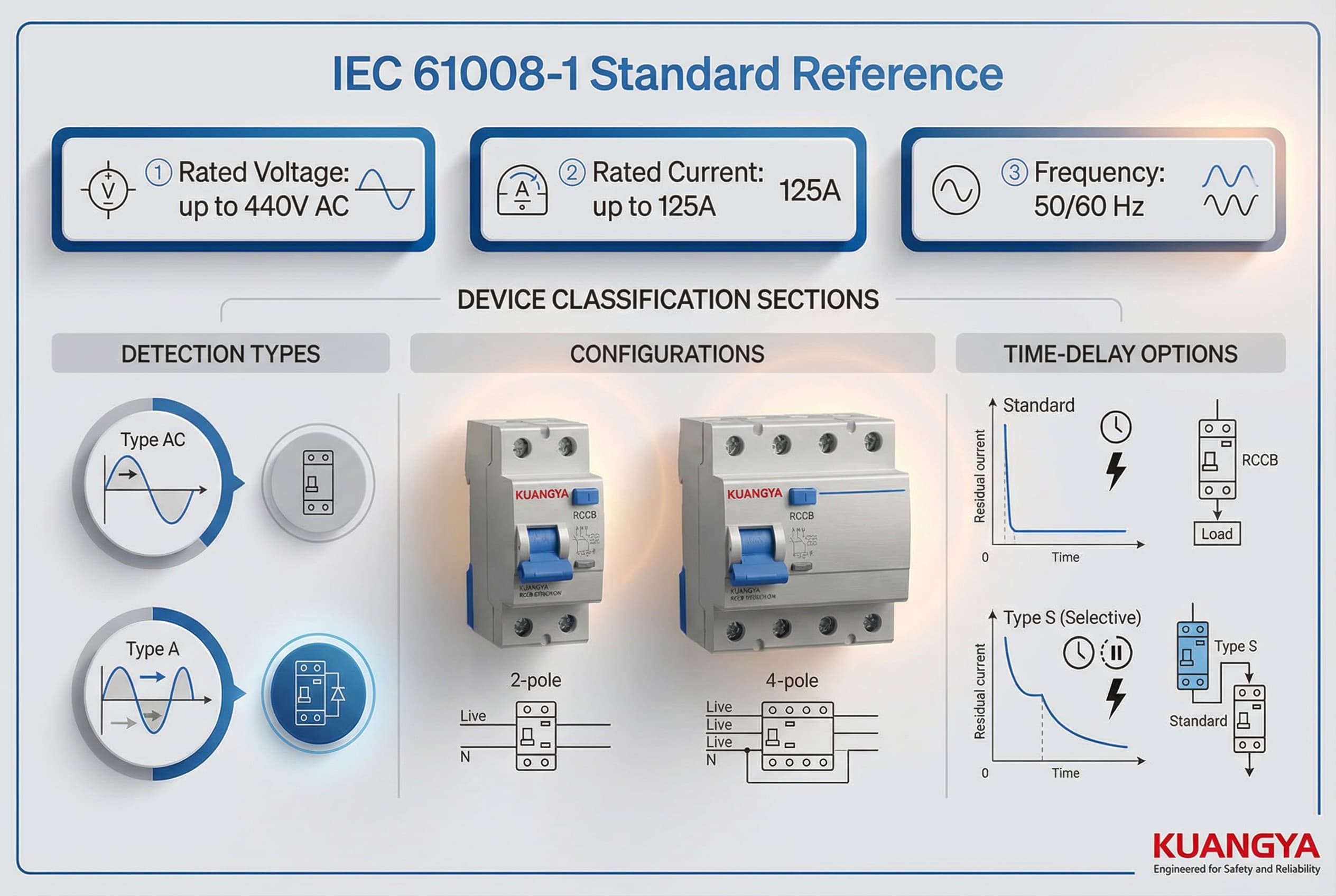
إجابة سريعة: تغطي المواصفة القياسية IEC 61008-1 قواطع التيار المتبقي (RCCBs) التي لا تحتوي على حماية مدمجة من التيار الزائد، وذلك للاستخدامات المنزلية وما يشابهها. يقوم قاطع التيار المتبقي (RCCB) باكتشاف أعطال التيار المتبقي المحددة، ولكنه لا يغني عن استخدام قاطع الدائرة المصغر (MCB) أو المصهر للحماية من الحمل الزائد وقصر الدائرة. قبل تحديد النوع المطلوب، يجب التأكد من جهد النظام، والتيار المقنن، والحساسية، ونوع التيار المتبقي، وترتيب الأقطاب، والحماية الأولية، وتعليمات المعدات، ومتطلبات التمديدات الكهربائية المحلية.
يشرح هذا الدليل المتطلبات العملية لقواطع التيار المتبقي (RCCB) وفحوصات الاختيار المرتبطة بالمواصفة IEC 61008-1. هذا الدليل هو نظرة عامة هندسية، وليس إعادة صياغة للمواصفة أو إثباتاً لاعتماد أي منتج معين. تحقق دائماً من الإصدار الرسمي الحالي، ووثائق الشركة المصنعة، ونطاق الشهادة المطبق، والقواعد المحلية الخاصة بمشروعك.
قبل الغوص في المواصفات الفنية، يجب علينا أولاً تحديد حدودنا. تُعد المواصفة IEC 61008-1 معياراً دقيقاً وأساسياً، ولكن فهم ما تغطيه - وما تستبعده عمداً - هو الخطوة الأولى لتجنب أخطاء التصميم الجسيمة.
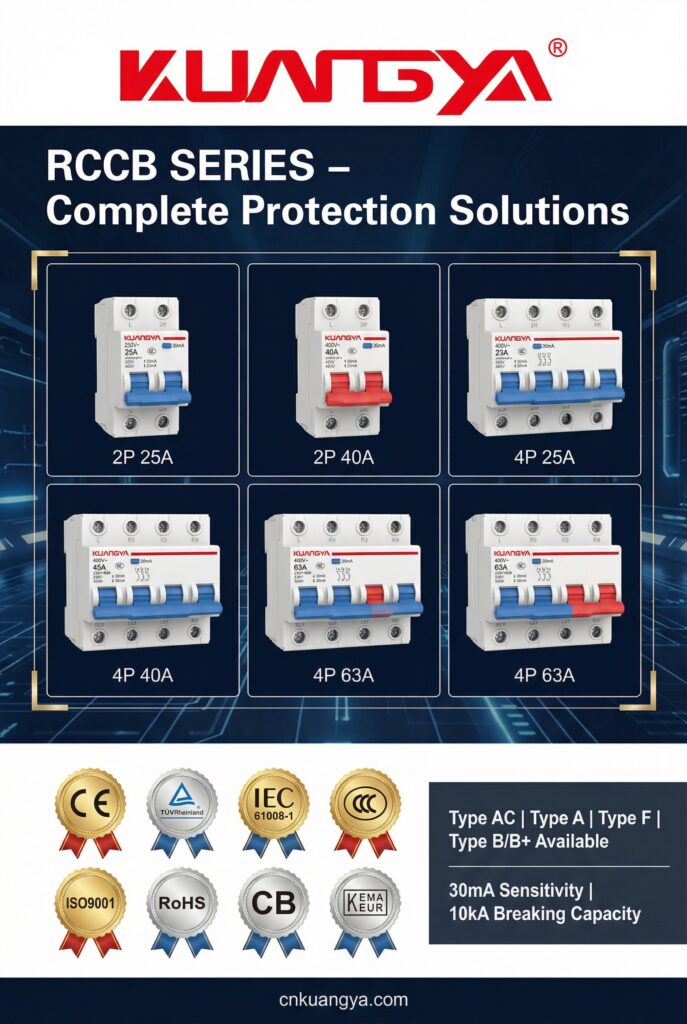
في جوهرها، تنطبق المواصفة IEC 61008-1 على قواطع التيار المتبقي التي لا تحتوي على حماية مدمجة من التيار الزائد للاستخدامات المنزلية وما يشابهها. هذا هو أهم تمييز يجب استيعابه. إن RCCB هو جهاز متخصص. غرضه الوحيد هو اكتشاف التيارات المتبقية المؤهلة (أعطال التسريب الأرضي) التي قد تشكل خطراً بحدوث صدمة كهربائية أو حريق والاستجابة لها. وهو جهاز حماية يهدف إلى تقليل المخاطر الناجمة عن أعطال التيار المتبقي المؤهلة عند اختياره وتنسيقه وتركيبه وصيانته بشكل صحيح.
ما يقوم به لا لا يقوم بالحماية من الأحمال الزائدة (سحب تيار كبير جداً) أو دوائر القصر (اتصال مباشر بين الخط الحي والمحايد). هذه المهمة متروكة لجهاز حماية من التيار الزائد (SCPD) يقع في المنبع، مثل قاطع الدائرة المصغر (MCB) أو المصهر.
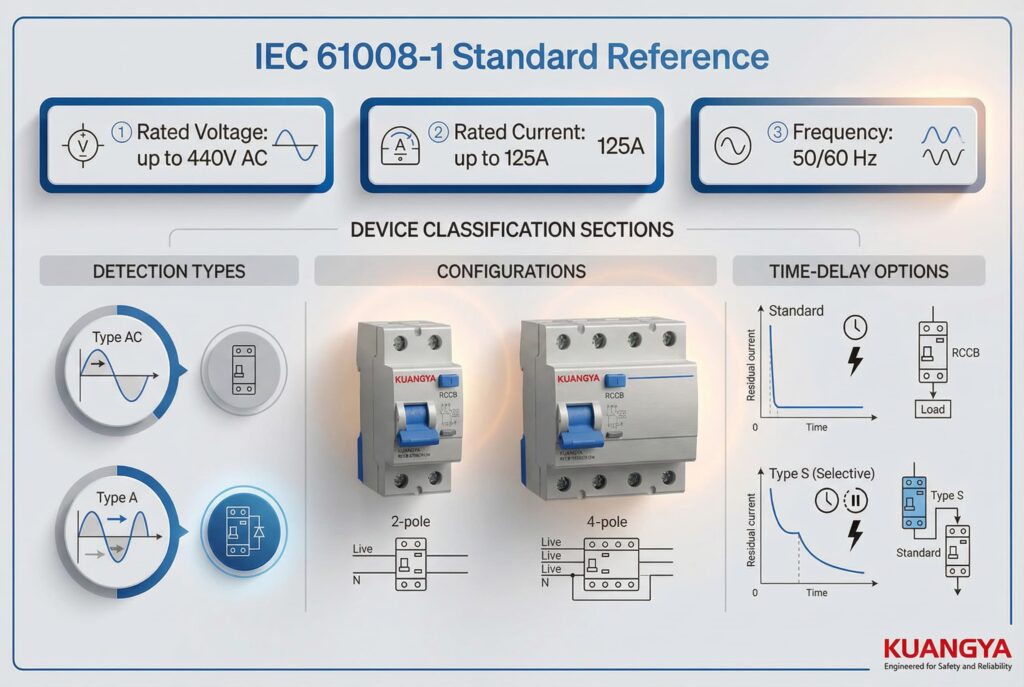
يحدد المعيار حدوداً تشغيلية واضحة للأجهزة التي يخضع لها:
إذا كنت بحاجة إلى جهاز واحد يوفر كلاً من الحماية من التيار المتبقي و والحماية من التيار الزائد، فأنت تبحث عن قاطع دائرة التيار المتبقي مع حماية مدمجة من التيار الزائد (RCBO)، والذي يخضع لمعيار مختلف، وهو IEC 61009.
استخدم الأداة أدناه لتنظيم معايير المشروع الرئيسية قبل طلب عرض سعر. هذه النتيجة أولية ولا تؤكد المطابقة أو الاعتماد أو ملاءمة التركيب.
قم بإعداد استفسار أولي حول قاطع التيار المتبقي (RCCB). النتيجة لا تؤكد مطابقة المنتج أو اعتماده أو ملاءمته للتركيب.
يتطلب قاطع التيار المتبقي (RCCB) حماية منسقة ضد الحمل الزائد وقصر الدائرة. تحقق دائماً من تصميم الدائرة، وتعليمات المعدات، ووثائق المنتج، والقواعد المحلية.
عالم السلامة الكهربائية ليس ثابتاً. لقد خضع المعيار IEC 61008-1 للمراجعة بمرور الوقت. بالنسبة للمشروع الحالي، تحقق من الإصدار المطلوب بموجب العقد أو السلطة المحلية، وتأكد من أن وثائق المورد تشير إلى نفس المنتج والتصنيف والإصدار. لا تستنتج الاعتماد من بيان الكتالوج وحده؛ بل راجع الجهة المصدرة ونطاق الشهادة وصلاحيتها.
الخلاصة الرئيسية: يتناول المعيار IEC 61008-1 قواطع التيار المتبقي (RCCBs) التي لا تحتوي على حماية مدمجة من التيار الزائد. قم بتنسيق قاطع التيار المتبقي (RCCB) مع قاطع دائرة مصغر (MCB) أو مصهر مناسب، وتحقق من التركيب الكامل وفقاً للقواعد الحالية المعمول بها.
لوحة بيانات قاطع التيار المتبقي (RCCB) هي بمثابة عقد فني. فهي إقرار من الشركة المصنعة، مُعتمد من خلال الاختبارات، لقدرات أداء الجهاز. بصفتك مهندساً، تكمن مهمتك في قراءة هذا العقد والتأكد من مطابقته لمتطلبات دائرتك الكهربائية. دعنا نحلل المعايير الحاسمة.
هذه هي المواصفات الأكثر مباشرة. الجهد المقنن (Un) هو أقصى جهد مستمر يمكن لقاطع التيار المتبقي (RCCB) تحمله، وعادة ما يكون 230 فولت للأنظمة أحادية الطور أو 400 فولت للأنظمة ثلاثية الطور. التيار المقدر (في) هو أقصى تيار حمل مستمر يمكن للجهاز تحمله دون ارتفاع درجة حرارته. تشمل التصنيفات الشائعة للمنتجات 16 أمبير، 25 أمبير، 40 أمبير، و63 أمبير، بينما تتوفر تصنيفات أعلى في بعض مجموعات المنتجات. تأكد من التيار المقنن، وسعة الأطراف، ونطاق الشهادة في الوثائق الحالية للشركة المصنعة.
تشبيه مهني: فكّر في هذه القيم باعتبارها السعة الهيكلية الأساسية لقاطع التيار المتبقي (RCCB). فإذا كانت الدائرة الكهربائية أنبوباً، في هو أقصى تدفق للمياه يمكنه التعامل معه على مدار الساعة طوال أيام الأسبوع دون أن يسخن الأنبوب نفسه، و Un هو أقصى ضغط يمكنه تحمله. ولا علاقة له بوظيفة الفصل الآمن نفسها.
هذا هو جوهر وظيفة السلامة في قاطع التيار المتبقي (RCCB). القيمة IΔn هي المقدار المحدد لتيار التسريب الذي سيؤدي إلى فصل الجهاز، وهي تمثل “حساسية الفصل”.”
-sensitivity-levels-and-their-applications.webp)
تُصنف الحساسيات القياسية وفقاً لهدف الحماية:
يحدد المعيار أيضاً تيار عدم التشغيل المتبقي المقنن (IΔno). في ظل ظروف الاختبار المحددة، يجب ألا يفصل قاطع التيار المتبقي (RCCB) عند مستوى تيار الاختبار هذا. في التركيبات الفعلية، يجب أيضاً تقييم خطر الفصل غير المرغوب فيه الناتج عن تيار التسريب التراكمي الطبيعي، والنبضات العابرة، والتنسيق مع الأجهزة الموجودة في أعلى وأسفل التيار.
هنا تقع العديد من أخطاء المواصفات. يحدد “نوع” قاطع التيار المتبقي (RCCB) شكل موجة تيار العطل الذي يمكنه اكتشافه. استخدام النوع الخاطئ قد يجعل الجهاز غير قادر على اكتشاف أعطال معينة.
تشبيه مهني: فكر في أنواع قواطع التيار المتبقي (RCCB) كمترجمين للغات. إذا كانت أحمالك الكهربائية “تتحدث” تياراً متردداً نقياً فقط، فإن المترجم الأساسي يعمل بشكل جيد. ولكن إذا كانت تتحدث لهجات أخرى (مثل التيار المستمر النابض)، فأنت بحاجة إلى مترجم أكثر تقدماً.
| نوع RCCB | يكشف عن التيار المتردد الجيبي. | يكتشف التيار المستمر النابض | يكتشف التيار المستمر السلس | التطبيق النموذجي |
|---|---|---|---|---|
| نوع التكييف | ✔️ | ❌ | ❌ | الأحمال المترددة الجيبية، فقط حيثما يُسمح بذلك. |
| النوع أ | ✔️ | ✔️ | ❌ | العديد من الأحمال الإلكترونية أحادية الطور؛ تحقق من المتطلبات. |
| النوع ب | ✔️ | ✔️ | ✔️ | الأحمال التي قد تنتج تياراً مستمراً أملس؛ تحقق من تعليمات المعدات. |
تحدد هذه التصنيفات متانة قاطع التيار المتبقي (RCCB) وقدرته على تحمل أحداث الأعطال الكبيرة.

الخلاصة الأساسية: مطابقة نوع قاطع دائرة التيار المتبقي (A أو B) مع تيار العطل المحتمل للحمل لا تقل أهمية عن اختيار الحساسية الصحيحة (IΔn). إن استخدام النوع AC في دائرة تحتوي على إلكترونيات يعد خطأً شائعاً وخطراً.
بعد فك رموز المعايير الفنية، دعونا نحول هذه المعرفة إلى عملية اتخاذ قرار قابلة للتكرار. اتبع هذه الخطوات الخمس لضمان أن يكون اختيارك آمناً ومتوافقاً وموثوقاً.
ابدأ بطرح السؤال: ما الذي أحاول حمايته؟
بناءً على هدفك، اختر تصنيف الحساسية. هذه هي الخطوة الأكثر أهمية للسلامة.
| الحساسية (IΔn) | الاستخدام الأساسي | مستوى الحماية | التطبيق النموذجي |
|---|---|---|---|
| 10 مللي أمبير | مخاطر عالية جداً | حماية قصوى للأفراد | المعدات الطبية، مناطق حمامات السباحة، الساونا. |
| 30 مللي أمبير | الاستخدام العام | سلامة الأفراد | المنازل، ومخارج المقابس، والمساحات التجارية، والمطابخ. |
| 100 مللي أمبير | الدوائر الصناعية | حماية المعدات والوقاية من الحرائق | خطوط الآلات، ولوحات التوزيع ذات التسريب العالي. |
| 300 مللي أمبير / 500 مللي أمبير | القاطع الرئيسي | الوقاية من الحرائق | في أعلى لوحات التوزيع الكبيرة لضمان الانتقائية. |
لأي مقبس كهربائي عام قد يقوم شخص بتوصيل جهاز به، 30 مللي أمبير هو الخيار الإلزامي لسلامة الإنسان.
بعد ذلك، قم بتحليل المعدات الموجودة على الدائرة. هذا يحدد “لغة” تيار العطل التي يحتاج قاطع التيار المتبقي (RCCB) الخاص بك إلى فهمها.
اختر الجهد المقنن للنظام الفعلي، واختر التيار المقنن باستخدام حمل التصميم، وسعة الموصل، وظروف التركيب، وجهاز الحماية المنسق في المنبع. تصنيف تيار قاطع التيار المتبقي (RCCB) ليس إعداداً للفصل عند التحميل الزائد.
تحقق من تيار قصر الدائرة المحتمل عند نقطة التركيب وتصنيف قصر الدائرة الشرطي لقاطع التيار المتبقي (RCCB) لجهاز الحماية المرتبط المحدد. لا يمكن اختيار القيمة المطلوبة من رقم “قياسي” عام؛ استخدم بيانات التنسيق الخاصة بالشركة المصنعة ودراسة الأعطال الخاصة بالمشروع.
الخلاصة الرئيسية: تعتمد الحساسية ونوع التيار المتبقي على التطبيق. تأكد من هدف الحماية، وشكل الموجة المتوقع، وتعليمات المعدات، والتنسيق، والمتطلبات المحلية.
إن تحديد وتركيب قاطع تيار متبقي (RCCB) متوافق هو نصف المهمة فقط. يُعد قاطع التيار المتبقي جهاز أمان ميكانيكي، ويجب التحقق من موثوقيته بشكل فعال. تم بناء معيار IEC 61008-1 على أساس من الاختبارات الصارمة.
يعتمد تقييم المطابقة على الاختبارات والوثائق المطبقة على المعيار المُدعى ونطاق المنتج. يجب على المشترين التحقق من الجهة المُصدرة، ومرجع التقرير أو الشهادة، والطراز والقدرات المقننة المشمولة، والإصدار، والصلاحية، وأي شروط أخرى بدلاً من الاعتماد على عدد غير محدد من الاختبارات.
ومع ذلك، بمجرد خروج الجهاز من المصنع، تنتقل مسؤولية ضمان جاهزيته التشغيلية إلى القائم بالتركيب والمستخدم النهائي. وهذا هو الغرض من زر T (الاختبار) الموجود على واجهة كل قاطع تيار متبقي (RCCB).
يؤدي الضغط على زر الاختبار إلى إنشاء تيار اختبار داخلي يهدف إلى تشغيل الجهاز. يعتمد السلوك المتوقع ووقت التشغيل المسموح به على تعليمات المنتج. إذا لم يعمل الجهاز كما هو محدد، فقم بعزل المشكلة واطلب تقييم التركيب من قبل شخص مؤهل؛ فزر الاختبار لا يثبت كل جوانب حماية الدائرة.
كم مرة يجب إجراء هذا الاختبار؟ تختلف فترات الاختبار حسب تعليمات الشركة المصنعة والقواعد المحلية. يؤدي تشغيل زر الاختبار إلى فحص وظيفة الاختبار الداخلية وآلية الفصل، لكنه لا يغني عن التحقق الكهربائي المطلوب عند التشغيل أو الفحص الدوري.
الخلاصة الرئيسية: اتبع الفترة الزمنية المحددة من قبل الشركة المصنعة لاستخدام زر الاختبار ومتطلبات الفحص والاختبار المطبقة على التركيب.
Q1: ما الفرق بين قاطع التيار المتبقي (RCCB)، وقاطع التيار المتبقي مع الحماية من التيار الزائد (RCBO)، وقاطع الدائرة المصغر (MCB)؟
س2: لماذا يفصل قاطع دائرة التيار المتبقي (RCCB) الخاص بي دون وجود عطل واضح؟ (الفصل المزعج)
غالباً ما يحدث هذا بسبب مستويات منخفضة من تيار التسرب التراكمي الناتج عن أجهزة إلكترونية متعددة على دائرة واحدة. كما يمكن أن يكون علامة على ضعف العزل في الأسلاك أو تعطل أحد الأجهزة. وعلى الرغم من أنه قد يشير أحياناً إلى حساسية مفرطة في قاطع التيار المتبقي، إلا أنه غالباً ما يشير إلى وجود مشكلات كامنة تتطلب الفحص.
س3: هل يمكنني استخدام قاطع تيار متبقي (RCCB) من النوع AC للدوائر التي تحتوي على إلكترونيات حديثة؟
لا تعتمد في اختيارك على مصطلح “إلكترونيات حديثة” فقط. حدد شكل موجة التيار المتبقي المذكور من قبل الشركة المصنعة للمعدات وطبق المتطلبات المحلية. اعتماداً على الحمل، قد يلزم استخدام النوع A أو F أو B - أو أي ترتيب حماية منسق آخر؛ يجب استخدام النوع AC فقط عندما تكون قدرته على الكشف مناسبة ومسموح بها.
س4: كم مرة يجب علي اختبار قاطع التيار المتبقي (RCCB) الخاص بي؟
قم بتشغيل زر الاختبار وفقاً للفترة الزمنية المحددة من قبل الشركة المصنعة والقواعد المحلية المعمول بها. يعد التشغيل الناجح لزر الاختبار مفيداً، لكنه لا يغني عن عمليات التحقق الكهربائية المطلوبة عند التركيب وبشكل دوري.
س5: هل يوفر قاطع التيار المتبقي (RCCB) حماية من الحمل الزائد؟
لا. التيار المقنن لقاطع التيار المتبقي (RCCB) هو تصنيف للتحمل وليس إعداداً للفصل عند الحمل الزائد. قم بتنسيق قاطع التيار المتبقي (RCCB) مع قاطع دائرة مصغر (MCB) أو مصهر أو أي جهاز حماية من التيار الزائد آخر، بحيث يظل التركيب ضمن حدود تصنيفات قاطع التيار المتبقي والموصلات في ظروف الحمل الزائد وقصر الدائرة.
س6: ما هو التأثير الرئيسي لتحديث عام 2024 لمعيار IEC 61008-1؟
تقدم النسخة الرابعة متطلبات أكثر صرامة، لا سيما فيما يتعلق بمقاومة الجهد الزائد المؤقت (TOV). وهذا يجعل الأجهزة أكثر قوة في البيئات ذات شبكات الطاقة غير المستقرة أو عابرات التبديل العالية، مما يحسن موثوقية النظام بشكل عام. بالنسبة للمشتريات، تحقق من النسخة المطلوبة للمشروع واحصل على أدلة تثبت أن المنتج والتصنيف ونطاق الشهادة تتطابق مع الجهاز المعروض.
لا يعد معيار IEC 61008-1 مجرد قائمة بالمتطلبات الفنية، بل يوفر إطاراً لمتطلبات السلامة والأداء المحددة لقواطع التيار المتبقي (RCCB). وبصفتنا مهندسين، فإن مسؤوليتنا تتجاوز مجرد الامتثال؛ إذ تتعلق بفهم المبادئ الكامنة وراء هذه القواعد، مثل فيزياء تيارات العطل، وفسيولوجيا الصدمة الكهربائية، والواقع العملي للتركيبات الكهربائية الحديثة.
من خلال اتباع نهج منظم - يبدأ بتحديد الهدف، واختيار الحساسية والنوع المناسبين، وضمان التصنيفات الصحيحة، والتحقق من خلال الاختبار - يمكنك تحويل تحدي المواصفات المعقد إلى عملية واضحة لضمان السلامة والموثوقية. إن قاطع التيار المتبقي (RCCB) الذي يتم اختياره بشكل صحيح هو جزء من نظام حماية متكامل، ويجب أن يكون مدعوماً بحماية مناسبة من التيار الزائد، وممارسات تركيب سليمة، وعمليات تحقق دقيقة.

