Zona industriale di WengYang Yueqing Wenzhou 325000
Orario di lavoro
Da lunedì a venerdì: dalle 7.00 alle 19.00
Fine settimana: 10.00 - 17.00
Zona industriale di WengYang Yueqing Wenzhou 325000
Orario di lavoro
Da lunedì a venerdì: dalle 7.00 alle 19.00
Fine settimana: 10.00 - 17.00

Avete appena ricevuto la scheda tecnica finale per una nuova installazione commerciale. Tra le note c'è un'unica riga critica: “Tutti i quadri di distribuzione devono utilizzare un sistema conforme alla norma IEC 61008-1". RCCB.” Per un ingegnere esperto, questo è un territorio familiare. Ma è anche un bivio. Una strada porta a una selezione rapida e conforme alla carta, che potrebbe nascondere rischi futuri. L'altra strada, quella della due diligence, richiede una comprensione più approfondita di ciò che lo standard richiede veramente.
La scelta del dispositivo sbagliato non è solo una questione di non conformità. Può portare a continui interventi fastidiosi che interrompono le operazioni o, peggio ancora, al mancato intervento durante un guasto reale, esponendo le persone al rischio di gravi scosse elettriche o creando un potenziale pericolo di incendio. La differenza tra un sistema sicuro e affidabile e un disastro latente si riduce spesso al modo in cui si interpretano standard come la norma IEC 61008-1.
In qualità di ingegnere applicativo con oltre 15 anni di esperienza nel settore, ho potuto constatare in prima persona come una corretta comprensione degli interruttori differenziali (RCCB) può rendere un progetto più o meno importante. Questa guida è stata concepita per tradurre il linguaggio denso della IEC 61008-1 in conoscenze pratiche e attuabili. Andremo oltre la semplice elencazione dei requisiti ed esploreremo perché Le specifiche RCCB sono importanti, come interpretarle per la vostra applicazione specifica e come costruire un quadro di riferimento per la selezione del dispositivo giusto, ogni volta. Questa è la vostra guida 2025 per padroneggiare le specifiche RCCB.
Prima di immergerci nelle specifiche tecniche, dobbiamo innanzitutto definire i nostri confini. La norma IEC 61008-1 è uno standard preciso e fondamentale, ma capire cosa copre e cosa esclude deliberatamente è il primo passo per evitare errori di progettazione critici.
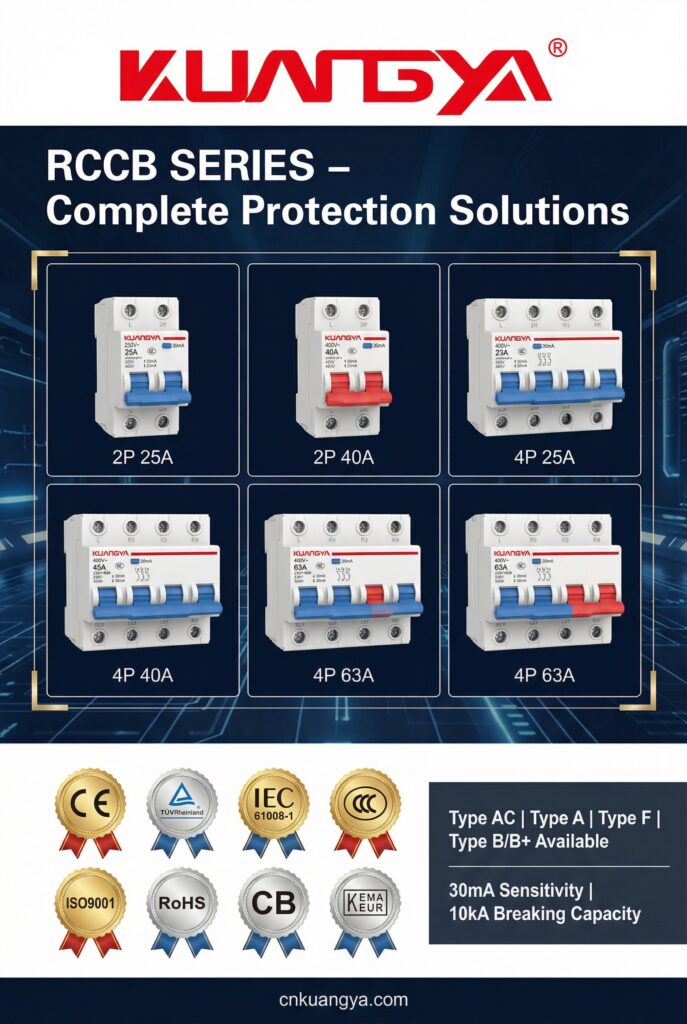
La norma IEC 61008-1 si applica essenzialmente a Interruttori differenziali senza protezione integrale contro le sovracorrenti per usi domestici e simili. Questa è la distinzione più importante da cogliere. Un RCCB è un dispositivo specializzato. Il suo unico scopo è quello di rilevare e reagire a piccole correnti di dispersione (guasti a terra) che potrebbero rappresentare un rischio di scossa elettrica o incendio. Si tratta fondamentalmente di un dispositivo salvavita.
Cosa fa non è proteggere dai sovraccarichi (assorbimento di corrente eccessivo) o dai cortocircuiti (collegamento diretto tra tensione e neutro). Questo compito spetta a un dispositivo di protezione contro le sovracorrenti (SCPD) a monte, come un interruttore automatico (MCB) o un fusibile.
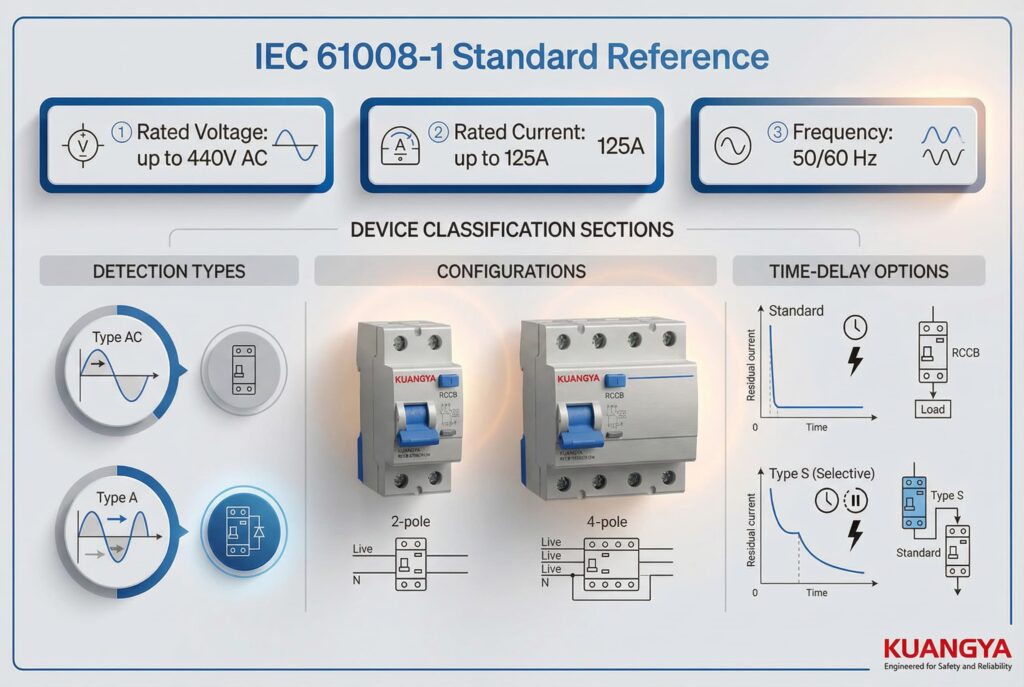
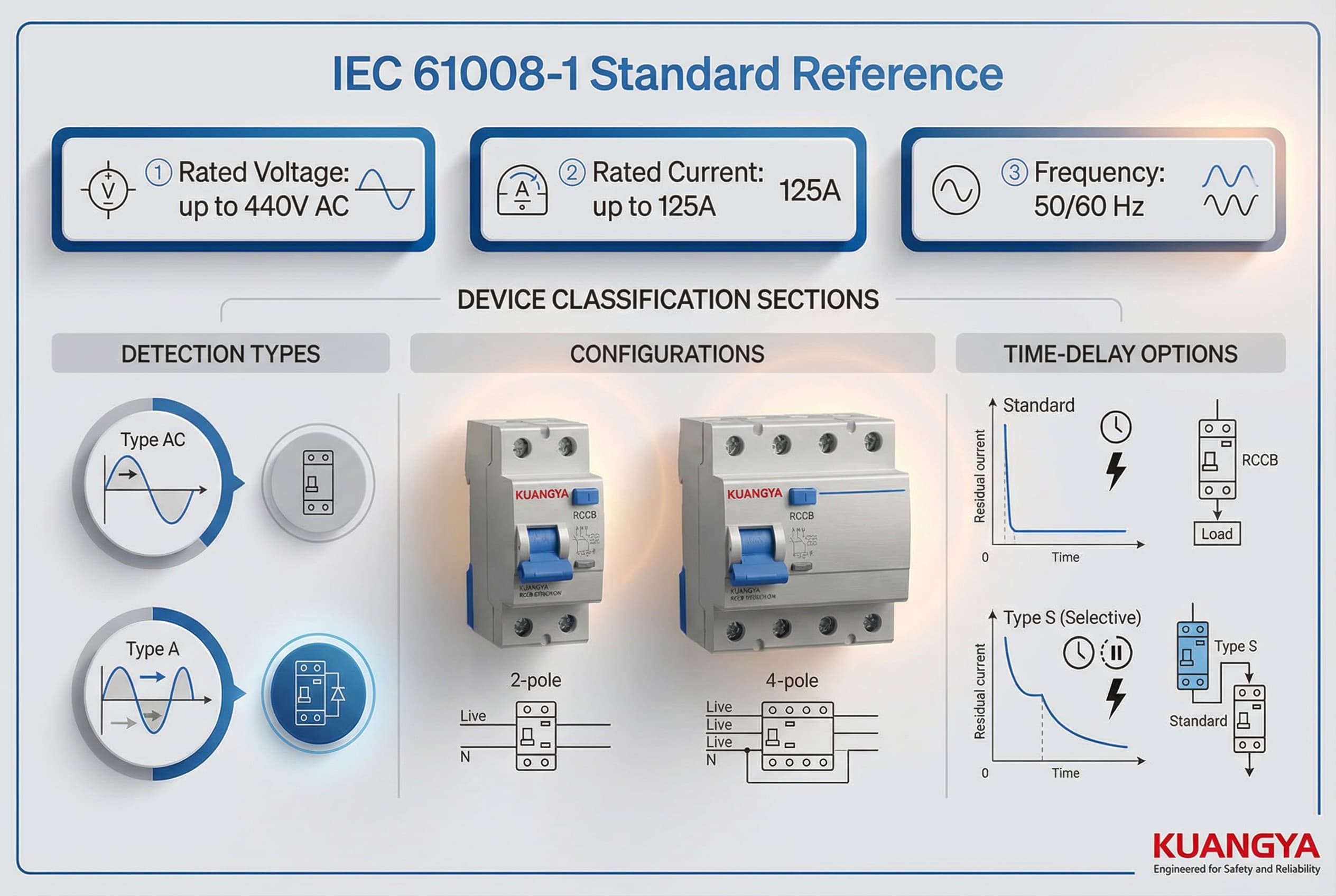
Lo standard stabilisce chiari limiti operativi per i dispositivi che disciplina:
Se si necessita di un unico dispositivo che fornisca sia la protezione contro i guasti a terra e Per quanto riguarda la protezione da sovracorrenti, si tratta di un interruttore automatico RCBO (Residual Current operated circuit-Breaker with integral Overcurrent protection), che è regolato da una norma diversa, la IEC 61009.
Il mondo della sicurezza elettrica non è statico. Il 21 novembre 2024, il CEI ha pubblicato ufficialmente la quarta edizione dello standard, ritirando la precedente versione del 2010 e i relativi emendamenti. Per i progetti che verranno specificati nel 2025 e oltre, si tratta di uno sviluppo critico. Le principali modifiche introdotte in quest'ultima edizione includono nuovi requisiti per la resistenza alle sovratensioni temporanee e una migliore armonizzazione con gli standard correlati. Al momento dell'acquisto dei dispositivi, è necessario verificare quale sia l'edizione a cui fa riferimento la certificazione del fornitore per garantire una conformità a prova di futuro.
Principali informazioni da trarre: La norma IEC 61008-1 è lo standard di sicurezza fondamentale per la protezione autonoma contro i guasti a terra, ma per una protezione completa del circuito è necessario abbinare gli interruttori differenziali con un MCB o un fusibile appropriato.
La targhetta di un RCCB è un contratto tecnico. È una dichiarazione del produttore, convalidata da test, sulle capacità prestazionali del dispositivo. Come ingegnere, il vostro compito è quello di leggere il contratto e assicurarvi che corrisponda alle esigenze del vostro circuito. Analizziamo i parametri critici.
Queste sono le specifiche più semplici. Tensione nominale (Un) è la tensione massima continua che l'RCCB può gestire, in genere 230V per i sistemi monofase o 400V per i sistemi trifase. Corrente nominale (In) è la massima corrente di carico continua che il dispositivo può sopportare senza surriscaldarsi. I valori standard includono 16A, 25A, 40A, 63A e fino a 125A. 1.
Analogia professionale: Considerate questi elementi come la capacità strutturale di base dell'RCCB. Se il circuito è un tubo, In è il flusso d'acqua massimo che può gestire 24 ore su 24, 7 giorni su 7, senza che il tubo si scaldi, e Un è la pressione massima che può sopportare. Non ha nulla a che vedere con la funzione di intervento di sicurezza.
È il cuore della funzione di sicurezza dell'RCCB. IΔn è la quantità specifica di corrente di dispersione che farà scattare il dispositivo. È la “sensibilità del filo di sgancio”.”
-sensitivity-levels-and-their-applications.webp)
Le sensibilità standard sono classificate in base all'obiettivo di protezione:
Lo standard definisce anche un Corrente residua nominale non operativa (IΔno), che in genere è pari a 0,5 x IΔn. Questa è la corrente di dispersione massima del dispositivo deve ignorare, evitando così fastidiosi interventi dovuti a piccole perdite di fondo cumulative, comuni nei moderni sistemi elettronici.
È qui che si verificano molti errori di specifica. Il “tipo” di RCCB definisce il tipo di forma d'onda della corrente di guasto che può rilevare. L'utilizzo di un tipo sbagliato può rendere il dispositivo cieco a determinati guasti.
Analogia professionale: Considerate i tipi di RCCB come traduttori di lingua. Se i carichi elettrici “parlano” solo CA pura, un traduttore di base funziona bene. Ma se parlano altri dialetti (come la corrente continua pulsante), è necessario un traduttore più avanzato.
| Tipo RCCB | Rileva la corrente alternata sinusoidale | Rileva la corrente continua pulsante | Rileva la corrente continua regolare | Applicazione tipica |
|---|---|---|---|---|
| Tipo AC | ✔️ | ❌ | ❌ | Obsoleto; solo carichi resistivi semplici. |
| Tipo A | ✔️ | ✔️ | ❌ | Standard per i moderni circuiti residenziali e commerciali. |
| Tipo B | ✔️ | ✔️ | ✔️ | Caricabatterie EV, inverter solari, VFD, apparecchiature mediche. |
Queste classificazioni definiscono la robustezza dell'RCCB, ovvero la sua capacità di sopravvivere a un evento di guasto grave.

Principali risultati: L'abbinamento del tipo di RCCB (A o B) alla corrente di guasto potenziale del carico è fondamentale quanto la scelta della sensibilità corretta (IΔn). L'utilizzo di un tipo AC su un circuito con componenti elettronici è un errore comune e pericoloso.
Una volta decodificati i parametri tecnici, traduciamo queste conoscenze in un processo decisionale ripetibile. Seguite queste cinque fasi per garantire che la vostra scelta sia sicura, conforme e affidabile.
Iniziate a chiedervi: Cosa sto cercando di proteggere?
In base al vostro obiettivo, selezionate il grado di sensibilità. Questa è la fase più critica per la sicurezza.
| Sensibilità (IΔn) | Uso primario | Livello di protezione | Applicazione tipica |
|---|---|---|---|
| 10mA | Rischio molto elevato | Protezione umana estrema | Attrezzature mediche, aree piscina, saune. |
| 30mA | Uso generale | Sicurezza umana | Case, prese di corrente, spazi commerciali, cucine. |
| 100mA | Circuiti industriali | Attrezzature e protezione antincendio | Linee di macchinari, quadri di distribuzione con perdite elevate. |
| 300mA / 500mA | Principale cliente | Protezione antincendio | A monte su grandi quadri di distribuzione per la selettività. |
Per qualsiasi presa di corrente generica in cui una persona possa collegare un apparecchio, 30mA è la scelta obbligata per la sicurezza delle persone.
Successivamente, si analizzano le apparecchiature presenti sul circuito. Questo determina il “linguaggio” della corrente di guasto che l'RCCB deve comprendere.
Scegliere la corrente nominale (In) in modo che sia uguale o superiore al valore nominale dell'interruttore magnetotermico a monte o alla massima corrente di carico sostenuta del circuito, a seconda di quale sia il valore più alto. Selezionare la tensione nominale (Un) in modo che corrisponda alla tensione del sistema (ad esempio, 230V o 400V).
Infine, verificare che la corrente di cortocircuito condizionale (Inc) nominale dell'interruttore differenziale sia adeguata alla corrente di guasto prevista per l'impianto e sia coordinata con l'MCB a monte. Per la maggior parte delle installazioni commerciali, un dispositivo da 10kA è standard. Questo coordinamento garantisce che, in caso di cortocircuito potente, l'MCB intervenga e protegga l'interruttore differenziale da un guasto catastrofico.
Principali informazioni da trarre: Un RCCB di tipo A da 30 mA è la scelta predefinita per i moderni circuiti residenziali e commerciali in generale, ma è sempre necessario analizzare il carico per determinare se è necessario un tipo B per la sicurezza e la conformità.
Specificare e installare un RCCB conforme è solo metà del lavoro. Un RCCB è un dispositivo di sicurezza meccanico e la sua affidabilità deve essere verificata attivamente. Lo standard IEC 61008-1 si basa su test rigorosi.
Per ottenere la certificazione, un interruttore differenziale deve superare una serie di impegnativi test di tipo, oltre 21 secondo alcune fonti, presso un laboratorio accreditato. Questi test convalidano tutti gli aspetti, dall'aumento della temperatura e della resistenza meccanica alle proprietà dielettriche e, soprattutto, alle precise caratteristiche di intervento in tutte le condizioni di guasto specificate.
Tuttavia, una volta che il dispositivo lascia la fabbrica, la responsabilità di assicurarne la prontezza operativa passa all'installatore e all'utente finale. Questo è lo scopo del “Pulsante ”T" (Test) situato sulla faccia di ogni RCCB.
Premendo questo pulsante si crea un piccolo squilibrio controllato, simulando un vero e proprio guasto a terra. Un RCCB sano scatta immediatamente. Questa semplice azione conferma che il collegamento meccanico di sgancio è libero e il circuito di rilevamento è funzionante. Se il dispositivo non scatta, non fornisce più protezione e deve essere sostituito immediatamente da un elettricista autorizzato.
Con quale frequenza deve essere eseguito questo test? Le migliori pratiche del settore e molte normative locali raccomandano test ogni mese. Si tratta di una procedura semplice, della durata di due secondi, che garantisce la tranquillità di sapere che il dispositivo salvavita principale è pronto a intervenire in caso di necessità.
Principali risultati: Un RCCB non testato è un RCCB inaffidabile. Il test mensile tramite il pulsante ‘T’ è una pratica di sicurezza non negoziabile che garantisce il funzionamento del dispositivo quando ne avete più bisogno.
D1: Qual è la differenza tra un RCCB, un RCBO e un MCB?
D2: Perché il mio RCCB interviene quando non c'è un guasto evidente? (Interventi fastidiosi)
Questo fenomeno è spesso causato da bassi livelli di corrente di dispersione cumulativa da più dispositivi elettronici su un singolo circuito. Può anche essere il segno di un cattivo isolamento del cablaggio o di un apparecchio guasto. Sebbene a volte sia un segno di un RCCB troppo sensibile, spesso indica problemi sottostanti che devono essere indagati.
D3: È possibile utilizzare un interruttore automatico di tipo AC per circuiti con elettronica moderna?
No. È una pratica pericolosa. L'elettronica moderna produce forme d'onda CC pulsanti durante il funzionamento. Un interruttore automatico di tipo AC non è progettato per rilevarle e potrebbe non intervenire durante un guasto. È necessario utilizzare il tipo A come minimo per qualsiasi circuito con carichi elettronici.
D4: Con quale frequenza devo testare il mio RCCB?
È necessario premere il pulsante “Test” una volta al mese per assicurarsi che il dispositivo sia meccanicamente funzionante.
D5: Un RCCB fornisce una protezione da sovraccarico?
No. Un RCCB non fornisce alcuna protezione contro le sovracorrenti. Un interruttore differenziale da 40 A lascerà passare tranquillamente 100 A se non c'è un guasto a terra, con un grave rischio di incendio. Deve sempre essere preceduto da un dispositivo di protezione da sovracorrenti come un MCB o un fusibile.
D6: Qual è l'impatto principale dell'aggiornamento 2024 della norma IEC 61008-1?
La quarta edizione introduce requisiti più severi, in particolare per la resistenza alle sovratensioni temporanee (TOV). Ciò rende i dispositivi più robusti in ambienti con reti elettriche instabili o con elevati transitori di commutazione, migliorando l'affidabilità complessiva del sistema. Quando vi rifornite per i progetti del 2025, cercate la certificazione secondo la norma IEC 61008-1:2024.
Lo standard IEC 61008-1 è più di un elenco di requisiti tecnici: è un progetto per salvare vite umane. Come ingegneri, la nostra responsabilità va oltre la semplice conformità. Si tratta di comprendere i principi alla base delle regole: la fisica delle correnti di guasto, la fisiologia delle scosse elettriche e le realtà pratiche di una moderna installazione elettrica.
Seguendo un approccio strutturato - definendo l'obiettivo, selezionando la sensibilità e il tipo giusti, assicurando i valori nominali corretti e verificando i test - si trasforma una complessa sfida di specifiche in un processo chiaro per garantire sicurezza e affidabilità. Un RCCB scelto correttamente è un guardiano silenzioso, ma la sua presenza testimonia la diligenza e la cura dell'ingegnere che lo ha installato.

