WengYang Industriegebiet Yueqing Wenzhou 325000
Arbeitszeiten
Montag bis Freitag: 7AM - 7PM
Am Wochenende: 10AM - 5PM
WengYang Industriegebiet Yueqing Wenzhou 325000
Arbeitszeiten
Montag bis Freitag: 7AM - 7PM
Am Wochenende: 10AM - 5PM

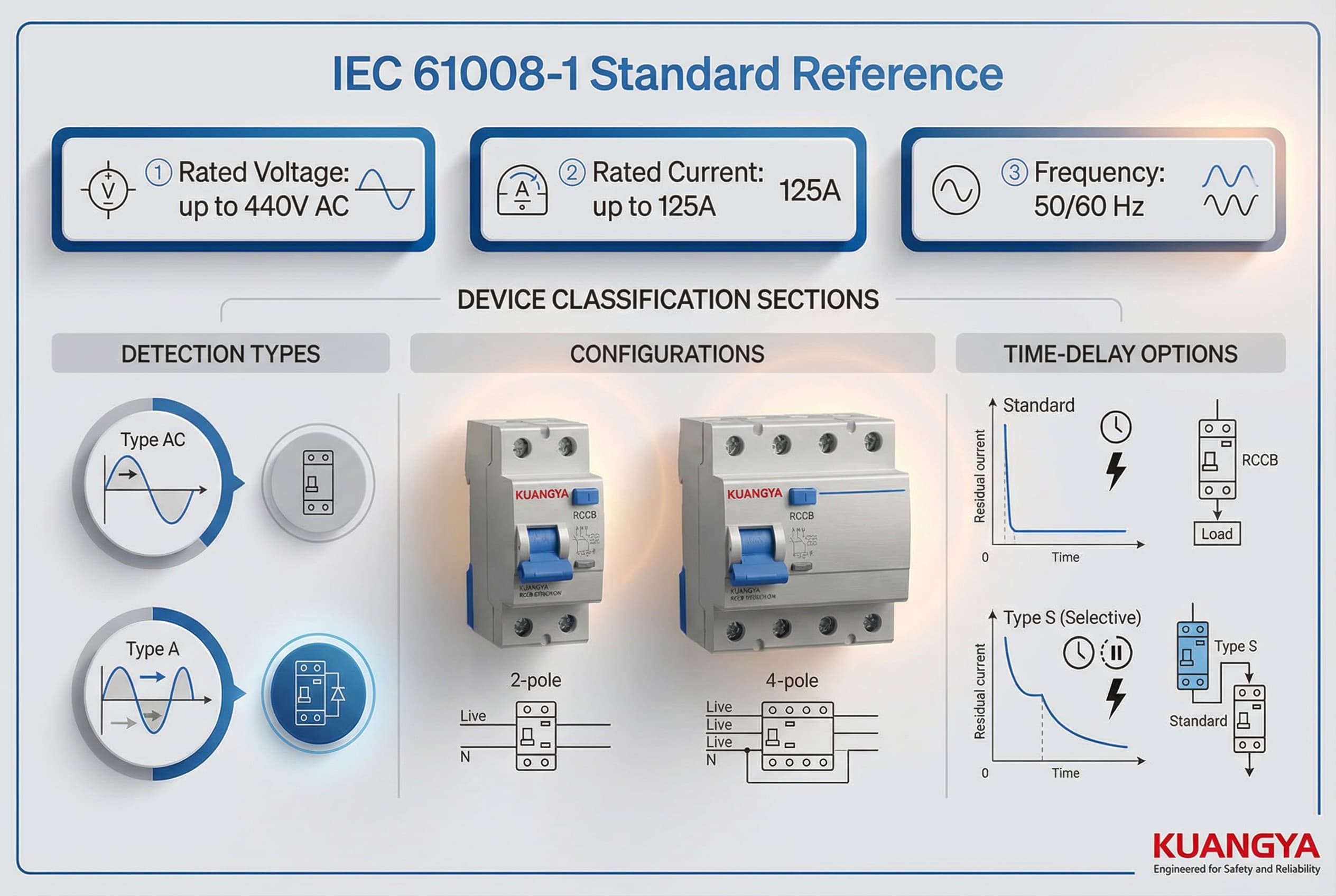
Kurze Antwort: Die IEC 61008-1 behandelt Fehlerstrom-Schutzschalter ohne eingebauten Überstromschutz (RCCBs) für Hausinstallationen und ähnliche Anwendungen. Ein RCCB erkennt qualifizierende Fehlerströme, ersetzt jedoch keinen Leitungsschutzschalter (MCB) oder eine Sicherung für den Überlast- und Kurzschlussschutz. Vor der Spezifikation sind die Systemspannung, der Nennstrom, die Empfindlichkeit, die Fehlerstromcharakteristik, die Polanordnung, der vorgeschaltete Schutz, die Geräteanweisungen sowie die örtlichen Installationsvorschriften zu prüfen.
Dieser Leitfaden erläutert die praktischen Anforderungen an RCCBs und die Auswahlkriterien gemäß IEC 61008-1. Es handelt sich um einen technischen Überblick, nicht um eine Wiedergabe der Norm oder einen Nachweis der Zertifizierung eines bestimmten Produkts. Überprüfen Sie stets die aktuelle offizielle Ausgabe, die Herstellerdokumentation, den Geltungsbereich des Zertifikats sowie die für Ihr Projekt geltenden lokalen Vorschriften.
Bevor wir uns in technische Spezifikationen vertiefen, müssen wir zunächst unsere Grenzen definieren. Die IEC 61008-1 ist ein präziser und grundlegender Standard, aber zu verstehen, was er abdeckt - und was er absichtlich ausschließt - ist der erste Schritt, um kritische Designfehler zu vermeiden.
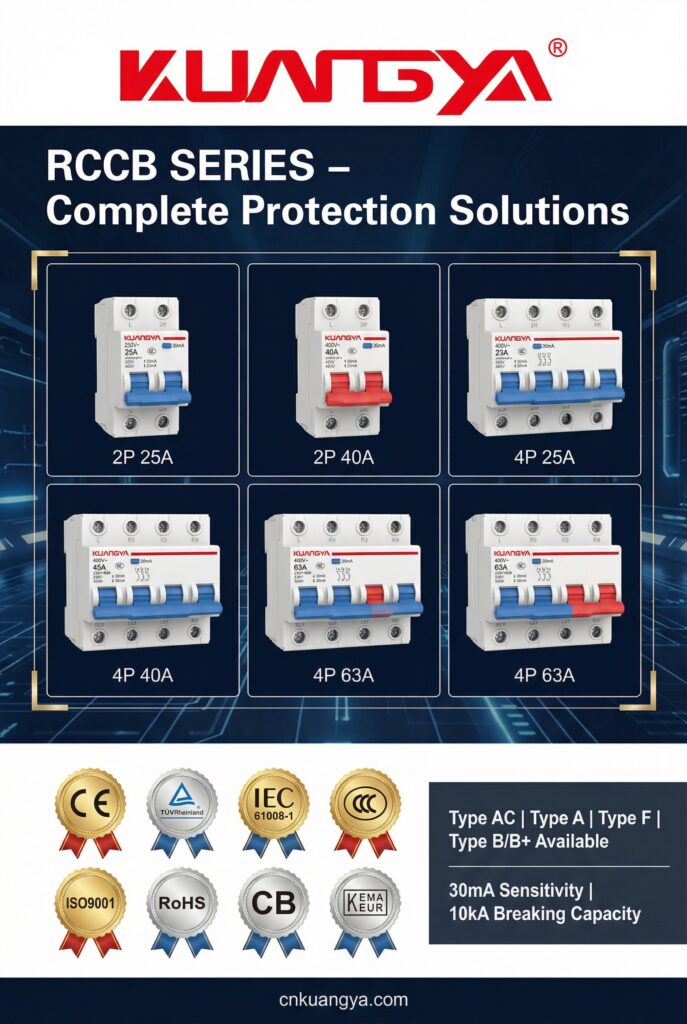
Im Kern gilt die IEC 61008-1 für Fehlerstrom-Schutzschalter ohne integrierten Überstromschutz für den Haushalt und ähnliche Zwecke. Dies ist die wichtigste Unterscheidung, die es zu treffen gilt. Eine RCCB ist ein Spezialgerät. Sein einziger Zweck besteht darin, qualifizierende Fehlerströme (Erdschlussfehler) zu erkennen und darauf zu reagieren, die ein Risiko für Stromschläge oder Brände darstellen könnten. Es handelt sich um eine Schutzeinrichtung, die bei korrekter Auswahl, Koordination, Installation und Wartung dazu dient, Risiken durch qualifizierende Fehlerströme zu reduzieren.
Was es bewirkt nicht ist der Schutz vor Überlast (zu hohe Stromaufnahme) oder Kurzschluss (eine direkte Verbindung zwischen Spannung und Nullleiter). Diese Aufgabe übernimmt eine vorgeschaltete Überstrom-Schutzeinrichtung (SCPD), wie z. B. ein Leitungsschutzschalter (MCB) oder eine Sicherung.
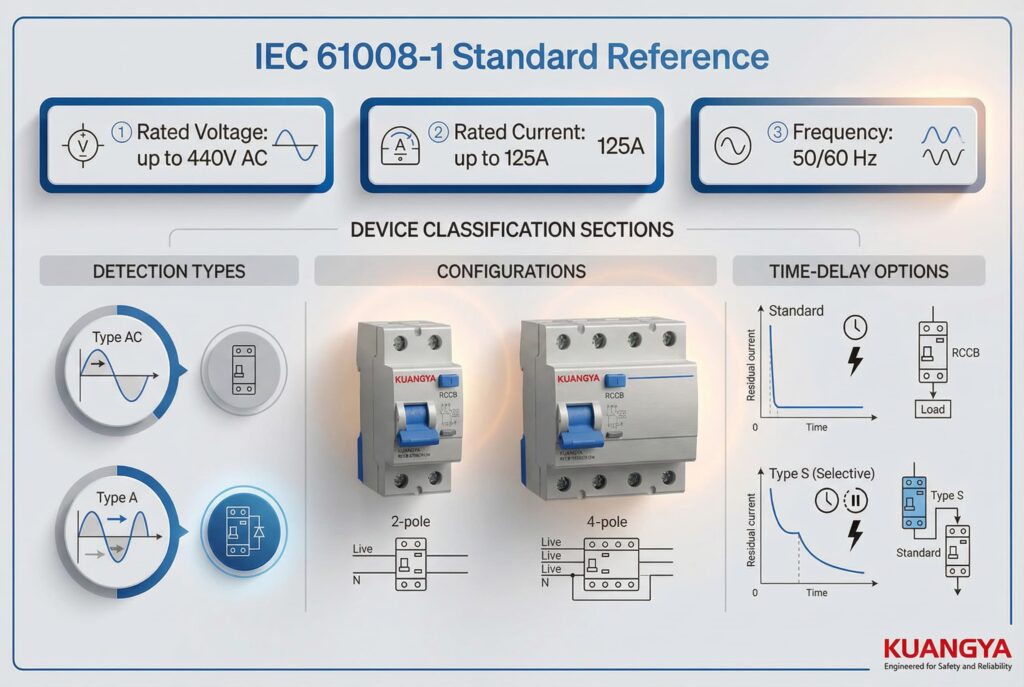
Die Norm legt klare Betriebsgrenzen für die von ihr geregelten Geräte fest:
Wenn Sie ein einzelnes Gerät benötigen, das sowohl Fehlerstromschutz bietet und Wenn Sie einen Überstromschutz benötigen, suchen Sie nach einem RCBO (Residual Current operated circuit-breaker with integral Overcurrent protection), der durch eine andere Norm, IEC 61009, geregelt ist.
Verwenden Sie die untenstehende Checkliste, um die wichtigsten Projektparameter vor einer Angebotsanfrage zu strukturieren. Das Ergebnis ist vorläufig und bestätigt weder die Konformität, die Zertifizierung noch die Eignung für die Installation.
Erstellen Sie eine vorläufige RCCB-Anfrage. Das Ergebnis bestätigt weder die Produktkonformität, Zertifizierung noch die Eignung für die Installation.
Ein RCCB erfordert einen koordinierten Überlast- und Kurzschlussschutz. Überprüfen Sie immer das Schaltungsdesign, die Geräteanweisungen, die Produktdokumentation und die örtlichen Vorschriften.
Die Welt der elektrischen Sicherheit ist nicht statisch. Die IEC 61008-1 wurde im Laufe der Zeit überarbeitet. Überprüfen Sie für ein aktuelles Projekt die vertraglich oder von der lokalen Behörde geforderte Ausgabe und stellen Sie sicher, dass sich alle Lieferantendokumentationen auf dasselbe Produkt, dieselbe Bemessung und dieselbe Ausgabe beziehen. Leiten Sie eine Zertifizierung nicht allein aus Katalogangaben ab; prüfen Sie die ausstellende Stelle, den Zertifikatsumfang und die Gültigkeit.
Wichtigste Erkenntnis: Die IEC 61008-1 befasst sich mit Fehlerstrom-Schutzschaltern (RCCBs) ohne integrierten Überstromschutz. Stimmen Sie den RCCB mit einem geeigneten Leitungsschutzschalter (MCB) oder einer Sicherung ab und überprüfen Sie die vollständige Installation anhand der aktuell geltenden Vorschriften.
Das Typenschild eines RCCB ist ein technischer Vertrag. Es ist eine Erklärung des Herstellers über die Leistungsfähigkeit des Geräts, die durch Tests bestätigt wurde. Als Ingenieur ist es Ihre Aufgabe, diesen Vertrag zu lesen und sicherzustellen, dass er den Anforderungen Ihres Stromkreises entspricht. Schauen wir uns die kritischen Parameter an.
Dies sind die einfachsten Spezifikationen. Nennspannung (Un) ist die maximale Dauerspannung, die der RCCB verarbeiten kann, in der Regel 230 V für einphasige oder 400 V für dreiphasige Systeme. Nennstrom (In) ist der maximale Dauerstrom, den das Gerät ohne Überhitzung führen kann. Gängige Produktbemessungen sind 16A, 25A, 40A und 63A, wobei in einigen Produktreihen auch höhere Bemessungen erhältlich sind. Bestätigen Sie den Bemessungsstrom, die Anschlusskapazität und den Zertifikatsumfang in der aktuellen Dokumentation des Herstellers.
Berufliche Analogie: Betrachten Sie diese als die grundlegende strukturelle Kapazität des RCCB. Wenn Ihr Stromkreis ein Rohr ist, Unter ist der maximale Wasserdurchfluss, den es rund um die Uhr bewältigen kann, ohne dass das Rohr selbst heiß wird, und Un ist der maximale Druck, dem er standhalten kann. Er hat nichts mit der eigentlichen Sicherheitsauslösefunktion zu tun.
Dies ist das Herzstück der Sicherheitsfunktion des RCCB. IΔn ist der spezifische Betrag des Leckstroms, der zum Auslösen des Geräts führt. Dies ist die “Auslöseempfindlichkeit”.”
-sensitivity-levels-and-their-applications.webp)
Standardempfindlichkeiten werden nach ihrem Schutzziel kategorisiert:
Der Standard definiert auch eine Bemessungs-Nichtansprechfehlerstrom (IΔno). Unter den festgelegten Prüfbedingungen darf der FI-Schutzschalter bei diesem Prüfstrompegel nicht auslösen. In einer realen Installation muss das Risiko von Fehlauslösungen auch anhand der normalen kumulativen Ableitströme, Transienten und der Koordination mit vor- und nachgeschalteten Geräten bewertet werden.
Hier treten viele Spezifikationsfehler auf. Der RCCB “Typ” legt fest, welche Art von Fehlerstromwellenform er erkennen kann. Die Verwendung des falschen Typs kann das Gerät für bestimmte Fehler blind machen.
Berufliche Analogie: Betrachten Sie RCCB-Typen als Sprachübersetzer. Wenn Ihre elektrischen Lasten nur reinen Wechselstrom “sprechen”, funktioniert ein einfacher Übersetzer gut. Wenn sie jedoch andere Dialekte sprechen (wie pulsierenden Gleichstrom), benötigen Sie einen fortschrittlicheren Übersetzer.
| RCCB-Typ | Erkennt sinusförmiges AC | Erkennt pulsierenden DC | Erkennt glatten DC | Typische Anwendung |
|---|---|---|---|---|
| Typ AC | ✔️ | ❌ | ❌ | Sinusförmige Wechselstromlasten, nur wo zulässig. |
| Typ A | ✔️ | ✔️ | ❌ | Viele einphasige elektronische Lasten; Anforderungen prüfen. |
| Typ B | ✔️ | ✔️ | ✔️ | Lasten, die glatten Gleichstrom erzeugen können; Betriebsanleitung prüfen. |
Diese Werte definieren die Robustheit des RCCB, d. h. seine Fähigkeit, ein größeres Fehlerereignis zu überstehen.

Das Wichtigste zum Schluss: Die Anpassung des RCCB-Typs (A oder B) an den potenziellen Fehlerstrom der Last ist ebenso wichtig wie die Wahl der richtigen Empfindlichkeit (IΔn). Die Verwendung eines Typs AC in einem Stromkreis mit Elektronik ist ein häufiger und gefährlicher Fehler.
Nachdem wir die technischen Parameter entschlüsselt haben, sollten wir dieses Wissen in einen wiederholbaren Entscheidungsprozess umsetzen. Befolgen Sie diese fünf Schritte, um sicherzustellen, dass Ihre Auswahl sicher, konform und zuverlässig ist.
Beginnen Sie mit der Frage: Was versuche ich zu schützen?
Wählen Sie die Empfindlichkeitsstufe, die Ihrem Ziel entspricht. Dies ist der wichtigste Schritt für die Sicherheit.
| Empfindlichkeit (IΔn) | Primäre Verwendung | Schutzniveau | Typische Anwendung |
|---|---|---|---|
| 10mA | Sehr hohes Risiko | Extremer Schutz des Menschen | Medizinische Geräte, Schwimmbadbereiche, Saunen. |
| 30mA | Allgemeine Verwendung | Menschliche Sicherheit | Wohnungen, Steckdosen, Geschäftsräume, Küchen. |
| 100mA | Industrielle Schaltkreise | Ausrüstung & Brandschutz | Maschinenleitungen, Verteilertafeln mit hoher Leckage. |
| 300mA / 500mA | Haupteinkommensbezieher | Feuerschutz | Vorgeschaltet auf großen Verteilertafeln für Selektivität. |
Für jede allgemeine Steckdose, an die eine Person ein Gerät anschließen kann, 30 mA ist die obligatorische Wahl für die menschliche Sicherheit.
Analysieren Sie als nächstes die Geräte im Stromkreis. Dies bestimmt die “Sprache” des Fehlerstroms, die Ihr FI-Schutzschalter verstehen muss.
Wählen Sie die Bemessungsspannung für das tatsächliche System und den Bemessungsstrom unter Berücksichtigung der Auslegungslast, der Leiterkapazität, der Installationsbedingungen und der koordinierten vorgeschalteten Schutzeinrichtung. Der Bemessungsstrom des RCCB ist keine Überlast-Auslöseeinstellung.
Überprüfen Sie den prospektiven Kurzschlussstrom am Installationsort sowie die bedingte Kurzschlussfestigkeit des RCCB in Verbindung mit dem spezifizierten Schutzorgan. Der erforderliche Wert kann nicht aus einem universellen “Standardwert” abgeleitet werden; verwenden Sie die Koordinationsdaten des Herstellers sowie die projektspezifische Kurzschlussstromberechnung.
Wichtigste Erkenntnis: Empfindlichkeit und Fehlerstromtyp sind anwendungsabhängig. Überprüfen Sie das Schutzziel, die erwartete Wellenform, die Geräteanweisungen, die Koordination sowie die lokalen Anforderungen.
Die Spezifikation und Installation eines konformen RCCB ist nur die halbe Arbeit. Ein RCCB ist eine mechanische Sicherheitseinrichtung, deren Zuverlässigkeit aktiv überprüft werden muss. Die Norm IEC 61008-1 basiert auf einem Fundament aus strengen Tests.
Die Konformitätsbewertung stützt sich auf die für die beanspruchte Norm und den Produktbereich geltenden Prüfungen und Dokumentationen. Käufer sollten die ausstellende Stelle, die Referenz des Berichts oder Zertifikats, das abgedeckte Modell und die Nennwerte, die Ausgabe, die Gültigkeit sowie etwaige Bedingungen überprüfen, anstatt sich auf eine unspezifische Anzahl von Prüfungen zu verlassen.
Sobald das Gerät jedoch das Werk verlässt, geht die Verantwortung für die Sicherstellung seiner Betriebsbereitschaft auf den Installateur und den Endnutzer über. Dies ist der Zweck der “Taste ”T" (Test) befindet sich auf der Vorderseite jeder RCCB.
Das Betätigen der Prüftaste erzeugt einen internen Prüfstrom, der das Gerät auslösen soll. Das erwartete Verhalten und die zulässige Auslösezeit hängen von den Produktanweisungen ab. Wenn das Gerät nicht wie spezifiziert auslöst, grenzen Sie das Problem ein und lassen Sie die Installation von einer Elektrofachkraft überprüfen; die Prüftaste weist nicht jeden Aspekt des Stromkreisschutzes nach.
Wie oft sollte diese Prüfung durchgeführt werden? Die Prüfintervalle variieren je nach Herstellerangaben und lokalen Vorschriften. Die Betätigung der Prüftaste überprüft die interne Testfunktion und den Auslösemechanismus, ersetzt jedoch nicht die für die Inbetriebnahme oder wiederkehrende Prüfung erforderliche elektrische Überprüfung.
Wichtigste Erkenntnis: Befolgen Sie das vom Hersteller vorgegebene Intervall für die Prüftaste sowie die für die Installation geltenden Inspektions- und Prüfanforderungen.
F1: Was ist der Unterschied zwischen einem RCCB, RCBO und MCB?
F2: Warum löst mein Fehlerstromschutzschalter aus, obwohl kein offensichtlicher Fehler vorliegt (Störungsauslösung)?
Dies wird oft durch geringe kumulierte Leckströme von mehreren elektronischen Geräten in einem einzigen Stromkreis verursacht. Es kann auch ein Zeichen für eine schlechte Isolierung in der Verkabelung oder ein defektes Gerät sein. Auch wenn es manchmal ein Anzeichen für einen überempfindlichen Fehlerstromschutzschalter ist, deutet es oft auf zugrunde liegende Probleme hin, die untersucht werden müssen.
F3: Kann ich einen Fehlerstrom-Schutzschalter vom Typ AC für Schaltungen mit moderner Elektronik verwenden?
Wählen Sie nicht allein aufgrund der Bezeichnung “moderne Elektronik”. Identifizieren Sie die vom Gerätehersteller angegebene Fehlerstromwellenform und wenden Sie die örtlichen Anforderungen an. Abhängig von der Last kann Typ A, F oder B – oder eine andere koordinierte Schutzmaßnahme – erforderlich sein; Typ AC sollte nur dort verwendet werden, wo dessen Erkennungsfähigkeit geeignet und zulässig ist.
F4: Wie oft muss ich meinen RCCB testen?
Betätigen Sie die Prüftaste in den vom Hersteller angegebenen Intervallen sowie gemäß den geltenden lokalen Vorschriften. Eine erfolgreiche Betätigung der Prüftaste ist nützlich, ersetzt jedoch nicht die erforderliche Installation und die regelmäßige elektrische Überprüfung.
F5: Bietet ein RCCB einen Überlastschutz?
Nein. Der Bemessungsstrom des RCCB ist ein Stromtragfähigkeitswert, keine Einstellung für eine Überlastauslösung. Stimmen Sie den RCCB mit einem MCB, einer Sicherung oder einer anderen Überstromschutzeinrichtung ab, damit die Anlage bei Überlast- und Kurzschlussbedingungen innerhalb der Nennwerte des RCCB und der Leiter bleibt.
F6: Was sind die wichtigsten Auswirkungen der Aktualisierung der IEC 61008-1 für das Jahr 2024?
Die vierte Ausgabe führt strengere Anforderungen ein, insbesondere hinsichtlich der Widerstandsfähigkeit gegen transiente Überspannungen (TOV). Dies macht die Geräte in Umgebungen mit instabilen Stromnetzen oder hohen Schalttransienten robuster und verbessert die allgemeine Systemzuverlässigkeit. Überprüfen Sie für die Beschaffung die für das Projekt erforderliche Ausgabe und fordern Sie Nachweise an, deren Produkt, Nennwerte und Zertifizierungsumfang mit dem angebotenen Gerät übereinstimmen.
Die Norm IEC 61008-1 ist mehr als nur eine Liste technischer Anforderungen; sie bietet einen Rahmen für spezifizierte Sicherheits- und Leistungsanforderungen an RCCBs. Als Ingenieure geht unsere Verantwortung über die bloße Einhaltung hinaus. Es geht darum, die Prinzipien hinter den Regeln zu verstehen – die Physik von Fehlerströmen, die Physiologie von Stromschlägen und die praktischen Realitäten einer modernen Elektroinstallation.
Durch einen strukturierten Ansatz – Definition des Ziels, Auswahl der richtigen Empfindlichkeit und des Typs, Sicherstellung der korrekten Nennwerte und Überprüfung durch Tests – verwandeln Sie eine komplexe Spezifikationsherausforderung in einen klaren Prozess zur Gewährleistung von Sicherheit und Zuverlässigkeit. Ein korrekt ausgewählter RCCB ist ein Teil eines koordinierten Schutzsystems und muss durch geeigneten Überstromschutz, fachgerechte Installation und Überprüfung unterstützt werden.

