Промышленная зона Вэньян Юэцин Вэньчжоу 325000
Рабочие часы
Понедельник - пятница: 7AM - 7PM
Выходные: 10AM - 5PM
Промышленная зона Вэньян Юэцин Вэньчжоу 325000
Рабочие часы
Понедельник - пятница: 7AM - 7PM
Выходные: 10AM - 5PM

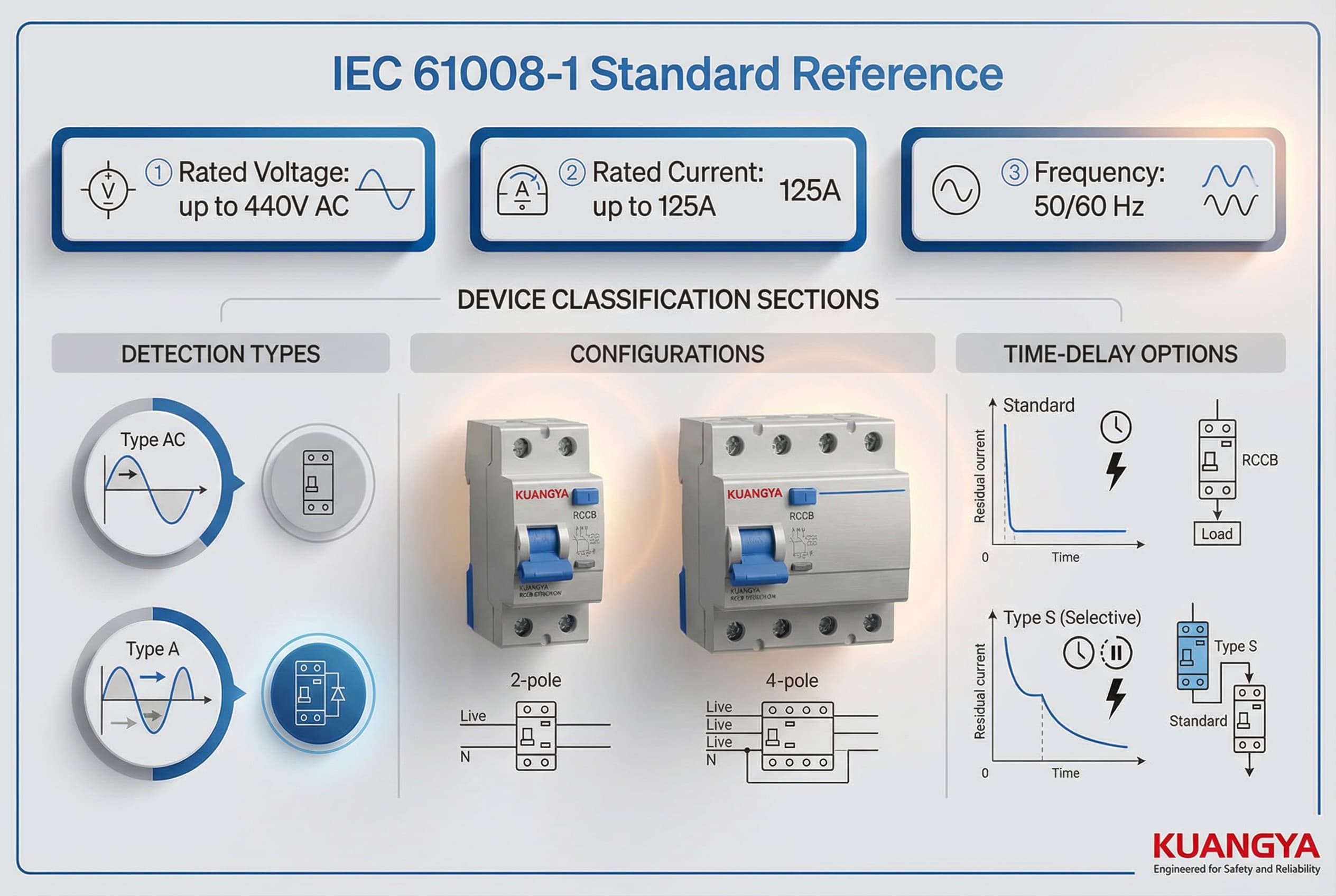
Краткий ответ: Стандарт IEC 61008-1 распространяется на автоматические выключатели, управляемые дифференциальным током, без встроенной защиты от сверхтоков (ВДТ/RCCB), предназначенные для бытового и аналогичного применения. ВДТ обнаруживает соответствующие токи утечки, но не заменяет автоматический выключатель (MCB) или плавкий предохранитель для защиты от перегрузки и короткого замыкания. Перед выбором устройства необходимо уточнить системное напряжение, номинальный ток, чувствительность, тип дифференциального тока, количество полюсов, вышестоящую защиту, инструкции к оборудованию и местные требования к электромонтажу.
В данном руководстве разъясняются практические требования к ВДТ и критерии выбора в соответствии со стандартом IEC 61008-1. Это инженерный обзор, а не воспроизведение текста стандарта или подтверждение сертификации конкретного изделия. Всегда проверяйте актуальную официальную редакцию стандарта, документацию производителя, область действия сертификата и местные нормы, применимые к вашему проекту.
Прежде чем погружаться в технические спецификации, необходимо определить границы. IEC 61008-1 - точный и основополагающий стандарт, но понимание того, что он охватывает и что намеренно исключает, - это первый шаг к тому, чтобы избежать критических ошибок при проектировании.
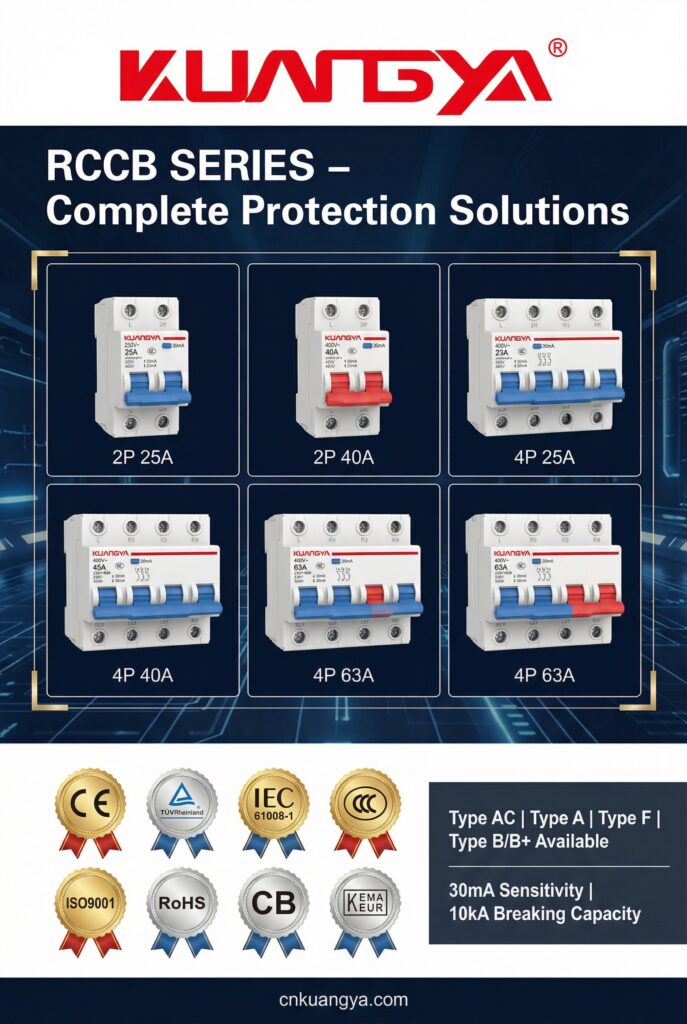
В своей основе IEC 61008-1 распространяется на автоматические выключатели с управлением по остаточному току без встроенной защиты от сверхтоков для домашнего и аналогичного использования. Это самое важное различие, которое необходимо уяснить. Сайт РЦКБ является специализированным устройством. Его единственная задача — обнаружение и реагирование на соответствующие токи утечки (замыкания на землю), которые могут создать риск поражения электрическим током или возгорания. Это защитное устройство, предназначенное для снижения рисков, связанных с токами утечки, при условии правильного выбора, координации, установки и технического обслуживания.
Что он делает не защищает от перегрузок (потребление слишком большого тока) или короткого замыкания (прямое соединение между током и нейтралью). Эта задача возлагается на устройство защиты от сверхтоков (УЗС), такое как миниатюрный автоматический выключатель (MCB) или предохранитель.
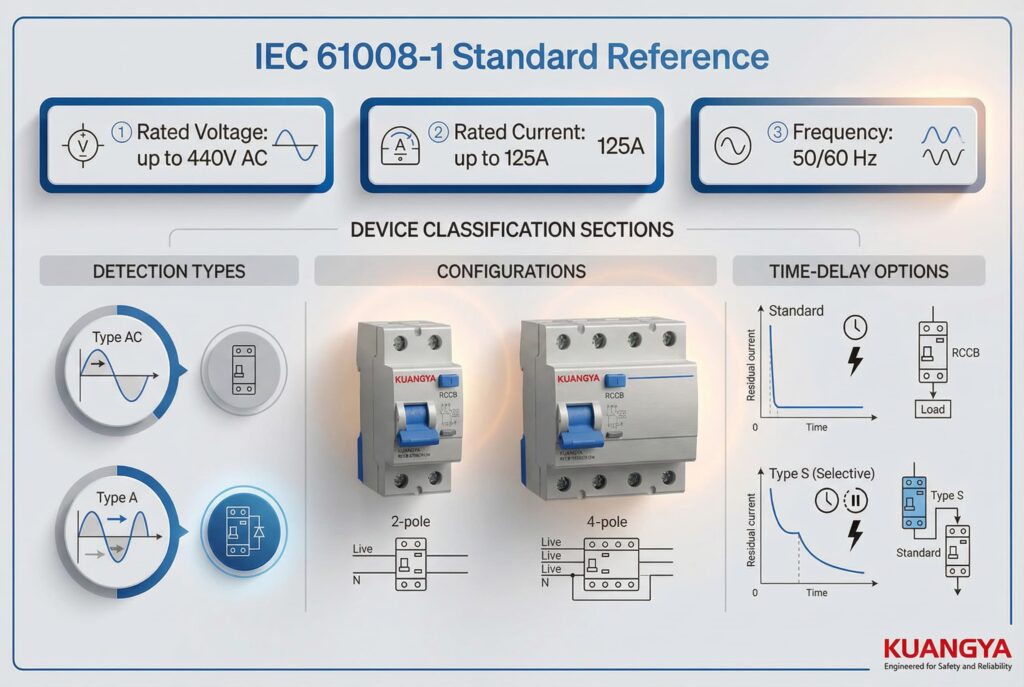
Стандарт устанавливает четкие эксплуатационные ограничения для устройств, которые он регулирует:
Если вам требуется единое устройство, обеспечивающее как защиту от дифференциального тока, и Для защиты от сверхтоков вам нужен RCBO (автоматический выключатель со встроенной защитой от сверхтоков), который регулируется другим стандартом, IEC 61009.
Используйте приведенный ниже чек-лист для систематизации основных параметров проекта перед запросом коммерческого предложения. Результат является предварительным и не подтверждает соответствие стандартам, наличие сертификации или пригодность для установки.
Подготовьте предварительный запрос на ВДТ. Результат не является подтверждением соответствия продукции, сертификации или пригодности для установки.
ВДТ требует согласованной защиты от перегрузки и короткого замыкания. Всегда проверяйте проект цепи, инструкции к оборудованию, документацию на продукцию и местные правила.
Сфера электробезопасности не статична. Стандарт IEC 61008-1 со временем пересматривался. Для текущего проекта проверьте редакцию, требуемую контрактом или местными органами власти, и убедитесь, что вся документация поставщика относится к тому же изделию, номиналу и редакции. Не делайте выводы о сертификации только на основании заявлений в каталоге; изучите орган, выдавший сертификат, область его действия и срок действия.
Основной вывод: IEC 61008-1 распространяется на ВДТ (RCCB) без встроенной защиты от сверхтоков. Согласуйте ВДТ с соответствующим автоматическим выключателем (MCB) или плавким предохранителем и проверьте всю установку на соответствие действующим правилам.
Заводская табличка РКУП - это технический контракт. Это заявление производителя, подтвержденное испытаниями, о рабочих возможностях устройства. Ваша задача как инженера - прочитать этот контракт и убедиться, что он соответствует требованиям вашей цепи. Давайте разберем критические параметры.
Это самые простые спецификации. Номинальное напряжение (Un) максимальное непрерывное напряжение, которое может выдержать RCCB, обычно 230 В для однофазных или 400 В для трехфазных систем. Номинальный ток (В) это максимальный ток длительной нагрузки, который устройство может выдерживать без перегрева. Стандартные номиналы изделий включают 16А, 25А, 40А и 63А, при этом в некоторых линейках продукции доступны более высокие номиналы. Подтвердите номинальный ток, сечение подключаемых проводников и область действия сертификата в актуальной документации производителя.
Профессиональная аналогия: Считайте, что это основные конструктивные возможности RCCB. Если ваш контур представляет собой трубу, На сайте это максимальный поток воды, который она может выдержать круглосуточно без перегрева самой трубы, и Un это максимальное давление, которое он может выдержать. Это не имеет никакого отношения к самой функции защитного отключения.
В этом заключается суть защитной функции RCCB. IΔn - это конкретная величина тока утечки, которая приведет к срабатыванию устройства. Это “чувствительность срабатывания”.”
-sensitivity-levels-and-their-applications.webp)
Стандартные чувствительности классифицируются по цели защиты:
Стандарт также определяет Номинальный неотключающий дифференциальный ток (IΔno). При заданных условиях испытаний ВДТ (RCCB) не должен срабатывать при данном уровне испытательного тока. В реальных условиях эксплуатации необходимо также оценивать риск ложного срабатывания, исходя из суммарных токов утечки, переходных процессов и координации с вышестоящими и нижестоящими устройствами.
Именно здесь возникает множество ошибок в спецификации. Тип“ RCCB определяет, какую форму тока повреждения он может обнаружить. Использование неправильного типа может сделать устройство слепым к определенным неисправностям.
Профессиональная аналогия: Думайте о типах RCCB как о переводчиках языка. Если ваши электрические нагрузки говорят только на чистом переменном токе, базовый переводчик будет работать хорошо. Но если они говорят на других диалектах (например, на пульсирующем постоянном токе), вам нужен более продвинутый переводчик.
| Тип RCCB | Обнаружение синусоидального переменного тока | Обнаружение пульсирующего постоянного тока | Обнаружение плавного постоянного тока | Типовое применение |
|---|---|---|---|---|
| Тип AC | ✔️ | ❌ | ❌ | Синусоидальные нагрузки переменного тока, только там, где это разрешено. |
| Тип A | ✔️ | ✔️ | ❌ | Многие однофазные электронные нагрузки; проверьте требования. |
| Тип B | ✔️ | ✔️ | ✔️ | Нагрузки, которые могут создавать сглаженный постоянный ток; проверьте инструкции к оборудованию. |
Эти рейтинги определяют прочность RCCB - его способность выжить в случае серьезного повреждения.

Основные выводы: Выбор типа RCCB (A или B) в соответствии с потенциальным током повреждения нагрузки так же важен, как и выбор правильной чувствительности (IΔn). Использование типа AC в цепи с электроникой - распространенная и опасная ошибка.
Расшифровав технические параметры, давайте переведем эти знания в повторяющийся процесс принятия решений. Следуйте этим пяти шагам, чтобы обеспечить безопасность, соответствие требованиям и надежность вашего выбора.
Начните с вопроса: Что я пытаюсь защитить?
Исходя из вашей цели, выберите степень чувствительности. Это самый важный шаг для обеспечения безопасности.
| Чувствительность (IΔn) | Основное использование | Уровень защиты | Типовое применение |
|---|---|---|---|
| 10 мА | Очень высокий риск | Экстремальная защита человека | Медицинское оборудование, бассейны, сауны. |
| 30 мА | Общее использование | Безопасность человека | Дома, розетки, коммерческие помещения, кухни. |
| 100 мА | Промышленные цепи | Оборудование и противопожарная защита | Машинные линии, распределительные щиты с высокой утечкой. |
| 300 мА / 500 мА | Основной потребитель | Противопожарная защита | Вверх по течению на больших распределительных щитах для селективности. |
Для любой розетки общего назначения, куда человек может подключить электроприбор, 30 мА - обязательный выбор для обеспечения безопасности человека.
Затем проанализируйте оборудование в цепи. Это определяет “язык” тока повреждения, который должен понимать RCCB.
Выбирайте номинальное напряжение для фактической системы и номинальный ток, исходя из расчетной нагрузки, пропускной способности проводников, условий монтажа и согласованного вышестоящего защитного устройства. Номинальный ток ВДТ (RCCB) не является уставкой срабатывания при перегрузке.
Проверьте ожидаемый ток короткого замыкания в точке установки и номинальный условный ток короткого замыкания ВДТ (RCCB) для указанного сопутствующего защитного устройства. Требуемое значение нельзя выбирать на основе универсального “стандартного” показателя; используйте данные производителя по координации защит и расчеты токов короткого замыкания для конкретного проекта.
Основной вывод: Чувствительность и тип дифференциального тока зависят от области применения. Уточните цель защиты, ожидаемую форму волны, инструкции к оборудованию, координацию и местные нормативные требования.
Выбрать и установить отвечающий требованиям РКУП - это только половина работы. RCCB - это механическое устройство безопасности, и его надежность должна активно проверяться. Стандарт IEC 61008-1 построен на фундаменте строгих испытаний.
Оценка соответствия основывается на испытаниях и документации, применимых к заявленному стандарту и области применения продукта. Покупателям следует проверять орган, выдавший документ, номер отчета или сертификата, охватываемые модели и номинальные характеристики, редакцию, срок действия и любые условия, а не полагаться на неопределенное количество испытаний.
Однако после того, как устройство покидает завод, ответственность за обеспечение его эксплуатационной готовности переходит к установщику и конечному пользователю. Именно для этого и существует “Кнопка ”T" (Тест) расположенный на лицевой стороне каждого РЦКБ.
Нажатие кнопки «Тест» создает внутренний испытательный ток, предназначенный для срабатывания устройства. Ожидаемое поведение и допустимое время срабатывания зависят от инструкций к продукту. Если устройство не срабатывает должным образом, локализуйте проблему и обратитесь к квалифицированному специалисту для оценки установки; кнопка «Тест» не подтверждает все аспекты защиты цепи.
Как часто следует проводить это испытание? Интервалы испытаний варьируются в зависимости от инструкций производителя и местных правил. Использование кнопки «Тест» проверяет внутреннюю функцию тестирования и механизм расцепления, но не заменяет электрическую проверку, требуемую при вводе в эксплуатацию или периодическом осмотре.
Основной вывод: Соблюдайте интервалы использования кнопки «Тест», установленные производителем, а также требования к осмотру и испытаниям, применимые к данной установке.
Вопрос 1: В чем разница между RCCB, RCBO и MCB?
Q2: Почему мой УЗО срабатывает при отсутствии явной неисправности? (Нештатное срабатывание)
Часто это вызвано низким уровнем суммарного тока утечки от нескольких электронных устройств в одной цепи. Это также может быть признаком плохой изоляции проводки или неисправного прибора. Хотя иногда это признак чрезмерной чувствительности RCCB, часто это указывает на глубинные проблемы, требующие исследования.
Q3: Можно ли использовать RCCB типа AC для цепей с современной электроникой?
Не делайте выбор, основываясь только на фразе “современная электроника”. Определите форму волны остаточного тока, указанную производителем оборудования, и примените местные требования. В зависимости от нагрузки может потребоваться устройство типа A, F или B — или иная согласованная схема защиты; тип AC следует использовать только там, где его способность к обнаружению является подходящей и разрешенной.
Q4: Как часто я должен проверять свой RCCB?
Нажимайте кнопку «Тест» с интервалом, указанным производителем и применимыми местными нормами. Успешное срабатывание кнопки «Тест» полезно, но оно не заменяет обязательную первичную и периодическую проверку электроустановки.
Q5: Обеспечивает ли RCCB защиту от перегрузки?
Нет. Номинальный ток ВДТ (RCCB) — это значение допустимой нагрузки, а не уставка срабатывания при перегрузке. Согласуйте ВДТ с автоматическим выключателем (MCB), плавким предохранителем или другим устройством защиты от сверхтоков так, чтобы параметры установки оставались в пределах номинальных значений ВДТ и проводников при перегрузках и коротких замыканиях.
Q6: Каково основное влияние обновления IEC 61008-1 в 2024 году?
Четвертое издание вводит более строгие требования, в частности, к устойчивости к временным перенапряжениям (TOV). Это делает устройства более надежными в условиях нестабильных электросетей или высоких коммутационных переходных процессов, повышая общую надежность системы. При закупках проверяйте редакцию стандарта, требуемую для проекта, и получайте подтверждение того, что изделие, его номинальные параметры и область действия сертификата соответствуют предлагаемому устройству.
Стандарт IEC 61008-1 — это не просто перечень технических требований; он обеспечивает основу для установленных требований к безопасности и эксплуатационным характеристикам ВДТ. Как инженеры, мы несем ответственность, выходящую за рамки простого соблюдения норм. Речь идет о понимании принципов, лежащих в основе правил — физики токов повреждения, физиологии воздействия электрического тока и практических реалий современной электроустановки.
Следуя структурированному подходу — определение цели, выбор правильной чувствительности и типа, обеспечение надлежащих номинальных параметров и проверка путем тестирования — вы превращаете сложную задачу по спецификации в четкий процесс обеспечения безопасности и надежности. Правильно выбранный ВДТ является частью скоординированной системы защиты и должен быть дополнен соответствующей защитой от сверхтоков, правилами монтажа и процедурами проверки.

