منطقة ونغ يانغ الصناعية يويتشينغ ونتشو 325000
ساعات العمل
من الاثنين إلى الجمعة: 7 صباحاً - 7 مساءً
عطلة نهاية الأسبوع 10 صباحاً - 5 مساءً
منطقة ونغ يانغ الصناعية يويتشينغ ونتشو 325000
ساعات العمل
من الاثنين إلى الجمعة: 7 صباحاً - 7 مساءً
عطلة نهاية الأسبوع 10 صباحاً - 5 مساءً

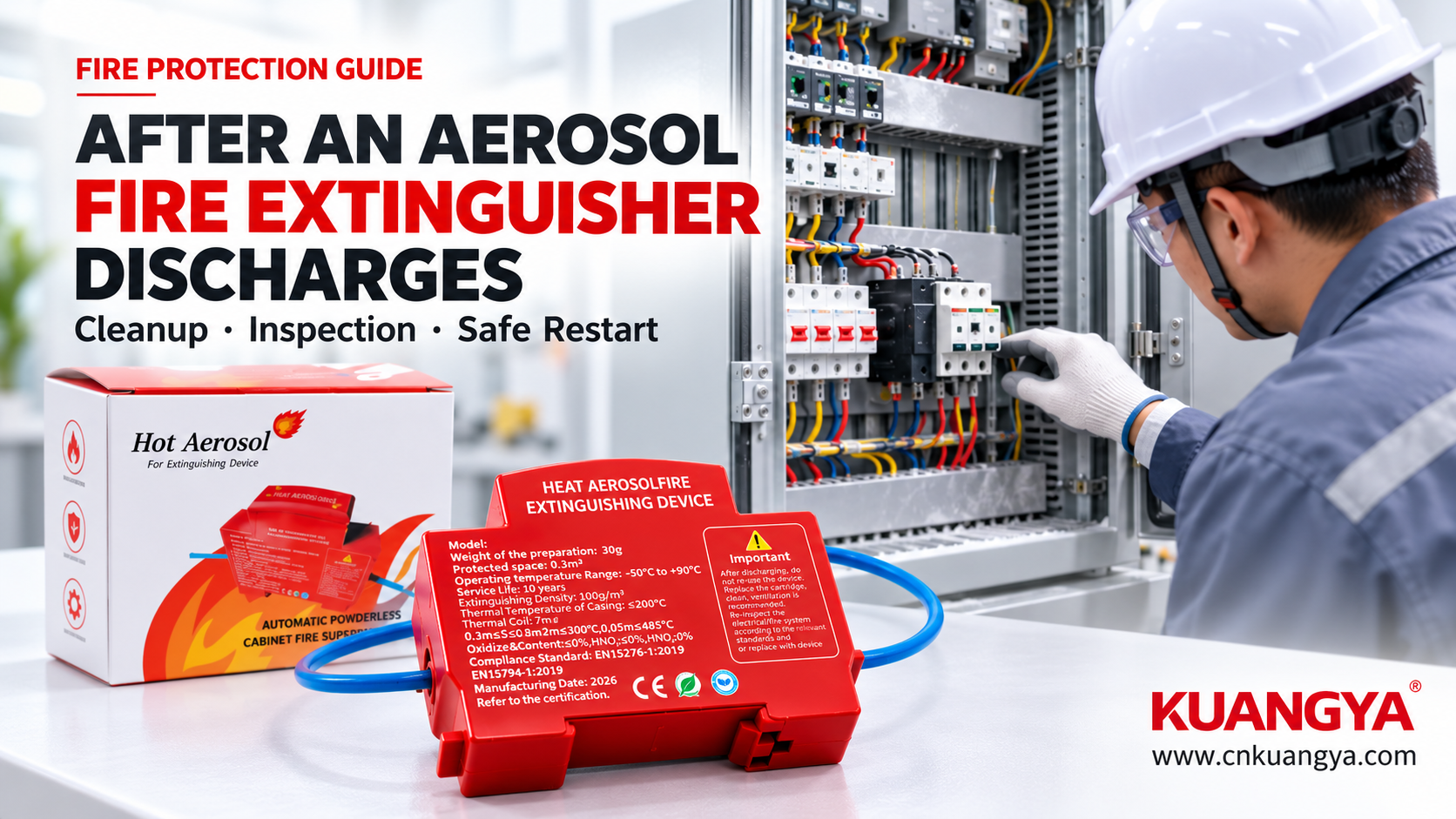
قد يساعد جهاز إطفاء الحريق بالهباء الجوي أو جهاز إخماد الحريق التلقائي بالهباء المكثف في السيطرة على حريق داخل خزانة كهربائية أو لوحة تحكم أو أي مساحة مغلقة أخرى. ومع ذلك، لا ينتهي العمل عند إطفاء الحريق.
بعد تفريغ نظام إخماد الحريق بالهباء الجوي، يجب على مديري المنشآت ومهندسي الصيانة تقييم أضرار الحريق، وإزالة المخلفات باستخدام طريقة تنظيف مناسبة، وفحص المكونات الكهربائية، والتحقق من حالة نظام الإخماد، وتحديد ما إذا كان يمكن إعادة تشغيل المعدات بأمان.
الخطأ الشائع هو افتراض أنه نظرًا لأن نظام الهباء الجوي لا يستخدم الماء بنفس الطريقة التي يستخدم بها نظام تقليدي قائم على الماء، يمكن إعادة تشغيل المعدات المحمية على الفور. في الواقع، تعتمد النتيجة على عامل الإطفاء وظروف التفريغ والحريق نفسه وحالة المعدات الكهربائية.
يشرح هذا الدليل ما يجب فعله بعد تفريغ نظام إخماد الحريق بالهباء المكثف، وكيفية التعامل مع إزالة المخلفات، وأي المكونات تتطلب الفحص، وما الذي يجب على المهندسين تأكيده قبل إعادة تشغيل المعدات الكهربائية.
تولد أنظمة إخماد الحريق بالهباء المكثف جزيئات وغازات دقيقة تساعد في قمع الاحتراق. اعتمادًا على تصميم النظام، يمكن لعامل الإطفاء الانتشار في جميع أنحاء حاوية محمية والوصول إلى المناطق التي قد يكون من الصعب حمايتها بالمعدات التقليدية.
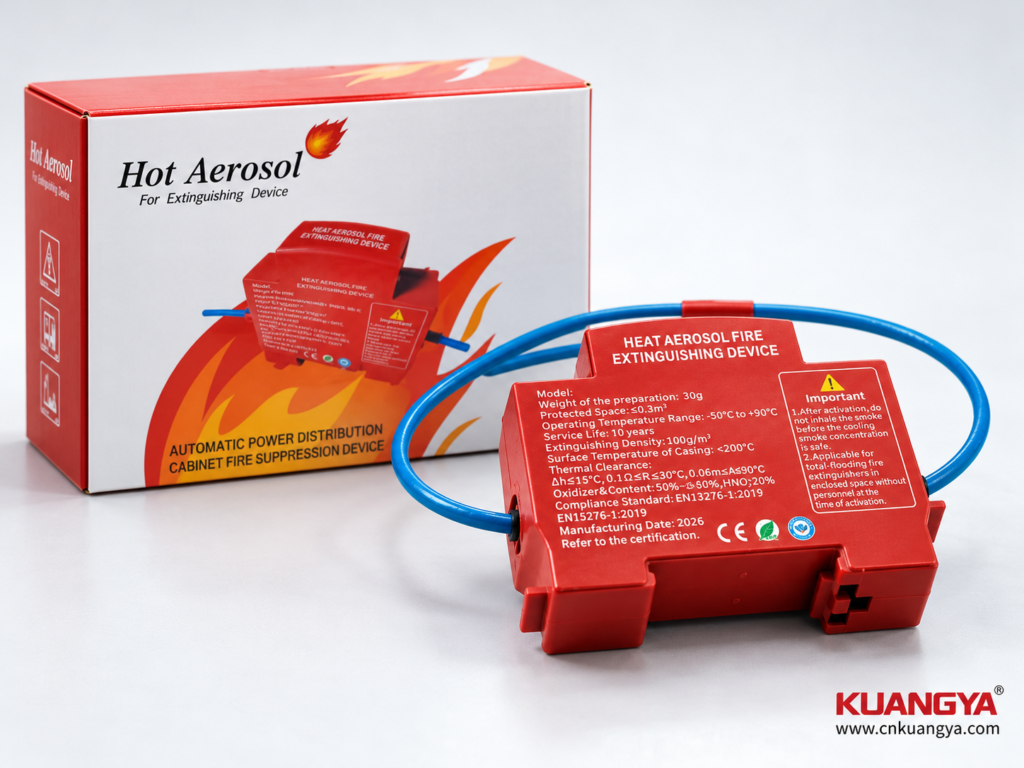
بعد التفريغ، قد تتطلب عدة ظروف اهتمامًا.
أولاً، قد تستقر جزيئات الهباء الجوي الدقيقة على الأسطح داخل العلبة. ثانيًا، قد يكون الحريق قد أنتج رواسب دخان خاصة به، وسخامًا، ومنتجات ثانوية للاحتراق. ثالثًا، قد تكون الحرارة قد أتلفت العزل أو الأسلاك أو لوحات الدوائر أو الأطراف أو المكونات الأخرى حتى لو تم إطفاء اللهب المرئي.
قد يؤدي تفريغ الهباء الجوي أيضًا إلى استهلاك المولد نفسه أو جعله غير مناسب للاستخدام المستقبلي، اعتمادًا على تصميم الشركة المصنعة.
| الحالة | التأثير المحتمل | الاستجابة الموصى بها |
|---|---|---|
| بقايا الهباء الجوي الدقيقة | رواسب على أسطح العلبة والمكونات | تحديد الوكيل واتباع تعليمات التنظيف الخاصة بالشركة المصنعة |
| الدخان والسخام | تلوث نقاط التلامس والعزل والمكونات الإلكترونية | تقييم التلوث واختيار طريقة التنظيف المناسبة |
| التعرض للحرارة | تلف العزل والمحطات والكابلات والأجزاء الإلكترونية | ترتيب فحص كهربائي مؤهل |
| الرطوبة العالية | قد يزيد من خطر التآكل عند بقاء بقايا معينة على الأسطح | التحكم في الرطوبة والتنظيف الفوري حسب التعليمات |
| المولد الذي تم تفريغه | قد لا يوفر النظام الحماية المقصودة بعد الآن | الفحص والاستبدال أو الخدمة حسب مواصفات الشركة المصنعة |
| دائرة إنذار أو تحكم نشطة | قد يتطلب نظام الإخماد إعادة الضبط وإعادة التشغيل | التحقق من لوحة التحكم ووظائف التشابك |
يجب تقييم هذه الظروف بشكل منفصل. المظهر النظيف للخزانة ليس دليلاً على أن مكوناتها الكهربائية آمنة، ولا يعني وجود بقايا مرئية تلقائيًا أنه يجب استبدال كل مكون.
للحصول على معلومات أساسية حول اختيار الحماية للمرفقات الكهربائية، راجع دليلنا الخاص بـ الحماية من الحرائق في الخزائن الكهربائية.
تعتمد الإجابة على تركيبة الأيروسول، ونتائج اختبارات الشركة المصنعة، والبيئة المحيطة، والمواد المعرضة للتفريغ.
تنتج بعض أنظمة الأيروسول المكثفة بقايا دقيقة وجافة في الغالب. تصف بعض الشركات المصنعة عواملها المحددة بأنها غير موصلة وغير مسببة للتآكل في ظل الظروف التي تغطيها وثائقها. لا ينبغي تعميم هذه الخصائص الخاصة بالمنتج على كل نظام إخماد حرائق بالأيروسول.
على سبيل المثال، دليل التركيب والتشغيل FirePro Xtinguish يوضح أن المخلفات الناتجة عن نظام الرذاذ المكثف الخاص به يجب إزالتها على الفور. يناقش الدليل أيضًا احتمالية امتصاص الرطوبة وأكسدة الأسطح المعدنية المعرضة للتلف عند بقاء المخلفات لفترة طويلة.
هذا التمييز مهم: خصائص عامل الإطفاء لا تلغي الحاجة إلى تقييم أضرار الحريق أو اتباع إجراءات التنظيف بعد التفريغ.
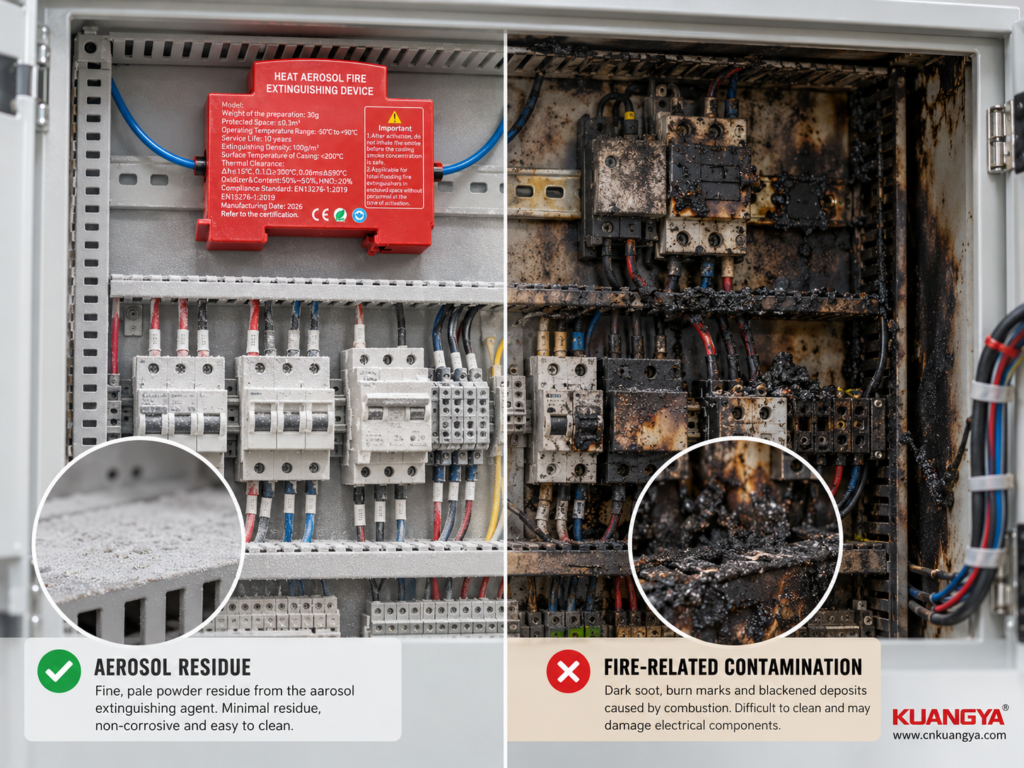
| المقارنة | مخلفات الرذاذ | التلوث المتعلق بالحريق |
|---|---|---|
| المصدر | عامل الإطفاء الذي تم إطلاقه بواسطة النظام | الدخان والسخام والحرارة ونواتج الاحتراق الثانوية |
| المظهر | قد يظهر كترسب دقيق فاتح اللون أو رمادي، حسب المادة المسببة | قد يظهر كسخام أسود، أو رواسب زيتية، أو تغير لون آخر |
| التوزيع | قد يستقر عبر الأسطح التي وصل إليها التفريغ | يعتمد على موقع الحريق، وتدفق الهواء، والمواد المحترقة |
| مصدر قلق محتمل | توافق المخلفات، وامتصاص الرطوبة، وتلوث الأسطح | التآكل، وتلف العزل، والترسبات الموصلة، والتلوث الكيميائي |
| نهج التنظيف | اتبع تعليمات الشركة المصنعة لنظام الرذاذ | قم بتقييم التلوث واستخدم طريقة مناسبة للمعدات المتأثرة |
في الممارسة العملية، قد يكون كلا النوعين من التلوث موجودين في وقت واحد. لا ينبغي للمهندسين افتراض أن كل رواسب هي بقايا عامل إطفاء أو أن إزالة جزيئات الرذاذ المرئية تحل جميع الأضرار المتعلقة بالحريق.
تتطلب لوحات الدوائر والمرحلات والموصلات والمستشعرات والملامسات المكشوفة عناية خاصة.
قبل تنظيفها، حدد توصيات الشركة المصنعة للمكونات وتعليمات نظام الإطفاء بعد التفريغ. قد تتحمل بعض المكونات رواسب معينة في ظل ظروف محددة، بينما قد تتطلب مكونات أخرى تنظيفًا متخصصًا أو استبدالًا بعد التعرض للحرارة أو الدخان أو التلوث الكيميائي.
لا تستخدم الماء أو المذيبات أو الهواء المضغوط أو بخاخات التنظيف الإلكترونية بشكل عشوائي. تعتمد الطريقة الصحيحة على المكون والرواسب وتعليمات الشركة المصنعة.
لمزيد من المعلومات حول الاختلافات بين أساليب مكافحة الحرائق بالرشاشات الهوائية والتقليدية، راجع مقالتنا حول أنظمة مكافحة الحرائق بالرشاشات الهوائية مقابل الأنظمة التقليدية.
الأولوية الأولى هي سلامة الأفراد، تليها تقييم الحريق وحماية المعدات المتأثرة.
لا تفتح حاوية أو تدخل غرفة محمية لمجرد توقف التفريغ. اعتمادًا على النظام والحادث، قد لا تزال هناك مخاطر من الأسطح الساخنة، أو الدخان، أو غازات الاحتراق، أو انخفاض الرؤية، أو الطاقة الكهربائية، أو التفريغ نفسه.
يجب أن تتبع فترة الانتظار المطلوبة وإجراءات إعادة الدخول تعليمات الشركة المصنعة للنظام وإجراءات الطوارئ الخاصة بالموقع.
أبقِ الأفراد بعيدًا عن المنطقة المتأثرة حتى يحدد موظفو الطوارئ أو السلامة المسؤولون أنها آمنة للدخول.
ضع في اعتبارك ما يلي:
في حالة وجود أي مؤشر على استمرار الحريق، قم بالإخلاء حسب الاقتضاء واتصل بأفراد الاستجابة للطوارئ المعنيين.
لا ينبغي افتراض سلامة المعدات الكهربائية لمجرد إطفاء حريق.
يجب على متخصص كهربائي مؤهل تحديد كيفية عزل المعدات المتأثرة، بما في ذلك أي إمدادات متصلة، والطاقة الكهربائية المخزنة، ومصادر التغذية الراجعة المحتملة.
لا تلمس الموصلات أو الأطراف أو لوحات الدوائر التالفة قبل تقييم حالتها الكهربائية.
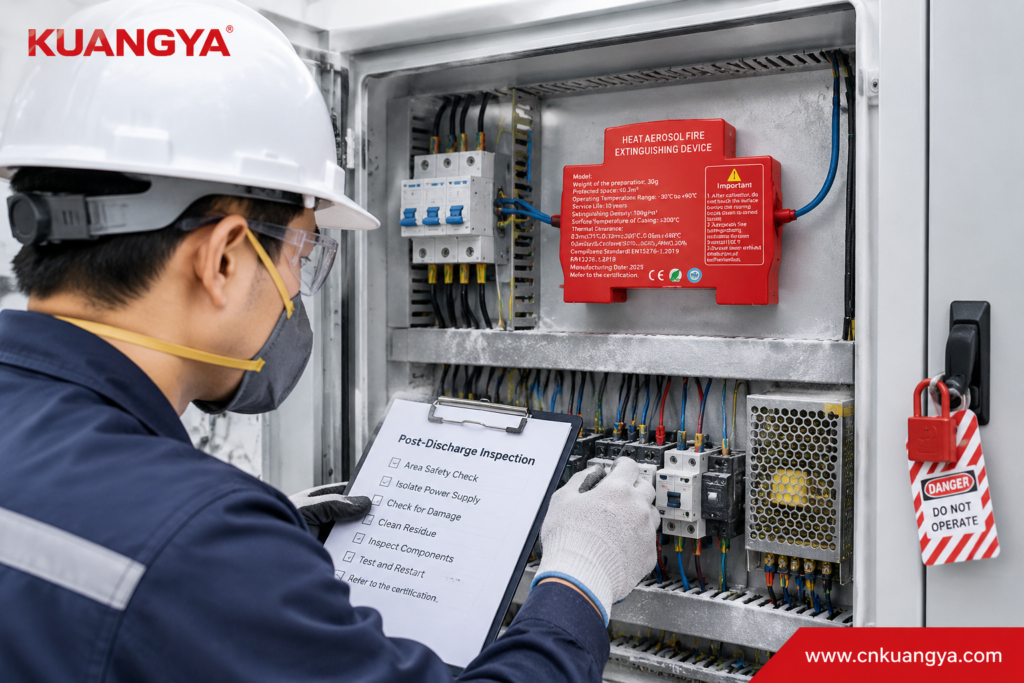
قبل بدء التنظيف، سجل حالة الغلاف ونظام الإخماد.
تشمل السجلات المفيدة:
يمكن لهذه المعلومات مساعدة فريق الصيانة، ومصنع المعدات، وشركة التأمين، ومقدم خدمة الحماية من الحرائق في تحديد ما يحتاج إلى إصلاح أو استبدال.
تحديد عامل الإطفاء والرجوع إلى دليل التركيب والتشغيل المعمول به. تحديد ما إذا كان يمكن تنفيذ العمل بواسطة موظفين مدربين داخليًا أو يتطلب شركة متخصصة في الاستعادة أو الخدمة الكهربائية.
تجنب البدء بطريقة تنظيف عامة قبل فهم متطلبات المخلفات والمعدات.
Cleaning should begin as soon as it is safe and practical, following the specific system manufacturer’s instructions.
Prompt removal matters because certain condensed aerosol residues may absorb moisture over time. At the same time, cleaning methods that are suitable for enclosure walls may not be appropriate for delicate electronic assemblies.
إن FirePro Xtinguish manual provides product-specific post-discharge guidance, including the use of suitable methods for dry residues and specialized cleaning products for electronic components.
| Area | Initial assessment | نهج التنظيف |
|---|---|---|
| Cabinet floor and internal panels | Check for loose residue, soot, and heat damage | Remove deposits using the method specified by the system manufacturer |
| Painted metal surfaces | Check for discoloration and residue buildup | Use a compatible cleaning method and inspect for coating damage |
| Uncoated metal surfaces | Check for deposits, oxidation, and moisture exposure | Clean promptly as instructed and assess susceptible surfaces |
| Circuit boards | Check for residue, soot, and heat exposure | Use an approved electronics-cleaning procedure or specialist service |
| Terminals and connectors | Check for deposits, corrosion, looseness, or thermal damage | Inspect and clean or replace according to component requirements |
| Ventilation paths and filters | Check for deposits and blocked airflow | Clean or replace affected parts according to equipment instructions |
| Suppression generator and mounting area | Check for physical damage and discharge-related changes | Have the system inspected and serviced as required |
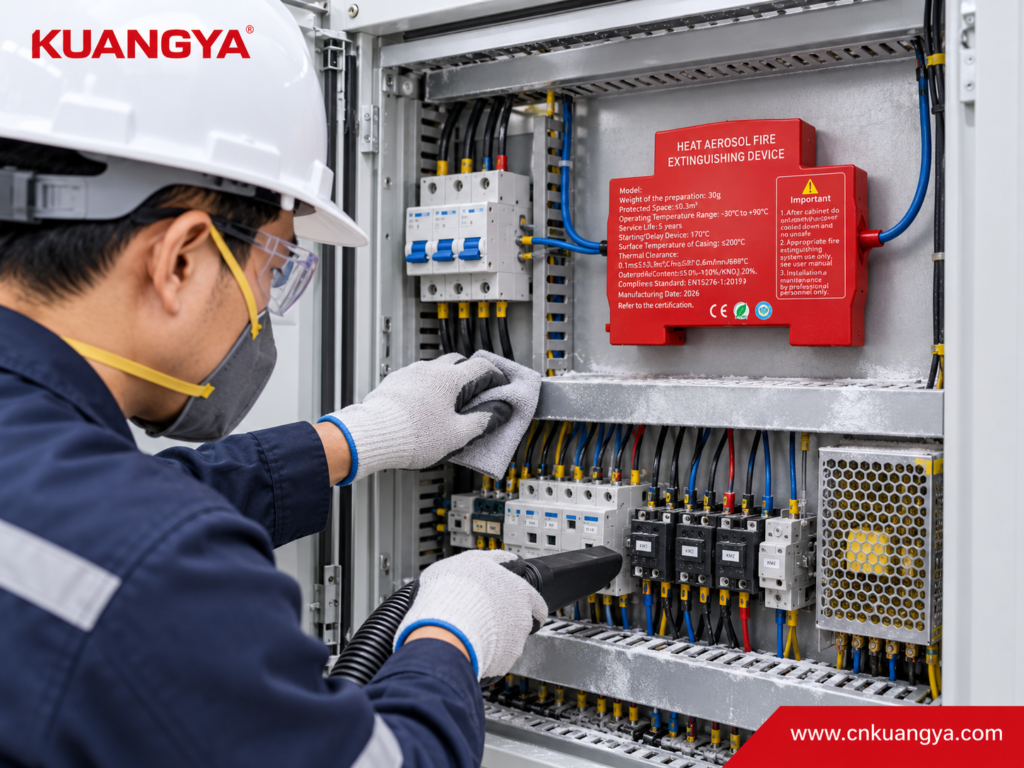
1. Identify the residue.
Confirm the agent type and consult its safety data sheet and operation manual. Where fire damage and aerosol deposits are mixed together, obtain specialist advice if necessary.
2. Protect personnel and sensitive equipment.
Use the personal protective equipment and handling procedures specified for the residue and incident conditions. Confirm that electrical equipment is safely isolated before any work begins.
3. Remove loose deposits using an approved method.
Depending on the specific product instructions, this may involve suitable wiping, brushing, vacuuming, or other controlled removal methods. Do not assume that compressed air or an ordinary vacuum is appropriate for every component or residue.
4. Clean electronic components separately.
Use only a method approved for the component and the particular contamination. A cleaning product that is safe for one circuit board or connector may be unsuitable for another.
5. Inspect after cleaning.
Check for remaining deposits, signs of corrosion, damaged insulation, discoloration, and other defects. Cleaning cannot reverse damage caused by excessive temperature or electrical arcing.
6. Record the work.
Document the cleaning method, products used, parts replaced, inspection results, and any outstanding issues.
The following practices can create additional problems when used without an approved procedure:
The objective is not simply to make the cabinet look clean. It is to remove the relevant contamination without introducing new electrical, chemical, or mechanical risks.
Once the immediate hazards have been addressed and the appropriate cleaning has been completed, the affected electrical equipment should undergo a systematic inspection.
The depth of inspection depends on the fire severity, equipment design, contamination, and operational importance of the installation.
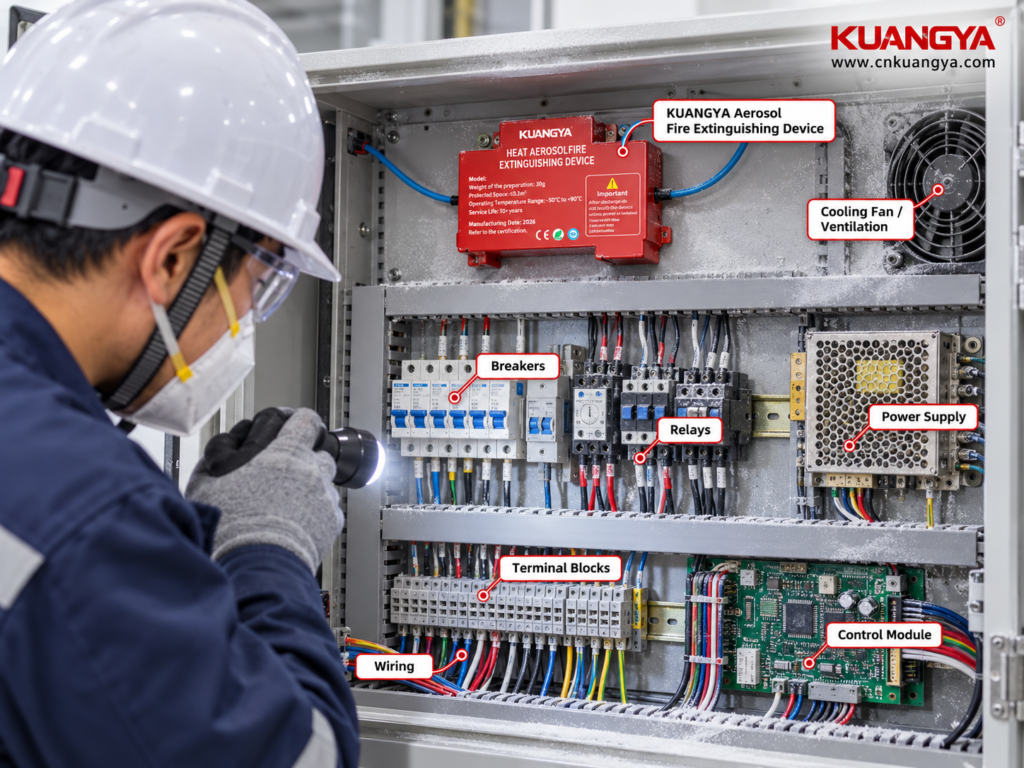
| المكوّن | What to check | Possible action |
|---|---|---|
| Cables and insulation | Cracking, melting, discoloration, brittleness, or deformation | Replace damaged cable sections |
| كتل التوصيل (Terminal blocks) | Loose connections, heat marks, residue, or corrosion | Clean, retorque, or replace according to manufacturer specifications |
| Circuit breakers and contactors | Heat damage, abnormal operation, damaged housings, or contaminated contacts | Arrange inspection and replacement where required |
| Printed circuit boards | Soot, residue, damaged components, lifted tracks, or discoloration | Specialist cleaning, testing, repair, or replacement |
| Sensors and detectors | Physical damage, contamination, or incorrect status indications | Clean, test, or replace as specified |
| Fans and ventilation components | Blocked airflow, damaged blades, or contaminated filters | Clean or replace affected parts |
| Enclosure and seals | Warping, damaged seals, openings, or compromised environmental protection | Repair or replace as appropriate |
| Protective earthing | Damaged conductors, loose connections, or compromised bonding | Verify electrical continuity and repair defects |
| Control and alarm circuits | Fault indications, damaged wiring, or failed interlocks | Test and recommission the affected circuits |
Visual inspection is important, but it may not be sufficient. Depending on the equipment and incident, qualified personnel may also need to perform insulation-resistance measurements, continuity checks, functional testing, or other electrical tests.
Test methods and acceptance criteria must be suitable for the equipment. Some electronic components can be damaged by inappropriate testing voltages, so the manufacturer’s instructions should be followed.
There is no universal waiting time that makes electrical equipment safe to restart after an aerosol fire suppression event.
The decision should be based on the condition of the equipment, the nature of the incident, the cleaning results, and the required inspection and testing.
A cabinet that experienced a nuisance discharge without a fire may need a different recovery process from one exposed to sustained flames, high temperatures, smoke, and electrical arcing.
| Finding | Is immediate restart appropriate? | Required next step |
|---|---|---|
| No visible fire damage, but the system discharged | ليس تلقائياً | Verify isolation, residue removal, system condition, and equipment requirements |
| Fine residue is present on electrical components | No, not before assessment | Complete the approved cleaning and inspection process |
| Smoke or soot has entered the cabinet | No, not before assessment | Evaluate contamination and component condition |
| Insulation is melted or cables are visibly damaged | لا يوجد | Replace or repair affected components and perform the required tests |
| A circuit breaker or contactor shows heat damage | لا يوجد | Have the component evaluated and replace it if required |
| Cleaning is complete, but electrical testing is outstanding | لا يوجد | Complete the required inspection and tests |
| Inspection and required tests are satisfactory | Potentially | Obtain the required authorization and follow the equipment’s return-to-service procedure |
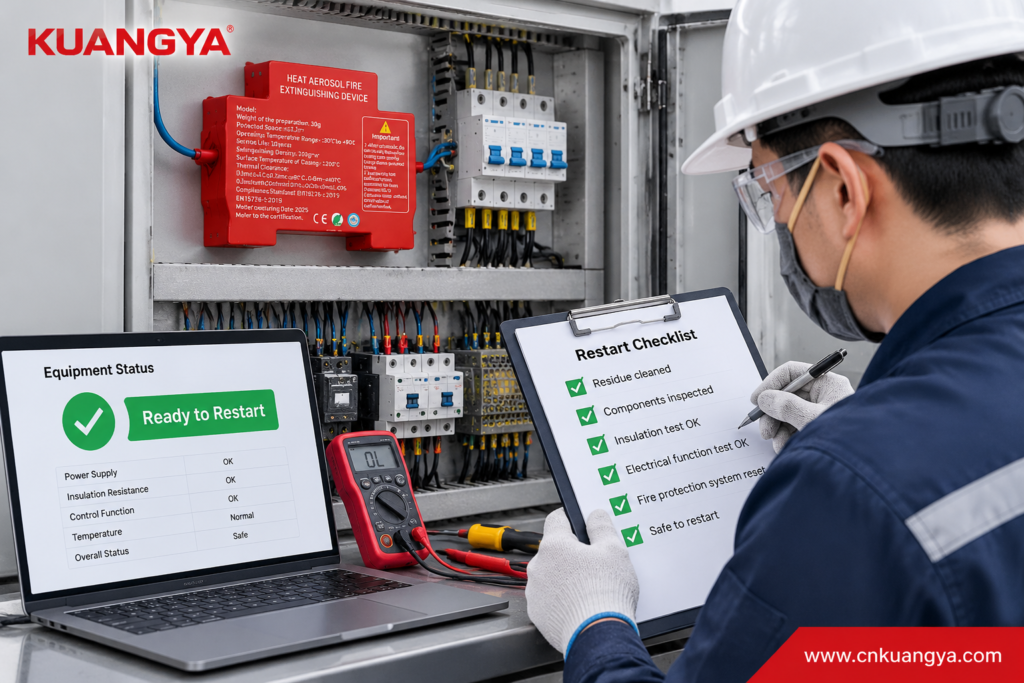
A responsible restart process typically includes:
Not every installation requires the same tests or approval process. The responsible engineer should determine the appropriate requirements based on the equipment manufacturer’s documentation, local regulations, and the incident findings.
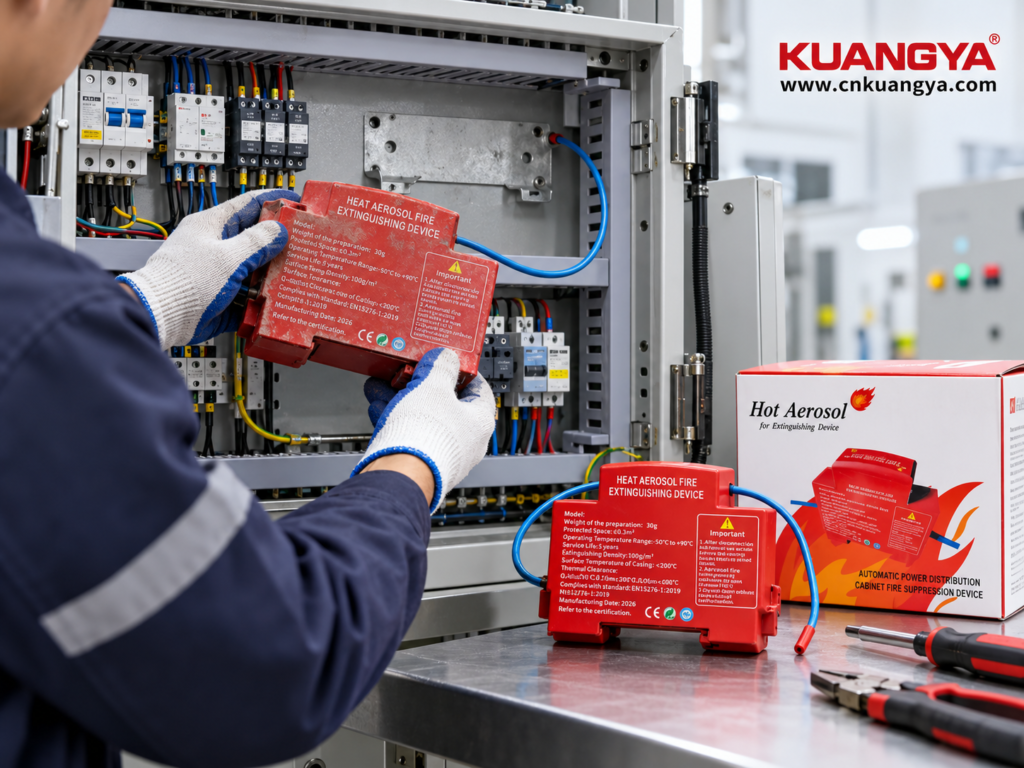
In many condensed aerosol systems, the generator is designed for a single discharge and must be replaced after activation. However, the exact requirement depends on the product design.
Do not assume that a generator can be reused simply because its housing appears intact. The internal extinguishing compound or activation mechanism may have been consumed, and the unit may no longer provide its intended protection.
| البند | Inspection question | Possible action |
|---|---|---|
| Aerosol generator | Has it discharged, activated, or sustained physical damage? | Replace or service according to the product manual |
| Activation wiring | Is the wiring intact and correctly connected? | Repair and test as specified |
| Detection devices | Are they damaged, contaminated, or still reporting a fault? | Inspect, clean, test, or replace |
| Control panel | Are alarms, faults, or activation indicators still present? | Investigate and reset only after the cause has been addressed |
| Backup power supply | Is the power supply functional and available? | Test and replace defective components |
| Mounting brackets | Are the generator and brackets secure and undamaged? | Repair or replace as required |
| System coverage | Have enclosure volume, openings, or protected equipment changed? | Have the design and coverage reviewed by a qualified specialist |
Replacement should restore the protection intended by the original design. Simply installing another generator of a similar size may not be sufficient if the protected enclosure or hazard has changed.
For more information about selecting a suitable device, see how to choose an aerosol fire extinguisher.
Post-discharge recovery is easier when the system has been correctly designed, installed, documented, and maintained before an incident occurs.
The following measures can help reduce downtime and make future maintenance more predictable.
Maintain the installation and operation manual, safety data sheet, wiring diagram, generator model information, inspection records, and supplier contact details.
Maintenance personnel should know which cleaning products and methods are permitted for the installed system.
Check the cabinet for unauthorized modifications, damaged seals, blocked discharge paths, changes in internal volume, and alterations to the protected equipment.
Changes to the enclosure can affect the effectiveness of a suppression system. Significant modifications should be reviewed by a qualified designer or service provider.
Where the aerosol system operates with detectors, alarm panels, electrical interlocks, or remote signals, verify that these associated systems are maintained according to their applicable requirements.
An aerosol generator alone does not establish that the entire fire protection system is functional.
Personnel should understand the difference between ordinary cleaning, post-fire recovery, electrical inspection, and suppression-system recommissioning.
They should also know when to stop work and contact a specialist rather than attempting an unfamiliar cleaning or repair procedure.
For critical electrical cabinets, establish a recovery plan that identifies replacement generators, spare electrical components, qualified service providers, and the authorization needed before equipment returns to operation.
This preparation can reduce delays without compromising personnel safety or equipment reliability.
The following is an illustrative engineering scenario, not a report of a verified customer incident. It demonstrates how a maintenance team might organize a post-discharge assessment.
An industrial control cabinet experiences an electrical fault, and its installed condensed aerosol fire suppression system activates. The flames are no longer visible after the incident, but fine deposits remain on internal surfaces. Several components show signs of heat exposure.
The maintenance team must determine whether the cabinet can be returned to service.
The team isolates the affected equipment under an approved electrical safety procedure and confirms that the area is safe for inspection.
Photographs are taken of the enclosure, the generator, the affected wiring, and the suspected fault location. The team records the control-panel indications and identifies the installed aerosol system.
The team consults the generator manufacturer’s documentation before selecting a residue-removal method.
Loose deposits are removed using an approved procedure. Electronic assemblies are assessed separately, and components exposed to heat or smoke are inspected for damage.
During the electrical inspection, the team identifies a cable section with visible heat damage. That section is replaced rather than being accepted merely because the surrounding cabinet has been cleaned.
The suppression generator is evaluated according to the manufacturer’s instructions and replaced because the installed unit is designed for single discharge.
The team completes the required electrical checks, verifies the detection and control circuits, and confirms that the suppression system has been restored to its required operational condition.
The cabinet returns to service only after the responsible personnel authorize the restart.
| Lesson | ما أهمية ذلك |
|---|---|
| Extinguishing the fire is only the first step | Electrical damage may remain after visible flames disappear |
| Cleaning must match the actual agent | Different formulations and components can require different procedures |
| Fire residue and aerosol residue are not the same | Both may need to be addressed |
| Damaged components should not be accepted solely on visual appearance | Appropriate electrical testing and engineering assessment may be necessary |
| The suppression system must also be restored | Cleaning the cabinet does not automatically restore fire protection |
The main lesson is that a successful recovery requires both fire-related assessment and electrical-system verification.
Not automatically. The equipment must be assessed for fire damage, contamination, and electrical safety. Follow the installed system’s instructions and the equipment manufacturer’s requirements before restarting.
Some condensed aerosol systems leave fine particulate residue after discharge. The amount and characteristics depend on the formulation, installation, and discharge conditions. Consult the specific product documentation.
The answer depends on the particular agent and the conditions of use. Some manufacturers document their own agents as nonconductive under specified conditions, but this should not be generalized to every aerosol product or to mixed deposits containing soot and combustion by-products.
Certain residues may absorb moisture and contribute to oxidation or other surface problems under particular conditions. Prompt cleaning in accordance with the manufacturer’s instructions helps manage this risk.
Only if the applicable instructions permit it and the method is suitable for the equipment. Uncontrolled compressed air can spread contamination or drive particles into sensitive components.
Many condensed aerosol generators are single-use devices. Check the specific model’s documentation and replace or service the unit as instructed.
A qualified electrical professional should assess electrical safety and damage. Depending on the installation, a fire suppression service provider and the equipment manufacturer may also need to participate in the recovery process.
As soon as it is safe and practical, in accordance with the manufacturer’s instructions. Do not delay cleaning unnecessarily, but never enter an unsafe area or begin maintenance before the required safety conditions have been met.
No. Cleaning removes contamination but does not repair damaged insulation, burned components, failed terminals, or a defective suppression system. The equipment must pass the required inspection and return-to-service checks.
The system should be inspected and restored according to the manufacturer’s recommissioning procedures and applicable requirements. Any required functional tests must be performed by appropriately qualified personnel using the approved procedure.
After a condensed aerosol fire suppression system discharges, safe recovery requires more than removing visible residue. The affected area must first be declared safe, the electrical equipment must be isolated and assessed, and cleaning must follow the specific agent and equipment requirements.
Engineers should then inspect electrical components, replace damaged parts, evaluate the discharged generator, and verify that the fire suppression system is ready for service before authorizing a restart.
The most reliable approach is to combine prompt, appropriate cleaning with a documented electrical inspection and a controlled return-to-service process.
For facilities planning protection for electrical cabinets and distribution equipment, selecting a suitable suppression device is only one part of the overall strategy. Correct installation, maintenance, incident procedures, and post-discharge recovery planning are equally important.
اعرف المزيد عن الحماية من الحرائق في الخزائن الكهربائية و aerosol fire suppression for PV distribution boxes to explore related protection considerations for electrical installations.

