Zona industriale di WengYang Yueqing Wenzhou 325000
Orario di lavoro
Da lunedì a venerdì: dalle 7.00 alle 19.00
Fine settimana: 10.00 - 17.00
Zona industriale di WengYang Yueqing Wenzhou 325000
Orario di lavoro
Da lunedì a venerdì: dalle 7.00 alle 19.00
Fine settimana: 10.00 - 17.00

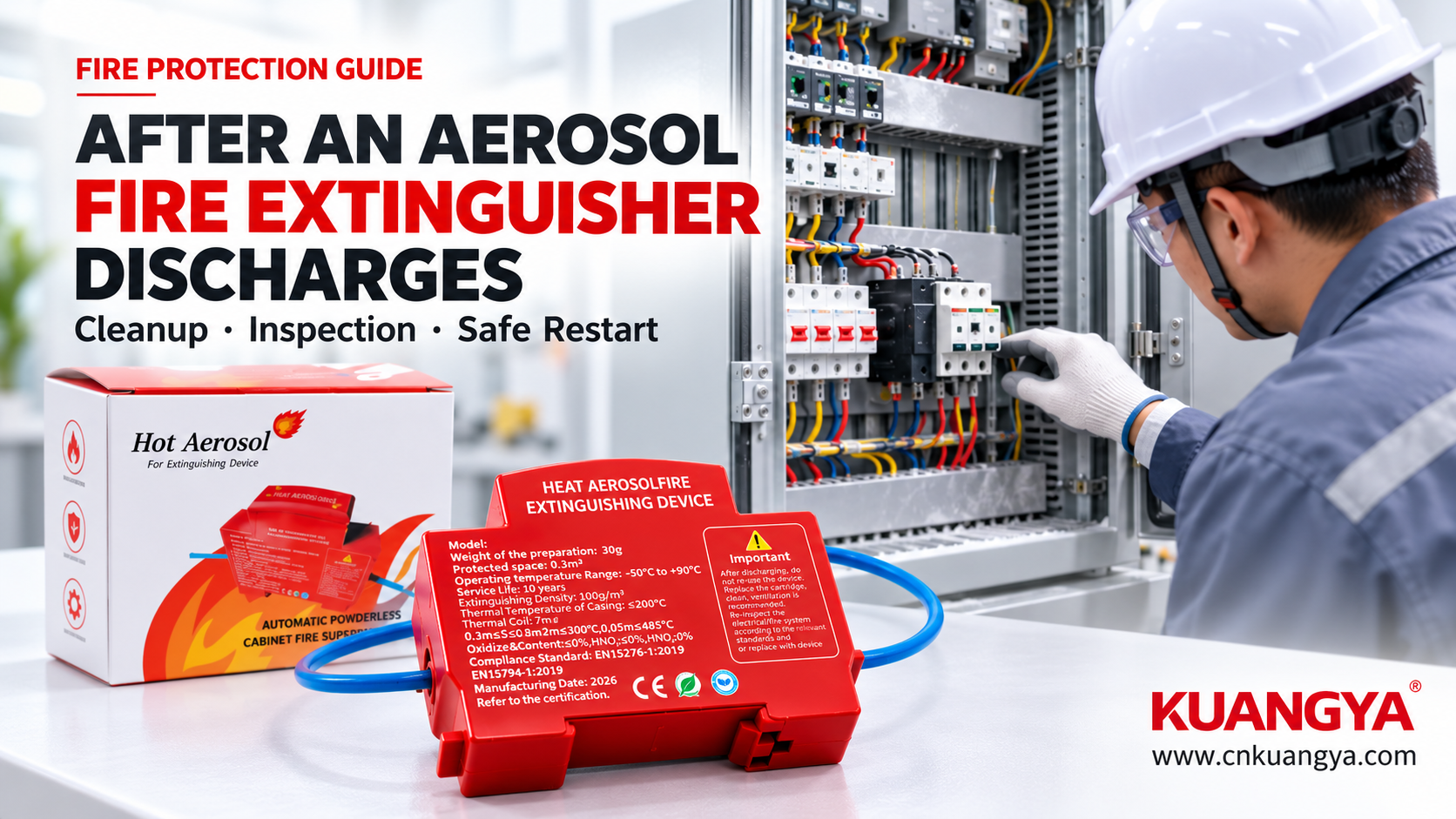
Un estintore a aerosol o un dispositivo automatico di spegnimento a aerosol condensato può aiutare a controllare un incendio all'interno di un armadio elettrico, un quadro di controllo o altro spazio chiuso. Tuttavia, il lavoro non finisce quando l'incendio è spento.
Dopo lo scarico di un sistema antincendio a aerosol, i responsabili dell'impianto e gli ingegneri di manutenzione devono valutare i danni causati dall'incendio, rimuovere i residui utilizzando un metodo di pulizia appropriato, ispezionare i componenti elettrici, verificare le condizioni del sistema di spegnimento e determinare se l'apparecchiatura può essere rimessa in servizio in sicurezza.
Un errore comune è presumere che, poiché un sistema a aerosol non utilizza acqua nello stesso modo di un sistema convenzionale a base d'acqua, l'apparecchiatura protetta possa essere riavviata immediatamente. In realtà, l'esito dipende dall'agente estinguente, dalle condizioni di scarica, dall'incendio stesso e dalle condizioni dell'apparecchiatura elettrica.
Questa guida spiega cosa fare dopo lo scarico di un sistema antincendio a aerosol condensato, come affrontare la rimozione dei residui, quali componenti richiedono ispezione e cosa gli ingegneri dovrebbero confermare prima di riavviare le apparecchiature elettriche.
I sistemi antincendio a aerosol condensato generano particelle fini e gas che aiutano a sopprimere la combustione. A seconda del design del sistema, l'agente estinguente può diffondersi in tutto un involucro protetto e raggiungere aree che potrebbero essere difficili da proteggere con apparecchiature convenzionali.
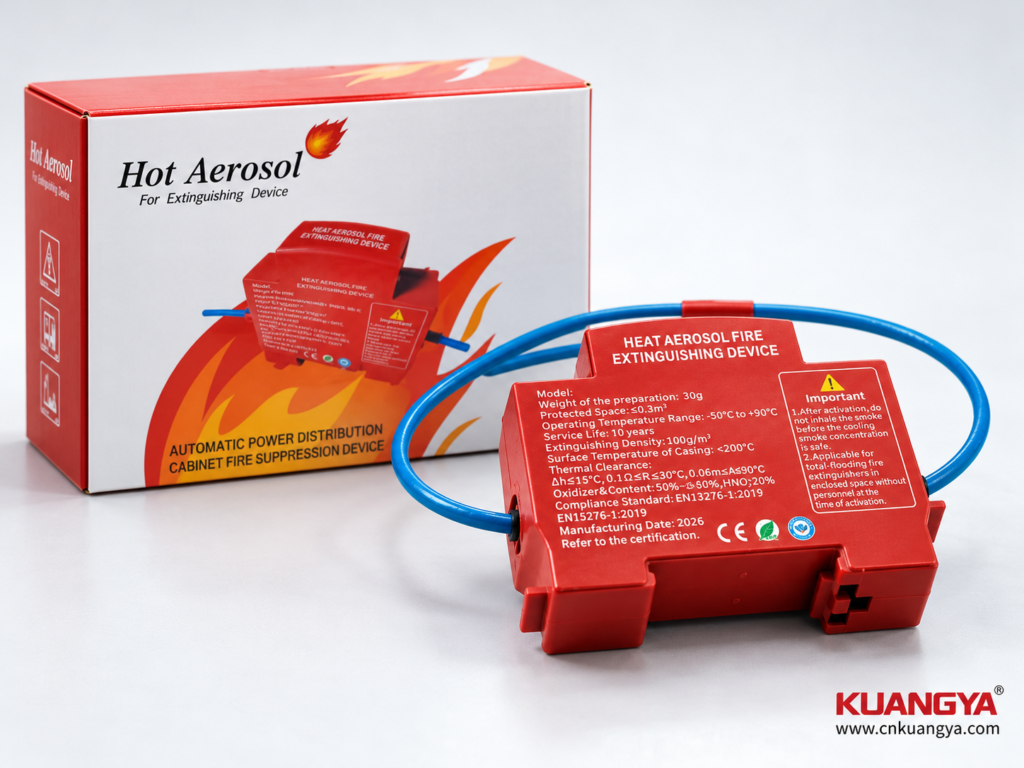
Dopo lo scarico, diverse condizioni potrebbero richiedere attenzione.
Innanzitutto, sottili particelle di aerosol potrebbero depositarsi sulle superfici interne dell'involucro. In secondo luogo, l'incendio potrebbe aver prodotto depositi di fumo, fuliggine e sottoprodotti della combustione. In terzo luogo, il calore potrebbe aver danneggiato isolamento, cablaggi, circuiti stampati, terminali o altri componenti, anche se le fiamme visibili sono state estinte.
Lo scarico dell'aerosol potrebbe anche lasciare il generatore stesso esaurito o altrimenti inadatto all'uso futuro, a seconda del design del produttore.
| Condizione | Impatto possibile | Risposta raccomandata |
|---|---|---|
| Residui di aerosol fine | Depositi sulle superfici dell'involucro e sui componenti | Identificare l'agente e seguire le istruzioni di pulizia del produttore |
| Fumo e fuliggine | Contaminazione di contatti, isolamento e componenti elettronici | Valutare la contaminazione e selezionare un metodo di pulizia idoneo |
| Esposizione al calore | Isolamento, morsetti, cavi e componenti elettronici danneggiati | Organizzare un'ispezione elettrica qualificata |
| Elevata umidità | Può aumentare il rischio di corrosione quando determinati residui rimangono sulle superfici | Controllare l'umidità e pulire prontamente come indicato |
| Generatore scaricato | Il sistema potrebbe non fornire più la protezione prevista | Ispezionare e sostituire o sottoporre a manutenzione come specificato dal produttore |
| Circuito di allarme o di controllo attivato | Il sistema di soppressione potrebbe richiedere il ripristino e la ricommissione | Controllare il pannello di controllo e le funzioni di interblocco |
Queste condizioni dovrebbero essere valutate separatamente. Un armadio dall'aspetto pulito non è prova che i suoi componenti elettrici siano sicuri, e la presenza di residui visibili non significa automaticamente che ogni componente debba essere sostituito.
Per informazioni sulla selezione della protezione per quadri elettrici, consultare la nostra guida alla protezione antincendio per quadri elettrici.
La risposta dipende dalla formulazione dell'aerosol, dai risultati dei test del produttore, dall'ambiente circostante e dai materiali esposti allo scarico.
Alcuni sistemi a aerosol condensato producono un residuo fine, prevalentemente particolato secco. Alcuni produttori descrivono i loro agenti specifici come non conduttivi e non corrosivi nelle condizioni coperte dalla loro documentazione. Queste caratteristiche specifiche del prodotto non dovrebbero essere generalizzate a ogni sistema di soppressione incendi a aerosol.
Ad esempio, il Manuale di installazione e funzionamento FirePro Xtinguish spiega che i residui del suo particolare sistema a aerosol condensato devono essere rimossi prontamente. Il manuale discute anche la possibilità di assorbimento di umidità e ossidazione delle superfici metalliche suscettibili quando i residui rimangono per un periodo prolungato.
Questa distinzione è importante: le proprietà di un agente estinguente non eliminano la necessità di valutare i danni causati dall'incendio o di seguire le procedure di pulizia post-scarica.
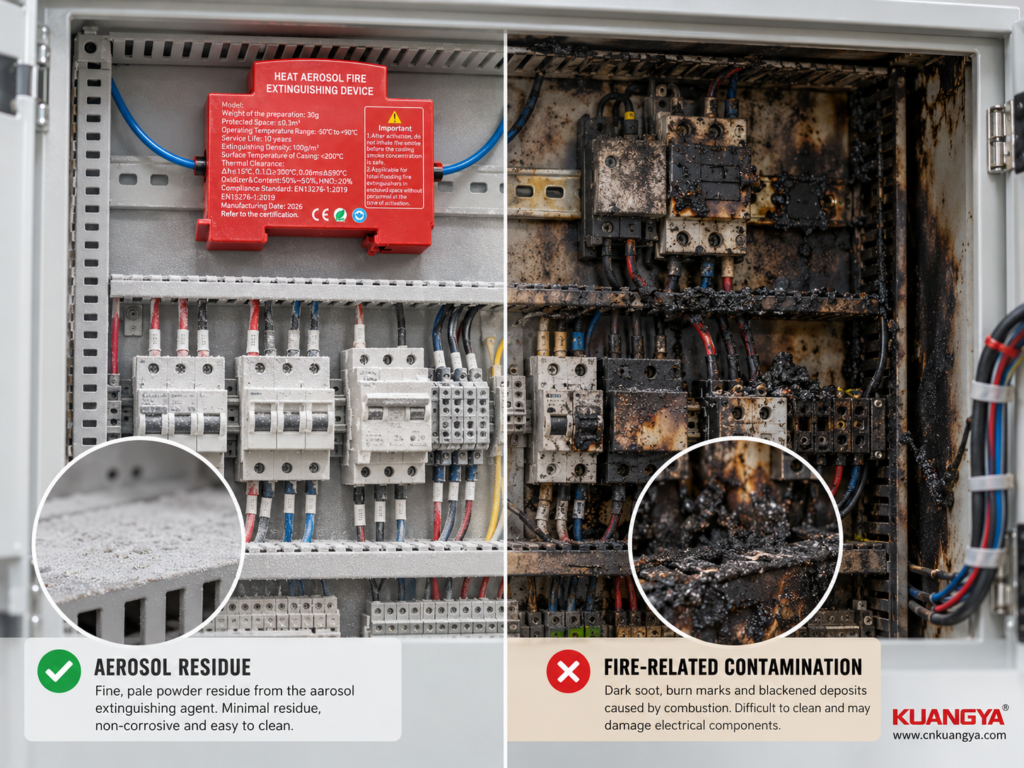
| Confronto | Residui di aerosol | Contaminazione correlata all'incendio |
|---|---|---|
| Sorgente | Agente estinguente scaricato dal sistema | Fumo, fuliggine, calore e sottoprodotti della combustione |
| Aspetto | Può apparire come un deposito fine, di colore chiaro o grigio, a seconda dell'agente | Può apparire come fuliggine nera, depositi oleosi o altre decolorazioni |
| Distribuzione | Può depositarsi sulle superfici raggiunte dalla scarica | Dipende dalla posizione dell'incendio, dal flusso d'aria e dai materiali bruciati |
| Potenziale preoccupazione | Compatibilità dei residui, assorbimento di umidità e contaminazione superficiale | Corrosione, danni all'isolamento, depositi conduttivi e contaminazione chimica |
| Approccio alla pulizia | Seguire le istruzioni del produttore del sistema a aerosol | Valutare la contaminazione e utilizzare un metodo appropriato per l'attrezzatura interessata |
In pratica, entrambi i tipi di contaminazione possono essere presenti contemporaneamente. Gli ingegneri non dovrebbero presumere che ogni deposito sia residuo di agente estinguente o che la rimozione di particelle di aerosol visibili risolva tutti i danni correlati all'incendio.
Schede elettroniche, relè, connettori, sensori e contatti esposti richiedono particolare attenzione.
Prima di pulirli, identificare le raccomandazioni del produttore del componente e le istruzioni post-scarica del sistema di estinzione. Alcuni componenti possono tollerare un particolare residuo in condizioni specificate, mentre altri potrebbero richiedere una pulizia specialistica o la sostituzione dopo l'esposizione a calore, fumo o contaminazione chimica.
Non applicare acqua, solventi, aria compressa o spray detergenti per elettronica in modo indiscriminato. Il metodo corretto dipende dal componente, dal residuo e dalle istruzioni del produttore.
Per ulteriori informazioni sulle differenze tra gli approcci di soppressione incendi a aerosol e convenzionali, consultare il nostro articolo su sistemi di soppressione incendi a aerosol rispetto a quelli tradizionali.
La prima priorità è la sicurezza del personale, seguita dalla valutazione dell'incendio e dalla protezione delle apparecchiature interessate.
Non aprire un quadro elettrico o entrare in una stanza protetta semplicemente perché lo scarico si è arrestato. A seconda del sistema e dell'incidente, potrebbero esserci ancora pericoli dovuti a superfici calde, fumo, gas di combustione, visibilità ridotta, energia elettrica o lo scarico stesso.
Il periodo di attesa richiesto e la procedura di rientro devono seguire le istruzioni del produttore del sistema e le procedure di emergenza del sito.
Tenere il personale lontano dall'area interessata fino a quando il personale di emergenza o di sicurezza responsabile non determina che è sicuro entrare.
Considerare quanto segue:
In caso di indicazione di incendio in corso, evacuare come appropriato e contattare il personale di risposta alle emergenze competente.
Le apparecchiature elettriche non devono essere considerate sicure semplicemente perché un incendio è stato estinto.
Un professionista elettrico qualificato dovrebbe determinare come isolare l'apparecchiatura interessata, comprese le alimentazioni collegate, l'energia elettrica immagazzinata e le possibili fonti di retroazione.
Non toccare conduttori, terminali o circuiti stampati danneggiati prima che la loro condizione elettrica sia stata valutata.
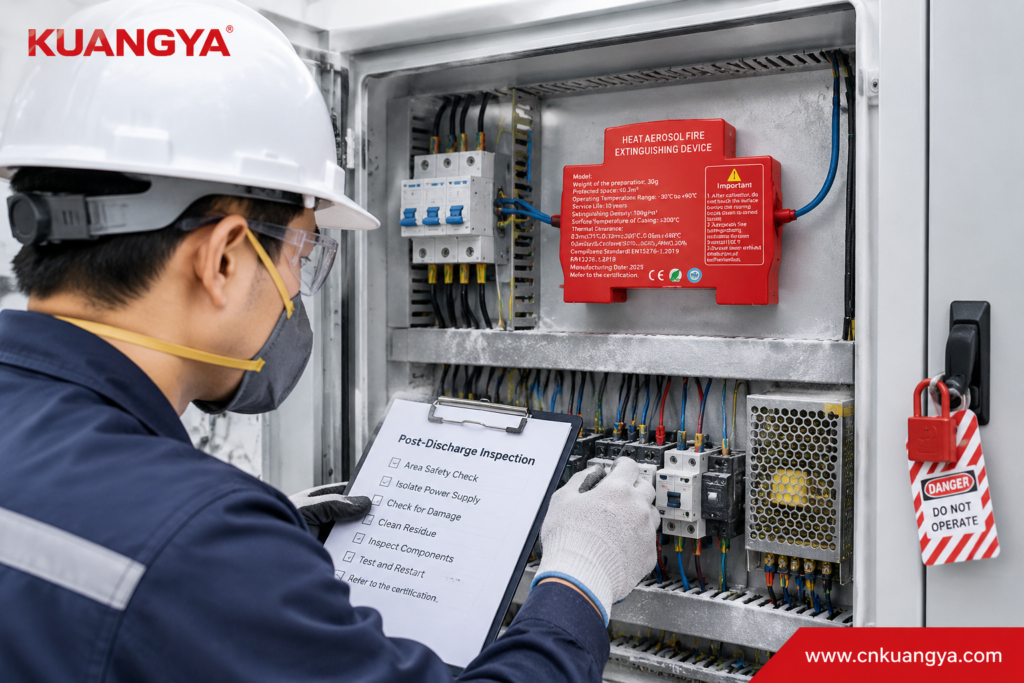
Prima che inizi la pulizia, registrare le condizioni dell'involucro e del sistema di soppressione.
I registri utili includono:
Queste informazioni possono aiutare il team di manutenzione, il produttore dell'apparecchiatura, l'assicuratore e il fornitore del servizio di protezione antincendio a determinare cosa deve essere riparato o sostituito.
Identificare l'agente estinguente e consultare il manuale di installazione e funzionamento applicabile. Determinare se il lavoro può essere svolto da personale interno formato o se richiede un'azienda specializzata in recupero o servizi elettrici.
Evitare di iniziare con un metodo di pulizia generico prima che siano stati compresi i residui e i requisiti dell'apparecchiatura.
La pulizia dovrebbe iniziare non appena è sicuro e pratico, seguendo le istruzioni specifiche del produttore del sistema.
Prompt removal matters because certain condensed aerosol residues may absorb moisture over time. At the same time, cleaning methods that are suitable for enclosure walls may not be appropriate for delicate electronic assemblies.
Il FirePro Xtinguish manual provides product-specific post-discharge guidance, including the use of suitable methods for dry residues and specialized cleaning products for electronic components.
| Area | Initial assessment | Approccio alla pulizia |
|---|---|---|
| Cabinet floor and internal panels | Check for loose residue, soot, and heat damage | Remove deposits using the method specified by the system manufacturer |
| Painted metal surfaces | Check for discoloration and residue buildup | Use a compatible cleaning method and inspect for coating damage |
| Uncoated metal surfaces | Check for deposits, oxidation, and moisture exposure | Clean promptly as instructed and assess susceptible surfaces |
| Circuit boards | Check for residue, soot, and heat exposure | Use an approved electronics-cleaning procedure or specialist service |
| Terminals and connectors | Check for deposits, corrosion, looseness, or thermal damage | Inspect and clean or replace according to component requirements |
| Ventilation paths and filters | Check for deposits and blocked airflow | Clean or replace affected parts according to equipment instructions |
| Suppression generator and mounting area | Check for physical damage and discharge-related changes | Have the system inspected and serviced as required |
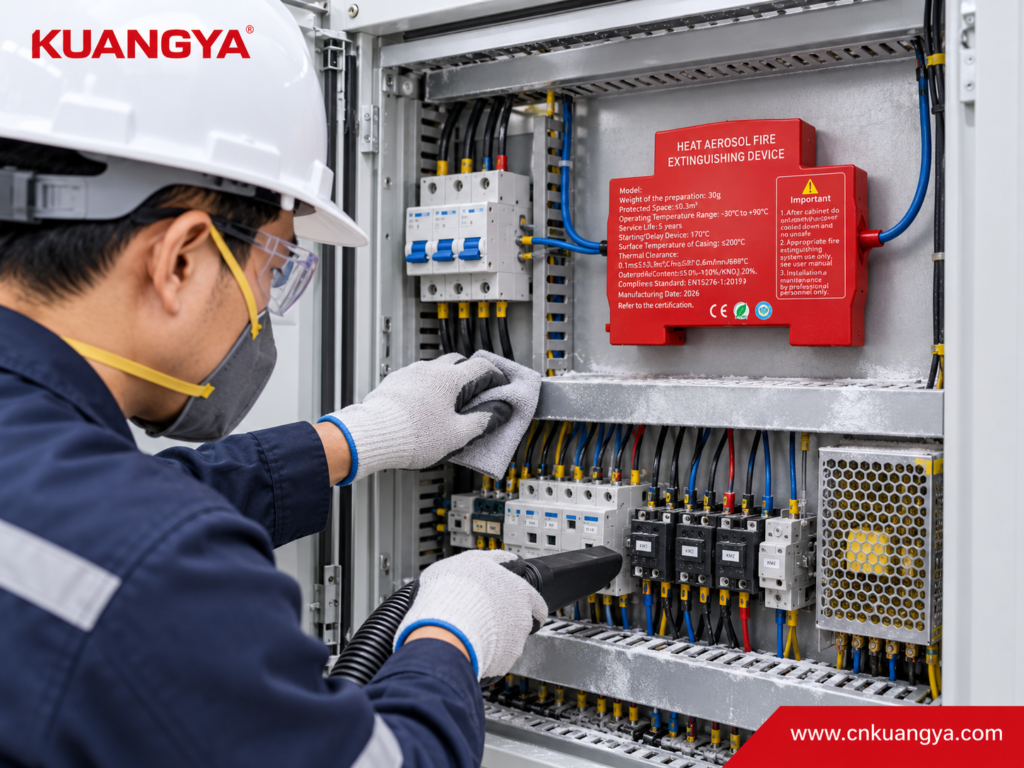
1. Identify the residue.
Confirm the agent type and consult its safety data sheet and operation manual. Where fire damage and aerosol deposits are mixed together, obtain specialist advice if necessary.
2. Protect personnel and sensitive equipment.
Use the personal protective equipment and handling procedures specified for the residue and incident conditions. Confirm that electrical equipment is safely isolated before any work begins.
3. Remove loose deposits using an approved method.
Depending on the specific product instructions, this may involve suitable wiping, brushing, vacuuming, or other controlled removal methods. Do not assume that compressed air or an ordinary vacuum is appropriate for every component or residue.
4. Clean electronic components separately.
Use only a method approved for the component and the particular contamination. A cleaning product that is safe for one circuit board or connector may be unsuitable for another.
5. Inspect after cleaning.
Check for remaining deposits, signs of corrosion, damaged insulation, discoloration, and other defects. Cleaning cannot reverse damage caused by excessive temperature or electrical arcing.
6. Record the work.
Document the cleaning method, products used, parts replaced, inspection results, and any outstanding issues.
The following practices can create additional problems when used without an approved procedure:
The objective is not simply to make the cabinet look clean. It is to remove the relevant contamination without introducing new electrical, chemical, or mechanical risks.
Once the immediate hazards have been addressed and the appropriate cleaning has been completed, the affected electrical equipment should undergo a systematic inspection.
The depth of inspection depends on the fire severity, equipment design, contamination, and operational importance of the installation.
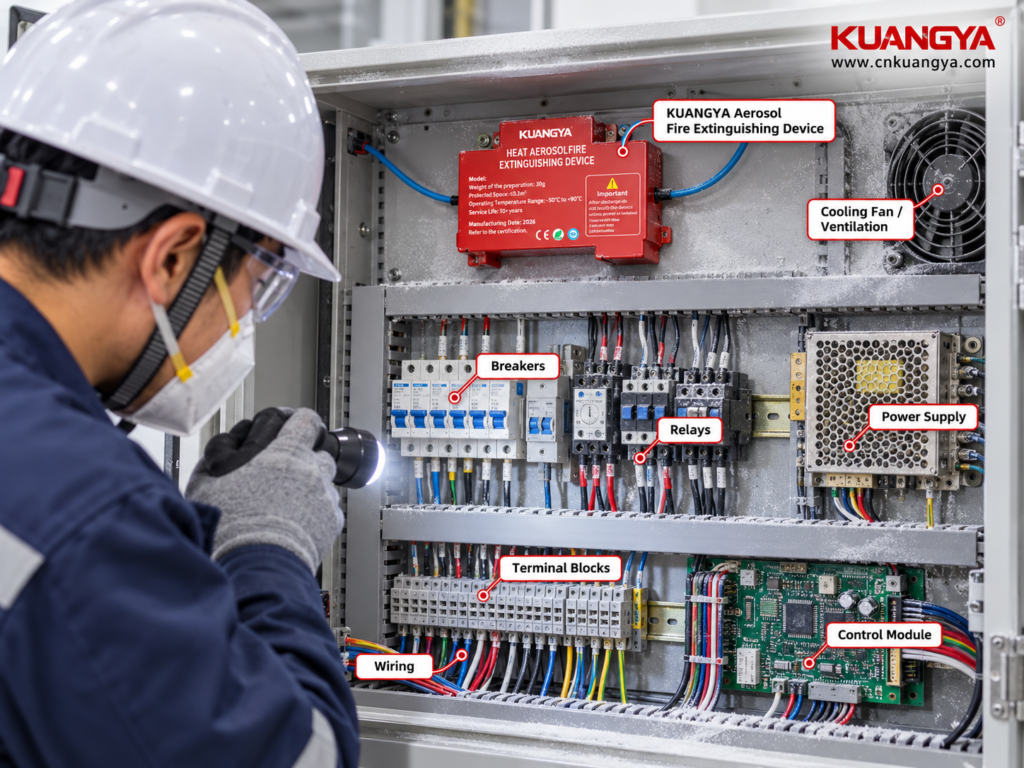
| Componente | What to check | Possible action |
|---|---|---|
| Cables and insulation | Cracking, melting, discoloration, brittleness, or deformation | Replace damaged cable sections |
| Morsettiere | Loose connections, heat marks, residue, or corrosion | Clean, retorque, or replace according to manufacturer specifications |
| Circuit breakers and contactors | Heat damage, abnormal operation, damaged housings, or contaminated contacts | Arrange inspection and replacement where required |
| Printed circuit boards | Soot, residue, damaged components, lifted tracks, or discoloration | Specialist cleaning, testing, repair, or replacement |
| Sensors and detectors | Physical damage, contamination, or incorrect status indications | Clean, test, or replace as specified |
| Fans and ventilation components | Blocked airflow, damaged blades, or contaminated filters | Clean or replace affected parts |
| Enclosure and seals | Warping, damaged seals, openings, or compromised environmental protection | Repair or replace as appropriate |
| Protective earthing | Damaged conductors, loose connections, or compromised bonding | Verify electrical continuity and repair defects |
| Control and alarm circuits | Fault indications, damaged wiring, or failed interlocks | Test and recommission the affected circuits |
Visual inspection is important, but it may not be sufficient. Depending on the equipment and incident, qualified personnel may also need to perform insulation-resistance measurements, continuity checks, functional testing, or other electrical tests.
Test methods and acceptance criteria must be suitable for the equipment. Some electronic components can be damaged by inappropriate testing voltages, so the manufacturer’s instructions should be followed.
There is no universal waiting time that makes electrical equipment safe to restart after an aerosol fire suppression event.
The decision should be based on the condition of the equipment, the nature of the incident, the cleaning results, and the required inspection and testing.
A cabinet that experienced a nuisance discharge without a fire may need a different recovery process from one exposed to sustained flames, high temperatures, smoke, and electrical arcing.
| Finding | Is immediate restart appropriate? | Required next step |
|---|---|---|
| No visible fire damage, but the system discharged | Non automaticamente | Verify isolation, residue removal, system condition, and equipment requirements |
| Fine residue is present on electrical components | No, not before assessment | Complete the approved cleaning and inspection process |
| Smoke or soot has entered the cabinet | No, not before assessment | Evaluate contamination and component condition |
| Insulation is melted or cables are visibly damaged | No | Replace or repair affected components and perform the required tests |
| A circuit breaker or contactor shows heat damage | No | Have the component evaluated and replace it if required |
| Cleaning is complete, but electrical testing is outstanding | No | Complete the required inspection and tests |
| Inspection and required tests are satisfactory | Potentially | Obtain the required authorization and follow the equipment’s return-to-service procedure |
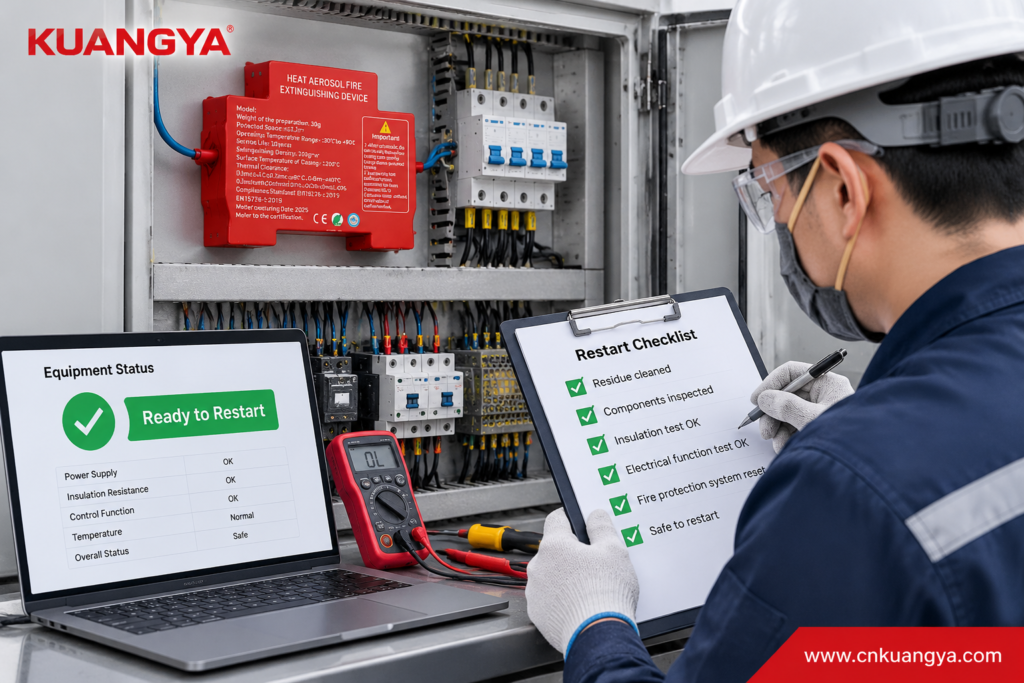
A responsible restart process typically includes:
Not every installation requires the same tests or approval process. The responsible engineer should determine the appropriate requirements based on the equipment manufacturer’s documentation, local regulations, and the incident findings.
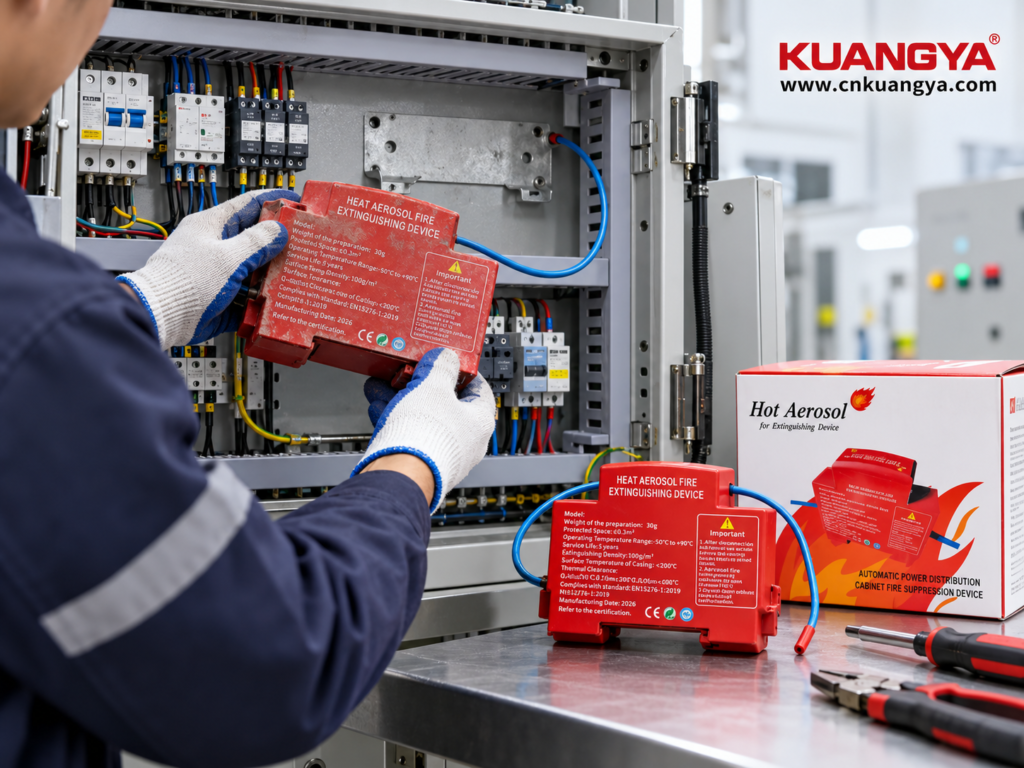
In many condensed aerosol systems, the generator is designed for a single discharge and must be replaced after activation. However, the exact requirement depends on the product design.
Do not assume that a generator can be reused simply because its housing appears intact. The internal extinguishing compound or activation mechanism may have been consumed, and the unit may no longer provide its intended protection.
| Articolo | Inspection question | Possible action |
|---|---|---|
| Aerosol generator | Has it discharged, activated, or sustained physical damage? | Replace or service according to the product manual |
| Activation wiring | Is the wiring intact and correctly connected? | Repair and test as specified |
| Detection devices | Are they damaged, contaminated, or still reporting a fault? | Inspect, clean, test, or replace |
| Control panel | Are alarms, faults, or activation indicators still present? | Investigate and reset only after the cause has been addressed |
| Backup power supply | Is the power supply functional and available? | Test and replace defective components |
| Mounting brackets | Are the generator and brackets secure and undamaged? | Repair or replace as required |
| System coverage | Have enclosure volume, openings, or protected equipment changed? | Have the design and coverage reviewed by a qualified specialist |
Replacement should restore the protection intended by the original design. Simply installing another generator of a similar size may not be sufficient if the protected enclosure or hazard has changed.
For more information about selecting a suitable device, see how to choose an aerosol fire extinguisher.
Post-discharge recovery is easier when the system has been correctly designed, installed, documented, and maintained before an incident occurs.
The following measures can help reduce downtime and make future maintenance more predictable.
Maintain the installation and operation manual, safety data sheet, wiring diagram, generator model information, inspection records, and supplier contact details.
Maintenance personnel should know which cleaning products and methods are permitted for the installed system.
Check the cabinet for unauthorized modifications, damaged seals, blocked discharge paths, changes in internal volume, and alterations to the protected equipment.
Changes to the enclosure can affect the effectiveness of a suppression system. Significant modifications should be reviewed by a qualified designer or service provider.
Where the aerosol system operates with detectors, alarm panels, electrical interlocks, or remote signals, verify that these associated systems are maintained according to their applicable requirements.
An aerosol generator alone does not establish that the entire fire protection system is functional.
Personnel should understand the difference between ordinary cleaning, post-fire recovery, electrical inspection, and suppression-system recommissioning.
They should also know when to stop work and contact a specialist rather than attempting an unfamiliar cleaning or repair procedure.
For critical electrical cabinets, establish a recovery plan that identifies replacement generators, spare electrical components, qualified service providers, and the authorization needed before equipment returns to operation.
This preparation can reduce delays without compromising personnel safety or equipment reliability.
The following is an illustrative engineering scenario, not a report of a verified customer incident. It demonstrates how a maintenance team might organize a post-discharge assessment.
An industrial control cabinet experiences an electrical fault, and its installed condensed aerosol fire suppression system activates. The flames are no longer visible after the incident, but fine deposits remain on internal surfaces. Several components show signs of heat exposure.
The maintenance team must determine whether the cabinet can be returned to service.
The team isolates the affected equipment under an approved electrical safety procedure and confirms that the area is safe for inspection.
Photographs are taken of the enclosure, the generator, the affected wiring, and the suspected fault location. The team records the control-panel indications and identifies the installed aerosol system.
The team consults the generator manufacturer’s documentation before selecting a residue-removal method.
Loose deposits are removed using an approved procedure. Electronic assemblies are assessed separately, and components exposed to heat or smoke are inspected for damage.
During the electrical inspection, the team identifies a cable section with visible heat damage. That section is replaced rather than being accepted merely because the surrounding cabinet has been cleaned.
The suppression generator is evaluated according to the manufacturer’s instructions and replaced because the installed unit is designed for single discharge.
The team completes the required electrical checks, verifies the detection and control circuits, and confirms that the suppression system has been restored to its required operational condition.
The cabinet returns to service only after the responsible personnel authorize the restart.
| Lesson | Perché è importante |
|---|---|
| Extinguishing the fire is only the first step | Electrical damage may remain after visible flames disappear |
| Cleaning must match the actual agent | Different formulations and components can require different procedures |
| Fire residue and aerosol residue are not the same | Both may need to be addressed |
| Damaged components should not be accepted solely on visual appearance | Appropriate electrical testing and engineering assessment may be necessary |
| The suppression system must also be restored | Cleaning the cabinet does not automatically restore fire protection |
The main lesson is that a successful recovery requires both fire-related assessment and electrical-system verification.
Not automatically. The equipment must be assessed for fire damage, contamination, and electrical safety. Follow the installed system’s instructions and the equipment manufacturer’s requirements before restarting.
Some condensed aerosol systems leave fine particulate residue after discharge. The amount and characteristics depend on the formulation, installation, and discharge conditions. Consult the specific product documentation.
The answer depends on the particular agent and the conditions of use. Some manufacturers document their own agents as nonconductive under specified conditions, but this should not be generalized to every aerosol product or to mixed deposits containing soot and combustion by-products.
Certain residues may absorb moisture and contribute to oxidation or other surface problems under particular conditions. Prompt cleaning in accordance with the manufacturer’s instructions helps manage this risk.
Only if the applicable instructions permit it and the method is suitable for the equipment. Uncontrolled compressed air can spread contamination or drive particles into sensitive components.
Many condensed aerosol generators are single-use devices. Check the specific model’s documentation and replace or service the unit as instructed.
A qualified electrical professional should assess electrical safety and damage. Depending on the installation, a fire suppression service provider and the equipment manufacturer may also need to participate in the recovery process.
As soon as it is safe and practical, in accordance with the manufacturer’s instructions. Do not delay cleaning unnecessarily, but never enter an unsafe area or begin maintenance before the required safety conditions have been met.
No. Cleaning removes contamination but does not repair damaged insulation, burned components, failed terminals, or a defective suppression system. The equipment must pass the required inspection and return-to-service checks.
The system should be inspected and restored according to the manufacturer’s recommissioning procedures and applicable requirements. Any required functional tests must be performed by appropriately qualified personnel using the approved procedure.
After a condensed aerosol fire suppression system discharges, safe recovery requires more than removing visible residue. The affected area must first be declared safe, the electrical equipment must be isolated and assessed, and cleaning must follow the specific agent and equipment requirements.
Engineers should then inspect electrical components, replace damaged parts, evaluate the discharged generator, and verify that the fire suppression system is ready for service before authorizing a restart.
The most reliable approach is to combine prompt, appropriate cleaning with a documented electrical inspection and a controlled return-to-service process.
For facilities planning protection for electrical cabinets and distribution equipment, selecting a suitable suppression device is only one part of the overall strategy. Correct installation, maintenance, incident procedures, and post-discharge recovery planning are equally important.
Per saperne di più protezione antincendio per quadri elettrici e aerosol fire suppression for PV distribution boxes to explore related protection considerations for electrical installations.

