温州市岳陽工業区 325000
勤務時間
月曜日~金曜日:午前7時~午後7時
週末午前10時~午後5時
温州市岳陽工業区 325000
勤務時間
月曜日~金曜日:午前7時~午後7時
週末午前10時~午後5時

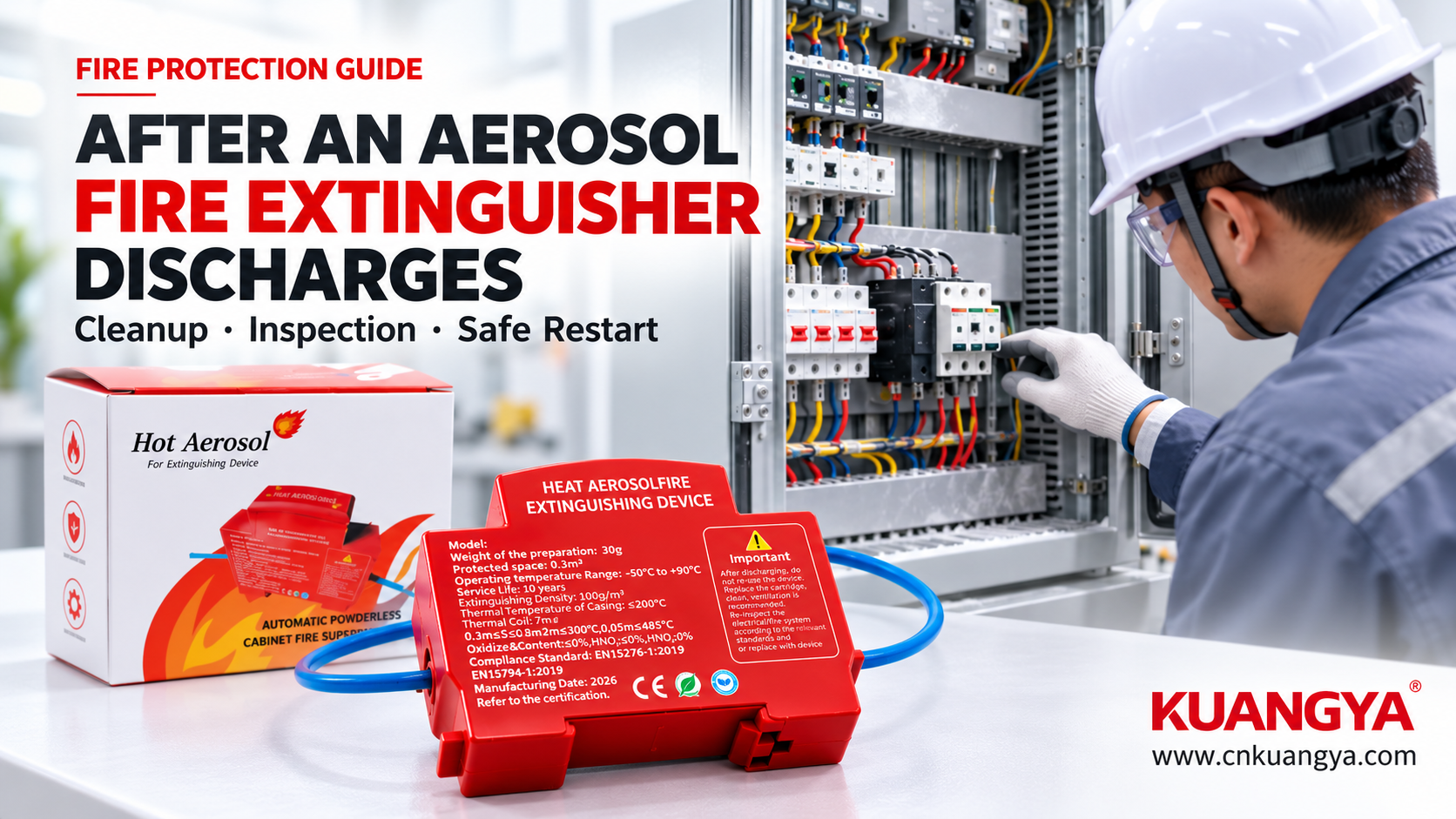
エアロゾール消火器または自動凝縮エアロゾール消火装置は、電気キャビネット、制御盤、またはその他の密閉空間内の火災を制御するのに役立つ場合があります。しかし、消火しても作業は終わりません。.
エアロゾール消火システムが作動した後、施設管理者および保守エンジニアは、火災による損傷を評価し、適切な清掃方法で残留物を除去し、電気部品を点検し、消火システムの状態を確認し、機器が安全にサービスに復帰できるかどうかを判断する必要があります。.
一般的な間違いは、エアロゾールシステムが従来の水系システムとは異なる方法で水を使用しないため、保護された機器はすぐに再起動できると想定することです。実際には、結果は消火剤、作動条件、火災自体、および電気機器の状態に依存します。.
このガイドでは、凝縮エアロゾール消火システムが作動した後に何を行うべきか、残留物除去へのアプローチ方法、どのコンポーネントの点検が必要か、そして電気機器を再起動する前にエンジニアが確認すべきことについて説明します。.
凝縮エアロゾール消火システムは、燃焼を抑制するのに役立つ微粒子とガスを生成します。システム設計によっては、消火剤が保護された筐体全体に広がり、従来の機器では保護が難しい領域に到達する可能性があります。.
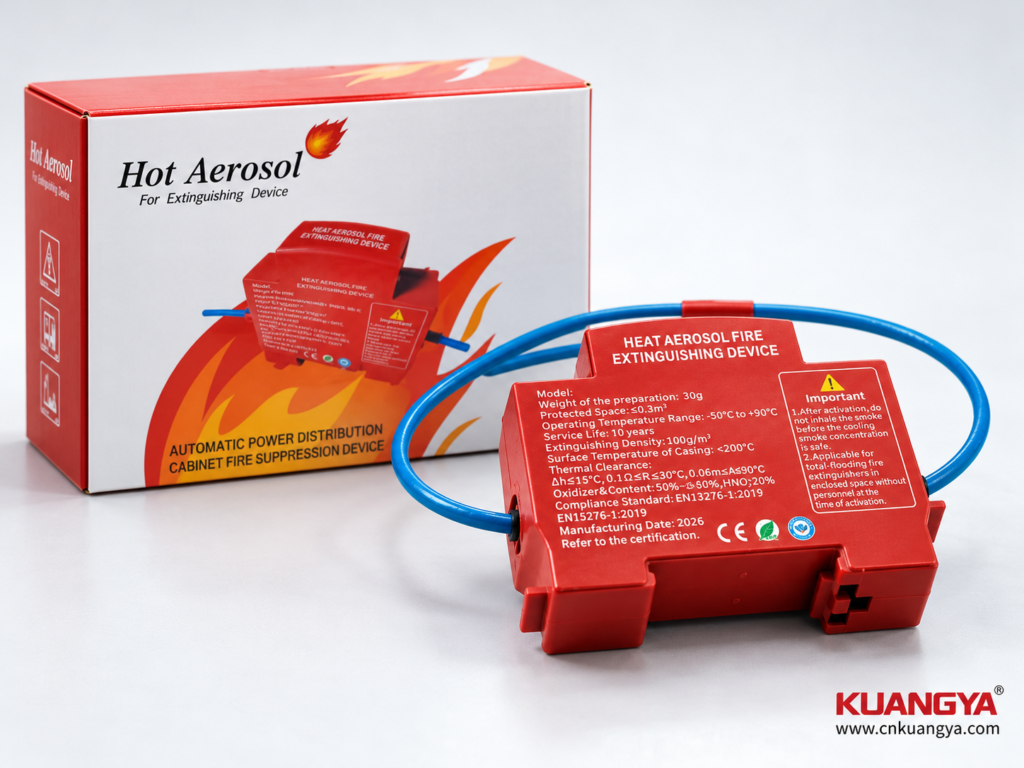
放電後、いくつかの注意すべき状態が発生する可能性があります。.
第一に、微細なエアロゾル粒子が筐体内部の表面に堆積する可能性があります。第二に、火災自体が煙の堆積物、すす、および燃焼生成物を生じさせた可能性があります。第三に、目に見える炎が消火されたとしても、熱によって絶縁体、配線、回路基板、端子、またはその他のコンポーネントが損傷を受けた可能性があります。.
エアロゾル放電により、メーカーの設計によっては、ジェネレーター自体が消耗したり、その他の理由で使用に適さなくなる可能性もあります。.
| コンディション | 潜在的な影響 | 推奨される対応 |
|---|---|---|
| 微細エアロゾル残留物 | 筐体表面およびコンポーネントへの堆積物 | 代理商を特定し、製造元の清掃手順に従ってください |
| 煙と煤 | 接点、絶縁体、電子部品の汚染 | 汚染を評価し、適切な清掃方法を選択してください |
| 熱暴露 | 絶縁体、端子、ケーブル、電子部品の損傷 | 有資格の電気検査を手配してください |
| 高湿度 | 表面に残った特定の残留物は腐食のリスクを高める可能性があります | 指示通りに湿気を管理し、速やかに清掃してください |
| 放電された発電機 | システムは意図された保護を提供できなくなる可能性があります | 製造元の仕様に従って点検し、交換または保守してください |
| 作動したアラームまたは制御回路 | 消火システムのリセットと再試運転が必要になる場合があります | 操作盤とインターロック機能を点検してください |
これらの条件は個別に評価されるべきです。見た目がきれいなキャビネットが、その電気部品が安全であることを証明するものではなく、目に見える残留物が必ずしもすべての部品を交換する必要があることを意味するわけではありません。.
電気エンクロージャーの保護の選択に関する背景については、当社のガイドを参照してください。 電気キャビネットの火災保護.
答えは、エアロゾル製剤、製造元の試験結果、周囲の環境、および放出にさらされた材料によって異なります。.
一部の凝縮エアロゾルシステムは、微細で主に乾燥した粒子状の残留物を生成します。特定のメーカーは、自社の文書でカバーされている条件下で、特定の薬剤が非導電性および非腐食性であると説明しています。これらの製品固有の特性は、すべてのエアロゾル消火システムに一般化されるべきではありません。.
例えば、 FirePro Xtinguish Installation and Operation Manual 特殊な凝縮エアロゾルシステムの残留物は速やかに除去する必要があることを説明しています。また、残留物が長期間放置された場合の吸湿性や、影響を受けやすい金属表面の酸化についても説明しています。.
この区別は重要です。 消火剤の特性があっても、火災による損傷の評価や、放出後の清掃手順に従う必要性がなくなるわけではありません。.
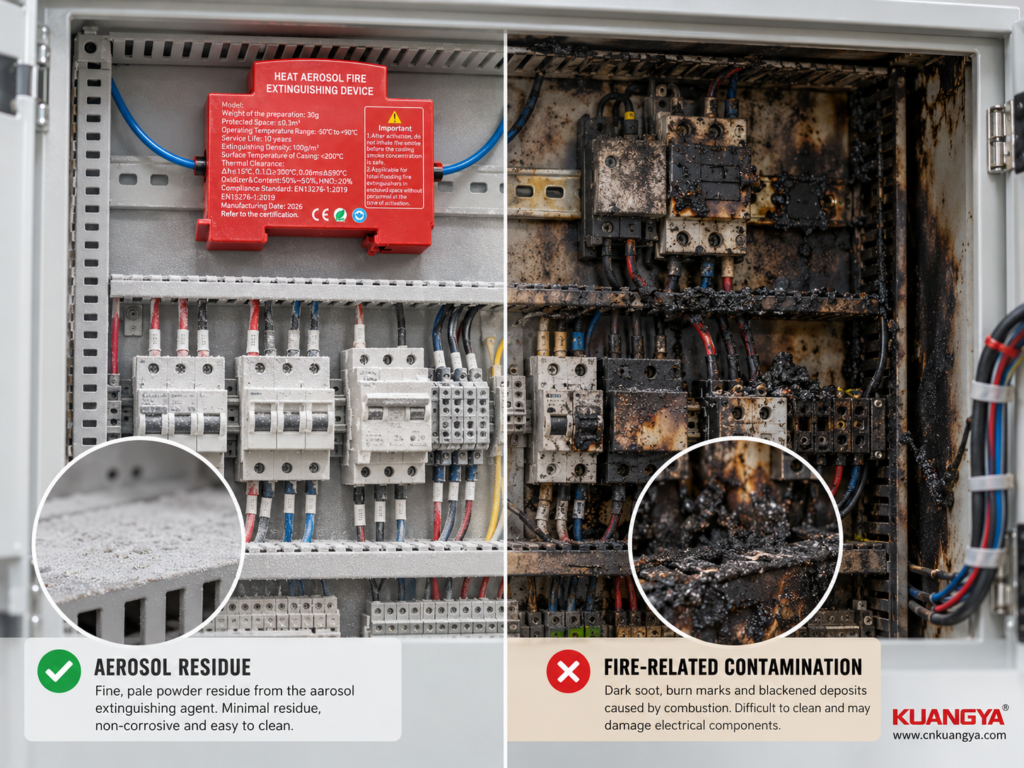
| 比較 | エアロゾル残留物 | 火災関連の汚染 |
|---|---|---|
| 出典 | システムによって放出された消火剤 | 煙、すす、熱、および燃焼副生成物 |
| 外観 | 剤によっては、細かく明るい色または灰色の堆積物として現れることがあります。 | 黒いすす、油っぽい堆積物、またはその他の変色として現れることがあります。 |
| 流通 | 放電が到達した表面全体に沈着する可能性があります。 | 火災の場所、気流、燃焼した材料によって異なります。 |
| 懸念事項 | 残留物の適合性、吸湿性、表面汚染 | 腐食、絶縁損傷、導電性堆積物、化学的汚染 |
| クリーニングアプローチ | エアロゾルシステムメーカーの指示に従ってください。 | 汚染を評価し、影響を受けた機器に適した方法を使用してください。 |
実際には、両方のタイプの汚染が同時に存在する可能性があります。技術者は、すべての堆積物が消火剤の残留物であると仮定したり、目に見えるエアロゾル粒子を除去することで火災関連の損傷がすべて解決されると仮定したりすべきではありません。.
回路基板、リレー、コネクタ、センサー、および露出した接点には、特別な注意が必要です。.
クリーニングを行う前に、コンポーネントメーカーの推奨事項と消火システムの放電後の指示を特定してください。一部のコンポーネントは、特定の条件下で特定の残留物を許容する場合がありますが、他のコンポーネントは、熱、煙、または化学的汚染にさらされた後に専門的なクリーニングまたは交換が必要になる場合があります。.
水、溶剤、圧縮空気、または電子クリーニングスプレーを無差別に適用しないでください。正しい方法は、コンポーネント、残留物、およびメーカーの指示によって異なります。.
エアロゾルと従来の消火アプローチの違いについては、当社の記事を参照してください。 エアロゾル消火システムと従来の消火システム.
最優先事項は人員の安全であり、次に火災の評価と被災機器の保護です。.
放出が停止したからといって、すぐに筐体を開けたり、保護された部屋に入ったりしないでください。システムや事象によっては、高温の表面、煙、燃焼ガス、視界不良、電気エネルギー、または放出自体による危険がまだ存在する可能性があります。.
要求される待機期間と再入室手順は、システムメーカーの指示およびサイトの緊急時手順に従う必要があります。.
責任ある緊急または安全担当者が立ち入り可能と判断するまで、人員を被災エリアから遠ざけてください。.
以下を考慮してください:
火災が継続している兆候がある場合は、適切に避難し、関連する緊急対応担当者に連絡してください。.
火災が鎮火したという理由だけで、電気機器が安全であるとみなすべきではありません。.
影響を受ける機器(接続されている電源、蓄積された電気エネルギー、および可能性のある逆流源を含む)をどのように切り離すかは、資格のある電気専門家が判断する必要があります。.
電気的状態が評価されるまで、損傷した導体、端子、または回路基板には触れないでください。.
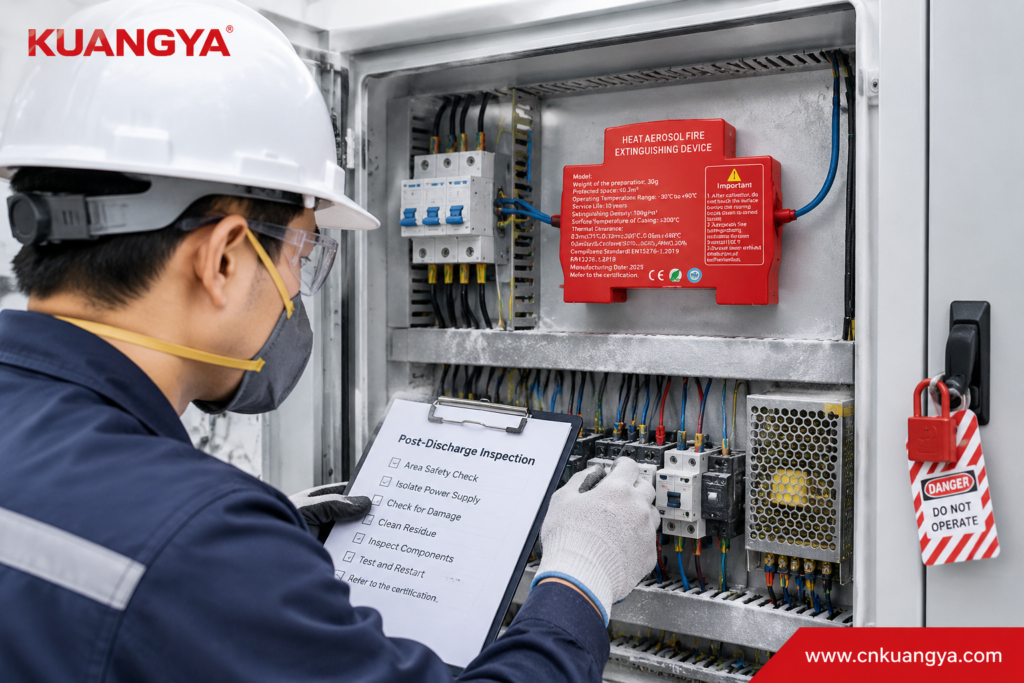
清掃を開始する前に、エンクロージャーとサプレッションシステムの状態を記録してください。.
役立つ記録には以下が含まれます:
この情報は、保守チーム、機器メーカー、保険会社、および防火サービスプロバイダーが、修理または交換が必要なものを判断するのに役立ちます。.
消火剤を特定し、適用される設置および操作マニュアルを参照してください。作業が訓練を受けた社内担当者によって実施できるか、または専門の復旧または電気サービス会社が必要かを判断してください。.
残留物および機器の要件が理解される前に、汎用的な清掃方法から始めることを避けてください。.
清掃は、システムメーカーの具体的な指示に従い、安全かつ実用的な状況になり次第、速やかに開始してください。.
Prompt removal matters because certain condensed aerosol residues may absorb moisture over time. At the same time, cleaning methods that are suitable for enclosure walls may not be appropriate for delicate electronic assemblies.
について FirePro Xtinguish manual provides product-specific post-discharge guidance, including the use of suitable methods for dry residues and specialized cleaning products for electronic components.
| Area | Initial assessment | クリーニングアプローチ |
|---|---|---|
| Cabinet floor and internal panels | Check for loose residue, soot, and heat damage | Remove deposits using the method specified by the system manufacturer |
| Painted metal surfaces | Check for discoloration and residue buildup | Use a compatible cleaning method and inspect for coating damage |
| Uncoated metal surfaces | Check for deposits, oxidation, and moisture exposure | Clean promptly as instructed and assess susceptible surfaces |
| Circuit boards | Check for residue, soot, and heat exposure | Use an approved electronics-cleaning procedure or specialist service |
| Terminals and connectors | Check for deposits, corrosion, looseness, or thermal damage | Inspect and clean or replace according to component requirements |
| Ventilation paths and filters | Check for deposits and blocked airflow | Clean or replace affected parts according to equipment instructions |
| Suppression generator and mounting area | Check for physical damage and discharge-related changes | Have the system inspected and serviced as required |
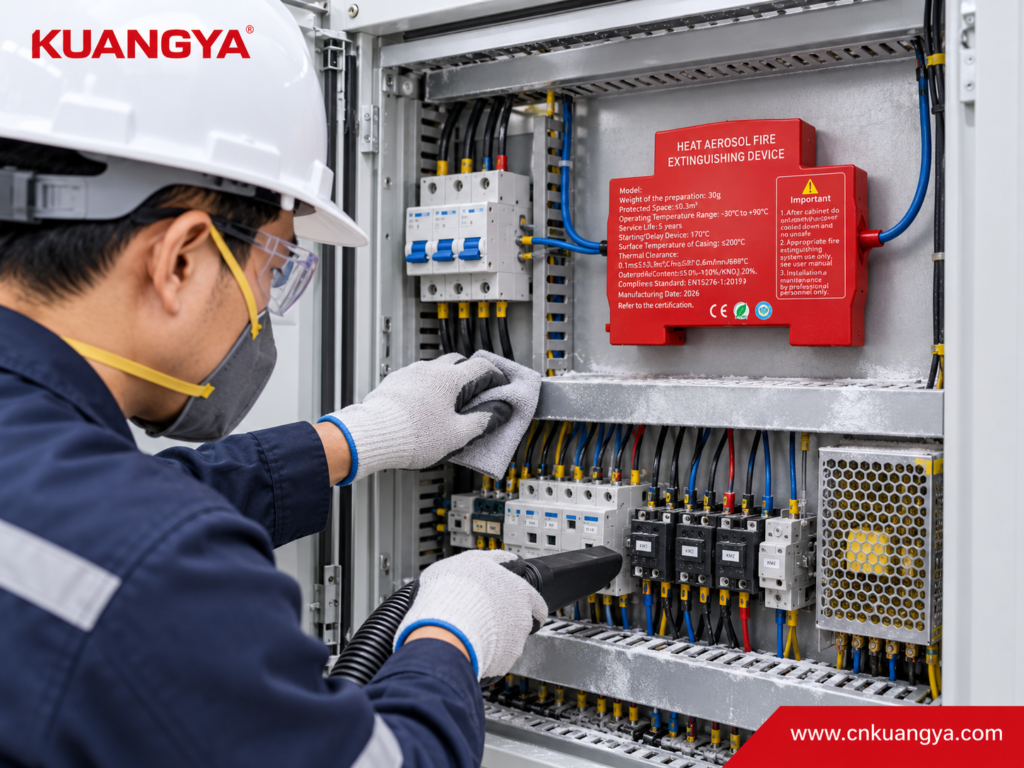
1. Identify the residue.
Confirm the agent type and consult its safety data sheet and operation manual. Where fire damage and aerosol deposits are mixed together, obtain specialist advice if necessary.
2. Protect personnel and sensitive equipment.
Use the personal protective equipment and handling procedures specified for the residue and incident conditions. Confirm that electrical equipment is safely isolated before any work begins.
3. Remove loose deposits using an approved method.
Depending on the specific product instructions, this may involve suitable wiping, brushing, vacuuming, or other controlled removal methods. Do not assume that compressed air or an ordinary vacuum is appropriate for every component or residue.
4. Clean electronic components separately.
Use only a method approved for the component and the particular contamination. A cleaning product that is safe for one circuit board or connector may be unsuitable for another.
5. Inspect after cleaning.
Check for remaining deposits, signs of corrosion, damaged insulation, discoloration, and other defects. Cleaning cannot reverse damage caused by excessive temperature or electrical arcing.
6. Record the work.
Document the cleaning method, products used, parts replaced, inspection results, and any outstanding issues.
The following practices can create additional problems when used without an approved procedure:
The objective is not simply to make the cabinet look clean. It is to remove the relevant contamination without introducing new electrical, chemical, or mechanical risks.
Once the immediate hazards have been addressed and the appropriate cleaning has been completed, the affected electrical equipment should undergo a systematic inspection.
The depth of inspection depends on the fire severity, equipment design, contamination, and operational importance of the installation.
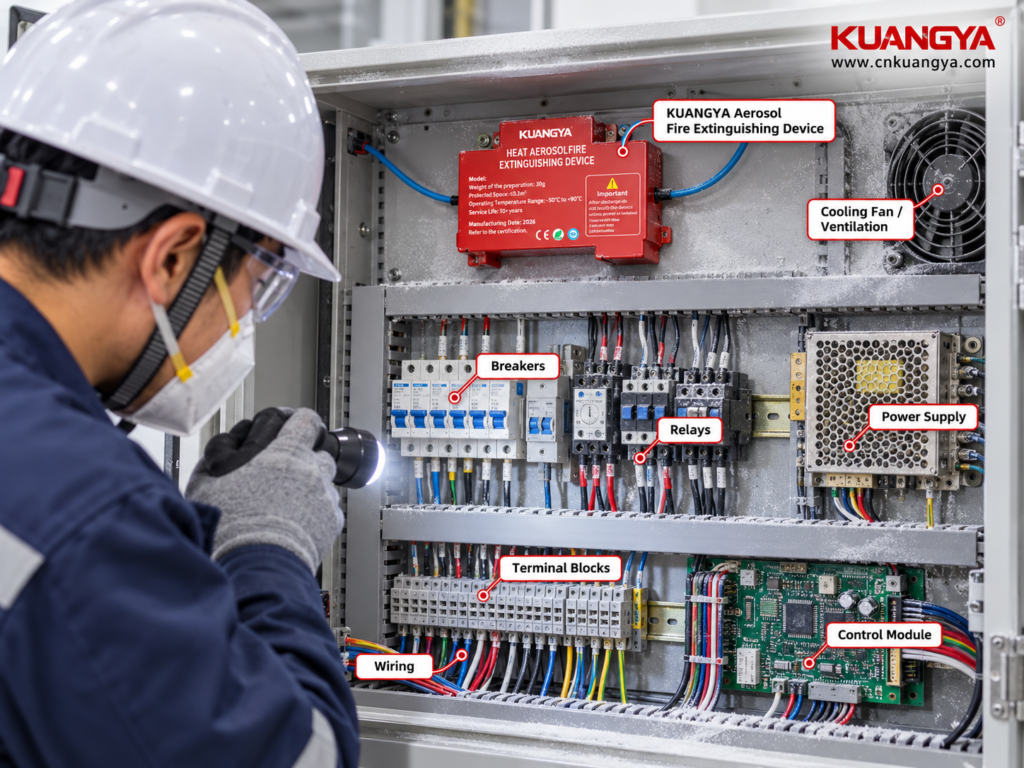
| コンポーネント | What to check | Possible action |
|---|---|---|
| Cables and insulation | Cracking, melting, discoloration, brittleness, or deformation | Replace damaged cable sections |
| 端子台 | Loose connections, heat marks, residue, or corrosion | Clean, retorque, or replace according to manufacturer specifications |
| Circuit breakers and contactors | Heat damage, abnormal operation, damaged housings, or contaminated contacts | Arrange inspection and replacement where required |
| Printed circuit boards | Soot, residue, damaged components, lifted tracks, or discoloration | Specialist cleaning, testing, repair, or replacement |
| Sensors and detectors | Physical damage, contamination, or incorrect status indications | Clean, test, or replace as specified |
| Fans and ventilation components | Blocked airflow, damaged blades, or contaminated filters | Clean or replace affected parts |
| Enclosure and seals | Warping, damaged seals, openings, or compromised environmental protection | Repair or replace as appropriate |
| Protective earthing | Damaged conductors, loose connections, or compromised bonding | Verify electrical continuity and repair defects |
| Control and alarm circuits | Fault indications, damaged wiring, or failed interlocks | Test and recommission the affected circuits |
Visual inspection is important, but it may not be sufficient. Depending on the equipment and incident, qualified personnel may also need to perform insulation-resistance measurements, continuity checks, functional testing, or other electrical tests.
Test methods and acceptance criteria must be suitable for the equipment. Some electronic components can be damaged by inappropriate testing voltages, so the manufacturer’s instructions should be followed.
There is no universal waiting time that makes electrical equipment safe to restart after an aerosol fire suppression event.
The decision should be based on the condition of the equipment, the nature of the incident, the cleaning results, and the required inspection and testing.
A cabinet that experienced a nuisance discharge without a fire may need a different recovery process from one exposed to sustained flames, high temperatures, smoke, and electrical arcing.
| Finding | Is immediate restart appropriate? | Required next step |
|---|---|---|
| No visible fire damage, but the system discharged | 自動的ではありません | Verify isolation, residue removal, system condition, and equipment requirements |
| Fine residue is present on electrical components | No, not before assessment | Complete the approved cleaning and inspection process |
| Smoke or soot has entered the cabinet | No, not before assessment | Evaluate contamination and component condition |
| Insulation is melted or cables are visibly damaged | いいえ | Replace or repair affected components and perform the required tests |
| A circuit breaker or contactor shows heat damage | いいえ | Have the component evaluated and replace it if required |
| Cleaning is complete, but electrical testing is outstanding | いいえ | Complete the required inspection and tests |
| Inspection and required tests are satisfactory | Potentially | Obtain the required authorization and follow the equipment’s return-to-service procedure |
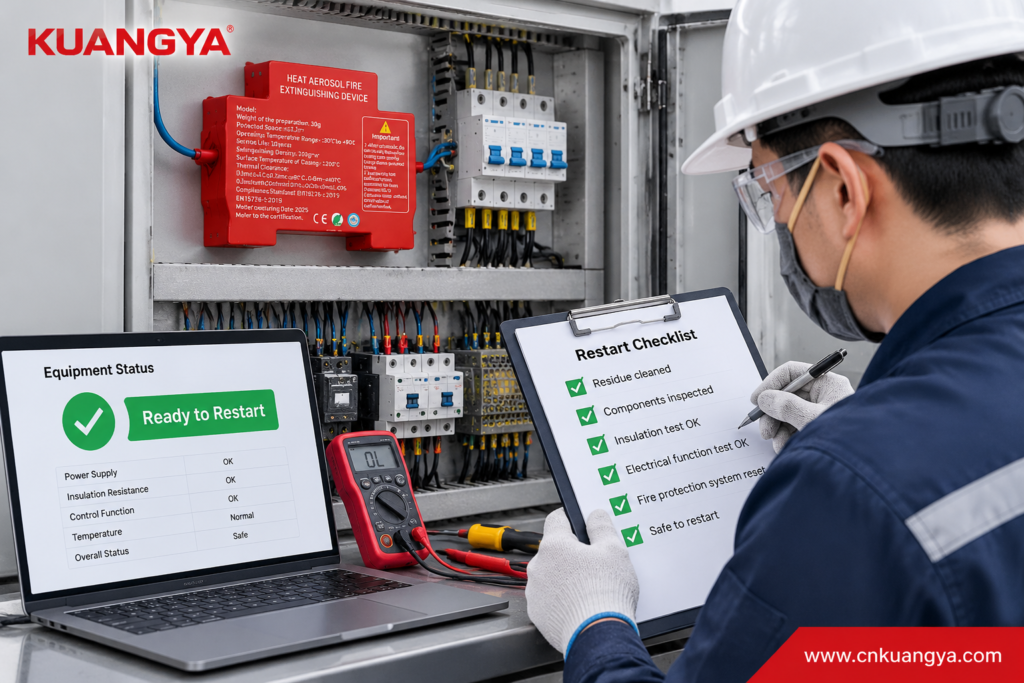
A responsible restart process typically includes:
Not every installation requires the same tests or approval process. The responsible engineer should determine the appropriate requirements based on the equipment manufacturer’s documentation, local regulations, and the incident findings.
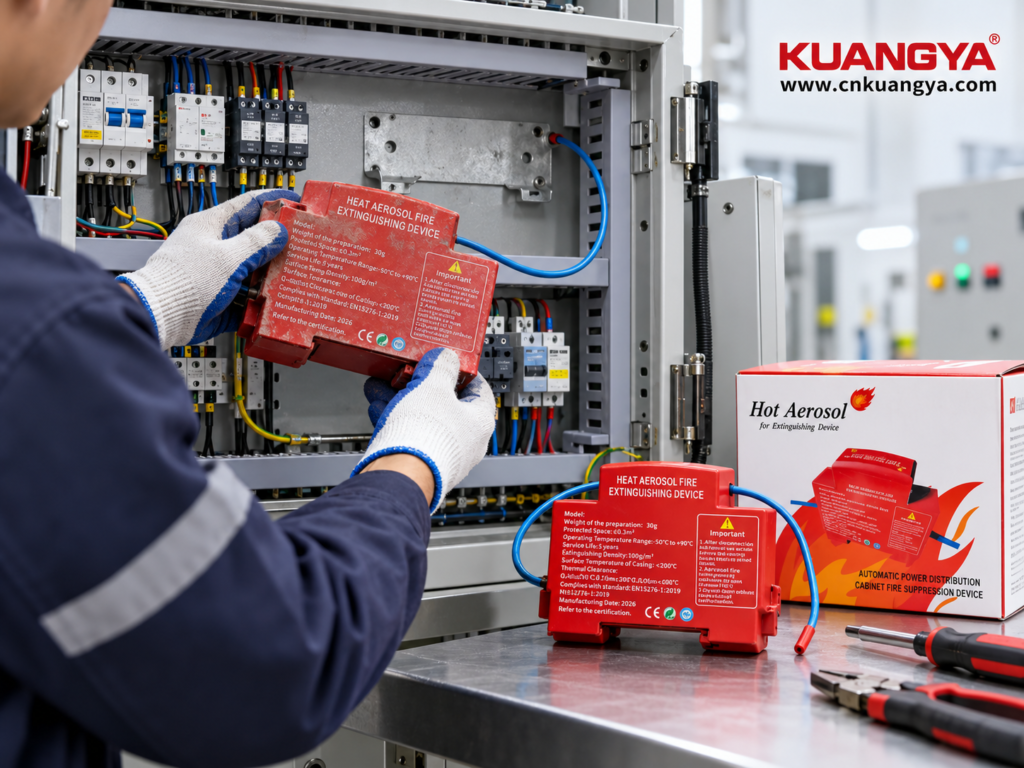
In many condensed aerosol systems, the generator is designed for a single discharge and must be replaced after activation. However, the exact requirement depends on the product design.
Do not assume that a generator can be reused simply because its housing appears intact. The internal extinguishing compound or activation mechanism may have been consumed, and the unit may no longer provide its intended protection.
| 項目 | Inspection question | Possible action |
|---|---|---|
| Aerosol generator | Has it discharged, activated, or sustained physical damage? | Replace or service according to the product manual |
| Activation wiring | Is the wiring intact and correctly connected? | Repair and test as specified |
| Detection devices | Are they damaged, contaminated, or still reporting a fault? | Inspect, clean, test, or replace |
| Control panel | Are alarms, faults, or activation indicators still present? | Investigate and reset only after the cause has been addressed |
| Backup power supply | Is the power supply functional and available? | Test and replace defective components |
| Mounting brackets | Are the generator and brackets secure and undamaged? | Repair or replace as required |
| System coverage | Have enclosure volume, openings, or protected equipment changed? | Have the design and coverage reviewed by a qualified specialist |
Replacement should restore the protection intended by the original design. Simply installing another generator of a similar size may not be sufficient if the protected enclosure or hazard has changed.
For more information about selecting a suitable device, see how to choose an aerosol fire extinguisher.
Post-discharge recovery is easier when the system has been correctly designed, installed, documented, and maintained before an incident occurs.
The following measures can help reduce downtime and make future maintenance more predictable.
Maintain the installation and operation manual, safety data sheet, wiring diagram, generator model information, inspection records, and supplier contact details.
Maintenance personnel should know which cleaning products and methods are permitted for the installed system.
Check the cabinet for unauthorized modifications, damaged seals, blocked discharge paths, changes in internal volume, and alterations to the protected equipment.
Changes to the enclosure can affect the effectiveness of a suppression system. Significant modifications should be reviewed by a qualified designer or service provider.
Where the aerosol system operates with detectors, alarm panels, electrical interlocks, or remote signals, verify that these associated systems are maintained according to their applicable requirements.
An aerosol generator alone does not establish that the entire fire protection system is functional.
Personnel should understand the difference between ordinary cleaning, post-fire recovery, electrical inspection, and suppression-system recommissioning.
They should also know when to stop work and contact a specialist rather than attempting an unfamiliar cleaning or repair procedure.
For critical electrical cabinets, establish a recovery plan that identifies replacement generators, spare electrical components, qualified service providers, and the authorization needed before equipment returns to operation.
This preparation can reduce delays without compromising personnel safety or equipment reliability.
The following is an illustrative engineering scenario, not a report of a verified customer incident. It demonstrates how a maintenance team might organize a post-discharge assessment.
An industrial control cabinet experiences an electrical fault, and its installed condensed aerosol fire suppression system activates. The flames are no longer visible after the incident, but fine deposits remain on internal surfaces. Several components show signs of heat exposure.
The maintenance team must determine whether the cabinet can be returned to service.
The team isolates the affected equipment under an approved electrical safety procedure and confirms that the area is safe for inspection.
Photographs are taken of the enclosure, the generator, the affected wiring, and the suspected fault location. The team records the control-panel indications and identifies the installed aerosol system.
The team consults the generator manufacturer’s documentation before selecting a residue-removal method.
Loose deposits are removed using an approved procedure. Electronic assemblies are assessed separately, and components exposed to heat or smoke are inspected for damage.
During the electrical inspection, the team identifies a cable section with visible heat damage. That section is replaced rather than being accepted merely because the surrounding cabinet has been cleaned.
The suppression generator is evaluated according to the manufacturer’s instructions and replaced because the installed unit is designed for single discharge.
The team completes the required electrical checks, verifies the detection and control circuits, and confirms that the suppression system has been restored to its required operational condition.
The cabinet returns to service only after the responsible personnel authorize the restart.
| Lesson | なぜそれが重要なのか |
|---|---|
| Extinguishing the fire is only the first step | Electrical damage may remain after visible flames disappear |
| Cleaning must match the actual agent | Different formulations and components can require different procedures |
| Fire residue and aerosol residue are not the same | Both may need to be addressed |
| Damaged components should not be accepted solely on visual appearance | Appropriate electrical testing and engineering assessment may be necessary |
| The suppression system must also be restored | Cleaning the cabinet does not automatically restore fire protection |
The main lesson is that a successful recovery requires both fire-related assessment and electrical-system verification.
Not automatically. The equipment must be assessed for fire damage, contamination, and electrical safety. Follow the installed system’s instructions and the equipment manufacturer’s requirements before restarting.
Some condensed aerosol systems leave fine particulate residue after discharge. The amount and characteristics depend on the formulation, installation, and discharge conditions. Consult the specific product documentation.
The answer depends on the particular agent and the conditions of use. Some manufacturers document their own agents as nonconductive under specified conditions, but this should not be generalized to every aerosol product or to mixed deposits containing soot and combustion by-products.
Certain residues may absorb moisture and contribute to oxidation or other surface problems under particular conditions. Prompt cleaning in accordance with the manufacturer’s instructions helps manage this risk.
Only if the applicable instructions permit it and the method is suitable for the equipment. Uncontrolled compressed air can spread contamination or drive particles into sensitive components.
Many condensed aerosol generators are single-use devices. Check the specific model’s documentation and replace or service the unit as instructed.
A qualified electrical professional should assess electrical safety and damage. Depending on the installation, a fire suppression service provider and the equipment manufacturer may also need to participate in the recovery process.
As soon as it is safe and practical, in accordance with the manufacturer’s instructions. Do not delay cleaning unnecessarily, but never enter an unsafe area or begin maintenance before the required safety conditions have been met.
No. Cleaning removes contamination but does not repair damaged insulation, burned components, failed terminals, or a defective suppression system. The equipment must pass the required inspection and return-to-service checks.
The system should be inspected and restored according to the manufacturer’s recommissioning procedures and applicable requirements. Any required functional tests must be performed by appropriately qualified personnel using the approved procedure.
After a condensed aerosol fire suppression system discharges, safe recovery requires more than removing visible residue. The affected area must first be declared safe, the electrical equipment must be isolated and assessed, and cleaning must follow the specific agent and equipment requirements.
Engineers should then inspect electrical components, replace damaged parts, evaluate the discharged generator, and verify that the fire suppression system is ready for service before authorizing a restart.
The most reliable approach is to combine prompt, appropriate cleaning with a documented electrical inspection and a controlled return-to-service process.
For facilities planning protection for electrical cabinets and distribution equipment, selecting a suitable suppression device is only one part of the overall strategy. Correct installation, maintenance, incident procedures, and post-discharge recovery planning are equally important.
詳細はこちら 電気キャビネットの火災保護 そして aerosol fire suppression for PV distribution boxes to explore related protection considerations for electrical installations.

