웽양 공업구 웨칭 원저우 325000
근무 시간
월요일~금요일: 오전 7시~오후 7시
주말: 주말: 오전 10시 - 오후 5시
웽양 공업구 웨칭 원저우 325000
근무 시간
월요일~금요일: 오전 7시~오후 7시
주말: 주말: 오전 10시 - 오후 5시

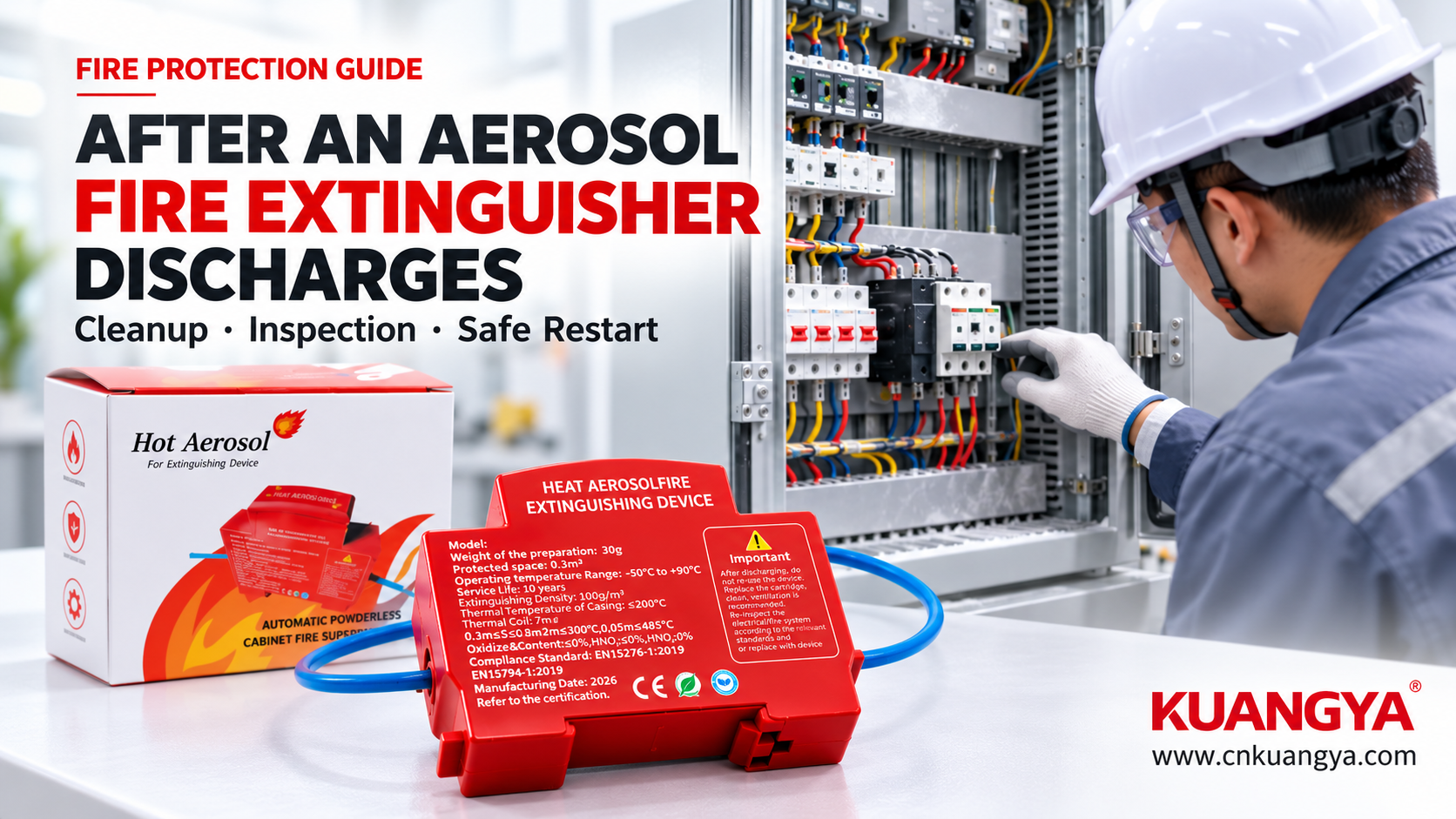
에어로졸 소화기 또는 자동 응축 에어로졸 소화 장치는 전기 캐비닛, 제어반 또는 기타 밀폐된 공간 내부의 화재를 제어하는 데 도움이 될 수 있습니다. 그러나 화재가 진압되었다고 해서 작업이 끝나는 것은 아닙니다.
에어로졸 소화 시스템이 방출된 후, 시설 관리자 및 유지보수 엔지니어는 화재 피해를 평가하고, 적절한 청소 방법을 사용하여 잔류물을 제거하며, 전기 부품을 점검하고, 소화 시스템의 상태를 확인하며, 장비가 안전하게 다시 작동될 수 있는지 여부를 결정해야 합니다.
일반적인 실수는 에어로졸 시스템이 기존의 물 기반 시스템과 같은 방식으로 물을 사용하지 않기 때문에 보호된 장비를 즉시 다시 시작할 수 있다고 가정하는 것입니다. 실제로는 결과가 소화제, 방출 조건, 화재 자체 및 전기 장비의 상태에 따라 달라집니다.
이 가이드에서는 응축 에어로졸 소화 시스템이 방출된 후 수행해야 할 작업, 잔류물 제거 접근 방법, 점검이 필요한 구성 요소 및 전기 장비를 다시 시작하기 전에 엔지니어가 확인해야 할 사항에 대해 설명합니다.
응축 에어로졸 소화 시스템은 연소를 억제하는 데 도움이 되는 미세 입자와 가스를 생성합니다. 시스템 설계에 따라 소화제는 보호된 인클로저 전체에 퍼져 기존 장비로는 보호하기 어려운 영역에 도달할 수 있습니다.
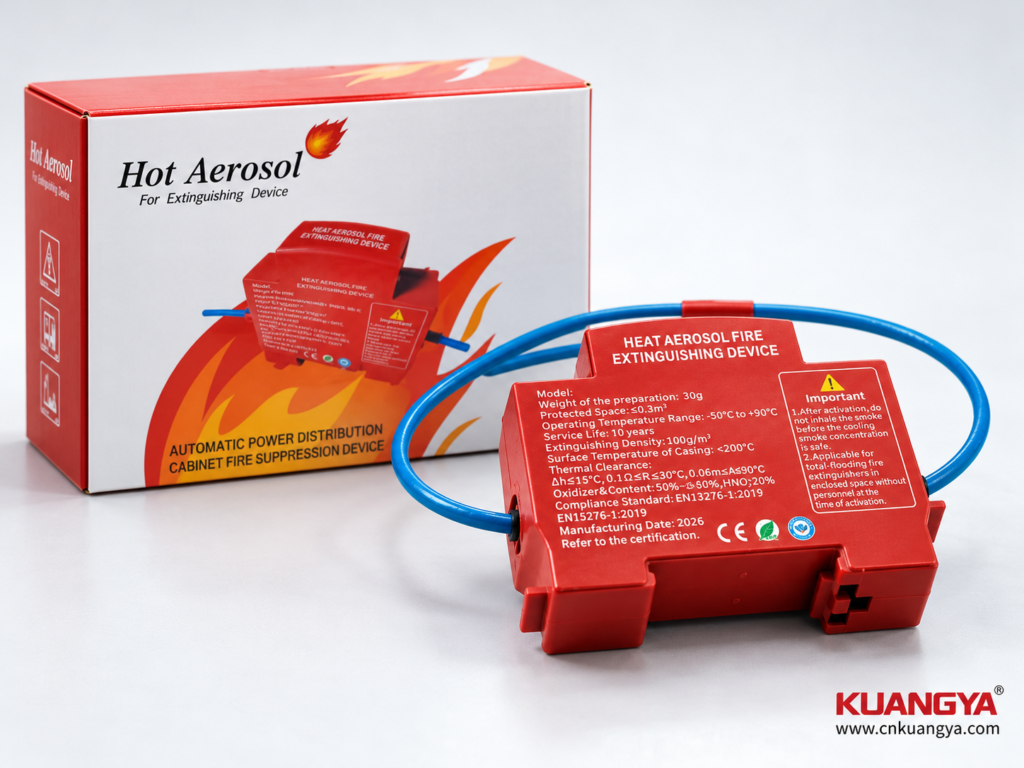
방전 후 몇 가지 주의해야 할 사항이 있을 수 있습니다.
첫째, 미세 에어로졸 입자가 인클로저 내부 표면에 쌓일 수 있습니다. 둘째, 화재 자체로 인해 연기 침전물, 그을음 및 연소 부산물이 발생했을 수 있습니다. 셋째, 눈에 보이는 불꽃이 꺼졌더라도 열로 인해 절연체, 배선, 회로 기판, 단자 또는 기타 부품이 손상되었을 수 있습니다.
에어로졸 방전으로 인해 제조업체의 설계에 따라 발전기 자체가 소모되거나 더 이상 사용할 수 없게 될 수도 있습니다.
| 조건 | 가능한 영향 | 권장 조치 |
|---|---|---|
| 미세 에어로졸 잔류물 | 인클로저 표면 및 부품에 쌓인 침전물 | 제조사의 청소 지침에 따라 해당 부품을 식별하십시오. |
| 연기 및 그을음 | 접점, 절연체 및 전자 부품의 오염 | 오염 정도를 평가하고 적절한 세척 방법을 선택하십시오. |
| 열 노출 | 손상된 절연체, 단자, 케이블 및 전자 부품 | 자격을 갖춘 전기 검사를 의뢰하십시오. |
| 높은 습도 | 표면에 특정 잔류물이 남아 있을 경우 부식 위험이 증가할 수 있습니다. | 지침에 따라 습도를 제어하고 즉시 청소하십시오. |
| 방전된 발전기 | 시스템이 의도한 보호 기능을 더 이상 제공하지 못할 수 있습니다. | 제조업체가 지정한 대로 검사하고 교체하거나 서비스를 받으십시오. |
| 활성화된 경보 또는 제어 회로 | 억제 시스템은 재설정 및 재시운전이 필요할 수 있습니다. | 제어판 및 인터록 기능을 확인하십시오. |
이러한 조건은 별도로 평가해야 합니다. 깨끗해 보이는 캐비닛이 전기 부품이 안전하다는 증거는 아니며, 눈에 보이는 잔여물이 있다고 해서 모든 부품을 교체해야 하는 것은 아닙니다.
전기 캐비닛 보호 장치 선택에 대한 배경 정보는 다음 가이드를 참조하십시오. 전기 캐비닛 화재 보호.
답변은 에어로졸 제형, 제조업체의 테스트 결과, 주변 환경 및 방출에 노출된 재료에 따라 달라집니다.
일부 응축 에어로졸 시스템은 미세하고 주로 건조한 입자 잔여물을 생성합니다. 특정 제조업체는 문서에 명시된 조건 하에서 특정 약품이 비전도성 및 비부식성이라고 설명합니다. 이러한 제품별 특성을 모든 에어로졸 소화 시스템에 일반화해서는 안 됩니다.
예를 들어, FirePro Xtinguish 설치 및 작동 설명서 특정 응축 에어로졸 시스템의 잔류물은 즉시 제거해야 함을 설명합니다. 또한, 잔류물이 장기간 방치될 경우 습기 흡수 및 민감한 금속 표면의 산화 가능성에 대해서도 설명합니다.
이 구분은 중요합니다: 소화 약제의 특성이 화재 피해 평가 또는 방출 후 청소 절차 준수의 필요성을 없애지는 않습니다.
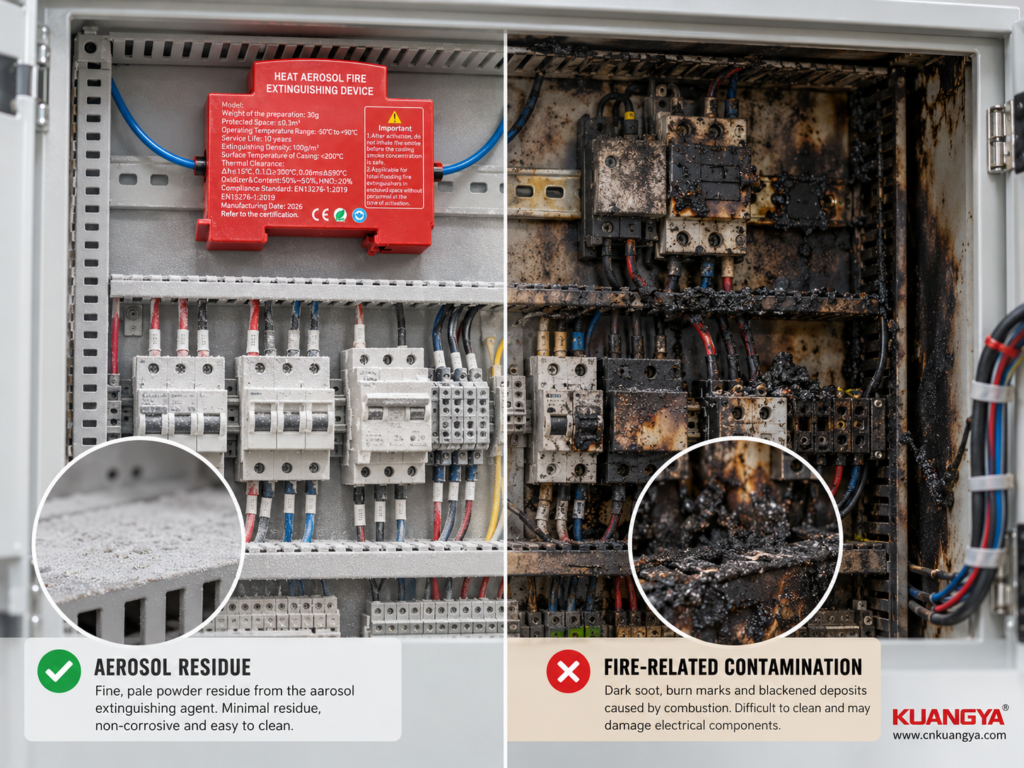
| 비교 | 에어로졸 잔류물 | 화재 관련 오염 |
|---|---|---|
| 출처 | 시스템에서 방출된 소화제 | 연기, 그을음, 열 및 연소 부산물 |
| 모양 | 시약에 따라 미세하고 옅은 색 또는 회색 침전물로 나타날 수 있습니다. | 검은 그을음, 기름때 또는 기타 변색으로 나타날 수 있습니다. |
| 배포 | 방전이 도달한 표면 전체에 퍼질 수 있습니다. | 화재 위치, 공기 흐름 및 연소된 물질에 따라 다릅니다. |
| 잠재적 우려 사항 | 잔류물 호환성, 수분 흡수 및 표면 오염 | 부식, 절연 손상, 전도성 침전물 및 화학적 오염 |
| 세척 접근 방식 | 에어로졸 시스템 제조업체의 지침을 따르십시오. | 오염을 평가하고 영향을 받은 장비에 적합한 방법을 사용하십시오. |
실제로는 두 가지 유형의 오염이 동시에 존재할 수 있습니다. 엔지니어는 모든 침전물이 소화제 잔류물이라고 가정하거나 눈에 보이는 에어로졸 입자를 제거하면 화재 관련 손상이 모두 해결된다고 가정해서는 안 됩니다.
회로 기판, 릴레이, 커넥터, 센서 및 노출된 접점은 특별한 주의가 필요합니다.
청소하기 전에 부품 제조업체의 권장 사항과 소화 시스템의 방출 후 지침을 확인하십시오. 일부 부품은 특정 조건에서 특정 잔류물을 허용할 수 있지만, 열, 연기 또는 화학적 오염에 노출된 후 전문적인 청소 또는 교체가 필요한 부품도 있습니다.
물, 용제, 압축 공기 또는 전자 세척 스프레이를 무분별하게 사용하지 마십시오. 올바른 방법은 부품, 잔류물 및 제조업체의 지침에 따라 달라집니다.
에어로졸 및 기존 화재 진압 방식의 차이점에 대한 자세한 내용은 당사의 기사를 참조하십시오. 에어로졸 소화 시스템 대 전통적인 소화 시스템.
최우선 과제는 인명 안전이며, 그 다음으로 화재 평가 및 영향받은 장비 보호입니다.
방전이 멈췄다고 해서 단순히 인클로저를 열거나 보호 구역에 들어가지 마십시오. 시스템 및 사고에 따라 뜨거운 표면, 연기, 연소 가스, 시야 감소, 전기 에너지 또는 방전 자체로 인한 위험이 여전히 존재할 수 있습니다.
필요한 대기 시간 및 재진입 절차는 시스템 제조업체의 지침과 현장의 비상 절차를 따라야 합니다.
책임 있는 비상 또는 안전 담당자가 출입이 안전하다고 판단할 때까지 인원을 영향받은 구역에서 멀리 떨어지게 하십시오.
다음 사항을 고려하십시오:
지속적인 화재의 징후가 있는 경우, 적절하게 대피하고 관련 비상 대응 인력에게 연락하십시오.
화재가 진압되었다고 해서 전기 장비가 안전하다고 가정해서는 안 됩니다.
자격을 갖춘 전기 전문가가 연결된 공급 장치, 저장된 전기 에너지 및 가능한 역전류원을 포함하여 영향을 받은 장비를 분리하는 방법을 결정해야 합니다.
전기적 상태가 평가되기 전에는 손상된 도체, 단자 또는 회로 기판을 만지지 마십시오.
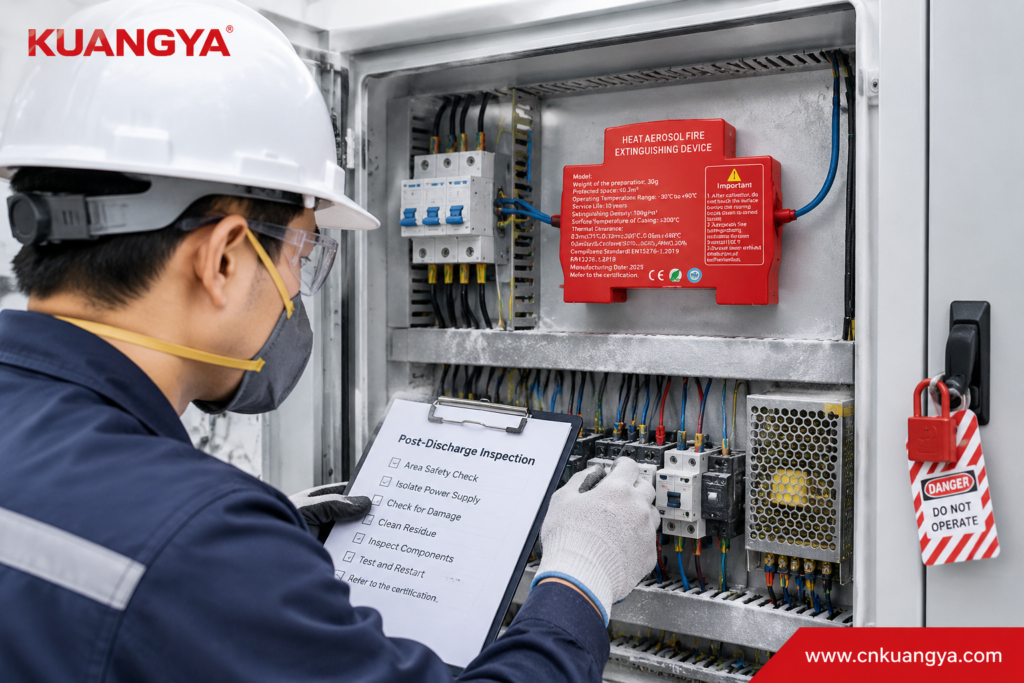
청소를 시작하기 전에 인클로저 및 억제 시스템의 상태를 기록하십시오.
유용한 기록에는 다음이 포함됩니다.
이 정보는 유지보수 팀, 장비 제조업체, 보험사 및 화재 보호 서비스 제공업체가 수리 또는 교체가 필요한 사항을 결정하는 데 도움이 될 수 있습니다.
소화 약제를 식별하고 해당 설치 및 작동 설명서를 참조하십시오. 작업이 숙련된 내부 인력에 의해 수행될 수 있는지 또는 전문 복구 또는 전기 서비스 회사가 필요한지 결정하십시오.
잔류물 및 장비 요구 사항을 이해하기 전에 일반적인 청소 방법으로 시작하는 것을 피하십시오.
청소는 시스템 제조업체의 특정 지침에 따라 안전하고 실용적인 즉시 시작해야 합니다.
Prompt removal matters because certain condensed aerosol residues may absorb moisture over time. At the same time, cleaning methods that are suitable for enclosure walls may not be appropriate for delicate electronic assemblies.
그리고 FirePro Xtinguish manual provides product-specific post-discharge guidance, including the use of suitable methods for dry residues and specialized cleaning products for electronic components.
| Area | Initial assessment | 세척 접근 방식 |
|---|---|---|
| Cabinet floor and internal panels | Check for loose residue, soot, and heat damage | Remove deposits using the method specified by the system manufacturer |
| Painted metal surfaces | Check for discoloration and residue buildup | Use a compatible cleaning method and inspect for coating damage |
| Uncoated metal surfaces | Check for deposits, oxidation, and moisture exposure | Clean promptly as instructed and assess susceptible surfaces |
| Circuit boards | Check for residue, soot, and heat exposure | Use an approved electronics-cleaning procedure or specialist service |
| Terminals and connectors | Check for deposits, corrosion, looseness, or thermal damage | Inspect and clean or replace according to component requirements |
| Ventilation paths and filters | Check for deposits and blocked airflow | Clean or replace affected parts according to equipment instructions |
| Suppression generator and mounting area | Check for physical damage and discharge-related changes | Have the system inspected and serviced as required |
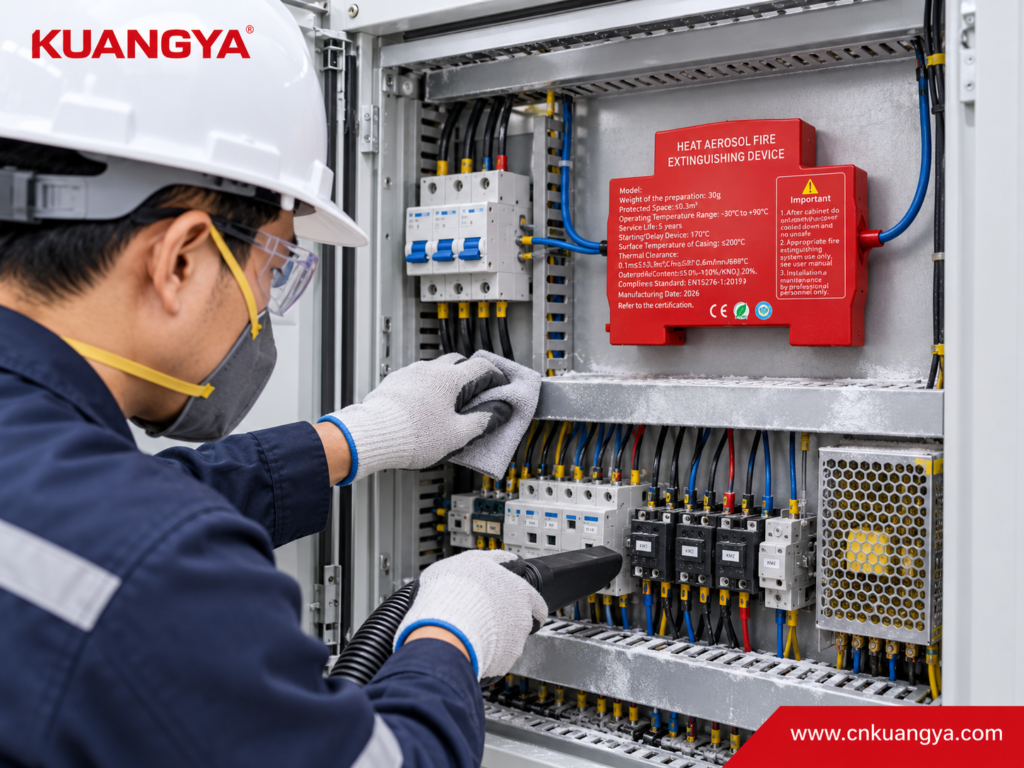
1. Identify the residue.
Confirm the agent type and consult its safety data sheet and operation manual. Where fire damage and aerosol deposits are mixed together, obtain specialist advice if necessary.
2. Protect personnel and sensitive equipment.
Use the personal protective equipment and handling procedures specified for the residue and incident conditions. Confirm that electrical equipment is safely isolated before any work begins.
3. Remove loose deposits using an approved method.
Depending on the specific product instructions, this may involve suitable wiping, brushing, vacuuming, or other controlled removal methods. Do not assume that compressed air or an ordinary vacuum is appropriate for every component or residue.
4. Clean electronic components separately.
Use only a method approved for the component and the particular contamination. A cleaning product that is safe for one circuit board or connector may be unsuitable for another.
5. Inspect after cleaning.
Check for remaining deposits, signs of corrosion, damaged insulation, discoloration, and other defects. Cleaning cannot reverse damage caused by excessive temperature or electrical arcing.
6. Record the work.
Document the cleaning method, products used, parts replaced, inspection results, and any outstanding issues.
The following practices can create additional problems when used without an approved procedure:
The objective is not simply to make the cabinet look clean. It is to remove the relevant contamination without introducing new electrical, chemical, or mechanical risks.
Once the immediate hazards have been addressed and the appropriate cleaning has been completed, the affected electrical equipment should undergo a systematic inspection.
The depth of inspection depends on the fire severity, equipment design, contamination, and operational importance of the installation.
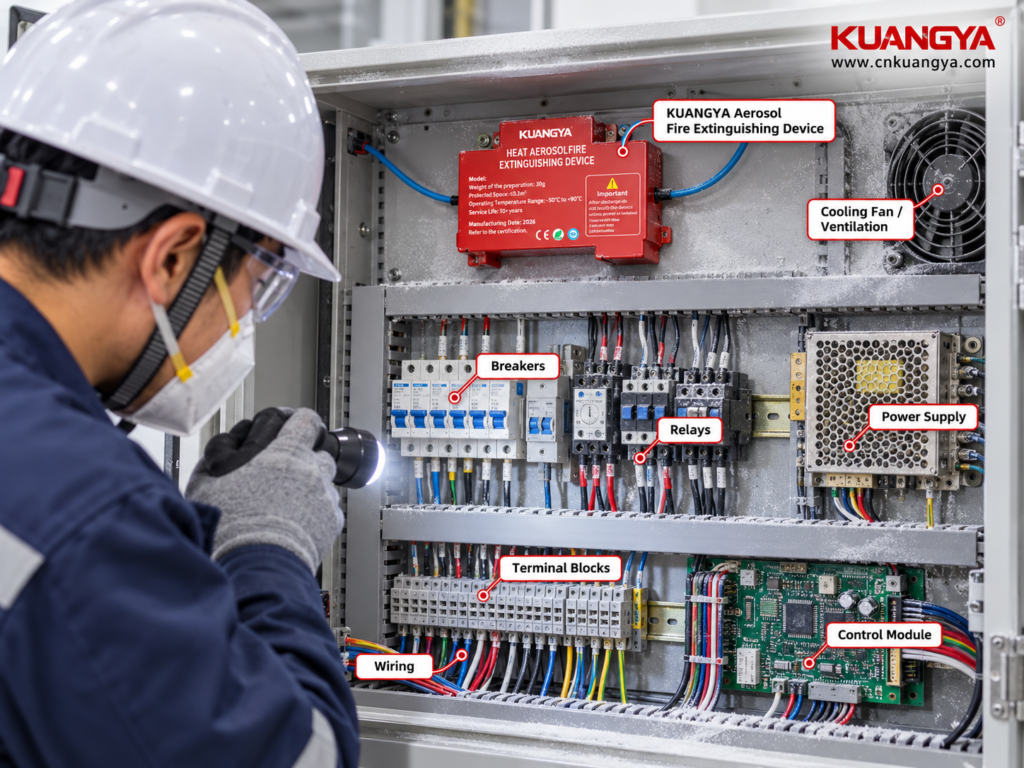
| 구성 요소 | What to check | Possible action |
|---|---|---|
| Cables and insulation | Cracking, melting, discoloration, brittleness, or deformation | Replace damaged cable sections |
| 단자대 | Loose connections, heat marks, residue, or corrosion | Clean, retorque, or replace according to manufacturer specifications |
| Circuit breakers and contactors | Heat damage, abnormal operation, damaged housings, or contaminated contacts | Arrange inspection and replacement where required |
| Printed circuit boards | Soot, residue, damaged components, lifted tracks, or discoloration | Specialist cleaning, testing, repair, or replacement |
| Sensors and detectors | Physical damage, contamination, or incorrect status indications | Clean, test, or replace as specified |
| Fans and ventilation components | Blocked airflow, damaged blades, or contaminated filters | Clean or replace affected parts |
| Enclosure and seals | Warping, damaged seals, openings, or compromised environmental protection | Repair or replace as appropriate |
| Protective earthing | Damaged conductors, loose connections, or compromised bonding | Verify electrical continuity and repair defects |
| Control and alarm circuits | Fault indications, damaged wiring, or failed interlocks | Test and recommission the affected circuits |
Visual inspection is important, but it may not be sufficient. Depending on the equipment and incident, qualified personnel may also need to perform insulation-resistance measurements, continuity checks, functional testing, or other electrical tests.
Test methods and acceptance criteria must be suitable for the equipment. Some electronic components can be damaged by inappropriate testing voltages, so the manufacturer’s instructions should be followed.
There is no universal waiting time that makes electrical equipment safe to restart after an aerosol fire suppression event.
The decision should be based on the condition of the equipment, the nature of the incident, the cleaning results, and the required inspection and testing.
A cabinet that experienced a nuisance discharge without a fire may need a different recovery process from one exposed to sustained flames, high temperatures, smoke, and electrical arcing.
| Finding | Is immediate restart appropriate? | Required next step |
|---|---|---|
| No visible fire damage, but the system discharged | 자동 아님 | Verify isolation, residue removal, system condition, and equipment requirements |
| Fine residue is present on electrical components | No, not before assessment | Complete the approved cleaning and inspection process |
| Smoke or soot has entered the cabinet | No, not before assessment | Evaluate contamination and component condition |
| Insulation is melted or cables are visibly damaged | 아니요 | Replace or repair affected components and perform the required tests |
| A circuit breaker or contactor shows heat damage | 아니요 | Have the component evaluated and replace it if required |
| Cleaning is complete, but electrical testing is outstanding | 아니요 | Complete the required inspection and tests |
| Inspection and required tests are satisfactory | Potentially | Obtain the required authorization and follow the equipment’s return-to-service procedure |
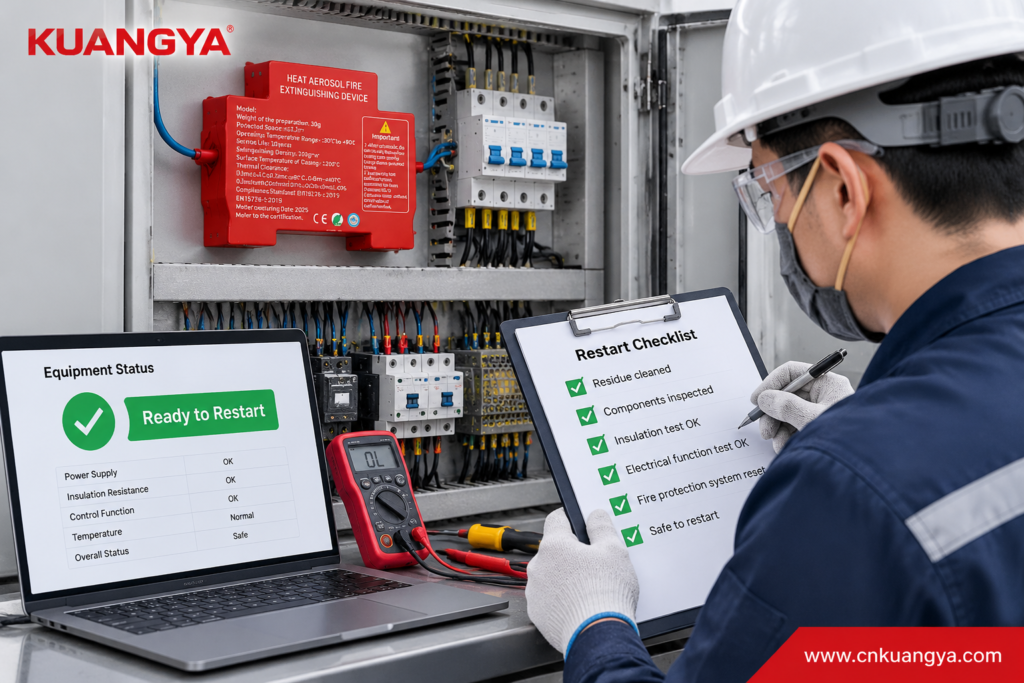
A responsible restart process typically includes:
Not every installation requires the same tests or approval process. The responsible engineer should determine the appropriate requirements based on the equipment manufacturer’s documentation, local regulations, and the incident findings.
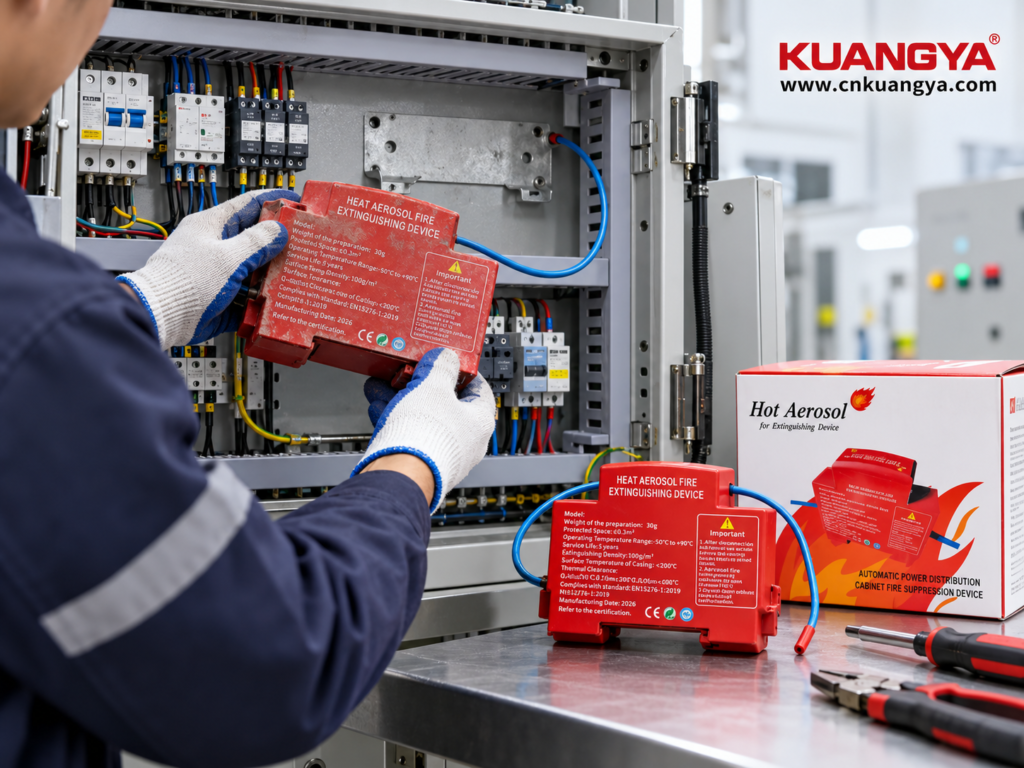
In many condensed aerosol systems, the generator is designed for a single discharge and must be replaced after activation. However, the exact requirement depends on the product design.
Do not assume that a generator can be reused simply because its housing appears intact. The internal extinguishing compound or activation mechanism may have been consumed, and the unit may no longer provide its intended protection.
| 항목 | Inspection question | Possible action |
|---|---|---|
| Aerosol generator | Has it discharged, activated, or sustained physical damage? | Replace or service according to the product manual |
| Activation wiring | Is the wiring intact and correctly connected? | Repair and test as specified |
| Detection devices | Are they damaged, contaminated, or still reporting a fault? | Inspect, clean, test, or replace |
| Control panel | Are alarms, faults, or activation indicators still present? | Investigate and reset only after the cause has been addressed |
| Backup power supply | Is the power supply functional and available? | Test and replace defective components |
| Mounting brackets | Are the generator and brackets secure and undamaged? | Repair or replace as required |
| System coverage | Have enclosure volume, openings, or protected equipment changed? | Have the design and coverage reviewed by a qualified specialist |
Replacement should restore the protection intended by the original design. Simply installing another generator of a similar size may not be sufficient if the protected enclosure or hazard has changed.
For more information about selecting a suitable device, see how to choose an aerosol fire extinguisher.
Post-discharge recovery is easier when the system has been correctly designed, installed, documented, and maintained before an incident occurs.
The following measures can help reduce downtime and make future maintenance more predictable.
Maintain the installation and operation manual, safety data sheet, wiring diagram, generator model information, inspection records, and supplier contact details.
Maintenance personnel should know which cleaning products and methods are permitted for the installed system.
Check the cabinet for unauthorized modifications, damaged seals, blocked discharge paths, changes in internal volume, and alterations to the protected equipment.
Changes to the enclosure can affect the effectiveness of a suppression system. Significant modifications should be reviewed by a qualified designer or service provider.
Where the aerosol system operates with detectors, alarm panels, electrical interlocks, or remote signals, verify that these associated systems are maintained according to their applicable requirements.
An aerosol generator alone does not establish that the entire fire protection system is functional.
Personnel should understand the difference between ordinary cleaning, post-fire recovery, electrical inspection, and suppression-system recommissioning.
They should also know when to stop work and contact a specialist rather than attempting an unfamiliar cleaning or repair procedure.
For critical electrical cabinets, establish a recovery plan that identifies replacement generators, spare electrical components, qualified service providers, and the authorization needed before equipment returns to operation.
This preparation can reduce delays without compromising personnel safety or equipment reliability.
The following is an illustrative engineering scenario, not a report of a verified customer incident. It demonstrates how a maintenance team might organize a post-discharge assessment.
An industrial control cabinet experiences an electrical fault, and its installed condensed aerosol fire suppression system activates. The flames are no longer visible after the incident, but fine deposits remain on internal surfaces. Several components show signs of heat exposure.
The maintenance team must determine whether the cabinet can be returned to service.
The team isolates the affected equipment under an approved electrical safety procedure and confirms that the area is safe for inspection.
Photographs are taken of the enclosure, the generator, the affected wiring, and the suspected fault location. The team records the control-panel indications and identifies the installed aerosol system.
The team consults the generator manufacturer’s documentation before selecting a residue-removal method.
Loose deposits are removed using an approved procedure. Electronic assemblies are assessed separately, and components exposed to heat or smoke are inspected for damage.
During the electrical inspection, the team identifies a cable section with visible heat damage. That section is replaced rather than being accepted merely because the surrounding cabinet has been cleaned.
The suppression generator is evaluated according to the manufacturer’s instructions and replaced because the installed unit is designed for single discharge.
The team completes the required electrical checks, verifies the detection and control circuits, and confirms that the suppression system has been restored to its required operational condition.
The cabinet returns to service only after the responsible personnel authorize the restart.
| Lesson | 중요한 이유 |
|---|---|
| Extinguishing the fire is only the first step | Electrical damage may remain after visible flames disappear |
| Cleaning must match the actual agent | Different formulations and components can require different procedures |
| Fire residue and aerosol residue are not the same | Both may need to be addressed |
| Damaged components should not be accepted solely on visual appearance | Appropriate electrical testing and engineering assessment may be necessary |
| The suppression system must also be restored | Cleaning the cabinet does not automatically restore fire protection |
The main lesson is that a successful recovery requires both fire-related assessment and electrical-system verification.
Not automatically. The equipment must be assessed for fire damage, contamination, and electrical safety. Follow the installed system’s instructions and the equipment manufacturer’s requirements before restarting.
Some condensed aerosol systems leave fine particulate residue after discharge. The amount and characteristics depend on the formulation, installation, and discharge conditions. Consult the specific product documentation.
The answer depends on the particular agent and the conditions of use. Some manufacturers document their own agents as nonconductive under specified conditions, but this should not be generalized to every aerosol product or to mixed deposits containing soot and combustion by-products.
Certain residues may absorb moisture and contribute to oxidation or other surface problems under particular conditions. Prompt cleaning in accordance with the manufacturer’s instructions helps manage this risk.
Only if the applicable instructions permit it and the method is suitable for the equipment. Uncontrolled compressed air can spread contamination or drive particles into sensitive components.
Many condensed aerosol generators are single-use devices. Check the specific model’s documentation and replace or service the unit as instructed.
A qualified electrical professional should assess electrical safety and damage. Depending on the installation, a fire suppression service provider and the equipment manufacturer may also need to participate in the recovery process.
As soon as it is safe and practical, in accordance with the manufacturer’s instructions. Do not delay cleaning unnecessarily, but never enter an unsafe area or begin maintenance before the required safety conditions have been met.
No. Cleaning removes contamination but does not repair damaged insulation, burned components, failed terminals, or a defective suppression system. The equipment must pass the required inspection and return-to-service checks.
The system should be inspected and restored according to the manufacturer’s recommissioning procedures and applicable requirements. Any required functional tests must be performed by appropriately qualified personnel using the approved procedure.
After a condensed aerosol fire suppression system discharges, safe recovery requires more than removing visible residue. The affected area must first be declared safe, the electrical equipment must be isolated and assessed, and cleaning must follow the specific agent and equipment requirements.
Engineers should then inspect electrical components, replace damaged parts, evaluate the discharged generator, and verify that the fire suppression system is ready for service before authorizing a restart.
The most reliable approach is to combine prompt, appropriate cleaning with a documented electrical inspection and a controlled return-to-service process.
For facilities planning protection for electrical cabinets and distribution equipment, selecting a suitable suppression device is only one part of the overall strategy. Correct installation, maintenance, incident procedures, and post-discharge recovery planning are equally important.
자세히 알아보기 전기 캐비닛 화재 보호 및 aerosol fire suppression for PV distribution boxes to explore related protection considerations for electrical installations.

