WengYang Industriegebiet Yueqing Wenzhou 325000
Arbeitszeiten
Montag bis Freitag: 7AM - 7PM
Am Wochenende: 10AM - 5PM
WengYang Industriegebiet Yueqing Wenzhou 325000
Arbeitszeiten
Montag bis Freitag: 7AM - 7PM
Am Wochenende: 10AM - 5PM

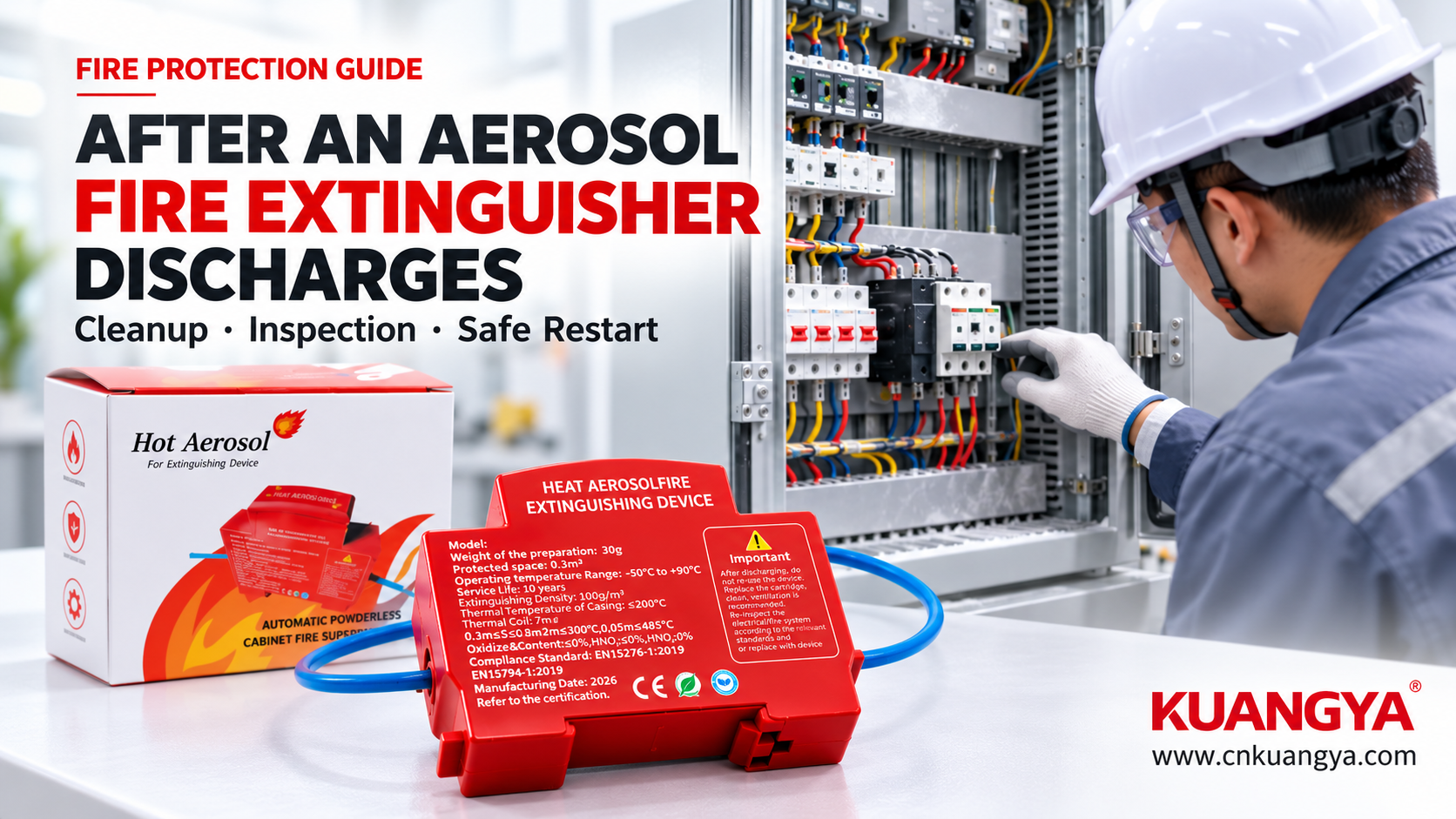
Ein Aerosol-Feuerlöscher oder eine automatische kondensierte Aerosol-Brandunterdrückungsanlage kann helfen, einen Brand in einem Schaltschrank, Bedienfeld oder einem anderen geschlossenen Raum zu kontrollieren. Die Arbeit ist jedoch nicht beendet, wenn der Brand gelöscht ist.
Nach der Auslösung eines Aerosol-Brandunterdrückungssystems müssen Facility Manager und Wartungsingenieure den Brandschaden beurteilen, Rückstände mit einer geeigneten Reinigungsmethode entfernen, elektrische Komponenten inspizieren, den Zustand des Unterdrückungssystems überprüfen und feststellen, ob die Ausrüstung sicher wieder in Betrieb genommen werden kann.
Ein häufiger Fehler ist die Annahme, dass die geschützte Ausrüstung sofort wieder eingeschaltet werden kann, nur weil ein Aerosolsystem kein Wasser auf die gleiche Weise wie ein herkömmliches wasserbasiertes System verwendet. In Wirklichkeit hängt das Ergebnis vom Löschmittel, den Auslösebedingungen, dem Brand selbst und dem Zustand der elektrischen Ausrüstung ab.
Diese Anleitung erklärt, was nach der Auslösung einer kondensierten Aerosol-Brandunterdrückungsanlage zu tun ist, wie Rückstände zu entfernen sind, welche Komponenten inspiziert werden müssen und was Ingenieure vor der Wiederinbetriebnahme elektrischer Geräte bestätigen sollten.
Kondensierte Aerosol-Brandunterdrückungsanlagen erzeugen feine Partikel und Gase, die zur Unterdrückung der Verbrennung beitragen. Je nach Systemdesign kann sich das Löschmittel in einem geschützten Gehäuse ausbreiten und Bereiche erreichen, die mit herkömmlichen Geräten schwer zu schützen sind.
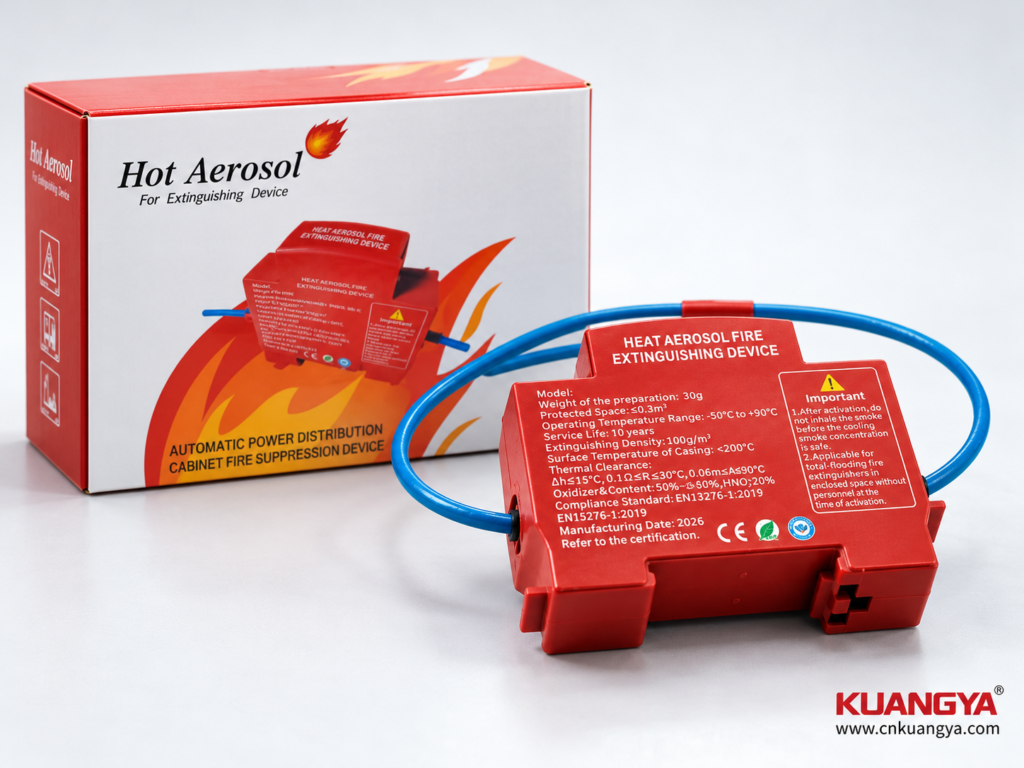
Nach der Entladung können mehrere Bedingungen Aufmerksamkeit erfordern.
Erstens können sich feine Aerosolpartikel auf Oberflächen im Gehäuse absetzen. Zweitens kann das Feuer eigene Rauchablagerungen, Ruß und Verbrennungsprodukte erzeugt haben. Drittens kann Hitze Isolierungen, Verkabelungen, Leiterplatten, Klemmen oder andere Komponenten beschädigt haben, auch wenn die sichtbaren Flammen gelöscht wurden.
Die Aerosolentladung kann auch den Generator selbst erschöpft oder anderweitig unbrauchbar machen, abhängig vom Design des Herstellers.
| Zustand | Mögliche Auswirkungen | Empfohlene Reaktion |
|---|---|---|
| Feine Aerosolrückstände | Ablagerungen auf Gehäuseoberflächen und Komponenten | Identifizieren Sie das Reinigungsmittel und befolgen Sie die Anweisungen des Herstellers zur Reinigung |
| Rauch und Ruß | Kontamination von Kontakten, Isolierung und elektronischen Bauteilen | Bewerten Sie die Kontamination und wählen Sie eine geeignete Reinigungsmethode |
| Hitzeeinwirkung | Beschädigte Isolierung, Klemmen, Kabel und elektronische Teile | Beauftragen Sie eine qualifizierte Elektroinspektion |
| Hohe Luftfeuchtigkeit | Kann das Korrosionsrisiko erhöhen, wenn bestimmte Rückstände auf Oberflächen verbleiben | Feuchtigkeit kontrollieren und umgehend gemäß Anweisung reinigen |
| Abgeschalteter Generator | Das System bietet möglicherweise keinen bestimmungsgemäßen Schutz mehr | Gemäß Herstellerangaben inspizieren und ersetzen oder warten |
| Aktivierte Alarm- oder Steuerschaltung | Das Unterdrückungssystem muss möglicherweise zurückgesetzt und neu in Betrieb genommen werden | Bedienfeld und Verriegelungsfunktionen prüfen |
Diese Bedingungen sollten separat bewertet werden. Ein sauber aussehender Schrank ist kein Beweis dafür, dass seine elektrischen Komponenten sicher sind, und sichtbare Rückstände bedeuten nicht automatisch, dass jede Komponente ersetzt werden muss.
Hintergrundinformationen zur Auswahl von Schutzmaßnahmen für elektrische Gehäuse finden Sie in unserem Leitfaden zu Brandschutz für elektrische Schaltschränke.
Die Antwort hängt von der Aerosolformulierung, den Testergebnissen des Herstellers, der Umgebung und den Materialien ab, die der Entladung ausgesetzt sind.
Einige kondensierte Aerosolsysteme erzeugen feine, überwiegend trockene Partikelrückstände. Bestimmte Hersteller beschreiben ihre spezifischen Mittel als nicht leitend und nicht korrosiv unter den Bedingungen, die von ihrer Dokumentation abgedeckt werden. Diese produktspezifischen Eigenschaften sollten nicht auf jedes Aerosol-Löschanlagensystem verallgemeinert werden.
Zum Beispiel die FirePro Xtinguish Installations- und Bedienungsanleitung erklärt, dass Rückstände aus seinem speziellen kondensierten Aerosolsystem umgehend entfernt werden sollten. Das Handbuch erörtert auch die Möglichkeit der Feuchtigkeitsaufnahme und Oxidation empfindlicher Metalloberflächen, wenn Rückstände über einen längeren Zeitraum verbleiben.
Diese Unterscheidung ist wichtig: die Eigenschaften eines Löschmittels entbinden nicht von der Notwendigkeit, Brandschäden zu beurteilen oder Reinigungsverfahren nach der Auslösung zu befolgen.
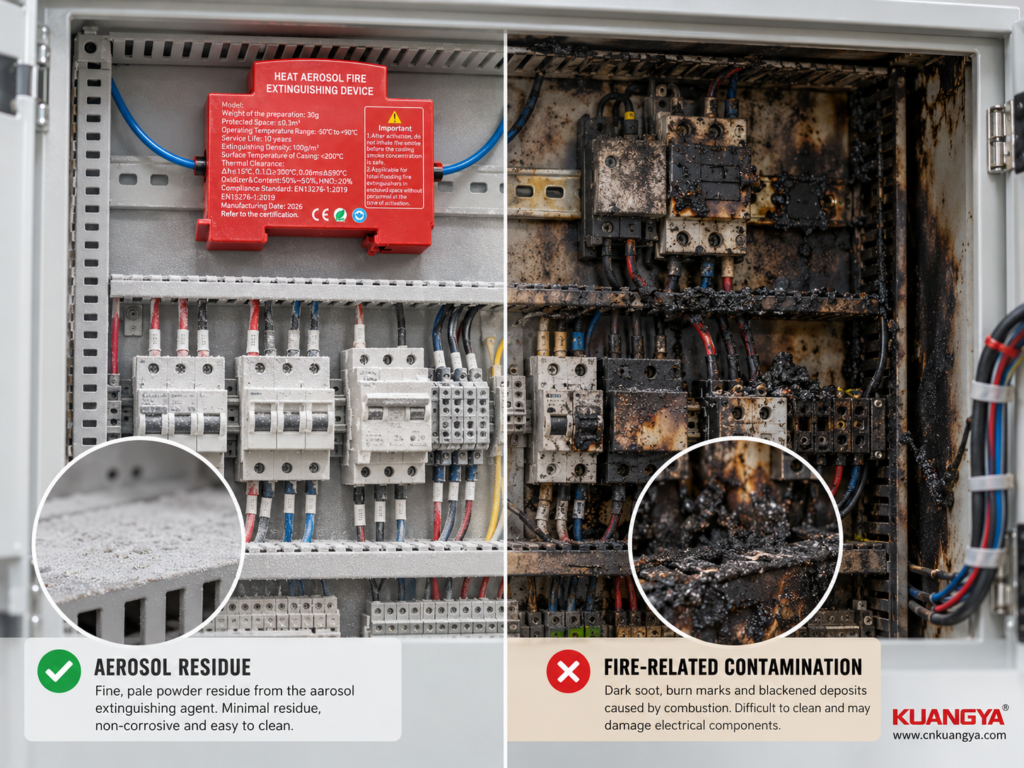
| Vergleich | Aerosolrückstände | Brandbedingte Kontamination |
|---|---|---|
| Quelle | Löschmittel, das vom System ausgestoßen wird | Rauch, Ruß, Hitze und Verbrennungsprodukte |
| Erscheinungsbild | Kann je nach Mittel als feiner, heller oder grauer Niederschlag erscheinen | Kann als schwarzer Ruß, ölige Ablagerungen oder andere Verfärbungen erscheinen |
| Vertrieb | Kann sich auf Oberflächen absetzen, die vom Entladungsvorgang erreicht werden | Hängt vom Brandort, der Luftzirkulation und den verbrannten Materialien ab |
| Mögliche Besorgnis | Verträglichkeit von Rückständen, Feuchtigkeitsaufnahme und Oberflächenkontamination | Korrosion, Isolationsschäden, leitfähige Ablagerungen und chemische Kontamination |
| Reinigungsansatz | Befolgen Sie die Anweisungen des Herstellers des Aerosolsystems | Bewerten Sie die Kontamination und verwenden Sie eine für die betroffene Ausrüstung geeignete Methode |
In der Praxis können beide Arten von Kontaminationen gleichzeitig vorhanden sein. Ingenieure sollten nicht davon ausgehen, dass jeder Niederschlag Rückstände von Löschmitteln sind oder dass die Entfernung sichtbarer Aerosolpartikel alle brandschadenbedingten Schäden behebt.
Leiterplatten, Relais, Steckverbinder, Sensoren und freiliegende Kontakte erfordern besondere Sorgfalt.
Identifizieren Sie vor der Reinigung die Empfehlungen des Komponentenherstellers und die Anweisungen des Löschsystems nach der Auslösung. Einige Komponenten können unter bestimmten Bedingungen einen bestimmten Rückstand tolerieren, während andere nach Einwirkung von Hitze, Rauch oder chemischer Kontamination eine spezielle Reinigung oder einen Austausch erfordern können.
Wenden Sie nicht wahllos Wasser, Lösungsmittel, Druckluft oder elektronische Reinigungssprays an. Die richtige Methode hängt von der Komponente, dem Rückstand und den Anweisungen des Herstellers ab.
Weitere Informationen zu den Unterschieden zwischen Aerosol- und herkömmlichen Feuerlöschanlagen finden Sie in unserem Artikel über Aerosol- vs. traditionelle Brandunterdrückungssysteme.
Die erste Priorität ist die Personensicherheit, gefolgt von der Brandbewertung und dem Schutz der betroffenen Ausrüstung.
Öffnen Sie kein Gehäuse und betreten Sie keinen geschützten Raum nur deshalb, weil die Auslösung gestoppt hat. Abhängig vom System und dem Vorfall können immer noch Gefahren durch heiße Oberflächen, Rauch, Verbrennungsgase, eingeschränkte Sicht, elektrische Energie oder die Auslösung selbst bestehen.
Die erforderliche Wartezeit und das Wiederbetretungsverfahren müssen den Anweisungen des Systemherstellers und den Notfallverfahren des Standorts befolgt werden.
Halten Sie das Personal vom betroffenen Bereich fern, bis das zuständige Notfall- oder Sicherheitspersonal festgestellt hat, dass der Zutritt sicher ist.
Berücksichtigen Sie Folgendes:
Wenn Anzeichen eines fortbestehenden Feuers vorliegen, evakuieren Sie entsprechend und kontaktieren Sie das zuständige Notfallpersonal.
Elektrische Geräte sollten nicht allein deshalb als sicher gelten, weil ein Feuer gelöscht wurde.
Ein qualifizierter Elektrofachmann sollte festlegen, wie die betroffene Ausrüstung zu isolieren ist, einschließlich aller angeschlossenen Stromversorgungen, gespeicherten elektrischen Energie und möglicher Rückspeisequellen.
Berühren Sie keine beschädigten Leiter, Klemmen oder Leiterplatten, bevor deren elektrischer Zustand beurteilt wurde.
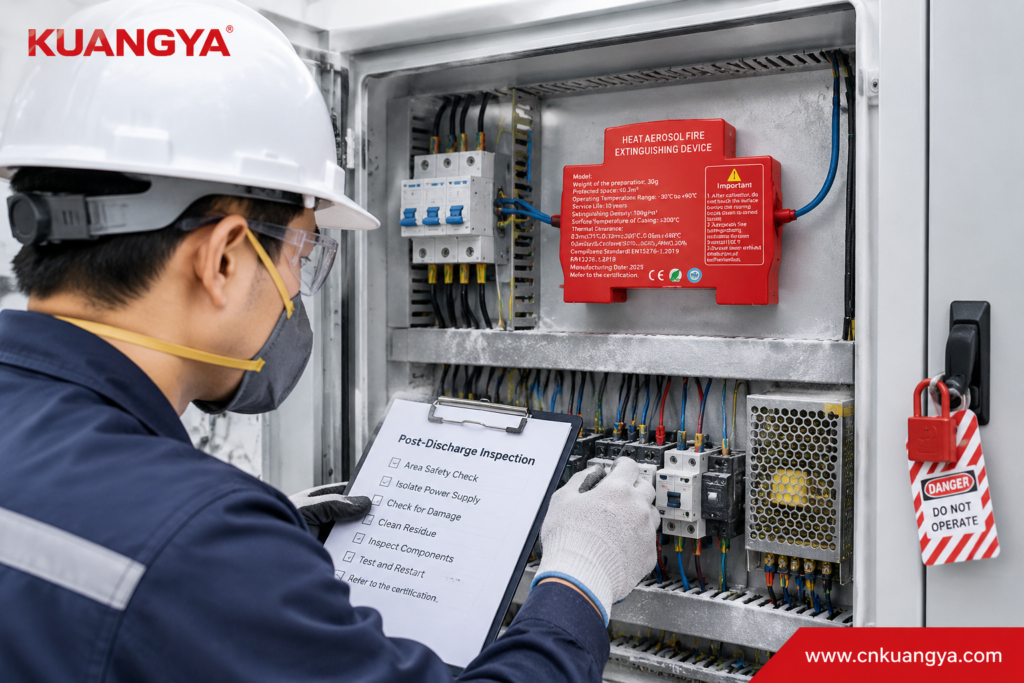
Vor Beginn der Reinigung ist der Zustand des Gehäuses und des Unterdrückungssystems zu dokumentieren.
Nützliche Aufzeichnungen umfassen:
Diese Informationen können dem Wartungsteam, dem Gerätehersteller, dem Versicherer und dem Anbieter von Brandschutzdienstleistungen helfen, festzustellen, was repariert oder ersetzt werden muss.
Identifizieren Sie das Löschmittel und konsultieren Sie das geltende Installations- und Betriebshandbuch. Ermitteln Sie, ob die Arbeiten von geschultem internem Personal durchgeführt werden können oder ob ein spezialisiertes Bergungs- oder Elektrodienstleistungsunternehmen erforderlich ist.
Vermeiden Sie es, mit einer allgemeinen Reinigungsmethode zu beginnen, bevor die Rückstände und die Anforderungen der Ausrüstung verstanden sind.
Die Reinigung sollte so bald wie sicher und praktikabel begonnen werden, wobei die spezifischen Anweisungen des Systemherstellers zu befolgen sind.
Prompt removal matters because certain condensed aerosol residues may absorb moisture over time. At the same time, cleaning methods that are suitable for enclosure walls may not be appropriate for delicate electronic assemblies.
Die FirePro Xtinguish manual provides product-specific post-discharge guidance, including the use of suitable methods for dry residues and specialized cleaning products for electronic components.
| Area | Initial assessment | Reinigungsansatz |
|---|---|---|
| Cabinet floor and internal panels | Check for loose residue, soot, and heat damage | Remove deposits using the method specified by the system manufacturer |
| Painted metal surfaces | Check for discoloration and residue buildup | Use a compatible cleaning method and inspect for coating damage |
| Uncoated metal surfaces | Check for deposits, oxidation, and moisture exposure | Clean promptly as instructed and assess susceptible surfaces |
| Circuit boards | Check for residue, soot, and heat exposure | Use an approved electronics-cleaning procedure or specialist service |
| Terminals and connectors | Check for deposits, corrosion, looseness, or thermal damage | Inspect and clean or replace according to component requirements |
| Ventilation paths and filters | Check for deposits and blocked airflow | Clean or replace affected parts according to equipment instructions |
| Suppression generator and mounting area | Check for physical damage and discharge-related changes | Have the system inspected and serviced as required |
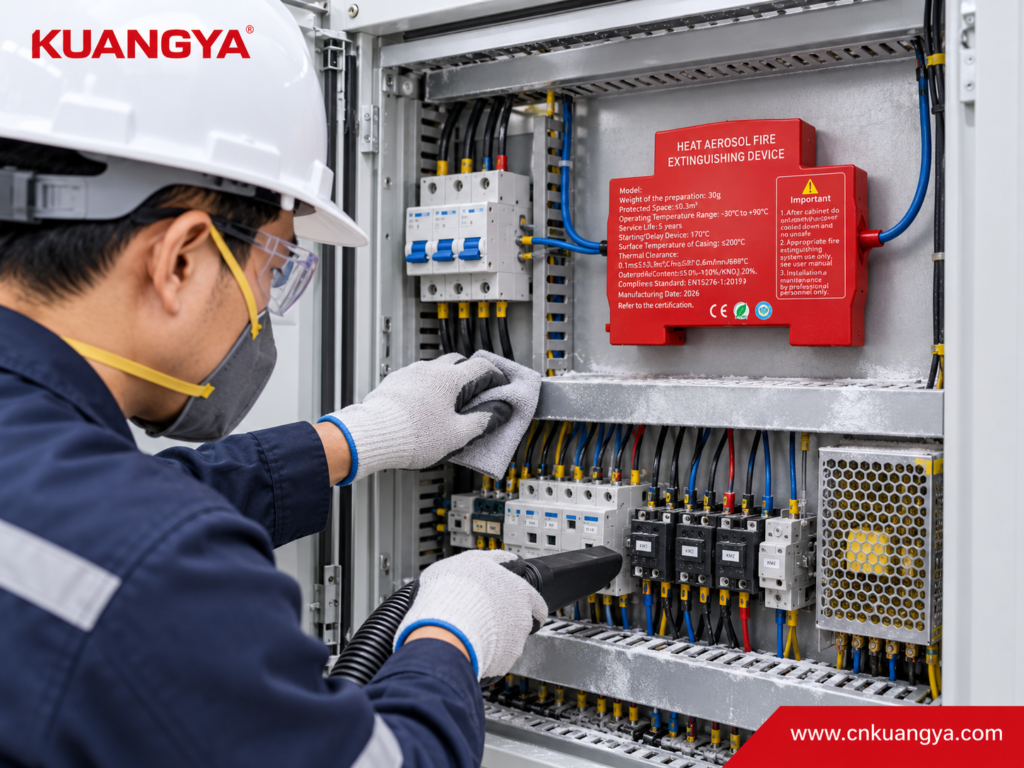
1. Identify the residue.
Confirm the agent type and consult its safety data sheet and operation manual. Where fire damage and aerosol deposits are mixed together, obtain specialist advice if necessary.
2. Protect personnel and sensitive equipment.
Use the personal protective equipment and handling procedures specified for the residue and incident conditions. Confirm that electrical equipment is safely isolated before any work begins.
3. Remove loose deposits using an approved method.
Depending on the specific product instructions, this may involve suitable wiping, brushing, vacuuming, or other controlled removal methods. Do not assume that compressed air or an ordinary vacuum is appropriate for every component or residue.
4. Clean electronic components separately.
Use only a method approved for the component and the particular contamination. A cleaning product that is safe for one circuit board or connector may be unsuitable for another.
5. Inspect after cleaning.
Check for remaining deposits, signs of corrosion, damaged insulation, discoloration, and other defects. Cleaning cannot reverse damage caused by excessive temperature or electrical arcing.
6. Record the work.
Document the cleaning method, products used, parts replaced, inspection results, and any outstanding issues.
The following practices can create additional problems when used without an approved procedure:
The objective is not simply to make the cabinet look clean. It is to remove the relevant contamination without introducing new electrical, chemical, or mechanical risks.
Once the immediate hazards have been addressed and the appropriate cleaning has been completed, the affected electrical equipment should undergo a systematic inspection.
The depth of inspection depends on the fire severity, equipment design, contamination, and operational importance of the installation.
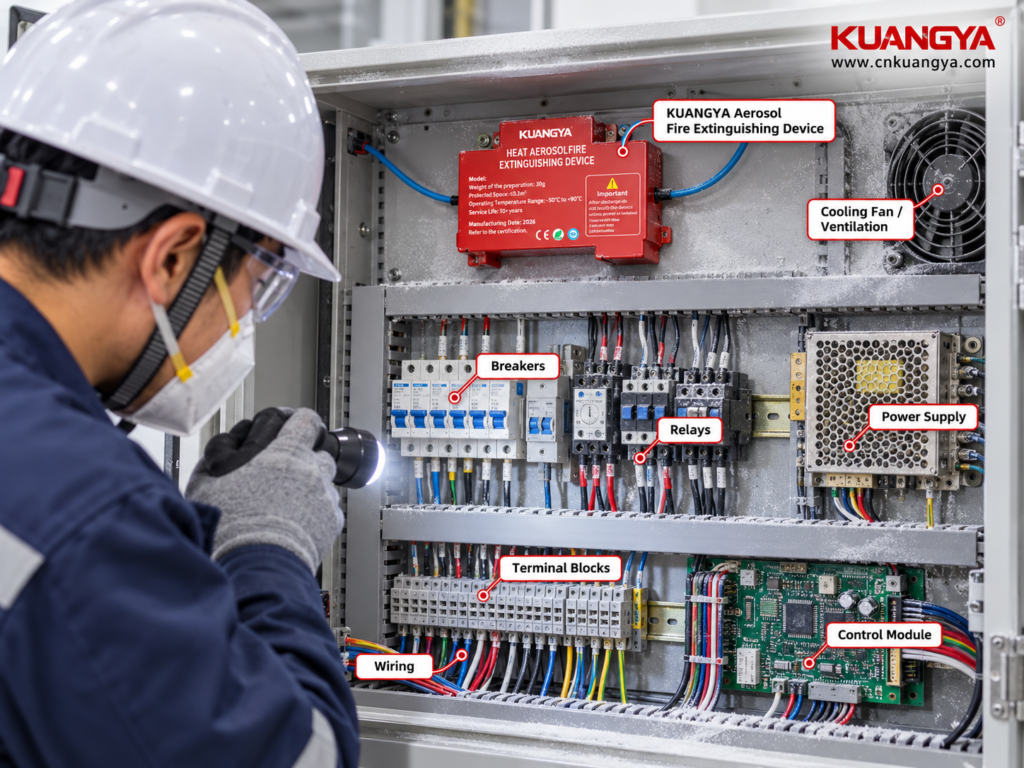
| Komponente | What to check | Possible action |
|---|---|---|
| Cables and insulation | Cracking, melting, discoloration, brittleness, or deformation | Replace damaged cable sections |
| Reihenklemmen | Loose connections, heat marks, residue, or corrosion | Clean, retorque, or replace according to manufacturer specifications |
| Circuit breakers and contactors | Heat damage, abnormal operation, damaged housings, or contaminated contacts | Arrange inspection and replacement where required |
| Printed circuit boards | Soot, residue, damaged components, lifted tracks, or discoloration | Specialist cleaning, testing, repair, or replacement |
| Sensors and detectors | Physical damage, contamination, or incorrect status indications | Clean, test, or replace as specified |
| Fans and ventilation components | Blocked airflow, damaged blades, or contaminated filters | Clean or replace affected parts |
| Enclosure and seals | Warping, damaged seals, openings, or compromised environmental protection | Repair or replace as appropriate |
| Protective earthing | Damaged conductors, loose connections, or compromised bonding | Verify electrical continuity and repair defects |
| Control and alarm circuits | Fault indications, damaged wiring, or failed interlocks | Test and recommission the affected circuits |
Visual inspection is important, but it may not be sufficient. Depending on the equipment and incident, qualified personnel may also need to perform insulation-resistance measurements, continuity checks, functional testing, or other electrical tests.
Test methods and acceptance criteria must be suitable for the equipment. Some electronic components can be damaged by inappropriate testing voltages, so the manufacturer’s instructions should be followed.
There is no universal waiting time that makes electrical equipment safe to restart after an aerosol fire suppression event.
The decision should be based on the condition of the equipment, the nature of the incident, the cleaning results, and the required inspection and testing.
A cabinet that experienced a nuisance discharge without a fire may need a different recovery process from one exposed to sustained flames, high temperatures, smoke, and electrical arcing.
| Finding | Is immediate restart appropriate? | Required next step |
|---|---|---|
| No visible fire damage, but the system discharged | Nicht automatisch | Verify isolation, residue removal, system condition, and equipment requirements |
| Fine residue is present on electrical components | No, not before assessment | Complete the approved cleaning and inspection process |
| Smoke or soot has entered the cabinet | No, not before assessment | Evaluate contamination and component condition |
| Insulation is melted or cables are visibly damaged | Nein | Replace or repair affected components and perform the required tests |
| A circuit breaker or contactor shows heat damage | Nein | Have the component evaluated and replace it if required |
| Cleaning is complete, but electrical testing is outstanding | Nein | Complete the required inspection and tests |
| Inspection and required tests are satisfactory | Potentially | Obtain the required authorization and follow the equipment’s return-to-service procedure |
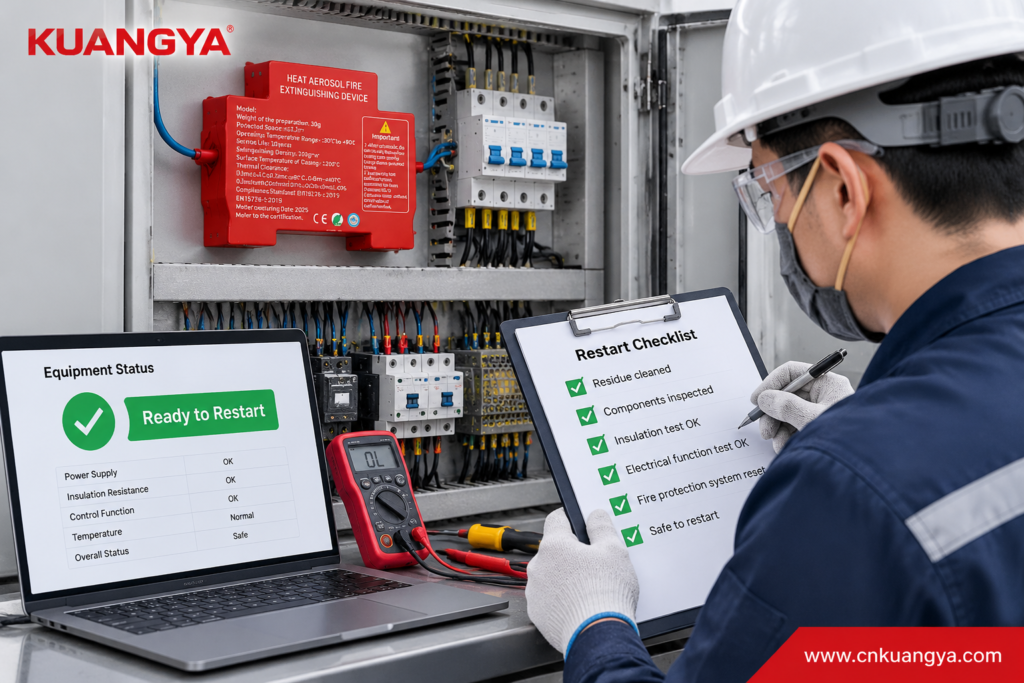
A responsible restart process typically includes:
Not every installation requires the same tests or approval process. The responsible engineer should determine the appropriate requirements based on the equipment manufacturer’s documentation, local regulations, and the incident findings.
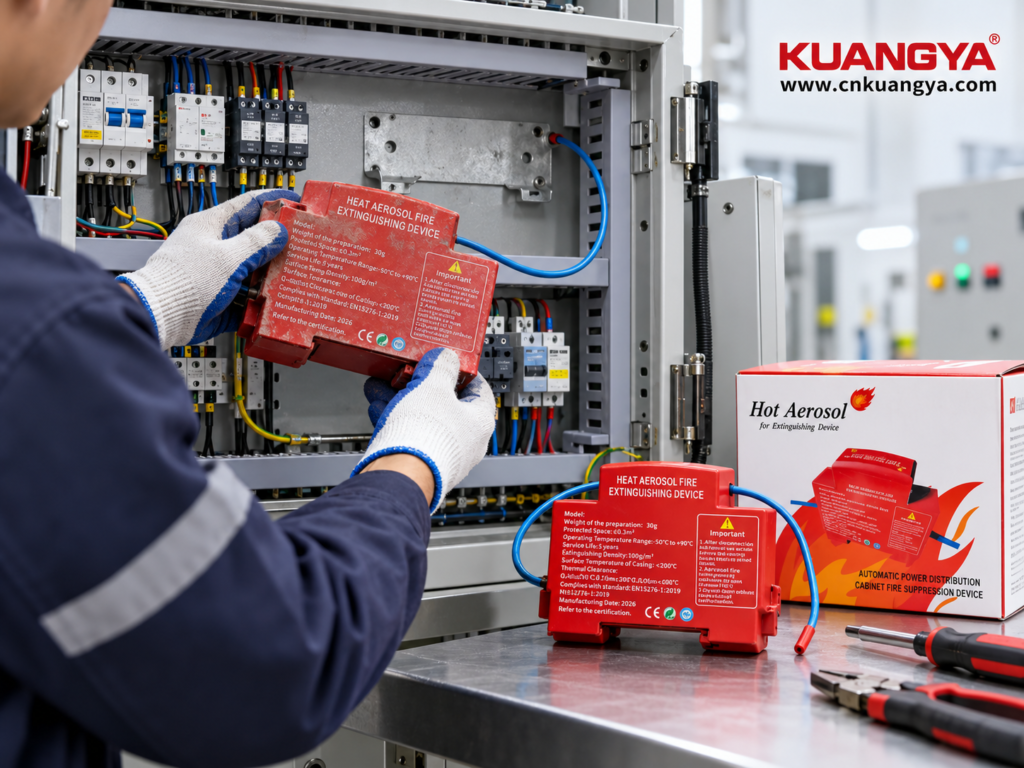
In many condensed aerosol systems, the generator is designed for a single discharge and must be replaced after activation. However, the exact requirement depends on the product design.
Do not assume that a generator can be reused simply because its housing appears intact. The internal extinguishing compound or activation mechanism may have been consumed, and the unit may no longer provide its intended protection.
| Artikel | Inspection question | Possible action |
|---|---|---|
| Aerosol generator | Has it discharged, activated, or sustained physical damage? | Replace or service according to the product manual |
| Activation wiring | Is the wiring intact and correctly connected? | Repair and test as specified |
| Detection devices | Are they damaged, contaminated, or still reporting a fault? | Inspect, clean, test, or replace |
| Control panel | Are alarms, faults, or activation indicators still present? | Investigate and reset only after the cause has been addressed |
| Backup power supply | Is the power supply functional and available? | Test and replace defective components |
| Mounting brackets | Are the generator and brackets secure and undamaged? | Repair or replace as required |
| System coverage | Have enclosure volume, openings, or protected equipment changed? | Have the design and coverage reviewed by a qualified specialist |
Replacement should restore the protection intended by the original design. Simply installing another generator of a similar size may not be sufficient if the protected enclosure or hazard has changed.
For more information about selecting a suitable device, see how to choose an aerosol fire extinguisher.
Post-discharge recovery is easier when the system has been correctly designed, installed, documented, and maintained before an incident occurs.
The following measures can help reduce downtime and make future maintenance more predictable.
Maintain the installation and operation manual, safety data sheet, wiring diagram, generator model information, inspection records, and supplier contact details.
Maintenance personnel should know which cleaning products and methods are permitted for the installed system.
Check the cabinet for unauthorized modifications, damaged seals, blocked discharge paths, changes in internal volume, and alterations to the protected equipment.
Changes to the enclosure can affect the effectiveness of a suppression system. Significant modifications should be reviewed by a qualified designer or service provider.
Where the aerosol system operates with detectors, alarm panels, electrical interlocks, or remote signals, verify that these associated systems are maintained according to their applicable requirements.
An aerosol generator alone does not establish that the entire fire protection system is functional.
Personnel should understand the difference between ordinary cleaning, post-fire recovery, electrical inspection, and suppression-system recommissioning.
They should also know when to stop work and contact a specialist rather than attempting an unfamiliar cleaning or repair procedure.
For critical electrical cabinets, establish a recovery plan that identifies replacement generators, spare electrical components, qualified service providers, and the authorization needed before equipment returns to operation.
This preparation can reduce delays without compromising personnel safety or equipment reliability.
The following is an illustrative engineering scenario, not a report of a verified customer incident. It demonstrates how a maintenance team might organize a post-discharge assessment.
An industrial control cabinet experiences an electrical fault, and its installed condensed aerosol fire suppression system activates. The flames are no longer visible after the incident, but fine deposits remain on internal surfaces. Several components show signs of heat exposure.
The maintenance team must determine whether the cabinet can be returned to service.
The team isolates the affected equipment under an approved electrical safety procedure and confirms that the area is safe for inspection.
Photographs are taken of the enclosure, the generator, the affected wiring, and the suspected fault location. The team records the control-panel indications and identifies the installed aerosol system.
The team consults the generator manufacturer’s documentation before selecting a residue-removal method.
Loose deposits are removed using an approved procedure. Electronic assemblies are assessed separately, and components exposed to heat or smoke are inspected for damage.
During the electrical inspection, the team identifies a cable section with visible heat damage. That section is replaced rather than being accepted merely because the surrounding cabinet has been cleaned.
The suppression generator is evaluated according to the manufacturer’s instructions and replaced because the installed unit is designed for single discharge.
The team completes the required electrical checks, verifies the detection and control circuits, and confirms that the suppression system has been restored to its required operational condition.
The cabinet returns to service only after the responsible personnel authorize the restart.
| Lesson | Warum das wichtig ist |
|---|---|
| Extinguishing the fire is only the first step | Electrical damage may remain after visible flames disappear |
| Cleaning must match the actual agent | Different formulations and components can require different procedures |
| Fire residue and aerosol residue are not the same | Both may need to be addressed |
| Damaged components should not be accepted solely on visual appearance | Appropriate electrical testing and engineering assessment may be necessary |
| The suppression system must also be restored | Cleaning the cabinet does not automatically restore fire protection |
The main lesson is that a successful recovery requires both fire-related assessment and electrical-system verification.
Not automatically. The equipment must be assessed for fire damage, contamination, and electrical safety. Follow the installed system’s instructions and the equipment manufacturer’s requirements before restarting.
Some condensed aerosol systems leave fine particulate residue after discharge. The amount and characteristics depend on the formulation, installation, and discharge conditions. Consult the specific product documentation.
The answer depends on the particular agent and the conditions of use. Some manufacturers document their own agents as nonconductive under specified conditions, but this should not be generalized to every aerosol product or to mixed deposits containing soot and combustion by-products.
Certain residues may absorb moisture and contribute to oxidation or other surface problems under particular conditions. Prompt cleaning in accordance with the manufacturer’s instructions helps manage this risk.
Only if the applicable instructions permit it and the method is suitable for the equipment. Uncontrolled compressed air can spread contamination or drive particles into sensitive components.
Many condensed aerosol generators are single-use devices. Check the specific model’s documentation and replace or service the unit as instructed.
A qualified electrical professional should assess electrical safety and damage. Depending on the installation, a fire suppression service provider and the equipment manufacturer may also need to participate in the recovery process.
As soon as it is safe and practical, in accordance with the manufacturer’s instructions. Do not delay cleaning unnecessarily, but never enter an unsafe area or begin maintenance before the required safety conditions have been met.
No. Cleaning removes contamination but does not repair damaged insulation, burned components, failed terminals, or a defective suppression system. The equipment must pass the required inspection and return-to-service checks.
The system should be inspected and restored according to the manufacturer’s recommissioning procedures and applicable requirements. Any required functional tests must be performed by appropriately qualified personnel using the approved procedure.
After a condensed aerosol fire suppression system discharges, safe recovery requires more than removing visible residue. The affected area must first be declared safe, the electrical equipment must be isolated and assessed, and cleaning must follow the specific agent and equipment requirements.
Engineers should then inspect electrical components, replace damaged parts, evaluate the discharged generator, and verify that the fire suppression system is ready for service before authorizing a restart.
The most reliable approach is to combine prompt, appropriate cleaning with a documented electrical inspection and a controlled return-to-service process.
For facilities planning protection for electrical cabinets and distribution equipment, selecting a suitable suppression device is only one part of the overall strategy. Correct installation, maintenance, incident procedures, and post-discharge recovery planning are equally important.
Erfahren Sie mehr über Brandschutz für elektrische Schaltschränke und aerosol fire suppression for PV distribution boxes to explore related protection considerations for electrical installations.

