منطقة ونغ يانغ الصناعية يويتشينغ ونتشو 325000
ساعات العمل
من الاثنين إلى الجمعة: 7 صباحاً - 7 مساءً
عطلة نهاية الأسبوع 10 صباحاً - 5 مساءً
منطقة ونغ يانغ الصناعية يويتشينغ ونتشو 325000
ساعات العمل
من الاثنين إلى الجمعة: 7 صباحاً - 7 مساءً
عطلة نهاية الأسبوع 10 صباحاً - 5 مساءً

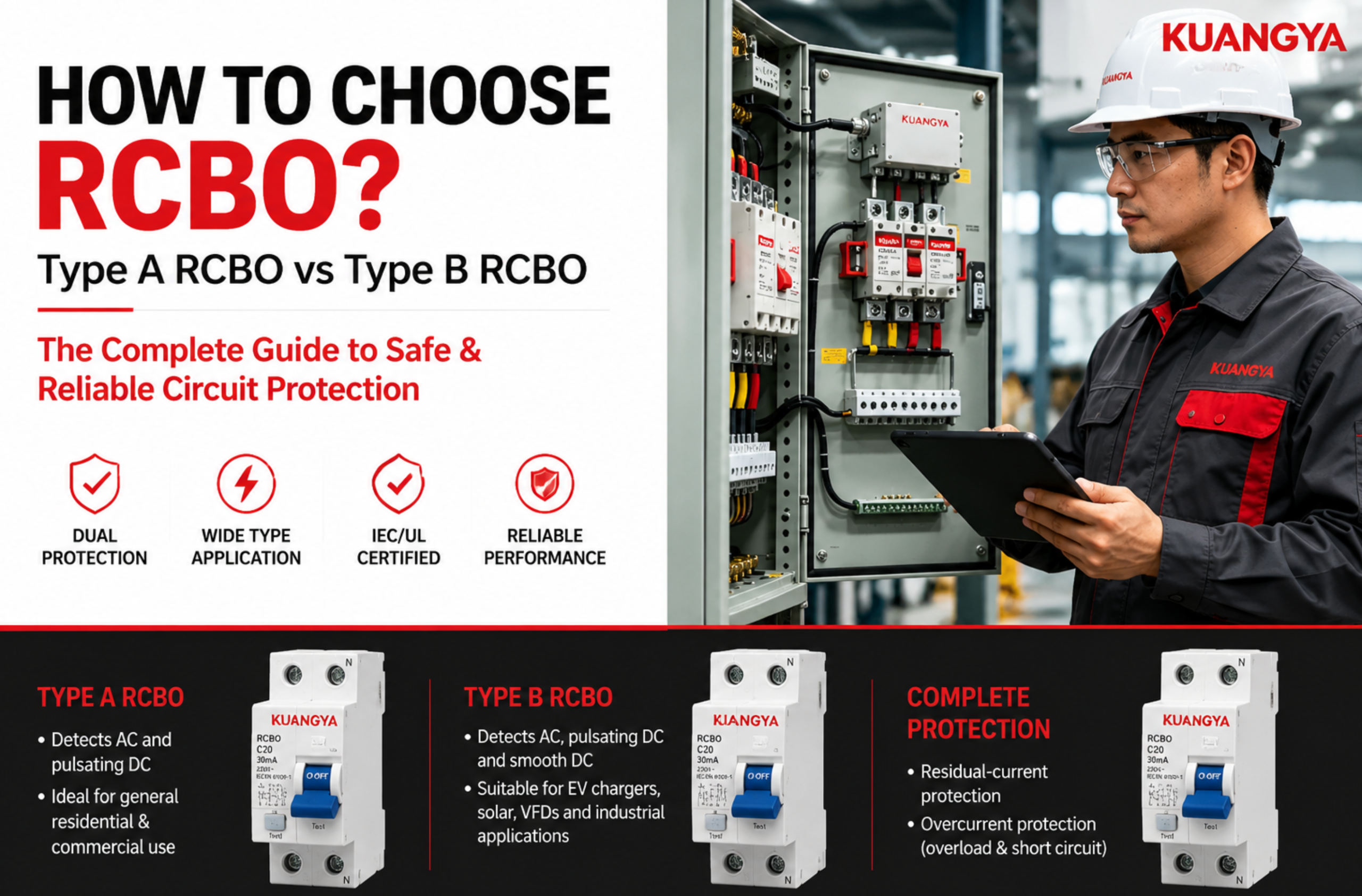
Type A vs Type B RCBO—quick answer: Type A RCBOs detect sinusoidal AC and pulsating DC residual currents. Type B RCBOs additionally cover smooth DC and mixed-frequency residual currents within the device’s specified range. Type B is not a universal upgrade: select the RCBO type according to the connected equipment, DC monitoring arrangement, manufacturer instructions, circuit design and local requirements.
This guide compares RCBO types, explains Type A or Type B selection, and covers poles, current rating, sensitivity, breaking capacity and application-specific checks for EV chargers, PV inverters and motor drives.
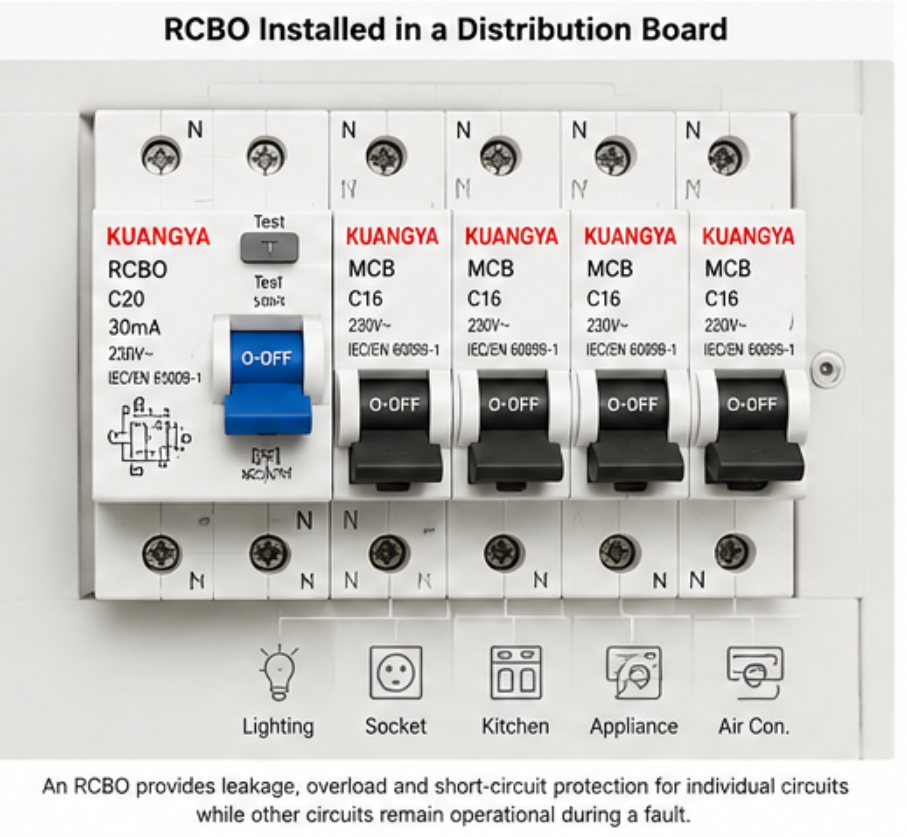
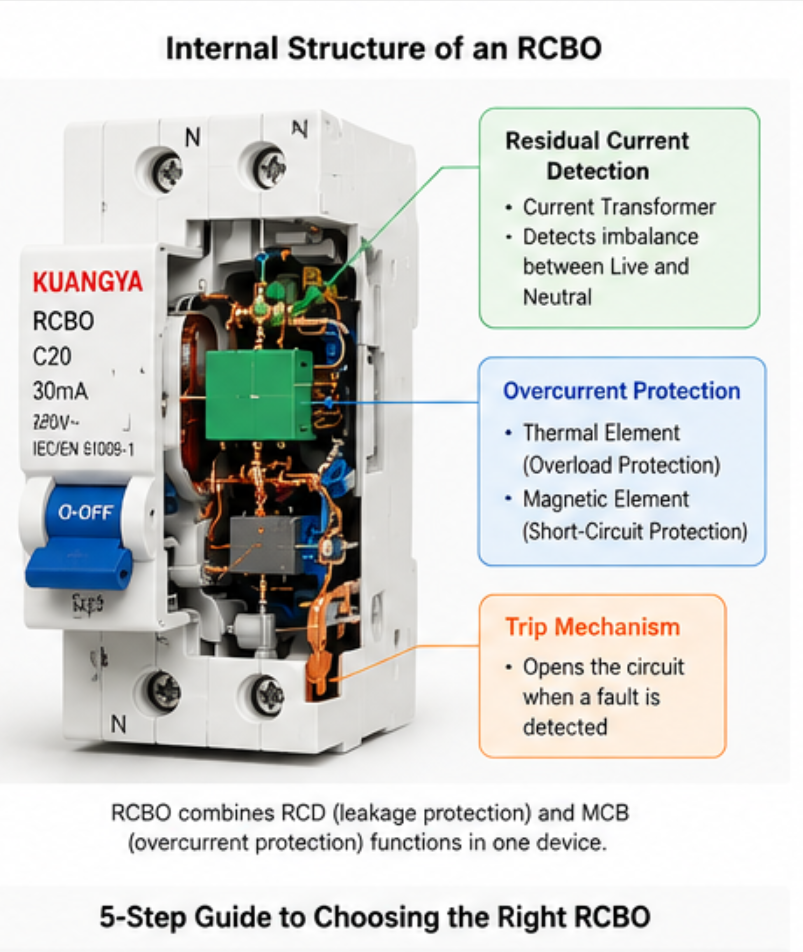
يوفر جهاز RCBO كلاً من حماية التيار المتبقي وحماية التيار الزائد في جهاز واحد. ومع ذلك، قد يؤدي اختيار النوع الخاطئ من جهاز RCBO إلى تقليل فعالية الحماية ويؤدي إلى تعطل مزعج أو فشل في اكتشاف حالات أعطال معينة.
وهذا هو السبب الذي يجعل فهم الفرق بين النوع A RCBO والنوع B RCBO أمرًا ضروريًا عند تصميم الأنظمة الكهربائية أو تحديثها.
يركز العديد من المثبتين على:
في حين أن هذه المواصفات مهمة، إلا أن نوع التيار المتبقي مهم بنفس القدر.
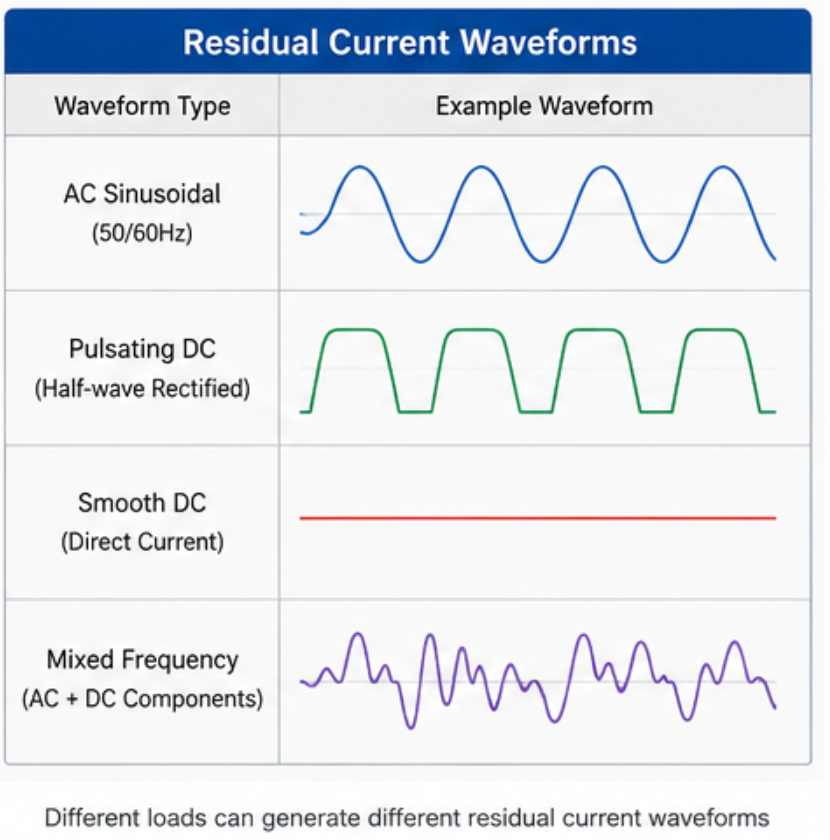
يمكن أن تنتج الأحمال الكهربائية المختلفة أشكالاً موجية مختلفة لتيار التسرب. لم يتم تصميم كل من أجهزة RCBO للكشف عن جميع هذه الأشكال الموجية.
إذا تم تحديد نوع RCBO خاطئ، فقد لا يتم اكتشاف تيارات الأعطال الأرضية الخطيرة بشكل صحيح.
تم تصميم النوع A RCBO للكشف عن:
هذا يجعل الأجهزة من النوع A مناسبة لمعظم التركيبات السكنية والتجارية الحديثة حيث توجد معدات إلكترونية.
يشيع استخدام النوع A RCBOs من النوع A في:
نظرًا لأن العديد من الأجهزة الحديثة تحتوي على مكونات إلكترونية ومقومات إلكترونية، فإن أجهزة RCBOs من النوع A مفضلة بشكل متزايد على أجهزة النوع AC القديمة.
| نوع التيار المتبقي | تم اكتشافه بواسطة النوع A RCBO |
|---|---|
| التيار المتردد الجيبية | نعم |
| تيار مستمر نابض | نعم |
| سلاسة التيار المستمر | لا يوجد |
| مكونات التيار المستمر عالي التردد | محدودة |
Type A is commonly used for many residential and commercial electronic loads, but suitability still depends on the connected equipment and applicable requirements.
تم تصميم النوع B RCBO للكشف عن:
توفر الأجهزة من النوع B أوسع قدرة على اكتشاف التيار المتبقي من بين الأنواع الشائعة من أجهزة RCBO.
وهذا يجعلها مناسبة للتركيبات التي قد تتولد فيها تيارات أعطال التيار المستمر.
يشيع استخدام النوع B RCBOs من النوع B في:
يمكن أن تولد هذه التطبيقات تيارات متبقية سلسة للتيار المستمر قد تعمي أو تشبع الأجهزة التقليدية من النوع A.
| نوع التيار المتبقي | تم اكتشافه بواسطة النوع B RCBO |
|---|---|
| التيار المتردد الجيبية | نعم |
| تيار مستمر نابض | نعم |
| سلاسة التيار المستمر | نعم |
| الترددات المختلطة | نعم |
| المكونات عالية التردد | نعم |
وبسبب نطاق الكشف الأوسع، غالبًا ما يتم تحديد النوع B RCBO للأنظمة الكهربائية المتقدمة.
هذه هي المقارنة الأكثر أهمية عند اختيار مركز الخدمات الإقليمي.
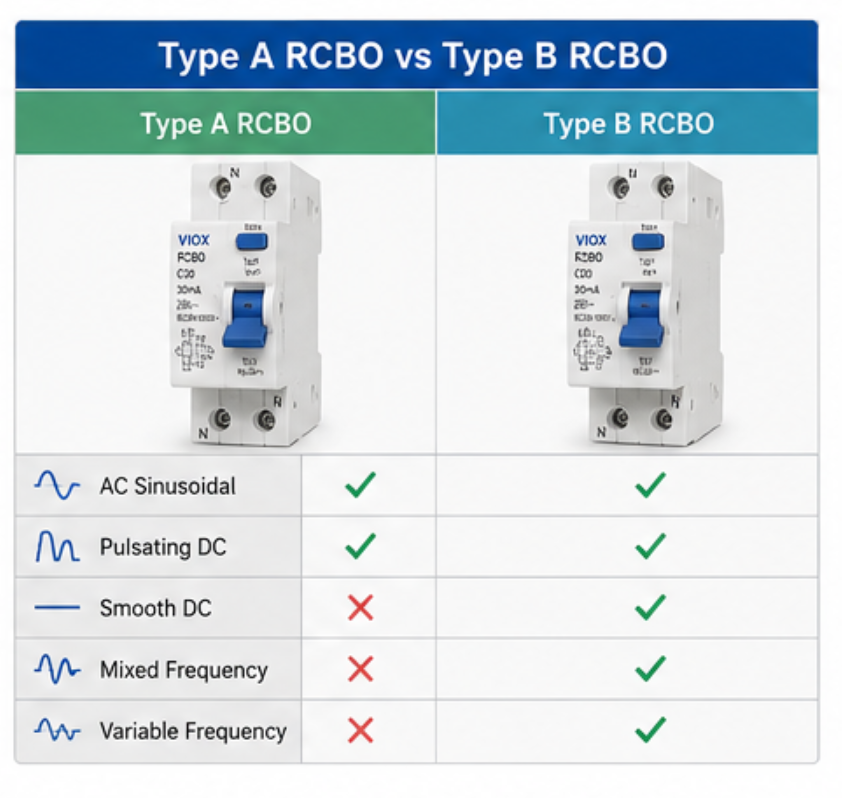
| الميزة | النوع A RCBO | النوع B RCBO |
|---|---|---|
| كشف التيار المتردد المتبقي من التيار المتردد | نعم | نعم |
| الكشف عن التيار المستمر النابض | نعم | نعم |
| كشف التيار المستمر السلس | لا يوجد | نعم |
| Mixed-Frequency Residual Currents | Verify waveform and device specification | Covered only within the device’s specified frequency range |
| تطبيقات شاحن السيارات الكهربائية | Possible with verified DC protection where permitted | Use when required by the charger manual or applicable rules |
| أنظمة الطاقة الشمسية الكهروضوئية | Verify inverter manual and DC monitoring | Use when required by the inverter manual or applicable rules |
| محركات الأقراص الصناعية | محدودة | Verify equipment manual and applicable rules |
| التكلفة | أقل | أعلى |
The key difference is residual-current waveform coverage. Type A detects sinusoidal AC and pulsating DC residual currents, while Type B additionally detects smooth DC and mixed-frequency components within the manufacturer’s specified range.
Do not treat Type B as automatically better. For EV chargers, PV inverters and variable-speed drives, follow the equipment manual and applicable rules to determine whether Type A with verified DC detection, Type F or Type B is required.
Use the tool below to organize a preliminary RCBO specification. It highlights missing parameters and unsafe combinations, but it does not replace engineering verification or local requirements.
How to use this RCBO selector: choose the known circuit and equipment conditions. The result organizes a preliminary specification and highlights information that still requires verification.
Preliminary selection only. This tool does not approve a circuit or replace the equipment manual, product datasheet, coordination study, qualified designer, or local rules.
يبدأ اختيار RCBO الصحيح بفهم الحمل المتصل.
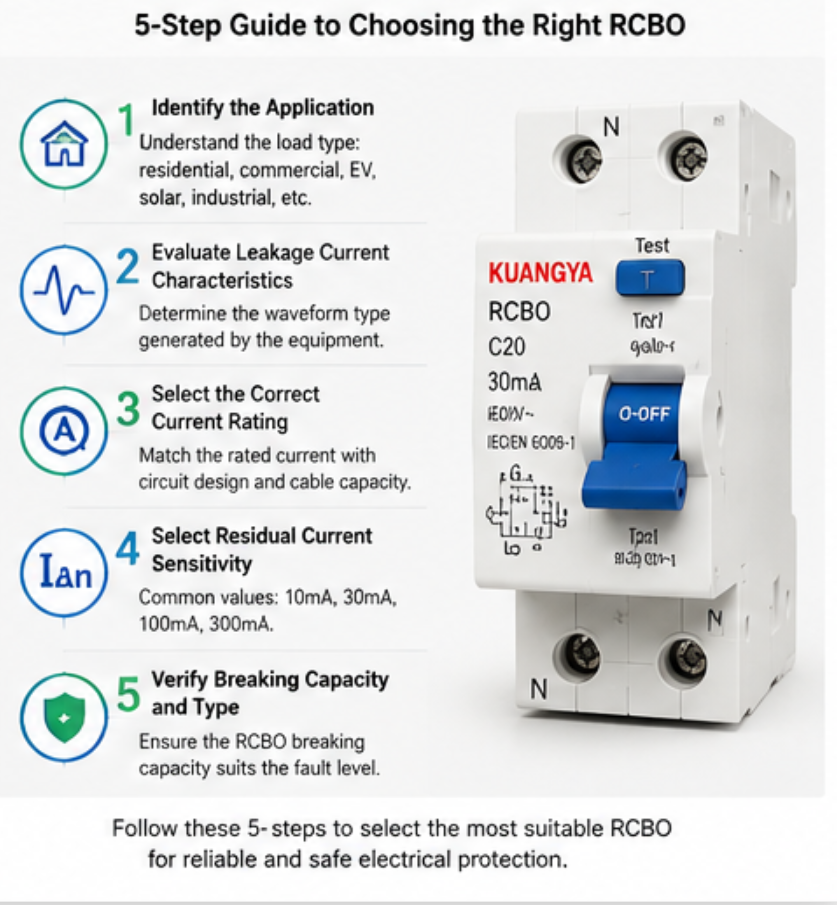
اسأل:
ستوجه الإجابات اختيار نوع RCBO.
تنشئ المعدات المختلفة أشكالاً موجية مختلفة للتيار المتبقي.
| نوع المعدات | نوع RCBO الموصى به |
|---|---|
| دوائر الإضاءة | النوع أ |
| منافذ المقبس | النوع أ |
| الأجهزة المنزلية | النوع أ |
| معدات مكتبية | النوع أ |
| شواحن السيارات الكهربائية | Follow the EVSE manual: Type A with verified DC monitoring or Type B, as required |
| محولات الطاقة الشمسية | Follow the inverter manual and applicable rules |
| محركات الدفع بمحرك VFD | Verify leakage waveform, frequency behavior and drive manual |
| أنظمة تخزين البطاريات | Follow the converter/BESS manual and applicable rules |
يجب أن يتطابق التيار المقنن:
تشمل التصنيفات الشائعة ما يلي:
تتضمن تصنيفات الحساسية الشائعة ما يلي:
| الحساسية | التطبيق النموذجي |
|---|---|
| 10 مللي أمبير | حماية شخصية معززة |
| 30 مللي أمبير | الحماية القياسية للأفراد |
| 100 مللي أمبير | حماية المعدات |
| 300 مللي أمبير | تطبيقات الحماية من الحرائق |
يظل 30 مللي أمبير الخيار الأكثر شيوعًا للدوائر النهائية.
يجب أن تكون وحدة RCBO قادرة على مقاطعة تيار العطل المتاح.
تشمل التصنيفات النموذجية ما يلي:
تعتمد القيمة المطلوبة على مستوى الخطأ في نقطة التركيب.
تأتي العديد من أخطاء المواصفات والشراء من سوء فهم أنواع RCBO.
تشمل الأخطاء الشائعة ما يلي:
يجب دائمًا اختيار نوع RCBO وفقًا لسلوك الحمل الفعلي وليس السعر وحده.
| المعلمة | What to confirm | ما أهمية ذلك |
|---|---|---|
| نظام | Single/three phase, voltage, frequency and neutral | Determines pole arrangement and operating voltage |
| Load | Electronic, motor/VFD, EVSE, PV inverter, UPS or resistive | Influences waveform type and trip curve |
| التيار المقنن | Design current, cable capacity and derating | A higher ampere rating is not automatically safer |
| RCBO type | AC, A, F or B required by the equipment manual | Determines detectable residual-current waveforms |
| الحساسية | 10/30/100/300 mA as permitted | Must match protection objective and selectivity |
| Trip curve | B, C or D after inrush and loop checks | Controls magnetic response to overcurrent |
| القدرة الاستيعابية | Prospective short-circuit current at installation point | Catalogue values cannot replace a fault-level calculation |
| Market | Required standard edition and certificate scope | IEC reference does not prove approval in every country |
Stop condition: If breaking capacity, leakage characteristics, pole arrangement or local requirements are unknown, do not finalize the RCBO selection.
| النتيجة | When to use it | Next action |
|---|---|---|
| Preliminary match | Every parameter is known and no obvious conflict exists | Compare exact datasheets and certificates; obtain engineering approval |
| يحتاج إلى تحقق | Breaking capacity, waveform, curve, poles or certification is unknown | Collect the missing data before ordering |
| لم يتم الاختيار بعد | Phase/poles conflict, EV/PV uses unverified Type AC, or the equipment manual contradicts the choice | Stop and review the circuit and equipment requirements |
System phase and voltage:
Load or equipment:
Rated current:
Poles and neutral requirement:
Residual-current type (AC/A/F/B):
Sensitivity (mA):
Trip curve (B/C/D):
Required breaking capacity (kA):
Frequency:
Target market and certification:
Quantity and purchase stage:
OEM/ODM requirement:
Required delivery date:
Also compare RCCB product families and read the RCCB vs RCBO guide. Final selection must use the exact product documentation and applicable local rules.
ينطوي اختيار الموزع الصحيح للتيار المتبقي على أكثر من مجرد اختيار التصنيف الحالي الصحيح. فنوع التيار المتبقي عامل حاسم يؤثر بشكل مباشر على أداء الحماية.
بالنسبة لمعظم الدوائر السكنية والتجارية، يوفر النوع A RCBO حماية فعالة ضد التيار المتردد والتيار المستمر النابض المتبقي.
For EV chargers, solar installations, battery storage systems and inverter-driven equipment, follow the exact equipment manual. Some designs allow Type A with verified DC monitoring; others require Type F or Type B.
يساعد فهم الفرق بين النوع A RCBO والنوع B RCBO على ضمان الامتثال وتحسين السلامة وتوفير حماية موثوقة للأنظمة الكهربائية الحديثة.
RCBO (قواطع التيار المتبقي مع التيار الزائد) | كوانجيا آمنة وموثوقة
IEC 61009-1:2024 gives general requirements and tests for RCBOs for household and similar uses within its stated scope. Always verify the applicable national adoption, installation rules, equipment manual and certificate scope of the exact product model.
Type A is common for many residential and commercial electronic circuits. EV, PV, storage and variable-frequency applications require verification against the equipment manual and local rules; do not assume one residual-current type fits every design.
يستطيع النوع A RCBO اكتشاف التيارات المتبقية النابضة للتيار المستمر النابض ولكن لا يمكنه اكتشاف التيارات المتبقية للتيار المستمر السلس بشكل موثوق.
يحتوي النوع B RCBO على تقنية استشعار أكثر تقدمًا قادرة على اكتشاف نطاق أوسع من أشكال موجات التيار المتبقي، بما في ذلك أعطال التيار المستمر السلس.
تتطلب العديد من تطبيقات شحن المركبات الكهربائية إما حماية من النوع B أو تدابير مكافئة لاكتشاف أعطال التيار المستمر، وذلك حسب المعايير المحلية وتصميم الشاحن.
Do not treat Type B as a universal upgrade. The selected type must match the residual-current waveform, equipment instructions, coordination requirements and certification scope of the exact device.

