温州市岳陽工業区 325000
勤務時間
月曜日~金曜日:午前7時~午後7時
週末午前10時~午後5時
温州市岳陽工業区 325000
勤務時間
月曜日~金曜日:午前7時~午後7時
週末午前10時~午後5時

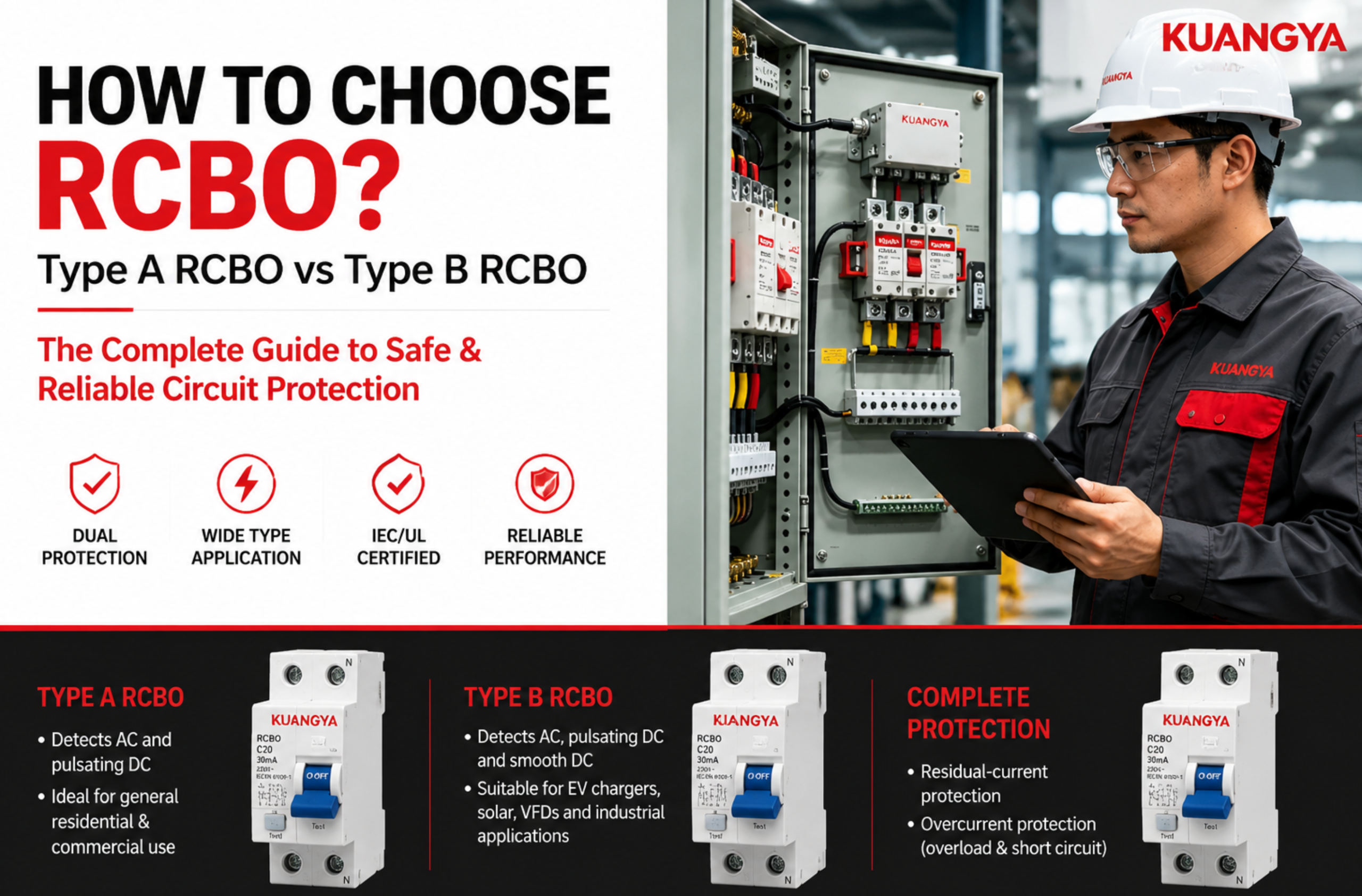
Type A vs Type B RCBO—quick answer: Type A RCBOs detect sinusoidal AC and pulsating DC residual currents. Type B RCBOs additionally cover smooth DC and mixed-frequency residual currents within the device’s specified range. Type B is not a universal upgrade: select the RCBO type according to the connected equipment, DC monitoring arrangement, manufacturer instructions, circuit design and local requirements.
This guide compares RCBO types, explains Type A or Type B selection, and covers poles, current rating, sensitivity, breaking capacity and application-specific checks for EV chargers, PV inverters and motor drives.
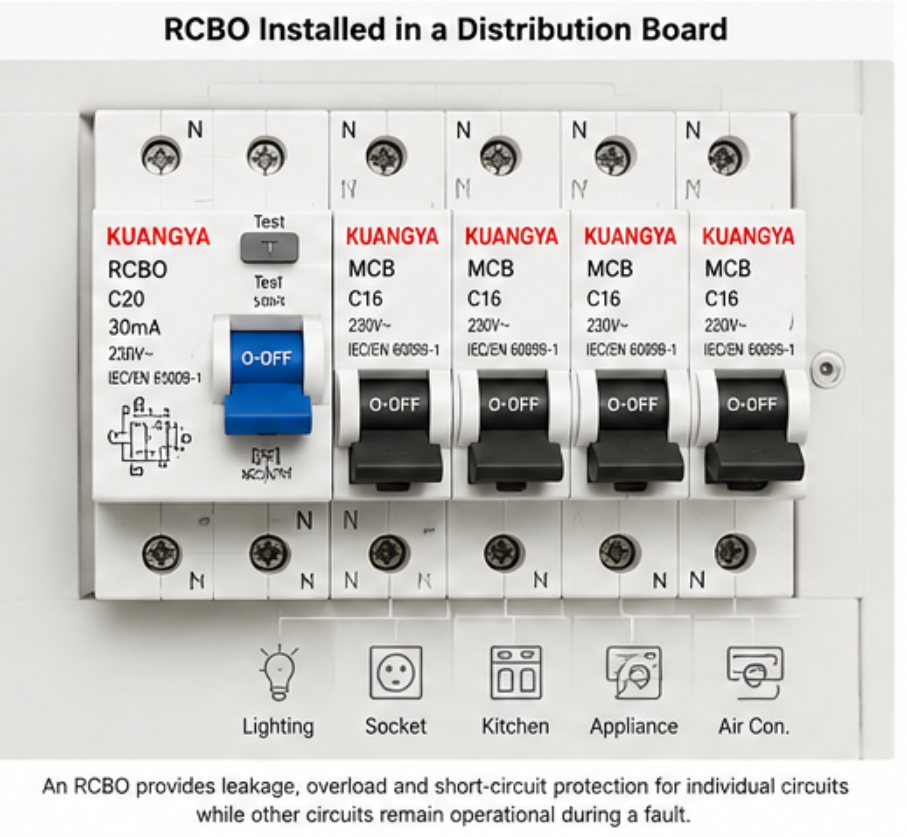
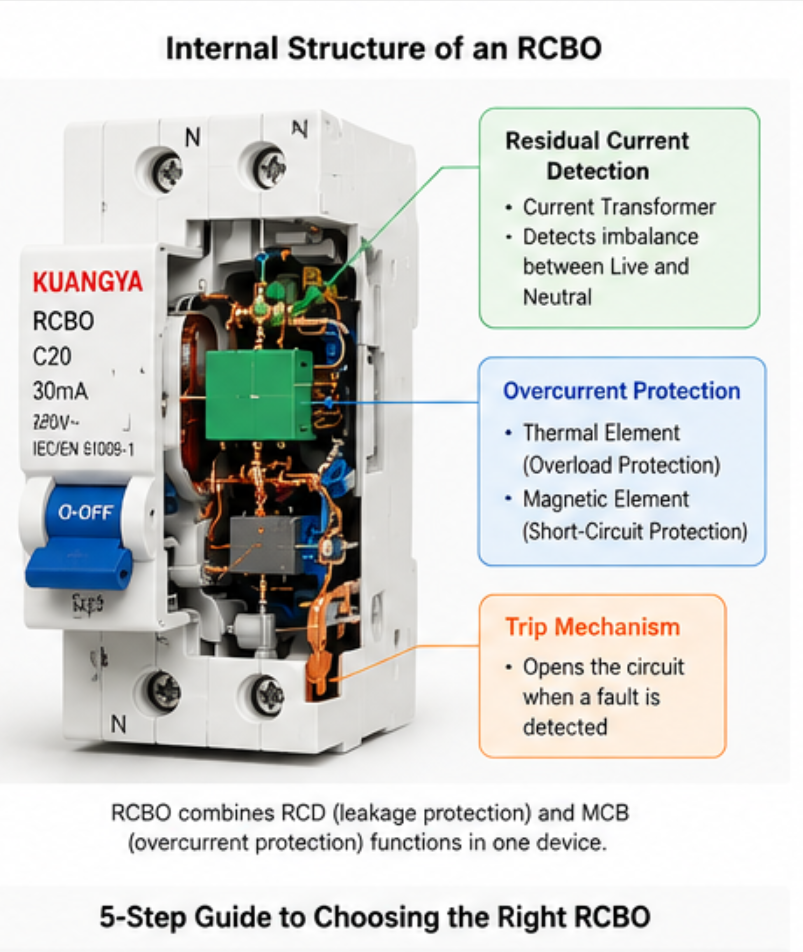
RCBO は、1 つのデバイスで残留電流保護と過電流保護の両方を提供します。ただし、RCBO タイプの選択を誤ると、保護効果が低下し、迷惑なトリップが発生したり、特定の故障状態を検出できなかったりする可能性があります。.
そのため、電気システムを設計またはアップグレードする際には、タイプA RCBOとタイプB RCBOの違いを理解することが不可欠である。.
多くのインストーラーが注目している:
これらの仕様も重要だが、残留電流タイプも同様に重要である。.
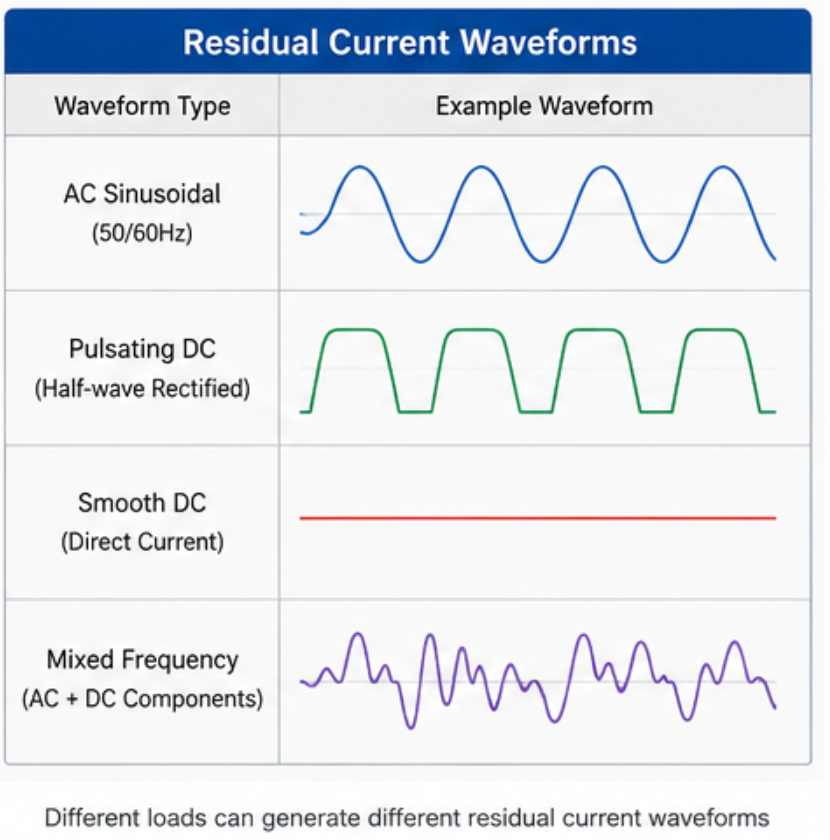
異なる電気負荷は、異なる漏れ電流波形を生成する可能性がある。すべてのRCBOがそれらすべてを検出できるように設計されているわけではありません。.
誤ったRCBOタイプを選択した場合、危険な地絡電流が正しく検出されない可能性がある。.
タイプAのRCBOは検出するように設計されている:
このため、タイプAのデバイスは、電子機器が存在する現代の住宅や商業施設のほとんどに適している。.
タイプAのRCBOは一般的に次のような用途に使用される:
最近の電化製品の多くには電子部品や整流器が含まれているため、タイプAのRCBOは、古いタイプACの機器よりも好まれるようになってきている。.
| 残留電流タイプ | タイプA RCBOで検出 |
|---|---|
| AC正弦波 | はい |
| 脈動するDC | はい |
| スムーズDC | いいえ |
| 高周波直流部品 | 限定 |
Type A is commonly used for many residential and commercial electronic loads, but suitability still depends on the connected equipment and applicable requirements.
タイプBのRCBOは検出するように設計されている:
タイプBのデバイスは、一般的なRCBOタイプの中で最も広範な残留電流検出能力を備えています。.
このため、直流故障電流が発生する可能性のある設備に適している。.
タイプBのRCBOは一般的に使用される:
このようなアプリケーションでは、従来のタイプAデバイスを盲目にしたり飽和させたりするような滑らかな直流残留電流を発生させることができる。.
| 残留電流タイプ | タイプB RCBOで検出 |
|---|---|
| AC正弦波 | はい |
| 脈動するDC | はい |
| スムーズDC | はい |
| 混合周波数 | はい |
| 高周波コンポーネント | はい |
タイプBのRCBOは検出範囲が広いため、高度な電気システムに指定されることが多い。.
これは、RCBOを選択する際に最も重要な比較である。.
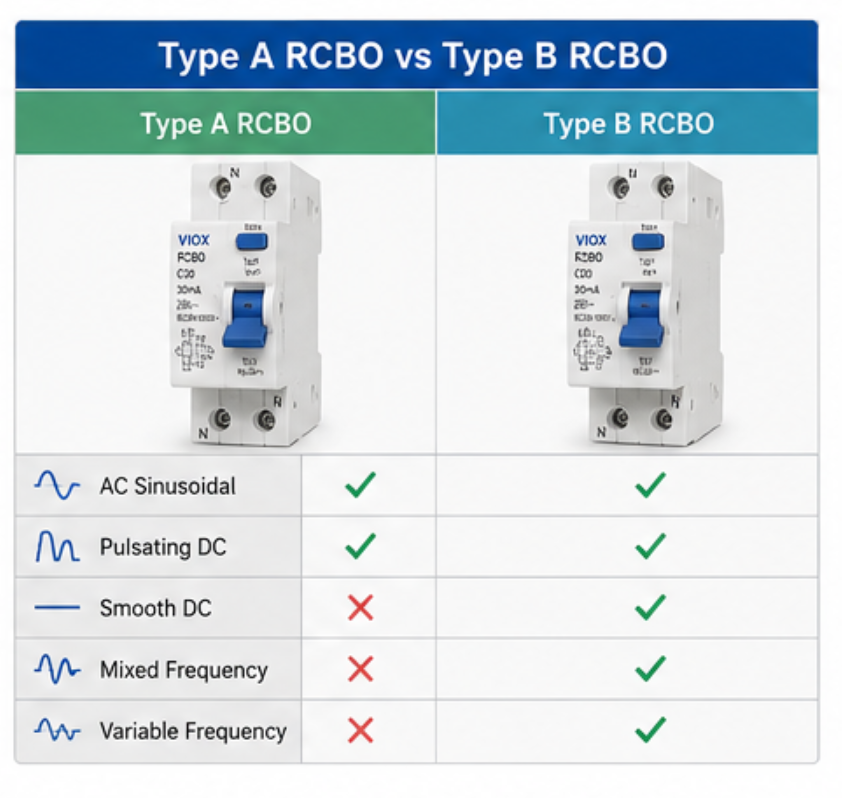
| 特徴 | タイプA RCBO | タイプB RCBO |
|---|---|---|
| AC残留電流検出 | はい | はい |
| 脈動DC検出 | はい | はい |
| スムーズな直流検出 | いいえ | はい |
| Mixed-Frequency Residual Currents | Verify waveform and device specification | Covered only within the device’s specified frequency range |
| EV充電器アプリケーション | Possible with verified DC protection where permitted | Use when required by the charger manual or applicable rules |
| 太陽光発電システム | Verify inverter manual and DC monitoring | Use when required by the inverter manual or applicable rules |
| 産業用ドライブ | 限定 | Verify equipment manual and applicable rules |
| コスト | より低い | より高い |
The key difference is residual-current waveform coverage. Type A detects sinusoidal AC and pulsating DC residual currents, while Type B additionally detects smooth DC and mixed-frequency components within the manufacturer’s specified range.
Do not treat Type B as automatically better. For EV chargers, PV inverters and variable-speed drives, follow the equipment manual and applicable rules to determine whether Type A with verified DC detection, Type F or Type B is required.
Use the tool below to organize a preliminary RCBO specification. It highlights missing parameters and unsafe combinations, but it does not replace engineering verification or local requirements.
How to use this RCBO selector: choose the known circuit and equipment conditions. The result organizes a preliminary specification and highlights information that still requires verification.
Preliminary selection only. This tool does not approve a circuit or replace the equipment manual, product datasheet, coordination study, qualified designer, or local rules.
正しいRCBOの選択は、接続される負荷を理解することから始まる。.
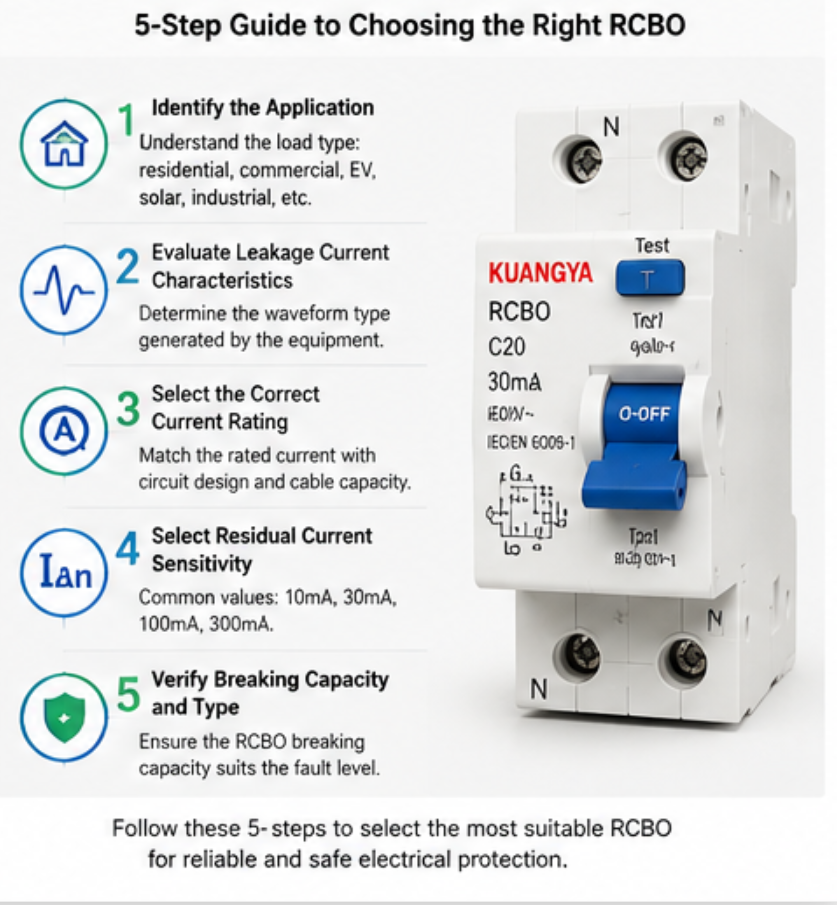
と尋ねている:
その答えがRCBOのタイプ選択の指針となる。.
機器によって残留電流波形は異なる。.
| 設備タイプ | 推奨RCBOタイプ |
|---|---|
| 照明回路 | タイプA |
| コンセント | タイプA |
| 家電製品 | タイプA |
| オフィス機器 | タイプA |
| EV充電器 | Follow the EVSE manual: Type A with verified DC monitoring or Type B, as required |
| ソーラー・インバータ | Follow the inverter manual and applicable rules |
| VFDモータードライブ | Verify leakage waveform, frequency behavior and drive manual |
| 蓄電池システム | Follow the converter/BESS manual and applicable rules |
定格電流が一致すること:
一般的な格付けは以下の通り:
一般的な感度評価には以下のものがある:
| 感度 | 代表的なアプリケーション |
|---|---|
| 10mA | 個人保護強化 |
| 30mA | 標準的な人員保護 |
| 100mA | 機器保護 |
| 300mA | 防火用途 |
30mAは、最終回路では依然として最も一般的な選択である。.
RCBOは、利用可能な故障電流を遮断できなければならない。.
代表的な格付けは以下の通り:
必要な値は、設置場所の障害レベルによって異なる。.
RCBOの種類を誤解しているために、仕様や購入に失敗することが多い。.
よくある間違いは以下のようなものだ:
RCBOのタイプは、価格だけでなく、実際の負荷挙動に応じて常に選択されるべきである。.
| パラメータ | What to confirm | なぜそれが重要なのか |
|---|---|---|
| システム | Single/three phase, voltage, frequency and neutral | Determines pole arrangement and operating voltage |
| Load | Electronic, motor/VFD, EVSE, PV inverter, UPS or resistive | Influences waveform type and trip curve |
| 定格電流 | Design current, cable capacity and derating | A higher ampere rating is not automatically safer |
| RCBO type | AC, A, F or B required by the equipment manual | Determines detectable residual-current waveforms |
| 感度 | 10/30/100/300 mA as permitted | Must match protection objective and selectivity |
| Trip curve | B, C or D after inrush and loop checks | Controls magnetic response to overcurrent |
| 破断能力 | Prospective short-circuit current at installation point | Catalogue values cannot replace a fault-level calculation |
| Market | Required standard edition and certificate scope | IEC reference does not prove approval in every country |
Stop condition: If breaking capacity, leakage characteristics, pole arrangement or local requirements are unknown, do not finalize the RCBO selection.
| 結果 | When to use it | Next action |
|---|---|---|
| Preliminary match | Every parameter is known and no obvious conflict exists | Compare exact datasheets and certificates; obtain engineering approval |
| 確認が必要です | Breaking capacity, waveform, curve, poles or certification is unknown | Collect the missing data before ordering |
| まだ選択しないでください | Phase/poles conflict, EV/PV uses unverified Type AC, or the equipment manual contradicts the choice | Stop and review the circuit and equipment requirements |
System phase and voltage:
Load or equipment:
Rated current:
Poles and neutral requirement:
Residual-current type (AC/A/F/B):
Sensitivity (mA):
Trip curve (B/C/D):
Required breaking capacity (kA):
Frequency:
Target market and certification:
Quantity and purchase stage:
OEM/ODM requirement:
Required delivery date:
Also compare RCCB product families and read the RCCB vs RCBO guide. Final selection must use the exact product documentation and applicable local rules.
適切なRCBOを選択するには、正しい定格電流を選択するだけではありません。残留電流タイプは、保護性能に直接影響する重要な要素です。.
ほとんどの住宅用および商業用回路では、タイプAのRCBOがACおよび脈動DC残留電流に対する効果的な保護を提供します。.
For EV chargers, solar installations, battery storage systems and inverter-driven equipment, follow the exact equipment manual. Some designs allow Type A with verified DC monitoring; others require Type F or Type B.
タイプA RCBOとタイプB RCBOの違いを理解することで、コンプライアンスを確保し、安全性を向上させ、最新の電気システムに信頼性の高い保護を提供することができます。.
IEC 61009-1:2024 gives general requirements and tests for RCBOs for household and similar uses within its stated scope. Always verify the applicable national adoption, installation rules, equipment manual and certificate scope of the exact product model.
Type A is common for many residential and commercial electronic circuits. EV, PV, storage and variable-frequency applications require verification against the equipment manual and local rules; do not assume one residual-current type fits every design.
タイプAのRCBOは脈動する直流残留電流を検出できるが、平滑な直流残留電流を確実に検出することはできない。.
タイプB RCBOには、滑らかな直流故障を含む、より広範囲の残留電流波形を検出できる、より高度な検出技術が搭載されている。.
多くのEV充電アプリケーションでは、地域の規格や充電器の設計に応じて、タイプB保護または同等のDC故障検出手段が必要となる。.
Do not treat Type B as a universal upgrade. The selected type must match the residual-current waveform, equipment instructions, coordination requirements and certification scope of the exact device.

