منطقة ونغ يانغ الصناعية يويتشينغ ونتشو 325000
ساعات العمل
من الاثنين إلى الجمعة: 7 صباحاً - 7 مساءً
عطلة نهاية الأسبوع 10 صباحاً - 5 مساءً
منطقة ونغ يانغ الصناعية يويتشينغ ونتشو 325000
ساعات العمل
من الاثنين إلى الجمعة: 7 صباحاً - 7 مساءً
عطلة نهاية الأسبوع 10 صباحاً - 5 مساءً

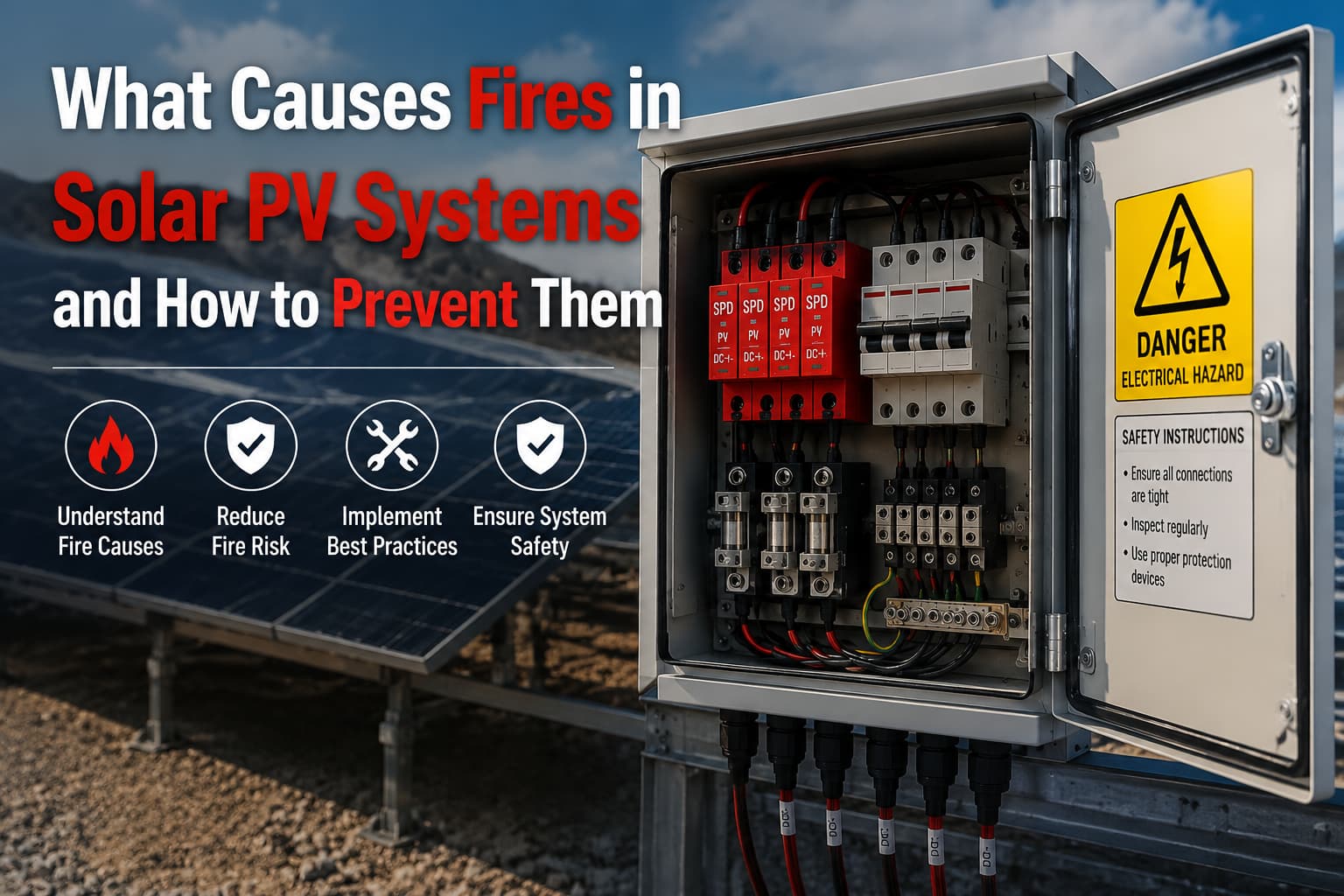
smart-solar-pv-fire-protection-system-architecture
Solar PV systems are widely recognized as a safe and clean energy source. However, Solar PV Fire incidents still occur globally, particularly in utility-scale plants and commercial rooftop installations.
Most fire events are not caused by PV modules themselves, but by failures in DC-side electrical infrastructure, especially:
يوضح هذا المقال ما يلي:
The goal is to provide a practical, engineering-based understanding of fire risk—not theoretical safety advice.
Despite improvements in PV technology, fire risk has not been eliminated. In fact, as system voltage increases from 600V to 1500V DC, the consequences of electrical faults become more severe.
A PV system is not a single device—it is a distributed electrical network exposed to environmental stress for 20–25 years.
The highest risk area is not the solar module, but the balance-of-system (BOS) components, especially the distribution box.
| مكون النظام | Fire Contribution Level | Reason |
|---|---|---|
| الألواح الكهروضوئية | منخفضة | Stable solid-state design |
| العاكسات | متوسط | Electronic protection built-in |
| DC Cables | متوسط-عالي | Aging and insulation breakdown |
| Distribution Boxes | عالية جداً | Connection concentration point |
| SPD Devices | High (if failed) | Surge energy exposure |
Most Solar PV Fire incidents originate at connection points, not energy generation components.
This is a critical distinction often missed in non-engineering discussions.
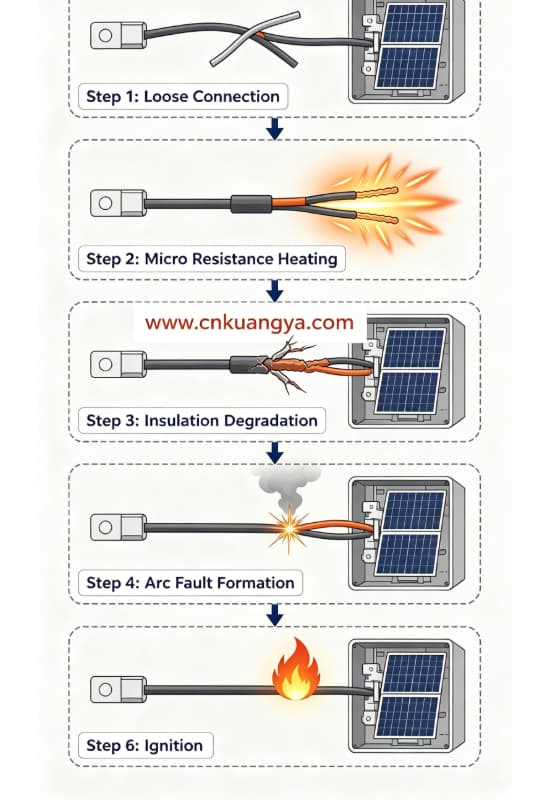
To understand fire prevention, we must first understand how fire actually develops inside PV systems.
A PV fire is almost never instant. It is usually the result of a progressive electrical degradation process.
| المرحلة | الحالة الكهربائية | التأثير المادي | صعوبة الكشف |
|---|---|---|---|
| 1 | Loose connection / micro defect | Slight resistance increase | منخفض جداً |
| 2 | بدء التسخين الموضعي | Temperature rises gradually | منخفضة |
| 3 | تقادم العزل | تغير لون المادة | متوسط |
| 4 | حدوث تقوس كهربائي جزئي | تفريغ كهربائي متقطع | متوسط-عالي |
| 5 | قوس كهربائي مستمر بالتيار المستمر | High-energy continuous discharge | High risk |
| 6 | الاشتعال | حريق في الكابلات أو الهيكل | Critical failure |
At early stages, the system still operates normally. This is why PV fire risk is often called a:
“Hidden degradation failure model”
Unlike mechanical failures, electrical degradation is not visible until thermal thresholds are exceeded.
Across global EPC projects, fire investigations reveal consistent patterns. While each incident differs in detail, the root causes are surprisingly similar.
| Scenario Type | بيئة الموقع | السبب الجذري | النتيجة |
|---|---|---|---|
| Utility solar farm fire | الصحراء (الشرق الأوسط) | ارتفاع درجة حرارة الأطراف في صندوق التجميع | String shutdown + equipment replacement |
| Industrial rooftop fire | Manufacturing plant | Loose MC4 connector in distribution box | Roof fire propagation |
| Coastal PV plant | Humid coastal region | تآكل داخل الصندوق الكهربائي | قصر في الدائرة الكهربائية تدريجي |
| High lightning zone system | جنوب شرق آسيا | فشل جهاز الحماية من الصواعق (SPD) بعد حدوث زيادة مفاجئة في التيار | Inverter + BOS damage |
Studies on photovoltaic system safety indicate that DC-side electrical faults in balance-of-system components are a leading cause of fire incidents in solar installations, as documented in U.S. Department of Energy solar fire safety guidance.
Fire origin is almost always located in DC junction or distribution components, not generation equipment.
PV fire risk increases significantly depending on environment:
| البيئة | آلية الخطر |
|---|---|
| الصحراء | Thermal expansion → loosening terminals |
| المناطق الساحلية | تآكل الملح ← زيادة المقاومة |
| استوائي | Moisture ingress → leakage currents |
| High UV regions | Insulation aging acceleration |
| Lightning regions | Surge overload stress |
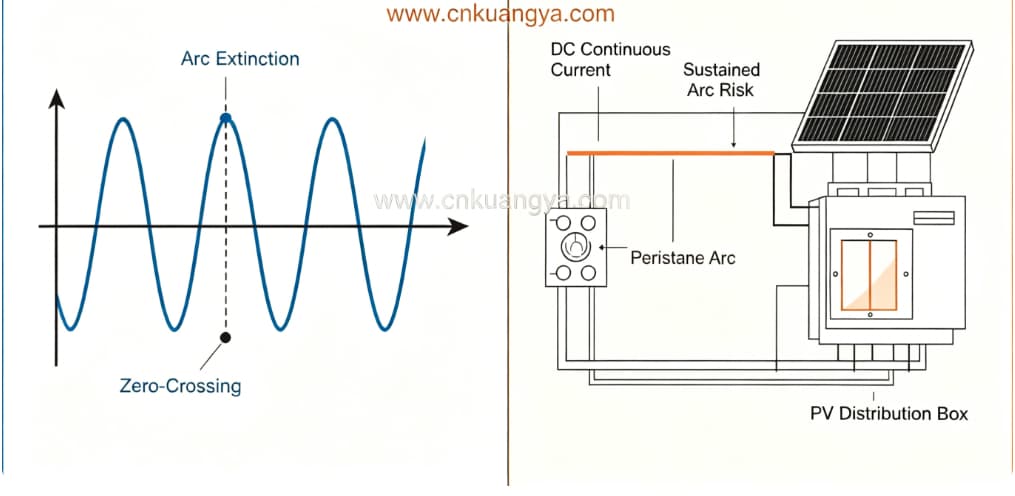
Understanding DC behavior is essential in analyzing Solar PV Fire mechanisms.
| الميزة | نظام التيار المتردد | نظام التيار المستمر الكهروضوئي |
|---|---|---|
| نقطة عبور التيار للصفر | نعم | لا يوجد |
| إخماد القوس الكهربائي | طبيعي | Requires interruption |
| قطع التيار عند حدوث عطل | أسهل | صعب |
| Energy behavior | Pulsed | مستمر |
| انتشار الحريق | أبطأ | أسرع |
In AC systems, current naturally drops to zero 50–60 times per second, helping extinguish arcs.
In DC PV systems:
This makes DC faults significantly more dangerous in fire scenarios.
PV fire incidents are rarely caused by a single issue. Instead, they result from combined stress factors.
Most PV fires are not sudden failures.
They are:
“Accumulated small defects reaching a thermal tipping point.”
One of the most critical issues in real PV operation is that early warning signs are often visible—but ignored.
| علامة تحذيرية | المعنى التقني |
|---|---|
| Slight discoloration inside box | ارتفاع موضعي في درجة الحرارة |
| رائحة احتراق | تدهور العزل |
| إنذارات متقطعة في العاكس | حدوث قوس كهربائي أو تذبذب في الجهد |
| One string hotter than others | Resistance imbalance |
| تغير في مؤشر جهاز الحماية من زيادة التيار (SPD) | Surge exposure event |
In most real EPC cases:
Systems operate normally until failure suddenly becomes visible.
But in reality, degradation has already been ongoing for weeks or months.
At this stage, understanding the causes is not enough. What matters is how to prevent escalation at each stage of failure development.
In real photovoltaic system design, surge protection and overcurrent protection must be coordinated to ensure a complete DC side protection strategy for solar PV systems.
عصري Solar PV Fire prevention strategy is based on layered protection:
Each layer targets a different failure stage.
In real EPC engineering, many Solar PV Fire incidents are not caused during operation, but are already “pre-designed” at the engineering stage.
PV system design and installation safety should comply with international photovoltaic standards, especially regarding DC system protection and wiring safety requirements under IEC 62548 photovoltaic array design standard.
The PV distribution box is the central convergence point of DC strings, and its internal layout directly determines thermal behavior, electrical stability, and fault response capability.
A poorly designed box can create heat concentration zones even if all components are compliant.
| عنصر التصميم | المتطلبات الهندسية | Fire Risk if Poorly Designed |
|---|---|---|
| Internal wiring layout | Clear separation of DC paths | Heat concentration and arcing risk |
| تصنيف الحاوية | IP65–IP66 outdoor protection | حدوث دوائر قصر ناتجة عن الرطوبة |
| Material selection | Flame-retardant housing | انتشار الحريق داخل الصندوق |
| التصميم الحراري | Passive/active heat dissipation | Continuous temperature rise |
| Terminal arrangement | Torque-controlled connection points | التسخين بالمقاومة على المدى الطويل |
One of the most underestimated issues in PV design is thermal accumulation inside sealed enclosures.
Even when electrical load is within specification, lack of ventilation or poor heat dispersion can lead to:
This slow thermal accumulation often becomes the hidden trigger of Solar PV Fire incidents.
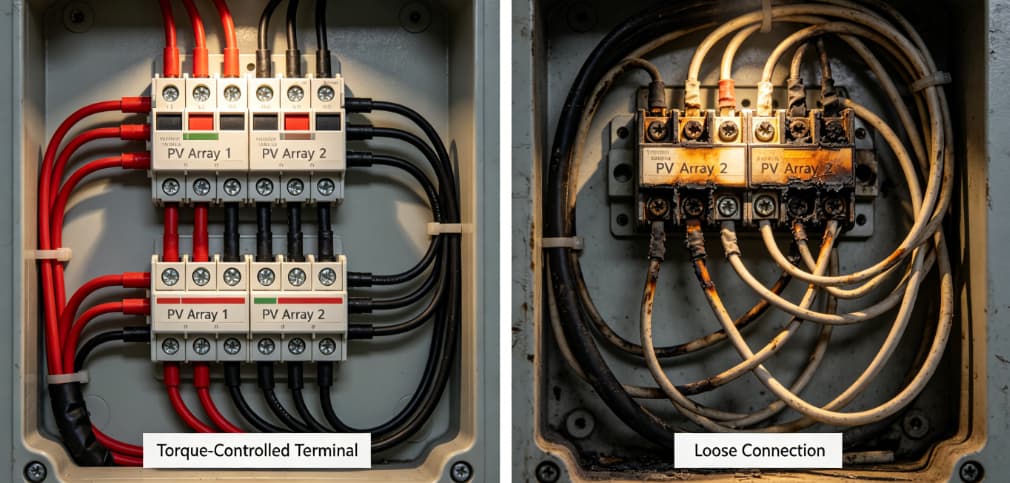
Across EPC projects worldwide, installation quality remains one of the most critical factors in fire prevention.
Even with high-quality components, improper installation can introduce permanent electrical weaknesses.
Terminals require precise torque values. However, in field installation:
Both conditions increase long-term thermal risk.
Inside distribution boxes, wiring density is often underestimated.
Poor routing leads to:
In many PV systems, grounding is treated as secondary.
However, incomplete grounding causes:
Skipping proper testing leads to:
| منطقة التركيب | Common Error | تأثير الحريق |
|---|---|---|
| المحطات الطرفية | عدم التحكم في عزم الدوران | Progressive overheating |
| Cabling | Overcrowding | النقاط الساخنة الحرارية |
| التأريض | Partial earthing | تراكم الجهد الزائد |
| الاختبار | Incomplete commissioning | Hidden electrical faults |
PV systems are designed for long operational lifespans, typically 20 to 25 years. However, electrical components degrade continuously due to environmental exposure and thermal cycling.
Without proper maintenance, even a perfectly designed system will eventually develop fire risk conditions.
| الفاصل الزمني | نوع الفحص | الغرض |
|---|---|---|
| شهرياً | الفحص البصري | الكشف عن تغير اللون أو وجود رائحة |
| ربع سنوي | المسح بالتصوير الحراري | تحديد أماكن ارتفاع الحرارة |
| نصف سنوي | Torque verification | Prevent terminal loosening |
| سنوي | SPD inspection | ضمان سلامة الحماية من اندفاع التيار |
| 3-5 سنوات | مراجعة استبدال المكونات | Avoid aging failure accumulation |
يعد التصوير الحراري بالأشعة تحت الحمراء أحد أكثر الأدوات فعالية في Solar PV Fire prevention strategy.
يسمح بالكشف عن:
Most importantly, it identifies problems قبل حدوث ضرر مادي.
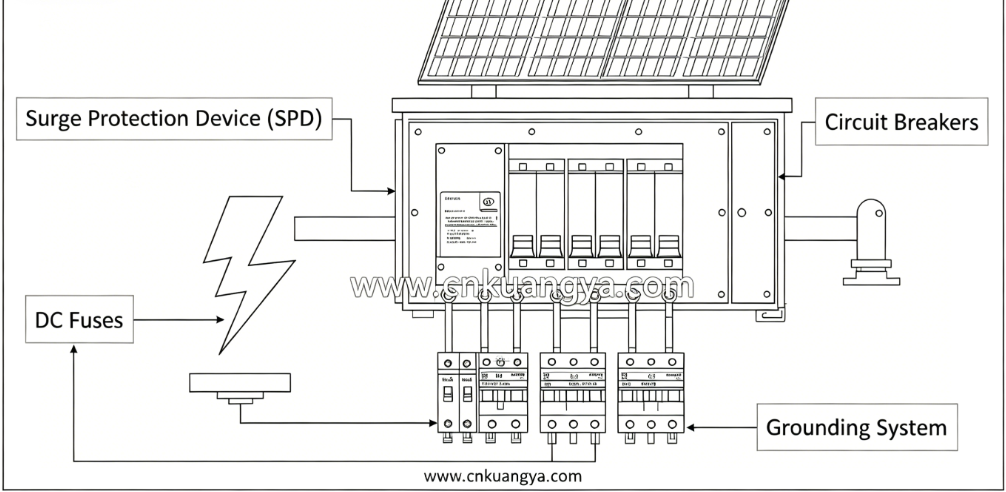
Surge Protection Devices (SPDs) are critical in PV systems, especially in lightning-prone regions.
A surge event can introduce extremely high transient voltage into DC circuits. Without proper suppression, this energy can damage insulation inside distribution boxes and trigger arc formation.
| الوظيفة | Fire Prevention Role |
|---|---|
| تثبيت الجهد | Prevent insulation breakdown |
| تحويل زيادة التيار | Redirect lightning energy safely |
| Thermal stress reduction | Reduce component overheating |
| استقرار النظام | Prevent transient arc initiation |
SPDs do not fail instantly. Instead, they degrade gradually after multiple surge events.
If not monitored or replaced, they become a silent risk factor inside the system.
This is why SPD coordination is not optional—it is a core part of Distribution Box Fire Protection engineering design.
Surge Protection Devices play a critical role in reducing lightning-induced failure risks in photovoltaic systems. Proper coordination of DC surge protection devices for solar PV systems is essential to prevent insulation breakdown and fire ignition inside distribution boxes.
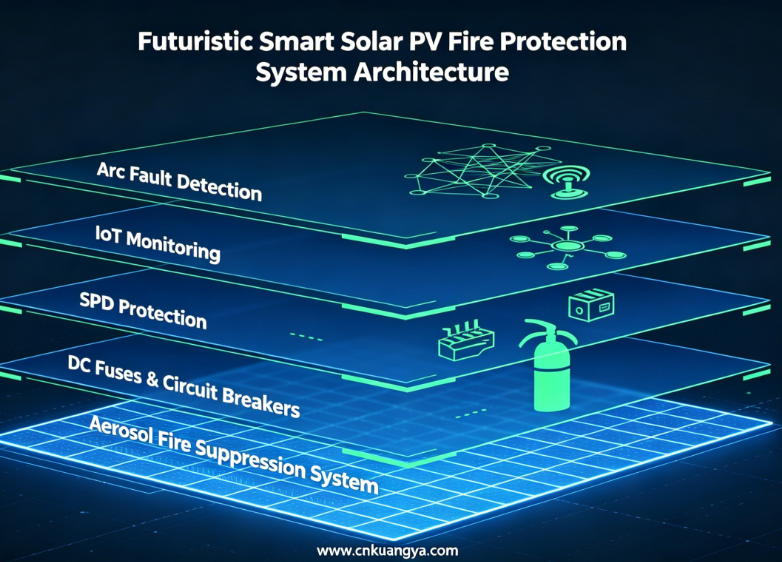
Modern PV systems are shifting from passive protection to intelligent active fire prevention systems.
AFCI technology detects abnormal DC waveform patterns and identifies arc conditions before ignition occurs.
Once detected, the system automatically disconnects affected circuits.
IoT systems enable real-time monitoring of:
This allows predictive maintenance rather than reactive repair.
Aerosol suppression is increasingly used inside PV distribution boxes.
Key advantages:
It is particularly suitable for high-value EPC solar projects.
These systems allow remote or automatic disconnection of faulty strings or distribution boxes during abnormal events.
This significantly reduces fire escalation risk.
Modern EPC projects are increasingly adopting a combined strategy:
Detection + Protection + Suppression + Remote Isolation
This reduces reliance on manual intervention, which is often too slow in DC fire scenarios.
A complete fire prevention system must integrate multiple layers into a unified architecture.
| الطبقة | الوظيفة | المكوّن |
|---|---|---|
| طبقة الكشف | تحديد السلوك غير الطبيعي | المستشعرات، أنظمة قاطع دائرة خطأ القوس (AFCI) |
| طبقة التحكم | التحليل والاستجابة | وحدة التحكم في المراقبة |
| طبقة الحماية | قطع تيار العطل | Fuses, breakers, SPDs |
| طبقة العزل | نظام الفصل | مفتاح عزل التيار المستمر (DC) |
| طبقة الإخماد | Extinguish fire | Aerosol fire system |
The system is based on redundancy:
If one layer fails, another layer must still prevent escalation.
This is now considered standard practice in high-end PV EPC design.
Despite advanced technology availability, many fire incidents still occur due to avoidable mistakes.
| خطأ | النتيجة |
|---|---|
| Ignoring torque specifications | Terminal overheating |
| اختيار جهاز حماية من الصواعق (SPD) بحجم غير مناسب | Surge-induced breakdown |
| ضعف إحكام غلق لوحة التوزيع | Moisture short circuit |
| غياب الفحص الحراري | Undetected hotspot growth |
| No long-term maintenance plan | Progressive system failure |
Most Solar PV Fire incidents are not caused by sudden failure.
بل تنتج عن:
“Small electrical and mechanical issues accumulating over time until system tolerance is exceeded.”
Fire protection strategies for photovoltaic systems should integrate both electrical fault prevention and early-stage suppression in enclosed electrical environments, as recommended by إرشادات السلامة الخاصة بالأنظمة الكهروضوئية الشمسية وفقاً للجمعية الوطنية للحماية من الحرائق (NFPA).
Solar PV Fire risk is not the result of a single failure point, but a combination of electrical, mechanical, and environmental stress factors acting over time.
The most critical insight from real EPC projects is:
الفعالية Solar PV Fire Prevention requires a full system approach combining:
Only through this layered engineering strategy can long-term PV system safety be achieved.
Loose DC connections leading to arc faults inside distribution boxes.
No. SPDs reduce surge-related risks but cannot prevent all fire causes such as loose connections or aging.
Because they are the convergence point of multiple DC strings under continuous electrical load.
Thermal inspection should be conducted quarterly, especially in commercial and utility-scale systems.
For high-value EPC installations, yes. It provides fast automatic suppression in enclosed electrical spaces.
Focusing only on equipment quality while ignoring installation torque control and long-term maintenance.

