WengYang Industrial Zone Yueqing Wenzhou 325000
Horas de trabalho
De segunda a sexta-feira: das 7h às 19h
Fim de semana: 10:00 - 17:00
WengYang Industrial Zone Yueqing Wenzhou 325000
Horas de trabalho
De segunda a sexta-feira: das 7h às 19h
Fim de semana: 10:00 - 17:00

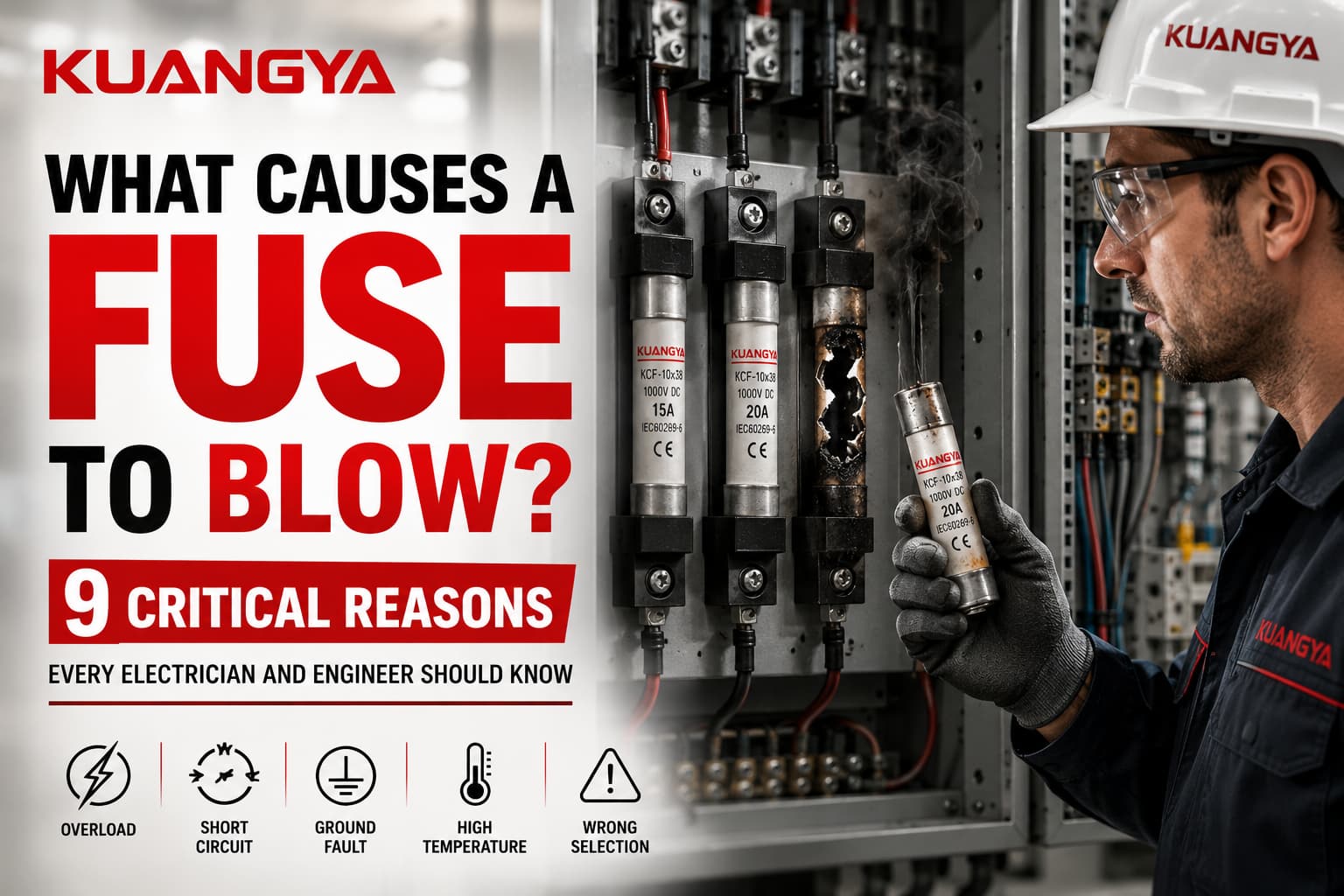
Todo eletricista já se deparou com isso.
Uma máquina para repentinamente.
Um inversor solar fica off-line.
Um sistema de bateria perde energia.
Após abrir o painel, o diagnóstico parece simples: o fusível está queimado.
Mas engenheiros experientes sabem que um fusível queimado raramente é o problema real.
Um fusível é projetado para se sacrificar para proteger cabos, equipamentos e pessoas de condições perigosas de sobrecorrente. Quando um fusível queima, geralmente está sinalizando um problema mais profundo em algum lugar do sistema elétrico.
Infelizmente, muitos técnicos simplesmente substituem o fusível e restauram a energia sem investigar por que o fusível falhou em primeiro lugar. Essa abordagem pode levar a falhas repetidas, danos ao equipamento, tempo de inatividade da produção e até mesmo riscos de incêndio.
Este guia fornece uma análise profissional de falhas em incidentes com fusíveis queimados, ajudando eletricistas, engenheiros de manutenção, instaladores de energia solar e operadores industriais a identificar as causas principais e evitar falhas futuras.
Um fusível é considerado queimado quando seu elemento fusível interno derrete e abre permanentemente o circuito.
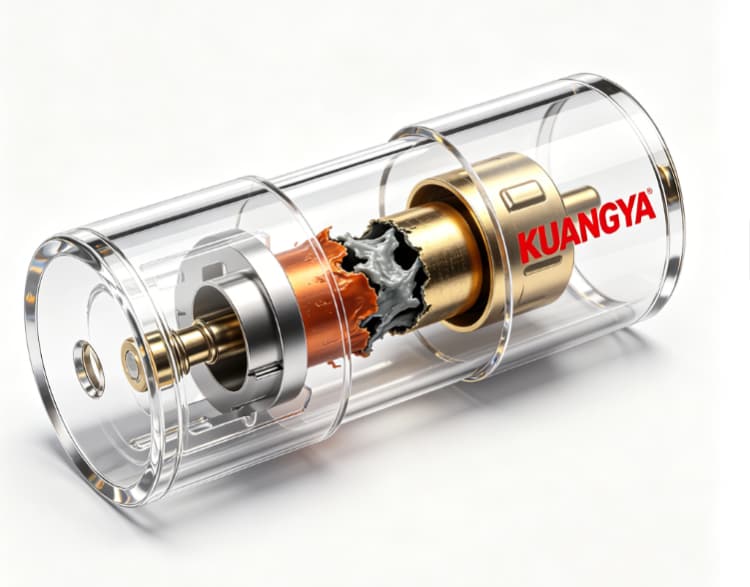
O processo de fusão ocorre porque a corrente elétrica gera calor.
Quando a corrente excede o limite operacional projetado do fusível por um período de tempo suficiente, o elemento fusível atinge sua temperatura de fusão e se rompe.
| Estágio | Descrição |
|---|---|
| Operação normal | A corrente permanece dentro da classificação |
| Começa a sobrecarga | A corrente aumenta acima da classificação |
| Aumento da temperatura | O elemento fusível se aquece |
| Ponto de fusão atingido | O elemento fusível derrete |
| Abertura do circuito | O fluxo de corrente é interrompido |
| Sistema protegido | A falha está isolada |
Em geral, o próprio fusível está funcionando corretamente.
A verdadeira questão é:
Por que ocorreu a sobrecorrente?
A sobrecarga é o motivo mais comum para uma condição de fusível queimado.
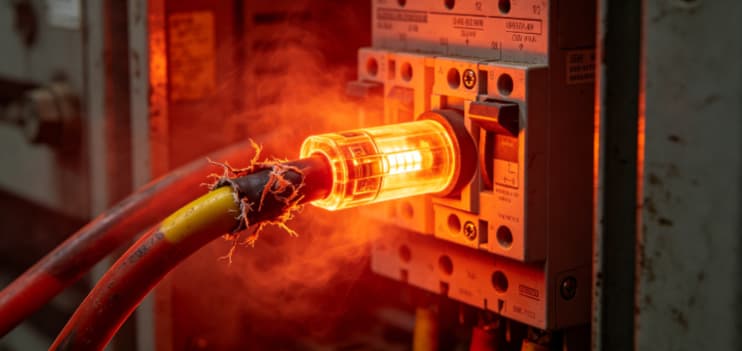
Isso ocorre quando o equipamento consome mais corrente do que o circuito foi projetado para suportar.
| Sintoma | Observação |
| Falha do fusível | Atrasado |
| Temperatura do cabo | Quente |
| Operação do equipamento | Geralmente continua antes da falha |
| Sopro repetido | Comum |
Ao contrário dos curtos-circuitos, as sobrecargas geralmente se desenvolvem gradualmente.
Um curto-circuito é uma das falhas elétricas mais graves.
Ocorre quando condutores com potenciais diferentes entram em contato direto.
Os exemplos incluem:
| Classificação do circuito | Possível corrente de curto-circuito |
| Circuito de 20A | 1.000 A A 10.000 A |
| Circuito de 100A | 5.000A-50.000A |
| Barramento industrial | Mais de 100kA |
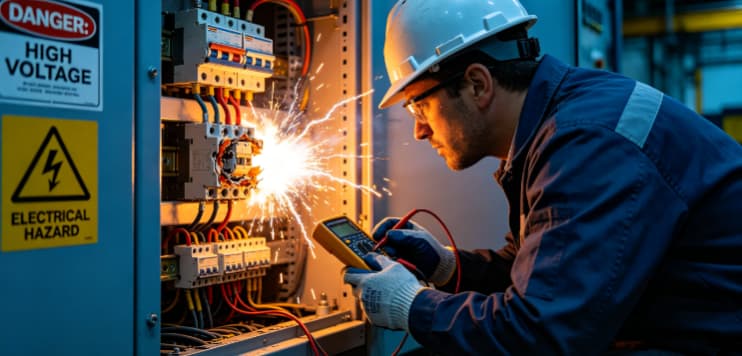
Um fusível adequadamente selecionado deve interromper a falha em milissegundos.
Falhas de aterramento ocorrem quando a corrente flui involuntariamente para o terra.
As causas comuns incluem:
| Meio ambiente | Nível de risco |
| Locais solares externos | Alta |
| Cabeamento subterrâneo | Alta |
| Salas de bateria | Médio |
| Painéis internos | Baixa |
As falhas de aterramento geralmente se desenvolvem antes que ocorram falhas catastróficas.
Muitos Incidentes com fusíveis queimados são causados pela seleção do fusível errado.
| Erro | Resultado |
| Fusível muito pequeno | Sopro incômodo frequente |
| Classificação de tensão incorreta | Falha na interrupção de arco |
| Fusível CA usado no sistema CC | Eliminação de falhas perigosas |
| Capacidade de ruptura insuficiente | Destruição de fusível |
É por isso que o dimensionamento adequado do fusível é essencial.
Os motores elétricos criam uma corrente de inrush temporária durante a partida.
| Tipo de motor | Corrente de inicialização |
| Motor pequeno | 3-5 × corrente nominal |
| Motor industrial | 6-8 × corrente nominal |
| Motor grande | 8-12 × corrente nominal |
Se o fusível for selecionado muito próximo da corrente de operação, a inicialização poderá causar falhas desnecessárias no fusível.
Os transformadores geram correntes de magnetização extremamente altas durante a energização.
| Tamanho do transformador | Inrush Múltiplo |
| Transformador pequeno | 8 × corrente nominal |
| Transformador médio | 10 × corrente nominal |
| Transformador grande | 15 × corrente nominal |
Os engenheiros frequentemente confundem esses surtos temporários com falhas reais.
Nem toda falha de fusível é causada por sobrecorrente.
Com o tempo, os ciclos repetidos de aquecimento e resfriamento enfraquecem o elemento fusível.
| Sintoma | Possível causa |
| Descoloração | Envelhecimento térmico |
| Oxidação | Exposição à umidade |
| Redução da expectativa de vida | Aquecimento contínuo |
As instalações industriais geralmente ignoram esse fator.
Terminais soltos criam resistência.
A resistência gera calor.
O calor pode causar pontos quentes locais que acabam danificando o fusível.
| Item | Verificar |
| Torque do terminal | Correto |
| Condição do titular | Intacto |
| Corrosão | Nenhum |
| Pressão de contato | Adequado |
Muitas “falhas de fusível” são, na verdade, falhas de conexão.
Os sistemas elétricos não operam em condições de laboratório, pois os fatores ambientais afetam significativamente o desempenho dos fusíveis, especialmente efeitos da temperatura ambiente sobre os fusíveis
Os fatores ambientais afetam significativamente o desempenho do fusível.
| Condição | Efeito |
| Alta temperatura | Redução da capacidade atual |
| Poeira | Aumento do aquecimento |
| Umidade | Risco de corrosão |
| Altitude | Eficiência de resfriamento reduzida |
Esses fatores se tornam especialmente importantes em instalações de energia solar fotovoltaica e sistemas de armazenamento de energia por bateria.
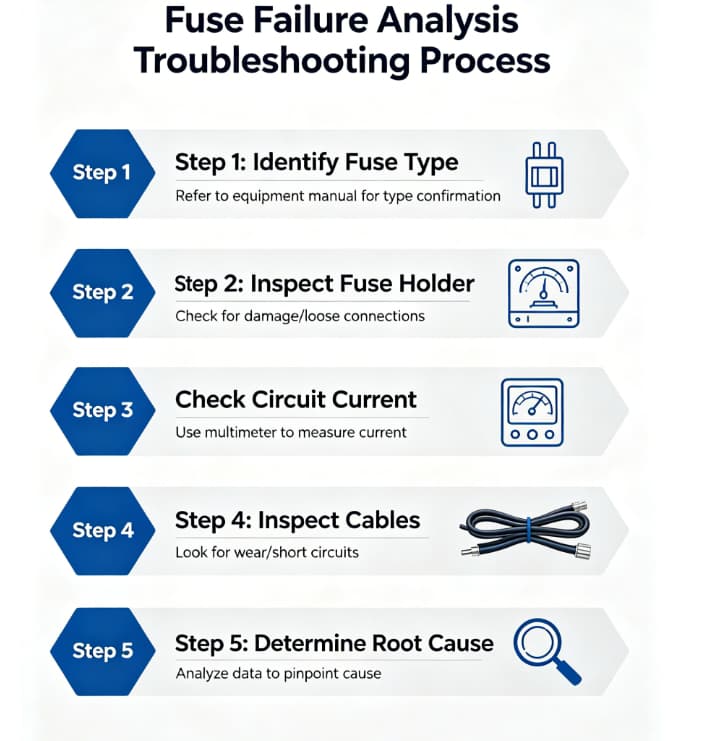
A substituição do fusível nunca deve ser a primeira etapa.
A solução de problemas profissional segue um processo sistemático.
Identifique o tipo e a classificação do fusível.
Inspecione o suporte do fusível.
Verifique se há danos visíveis.
Meça a resistência do isolamento.
Meça a corrente operacional.
Inspecione os cabos e os terminais.
Investigar alterações recentes no sistema.
Verifique os cálculos de carga.
A aparência de um fusível queimado geralmente fornece informações valiosas para o diagnóstico.
| Aparência | Causa provável |
| Pausa limpa | Sobrecarga moderada |
| Interior escurecido | Curto-circuito |
| Suporte derretido | Conexão solta |
| Corpo rachado | Energia de falha extrema |
| Marcas de queimadura nos terminais | Resistência de contato |
Os eletricistas experientes geralmente diagnosticam as falhas antes de usar qualquer equipamento de teste.
Os sistemas solares fotovoltaicos apresentam desafios únicos.
| Causa | Frequência |
| Corrente reversa | Alta |
| Incompatibilidade de strings | Médio |
| Falha de aterramento | Médio |
| Surtos de raios | Baixa |
| Erros de instalação | Alta |
Como os sistemas fotovoltaicos operam com corrente contínua, os arcos de falha são mais difíceis de extinguir.
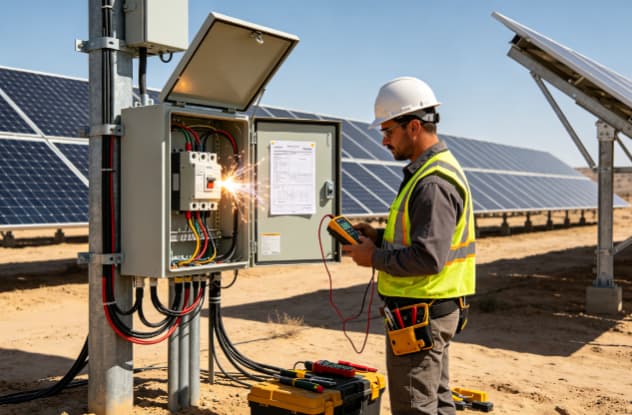
É por isso que são necessários fusíveis gPV especializados.
Os sistemas de bateria podem produzir correntes de falha extremamente altas.
| Requisito | Importância |
| Classificação DC | Crítico |
| Alta capacidade de ruptura | Crítico |
| Resposta rápida | Alta |
| Resistência à temperatura | Alta |
Antes de substituir um fusível, responda a estas perguntas.
| Pergunta | Sim/Não |
| O fusível tem a classificação correta? | |
| A classificação da tensão está correta? | |
| Todos os terminais estão apertados? | |
| O isolamento do cabo está intacto? | |
| O equipamento foi modificado recentemente? | |
| A temperatura ambiente está elevada? | |
| A corrente de inicialização está sendo considerada? | |
| Há evidência de um curto-circuito? |
Essa lista de verificação pode eliminar muitas falhas recorrentes.
Falhas repetidas do fusível geralmente indicam uma sobrecarga não resolvida, curto-circuito, conexão solta ou dimensionamento incorreto do fusível.
Sim.
Sobrecargas, envelhecimento, correntes de inrush e estresse térmico podem causar a queima de um fusível.
Não.
O superdimensionamento de um fusível pode permitir níveis perigosos de corrente que danificam o equipamento e criam riscos de incêndio.
Com certeza.
As altas temperaturas ambientes reduzem a capacidade de condução de corrente da maioria dos projetos de fusíveis.
Somente após identificar e corrigir a causa subjacente.
Caso contrário, o fusível de reposição poderá falhar novamente.
Os sistemas elétricos modernos estão se tornando mais inteligentes.
As tecnologias emergentes incluem:
Essas tecnologias ajudam a reduzir as falhas inesperadas dos fusíveis e aumentam a confiabilidade do sistema.
Uma condição de fusível queimado nunca deve ser vista como o problema em si.
Em vez disso, é um sinal de alerta de que algo anormal ocorreu no sistema elétrico.
Sobrecargas, curtos-circuitos, falhas de aterramento, correntes de inrush, conexões ruins, envelhecimento, condições ambientais e seleção incorreta de fusíveis estão entre as causas mais comuns.
Ao aplicar um processo estruturado de análise de falhas, os eletricistas e engenheiros podem identificar a verdadeira causa raiz, melhorar a confiabilidade do sistema, reduzir o tempo de inatividade e evitar falhas futuras.
Na próxima vez que um O fusível queima, Não basta substituí-lo.
Investigue.
O fusível pode estar protegendo seu equipamento de um problema muito maior.

