Zona industrial de WengYang Yueqing Wenzhou 325000
Horas de trabajo
De lunes a viernes: de 7.00 a 19.00 horas
Fin de semana: 10.00 A 17.00 HORAS
Zona industrial de WengYang Yueqing Wenzhou 325000
Horas de trabajo
De lunes a viernes: de 7.00 a 19.00 horas
Fin de semana: 10.00 A 17.00 HORAS

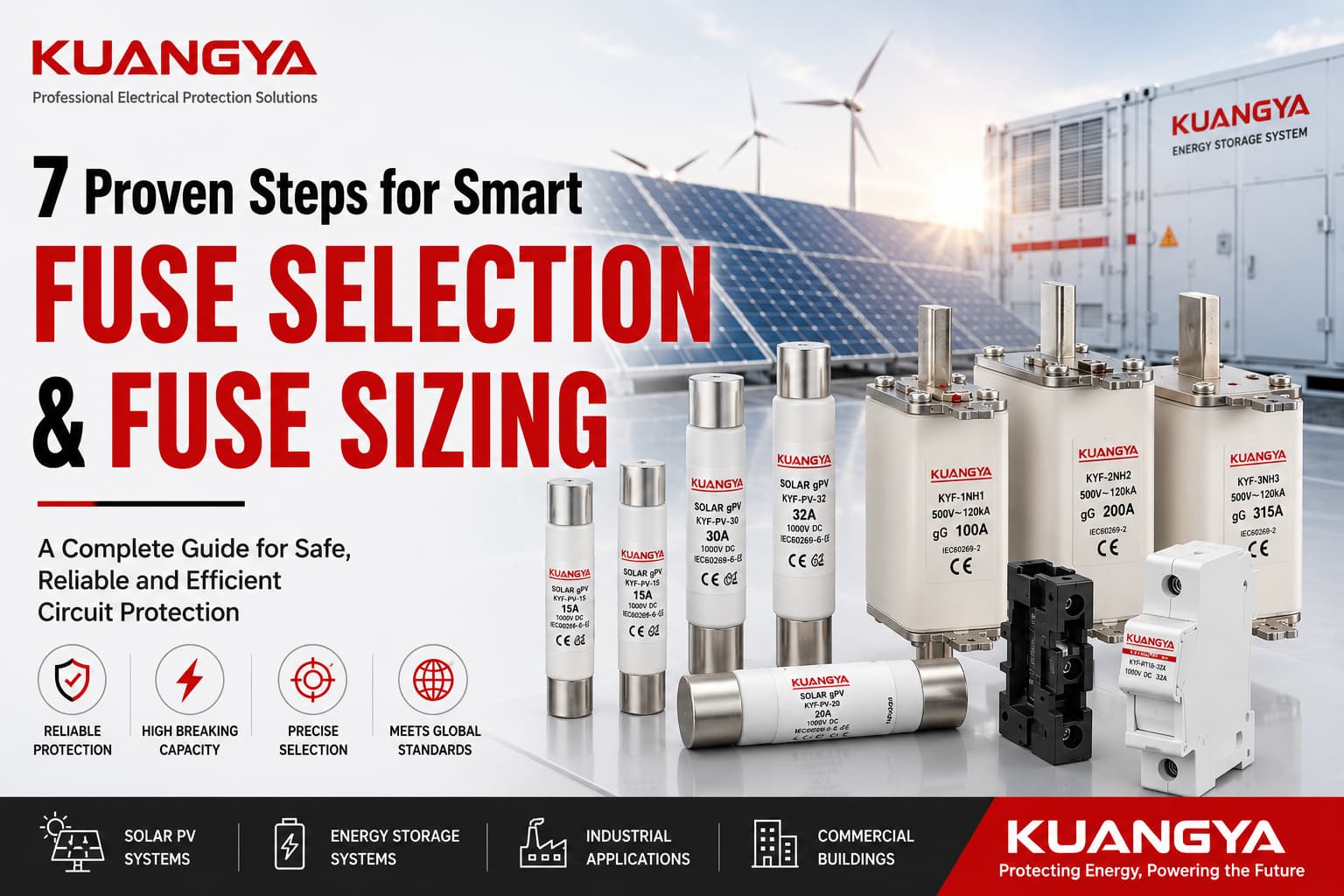
Todos los circuitos eléctricos necesitan protección. Tanto si alimenta un electrodoméstico, un sistema de paneles solares, un cargador de vehículo eléctrico, un banco de baterías o un equipo industrial, elegir el fusible correcto puede suponer la diferencia entre un funcionamiento seguro y daños costosos.
Mucha gente asume que un fusible es simplemente un trozo de metal que se funde cuando circula demasiada corriente a través de él. Aunque eso es cierto, la selección adecuada de un fusible es mucho más compleja. Un fusible debe ajustarse a las características eléctricas del circuito, soportar las condiciones normales de funcionamiento y reaccionar con suficiente rapidez en caso de avería.
Desgraciadamente, el dimensionado incorrecto de los fusibles sigue siendo uno de los errores más comunes en las instalaciones eléctricas de todo el mundo. Un fusible demasiado grande puede no proteger los equipos y crear riesgos de incendio y seguridad.
Esta guía explica la selección y el dimensionamiento de los fusibles en un lenguaje sencillo para que propietarios de viviendas, técnicos, ingenieros, instaladores solares y compradores de material eléctrico puedan elegir con confianza el fusible adecuado para sus aplicaciones.
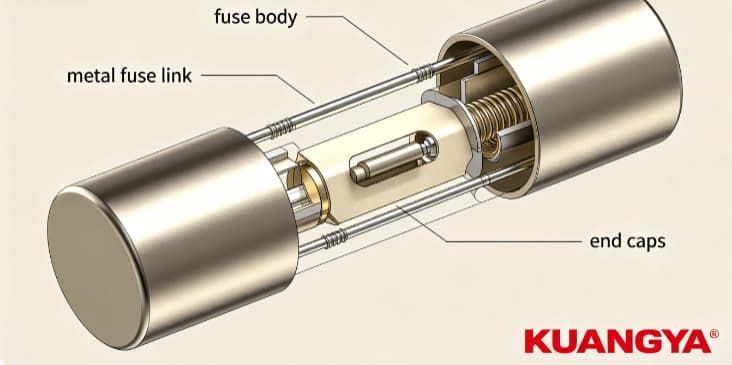
Un fusible es un dispositivo de seguridad eléctrica diseñado para proteger los circuitos de la sobrecorriente. Un fusible es un dispositivo de seguridad eléctrica diseñado para proteger los circuitos de una sobrecorriente., que se explica detalladamente en nuestro Guía de fusibles de CC para sistemas solares
Dentro de cada fusible hay un elemento metálico llamado eslabón fusible. Cuando la corriente supera el valor nominal del fusible durante un cierto tiempo, el elemento se calienta y se funde, interrumpiendo el circuito.
El fusible actúa como un componente de sacrificio. En lugar de permitir que una corriente excesiva dañe equipos costosos, el fusible desconecta la alimentación de forma segura.
| Condición | Nivel actual | Estado del fusible |
|---|---|---|
| Funcionamiento normal | Dentro de la clasificación | El fusible permanece intacto |
| Sobrecarga moderada | Ligeramente por encima de la calificación | El fusible puede abrirse después de un retardo |
| Cortocircuito | Corriente extremadamente alta | El fusible se abre rápidamente |
| Fallo eliminado | No hay flujo de corriente | Debe sustituirse el fusible |
Comprender este sencillo principio es la base del éxito en la selección de fusibles.
El fusible correcto cumple dos funciones esenciales:
Un fusible correctamente seleccionado puede evitar:
Una mala selección de fusibles puede provocar:
Piense en un fusible como una póliza de seguro para su sistema eléctrico. Elegir uno equivocado puede hacer que esa protección sea ineficaz.
Al seleccionar un fusible, siempre deben evaluarse siete factores.
El primer paso para dimensionar un fusible es identificar la corriente de funcionamiento normal del circuito.
Por lo general, puede encontrar este valor en:
Un dispositivo funciona a:
La corriente puede calcularse mediante:
Corriente = Potencia ÷ Tensión
Corriente = 240 ÷ 24
Corriente = 10A
Por lo tanto, la corriente de funcionamiento normal es de 10 A.
Un fusible no debe funcionar continuamente a su capacidad máxima.
La práctica industrial suele recomendar dimensionar el fusible a 125% de la corriente de funcionamiento continuo.
Capacidad del fusible = Corriente de funcionamiento × 1,25
Corriente de funcionamiento = 10A
Capacidad del fusible = 10 × 1,25
Capacidad del fusible = 12,5 A
El siguiente tamaño de fusible estándar suele ser de 15 A.
| Corriente de funcionamiento | Fusible recomendado |
| 5A | 6A-8A |
| 10A | 15A |
| 20A | 25A |
| 40A | 50A |
| 80A | 100A |
Esta es una de las reglas más importantes en el dimensionamiento de los fusibles.
Un fusible debe tener una tensión nominal igual o superior a la tensión del sistema.
| Tensión del sistema | Tensión mínima del fusible |
| 24 V CC | 32 V CC |
| 48 V CC | 58 V CC |
| 150 V CC | 150 V CC |
| 600 V CA | 600 V CA |
No utilice nunca un fusible con una tensión nominal inferior a la del circuito.
Aunque el valor nominal de corriente parezca correcto, un valor nominal de tensión insuficiente puede impedir la extinción adecuada del arco durante las averías.
Uno de los errores más comunes en la selección de fusibles es suponer que los fusibles de CA y CC son intercambiables.
No lo son.
La corriente continua no cruza naturalmente el cero como la corriente alterna.
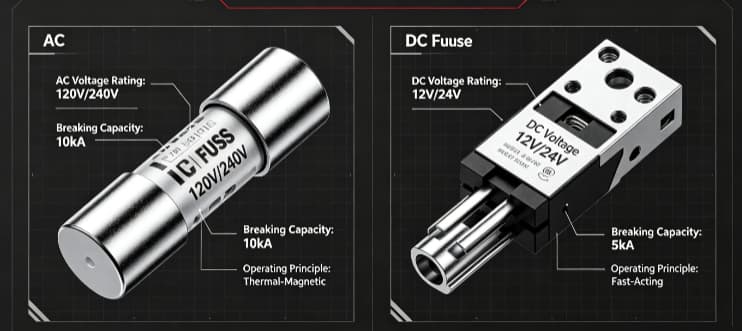
Como resultado, los arcos de CC son más difíciles de extinguir.
| Característica | Fusible CA | Fusible CC |
| Extinción de arcos | Más fácil | Más difícil |
| Estructura interna | Más sencillo | Más robusto |
| Longitud típica | Más corto | Más largo |
| Aplicaciones comunes | Edificios | Energía solar, baterías y vehículos eléctricos |
Para los sistemas solares y de baterías, utilice siempre fusibles de CC específicos.
Muchos dispositivos consumen brevemente una corriente elevada durante el arranque.
Algunos ejemplos son:
Un fusible seleccionado únicamente en función de la corriente de funcionamiento puede fundirse innecesariamente.
| Equipamiento | Corriente de arranque |
| Motor | 5-8× corriente normal |
| Transformador | 10-15× corriente normal |
| Banco de condensadores | 20× corriente normal |
| Controlador LED | 2-5× corriente normal |
En estos casos, un fusible temporizado puede ser más apropiado.
La capacidad de interrupción, también llamada capacidad de corte, se refiere a la corriente de defecto máxima que un fusible puede interrumpir con seguridad.
Un circuito puede funcionar normalmente a 20 A.
Sin embargo, durante un cortocircuito, la corriente de fallo podría alcanzar los 20.000 A.
Un fusible con capacidad de ruptura de sólo 5.000 A no sería seguro.
| Tipo de fusible | Capacidad de rotura |
| Fusible de vidrio | 35A-150A |
| Fusibles industriales | 50kA-120kA |
| Fusible NH | Hasta 120 kA |
| Fusible solar gPV | Hasta 50 kA |
Verifique siempre los niveles de corriente de defecto antes de seleccionar un fusible.
Los factores ambientales afectan directamente al rendimiento de los fusibles.
Entre ellas figuran:
| Temperatura ambiente | Rendimiento de los fusibles |
| Baja temperatura | Mayor tolerancia a la corriente |
| Temperatura normal | Rendimiento nominal |
| Alta temperatura | Menor tolerancia a la corriente |
En entornos calurosos, puede ser necesario reducir la potencia.
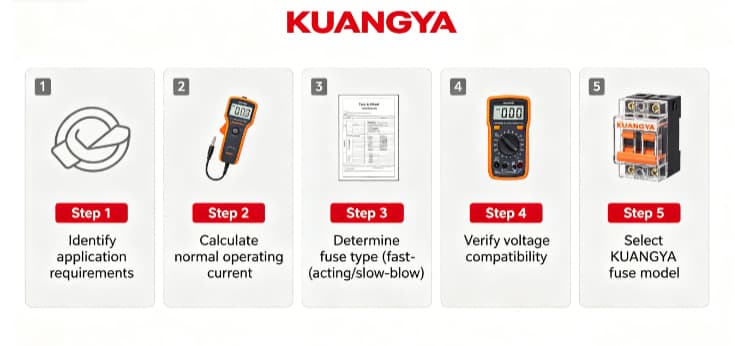
El siguiente flujo de trabajo simplifica la selección de fusibles.
Identificar la tensión del sistema.
Determinar la corriente de funcionamiento.
Calcule el tamaño del fusible utilizando la regla 125%.
Elige fusible de CA o CC.
Evalúe la corriente de arranque.
Comprobar la capacidad de rotura.
Verificar las condiciones ambientales.
Confirmar el cumplimiento de las normas locales.
Ejemplos:
Tipo de fusible recomendado:
Razón:
Las corrientes de arranque son habituales.
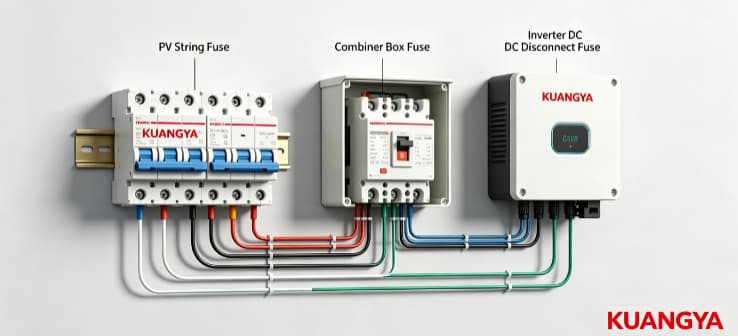
Los sistemas solares requieren fusibles gPV especiales.
| Posición | Fusible necesario |
| Cadena PV | Sí |
| Caja combinadora | Sí |
| Desconexión CC | A menudo |
| Inversor Lado CA | Fusible CA |
La selección del fusible solar debe seguir siempre las recomendaciones del fabricante.
Los sistemas de baterías pueden generar corrientes de fallo extremadamente altas.
Tensiones de batería comunes:
Las estaciones de recarga de vehículos eléctricos suelen ser necesarias:
El dimensionamiento adecuado de los fusibles es fundamental porque las corrientes de carga son continuas durante largos periodos.
Evite estos errores comunes.
Ejemplo:
Carga de 10 A → fusible de 10 A
Resultado:
Viajes molestos frecuentes.
Ejemplo:
Carga de 10 A → fusible de 40 A
Resultado:
Mala protección.
El uso de fusibles de CA en sistemas solares puede crear graves peligros.
Las altas temperaturas reducen la capacidad de carga de los fusibles.
La capacidad de ruptura es tan importante como la intensidad nominal.
Utilice esta sencilla lista de comprobación antes de comprar un fusible.
| Pregunta | Respuesta |
| ¿Cuál es la tensión del sistema? | _____ |
| ¿Es CA o CC? | _____ |
| ¿Cuál es la corriente de funcionamiento? | _____ |
| ¿Hay corriente de arranque? | Sí / No |
| ¿Corriente de defecto máxima? | _____ |
| ¿Entorno de instalación? | _____ |
| ¿Normas exigidas? | _____ |
| ¿Tamaño de fusible recomendado? | _____ |
Completar esta tabla puede evitar muchos errores costosos.
| Carga continua | Tamaño de fusible sugerido |
| 5A | 6A-8A |
| 10A | 15A |
| 15A | 20A |
| 20A | 25A |
| 30A | 40A |
| 40A | 50A |
| 60A | 80A |
| 80A | 100A |
| 100A | 125A |
Esta tabla constituye un punto de partida útil, pero no debe sustituir a los cálculos de ingeniería.
Las distintas regiones utilizan normas diferentes.
Al exportar productos a todo el mundo, asegúrese de cumplir la normativa local.
Los ingenieros experimentados rara vez eligen un fusible basándose únicamente en la intensidad nominal.
En su lugar, analizan:
Este enfoque sistemático mejora la seguridad y la fiabilidad.
A medida que las energías renovables y el transporte eléctrico siguen creciendo, la tecnología de los fusibles evoluciona.
Entre las aplicaciones emergentes figuran:
Estas aplicaciones suelen requerir:
Comprender los principios modernos de selección de fusibles es cada vez más importante para instaladores, contratistas y compradores de material eléctrico de todo el mundo.
A la hora de seleccionar los fusibles, los instaladores e ingenieros siempre deben tener en cuenta los siguientes puntos normas de seguridad eléctrica para garantizar el cumplimiento de la normativa, reducir los riesgos de incendio y mejorar la fiabilidad general del sistema.
Muchos usuarios comparan fusibles con disyuntores antes de tomar una decisión definitiva. Más información en nuestro Artículo sobre fusibles e interruptores automáticos.
Los fusibles NH00, NH1 y NH2 se utilizan habitualmente en sistemas de distribución industrial. Cada tamaño tiene una intensidad nominal y un poder de corte diferentes, por lo que una selección adecuada es fundamental para la seguridad y la fiabilidad.
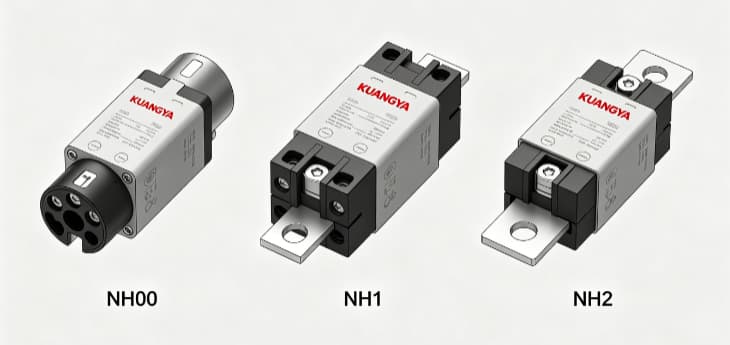
Elegir el fusible adecuado no consiste simplemente en hacer coincidir los valores nominales de corriente. Para seleccionar un fusible adecuado es necesario evaluar la corriente de funcionamiento, la tensión, las condiciones de arranque, la capacidad de corte, los factores ambientales y los requisitos de la aplicación.
Un fusible bien elegido protege los equipos, evita tiempos de inactividad y mejora la seguridad. Tanto si trabaja con electrodomésticos como con maquinaria industrial, sistemas de energía solar, almacenamiento de baterías o estaciones de carga de vehículos eléctricos, seguir un proceso estructurado de dimensionamiento de fusibles le ayudará a garantizar un funcionamiento fiable.
Antes de comprar un fusible, haga siempre las preguntas adecuadas, realice cálculos precisos y verifique el cumplimiento de las normas pertinentes. Unos minutos extra dedicados a la selección de fusibles pueden ahorrar miles de dólares en daños a los equipos y costes de mantenimiento más adelante.
Al comprender los principios descritos en esta guía, cualquier persona, desde principiantes hasta profesionales experimentados, puede tomar decisiones más inteligentes y seguras a la hora de seleccionar fusibles.

