Zona industrial de WengYang Yueqing Wenzhou 325000
Horas de trabajo
De lunes a viernes: de 7.00 a 19.00 horas
Fin de semana: 10.00 A 17.00 HORAS
Zona industrial de WengYang Yueqing Wenzhou 325000
Horas de trabajo
De lunes a viernes: de 7.00 a 19.00 horas
Fin de semana: 10.00 A 17.00 HORAS

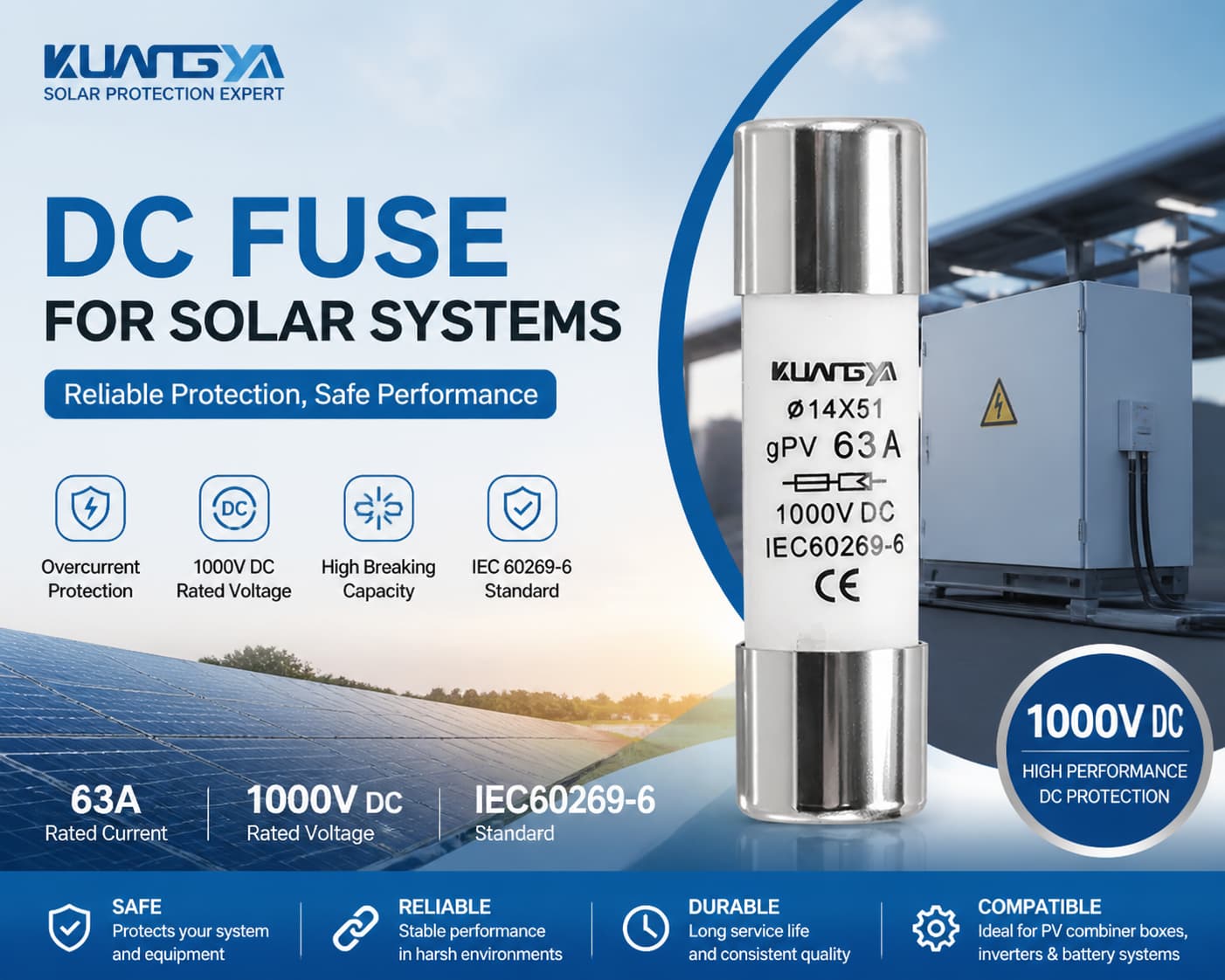
En los sistemas modernos de energía solar, la seguridad no es sólo un requisito, sino una necesidad. Uno de los componentes más críticos para garantizar la seguridad eléctrica es el Fusible de CC para sistemas solares.
Muchos fallos del sistema no están causados por los equipos principales, sino por una protección inadecuada de los circuitos. Elegir el componente equivocado puede provocar sobrecalentamiento, daños en los equipos o incluso riesgo de incendio.
En esta guía, aprenderá cómo funciona la protección con fusibles de CC, cómo seleccionar el modelo adecuado y cómo evitar errores comunes en los sistemas fotovoltaicos.
Un fusible de CC es un tipo de dispositivo de protección contra sobrecorriente diseñado específicamente para aplicaciones de corriente continua (CC). Protege los circuitos eléctricos interrumpiendo el flujo excesivo de corriente.
A diferencia de los componentes de protección generales, las versiones de CC están diseñadas para manejar la corriente continua y evitar la formación de arcos, que es más difícil de extinguir en los sistemas de CC.
El principio de funcionamiento se basa en la energía térmica.
Cuando la corriente supera el nivel nominal, el elemento interno se calienta y se funde, desconectando el circuito. De este modo se evitan daños adicionales a los equipos situados aguas abajo.
Este mecanismo sencillo pero eficaz lo convierte en uno de los métodos de protección más fiables en aplicaciones solares.
Las instalaciones solares funcionan en condiciones únicas:
Debido a estos factores, los componentes de protección de CA estándar no son adecuados.
El uso de una protección inadecuada puede provocar:
Como referencia, normas internacionales como IEC (Comisión Electrotécnica Internacional)
establecen requisitos estrictos para los dispositivos de protección eléctrica.
Elegir el dispositivo de protección adecuado requiere comprender varios factores importantes.
Seleccione un valor ligeramente superior a la corriente de funcionamiento normal (normalmente 125%).
Asegúrese de que la tensión nominal cumple o supera la tensión del sistema.
Determina la corriente de defecto máxima que el aparato puede interrumpir con seguridad.
La temperatura y el entorno de instalación pueden afectar al rendimiento. Tenga siempre en cuenta la reducción de potencia.
Los dispositivos de protección de CC se utilizan ampliamente en:
👉 Más información sobre la integración de sistemas:
KUANGYA(Soluciones de protección solar)
Muchos compradores cometen errores críticos al seleccionar los componentes de protección:
⚠️ Estos errores pueden provocar graves riesgos para la seguridad y fallos del sistema.
Ambos cumplen funciones protectoras, pero difieren significativamente.
| Característica | Fusible | Interruptor automático |
|---|---|---|
| Reutilización | No | Sí |
| Velocidad | Rápido | Más lento |
| Coste | Baja | Más alto |
En las aplicaciones solares, la rapidez de respuesta y la fiabilidad suelen hacer que la protección basada en fusibles sea la opción preferida.
No todos los productos son iguales.
Los componentes de baja calidad pueden tener:
Las soluciones de alta calidad garantizan:
👉 Explora más componentes de protección:
Ver nuestra gama de productos
Elegir el dispositivo de protección de CC adecuado no siempre es sencillo. Cada proyecto solar tiene requisitos diferentes.
⚠️ Una selección incorrecta puede provocar fallos en el sistema o riesgo de incendio.
👉 Si no está seguro, nuestros ingenieros pueden ayudarle a elegir la solución adecuada en función de su proyecto.
Proporcionamos:
📧 Correo electrónico: export@cnkuangya.com
📱 WhatsApp: +86 13606875281
🌐 Página web: https://cnkuangya.com
Seleccionar el fusible de CC adecuado para los sistemas solares es esencial para la seguridad, el rendimiento y la fiabilidad a largo plazo.
Si conoce los parámetros clave y evita los errores más comunes, podrá reducir considerablemente los riesgos y mejorar la eficacia del sistema.
Si está trabajando en un proyecto solar, invertir en la solución de protección adecuada es una de las decisiones más inteligentes que puede tomar.

