Zone industrielle WengYang Yueqing Wenzhou 325000
Heures de travail
Du lundi au vendredi : de 7h00 à 19h00
Le week-end : 10H00 - 17H00
Zone industrielle WengYang Yueqing Wenzhou 325000
Heures de travail
Du lundi au vendredi : de 7h00 à 19h00
Le week-end : 10H00 - 17H00

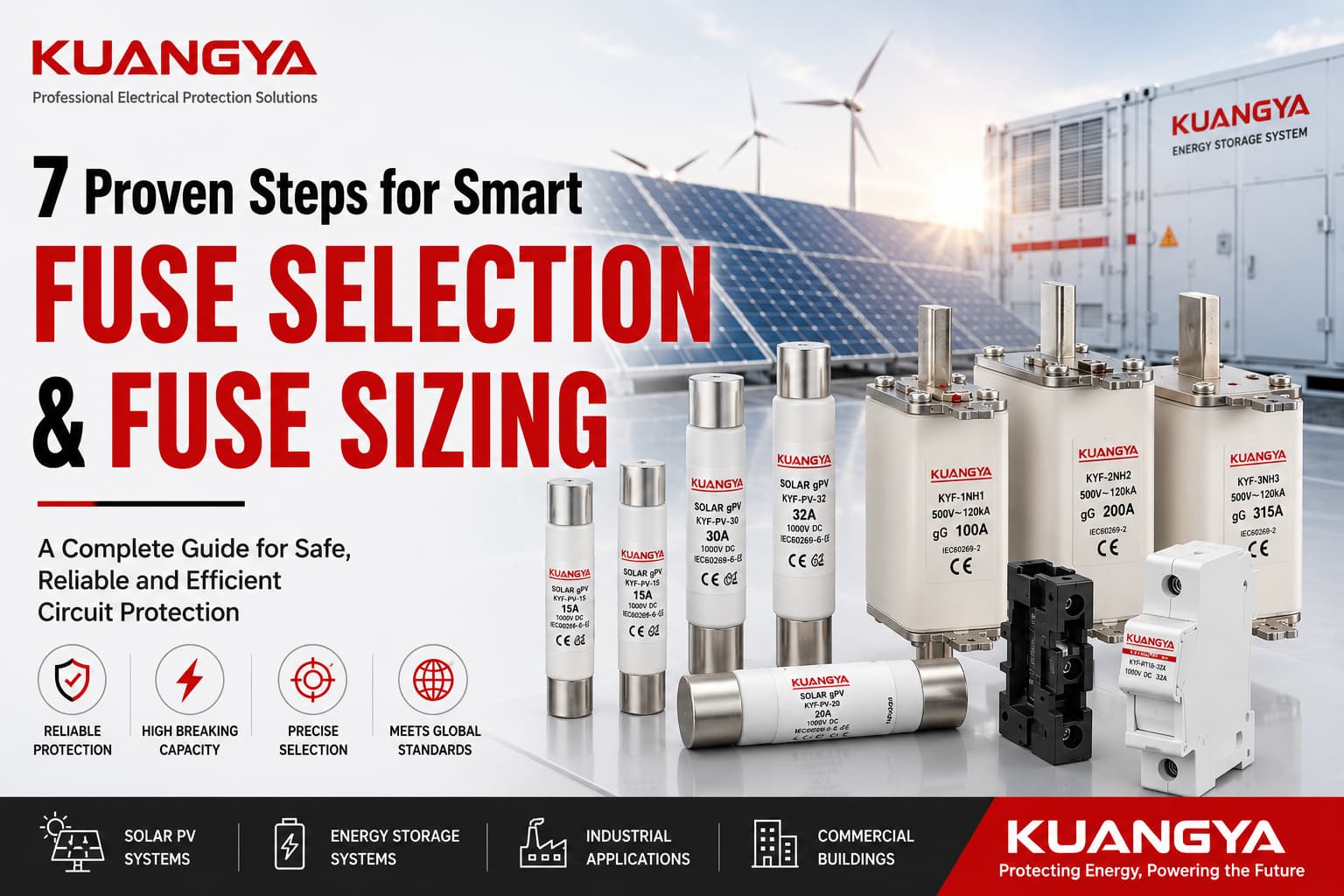
Chaque circuit électrique a besoin d'être protégé. Qu'il s'agisse d'alimenter un appareil électroménager, un système de panneaux solaires, un chargeur de véhicule électrique, un parc de batteries ou un équipement industriel, le choix du bon fusible peut faire la différence entre un fonctionnement sûr et des dommages coûteux.
Nombreux sont ceux qui pensent qu'un fusible est simplement un morceau de métal qui fond lorsqu'il est traversé par une trop grande quantité de courant. Bien que cela soit vrai, le choix d'un fusible approprié est beaucoup plus complexe. Un fusible doit correspondre aux caractéristiques électriques du circuit, résister aux conditions normales de fonctionnement et réagir suffisamment rapidement en cas de défaillance.
Malheureusement, le mauvais dimensionnement des fusibles reste l'une des erreurs les plus courantes dans les installations électriques du monde entier. Un fusible trop grand peut ne pas protéger l'équipement, ce qui crée des risques d'incendie et de sécurité.
Ce guide explique la sélection et le dimensionnement des fusibles dans un langage simple afin que les propriétaires, les techniciens, les ingénieurs, les installateurs solaires et les acheteurs de matériel électrique puissent choisir en toute confiance le fusible adapté à leurs applications.
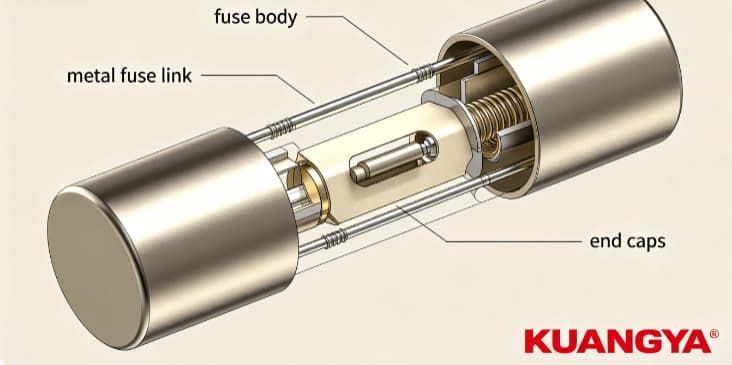
Un fusible est un dispositif de sécurité électrique conçu pour protéger les circuits contre les surintensités. Le fusible est un dispositif de sécurité électrique conçu pour protéger les circuits contre les surintensités., qui est expliquée en détail dans notre Fusible DC pour système solaire Guide
À l'intérieur de chaque fusible se trouve un élément métallique appelé fusible. Lorsque le courant dépasse la valeur nominale du fusible pendant un certain temps, l'élément s'échauffe et fond, interrompant le circuit.
Le fusible agit comme un composant sacrificiel. Au lieu de laisser un courant excessif endommager un équipement coûteux, le fusible coupe l'alimentation en toute sécurité.
| Condition | Niveau actuel | État des fusibles |
|---|---|---|
| Fonctionnement normal | Dans les limites de la notation | Le fusible reste intact |
| Surcharge modérée | Légèrement supérieur à la note | Le fusible peut s'ouvrir après un certain délai |
| Court-circuit | Courant extrêmement élevé | Le fusible s'ouvre rapidement |
| Défaut éliminé | Pas de flux de courant | Le fusible doit être remplacé |
La compréhension de ce principe simple est la base d'une sélection réussie des fusibles.
Le bon fusible remplit deux fonctions essentielles :
Un fusible bien choisi peut empêcher :
Un mauvais choix de fusible peut entraîner
Un fusible est une police d'assurance pour votre système électrique. Le choix d'un mauvais fusible peut rendre cette protection inefficace.
Lors de la sélection d'un fusible, sept facteurs doivent toujours être évalués.
La première étape du dimensionnement des fusibles consiste à identifier le courant de fonctionnement normal du circuit.
Vous pouvez généralement trouver cette valeur sur :
Un appareil fonctionne à :
Le courant peut être calculé en utilisant :
Courant = Puissance ÷ Tension
Courant = 240 ÷ 24
Courant = 10A
Le courant de fonctionnement normal est donc de 10A.
Un fusible ne doit pas fonctionner en permanence à sa valeur maximale.
La pratique industrielle recommande souvent de dimensionner le fusible à 125% du courant de fonctionnement continu.
Calibre du fusible = Courant de fonctionnement × 1,25
Courant de fonctionnement = 10A
Calibre des fusibles = 10 × 1,25
Calibre du fusible = 12,5A
La taille de fusible standard suivante est généralement de 15A.
| Courant d'exploitation | Fusible recommandé |
| 5A | 6A-8A |
| 10A | 15A |
| 20A | 25A |
| 40A | 50A |
| 80A | 100A |
Il s'agit de l'une des règles les plus importantes en matière de dimensionnement des fusibles.
Un fusible doit avoir une tension nominale égale ou supérieure à la tension du système.
| Tension du système | Tension minimale du fusible |
| 24V DC | 32V DC |
| 48V DC | 58V DC |
| 150V DC | 150V DC |
| 600V AC | 600V AC |
N'utilisez jamais un fusible dont la tension nominale est inférieure à celle du circuit.
Même si l'intensité nominale semble correcte, une tension nominale insuffisante peut empêcher l'extinction correcte de l'arc en cas de défaut.
L'une des erreurs les plus courantes dans le choix des fusibles est de croire que les fusibles à courant alternatif et à courant continu sont interchangeables.
Ce n'est pas le cas.
Le courant continu ne passe pas naturellement par zéro comme le courant alternatif.
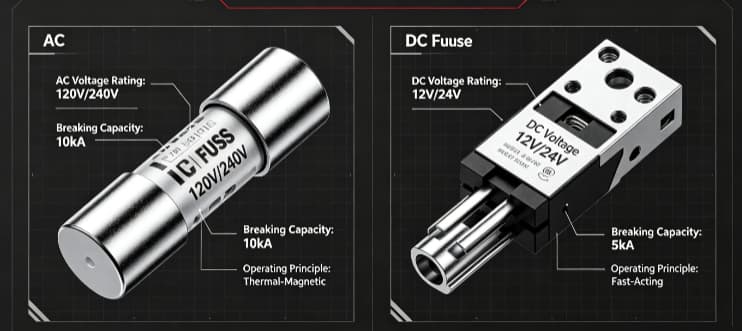
Par conséquent, les arcs à courant continu sont plus difficiles à éteindre.
| Fonctionnalité | Fusible CA | Fusible DC |
| Extinction des arcs électriques | Plus facile | Plus difficile |
| Structure interne | Plus simple | Plus robuste |
| Longueur typique | Plus court | Plus long |
| Applications courantes | Bâtiments | Solaire, batteries, VE |
Pour les systèmes solaires et de batteries, utilisez toujours des fusibles DC dédiés.
De nombreux appareils consomment brièvement un courant élevé lors de la mise en route.
En voici quelques exemples :
Un fusible sélectionné uniquement sur la base du courant de fonctionnement peut sauter inutilement.
| Equipement | Courant de démarrage |
| Moteur | 5-8× courant normal |
| Transformateur | 10-15× le courant normal |
| Banque de condensateurs | 20× le courant normal |
| Pilote de LED | 2-5× courant normal |
Dans ce cas, un fusible à retardement peut être plus approprié.
Le pouvoir d'interruption, également appelé pouvoir de coupure, désigne le courant de défaut maximal qu'un fusible peut interrompre en toute sécurité.
Un circuit peut normalement fonctionner à 20 A.
Cependant, lors d'un court-circuit, le courant de défaut peut atteindre 20 000 A.
Un fusible dont le pouvoir de coupure n'est que de 5 000 A n'est pas sûr.
| Type de fusible | Capacité de rupture |
| Fusible en verre | 35A-150A |
| Fusible industriel | 50kA-120kA |
| Fusible NH | Jusqu'à 120 kA |
| Fusible solaire gPV | Jusqu'à 50 kA |
Vérifiez toujours les niveaux de courant de défaut avant de choisir un fusible.
Les facteurs environnementaux affectent directement la performance des fusibles.
Il s'agit notamment de
| Température ambiante | Performance des fusibles |
| Basse température | Tolérance de courant plus élevée |
| Température normale | Performance nominale |
| Haute température | Tolérance de courant plus faible |
Dans les environnements chauds, un déclassement peut être nécessaire.
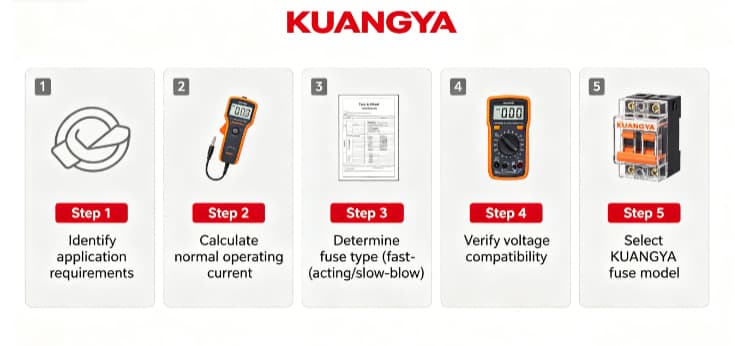
Le processus suivant simplifie la sélection des fusibles.
Identifier la tension du système.
Déterminer le courant de fonctionnement.
Calculer le dimensionnement du fusible en utilisant la règle 125%.
Choisir un fusible CA ou CC.
Évaluer le courant de démarrage.
Vérifier la capacité de rupture.
Vérifier les conditions environnementales.
Confirmer la conformité avec les normes locales.
Exemples :
Type de fusible recommandé :
Raison :
Les courants de démarrage sont courants.
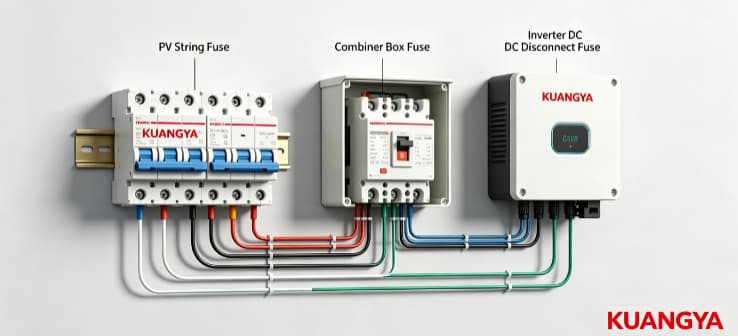
Les systèmes solaires nécessitent des fusibles gPV spéciaux.
| Position | Fusible nécessaire |
| Chaîne PV | Oui |
| Boîte de raccordement | Oui |
| Déconnexion DC | Souvent |
| Côté onduleur AC | Fusible CA |
Le choix des fusibles solaires doit toujours suivre les recommandations du fabricant.
Les systèmes de batteries peuvent générer des courants de défaut extrêmement élevés.
Tensions courantes de la batterie :
Les stations de recharge pour véhicules électriques nécessitent souvent :
Le dimensionnement correct des fusibles est essentiel car les courants de charge sont continus pendant de longues périodes.
Évitez ces erreurs courantes.
Exemple :
Charge de 10A → fusible de 10A
Résultat :
Déplacements gênants fréquents.
Exemple :
Charge de 10A → fusible de 40A
Résultat :
Mauvaise protection.
L'utilisation de fusibles CA dans les systèmes solaires peut entraîner de graves dangers.
Les températures élevées réduisent la capacité de charge des fusibles.
La capacité de rupture est tout aussi importante que l'intensité du courant.
Utilisez cette simple liste de contrôle avant d'acheter un fusible.
| Question | Réponse |
| Quelle est la tension du système ? | _____ |
| S'agit-il d'un courant alternatif ou continu ? | _____ |
| Quel est le courant de fonctionnement ? | _____ |
| Le courant de démarrage est-il présent ? | Oui / Non |
| Courant de défaut maximal ? | _____ |
| Environnement d'installation ? | _____ |
| Normes requises ? | _____ |
| Taille de fusible recommandée ? | _____ |
Remplir ce tableau permet d'éviter de nombreuses erreurs coûteuses.
| Charge continue | Taille de fusible suggérée |
| 5A | 6A-8A |
| 10A | 15A |
| 15A | 20A |
| 20A | 25A |
| 30A | 40A |
| 40A | 50A |
| 60A | 80A |
| 80A | 100A |
| 100A | 125A |
Ce tableau constitue un point de départ utile mais ne doit pas remplacer les calculs techniques.
Les normes varient d'une région à l'autre.
| Standard | Région |
| IEC 60269 | Mondial |
| UL 248 | Amérique du Nord |
| BS 88 | Royaume-Uni |
| Normes DIN | Allemagne |
| Normes GB/T | Chine |
Lorsque vous exportez des produits dans le monde entier, veillez à respecter les réglementations locales.
Les ingénieurs expérimentés choisissent rarement un fusible sur la base du seul courant nominal.
Au lieu de cela, ils analysent :
Cette approche systématique améliore la sécurité et la fiabilité.
Alors que les énergies renouvelables et les transports électriques continuent de se développer, la technologie des fusibles évolue.
Les applications émergentes sont les suivantes :
Ces applications requièrent souvent :
La compréhension des principes modernes de sélection des fusibles est de plus en plus importante pour les installateurs, les entrepreneurs et les acheteurs de matériel électrique du monde entier.
Lors de la sélection des fusibles, les installateurs et les ingénieurs doivent toujours suivre les règles applicables aux fusibles. normes de sécurité électrique afin de garantir la conformité, de réduire les risques d'incendie et d'améliorer la fiabilité globale du système.
De nombreux utilisateurs comparent fusibles avec disjoncteurs avant de prendre une décision définitive. Pour en savoir plus, consultez notre Article sur les fusibles et les disjoncteurs.
Les fusibles NH00, NH1 et NH2 sont couramment utilisés dans les systèmes de distribution industriels. Chaque taille a un courant nominal et un pouvoir de coupure différents, de sorte qu'une sélection correcte est essentielle pour la sécurité et la fiabilité.
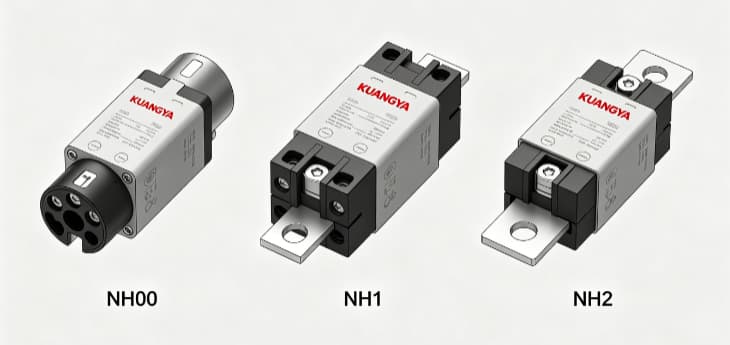
Choisir le bon fusible ne consiste pas simplement à faire correspondre les courants nominaux. Pour bien choisir un fusible, il faut évaluer le courant de fonctionnement, la tension, les conditions de démarrage, le pouvoir de coupure, les facteurs environnementaux et les exigences de l'application.
Un fusible bien choisi protège l'équipement, évite les temps d'arrêt et améliore la sécurité. Que vous travailliez avec des appareils électroménagers, des machines industrielles, des systèmes d'énergie solaire, des batteries de stockage ou des stations de recharge pour véhicules électriques, le respect d'un processus structuré de dimensionnement des fusibles contribuera à garantir un fonctionnement fiable.
Avant d'acheter un fusible, posez toujours les bonnes questions, effectuez des calculs précis et vérifiez la conformité aux normes en vigueur. Quelques minutes supplémentaires consacrées à la sélection d'un fusible peuvent permettre d'économiser des milliers d'euros en dommages matériels et en coûts de maintenance ultérieurs.
En comprenant les principes énoncés dans ce guide, tout le monde, du débutant au professionnel expérimenté, peut prendre des décisions plus judicieuses et plus sûres en matière de sélection des fusibles.

