منطقة ونغ يانغ الصناعية يويتشينغ ونتشو 325000
ساعات العمل
من الاثنين إلى الجمعة: 7 صباحاً - 7 مساءً
عطلة نهاية الأسبوع 10 صباحاً - 5 مساءً
منطقة ونغ يانغ الصناعية يويتشينغ ونتشو 325000
ساعات العمل
من الاثنين إلى الجمعة: 7 صباحاً - 7 مساءً
عطلة نهاية الأسبوع 10 صباحاً - 5 مساءً

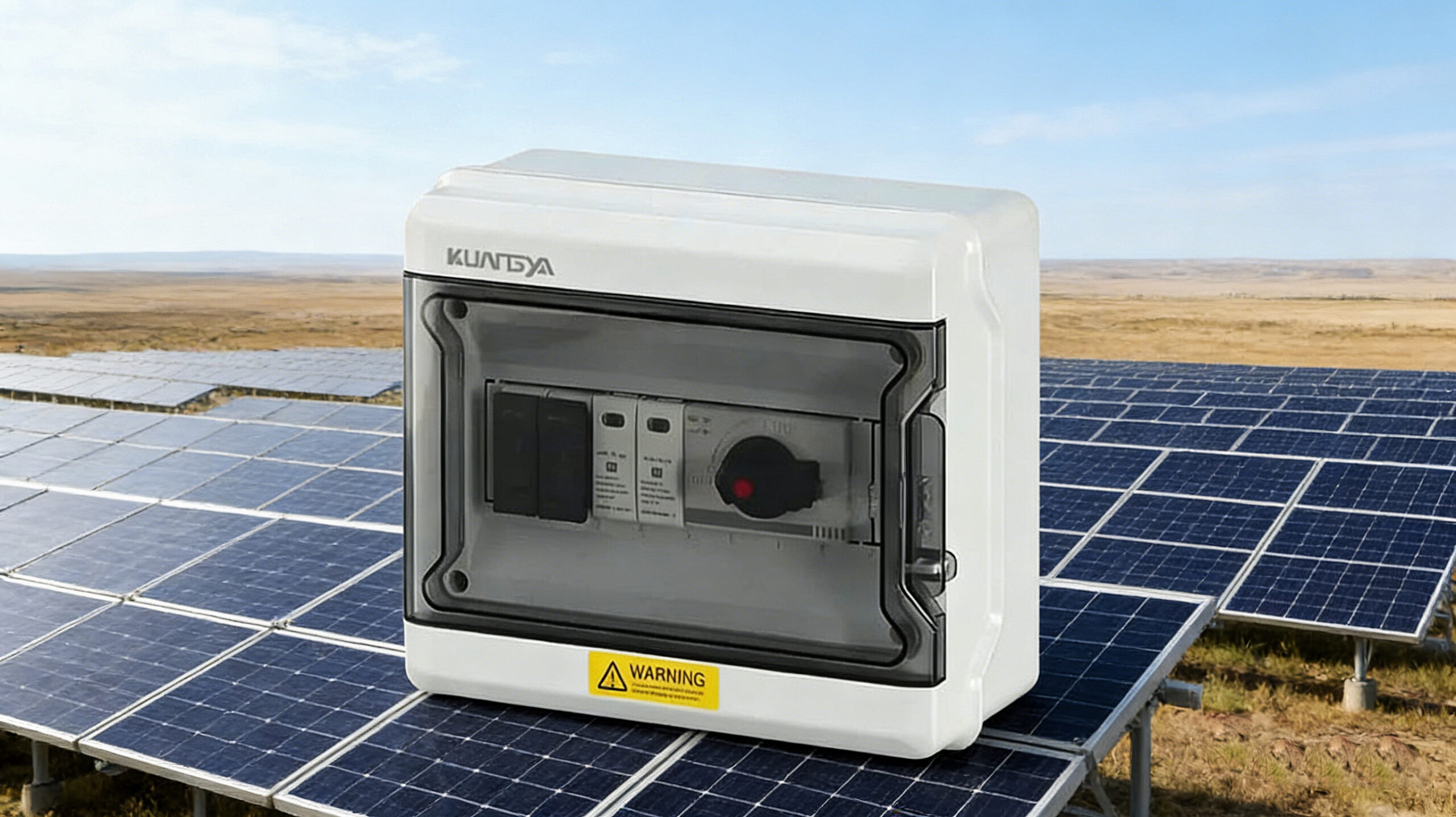
In the rapidly expanding world of solar photovoltaic (PV) energy, every component plays a vital role in ensuring the efficiency, safety, and reliability of the entire system. While solar panels and inverters often take the spotlight, there is a smaller yet indispensable component that acts as the “central nervous system” of many PV setups: the combiner box. It is a cornerstone of efficient PV system operation, often overlooked but critical to performance.
Whether you are a homeowner looking to install a residential solar system, a business owner planning a commercial PV project, or an industry professional working on utility-scale solar farms, understanding what a combiner box is and how it works is essential for making informed decisions about your solar investment. Its role in consolidating solar power makes it a non-negotiable component for most PV setups.
This guide will break down everything you need to know about the combiner box, from its basic definition and core functions to its components, types, applications, and global market significance. By the end, you’ll have a clear understanding of why it is essential for any efficient solar PV system.
Also known as a PV combiner box or solar combiner box, it is an electrical junction device designed to gather and consolidate the direct current (DC) power generated by multiple solar panel strings into a single, unified output. Its primary job is to streamline power flow, making the solar system more efficient and easier to manage.
In a typical solar PV system, solar panels are connected in series to form “strings” – each string consists of several panels wired together to produce a specific voltage.
It acts as a central hub where these multiple strings converge, combining their DC power into one main circuit that is then sent to an inverter. This centralization is what makes it such a vital component—without it, wiring would be chaotic and inefficient.
At its core, it serves two primary purposes: simplifying the wiring of the solar system and enhancing its safety and efficiency. Without it, a solar system with multiple panel strings would require dozens of separate wires running directly to the inverter, creating a messy, inefficient, and high-risk setup. It streamlines this process by centralizing the connections, reducing the number of cables needed, and providing essential protection against electrical faults—all key reasons it is a must-have for most PV systems.
While it is relatively small – often making up less than 1% of a solar project’s total cost – it is a critical point of failure if not designed or installed correctly. Research shows that poorly designed or maintained units are a leading cause of system burnout, equipment damage, and even fires in solar PV systems, highlighting just how important it is to the overall performance and safety of the system.
Understanding the inner workings of the combiner box is key to appreciating its role in a solar PV system. The process is straightforward but essential, and it can be broken down into four key steps that showcase how it operates.
To visualize this process, imagine a solar PV system as a network of roads: each solar panel string is a small road, and the combiner box is a roundabout that connects all these small roads into one main highway (the inverter). Just as a roundabout streamlines traffic flow and reduces congestion, it simplifies the flow of DC power, making the entire system more efficient and easier to manage—another key benefit.
The combiner box is more than just a metal or plastic enclosure – it contains several key components that work together to ensure its functionality, safety, and reliability. The exact components may vary depending on the type (e.g., basic vs. smart) and its intended application, but the following are the most common components found in most units.
| المكوّن | Function | الأهمية |
|---|---|---|
| Enclosure | A weatherproof, corrosion-resistant housing that protects internal components from dust, moisture, sunlight, and physical damage. Enclosures are rated by IP (Ingress Protection) and NEMA (National Electrical Manufacturers Association) standards. | Prevents damage to internal components, ensuring long-term reliability, especially for outdoor installations. |
| Input Terminals | Connection points for solar panel strings, allowing easy and secure wiring of each string to the unit. | Ensures a stable connection between the solar panels and the unit, minimizing energy loss and connection errors. |
| Fuses/Circuit Breakers | Protective devices that interrupt the flow of current if it exceeds safe levels (overcurrent) or if a short circuit occurs. Fuses are one-time use, while circuit breakers can be reset. | Prevents equipment damage, overheating, and fires by stopping excess current from flowing through the system. |
| Busbar | A thick metal bar (usually copper or aluminum) that collects DC power from all input strings and combines it into a single output. | Enables efficient power combining with minimal energy loss, ensuring the system operates at peak efficiency. |
| جهاز الحماية من زيادة التيار (SPD) | Diverts high-voltage surges (e.g., from lightning or grid fluctuations) to the ground, protecting the unit and other system components connected to it. | Prevents costly damage to sensitive electrical components, especially in areas prone to lightning strikes. |
| Disconnect Switch | A switch that allows the unit to be safely shut down for maintenance, repairs, or emergencies, adding a critical safety feature. | Ensures the safety of technicians working on the system by cutting off power to the unit, a key safety consideration. |
| Monitoring Sensors (Smart Models) | Sensors that track the voltage, current, and temperature of each solar string, providing real-time data about system performance. | Allows for early fault detection, predictive maintenance, and optimization of system efficiency. |
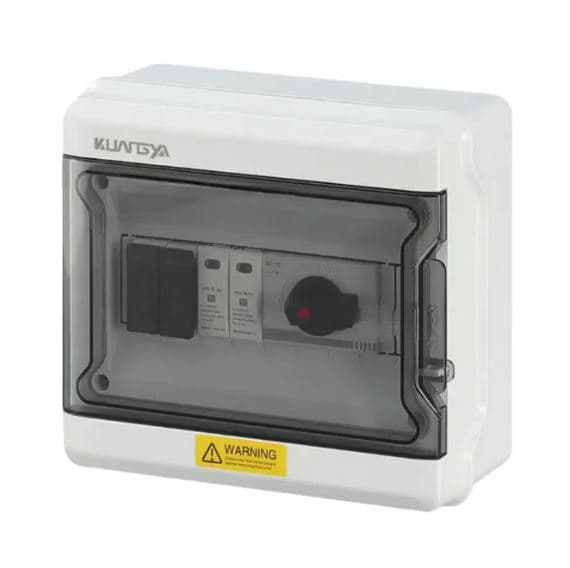
Combiner boxes are not one-size-fits-all – they come in several types, each designed for specific applications, system sizes, and performance requirements. Choosing the right one is essential to maximizing your solar system’s efficiency, as each type serves a unique purpose.
The most common types are categorized based on their functionality, voltage rating, and application. Each type has distinct features that make it suitable for different PV setups.
Understanding the differences between types is crucial for choosing the right one for your solar project, ensuring optimal performance and safety.
The most fundamental distinction is between DC and AC types, which are used at different stages of the solar PV system and serve different roles:
Another key distinction is between basic and smart types, which differ in their functionality and monitoring capabilities, affecting how they operate and add value to the PV system:
They are also categorized by their voltage rating, which must match the voltage of the solar panel strings and the inverter. The voltage rating is a key specification of any unit, as it determines its compatibility with the PV system.
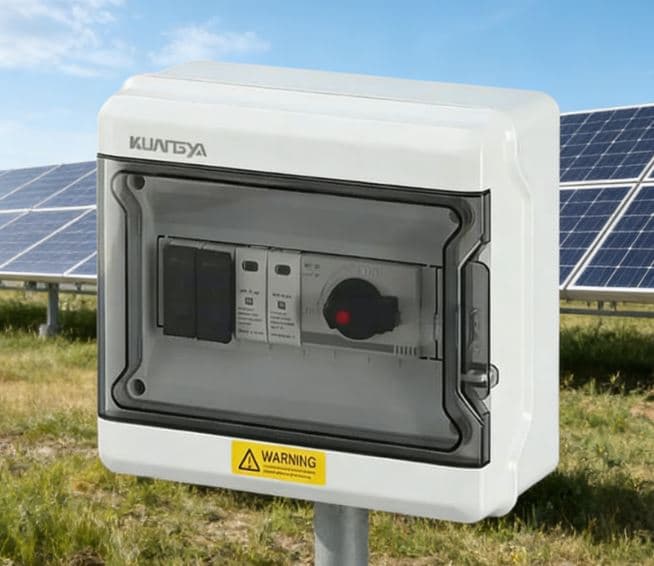
Combiner boxes are used in a wide range of solar PV applications, from small residential rooftops to large utility-scale solar farms. Their versatility and functionality make them a critical component in any solar system with multiple panel strings, as they ensure efficient power consolidation.
Below are the most common applications, each tailored to different system sizes and needs.
In residential solar systems (typically 2-10 kW), they are used to consolidate power from 2-4 solar panel strings. For small systems (e.g., 1-2 strings), one may be optional, but it is still recommended for safety and future scalability. Basic or entry-level smart units are ideal for residential applications, as they provide essential protection and can be easily integrated with home energy monitoring systems. Residential systems often use 600V or 1000V units, depending on the number of panels and the inverter’s voltage rating.
Commercial solar systems (10-100 kW) – such as those installed on office buildings, warehouses, or retail stores – typically have 5-20 solar panel strings. These systems require more robust units, often smart models with monitoring capabilities, to ensure efficient performance and easy maintenance. Commercial systems often use 1000V or 1500V units, and they may include multiple units (one per array of panels) to manage the system more effectively. According to market data, commercial applications lead the market with a 41.0% share, driven by the increasing adoption of solar energy by businesses worldwide.
Utility-scale solar farms (100 kW and above) are the largest users, with hundreds or even thousands of solar panel strings. These farms require high-capacity, smart units that can handle 1500V DC voltage, integrate with advanced monitoring systems, and provide reliable protection for large amounts of power. In utility-scale farms, units are often grouped together in “combiner stations” to manage the power from multiple arrays of panels. The global demand for units in utility-scale projects is growing rapidly, with over 64% of demand driven by large-scale solar farms.
Off-grid solar systems (used in remote areas without access to the utility grid) also rely on them to consolidate power from solar panel strings before it is stored in batteries. In off-grid systems, they are often paired with charge controllers to regulate the voltage and current going into the batteries, ensuring the batteries are not overcharged or damaged. Basic or smart units with surge protection are essential for off-grid systems, as they protect the batteries and other components from electrical faults.
The global market is experiencing significant growth, driven by the rapid expansion of solar PV installations worldwide, increasing demand for smart monitoring systems, and growing focus on safety and efficiency in solar power plants. Its role in PV systems makes it a key player in the global renewable energy market.
Below are key trends and insights from the global market, highlighting the growing importance of high-quality units in modern solar systems.
For more detailed market insights, you can refer to industry reports fromFuture Market Insights و Global Growth Insights, which provide comprehensive analysis of the global market and its role in solar energy.
To help you further understand combiner boxes, we’ve answered some of the most frequently asked questions about them and their role in solar PV systems:
A: No, not all solar systems need one. Small systems with 1-2 solar panel strings can connect directly to the inverter without one. However, systems with 3 or more strings benefit significantly from it, as it simplifies wiring, reduces energy loss, and provides essential protection. For commercial and utility-scale systems, one is essential.
A: The typical lifespan is 15-25 years, depending on the quality of its components, the environment (e.g., outdoor vs. indoor), and maintenance. High-quality units with weatherproof enclosures and durable components can last up to 25 years, matching the lifespan of most solar panels.
A: Yes, most are designed for outdoor installation. Outdoor units have weatherproof enclosures with IP ratings (typically IP65-IP67) and NEMA ratings (NEMA 3R/4X) to protect against rain, dust, sunlight, and corrosion. It is important to choose one with the appropriate IP rating for your installation environment.
A: Both connect electrical wires, but they serve different purposes. A junction box is a simple device that connects two or more wires together, with no protective components. A combiner box, on the other hand, is designed specifically for solar PV systems to combine DC power from multiple strings, and it includes protective components (fuses, circuit breakers, SPDs) to ensure safety and efficiency.
A: Yes, they require regular maintenance to ensure optimal performance and safety. Recommended maintenance tasks include inspecting the enclosure for damage or moisture, checking fuses and circuit breakers for signs of wear, cleaning the terminals to prevent corrosion, and verifying the performance of monitoring systems (for smart models). It is recommended to inspect one at least once or twice a year.
A: Yes, in most cases, you can retrofit a monitoring system into an existing unit. Many manufacturers offer retrofittable monitoring modules that can be installed in basic units to add real-time monitoring capabilities. However, it is important to ensure that the retrofitted module is compatible with the unit’s voltage and current ratings.
A: If one fails, it can cause the solar system to stop producing power, or it can lead to more serious issues like equipment damage or fires. Common signs of failure include no power output from the system, tripped fuses or circuit breakers, overheating, or visible damage to the enclosure. If you suspect a failure, you should shut down the system and contact a qualified solar technician for repairs or replacement.
A: Yes, they must comply with various international safety standards to ensure reliability and safety. Common standards include UL 1741 (Underwriters Laboratories), IEC 62548 (International Electrotechnical Commission), and NEC (National Electrical Code). These standards specify requirements for electrical safety, enclosure protection, and performance, ensuring that units meet strict safety guidelines.
The combiner box may be small in a solar PV system, but its role is indispensable. It acts as the central hub that consolidates DC power from multiple solar panel strings, simplifies wiring, and provides essential protection against electrical faults.
In smart models, it also enables real-time monitoring and optimization, making it even more valuable for modern solar systems.
Whether you are installing a small residential system or a large utility-scale solar farm, choosing the right one is critical for ensuring the efficiency, safety, and long-term reliability of your solar investment—making it a key component of any successful PV system.
As the global solar industry continues to grow, the demand for high-quality, efficient units will only increase. With advancements in smart technology, they are becoming more sophisticated, offering more value than ever before.
They now offer features like predictive maintenance, remote monitoring, and integration with renewable energy management systems, enhancing their functionality and making them an even more essential component.
By understanding what a combiner box is, how it works, and which type is right for your system, you can make informed decisions that will maximize the performance and lifespan of your solar PV system—all thanks to the humble but powerful unit.
If you are looking for more information about them, or if you need help choosing the right one for your solar project, feel free to contact Kuangya. We can provide personalized advice based on your system size, application, and budget, ensuring you select the best unit for your needs.