منطقة ونغ يانغ الصناعية يويتشينغ ونتشو 325000
ساعات العمل
من الاثنين إلى الجمعة: 7 صباحاً - 7 مساءً
عطلة نهاية الأسبوع 10 صباحاً - 5 مساءً
منطقة ونغ يانغ الصناعية يويتشينغ ونتشو 325000
ساعات العمل
من الاثنين إلى الجمعة: 7 صباحاً - 7 مساءً
عطلة نهاية الأسبوع 10 صباحاً - 5 مساءً

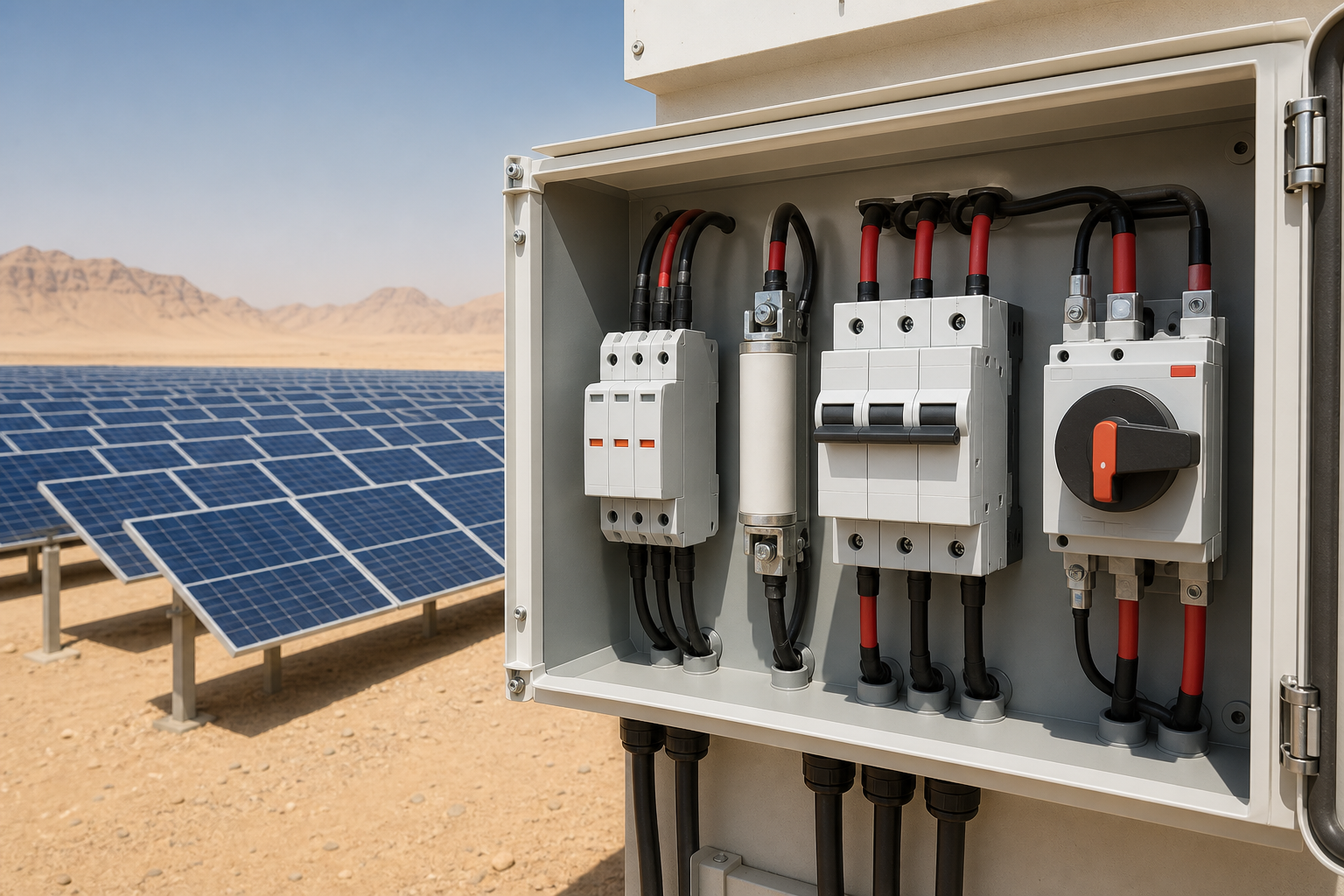
يجب أن تعمل أنظمة حماية التيار المستمر الشمسية في الشرق الأوسط بشكل موثوق في ظل درجات الحرارة المحيطة المرتفعة، والتعرض المكثف للأشعة فوق البنفسجية، والغبار المحمول جواً، والملوحة الساحلية، والتقلبات الكبيرة في درجات الحرارة اليومية. بالنسبة للمشاريع في المملكة العربية السعودية والإمارات العربية المتحدة وقطر وعمان، تؤثر هذه الظروف بشكل مباشر على اختيار المكونات والسلامة الكهربائية على المدى الطويل.
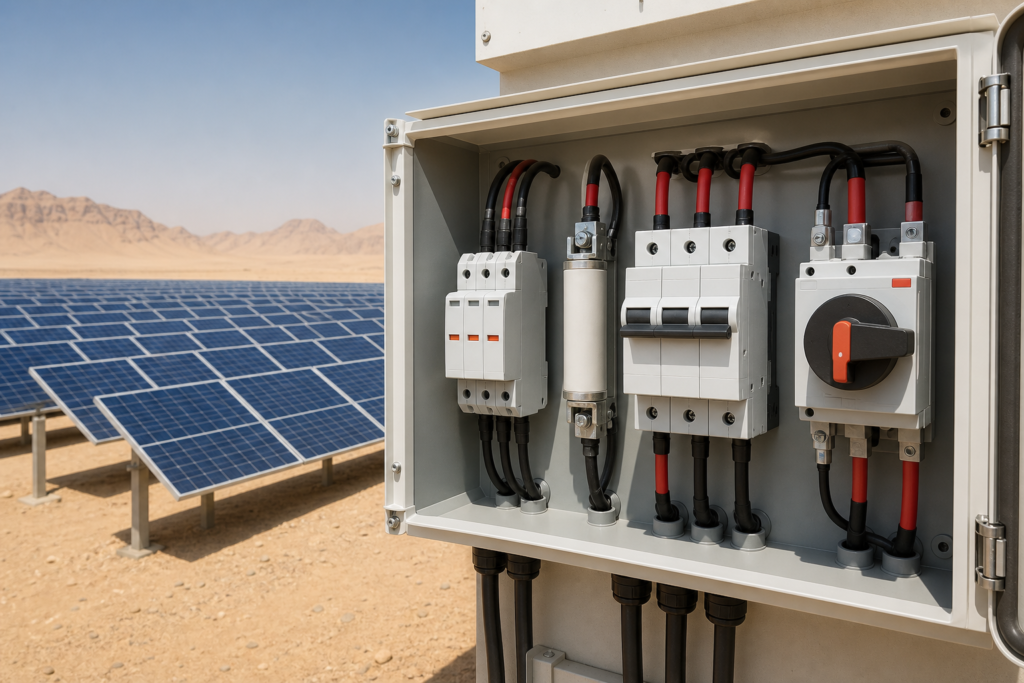
بالنسبة لمقاولي الهندسة والمشتريات والبناء (EPC) ومشترِي المعدات، لا يكفي اختيار المكون بناءً على الجهد والتيار الاسمي فقط. يجب أن يظل نظام حماية التيار المستمر الكامل موثوقاً به عند درجة حرارة التركيب الفعلية، وأن يقطع أعطال التيار المستمر بأمان، وأن يتوافق مع تصميم المصفوفة الكهروضوئية والعاكس والتأريض.
يشرح هذا الدليل كيفية تقييم أربعة مكونات أساسية لحماية الطاقة الشمسية الكهروضوئية:
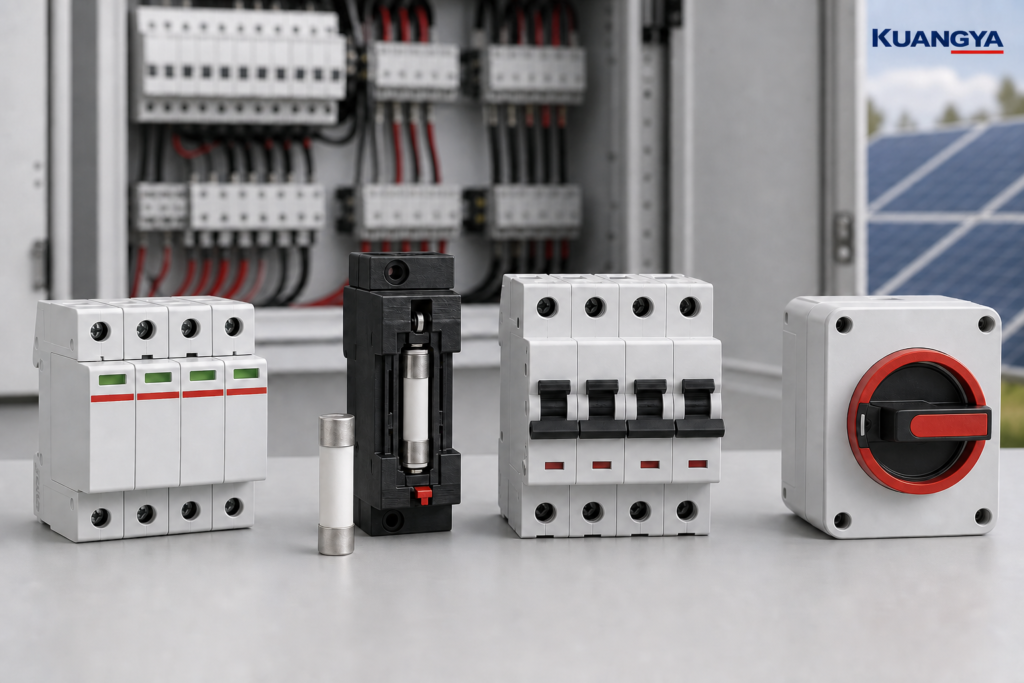
ملخص الاختيار السريع لحماية التيار المستمر الشمسي
| المكوّن | الوظيفة الرئيسية | فحوصات هامة للمشتري |
|---|---|---|
| DC SPD | تحويل الجهد الزائد العابر بعيداً عن العواكس | تصنيف تيار مستمر خاص بالطاقة الشمسية الكهروضوئية، Ucpv، نوع جهاز الحماية من التموجات (SPD)، معيار IEC 61643-31 |
| مصهر gPVV | حماية سلاسل الألواح من التيار العكسي وأعطال التيار المستمر | تصنيف 1000 فولت/1500 فولت، خصائص gPV، معيار IEC 60269-6 |
| قاطع دارة التيار المستمر | توفير حماية قابلة لإعادة الضبط ضد الحمل الزائد وقصر الدائرة | تصنيف تيار مستمر حقيقي، عدد الأقطاب، قدرة القطع، خفض التصنيف الحراري |
| فاصل تيار مستمر | يوفر خاصية فصل الحمل وعزل الصيانة | تصنيف الاستخدام للتيار المستمر (DC)، مقبض قابل للقفل، معيار IEC 60947-3، درجة الحماية (IP) |
قد تصبح حاويات الطاقة الشمسية الكهروضوئية الخارجية المعرضة لأشعة الشمس المباشرة أكثر سخونة بكثير من الهواء المحيط. يمكن أن تؤدي درجات الحرارة المرتفعة إلى تقليل سعة التيار المستمر للقواطع وحوامل المصهرات، وتسريع تقادم العزل، وزيادة مقاومة التلامس، وتقصير العمر الافتراضي لأجهزة الحماية من زيادة التيار (SPD).
اطلب من الموردين بيانات خفض التصنيف الحراري بدلاً من افتراض أن تيار لوحة الاسم يظل متاحاً عند درجة حرارة الحاوية القصوى للمشروع.
يمكن للغبار الناعم أن يدخل إلى الحاويات سيئة الإغلاق، ويتجمع حول الأطراف، ويحد من تبديد الحرارة. كما يمكن للغبار الممزوج بالرطوبة أو الملح أن يخلق مسارات تلوث عبر أسطح العزل.
تحقق من درجة الحماية (IP) للحاوية، وتصميم جلبة الكابلات، ومسافات الزحف والخلوص. يجب تقييم المكون وحاويته كنظام واحد.
تتطلب مفاتيح العزل الخارجية، والملصقات، ومداخل الكابلات (Glands)، والأغلفة البوليمرية مواد مقاومة للأشعة فوق البنفسجية. كما يجب على المشاريع القريبة من ساحل الخليج مراعاة مقاومة رذاذ الملح والتآكل للأطراف، والمثبتات، والأجزاء المعدنية المكشوفة.
تدعو توجيهات دبي لربط الطاقة المتجددة الموزعة إلى حماية صناديق تجميع سلاسل الألواح الكهروضوئية (PV string combiner boxes) من الحرارة، والأشعة فوق البنفسجية، والغبار، والملوحة. ويعد هذا مبدأً مفيداً للمشتريات في جميع أنحاء المنطقة، مع ضرورة التزام كل مشروع بالقواعد المعمول بها.
يعمل جهاز الحماية من التيار المستمر (DC SPD) على الحد من الجهد الزائد العابر الناتج عن تأثيرات الصواعق أو أحداث التبديل، ويقوم بتوجيه تيار الاندفاع نحو الأرض. يجب أن يكون الجهاز مصمماً للاستخدام مع التيار المستمر الكهروضوئي؛ ولا ينبغي استبداله بجهاز حماية من التيار المتردد (AC SPD) في جانب التيار المستمر.
يجب أن يكون جهد التشغيل المستمر للجهاز (Ucpv) أعلى من أقصى جهد ممكن للدائرة المفتوحة لمصفوفة الألواح الكهروضوئية في ظل أبرد ظروف تصميم للمشروع. لا تكتفِ باختياره بناءً على جهد التشغيل الاسمي للمحول (Inverter).
تشمل فئات الأنظمة الشائعة 600 فولت تيار مستمر للأنظمة الصغيرة، و1000 فولت تيار مستمر للعديد من أنظمة الأسطح والأنظمة التجارية، و1500 فولت تيار مستمر للمشاريع على مستوى المرافق العامة.
تُستخدم أجهزة الحماية من الصواعق (SPDs) للتيار المستمر من النوع 2 عادةً للحماية من الصواعق المستحثة وارتفاعات الجهد الناتجة عن عمليات التبديل. قد تكون أجهزة النوع 1+2 مطلوبة في المواقع التي تتطلب قدرة تحمل لتيار الصواعق، بما في ذلك المواقع المتأثرة بنظام حماية خارجي من الصواعق.
تصف توجيهات تصميم الأنظمة الكهروضوئية في المملكة العربية السعودية مواقع أجهزة الحماية من الصواعق (SPD) المنسقة على جانبي التيار المستمر والتيار المتردد، بالإضافة إلى حماية إضافية على جانب التيار المستمر حيثما تستدعي مسافة الكابلات ذلك. يجب أن يتبع التموضع النهائي والنوع تقييم مخاطر الصواعق الخاص بالمشروع والمتطلبات المحلية الحالية.
استكشف Kuangya DC SPDs, ، بما في ذلك جهاز حماية من اندفاع التيار (SPD) تيار مستمر من النوع 1+2 بجهد 1500 فولت.
يمكن لسلاسل الطاقة الكهروضوئية (PV) أن تغذي تياراً عكسياً إلى سلسلة متوازية معطلة. يقوم مصهر gPV المختار بشكل صحيح بقطع هذا التيار قبل أن تتعرض الكابلات والوحدات لأضرار حرارية.
استخدم مصهرًا ضوئيًا بخصائص تشغيل gPV بدلاً من مصهر التيار المتردد العام. يجب أن يغطي تصنيف الجهد الخاص به أقصى جهد تيار مستمر للنظام الكهروضوئي، كما يجب أن يتمتع بقدرة كافية على قطع التيار المستمر.
زود المورد بالمعلومات التالية:
لا تتجاهل الحامل. تأكد من مطابقة الأبعاد، وتصنيف جهد التيار المستمر (DC)، وسعة التيار المستمر المخفضة، وعزم دوران الأطراف، ونطاق الموصل، ومسافات الزحف والخلوص المطلوبة.
توفر شركة كوانغيا (Kuangya) مصهرات (فيوزات) وحوامل gPV بجهد 1000 فولت و1500 فولت, ، بما في ذلك حامل KYPV-63D بجهد 1500 فولت.
يصعب إخماد أقواس التيار المستمر مقارنة بأقواس التيار المتردد لأن التيار المستمر لا يمر بنقطة صفر طبيعية. لذلك، يجب أن يحمل قاطع الدائرة الكهروضوئية (PV) تصنيفاً معتمداً لجهد التيار المستمر وسعة القطع.
استخدم قاطع دائرة مصغر (MCB) يعمل بالتيار المستمر لتطبيقات السلاسل والأفرع والمغذيات الصغيرة ذات التيار المنخفض ضمن تصنيفاته المعتمدة. استخدم قاطع دائرة مصبوب (MCCB) يعمل بالتيار المستمر حيثما يتطلب الأمر تياراً أعلى، أو حماية قابلة للضبط، أو سعة قطع أكبر.
تحقق بعض قواطع التيار المستمر ذات الجهد العالي تصنيف جهدها الكلي عن طريق توصيل أقطاب متعددة على التوالي. اتبع مخطط الأسلاك وعلامات القطبية الخاصة بالشركة المصنعة؛ ولا تستنتج التصنيف الكامل أبداً من قطب واحد.
مراجعة شركة Kuangya قواطع الدائرة المصغرة (MCB) للتيار المستمر بقدرة تصل إلى 1000 فولت و125 أمبير. بالنسبة للمغذيات ذات الجهد العالي أو التيار العالي، يرجى طلب قاطع دائرة مصبوب (MCCB) مناسب للتيار المستمر.
يوفر مفتاح فصل التيار المستمر عزلاً متعمداً لأغراض التشغيل والصيانة، ولا يعتبر بديلاً تلقائياً للحماية من التيار الزائد.
يجب على المشترين التحقق من:
تقدم شركة Kuangya مفاتيح فصل التيار المستمر (DC) للتركيب على سكة DIN وبدرجة حماية IP66.
تقوم هذه الأجهزة بمهام مختلفة:
يجب أن يأخذ التنسيق في الاعتبار دراسة الأعطال، وحدود العاكس، وترتيب التأريض، وحجم الكابلات، ودرجة حرارة الصندوق، ومتطلبات شركة الكهرباء. لا يمكن التحقق من تصنيفات المكونات بشكل مستقل.
قم بتضمين المعلومات التالية:
غالباً ما تجمع مشاريع الطاقة الشمسية في السعودية بين درجات الحرارة المحيطة المرتفعة ومواقع التركيب النائية ومسارات كابلات التيار المستمر الطويلة. يجب أن يأخذ تصميم حماية التيار المستمر العملي في الاعتبار درجة حرارة الصندوق (Enclosure) بدلاً من الاعتماد فقط على درجة حرارة الهواء الخارجي المعلنة. اطلب من المورد منحنيات خفض القدرة (Derating curves) لكل قاطع دائرة تيار مستمر، وحامل مصهر كهروضوئي، ومفتاح فصل مستخدم داخل صندوق التجميع (Combiner box).
يمكن أن تؤدي مسارات الكابلات الطويلة أيضاً إلى زيادة التعرض لجهد الاندفاع المستحث. لذلك، يجب مراجعة ترتيب أجهزة حماية التيار المستمر من الاندفاعات (DC SPD) جنباً إلى جنب مع مسارات الكابلات، وموقع العاكس (Inverter)، ومخاطر الصواعق، وتصميم التأريض. بالنسبة لمشتريات مشاريع المرافق واسعة النطاق، يجب على المشترين طلب وثائق اختبار IEC، وإمكانية تتبع الدفعات، وقيم عزم دوران الأطراف، ومراجع واضحة لقطع الغيار قبل الموافقة على العينات.
في الإمارات العربية المتحدة وقطر والبحرين والمناطق الساحلية في سلطنة عمان، قد يختلط الغبار الناعم مع الرطوبة والأملاح المحمولة جواً. يمكن لهذا المزيج أن يزيد من خطر التآكل ويخلق تلوثاً موصلاً للكهرباء على أسطح العزل غير المحمية بشكل جيد. يجب أن تستخدم معدات الطاقة الشمسية في الشرق الأوسط إحكاماً مناسباً للهياكل، وأطراف توصيل مقاومة للتآكل، وبلاستيكاً مقاوماً للأشعة فوق البنفسجية، ومداخل كابلات مطابقة لتصنيف الحماية (IP) المطلوب.
بالنسبة لمشاريع الأسطح، تحقق مما إذا كان جهاز العزل سيظل قابلاً للوصول إليه تحت أشعة الشمس المباشرة. يساعد مفتاح الفصل (DC switch disconnector) القابل للقفل مع علامات وضع متينة الفنيين على إجراء الصيانة بأمان. كما يجب أن تكون مؤشرات حالة أجهزة الحماية من زيادة التيار (DC SPD) مرئية دون الحاجة إلى فتح الأجزاء الحية كلما سمح تصميم الهيكل بذلك.
لا يعني انخفاض سعر العرض أن المكون مناسب لمشروع كهروضوئي في بيئة صحراوية. يجب أن يحدد العرض الفني الكامل الشركة المصنعة، والطراز، والجهد المستمر المقنن، والتيار، وقدرة القطع، ونطاق درجة حرارة التشغيل، ومعيار IEC المطبق، وتكوين الأسلاك. بالنسبة لصمامات الطاقة الشمسية (PV fuse)، اطلب بيانات وصلة الصمام (fuse-link) من نوع gPV وبيانات الحامل المطابق لها، لأن الأداء الحراري يعتمد على التجميع الكامل.
قبل الإنتاج الضخم، قارن العينات المعتمدة بقائمة المواد النهائية. تأكد من لغة الملصقات، وعلامات القطبية، ونطاق الموصلات، وعزم الربط، والتعبئة، وكميات قطع الغيار. بالنسبة لطلبات تصنيع المعدات الأصلية (OEM)، قم بتضمين رموز التتبع على المنتجات والكرتون حتى يمكن ربط المشكلات الميدانية بدفعة إنتاج معينة.
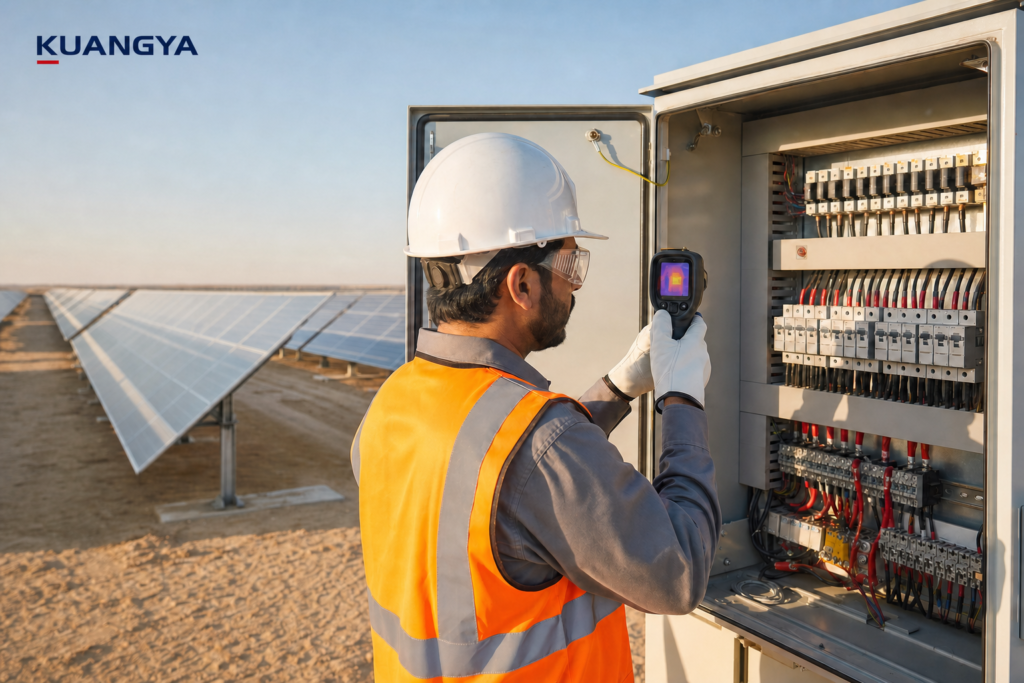
يجب أن تخطط مشاريع الصحراء لمخزون الاستبدال قبل التشغيل. تشمل قطع الغيار المفيدة خراطيش أجهزة الحماية من زيادة التيار (DC SPD) القابلة للتوصيل، ووصلات صمامات الطاقة الشمسية ذات التصنيف الصحيح، والملامسات المساعدة، وقواطع الدائرة المستمرة أو مفاتيح الفصل الكاملة للمغذيات الحيوية. قم بتخزين قطع الغيار وفقاً لحدود درجة الحرارة والرطوبة التي تحددها الشركة المصنعة، واحتفظ بتصنيفات الجهد المختلفة منفصلة فعلياً لتقليل أخطاء التركيب.
أثناء الفحص الدوري، يجب على الفنيين البحث عن تراكم الغبار، وتغير اللون، والوصلات المرتخية، والتآكل، والأختام التالفة، ومؤشرات أجهزة الحماية من زيادة التيار (SPD) التي تم تفعيلها. يمكن أن يساعد التصوير الحراري تحت حمل تمثيلي في تحديد المقاومة غير الطبيعية عند الأطراف. كما توفر سجلات الصيانة هذه لفرق الهندسة والمشتريات والبناء (EPC) أدلة لتحسين مواصفات الحماية من التيار المستمر للطاقة الشمسية في المشاريع القادمة. الأسئلة الشائعة
لا، ما لم توفر الشركة المصنعة صراحةً تصنيف التيار المستمر المطلوب لهذا المنتج وتكوينه بالتحديد.
لا. يجب أن يكون لكل مكون معرض لجهد الدائرة تصنيف مناسب لأقصى جهد تيار مستمر.
لا يوجد بديل واحد للحماية المنسقة. فالمصهرات (الفيوزات)، والقواطع، وأجهزة الحماية من زيادة التيار (SPDs)، وفواصل التيار تعالج مخاطر مختلفة.
اطلب أوراق البيانات، أو الشهادات، أو تقارير الاختبار، أو معلومات خفض التصنيف (derating)، أو مخططات الأسلاك، أو قيم عزم دوران الأطراف، أو تفاصيل التتبع، أو العينات.
توفر شركة Kuangya أجهزة حماية من اندفاع التيار المستمر (DC SPDs)، ووصلات وحوامل فيوزات gPV، وقواطع دوائر التيار المستمر، ومفاتيح فصل التيار المستمر للتطبيقات الكهروضوئية. تشمل الخيارات متطلبات 1000 فولت و1500 فولت الشائعة، مع توفر خدمات وضع العلامات والتغليف حسب طلب المصنع الأصلي (OEM) للموزعين ومشترِي المشاريع.
أرسل متطلباتك المتعلقة بالجهد، والتيار، والكمية، وبلد المشروع إلى info@cnkuangya.com أو طلب عرض سعر.
مواصفات جهاز إطفاء الحريق بالهباء الجويدليل تصميم الطاقة الشمسية الكهروضوئية الخاص بالشركة السعودية للكهرباء: https://www.se.com.sa/-/media/sec/Sustainability/Solar-PV/ProceduresandGuides/14SEC–Best-practice-for-designing-a-PV-systemv2Clean.ashx
ملاحظة هندسية: يجب التحقق من الاختيار مقابل أحدث مواصفات المشروع، ووثائق الشركة المصنعة، واللوائح المحلية المعمول بها قبل التركيب.

