منطقة ونغ يانغ الصناعية يويتشينغ ونتشو 325000
ساعات العمل
من الاثنين إلى الجمعة: 7 صباحاً - 7 مساءً
عطلة نهاية الأسبوع 10 صباحاً - 5 مساءً
منطقة ونغ يانغ الصناعية يويتشينغ ونتشو 325000
ساعات العمل
من الاثنين إلى الجمعة: 7 صباحاً - 7 مساءً
عطلة نهاية الأسبوع 10 صباحاً - 5 مساءً

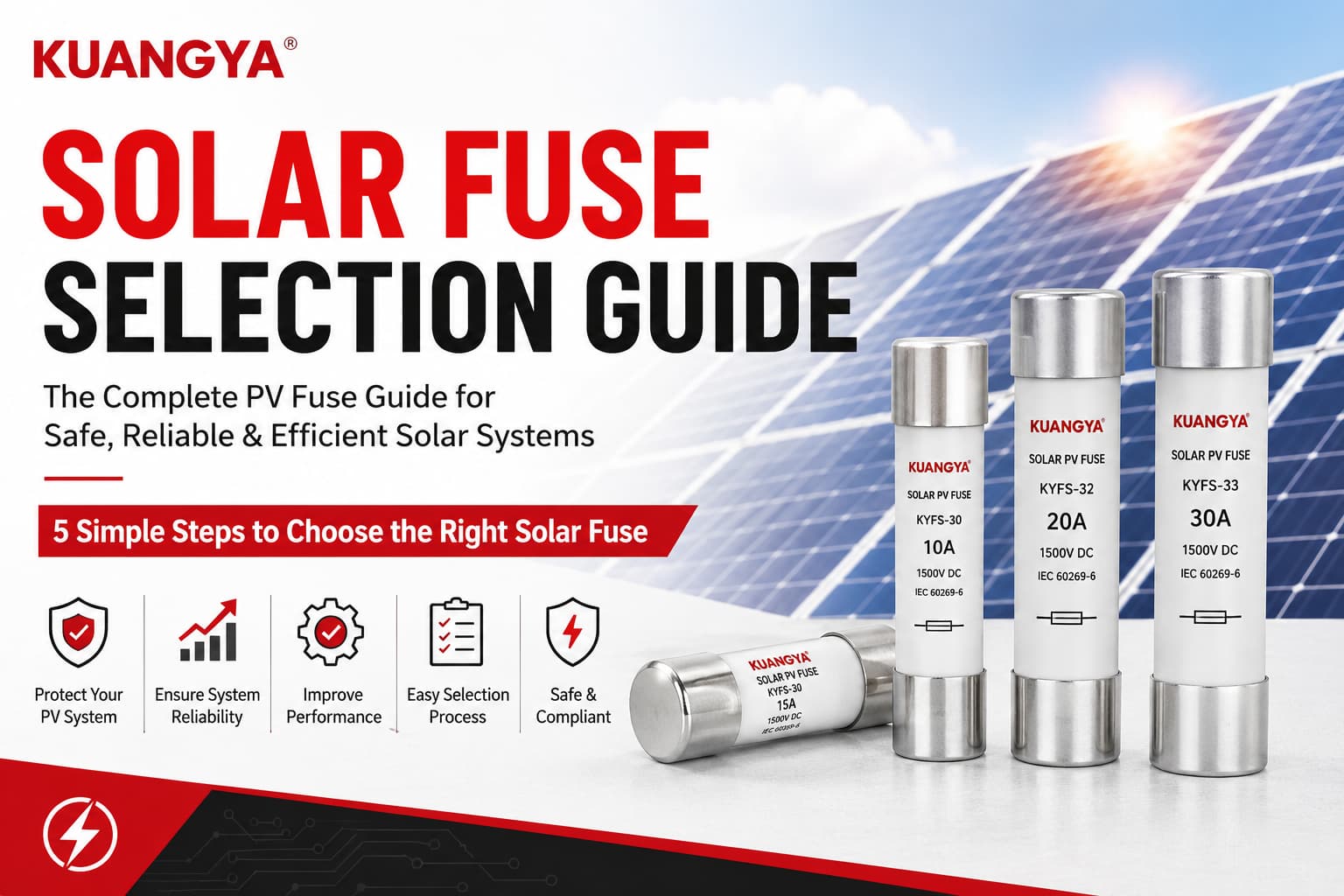
في عالم أنظمة الطاقة الشمسية الكهروضوئية (PV)، تعتبر السلامة أمراً بالغ الأهمية. سواء كنت تقوم بتركيب نظام طاقة شمسية على السطح أو إدارة مزرعة شمسية واسعة النطاق، فإن أجهزة الحماية المناسبة أمر بالغ الأهمية. ومن بين هذه الأجهزة الصمامات الشمسية يلعب دورًا حيويًا في منع التلف الناتج عن التيار الزائد أو حالات الأعطال.
بالنسبة لكثير من مالكي المنازل وحتى من يقومون بالتركيب لأول مرة، فإن فهم كيفية اختيار الصمامات الشمسية قد يبدو معقدًا. سيرشدك هذا الدليل خلال هذه العملية بطريقة واضحة وخطوة بخطوة، مما يجعل المفاهيم الأكثر تقنية في متناول المستخدمين العاديين.
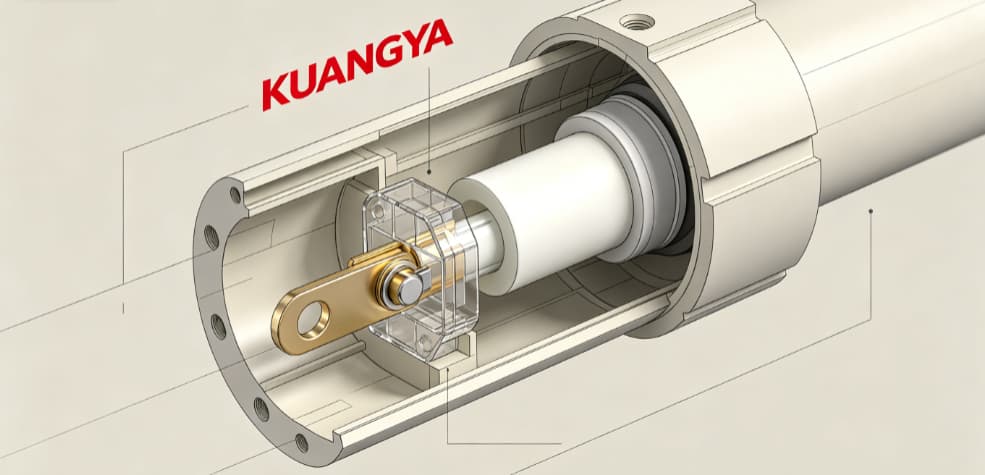
A الصمامات الشمسية, غالبًا ما يشار إليها باسم الصمامات الكهروضوئية، وهي جهاز حماية مصمم خصيصًا للأنظمة الكهروضوئية. وعلى عكس صمامات الأغراض العامة، فإن الصمامات الشمسية مصممة للتعامل مع:
الوظائف الرئيسية للفتيل الشمسي:
| المكوّن | الوظيفة |
|---|---|
| رابط الصمامات | يذوب عند تجاوز التيار للقيمة المقدرة |
| الإسكان | يحتوي على عنصر المصهر ويعزله |
| المحطات الطرفية | قم بتوصيل المصهر بإحكام في الدائرة |
| مادة التبريد بالقوس الكهربائي | يمنع الحريق أثناء تشغيل الصمامات |
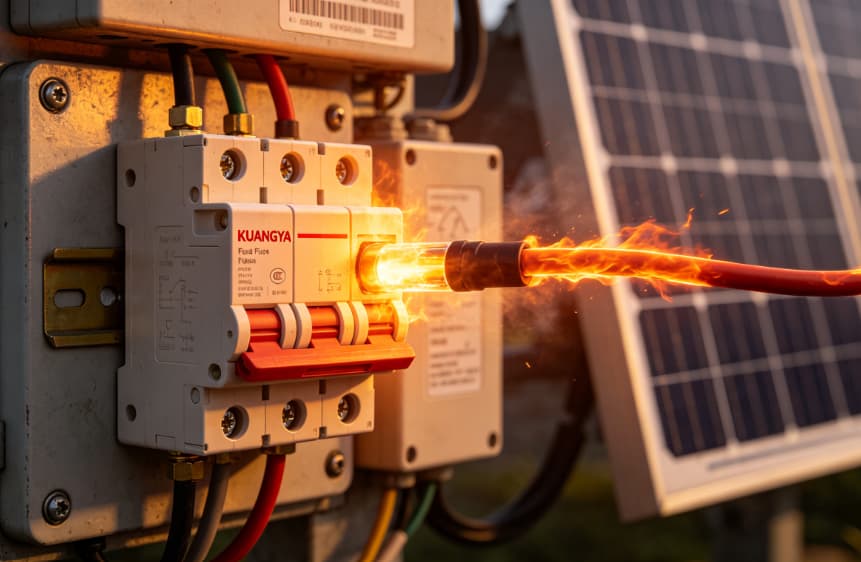
عندما يتجاوز التيار القيمة المقدرة للصمامات، فإن ذوبان وصلة الصمامات, وفتح الدائرة وعزل الجزء المعيب. يحمي هذا الإجراء القرباني بقية النظام.
اختيار المناسب الصمامات الشمسية لا يتعلق الأمر ببساطة بمطابقة الأرقام. فهناك عدة عوامل تؤثر على التشغيل الآمن والموثوق:
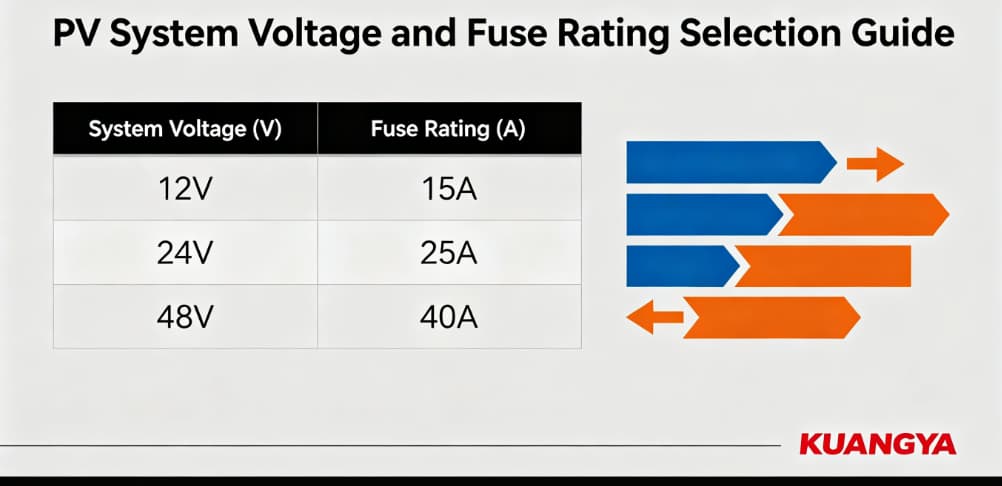
يجب أن يكون تصنيف جهد المصهر مساوياً لجهد النظام الكهروضوئي أو أعلى منه. على سبيل المثال:
| جهد النظام الكهروضوئي | جهد الصمامات الموصى به |
| 24 فولت تيار مستمر | ≥32 فولت تيار مستمر |
| 48 فولت تيار مستمر | ≥58 فولت تيار مستمر |
| 600 فولت تيار مستمر | ≥ 600 فولت تيار مستمر |
| 1000 فولت تيار مستمر | ≥ 1000 فولت تيار مستمر |
إن تصنيف الصمامات الشمسية يجب أن تمثل:
الصيغة النموذجية:
[\نص {تصنيف الصمامات} = \نص {تيار التشغيل} \أضعاف 1.25]
جدول الأمثلة: اختيار الصمامات حسب تيار السلسلة
| السلسلة الحالية | تصنيف الصمامات المقترحة |
| 5A | 6A |
| 10A | 12.5A |
| 15A | 20A |
| 20A | 25A |
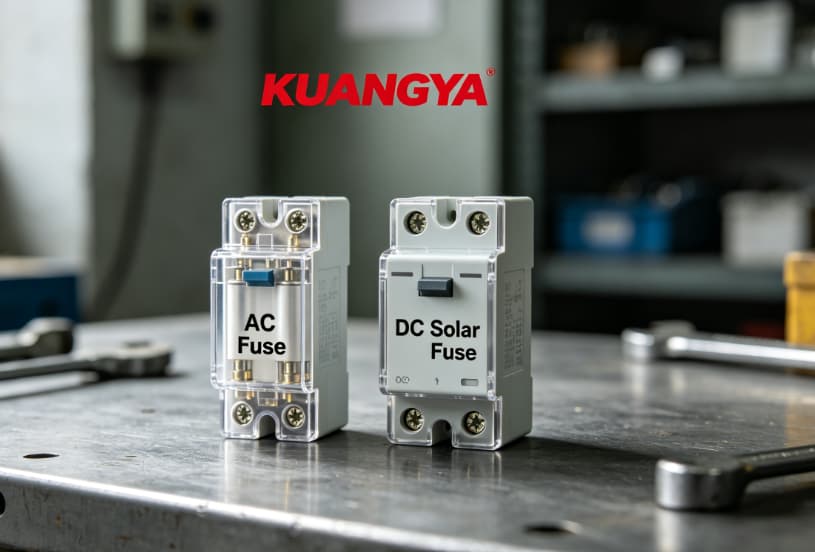
غالبًا ما تأتي الصمامات الشمسية مع سريع المفعول أو التأخير الزمني الخيارات:
ضع في اعتبارك درجة الحرارة والرطوبة والتعرض الخارجي:
| العامل | التأثير |
| درجة الحرارة المحيطة | قد تتطلب درجات الحرارة المرتفعة اشتقاق درجة الحرارة العالية |
| الرطوبة والرطوبة | استخدم حاملات الصمامات المصنفة IP |
| التعرض للأشعة فوق البنفسجية | العلب المصنفة في الهواء الطلق تمنع التدهور |
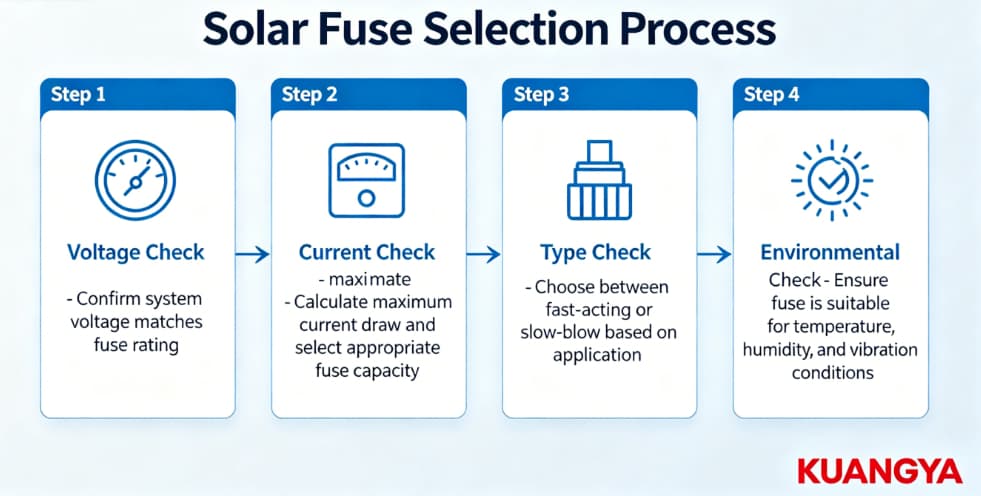
اتبع هذه الخطوات الثماني لضمان الاختيار الصحيح:
الإجابة:
لا. قد لا تتعامل الصمامات ذات الأغراض العامة مع جهد التيار المستمر أو أقواس المقاطعة بأمان. استخدم الصمامات ذات التصنيف الشمسي مصممة خصيصاً للأنظمة الكهروضوئية.
نعم، درجات الحرارة المحيطة العالية تقلل من قدرة تحمل الصمامات. راجع دائمًا ورقة بيانات الصمامات للاطلاع على مخططات الاستثناءات.
| تيار السلسلة (A) | الصمامات الشمسية الموصى بها (A) | نوع المصهر | الملاحظات |
| 8 | 10 | gPV سريع المفعول | سكني قياسي |
| 12 | 15 | زمن التأخير الزمني لـ gPV | عاكس سلسلة متسلسل، يتحمل بدء التشغيل |
| 18 | 20 | gPV سريع المفعول | حماية سلسلة العاكس المركزية |
| 25 | 30 | gPV سريع المفعول | الأسطح الكهروضوئية التجارية |
| المشكلة | السبب المحتمل | الحل |
| ينفجر المصهر على الفور | ماس كهربائي في السلسلة الكهروضوئية | فحص الأسلاك، والتحقق من توصيلات اللوحة |
| ينفجر المصهر خلال الساعات المشمسة | الحمل الزائد | التحقق من حجم السلسلة، وضبط تكوين العاكس |
| ينفجر المصهر بشكل متكرر | صمامات كهربائية صغيرة الحجم | زيادة تصنيف الصمامات ضمن هامش الأمان |
| علامات الانحناء | التوصيل المفكوك أو التآكل | أحكم ربط الأطراف واستبدل الأجزاء المتآكلة |
اختيار الصحيح الصمامات الشمسية ضروري لسلامة النظام وطول عمره وكفاءته. وبالنظر إلى:
حتى المبتدئين يمكنهم اتخاذ قرارات مستنيرة.
الصمامات المختارة بشكل صحيح لا تحمي ألواحك الشمسية فحسب، بل تضمن أيضًا توليد طاقة موثوق بها وتمنع حدوث أضرار مكلفة. استشر دائمًا ورقة البيانات، واتبع دليل الصمامات الكهروضوئية, واستخدام صمامات كوانجيا الشمسية لحماية من الدرجة الاحترافية.
إذا كنت ترغب في معرفة المزيد عن اختيار الصمامات الشمسية وحماية النظام الكهروضوئي، اطلع على الموارد التالية:

