WengYang Industrial Zone Yueqing Wenzhou 325000
Horas de trabalho
De segunda a sexta-feira: das 7h às 19h
Fim de semana: 10:00 - 17:00
WengYang Industrial Zone Yueqing Wenzhou 325000
Horas de trabalho
De segunda a sexta-feira: das 7h às 19h
Fim de semana: 10:00 - 17:00

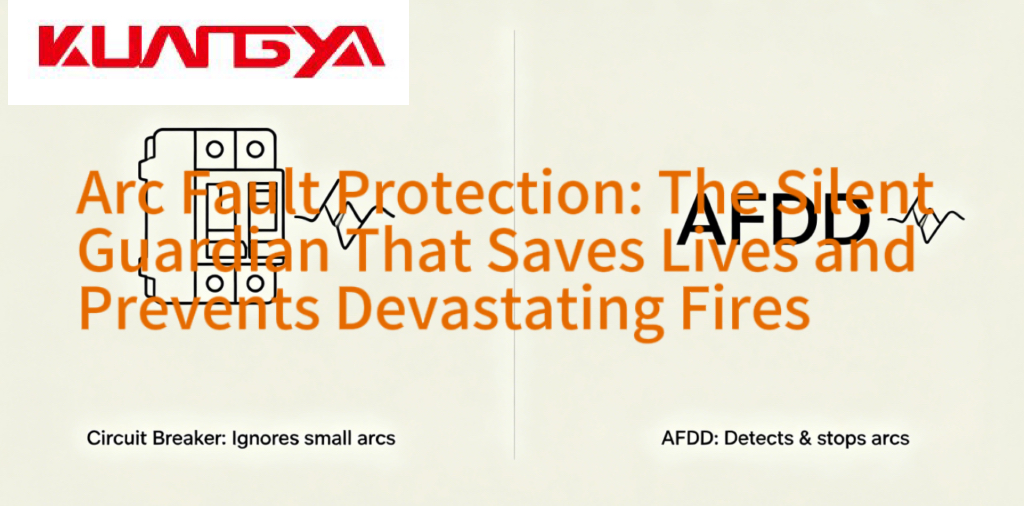
Todos os anos, incêndios elétricos causam milhares de mortes, ferimentos e bilhões de dólares em danos materiais em todo o mundo. A maioria desses incêndios começa com um fenômeno elétrico perigoso chamado falha de arco.
Proteção contra falha de arco é a única tecnologia projetada especificamente para detectar e interromper esses perigos invisíveis e mortais antes que eles provoquem incêndios. É uma das inovações de segurança mais importantes da engenharia elétrica moderna.
A maioria das pessoas está familiarizada com disjuntores e fusíveis, mas esses dispositivos tradicionais não conseguem detectar os arcos de baixa corrente que causam a maioria dos incêndios elétricos. É nesse ponto que proteção contra falha de arco torna-se indispensável.
Neste guia abrangente, exploraremos tudo o que você precisa saber sobre proteção contra falha de arco, Desde como ele funciona até onde é necessário, como instalá-lo e como mantê-lo adequadamente. Faremos referência aos principais padrões do setor de organizações como a Associação Nacional de Proteção contra Incêndios (NFPA) e o Comissão Eletrotécnica Internacional (IEC) para garantir as informações mais precisas e atualizadas.
De acordo com o Associação Nacional de Proteção contra Incêndios (NFPA), Em um incêndio de estrutura residencial nos Estados Unidos entre 2015 e 2019, 44% envolveram equipamentos de distribuição elétrica ou de iluminação.
Esses incêndios resultaram em uma média de 420 mortes, 1.360 feridos e $1,5 bilhão em danos diretos à propriedade a cada ano. Aproximadamente 60% desses incêndios elétricos são causados por falhas de arco que os dispositivos de proteção tradicionais não conseguem detectar.
O Comissão Eletrotécnica Internacional (IEC) relata estatísticas semelhantes em nível global, com incêndios elétricos representando 20-30% de todos os incêndios em edifícios na maioria dos países.
Esses números destacam a necessidade urgente de adoção generalizada de proteção contra falha de arco em edifícios residenciais e comerciais. O Administração de Segurança e Saúde Ocupacional (OSHA) também reconhece as falhas de arco como um risco significativo no local de trabalho, exigindo medidas de proteção adequadas em muitos ambientes industriais.
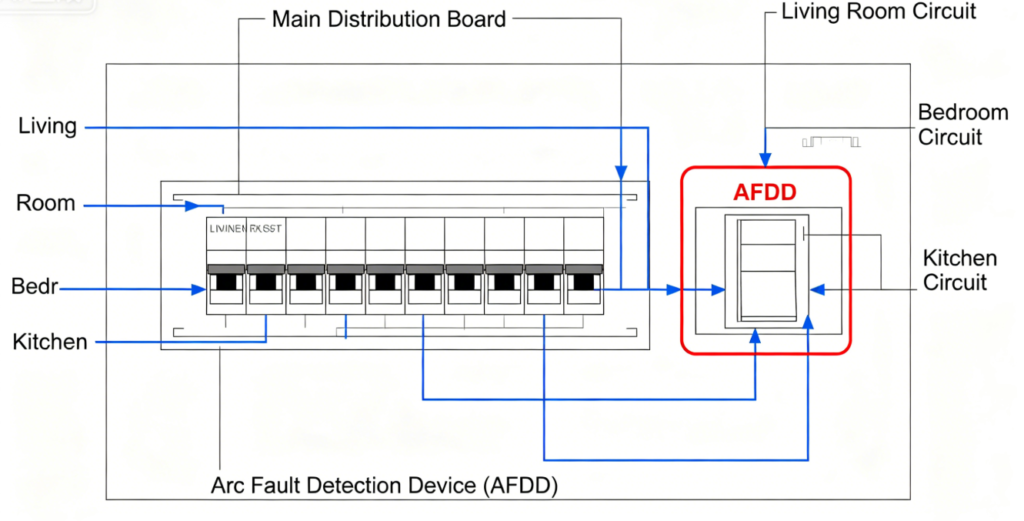
Proteção contra falha de arco refere-se a um conjunto de tecnologias projetadas para detectar arcos elétricos anormais em sistemas de fiação e interromper o circuito antes que o arco possa provocar um incêndio.
O principal dispositivo usado para essa finalidade é o Arc Fault Detection Device (AFDD), também conhecido como Arc Fault Circuit Interrupter (AFCI) na América do Norte. Esses dispositivos devem atender a padrões de desempenho rigorosos definidos por Underwriters Laboratories (UL) e o IEC.
Proteção contra falha de arco Os dispositivos monitoram continuamente a corrente elétrica que flui por um circuito, procurando os padrões exclusivos de forma de onda que indicam a ocorrência de uma falha de arco.
Quando um arco perigoso é detectado, o dispositivo dispara em milissegundos, cortando a energia do circuito e evitando um possível incêndio.
Um arco elétrico é uma descarga de alta temperatura de eletricidade que salta entre dois condutores. Os arcos podem atingir temperaturas de até 19.400°C (35.000°F), o que é mais quente do que a superfície do sol.
Mesmo um pequeno arco pode incendiar materiais combustíveis próximos, como madeira, plástico e isolamento, em menos de um segundo. O Instituto de Engenheiros Eletricistas e Eletrônicos (IEEE) publicou uma extensa pesquisa sobre a física dos arcos elétricos e seu potencial de ignição de incêndios.
Os arcos podem ocorrer por vários motivos, incluindo fiação danificada, conexões soltas, circuitos sobrecarregados e cabos elétricos danificados.
Ao contrário dos curtos-circuitos, que causam um grande surto de corrente que os disjuntores tradicionais podem detectar, muitos arcos elétricos perigosos ocorrem em níveis normais de corrente, o que os torna invisíveis para os dispositivos de proteção convencionais.
Moderno proteção contra falha de arco Os dispositivos usam tecnologia avançada de microprocessador para analisar a forma de onda elétrica milhares de vezes por segundo.
Eles procuram características específicas que distinguem os arcos perigosos dos arcos normais que ocorrem em dispositivos cotidianos, como interruptores de luz, motores e aspiradores de pó.
Essas características incluem:
Quando o dispositivo detecta um padrão que corresponde a um arco perigoso, ele aciona um mecanismo interno para abrir o circuito, normalmente em 25 milissegundos. O Norma UL 1699 especifica os requisitos de desempenho desses algoritmos de detecção para garantir a eficácia e a confiabilidade.
Os arcos em série ocorrem quando há uma ruptura em um único condutor, fazendo com que a corrente salte através da lacuna.
Esse é o tipo mais comum de falha de arco e o mais perigoso, pois geralmente ocorre em níveis normais de corrente que não disparam os disjuntores tradicionais.
Os arcos em série podem ser causados por:
Um arco em série com apenas 5 amperes pode gerar calor suficiente para incendiar a maioria dos materiais de construção. A Fundação de Segurança Elétrica da NFPA fornece informações detalhadas sobre como os arcos de série se desenvolvem e como evitá-los.
Os arcos paralelos ocorrem entre dois condutores de polaridade oposta, como um fio quente e um fio neutro ou um fio quente e um fio terra.
Esses arcos normalmente consomem correntes mais altas do que os arcos em série e podem, eventualmente, disparar um disjuntor tradicional.
Entretanto, mesmo um arco paralelo pode gerar calor suficiente para provocar um incêndio antes que o disjuntor seja acionado.
Os arcos paralelos geralmente são causados por:
Os arcos de aterramento ocorrem entre um fio quente e uma superfície aterrada, como uma caixa elétrica ou um conduíte de metal.
Esses arcos são particularmente perigosos porque podem ocorrer sem consumir corrente suficiente para disparar um disjuntor tradicional.
Os arcos de aterramento são uma causa comum de incêndios em edifícios antigos com sistemas de conduítes metálicos. Os Norma IEC 60364 fornece orientação sobre proteção contra falhas de aterramento e falhas de arco em instalações elétricas.
| Tipo de falha de arco | Faixa atual | Dificuldade de detecção | Risco de incêndio | Causas comuns |
|---|---|---|---|---|
| Série Arc | 5-30 amperes | Muito alto | Extremo | Fios danificados, conexões soltas |
| Arco paralelo | 30-1000+ amperes | Moderado | Alta | Quebra de isolamento, cabos danificados |
| Arco de terra | 5-100 amperes | Alta | Muito alto | Contato com conduíte de metal, intrusão de água |
Os disjuntores tradicionais são projetados para proteger contra duas condições: sobrecorrente e curto-circuito.
Eles funcionam detectando quando a corrente que flui pelo circuito excede um limite predeterminado e disparam para evitar o superaquecimento da fiação.
Entretanto, eles não conseguem detectar os arcos de baixa corrente que causam a maioria dos incêndios elétricos. Um disjuntor pode nunca disparar, mesmo que um arco esteja queimando ativamente e gerando calor suficiente para provocar um incêndio.
De fato, testes realizados por Laboratórios UL mostraram que um disjuntor de 15 ampères não dispara mesmo quando um arco em série de 10 ampères está queimando continuamente.
Os Dispositivos de Corrente Residual (RCDs), também conhecidos como Interruptores de Circuito de Falta à Terra (GFCIs), são projetados para detectar vazamento de corrente para a terra.
Eles são excelentes para evitar choques elétricos, mas não conseguem detectar arcos em série ou a maioria dos arcos paralelos.
Proteção contra falha de arco e a proteção RCD trabalham em conjunto para oferecer segurança elétrica abrangente. Proteção contra falha de arco evita incêndios, enquanto os RCDs evitam choques elétricos.
Muitos dispositivos modernos combinam ambos proteção contra falha de arco e RCD em uma única unidade, fornecendo proteção completa ao circuito. O Norma IEC 61008 define os requisitos de desempenho dos RCDs.
| Dispositivo de proteção | Detecta sobrecorrente | Detecta curtos-circuitos | Detecta falhas de arco | Detecta falhas de aterramento | Objetivo principal |
|---|---|---|---|---|---|
| Fusível | Sim | Sim | Não | Não | Proteção contra sobrecorrente |
| Disjuntor (MCB) | Sim | Sim | Não | Não | Proteção contra sobrecorrente |
| RCD/GFCI | Não | Não | Não | Sim | Prevenção de choque elétrico |
| AFDD/AFCI | Sim | Sim | Sim | Não | Prevenção de incêndios |
| RCBO | Sim | Sim | Não | Sim | Proteção contra sobrecorrente e choque |
| AFDD+RCBO | Sim | Sim | Sim | Sim | Proteção completa do circuito |
Nos Estados Unidos e no Canadá, o Código Elétrico Nacional (NEC) exigiu proteção contra falha de arco em quartos residenciais desde 2002.
Atualizações posteriores do código expandiram o requisito para incluir:
A partir do NEC de 2023, proteção contra falha de arco é exigido em praticamente todas as áreas de edifícios residenciais, com pouquíssimas exceções.
A NEC exige dispositivos AFCI do tipo combinado que detectem arcos em série e em paralelo, certificados de acordo com a norma Padrão UL 1699B.
O Comissão Eletrotécnica Internacional (IEC) publicou o primeiro padrão internacional para proteção contra falha de arco dispositivos em 2010: IEC 62606.
Esta norma define os requisitos de desempenho e os métodos de teste para AFDDs para uso em aplicações residenciais e similares.
Muitos países europeus adotaram a IEC 62606 em seus padrões nacionais e começaram a exigir proteção contra falha de arco em novas construções.
A Alemanha foi o primeiro país europeu a exigir proteção contra falha de arco em edifícios residenciais, a partir de 2017. Desde então, outros países, incluindo França, Itália e Espanha, seguiram o exemplo. O Comitê Europeu de Padronização Eletrotécnica (CENELEC) também adotou a IEC 62606 como um padrão europeu.
| Região | Padrão | Obrigatório desde | Locais necessários | Tipo de dispositivo necessário |
|---|---|---|---|---|
| Estados Unidos | NEC 2023 | 2002 (ampliado desde então) | Todos os cômodos habitáveis | AFCI do tipo combinado (UL 1699B) |
| Canadá | CSA C22.1 | 2002 | Todos os cômodos habitáveis | AFCI do tipo combinado |
| Alemanha | DIN VDE 0100 | 2017 | Todos os circuitos residenciais | AFDD compatível com a norma IEC 62606 |
| França | NF C 15-100 | 2020 | Todos os circuitos residenciais | AFDD compatível com a norma IEC 62606 |
| Reino Unido | BS 7671 | 2022 | A maioria dos circuitos residenciais | AFDD compatível com a norma IEC 62606 |
| Austrália | AS/NZS 3000 | 2023 | Todos os cômodos habitáveis | AFDD compatível com a norma IEC 62606 |
Proteção contra falha de arco é mais comumente usado em edifícios residenciais, onde foi comprovado que reduz significativamente o risco de incêndios elétricos.
Ele deve ser instalado em todos os circuitos que fornecem energia:
Mesmo em casas mais antigas, construídas antes de proteção contra falha de arco se necessário, o retrofit dos AFDDs é uma atualização de segurança altamente recomendada. O A NFPA recomenda que todas as residências tenham proteção AFCI instalada em todos os quartos e áreas de estar.
www.cnkuangya.com oferece uma linha completa de produtos residenciais proteção contra falha de arco dispositivos que são fáceis de instalar e compatíveis com a maioria dos sistemas elétricos existentes.
Enquanto proteção contra falha de arco é mais comumente associado a edifícios residenciais, mas também é extremamente importante em ambientes comerciais e industriais.
Edifícios comerciais que se beneficiam de proteção contra falha de arco Incluir:
Em ambientes industriais, proteção contra falha de arco pode ajudar a evitar incêndios:
O Padrão de segurança elétrica da OSHA exige que os empregadores ofereçam um local de trabalho seguro, o que inclui proteção contra riscos elétricos, como falhas de arco.
www.cnkuangya.com fornece um produto de nível industrial proteção contra falha de arco projetadas para suportar as condições adversas dos ambientes industriais.
Proteção contra falha de arco também é usado em uma variedade de aplicações especializadas, incluindo:
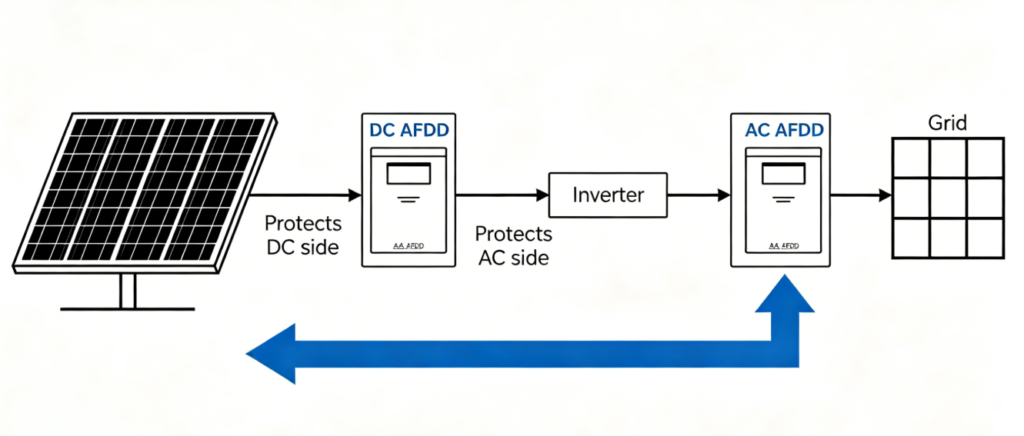
Em cada um desses aplicativos, proteção contra falha de arco fornece uma camada adicional de segurança que os dispositivos de proteção tradicionais não conseguem igualar. Para sistemas solares, o Norma IEC 62548 exige especificamente a proteção contra falhas de arco nos lados CC e CA das instalações fotovoltaicas.
Entender as causas comuns das falhas de arco elétrico pode ajudá-lo a evitar que elas ocorram em sua casa ou empresa.
As causas mais comuns incluem:
O Fundação Internacional de Segurança Elétrica (ESFI) fornece uma lista abrangente de causas de falhas de arco e estratégias de prevenção.
Enquanto proteção contra falha de arco A melhor defesa contra incêndios elétricos causados por arcos voltaicos é a segurança, mas também há medidas que podem ser tomadas para evitar a ocorrência de arcos voltaicos.
| Causa comum | Método de prevenção | Sinais de alerta |
|---|---|---|
| Fiação danificada | Inspeções regulares, evite perfurar as paredes | Luzes piscando, cheiro de queimado |
| Conexões soltas | Aperte as conexões, use as porcas de fio adequadas | Tomadas quentes, sons de zumbido |
| Circuitos sobrecarregados | Distribuir cargas em vários circuitos | Disparos frequentes de disjuntores |
| Cabos danificados | Substitua imediatamente os cabos danificados | Fios expostos, isolamento rachado |
| Intrusão de água | Mantenha os sistemas elétricos secos, instale proteção GFCI | Acionamento de tomadas GFCI |
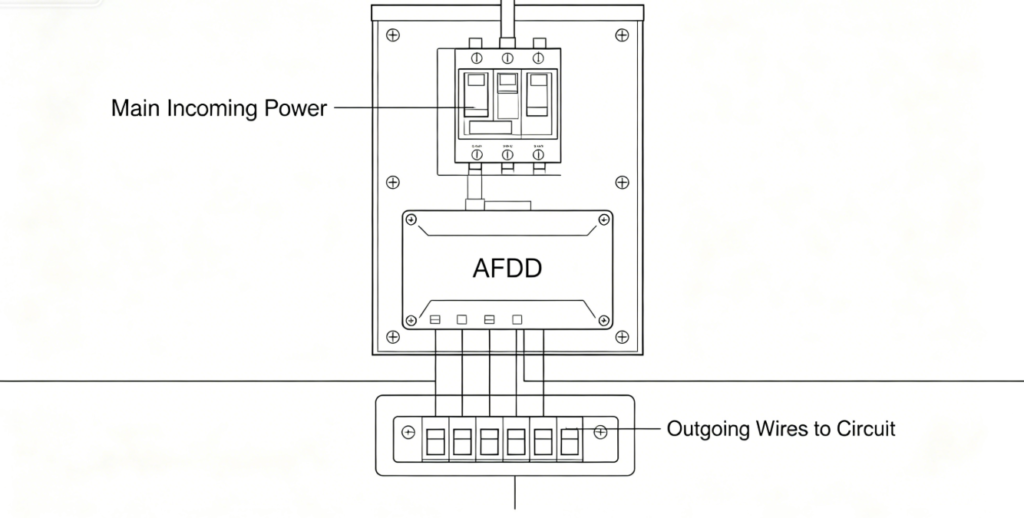
Proteção contra falha de arco Os dispositivos devem ser instalados por um eletricista licenciado que esteja familiarizado com os códigos e regulamentos elétricos locais.
Normalmente, o processo de instalação envolve:
É importante usar somente proteção contra falha de arco dispositivos listados por um laboratório de testes reconhecido, como UL, CSAou IEC.
www.cnkuangya.com oferece uma ampla seleção de produtos testados e certificados proteção contra falha de arco dispositivos que atendem a todos os padrões internacionais de segurança.
Proteção contra falha de arco Os dispositivos devem ser testados mensalmente para garantir que estejam funcionando corretamente.
A maioria dos dispositivos tem um botão de teste que simula uma falha de arco e verifica se o dispositivo dispara quando um arco é detectado. O botão A NFPA recomenda teste mensal de todos os dispositivos AFCI.
Para testar um AFDD/AFCI:
Além dos testes mensais, proteção contra falha de arco devem ser inspecionados anualmente por um eletricista licenciado.
Um problema comum com proteção contra falha de arco é o disparo incômodo, que ocorre quando o dispositivo dispara mesmo que não haja nenhum arco perigoso presente.
Os disparos incômodos podem ser causados por:
O White Paper da UL sobre disparos incômodos fornece orientação detalhada sobre como identificar e resolver esse problema. Usando Certificação ENERGY STAR As luzes e os eletrodomésticos de LED também podem ajudar a reduzir os tropeços incômodos.
Se ocorrerem disparos incômodos, tente o seguinte:
R: Sim, do tipo combinação moderna proteção contra falha de arco podem detectar arcos em série em cabos de extensão, desde que o arco ocorra no lado da carga do dispositivo.
Entretanto, a capacidade de detectar arcos diminui à medida que o comprimento do cabo de extensão aumenta. Por esse motivo, é recomendável usar o cabo de extensão mais curto possível para suas necessidades. O Norma IEC 62606 especifica o comprimento máximo do cabo para uma detecção de arco confiável.
Também é importante observar que proteção contra falha de arco não pode detectar arcos que ocorrem no lado da linha do dispositivo, como na fiação entre o painel principal e o AFDD.
A: Proteção contra falha de arco Às vezes, os dispositivos disparam com luzes de LED porque muitos drivers de LED geram ruído elétrico que pode imitar a forma de onda de uma falha de arco.
Isso é particularmente comum com lâmpadas LED mais baratas e não certificadas que não têm filtragem adequada para reduzir o ruído elétrico. O Transações IEEE sobre eletrônica de potência publicou uma pesquisa sobre esse fenômeno e como atenuá-lo.
Para evitar esse problema, use somente lâmpadas LED certificadas como compatíveis com proteção contra falha de arco dispositivos. Você também pode tentar instalar um filtro de linha no circuito para reduzir o ruído elétrico.
R: Sim, proteção contra falha de arco podem ser usados com sistemas solares fotovoltaicos, mas é preciso fazer considerações especiais.
Os sistemas solares geram energia CC, que tem características de arco diferentes da energia CA. Por isso, é necessário um sistema DC proteção contra falha de arco são necessários para o lado CC dos sistemas solares. Os NEC 690.11 exige proteção contra falha de arco CC para todos os sistemas solares residenciais instalados após 2014.
O lado CA dos sistemas solares pode ser protegido com o sistema CA padrão proteção contra falha de arco dispositivos. www.cnkuangya.com oferece DC e AC proteção contra falha de arco soluções para aplicações solares.
R: Não, não é seguro nem legal substituir um proteção contra falha de arco com um disjuntor comum em locais onde proteção contra falha de arco é exigido pelo código.
Fazer isso remove a única proteção contra falhas de arco e aumenta significativamente o risco de incêndio elétrico. Isso também pode anular a cobertura de seu seguro em caso de incêndio. O A NFPA adverte contra a remoção ou desvio de dispositivos AFCI.
Se estiver tendo problemas com disparos incômodos, consulte um eletricista licenciado para identificar e resolver o problema, em vez de substituir o AFDD por um disjuntor comum.
A: Proteção contra falha de arco Os dispositivos têm uma vida útil típica de 10 a 15 anos, semelhante à de outros disjuntores.
No entanto, eles devem ser substituídos imediatamente se:
O Guia de segurança de produtos UL recomenda a substituição de todos os dispositivos de proteção elétrica a cada 10 a 15 anos para garantir o desempenho ideal.
Testes e manutenção regulares ajudarão a garantir que seu proteção contra falha de arco Os dispositivos continuam a fornecer proteção confiável por muitos anos.
Proteção contra falha de arco A tecnologia está em constante evolução, com os fabricantes desenvolvendo algoritmos de detecção mais avançados que podem distinguir melhor entre arcos perigosos e arcos normais.
Os dispositivos mais novos usam inteligência artificial e aprendizado de máquina para analisar formas de onda elétrica com maior precisão, reduzindo os disparos incômodos e melhorando a detecção de arcos elétricos perigosos. Os Sociedade de Potência e Energia do IEEE está pesquisando ativamente novas tecnologias de detecção de falhas de arco.
Futuro proteção contra falha de arco Os dispositivos também podem ser capazes de:
A integração de proteção contra falha de arco com a tecnologia de casa inteligente é um dos desenvolvimentos mais interessantes na área.
Os AFDDs inteligentes podem se conectar à rede Wi-Fi da sua casa e enviar alertas para o seu smartphone ou tablet quando uma falha de arco é detectada.
Eles também podem fornecer informações detalhadas sobre o circuito, incluindo o uso de energia, os níveis de tensão e o número de vezes que o dispositivo disparou.
Isso permite que os proprietários monitorem seu sistema elétrico remotamente e resolvam possíveis problemas antes que eles se tornem perigosos. Vários dos principais fabricantes já lançaram produtos AFDD inteligentes que se integram a plataformas populares de casa inteligente.
Como os benefícios do proteção contra falha de arco se tornar mais amplamente reconhecido, mais países em todo o mundo estão adotando requisitos obrigatórios para sua instalação.
O IEC estima que até 2030, proteção contra falha de arco será exigido em novas construções residenciais em mais de 50 países em todo o mundo.
Essa adoção generalizada ajudará a salvar milhares de vidas e evitará bilhões de dólares em danos materiais a cada ano. O Organização Mundial da Saúde (OMS) também reconheceu que os incêndios elétricos são um problema significativo de saúde pública e apoia a adoção de medidas de proteção contra falhas de arco.
www.cnkuangya.com tem o compromisso de desenvolver e fabricar produtos de alta qualidade proteção contra falha de arco dispositivos que atendem às necessidades em constante evolução do mercado global.
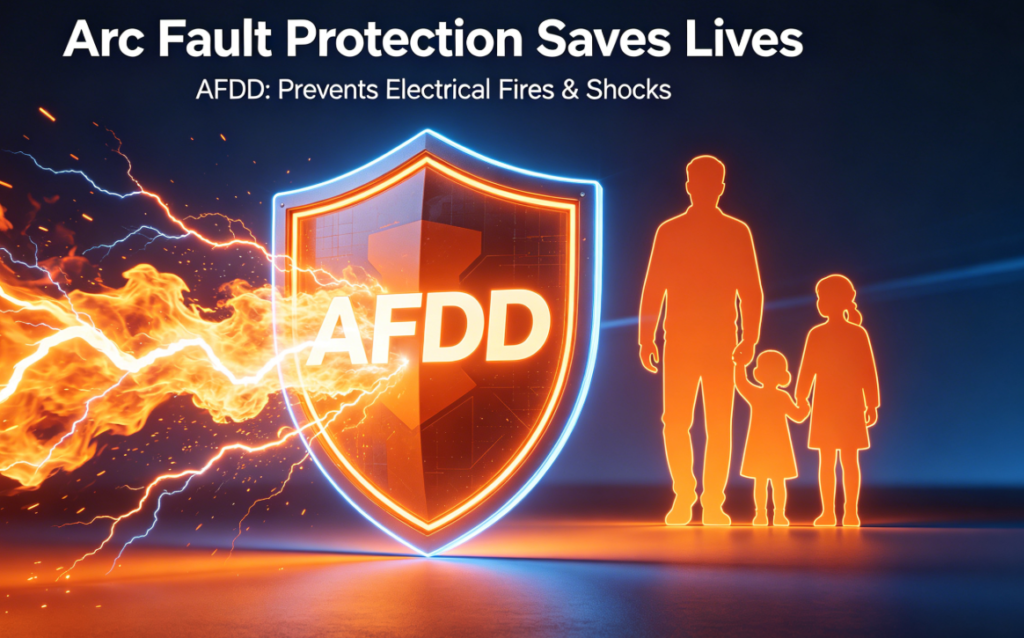
Proteção contra falha de arco não é apenas mais um requisito do código elétrico - é uma tecnologia que salva vidas e que, comprovadamente, reduz o risco de incêndios elétricos em até 80%.
Os dispositivos tradicionais de proteção elétrica, como disjuntores e fusíveis, simplesmente não foram projetados para detectar os arcos de baixa corrente que causam a maioria dos incêndios elétricos. Somente proteção contra falha de arco pode fornecer essa camada crítica de segurança.
Se você estiver construindo uma nova casa, reformando uma já existente ou atualizando seu sistema elétrico comercial, a instalação de proteção contra falha de arco Os dispositivos são um dos investimentos mais importantes que você pode fazer na segurança de sua família, funcionários e propriedade.
Como proteção contra falha de arco continua avançando e se tornando mais acessível, não há motivo para não instalá-la em todos os circuitos de sua casa ou empresa.
Para obter mais informações sobre proteção contra falha de arco produtos e soluções, visite www.cnkuangya.com hoje. Sua equipe de profissionais experientes pode ajudá-lo a selecionar o proteção contra falha de arco dispositivos para suas necessidades específicas e garantir que eles sejam instalados corretamente.
Não espere até que seja tarde demais. Proteja sua casa, sua família e sua empresa com proteção contra falha de arco - o guardião silencioso que salva vidas.

