WengYang Industriegebiet Yueqing Wenzhou 325000
Arbeitszeiten
Montag bis Freitag: 7AM - 7PM
Am Wochenende: 10AM - 5PM
WengYang Industriegebiet Yueqing Wenzhou 325000
Arbeitszeiten
Montag bis Freitag: 7AM - 7PM
Am Wochenende: 10AM - 5PM

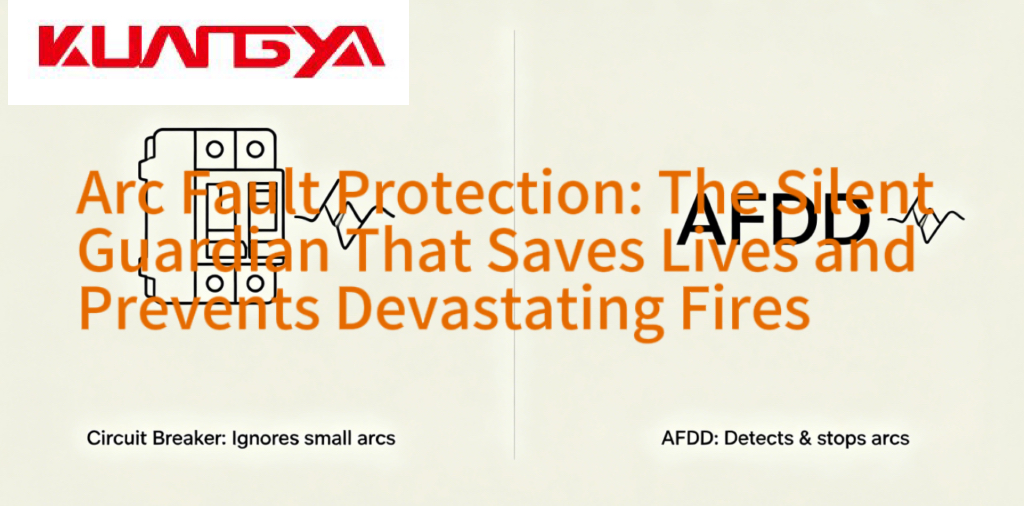
Jedes Jahr verursachen elektrische Brände weltweit Tausende von Todesfällen, Verletzungen und Sachschäden in Milliardenhöhe. Die meisten dieser Brände entstehen durch ein gefährliches elektrisches Phänomen, den sogenannten Störlichtbogen.
Störlichtbogenschutz ist die einzige Technologie, die speziell entwickelt wurde, um diese unsichtbaren, tödlichen Gefahren zu erkennen und zu stoppen, bevor sie Brände entfachen. Sie ist eine der wichtigsten Sicherheitsinnovationen in der modernen Elektrotechnik.
Die meisten Menschen sind mit Schutzschaltern und Sicherungen vertraut, aber diese traditionellen Geräte können die Schwachstromlichtbögen, die die meisten elektrischen Brände verursachen, nicht erkennen. Das ist der Punkt, an dem Störlichtbogenschutz unverzichtbar wird.
In diesem umfassenden Leitfaden erfahren Sie alles, was Sie wissen müssen über Störlichtbogenschutz, von der Funktionsweise bis hin zum Einsatzort, der Installation und der ordnungsgemäßen Wartung. Wir verweisen auf führende Industriestandards von Organisationen wie der Nationale Feuerschutzvereinigung (NFPA) und die Internationale Elektrotechnische Kommission (IEC) um möglichst genaue und aktuelle Informationen zu erhalten.
Nach Angaben der Nationale Feuerschutzvereinigung (NFPA), Bei 44% der Wohnungsbrände in den Vereinigten Staaten zwischen 2015 und 2019 waren elektrische Verteilungs- oder Beleuchtungsanlagen beteiligt.
Diese Brände führten zu durchschnittlich 420 Todesfällen, 1.360 Verletzten und $1,5 Milliarden direktem Sachschaden pro Jahr. Etwa 60% dieser elektrischen Brände werden durch Störlichtbögen verursacht, die von herkömmlichen Schutzvorrichtungen nicht erkannt werden.
Die Internationale Elektrotechnische Kommission (IEC) berichtet über ähnliche Statistiken weltweit, wobei elektrische Brände in den meisten Ländern 20-30% aller Gebäudebrände ausmachen.
Diese Zahlen verdeutlichen die dringende Notwendigkeit einer breiten Einführung von Störlichtbogenschutz Technologie sowohl in Wohn- als auch in Geschäftsgebäuden. Die Behörde für Sicherheit und Gesundheit am Arbeitsplatz (OSHA) erkennt auch Störlichtbögen als signifikante Gefahr am Arbeitsplatz an, die in vielen industriellen Bereichen angemessene Schutzmaßnahmen erfordert.
Störlichtbogenschutz bezieht sich auf eine Reihe von Technologien zur Erkennung anormaler elektrischer Lichtbögen in Verkabelungssystemen und zur Unterbrechung des Stromkreises, bevor der Lichtbogen einen Brand entfachen kann.
Das wichtigste Gerät für diesen Zweck ist das Arc Fault Detection Device (AFDD), das in Nordamerika auch als Arc Fault Circuit Interrupter (AFCI) bezeichnet wird. Diese Geräte müssen strenge Leistungsstandards erfüllen, die von Unterzeichner-Laboratorien (UL) und die IEC.
Störlichtbogenschutz Geräte überwachen kontinuierlich den elektrischen Strom, der durch einen Stromkreis fließt, und suchen nach den einzigartigen Wellenformmustern, die auf einen Lichtbogenfehler hinweisen.
Wenn ein gefährlicher Lichtbogen erkannt wird, löst das Gerät innerhalb von Millisekunden aus, unterbricht die Stromzufuhr zum Stromkreis und verhindert einen möglichen Brand.
Ein elektrischer Lichtbogen ist eine Hochtemperatur-Entladung von Elektrizität, die zwischen zwei Leitern überspringt. Lichtbögen können Temperaturen von bis zu 19.400 °C (35.000 °F) erreichen, was heißer ist als die Oberfläche der Sonne.
Selbst ein kleiner Lichtbogen kann in weniger als einer Sekunde brennbare Materialien wie Holz, Kunststoff und Isolierung entzünden. Die Institut der Elektro- und Elektronikingenieure (IEEE) hat umfangreiche Forschungsarbeiten über die Physik elektrischer Lichtbögen und deren Entzündungspotenzial veröffentlicht.
Lichtbögen können aus vielen Gründen entstehen, z. B. durch beschädigte Leitungen, lose Verbindungen, überlastete Stromkreise und beschädigte Stromkabel.
Im Gegensatz zu Kurzschlüssen, die einen großen Stromstoß verursachen, der von herkömmlichen Schutzschaltern erkannt werden kann, treten viele gefährliche Lichtbögen bei normalen Stromstärken auf, so dass sie für herkömmliche Schutzeinrichtungen unsichtbar sind.
Modern Störlichtbogenschutz Die Geräte verwenden fortschrittliche Mikroprozessortechnologie, um die elektrische Wellenform Tausende Male pro Sekunde zu analysieren.
Sie suchen nach bestimmten Merkmalen, die gefährliche Lichtbögen von normalen Lichtbögen unterscheiden, die in alltäglichen Geräten wie Lichtschaltern, Motoren und Staubsaugern auftreten.
Zu diesen Merkmalen gehören:
Wenn das Gerät ein Muster erkennt, das mit einem gefährlichen Lichtbogen übereinstimmt, löst es einen internen Mechanismus aus, um den Stromkreis zu öffnen, normalerweise innerhalb von 25 Millisekunden. Die UL 1699-Norm legt die Leistungsanforderungen für diese Erkennungsalgorithmen fest, um sowohl Wirksamkeit als auch Zuverlässigkeit zu gewährleisten.
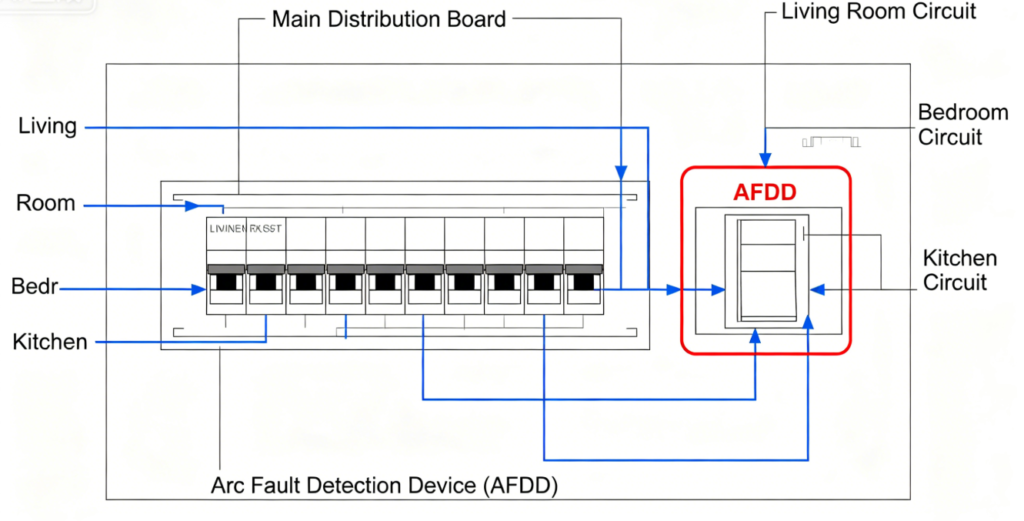
Serienlichtbögen treten auf, wenn ein einzelner Leiter unterbrochen ist und der Strom über die Lücke springt.
Dies ist die häufigste Art von Störlichtbögen und die gefährlichste, da sie oft bei normalen Stromstärken auftreten, die herkömmliche Schutzschalter nicht auslösen.
Serienlichtbögen können verursacht werden durch:
Ein Serienlichtbogen, der nur 5 Ampere zieht, kann genug Hitze erzeugen, um die meisten Baumaterialien zu entzünden. Die NFPA-Stiftung für elektrische Sicherheit liefert detaillierte Informationen darüber, wie Serienbögen entstehen und wie man sie verhindern kann.
Parallele Lichtbögen treten zwischen zwei Leitern mit entgegengesetzter Polarität auf, z. B. zwischen einem heißen und einem neutralen Draht oder zwischen einem heißen und einem geerdeten Draht.
Diese Lichtbögen ziehen in der Regel höhere Ströme als Serienlichtbögen und können schließlich einen herkömmlichen Schutzschalter auslösen.
Aber selbst ein paralleler Lichtbogen kann genug Hitze erzeugen, um ein Feuer zu entfachen, bevor der Schutzschalter auslöst.
Parallele Bögen werden häufig verursacht durch:
Erdungslichtbögen entstehen zwischen einem heißen Draht und einer geerdeten Oberfläche, z. B. einer Metalldose oder einem Kabelkanal.
Diese Lichtbögen sind besonders gefährlich, weil sie auftreten können, ohne dass der Strom ausreicht, um einen herkömmlichen Schutzschalter auszulösen.
Störlichtbögen sind eine häufige Ursache für Brände in älteren Gebäuden mit metallischen Leitungssystemen. Die IEC 60364-Norm gibt Hinweise zum Schutz vor Erd- und Störlichtbögen in elektrischen Anlagen.
| Störlichtbogen-Typ | Aktueller Bereich | Schwierigkeit der Erkennung | Brandrisiko | Häufige Ursachen |
|---|---|---|---|---|
| Serie Bogen | 5-30 Ampere | Sehr hoch | Extrem | Beschädigte Drähte, lose Verbindungen |
| Paralleler Bogen | 30-1000+ Ampere | Mäßig | Hoch | Isolationsdurchbruch, beschädigte Kabel |
| Erdbogen | 5-100 Ampere | Hoch | Sehr hoch | Kontakt mit Metallrohren, Eindringen von Wasser |
Herkömmliche Stromkreisunterbrecher sind so konzipiert, dass sie gegen zwei Bedingungen schützen: Überstrom und Kurzschluss.
Sie erkennen, wenn der durch den Stromkreis fließende Strom einen bestimmten Schwellenwert überschreitet und lösen aus, um eine Überhitzung der Leitungen zu verhindern.
Sie können jedoch die Schwachstromlichtbögen, die die meisten elektrischen Brände verursachen, nicht erkennen. Ein Schutzschalter wird möglicherweise nie ausgelöst, selbst wenn ein Lichtbogen aktiv brennt und genügend Wärme erzeugt, um ein Feuer zu entfachen.
In der Tat haben Tests, die von UL-Laboratorien haben gezeigt, dass ein 15-Ampere-Schutzschalter auch dann nicht auslöst, wenn ein 10-Ampere-Serienlichtbogen kontinuierlich brennt.
Fehlerstromschutzschalter (RCDs), auch bekannt als Erdschlussstromunterbrecher (GFCIs), sind so konzipiert, dass sie Kriechströme zur Erde erkennen.
Sie eignen sich hervorragend zur Vermeidung von Stromschlägen, können aber weder Serienlichtbögen noch die meisten parallelen Lichtbögen erkennen.
Störlichtbogenschutz und RCD-Schutz sorgen gemeinsam für umfassende elektrische Sicherheit. Störlichtbogenschutz verhindert Brände, während FI-Schutzschalter Stromschläge verhindern.
Viele moderne Geräte kombinieren beides Störlichtbogenschutz und RCD-Schutz in einem einzigen Gerät, das einen vollständigen Stromkreisschutz bietet. Die IEC 61008-Norm definiert die Leistungsanforderungen für RCDs.
| Schutzvorrichtung | Erfasst Überstrom | Erkennung von Kurzschlüssen | Erkennt Lichtbogenfehler | Detektiert Erdungsfehler | Primärer Zweck |
|---|---|---|---|---|---|
| Sicherung | Ja | Ja | Nein | Nein | Überstromschutz |
| Stromkreisunterbrecher (MCB) | Ja | Ja | Nein | Nein | Überstromschutz |
| RCD/GFCI | Nein | Nein | Nein | Ja | Schutz vor Stromschlägen |
| AFDD/AFCI | Ja | Ja | Ja | Nein | Brandverhütung |
| RCBO | Ja | Ja | Nein | Ja | Überstrom- und Stoßschutz |
| AFDD+RCBO | Ja | Ja | Ja | Ja | Vollständiger Schutz des Stromkreises |
In den Vereinigten Staaten und Kanada ist die Nationales Elektrogesetz (NEC) hat erforderlich Störlichtbogenschutz in privaten Schlafzimmern seit 2002.
Spätere Aktualisierungen des Codes haben diese Anforderung erweitert:
Ab dem NEC 2023, Störlichtbogenschutz ist bis auf wenige Ausnahmen in praktisch allen Bereichen von Wohngebäuden erforderlich.
Der NEC verlangt kombinierte AFCI-Geräte, die sowohl serielle als auch parallele Lichtbögen erkennen und nach den folgenden Normen zertifiziert sind UL 1699B-Norm.
Die Internationale Elektrotechnische Kommission (IEC) veröffentlichte die erste internationale Norm für Störlichtbogenschutz Geräte im Jahr 2010: IEC 62606.
Diese Norm legt die Leistungsanforderungen und Prüfverfahren für AFDDs zur Verwendung in Wohngebäuden und ähnlichen Anwendungen fest.
Viele europäische Länder haben die IEC 62606 in ihre nationalen Normen übernommen und verlangen inzwischen Störlichtbogenschutz bei Neubauten.
Deutschland war das erste europäische Land, das die Störlichtbogenschutz in Wohngebäuden, beginnend im Jahr 2017. Andere Länder, darunter Frankreich, Italien und Spanien, haben inzwischen nachgezogen. Die Website Europäisches Komitee für elektrotechnische Normung (CENELEC) hat auch die IEC 62606 als europäische Norm übernommen.
| Region | Standard | Obligatorisch seit | Erforderliche Standorte | Erforderlicher Gerätetyp |
|---|---|---|---|---|
| Vereinigte Staaten | NEC 2023 | 2002 (seitdem erweitert) | Alle bewohnbaren Räume | AFCI-Kombinationstyp (UL 1699B) |
| Kanada | CSA C22.1 | 2002 | Alle bewohnbaren Räume | AFCI-Kombinationstyp |
| Deutschland | DIN VDE 0100 | 2017 | Alle privaten Stromkreise | IEC 62606-konforme AFDD |
| Frankreich | NF C 15-100 | 2020 | Alle privaten Stromkreise | IEC 62606-konforme AFDD |
| Vereinigtes Königreich | BS 7671 | 2022 | Die meisten privaten Stromkreise | IEC 62606-konforme AFDD |
| Australien | AS/NZS 3000 | 2023 | Alle bewohnbaren Räume | IEC 62606-konforme AFDD |
Störlichtbogenschutz wird am häufigsten in Wohngebäuden eingesetzt, wo es nachweislich die Gefahr von Elektrobränden erheblich verringert.
Es sollte in allen Stromkreisen installiert werden, die Strom führen:
Selbst in älteren Häusern, die vor dem Störlichtbogenschutz erforderlich war, ist die Nachrüstung von AFDDs eine dringend empfohlene Sicherheitsmaßnahme. Die Die NFPA empfiehlt dass in allen Wohnungen in allen Schlaf- und Wohnräumen ein AFCI-Schutz installiert ist.
www.cnkuangya.com bietet eine vollständige Palette von Störlichtbogenschutz Geräte, die einfach zu installieren und mit den meisten bestehenden elektrischen Systemen kompatibel sind.
Während Störlichtbogenschutz wird meist mit Wohngebäuden in Verbindung gebracht, ist aber auch in Gewerbe- und Industriebetrieben von großer Bedeutung.
Kommerzielle Gebäude, die profitieren von Störlichtbogenschutz umfassen:
In industriellen Umgebungen, Störlichtbogenschutz können dazu beitragen, Brände zu verhindern:
Die OSHA-Norm für elektrische Sicherheit verpflichtet die Arbeitgeber, für einen sicheren Arbeitsplatz zu sorgen, wozu auch der Schutz vor elektrischen Gefahren wie Störlichtbögen gehört.
www.cnkuangya.com bietet industrietaugliche Störlichtbogenschutz Lösungen, die für die rauen Bedingungen in industriellen Umgebungen konzipiert sind.
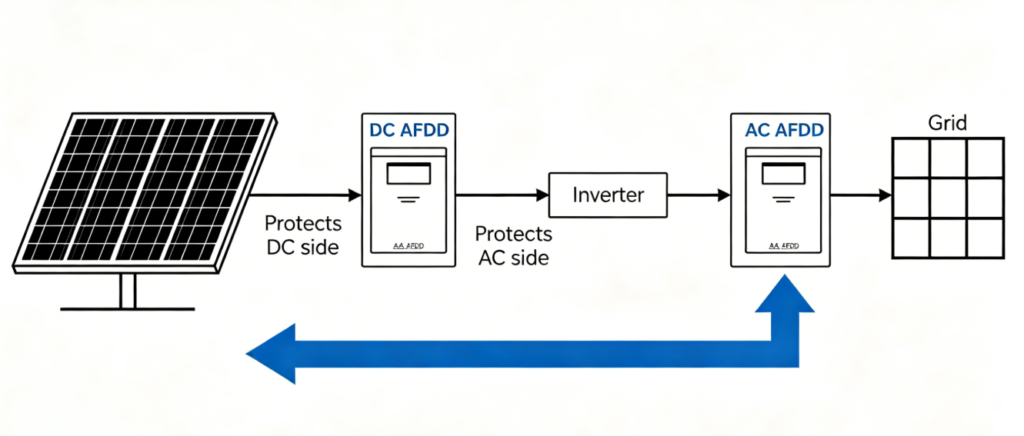
Störlichtbogenschutz wird auch in einer Reihe von Spezialanwendungen eingesetzt, darunter:
In jeder dieser Anwendungen, Störlichtbogenschutz bietet eine zusätzliche Sicherheitsebene, mit der herkömmliche Schutzvorrichtungen nicht mithalten können. Für Solaranlagen ist die IEC 62548-Norm verlangt ausdrücklich einen Störlichtbogenschutz sowohl auf der Gleichstrom- als auch auf der Wechselstromseite von Photovoltaikanlagen.
Wenn Sie die häufigen Ursachen von Störlichtbögen kennen, können Sie verhindern, dass sie in Ihrem Haus oder Unternehmen auftreten.
Zu den häufigsten Ursachen gehören:
Die Internationale Stiftung für elektrische Sicherheit (ESFI) enthält eine umfassende Liste von Störlichtbogenursachen und Vermeidungsstrategien.
Während Störlichtbogenschutz die beste Vorbeugung gegen durch Lichtbögen verursachte elektrische Brände ist, können Sie auch Maßnahmen ergreifen, um Lichtbögen von vornherein zu vermeiden.
| Gemeinsame Sache | Prävention Methode | Warnschilder |
|---|---|---|
| Beschädigte Verkabelung | Regelmäßige Inspektionen, Anbohren von Wänden vermeiden | Flackerndes Licht, Brandgeruch |
| Lose Verbindungen | Verbindungen festziehen, geeignete Kabelmuttern verwenden | Warme Steckdosen, brummende Geräusche |
| Überlastete Stromkreise | Verteilen Sie Lasten auf mehrere Stromkreise | Häufig auslösende Schutzschalter |
| Beschädigte Schnüre | Ersetzen Sie beschädigte Schnüre sofort | Freiliegende Drähte, rissige Isolierung |
| Eindringen von Wasser | Elektrische Anlagen trocken halten, GFCI-Schutz installieren | Ausgelöste GFCI-Steckdosen |
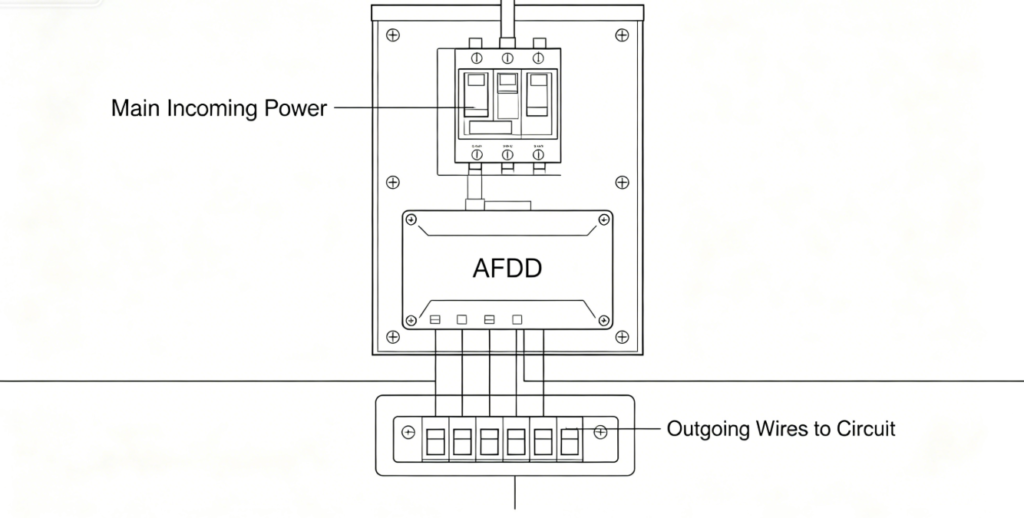
Störlichtbogenschutz Geräte sollten von einem lizenzierten Elektriker installiert werden, der mit den örtlichen elektrischen Vorschriften und Bestimmungen vertraut ist.
Der Installationsprozess umfasst in der Regel folgende Schritte:
Es ist wichtig, dass Sie nur Störlichtbogenschutz Geräte, die von einem anerkannten Prüflabor gelistet sind, wie z. B. UL, CSA, oder IEC.
www.cnkuangya.com bietet eine große Auswahl an geprüften und zertifizierten Störlichtbogenschutz Geräte, die alle internationalen Sicherheitsstandards erfüllen.
Störlichtbogenschutz Die Geräte sollten monatlich getestet werden, um sicherzustellen, dass sie ordnungsgemäß funktionieren.
Die meisten Geräte verfügen über eine Testtaste, die einen Störlichtbogen simuliert und prüft, ob das Gerät auslöst, wenn ein Lichtbogen erkannt wird. Die Die NFPA empfiehlt monatliche Prüfung aller AFCI-Geräte.
Zum Testen einer AFDD/AFCI:
Zusätzlich zu den monatlichen Tests, Störlichtbogenschutz Geräte sollten jährlich von einem zugelassenen Elektriker überprüft werden.
Ein häufiges Problem bei Störlichtbogenschutz Geräten ist die Fehlauslösung, die auftritt, wenn das Gerät auslöst, obwohl kein gefährlicher Lichtbogen vorhanden ist.
Unerwünschte Auslösungen können verursacht werden durch:
Die UL Weißbuch über störende Auslösungen bietet eine ausführliche Anleitung zur Erkennung und Lösung dieses Problems. Verwendung von ENERGY STAR-zertifiziert LED-Beleuchtung und -Geräte können ebenfalls dazu beitragen, lästiges Auslösen zu vermeiden.
Wenn Sie störende Auslösungen feststellen, versuchen Sie Folgendes:
A: Ja, moderner Kombinationstyp Störlichtbogenschutz Geräte können Serienlichtbögen in Verlängerungskabeln erkennen, solange der Lichtbogen auf der Lastseite des Geräts auftritt.
Die Fähigkeit, Lichtbögen zu erkennen, nimmt jedoch mit zunehmender Länge des Verlängerungskabels ab. Aus diesem Grund wird empfohlen, das kürzestmögliche Verlängerungskabel für Ihre Bedürfnisse zu verwenden. Die IEC 62606-Norm gibt die maximale Kabellänge für eine zuverlässige Lichtbogenerkennung an.
Es ist auch wichtig zu beachten, dass Störlichtbogenschutz kann keine Lichtbögen erkennen, die auf der Netzseite des Geräts auftreten, z. B. in der Verdrahtung zwischen der Hauptschalttafel und dem AFDD.
A: Störlichtbogenschutz Geräte lösen manchmal bei LED-Leuchten aus, weil viele LED-Treiber ein elektrisches Rauschen erzeugen, das die Wellenform eines Störlichtbogens imitieren kann.
Dies ist besonders häufig bei billigeren, nicht zertifizierten LED-Leuchten der Fall, die nicht über eine geeignete Filterung zur Reduzierung des elektrischen Rauschens verfügen. Die IEEE-Transaktionen zur Leistungselektronik hat Forschungsarbeiten zu diesem Phänomen und zu seiner Abschwächung veröffentlicht.
Um dieses Problem zu vermeiden, verwenden Sie nur LED-Leuchten, die für die Kompatibilität mit Störlichtbogenschutz Geräte. Sie können auch versuchen, einen Netzfilter in den Stromkreis einzubauen, um das elektrische Rauschen zu reduzieren.
A: Ja, Störlichtbogenschutz Geräte können mit photovoltaischen Solarsystemen verwendet werden, aber es müssen besondere Überlegungen angestellt werden.
Solarsysteme erzeugen Gleichstrom, der andere Lichtbogeneigenschaften hat als Wechselstrom. Daher müssen spezielle DC Störlichtbogenschutz Geräte sind für die Gleichstromseite von Solaranlagen erforderlich. Die NEC 690.11 verlangt einen Gleichstrom-Lichtbogenschutz für alle nach 2014 installierten Solaranlagen für Wohngebäude.
Die AC-Seite von Solarsystemen kann mit Standard-AC geschützt werden Störlichtbogenschutz Geräte. www.cnkuangya.com bietet sowohl DC als auch AC Störlichtbogenschutz Lösungen für Solaranwendungen.
A: Nein, es ist weder sicher noch legal, ein Störlichtbogenschutz Gerät mit einem normalen Schutzschalter an Orten, an denen Störlichtbogenschutz ist gesetzlich vorgeschrieben.
Dadurch wird der einzige Schutz gegen Störlichtbögen aufgehoben und die Gefahr eines elektrischen Brandes erheblich erhöht. Außerdem kann Ihr Versicherungsschutz im Falle eines Brandes erlöschen. Die NFPA warnt gegen die Entfernung oder Umgehung von AFCI-Vorrichtungen.
Wenn Sie eine störende Auslösung feststellen, sollten Sie einen zugelassenen Elektriker zu Rate ziehen, um das Problem zu identifizieren und zu beheben, anstatt den AFDD durch einen normalen Unterbrecher zu ersetzen.
A: Störlichtbogenschutz Geräte haben eine typische Lebensdauer von 10-15 Jahren, ähnlich wie andere Schutzschalter.
Sie sollten jedoch sofort ersetzt werden, wenn:
Die UL Leitfaden zur Produktsicherheit empfiehlt, alle elektrischen Schutzvorrichtungen alle 10-15 Jahre zu ersetzen, um eine optimale Leistung zu gewährleisten.
Regelmäßige Tests und Wartung tragen dazu bei, dass Ihr Störlichtbogenschutz Geräte bieten über viele Jahre hinweg zuverlässigen Schutz.
Störlichtbogenschutz Die Technologie wird ständig weiterentwickelt, und die Hersteller entwickeln immer fortschrittlichere Erkennungsalgorithmen, die besser zwischen gefährlichen Lichtbögen und normalen Lichtbögen unterscheiden können.
Neuere Geräte nutzen künstliche Intelligenz und maschinelles Lernen, um elektrische Wellenformen mit größerer Genauigkeit zu analysieren, wodurch störende Auslösungen reduziert und gefährliche Lichtbögen besser erkannt werden. Die IEEE Power & Energy Gesellschaft forscht aktiv an neuen Technologien zur Störlichtbogenerkennung.
Zukunft Störlichtbogenschutz Geräte können das auch:
Die Integration von Störlichtbogenschutz mit Smart-Home-Technologie ist eine der spannendsten Entwicklungen in diesem Bereich.
Intelligente AFDDs können sich mit dem Wi-Fi-Netzwerk Ihres Hauses verbinden und Warnmeldungen an Ihr Smartphone oder Tablet senden, wenn ein Störlichtbogen erkannt wird.
Sie können auch detaillierte Informationen über den Stromkreis liefern, einschließlich des Energieverbrauchs, der Spannungspegel und der Anzahl der Auslösungen des Geräts.
So können Hausbesitzer ihr elektrisches System aus der Ferne überwachen und mögliche Probleme beheben, bevor sie gefährlich werden. Mehrere führende Hersteller haben bereits intelligente AFDD-Produkte auf den Markt gebracht, die sich in gängige Smart-Home-Plattformen integrieren lassen.
Da die Vorteile der Störlichtbogenschutz Immer mehr Länder auf der ganzen Welt erlassen verbindliche Vorschriften für ihre Installation.
Die IEC schätzt, dass bis 2030, Störlichtbogenschutz wird in mehr als 50 Ländern weltweit im Wohnungsneubau vorgeschrieben sein.
Diese weit verbreitete Einführung wird dazu beitragen, jedes Jahr Tausende von Menschenleben zu retten und Sachschäden in Milliardenhöhe zu vermeiden. Die Weltgesundheitsorganisation (WHO) hat ebenfalls erkannt, dass elektrische Brände ein bedeutendes Problem für die öffentliche Gesundheit darstellen und unterstützt die Einführung von Maßnahmen zum Schutz vor Störlichtbögen.
www.cnkuangya.com verpflichtet sich zur Entwicklung und Herstellung hochwertiger Störlichtbogenschutz Geräte, die den sich wandelnden Anforderungen des Weltmarktes entsprechen.
Störlichtbogenschutz ist nicht nur eine weitere Anforderung der Elektrovorschriften - es handelt sich um eine lebensrettende Technologie, die nachweislich das Risiko von Elektrobränden um bis zu 80% reduziert.
Herkömmliche elektrische Schutzeinrichtungen wie Schutzschalter und Sicherungen sind einfach nicht dafür ausgelegt, die Schwachstromlichtbögen zu erkennen, die die meisten elektrischen Brände verursachen. Nur Störlichtbogenschutz kann diese entscheidende Sicherheitsebene bieten.
Ob Sie nun ein neues Haus bauen, ein bestehendes renovieren oder Ihr gewerbliches Elektrosystem aufrüsten, die Installation von Störlichtbogenschutz Geräte sind eine der wichtigsten Investitionen, die Sie für die Sicherheit Ihrer Familie, Ihrer Mitarbeiter und Ihres Eigentums tätigen können.
Als Störlichtbogenschutz Technologie weiter voranschreitet und immer erschwinglicher wird, gibt es keinen Grund, sie nicht in jedem Stromkreis in Ihrem Haus oder Unternehmen zu installieren.
Für weitere Informationen über Störlichtbogenschutz Produkte und Lösungen, besuchen Sie www.cnkuangya.com heute. Das Team von erfahrenen Fachleuten kann Ihnen bei der Auswahl des richtigen Störlichtbogenschutz Geräte für Ihre speziellen Bedürfnisse und stellen Sie sicher, dass sie korrekt installiert sind.
Warten Sie nicht, bis es zu spät ist. Schützen Sie Ihr Haus, Ihre Familie und Ihr Unternehmen mit Störlichtbogenschutz - der stille Wächter, der Leben rettet.

