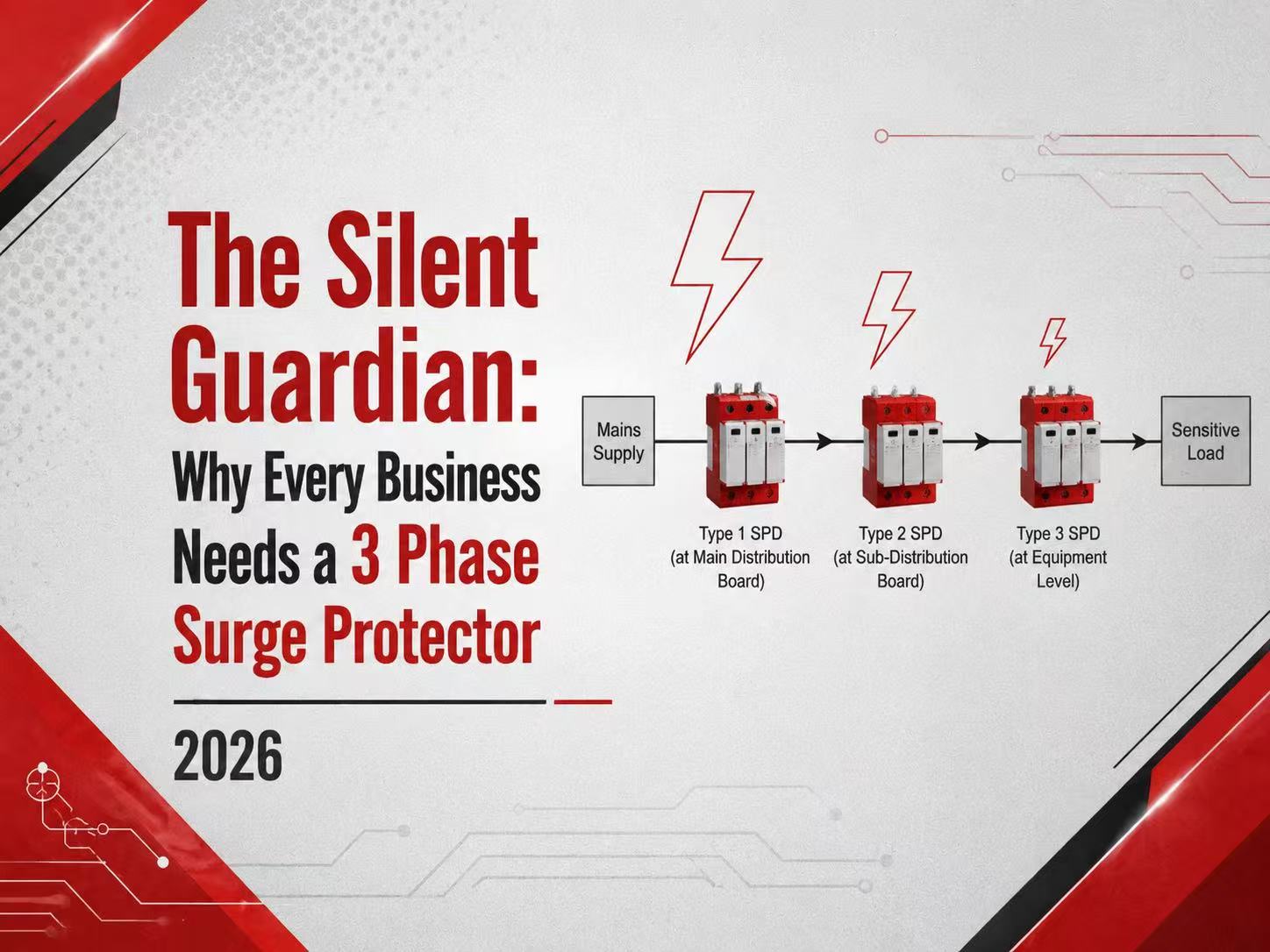
The Silent Guardian: Why Every Business Needs a 3 Phase Surge Protector 2026

In today’s technology-driven world, electrical surges pose a constant threat to our valuable equipment and infrastructure. While most people are familiar with single-phase surge protectors for home use, far fewer understand the critical importance of a 3 phase surge protector for commercial and industrial applications.

This unassuming device works silently behind the scenes, protecting thousands of dollars worth of equipment from sudden voltage spikes that can cause irreparable damage. In this comprehensive guide, we will explore everything you need to know about these essential protection systems, from their basic working principles to advanced installation techniques and troubleshooting.

Whether you are a facility manager, an electrical contractor, or a business owner looking to safeguard your investments, this article will provide you with the knowledge you need to make informed decisions about electrical protection.<img src="”https://via.placeholder.com/1200×675?text=Industrial+3+Phase+Surge+Protection+System”" alt="”3" phase surge protector” title="”Industrial" grade 3 protector installed in distribution panel”> *Figure 1: Industrial grade 3 phase surge protector installed in a main distribution panel*

What Is a 3 Phase Surge Protector and How Does It Work

The Basic Definition of a 3 Phase Surge Protector

A 3 phase surge protector, also known as a three-phase surge protective device (SPD), is an electrical appliance designed to protect three-phase electrical systems from voltage transients or surges.

These devices divert excess voltage away from sensitive equipment and safely dissipate it into the ground, preventing damage to motors, computers, control systems, and other critical electrical components.

Unlike single-phase units that only protect one line, this comprehensive solution provides protection for all three phases and the neutral line, ensuring complete coverage for the entire electrical system.

How a 3 Phase Surge Protector Operates

A 3 phase surge protector operates on a simple but effective principle. Under normal operating conditions, the device remains inactive and does not affect the flow of electricity through the system.

When a voltage surge occurs, the internal components immediately activate, creating a low-resistance path to ground. This diverts the excess voltage away from the connected equipment, limiting the voltage to a safe level.

Once the surge has passed, the device automatically resets and returns to its normal inactive state, ready to protect against the next transient event.

Key Components of a 3 Phase Surge Protector

A typical 3 phase surge protector consists of several key components that work together to provide effective protection:

  1. 금속 산화물 배리스터(MOV): The primary protection components that conduct electricity when voltage exceeds a certain threshold.
  2. 가스 방전관(GDT): Secondary protection components that handle larger surges and provide backup protection.
  3. Thermal Fuses: Safety devices that disconnect the unit from the circuit if it overheats.
  4. Indicator Lights: LED lights that show whether the protection system is functioning properly.
  5. 주택: A durable metal or plastic enclosure that protects the internal components from damage.

<img src="”https://via.placeholder.com/800×450?text=Internal+Components+of+3+Phase+SPD”" alt="”3" phase surge protector internal components” title="”Cross-sectional" diagram of 3> *Figure 2: Cross-sectional diagram showing the internal components of a 3 phase surge protector*

Why Your Business Cannot Afford to Skip a 3 Phase Surge Protector

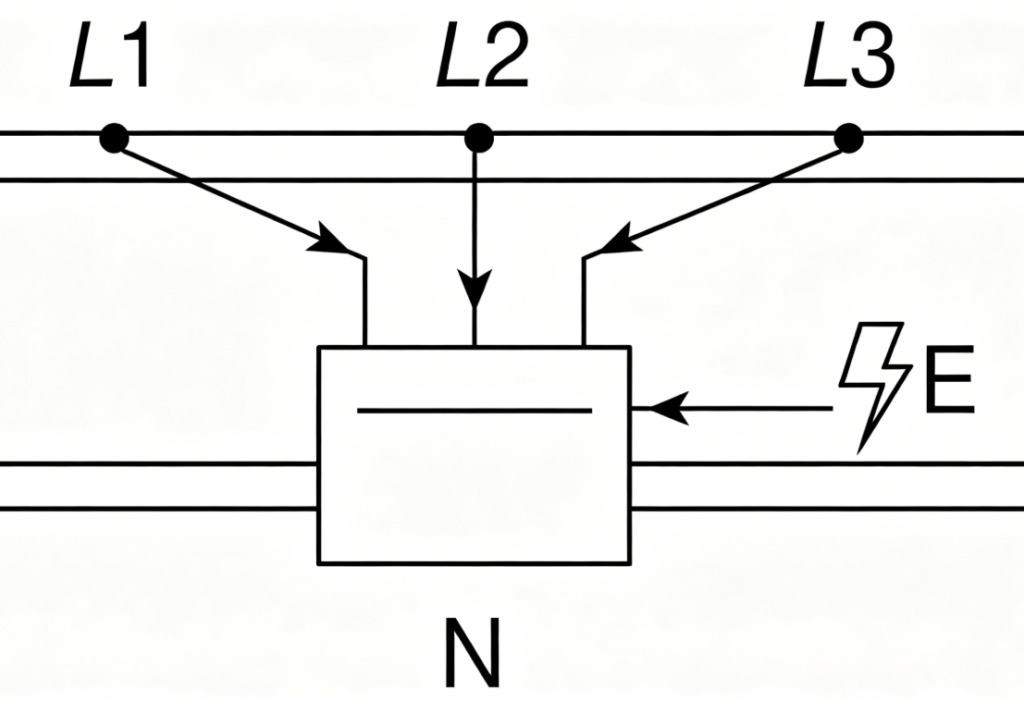
3 phase surge protector working principle diagram

The Hidden Costs of Electrical Surges in 3 Phase Systems

Electrical surges can cause significant financial losses for businesses of all sizes. According to the Electrical Safety Foundation International (ESFI), electrical surges cost U.S. businesses more than $26 billion annually in equipment damage and downtime.

In three-phase systems, the damage can be even more severe. A single surge can destroy multiple pieces of equipment simultaneously, leading to costly repairs, replacement expenses, and lost productivity.

For example, a surge in a manufacturing plant could damage several motors, conveyor systems, and control panels, resulting in days or even weeks of downtime.

Common Sources of 3 Phase Electrical Surges

Electrical surges can come from a variety of sources, both internal and external to the facility. The following table lists the most common sources of three-phase electrical surges and their potential impact:

Source of Surge빈도Potential Impact
Lightning Strikes낮음Catastrophic equipment damage, fire
Utility Switching OperationsMediumEquipment malfunction, data loss
Motor Starting/Stopping높음Component degradation, premature failure
Capacitor Bank SwitchingMediumVoltage spikes, equipment damage
배선 결함높음Intermittent surges, equipment damage
Generator OperationMediumVoltage fluctuations, component stress

Regulatory and Insurance Requirements for Surge Protection

Many industries have specific regulatory requirements for electrical protection, including the installation of 3 phase surge protectors.

The National Fire Protection Association (NFPA) 70 National Electrical Code (NEC) requires surge protection for certain types of electrical equipment in commercial and industrial facilities.

Additionally, many insurance companies now require businesses to install these protection devices as a condition of coverage. Failure to comply with these requirements can result in higher insurance premiums or even denial of claims in the event of surge-related damage.

For more information about regulatory requirements, you can visit the NFPA websiteOSHA Electrical Safety page.

Understanding 3 Phase Surge Protector Technical Specifications

Core Electrical Parameters of 3 Phase Surge Protectors

To select the right 3 phase surge protector for your application, it is essential to understand its key electrical parameters. The following table summarizes the core specifications of standard three-phase surge protection units:

3 Phase Surge – DC Circuit Breaker Manufacturer | Solar Protection Device Supplier – Kuangya

매개변수Typical Value Range설명
정격 전압208V, 240V, 480V, 600VThe normal operating voltage of the system
공칭 방전 전류(In)10kA – 40kAThe current the device can handle repeatedly
최대 방전 전류(Imax)20kA – 100kAThe maximum current the device can handle once
전압 보호 수준(상향)1.5kV – 4.0kVThe maximum voltage that will appear across the protected equipment
응답 시간<25 nanosecondsThe time it takes for the device to activate
작동 온도 범위-40°C ~ +85°CThe temperature range in which the device can operate
표준 준수IEC 61643-11, UL 1449The international and national standards the device meets

Table 2: Core electrical specifications of 3 phase surge protectors

Different Types of 3 Phase Surge Protectors

3 phase surge protectors are available in several different types, each designed for specific applications and protection levels. The following table compares the most common types:

3 Phase Surge Type 1 – Page 2 of 2 – DC Circuit Breaker Manufacturer | Solar Protection Device Supplier – Kuangya

유형보호 수준설치 위치일반적인 애플리케이션
유형 1높음서비스 입구Whole facility protection against direct lightning strikes
유형 2MediumDistribution panelsProtection for individual circuits and equipment
유형 3낮음Point-of-useProtection for sensitive electronic equipment
유형 1+2결합Service entrance or distribution panelsComprehensive protection from both external and internal surges

Table 3: Comparison of different types of 3 phase surge protectors

Protection Classes Explained

In addition to the types listed above, these units are also classified according to their protection class, which indicates their ability to handle different types of surges.

Class I units are designed to handle the highest energy surges, such as those caused by direct lightning strikes. Class II units are designed for medium energy surges, while Class III units are designed for lower energy surges that occur closer to the equipment.

For most commercial and industrial applications, a combination of Type 1+2 or Class I+II protection is recommended to provide comprehensive coverage against all types of surges.

3 Phase Surge Protector Applications Across Industries

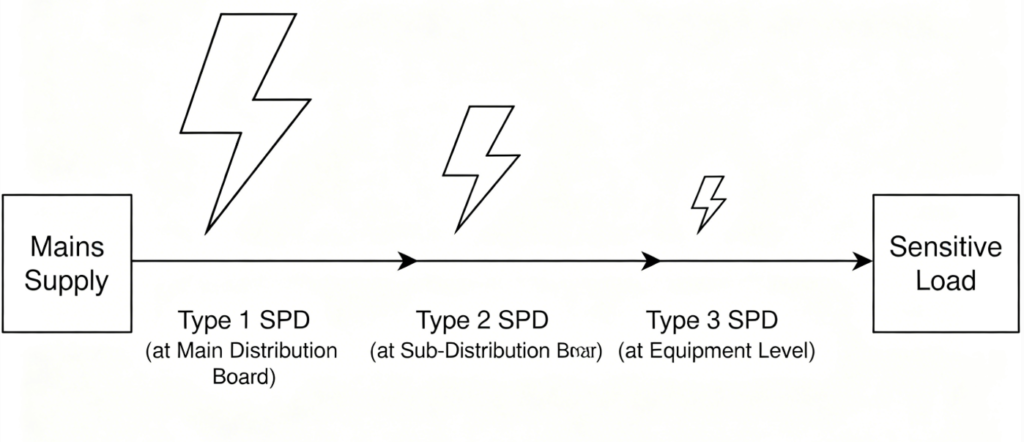
3 phase surge protector type 1 vs type 2 vs type 3 comparison

Industrial Applications of 3 Phase Surge Protectors

Industrial facilities are particularly vulnerable to electrical surges due to the large amount of heavy machinery and electrical equipment they use.

3 phase surge protectors are essential for protecting:

  • Motors and motor control centers
  • Variable frequency drives (VFDs)
  • Programmable logic controllers (PLCs)
  • Robotic systems
  • 용접 장비
  • Compressors and pumps
  • 전력 분배 시스템

In industrial settings, even a small surge can cause significant downtime and lost revenue. A properly installed protection system can help prevent these costly disruptions.<img src="”https://via.placeholder.com/800×450?text=3+Phase+SPD+in+Industrial+Motor+Control+Center”" alt="”3" phase surge protector industrial application” title="”3" protecting equipment”> *Figure 3: 3 phase surge protector installed in an industrial motor control center*

Commercial Applications of 3 Phase Surge Protectors

Commercial buildings also rely heavily on three-phase electrical systems to power their operations. 3 phase surge protectors are used to protect:

  • 오피스 빌딩
  • Retail stores
  • Restaurants
  • Hospitals and healthcare facilities
  • Schools and universities
  • 데이터 센터
  • Hotels and resorts

In commercial applications, surges can damage computers, servers, point-of-sale systems, HVAC equipment, and other critical systems. A reliable protection unit helps ensure the smooth operation of these systems and protects against costly repairs and downtime.

Residential Applications of 3 Phase Surge Protectors

While most residential homes use single-phase electrical systems, some larger homes and properties with three-phase service can benefit from a 3 phase surge protector.

Common residential applications include:

  • Homes with three-phase air conditioning systems
  • Farms and agricultural properties
  • Home workshops with three-phase equipment
  • Large residential properties with multiple buildings

For example, a farm with three-phase pumps, motors, and irrigation systems can suffer significant damage from electrical surges. A comprehensive protection system provides complete coverage for all these systems.

How to Properly Install and Maintain Your 3 Phase Surge Protector

Step-by-Step Installation Guide

Proper installation is crucial for ensuring that your 3 phase surge protector provides effective protection. Follow this step-by-step installation checklist:

表格

단계Action
1Turn off the power to the circuit at the main disconnect switch
2Verify that the power is off using a voltage tester
3Mount the unit in a suitable location near the distribution panel
4Connect the phase wires to the appropriate terminals
5Connect the neutral wire to the neutral terminal
6Connect the ground wire to the ground terminal using the shortest possible wire
7Tighten all connections to the manufacturer’s specified torque
8Restore power to the circuit
9Verify that the indicator lights are functioning properly
10Label the unit for future reference

Table 4: Step-by-step 3 phase surge protector installation checklist<img src="”https://via.placeholder.com/800×450?text=Proper+Installation+of+3+Phase+Surge+Protector”" alt="”3" phase surge protector installation” title="”Proper" 3> *Figure 4: Proper installation of a 3 phase surge protector in a distribution panel*

Essential Maintenance Tips

Regular maintenance is essential for ensuring the long-term reliability and performance of your protection system. Follow these maintenance tips:

  1. Inspect Regularly: Inspect your unit at least once a year, or more frequently in harsh environments.
  2. Check Indicator Lights: Verify that the indicator lights are functioning properly. A red light or no light may indicate that the unit has failed.
  3. Tighten Connections: Check that all electrical connections are tight and secure. Loose connections can cause overheating and reduce effectiveness.
  4. Clean the Unit: Remove any dust, dirt, or debris from the housing and vents.
  5. Replace When Necessary: These devices have a limited lifespan and should be replaced every 5-10 years, or immediately after a major surge event.

Safety Precautions When Working with Electrical Protection Systems

Working with three-phase electrical systems can be dangerous. Always follow these safety precautions:

  1. Always Turn Off the Power: Never work on electrical circuits with the power on. Always turn off the power at the main disconnect switch and verify that it is off with a voltage tester.
  2. Use Proper PPE: Wear insulated gloves, safety glasses, and appropriate clothing when working with electrical equipment.
  3. Follow Manufacturer’s Instructions: Always follow the manufacturer’s installation and maintenance instructions carefully.
  4. Hire a Qualified Electrician: If you are not experienced in working with three-phase electrical systems, hire a qualified electrician to install and maintain your protection system.

Troubleshooting Common 3 Phase Surge Protector Issues

Why Your Protection System Keeps Tripping

If your 3 phase surge protector keeps tripping, it could be caused by several factors:

  1. Frequent Surges: If your area experiences frequent electrical surges, your unit may be activating repeatedly. 솔루션: Consider upgrading to a higher capacity unit or adding additional layers of protection.
  2. Incorrect Installation: Improper installation, such as incorrect wiring or loose connections, can cause the unit to trip. 솔루션: Have a qualified electrician inspect and correct the installation.
  3. Faulty Unit: A defective protection device may trip unnecessarily. 솔루션: Replace the unit with a new one from a reputable manufacturer.
  4. Overloaded Circuit: An overloaded circuit can cause voltage fluctuations that trigger the protection system. 솔루션: Reduce the load on the circuit or install a new circuit for the additional equipment.

Indicator Light Problems

Indicator light problems are common with these protection devices. Here are the most common issues and their solutions:

  1. No Indicator Light: If the indicator light is not on, it could mean that the unit has failed or that there is no power to the unit. 솔루션: Check the power supply and verify that the unit is properly connected. If the power is on but the light is still off, replace the unit.
  2. Red Indicator Light: A red indicator light typically indicates that the unit has been damaged by a surge and needs to be replaced. 솔루션: Replace the unit immediately to ensure continued protection.
  3. Flashing Indicator Light: A flashing indicator light may indicate a problem with the unit or the electrical system. 솔루션: Have a qualified electrician inspect the unit and the electrical system to identify and correct the problem.

How to Tell If Your Protection System Has Failed

It is important to know how to identify a failed 3 phase surge protector, as a failed unit will not provide any protection. Signs of a failed unit include:

  • Indicator light is off or red
  • Visible damage to the unit, such as cracks, burns, or melting
  • Strange odors coming from the unit
  • Frequent tripping of the circuit breaker
  • Equipment damage despite having a protection system installed

If you notice any of these signs, replace your protection unit immediately.

Rarely Answered Questions About 3 Phase Surge Protectors

Can a 3 Phase Surge Protector Protect Against Direct Lightning Strikes?

This is one of the most commonly asked but least thoroughly answered questions about these devices.

The short answer is that no surge protector can provide 100% protection against a direct lightning strike to your building. Direct lightning strikes can generate voltages of up to 100 million volts, which is far beyond the capacity of any protection device.

However, a properly installed Type 1 3 phase surge protector can significantly reduce the damage caused by direct lightning strikes by diverting most of the current into the ground. For complete protection against lightning, a comprehensive lightning protection system that includes air terminals, down conductors, and grounding electrodes is required in addition to surge protectors.

How Does Phase Imbalance Affect Protection Performance?

Phase imbalance is a common problem in three-phase systems that can have a significant impact on the performance of these protection devices.

Phase imbalance occurs when the current or voltage on the three phases is not equal. This can cause increased stress on the unit’s components, leading to premature failure.

Additionally, phase imbalance can cause neutral-to-ground voltage spikes, which can damage sensitive electronic equipment even if the phase-to-phase voltage is within normal limits.

To ensure optimal performance, it is important to maintain balanced phases in your three-phase system and to select a 3 phase surge protector that is designed to handle phase imbalance.

What Is the Difference Between a Surge Protector and an SPD?

Many people use the terms “surge protector” and “SPD” interchangeably, but there is actually a subtle difference between them.

SPD stands for Surge Protective Device, which is the technical term used in international standards such as IEC 61643-11. A 3 phase surge protector is a type of SPD that is specifically designed for three-phase electrical systems.

In other words, all three-phase surge protectors are SPDs, but not all SPDs are designed for three-phase systems. SPDs can also be single-phase or DC, depending on their application.

Can I Use a Single-Phase Surge Protector on a 3 Phase System?

This is another common question that is often answered incorrectly. The short answer is no, you should not use a single-phase surge protector on a three-phase system.

Single-phase units are only designed to protect one phase and the neutral line. They do not provide protection for the other two phases, leaving your system vulnerable to surges on those phases.

Additionally, using a single-phase unit on a three-phase system can create a dangerous imbalance in the system, leading to equipment damage and safety hazards.

Always use a properly rated 3 phase surge protector for three-phase electrical systems.

Choosing the Right 3 Phase Surge Protector for Your Needs

Factors to Consider When Selecting a Protection System

선택 시 3 phase surge protector for your application, consider the following factors:

  1. 시스템 전압: Ensure that the unit’s rated voltage matches your system’s voltage.
  2. 보호 유형: Choose the appropriate type (Type 1, Type 2, or Type 1+2) based on your installation location and protection needs.
  3. Discharge Current: Select a unit with a discharge current rating that is appropriate for your application.
  4. 전압 보호 수준: Choose a unit with the lowest possible voltage protection level for maximum equipment protection.
  5. 표준 준수: Look for units that comply with international standards such as IEC 61643-11 and UL 1449.
  6. 보증: Choose a unit with a good warranty from a reputable manufacturer.

Where to Buy High-Quality 3 Phase Surge Protectors

When it comes to buying these essential protection devices, it is important to choose a reputable supplier that offers high-quality products. One excellent option is 3 Phase Surge Type 1 – DC Circuit Breaker Manufacturer | Solar Protection Device Supplier – Kuangya,a leading manufacturer and supplier of electrical protection devices.

3 Phase Surge Type 1 – DC Circuit Breaker Manufacturer | Solar Protection Device Supplier – Kuangyaoffers a wide range of 3 phase surge protectors with different voltage ratings, discharge current capacities, and protection types to meet the needs of various applications. All of their products are manufactured to the highest quality standards and have the necessary certifications.<img src="”https://via.placeholder.com/800×450?text=Premium+3+Phase+Surge+Protectors+from+Kuangya+Technology”" alt="”premium" 3 phase surge protectors from cnkuangya” title="”Premium" quality kuangya technology”> *Figure 5: Premium quality 3 phase surge protectors available from Kuangya Technology*

In addition to this trusted supplier, you can also buy these protection devices from:

  • Local electrical supply stores
  • Authorized distributors of major electrical manufacturers
  • Reputable online retailers

When buying these units, always make sure that you are buying genuine products from a reputable source. Avoid cheap, counterfeit products, as they may not provide adequate protection and can pose a serious safety hazard.

Video Resources for Further Education

To further enhance your understanding of these protection systems, we recommend watching these educational videos:

  1. “How Surge Protectors Work – The Complete Guide” – A detailed explanation of how surge protectors operate and why they are important.
  2. “3 Phase Surge Protector Installation Tutorial” – A step-by-step video guide showing proper installation techniques.
  3. “Lightning Protection vs Surge Protection – What’s the Difference?” – A video explaining the difference between lightning protection systems and surge protectors.
  4. “Troubleshooting Common Surge Protector Problems” – A practical video demonstrating how to diagnose and fix common issues.

Conclusion: Protect Your Investment with a Reliable 3 Phase Surge Protector

In conclusion, a 3 phase surge protector is an essential investment for any business or facility with a three-phase electrical system. It provides reliable protection against electrical surges that can cause costly equipment damage, downtime, and lost revenue.

Throughout this article, we have explored everything you need to know about these essential devices, including their working principles, technical specifications, applications, installation procedures, maintenance tips, and troubleshooting advice.

We have also answered some of the most rarely answered questions about these systems, helping you make informed decisions about your electrical protection needs.

When selecting a protection system, always choose a high-quality product from a reputable manufacturer like3 Phase Surge Type 1 – DC Circuit Breaker Manufacturer | Solar Protection Device Supplier – Kuangya. Their products are designed to provide reliable protection for years to come, giving you peace of mind knowing that your valuable equipment is safe.

Remember, electrical surges can happen at any time, without warning. Don’t wait until it’s too late to protect your investment. Install a reliable 3 phase surge protector today and safeguard your business against the devastating effects of electrical surges.


elaine
elaine

전기 보호 및 배전 솔루션의 글로벌 홍보에 주력하는 쿠앙야의 마케팅 책임자 ● 핵심 분야: 태양광, 에너지 저장 및 산업용 전력 시장에서의 브랜드 구축.● 전문 제품: 퓨즈, 서지 보호 장치(SPD), 미니어처 회로 차단기(MCB), 전송 스위치.● 가치 제안: "안전, 신뢰성, 혁신"을 초석으로 글로벌 재생 에너지 시장에 서비스를 제공합니다.지능형 배전 기술의 발전을 공동으로 발전시키기 위해 연결하고 협력하는 것을 환영합니다.

기사 : 128