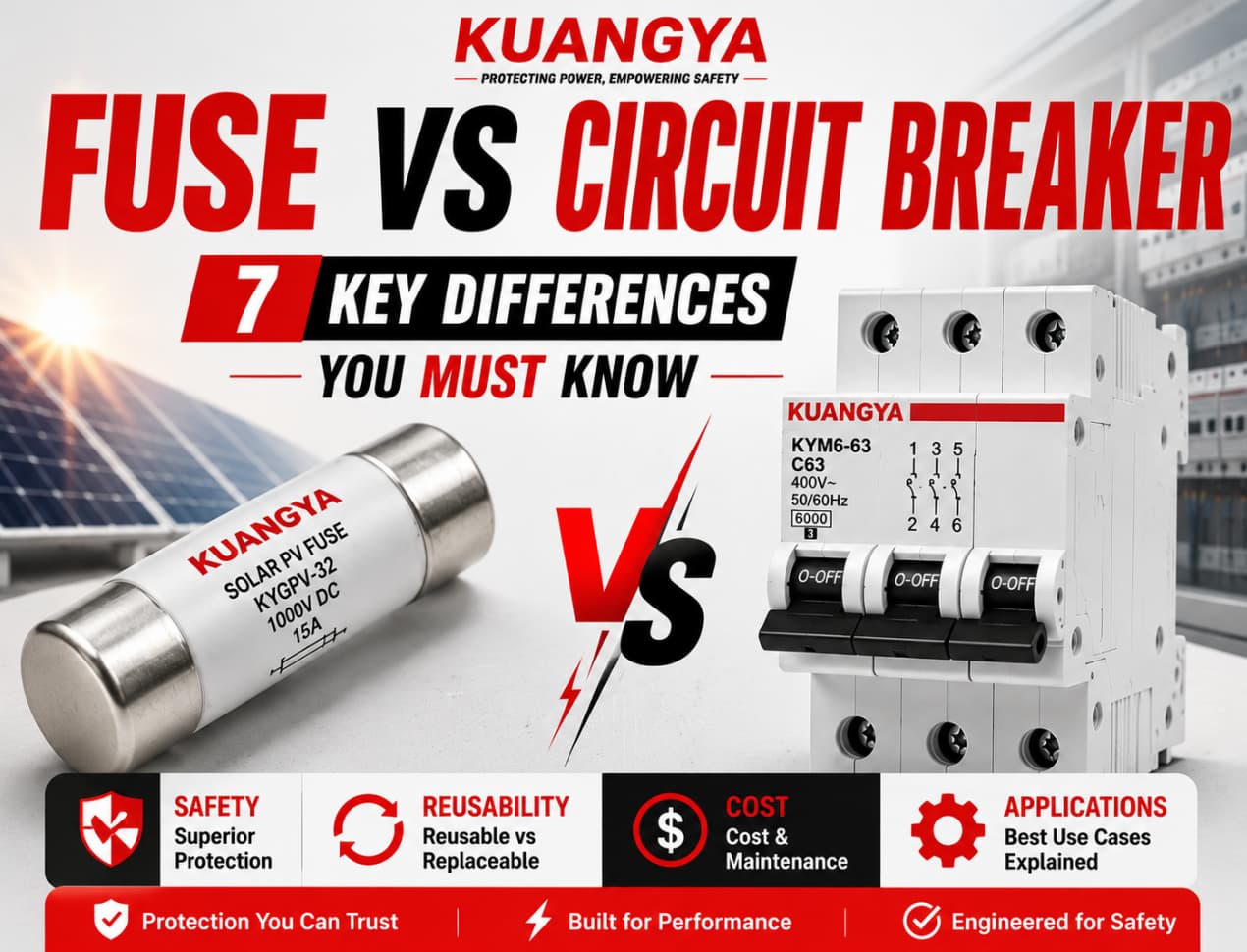
Fuse vs Circuit Breaker: 7 Essential Differences Every Homeowner Should Know

はじめに

When it comes to electrical safety, two devices are commonly used to protect circuits from overloads and short circuits: fuses and circuit breakers.

Many people often wonder about the fuse vs circuit breaker debate. Which one is safer? Which lasts longer? Which should be used in homes, factories, or solar systems?

Understanding the difference between fuse and circuit breaker can help homeowners, electricians, and facility managers make smarter decisions and improve electrical safety.

In this guide, we’ll explain how each device works, compare their advantages and disadvantages, and help you determine which protection method is best for your application.


ヒューズとは何か?

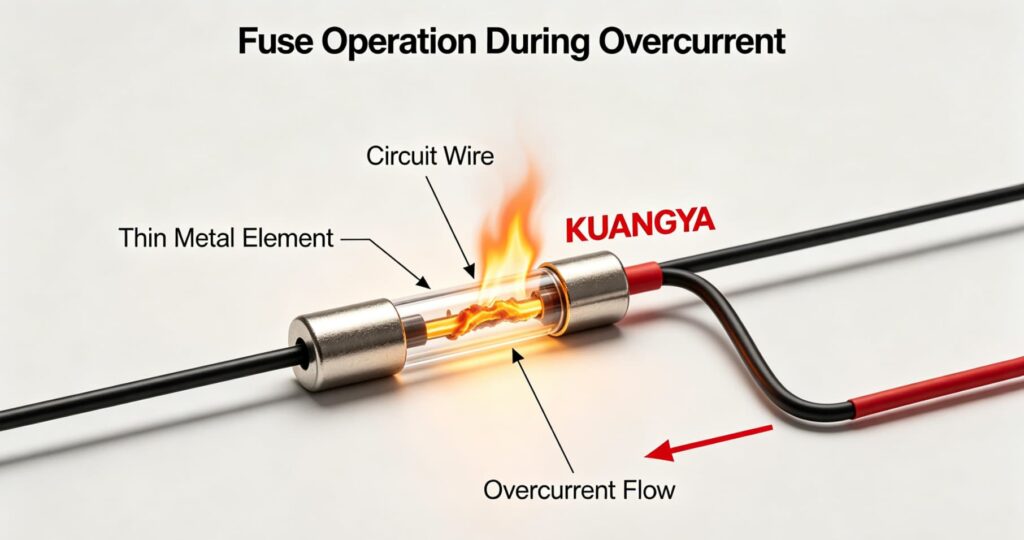
Fuse working principle showing metal element melting during overcurrent

A fuse is one of the oldest electrical protection devices.For photovoltaic applications, understanding the correct selection of DC fuse protection is equally important.

It contains a thin metal element designed to melt when excessive current flows through the circuit.

When the current exceeds the fuse rating:

  1. The fuse wire heats up.
  2. The metal melts.
  3. The circuit opens.
  4. Power is disconnected.

This prevents wires, appliances, and equipment from overheating or catching fire.Fuse performance and testing requirements are defined by internationally recognized IEC standards for low-voltage protection devices.

Simple Example

Imagine a water pipe carrying water.

If too much pressure builds up, a weak section intentionally breaks to protect the rest of the system.

A fuse works in the same way.


Main Components of a Fuse

コンポーネント機能
Fuse ElementMelts during overload
Fuse BodyHolds the element
End CapsConnect to the circuit
Filler MaterialHelps extinguish arcs

サーキットブレーカーとは?

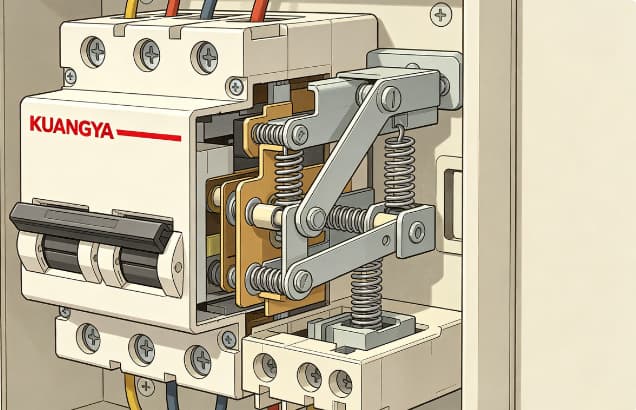
Circuit breaker opening its contacts to interrupt overload current

A circuit breaker is an automatic electrical switch designed to interrupt excessive current flow.Different circuit breaker types are used in residential, industrial, and renewable energy systems.

Unlike a fuse, a circuit breaker does not need replacement after operation.

Instead, it trips and can be reset.

When an overload occurs:

  1. Current exceeds safe levels.
  2. Internal trip mechanism activates.
  3. Contacts separate.
  4. Circuit disconnects.
  5. User resets breaker after fault removal.

This reusability is one reason circuit breakers have become popular in modern installations.Many modern breakers are manufactured according to UL safety standards for circuit protection.


Main Components of a Circuit Breaker

コンポーネント機能
連絡先Carry current
Trip UnitDetects faults
Arc ChuteExtinguishes arc
Operating HandleManual control
住宅Provides insulation

Fuse vs Circuit Breaker: How Do They Work?

Although both devices protect electrical systems, they use different methods.

Fuse Operation

A fuse works through thermal melting.

Excessive current generates heat.

The fuse element melts and permanently disconnects the circuit.

Circuit Breaker Operation

A circuit breaker uses mechanical switching.

The trip mechanism detects abnormal current and opens the contacts automatically.

After troubleshooting, the breaker can be reset.


Fuse vs Circuit Breaker: Quick Comparison Table

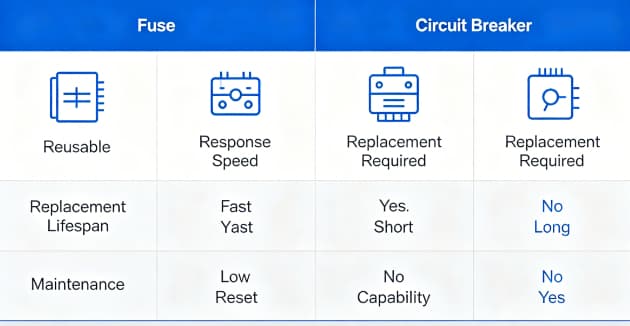
Comparison table of fuse and circuit breaker features including speed, reusability, and maintenance
特徴ヒューズサーキットブレーカー
再利用可能いいえはい
応答速度Very Fast速い
Replacement Requiredはいいいえ
初期費用より低いより高い
メンテナンスMore FrequentLess Frequent
リセット機能いいえはい
寿命ShorterLonger
利便性より低いより高い
故障表示限定Better
Automation Support限定素晴らしい

7 Important Differences Between Fuse and Circuit Breaker

Understanding the difference between fuse and circuit breaker becomes easier when comparing specific characteristics.


1. Operating Principle

The first major difference lies in how they interrupt current.

ヒューズ

Uses a sacrificial metal element.

The element melts permanently during a fault.

サーキットブレーカー

Uses mechanical contacts and trip mechanisms.

The device opens and can later be reset.

装置Operating Method
ヒューズMelting element
サーキットブレーカーMechanical trip

2. Response Time

One advantage in the fuse vs circuit breaker comparison is speed.

Fuses often react faster to severe short circuits.

This rapid action can limit equipment damage.

Circuit breakers are slightly slower because mechanical components must operate.

優勝

For pure speed:

✅ Fuse


3. Reusability

This is perhaps the most obvious difference.

Once a fuse blows, it cannot be used again.

A new fuse must be installed.

Circuit breakers simply need resetting.

If a homeowner experiences a temporary overload:

  • Fuse → replacement required
  • Circuit breaker → reset switch

優勝

✅ Circuit Breaker


4. Maintenance Requirements

Fuses require stock management and periodic replacement.

Circuit breakers generally require less maintenance.

For large facilities, reducing downtime is critical.

This makes circuit breakers more attractive.

Maintenance Factorヒューズサーキットブレーカー
Replacement PartsNeededRarely Needed
ダウンタイムより高いより低い
Maintenance CostミディアムLower Long-Term

5. Cost Comparison

Initial purchase cost is another important factor.

ヒューズ

  • Lower upfront cost
  • Simpler design
  • Inexpensive replacement

サーキットブレーカー

  • 高いイニシャルコスト
  • More complex mechanism
  • Greater long-term convenience

Typical Cost Trend

Relative protection device cost

Typical comparison of upfront investment.01234FuseCircuit Breaker

While actual prices vary, circuit breakers generally cost more initially.


6. Safety and Reliability

Both devices provide excellent protection when properly selected.

However, circuit breakers offer additional safety features.Understanding common breaker failures can further improve system reliability.

Examples include:

  • 遠隔監視
  • Ground fault protection
  • Arc fault protection
  • Smart diagnostics

Traditional fuses mainly provide overcurrent protection.

優勝

✅ Circuit Breaker


7. Lifespan

A fuse may operate only once.

A circuit breaker can trip thousands of times over its service life.

For applications with frequent switching, circuit breakers provide greater durability.

特徴ヒューズサーキットブレーカー
耐用年数限定Long
Number of OperationsSingle UseMultiple Use
長期的価値中程度高い

ヒューズの利点

Despite the popularity of breakers, fuses still offer many benefits.

メリット

  • Extremely fast fault clearing
  • Simple design
  • Low purchase cost
  • 高い遮断能力
  • Reliable operation

一般的なアプリケーション

  • Electronic devices
  • Automotive systems
  • Solar PV protection
  • Battery systems
  • Industrial equipment

サーキットブレーカーの利点

Circuit breakers dominate modern electrical installations for several reasons.Selecting the correct MCB specification is essential for ensuring long-term protection performance.

メリット

  • 再利用可能
  • Easy reset
  • Improved convenience
  • Better diagnostics
  • Enhanced safety functions
  • Reduced downtime

一般的なアプリケーション

  • Residential buildings
  • Commercial facilities
  • データセンター
  • 産業プラント
  • 再生可能エネルギー・システム

Fuse vs Circuit Breaker for Home Use

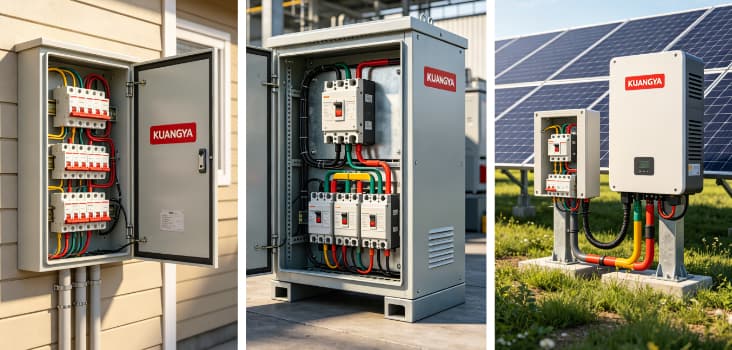
Fuse and circuit breaker applications in residential, industrial, and solar PV systems

For residential electrical panels, circuit breakers are usually preferred.

Reasons include:

  • Easier operation
  • Better safety features
  • No replacement required
  • Faster restoration of power

Most modern homes worldwide now use breaker panels instead of fuse boxes.Residential electrical systems should follow NFPA electrical safety recommendations whenever applicable.


Fuse vs Circuit Breaker for Industrial Applications

Industrial environments often use both technologies.

Fuse Preferred When:

  • Extremely high fault currents exist
  • Equipment requires ultra-fast protection
  • Semiconductor protection is needed

Circuit Breaker Preferred When:

  • Frequent operation occurs
  • Maintenance access is limited
  • Remote monitoring is required

The best solution often combines both devices.


Fuse vs Circuit Breaker for Solar Power Systems

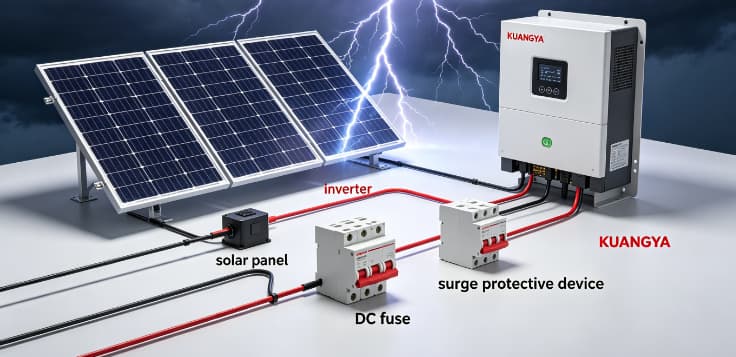
Solar installations use both protection methods.Surge protection for solar systems is also essential to protect inverters and photovoltaic equipment from lightning-induced damage.

Surge protection for solar systems protecting inverters and photovoltaic panels

Common Fuse Applications

  • ストリング保護
  • バッテリー保護
  • 直流回路保護

Common Circuit Breaker Applications

  • AC distribution
  • Maintenance isolation
  • Inverter protection
  • Distribution boards

Modern photovoltaic systems frequently incorporate both devices to achieve comprehensive protection.


Common Myths About Fuses and Circuit Breakers

Myth 1: Circuit Breakers Are Always Better

Not necessarily.

Certain applications require the extremely fast protection provided by fuses.


Myth 2: Fuses Are Outdated

Fuses remain essential in many industries.

They continue to protect sensitive electronics and renewable energy systems.


Myth 3: Circuit Breakers Never Fail

Like all electrical devices, breakers require proper selection, installation, and maintenance.


How to Choose Between a Fuse and Circuit Breaker

Consider the following factors:

Choose a Fuse If:

  • Budget is limited
  • Fast protection is critical
  • Equipment is highly sensitive
  • Space is limited

Choose a Circuit Breaker If:

  • Frequent resets are expected
  • Convenience is important
  • Monitoring is needed
  • Long-term maintenance costs matter

よくある質問

Is a fuse safer than a circuit breaker?

Both are safe when correctly selected and installed. Fuses typically react faster, while circuit breakers provide additional operational safety features.


Which lasts longer, a fuse or a circuit breaker?

A circuit breaker generally lasts longer because it can be reset and reused many times.


Why do modern homes use circuit breakers?

Circuit breakers offer convenience, reusability, and improved safety features compared with traditional fuse systems.


サーキット・ブレーカーはヒューズの代わりになりますか?

In many applications, yes. However, some specialized systems still require fuse protection due to their fast response characteristics.


Which is cheaper?

Fuses usually cost less initially, while circuit breakers may offer lower long-term operating costs.


結論

The debate over fuse vs circuit breaker does not have a universal winner.

The right choice depends on the application, safety requirements, maintenance expectations, and budget.

If you need fast and economical protection, a fuse may be ideal.

If you value convenience, reusability, and advanced safety features, a circuit breaker is often the better solution.

Understanding the difference between fuse and circuit breaker allows homeowners, engineers, and business owners to make informed decisions that improve electrical safety and system reliability.

In many modern electrical systems, the most effective approach is not choosing one over the other—but using both together to provide comprehensive protection.


About & Contact Block

会社概要

Solar Energy Engineer

私達は MCB、SPD、漏電遮断器および関連付属品を含む太陽および産業適用のための電気プロダクトの専門の製造業者、です。豊富な輸出経験により、グローバルクライアントに信頼性の高いソリューションとOEM / ODMサービスを提供しています。.

連絡方法

+86-577-61885000
+86 13676769183
info@cnkuangya.com
export@cnkuangya.com
325000 温州市岳青区涌陽工業区
チンクアンヤ
チンクアンヤ
記事本文: 33