Zone industrielle WengYang Yueqing Wenzhou 325000
Heures de travail
Du lundi au vendredi : de 7h00 à 19h00
Le week-end : 10H00 - 17H00
Zone industrielle WengYang Yueqing Wenzhou 325000
Heures de travail
Du lundi au vendredi : de 7h00 à 19h00
Le week-end : 10H00 - 17H00

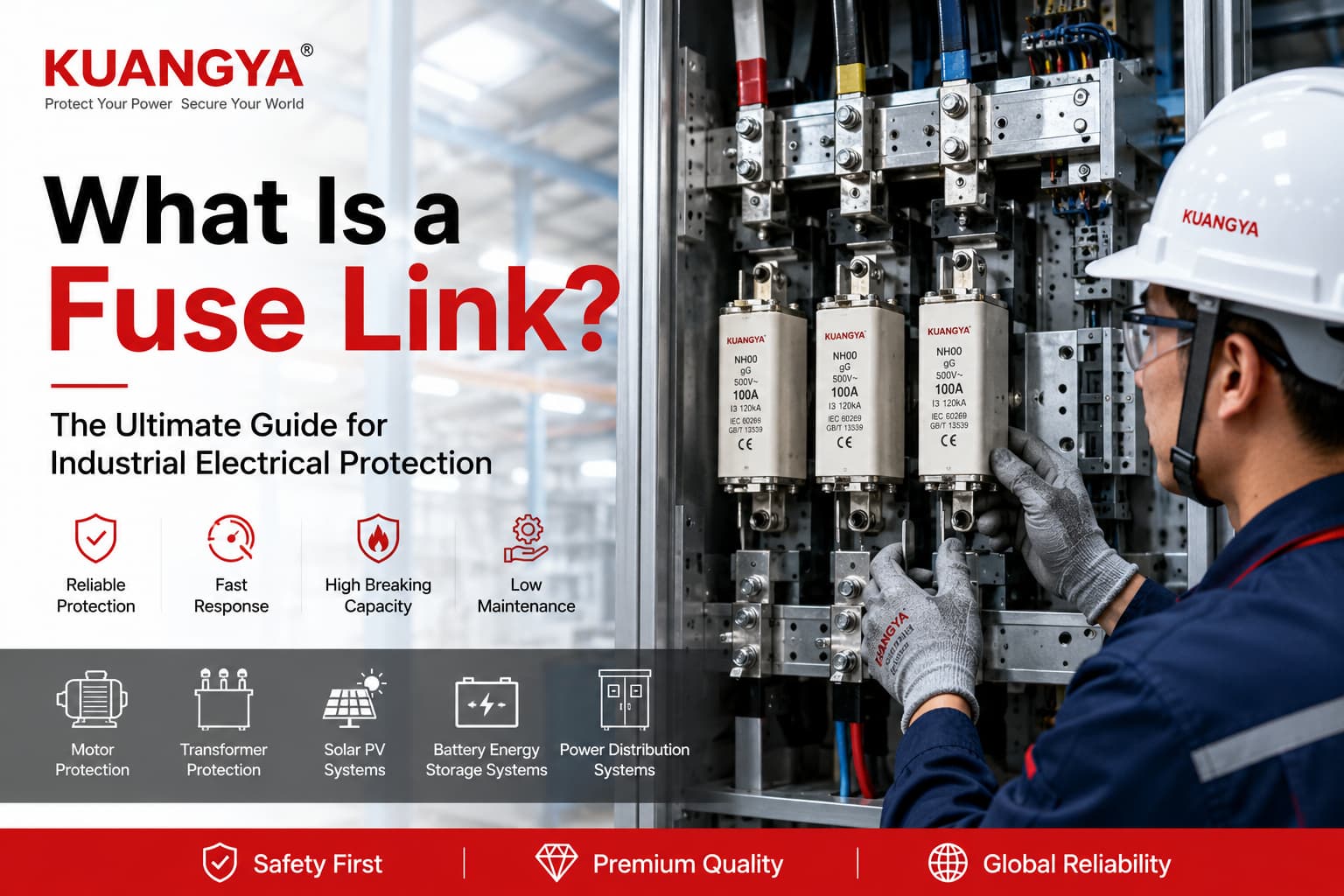
Les systèmes électriques deviennent de plus en plus complexes chaque année. Qu'il s'agisse de panneaux de contrôle industriels, d'installations d'énergie renouvelable, de réseaux de distribution d'énergie ou d'équipements de fabrication, une protection fiable des circuits est essentielle.
Pourtant, de nombreux ingénieurs, responsables des achats et entrepreneurs se posent toujours la même question :
Qu'est-ce qu'un fusible et comment protège-t-il les équipements électriques ?
Un fusible peut sembler un simple composant, mais il joue un rôle crucial dans la prévention des dommages aux équipements, la réduction des temps d'arrêt et la garantie de la sécurité électrique.
Le choix d'un mauvais fusible peut entraîner des défaillances coûteuses, des arrêts inattendus, voire des risques d'incendie.
Dans ce guide complet, vous apprendrez tout sur les fusibles, y compris leur principe de fonctionnement, les types, les applications, les critères de sélection et les erreurs courantes que les acheteurs doivent éviter.
Pour les applications industrielles, le choix d'un fusible de calibre approprié est essentiel pour assurer une protection fiable contre les surintensités.
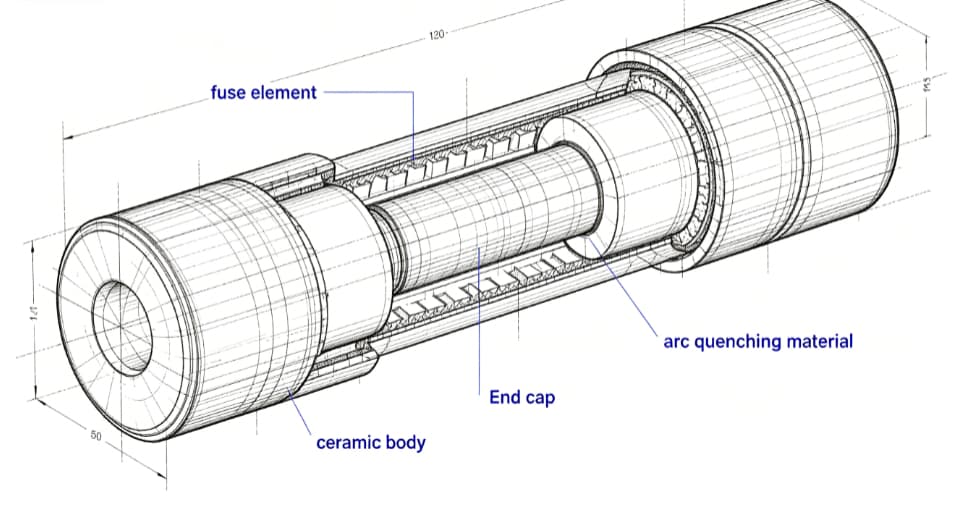
Un élément fusible est le composant remplaçable porteur de courant à l'intérieur d'un assemblage de fusibles qui fond et interrompt le circuit lorsqu'il est traversé par un courant excessif.
En termes simples, le fusible est la partie qui se sacrifie pour protéger le reste du système électrique.
Lorsque le courant dépasse la valeur nominale pendant une période donnée, le fusible s'échauffe et fond, ce qui coupe le circuit et évite d'endommager les câbles, les moteurs, les transformateurs, les batteries ou d'autres équipements.
| Fonctionnalité | Description |
|---|---|
| Fonction | Protection contre les surintensités |
| Fonctionnement | Fonte sous l'effet d'un courant excessif |
| Réutilisation | Composant à usage unique |
| Réponse | Automatique |
| Installation | Intérieur du corps du fusible |
| Type de protection | Surcharge et court-circuit |
Comme les fusibles fonctionnent sans alimentation externe ni contrôle électronique, ils restent l'un des dispositifs de protection les plus fiables disponibles aujourd'hui.
Les performances d'un fusible dépendent en grande partie de la composition de son matériau.
Les fabricants sélectionnent soigneusement des métaux dont les caractéristiques de fusion sont prévisibles.
Les matériaux les plus courants sont les suivants
| Matériau | Avantages |
| Argent | Conductivité élevée et performances stables |
| Cuivre | Rentable et fiable |
| Zinc | Bonne protection contre les courants faibles |
| Alliages d'étain | Caractéristiques de fusion précises |
| Cuivre argenté | Excellentes performances industrielles |
Les fusibles à base d'argent sont souvent préférés dans les applications industrielles et utilitaires parce qu'ils offrent les avantages suivants
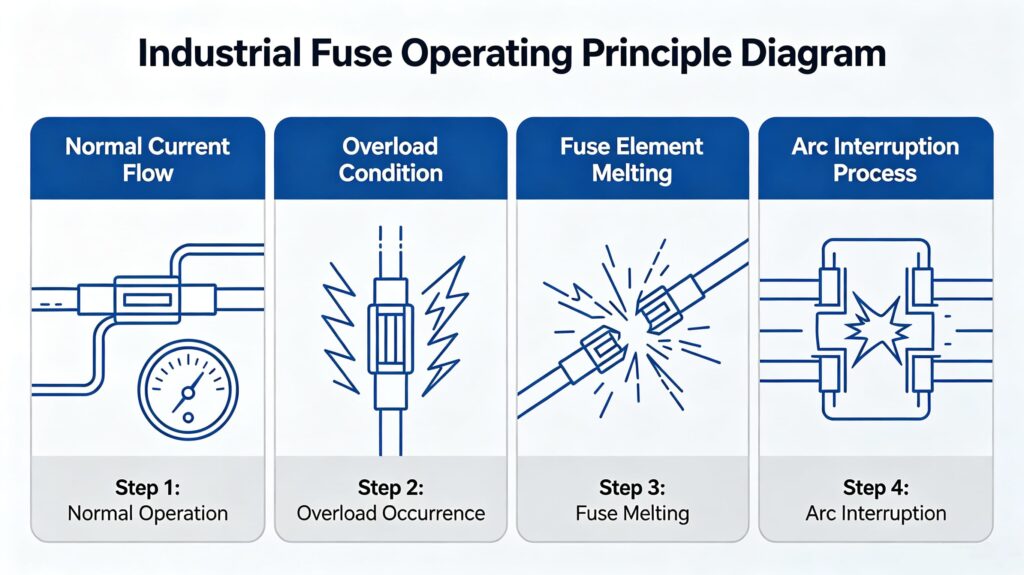
Le fonctionnement d'un fusible repose sur un principe physique simple :
Le courant électrique génère de la chaleur.
Dans des conditions de fonctionnement normales, la chaleur produite reste inférieure au point de fusion de l'élément fusible.
En cas de courant anormal :
Ce processus se produit généralement en quelques millisecondes lors de courts-circuits importants.
| Stade | Description |
| Fonctionnement normal | Le courant circule en toute sécurité |
| Condition de surcharge | Augmentation de la température |
| Point de fusion atteint | L'élément fusible fond |
| Formation de l'arc | Début de l'interruption du courant |
| Extinction de l'arc | Le circuit s'ouvre |
| Protection complète | Défaut isolé |
La vitesse de fonctionnement dépend de la conception du fusible et de l'intensité du courant de défaut.
En l'absence de fusibles appropriés, l'équipement électrique peut subir des dommages :
| Bénéfice | Explication |
| Protection rapide | Réagit rapidement aux défaillances |
| Haute fiabilité | Pas de pièces mobiles |
| Faible coût | Solution de protection économique |
| Installation simple | Remplacement facile |
| Capacité de rupture élevée | Gère les courts-circuits importants |
| Entretien minimal | Longue durée de vie |
Pour les utilisateurs industriels, la prévention d'une seule panne d'équipement justifie souvent des années d'investissement dans les fusibles.
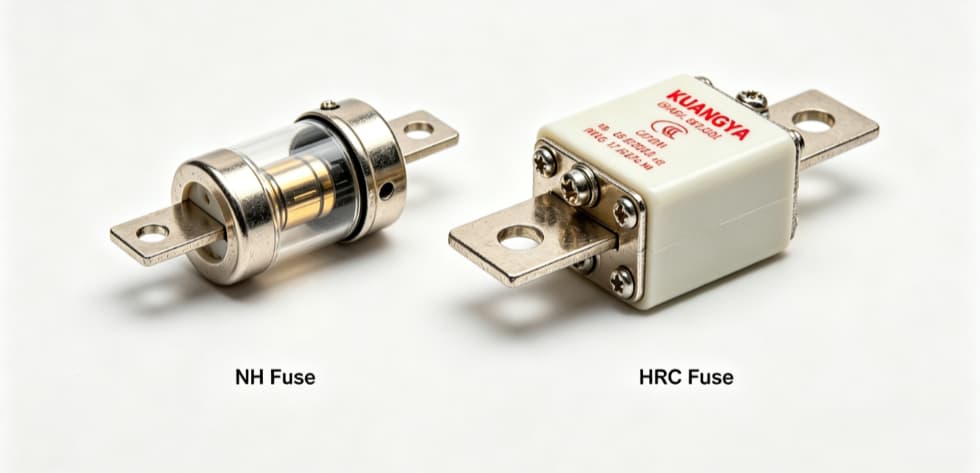
Différentes applications requièrent différentes conceptions de fusibles.
La compréhension de ces catégories aide les acheteurs à prendre des décisions en connaissance de cause.
HRC signifie High Rupturing Capacity (capacité de rupture élevée).
Ces fusibles peuvent interrompre en toute sécurité des courants de défaut extrêmement élevés.
Les fusibles NH sont largement utilisés dans les systèmes industriels à basse tension.
| L'industrie | Utilisation |
| Fabrication | Protection des machines |
| Énergie solaire | Protection DC |
| Utilitaires | Systèmes de distribution |
| Exploitation minière | Matériel lourd |
| Centres de données | Systèmes de sauvegarde de l'énergie |
Les fusibles NH sont particulièrement appréciés parce qu'ils allient haute performance et facilité d'entretien.
Ces fusibles ont une forme cylindrique compacte.
On les trouve couramment dans :
Leur faible encombrement les rend idéaux pour les espaces d'installation limités.
Les fusibles à lame sont fréquemment utilisés dans les applications automobiles et les batteries.
Les exemples les plus courants sont les suivants :
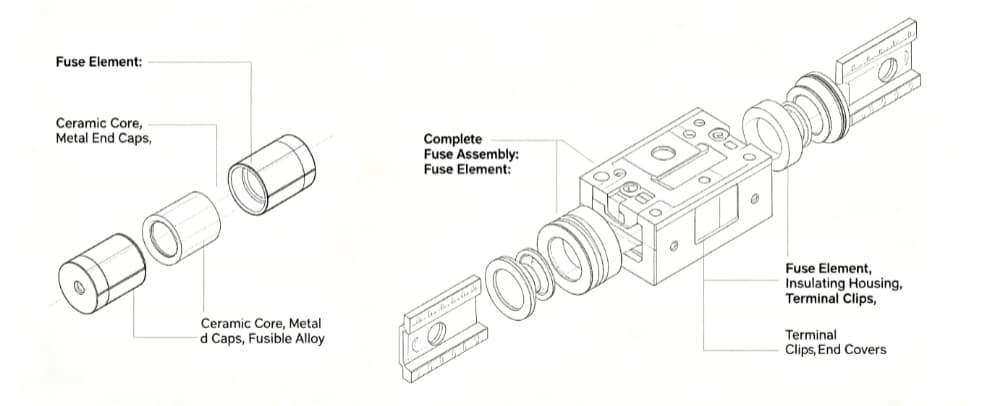
De nombreux acheteurs utilisent ces termes de manière interchangeable.
Il y a toutefois une distinction importante à faire.
| Lien de fusible | Fusible |
| Élément interne remplaçable | Dispositif de protection complet |
| Exécute la fonction d'interruption | Comprend le boîtier et les contacts |
| Souvent vendus séparément | Assemblage complet |
| Nécessite un titulaire dans certains systèmes | Prêt pour l'installation |
L'élément fusible est généralement le composant de protection actif à l'intérieur de l'ensemble fusible complet.
Les moteurs électriques sont soumis à des courants de démarrage élevés.
Des fusibles appropriés permettent d'éviter les dommages causés par
Les transformateurs représentent des investissements importants.
Les fusibles permettent d'éviter :
La croissance rapide de l'énergie solaire a augmenté la demande de fusibles DC spécialisés.
Les fusibles solaires doivent résister :
Les installations modernes de BESS nécessitent une protection fiable contre les défaillances.
Les fusibles protègent :
Alors que l'adoption du stockage de l'énergie se développe, la demande de fusibles continue d'augmenter dans le monde entier.
Le choix du fusible industriel approprié nécessite une évaluation minutieuse.
Le calibre du fusible doit correspondre au courant de fonctionnement normal tout en assurant la protection.
Ligne directrice typique :
| Courant de charge | Calibre de fusible recommandé |
| 10A | 12A-16A |
| 20A | 25A |
| 50A | 63A |
| 100A | 125A |
Suivez toujours les recommandations du fabricant.
La tension nominale doit être égale ou supérieure à la tension du système.
Exemples :
| Tension du système | Indice de protection recommandé |
| 230V AC | 500V Fuse Link |
| 400V AC | 690V Fuse Link |
| 1000V DC | Fusible solaire 1000V |
| 1500V DC | 1500V PV Fuse Link |
Le pouvoir de coupure indique le courant de défaut maximal qu'un fusible peut interrompre en toute sécurité.
Les systèmes industriels nécessitent souvent :
ou plus.
Les facteurs environnementaux affectent les performances.
Révision :
Ces conditions peuvent nécessiter un déclassement ou des fusibles de protection spéciaux.
Tous les fusibles industriels ne sont pas conçus pour le même usage. Un fusible qui fonctionne bien dans un circuit de moteur peut ne pas fournir une protection adéquate pour un système photovoltaïque ou une installation de stockage d'énergie par batterie.
Pour les ingénieurs, les tableautiers, les entrepreneurs EPC et les responsables des achats, il est essentiel de comprendre les exigences spécifiques à l'application pour choisir le dispositif de protection adéquat.

Les systèmes solaires photovoltaïques fonctionnent dans des conditions uniques de courant continu qui diffèrent considérablement des réseaux traditionnels de courant alternatif.
Les circuits photovoltaïques sont exposés à
Les arcs en courant continu étant plus difficiles à éteindre que les arcs en courant alternatif, les fusibles en courant alternatif standard ne doivent jamais être utilisés dans les applications photovoltaïques.
| Paramètres | Recommandation |
|---|---|
| Tension nominale | 1000VDC ou 1500VDC |
| Type de fusible | gPV Fuse Link |
| Capacité de rupture | ≥20kA |
| Température de fonctionnement | -40°C à +85°C |
| Norme de conformité | IEC 60269-6 |
Les lieux d'installation typiques sont les suivants
Une sélection appropriée des fusibles permet de réduire les risques d'incendie et de protéger les actifs solaires coûteux.
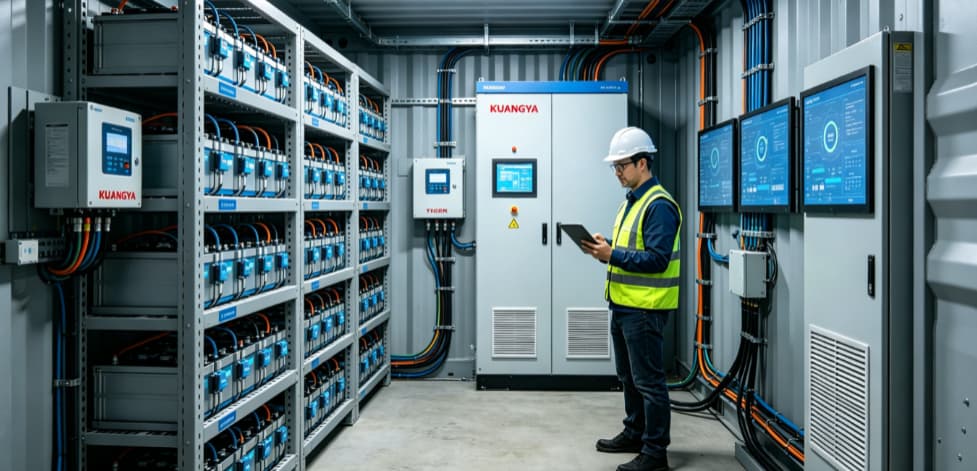
Les systèmes de stockage d'énergie deviennent de plus en plus importants dans les projets d'énergie renouvelable.
Les batteries lithium-ion peuvent générer des courants de défaut extrêmement élevés en cas de court-circuit.
Par conséquent, les fusibles utilisés dans les systèmes de batteries doivent fournir :
| Exigence | Importance |
|---|---|
| Temps de réponse rapide | Critique |
| Tension nominale en courant continu | Critique |
| Capacité d'interruption élevée | Critique |
| Résistance à la température | Haut |
| Fiabilité à long terme | Haut |
Les fusibles de protection de la batterie sont généralement installés entre :
Les projets de stockage à l'échelle des services publics continuant à se développer dans le monde entier, la demande de fusibles industriels à haute performance devrait croître de manière significative.
Les moteurs électriques sont souvent soumis à des courants de démarrage qui peuvent atteindre six à huit fois leur courant nominal de fonctionnement.
Une erreur fréquente consiste à choisir un fusible en se basant uniquement sur le courant de pleine charge du moteur.
Cela se traduit souvent par des déclenchements intempestifs lors du démarrage.
| Caractéristique | Recommandation |
|---|---|
| Tolérance du courant de démarrage | Haut |
| Protection contre les courts-circuits | Excellent |
| Stabilité thermique | Haut |
| Coordination avec les contacteurs | Exigée |
De nombreuses installations industrielles utilisent des fusibles aM pour la protection des moteurs parce qu'ils sont spécialement conçus pour supporter des courants d'appel temporaires tout en protégeant contre les défauts graves.
Les applications comprennent
Les transformateurs représentent un investissement majeur dans les systèmes de distribution d'énergie.
Un fusible mal choisi peut soit ne pas protéger le transformateur, soit provoquer des coupures inutiles.
La protection des transformateurs nécessite un équilibrage :
| Facteur | Importance |
|---|---|
| Valeur nominale du transformateur en kVA | Critique |
| Tension primaire | Critique |
| Courant d'appel | Haut |
| Niveau de courant de défaut | Haut |
| Coordination des systèmes | Haut |
Les ingénieurs sélectionnent généralement les fusibles à l'aide des courbes de protection des transformateurs afin de garantir un fonctionnement fiable dans des conditions normales et de défaut.
De nombreux services d'achat se concentrent uniquement sur le prix.
Toutefois, le choix d'un mauvais fusible peut entraîner des coûts beaucoup plus élevés par la suite.
Les erreurs les plus courantes sont les suivantes :
Deux fusibles peuvent avoir la même intensité nominale mais des caractéristiques de performance complètement différentes.
Vérifiez toujours :
Un fusible conçu pour les circuits à courant alternatif peut présenter des risques de défaillance lorsqu'il est utilisé dans des systèmes à courant continu.
Ceci est particulièrement important pour :
Les fusibles non certifiés et bon marché manquent souvent d'essais fiables et de traçabilité.
Pour les projets industriels, vérifiez toujours la conformité avec :
De nombreux établissements augmentent leur capacité de charge au fil du temps.
Le choix d'un fusible avec des marges de conception appropriées peut réduire les coûts de mise à niveau futurs.
Les projets internationaux exigent souvent le respect de normes reconnues.
| Standard | Région |
| IEC 60269 | International |
| UL 248 | Amérique du Nord |
| BS 88 | Royaume-Uni |
| Normes DIN | Allemagne |
| Normes GB/T | Chine |
Pour les fabricants OEM et les entrepreneurs de projets, la conformité à la certification est souvent obligatoire.
Même les fusibles correctement sélectionnés peuvent tomber en panne dans des conditions anormales.
Causes possibles :
Les raisons possibles sont les suivantes :
Un fonctionnement inattendu peut être indiqué :
Une analyse systématique est nécessaire avant le remplacement.
L'industrie électrique évolue rapidement.
Plusieurs tendances façonnent l'avenir des fusibles.
Les projets d'énergie solaire et de stockage d'énergie stimulent la demande :
L'infrastructure de recharge des VE nécessite des fusibles spécialisés capables de gérer :
Bien que les technologies de protection numérique se développent, les fusibles restent indispensables en raison de leurs caractéristiques :
La plupart des systèmes de protection modernes combinent encore la surveillance électronique et la protection traditionnelle par fusible.
Un fusible protège les équipements électriques contre les surcharges et les courts-circuits en fondant et en coupant le circuit en cas de courant excessif.
Un fusible solaire protège les chaînes photovoltaïques, les boîtiers de raccordement, les onduleurs et les systèmes de batteries contre les surintensités de courant continu.
Non.
Un fusible est conçu comme un composant sacrificiel et doit être remplacé après utilisation.
Dans des conditions de fonctionnement normales, un fusible peut rester fonctionnel pendant de nombreuses années jusqu'à ce qu'une défaillance se produise.
La sélection doit prendre en compte
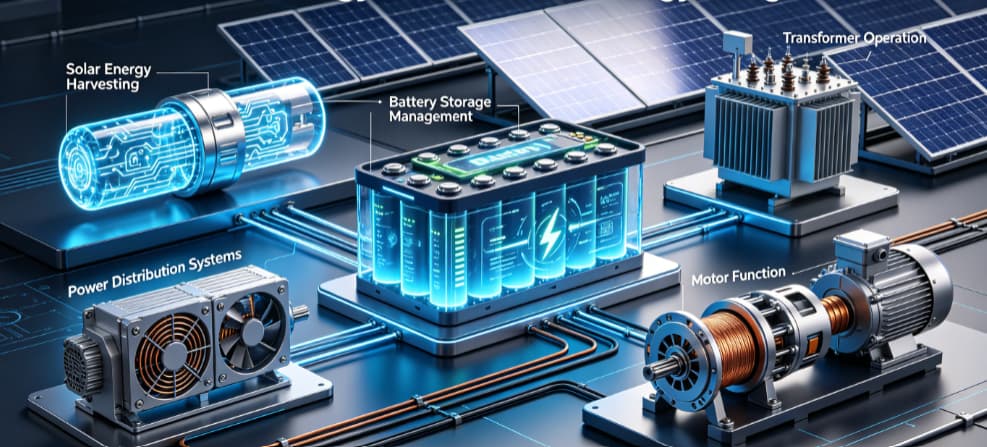
Comprendre Qu'est-ce qu'un fusible ? est essentiel pour les ingénieurs, les entrepreneurs, les fabricants OEM et les professionnels de l'approvisionnement impliqués dans les systèmes électriques modernes.
Une sélection adéquate lien de fusible offre une protection rapide, fiable et rentable contre les surcharges et les courts-circuits. Qu'il s'agisse de protéger des moteurs, des transformateurs, des installations solaires, des systèmes de stockage de batteries ou des réseaux de distribution industriels, les fusibles restent l'un des dispositifs de sécurité les plus fiables de l'industrie électrique.
Alors que les énergies renouvelables, les véhicules électriques et les infrastructures intelligentes continuent de se développer, l'importance des solutions de fusibles de haute qualité ne fera que croître. Investir dans le bon fusible aujourd'hui peut réduire de manière significative les pannes d'équipement, améliorer la fiabilité du système et réduire les coûts opérationnels à long terme.

Nous sommes un fabricant professionnel de produits électriques pour les applications solaires et industrielles, y compris les disjoncteurs, les disjoncteurs SPD, les disjoncteurs RCD et les accessoires connexes. Forts d'une riche expérience en matière d'exportation, nous fournissons des solutions fiables et des services OEM/ODM à nos clients du monde entier.

