Промышленная зона Вэньян Юэцин Вэньчжоу 325000
Рабочие часы
Понедельник - пятница: 7AM - 7PM
Выходные: 10AM - 5PM
Промышленная зона Вэньян Юэцин Вэньчжоу 325000
Рабочие часы
Понедельник - пятница: 7AM - 7PM
Выходные: 10AM - 5PM

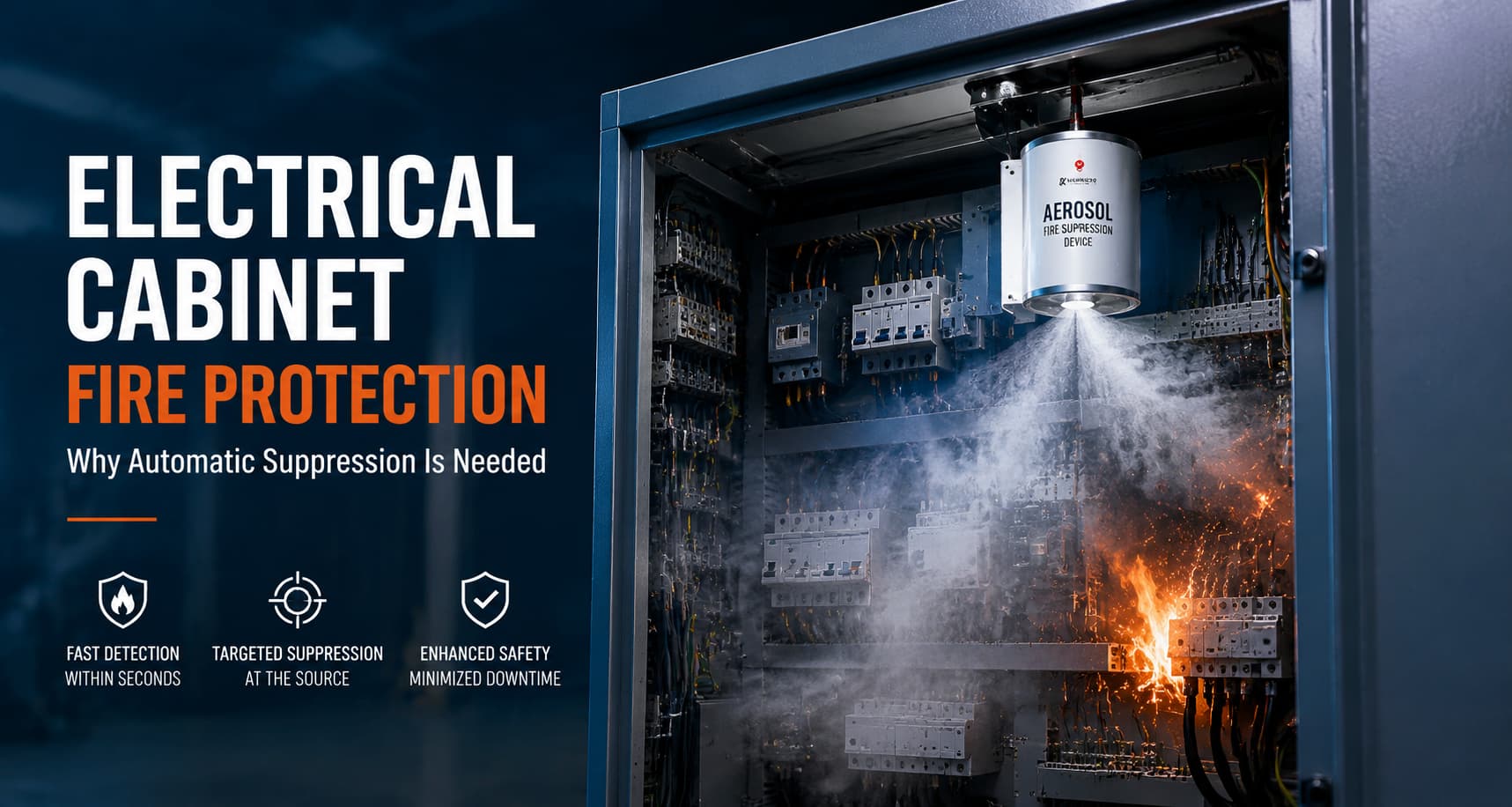
Electrical cabinets are one of the most overlooked fire risk points in industrial, solar, and commercial power systems. Due to heat buildup, electrical faults, dust accumulation, and continuous operation, cabinet fires can escalate rapidly and cause catastrophic downtime and asset loss.
Automatic fire suppression systems provide fast, localized, and equipment-level protection, activating within seconds of ignition—often before human detection is possible.
If you want to improve Electrical Cabinet Fire Protection, automatic suppression is no longer optional in modern power infrastructure—it is a design requirement.
Electrical cabinets are the “nervous system” of modern infrastructure. They control power distribution, manage switching, host protection devices, and connect critical circuits in systems such as:
Despite their importance, they share a common weakness: high energy density in a confined space.
When electrical faults occur inside a cabinet, the fire does not start large—it starts small:
But because the enclosure is closed, heat accumulates rapidly. Within seconds, a small arc can turn into a full cabinet fire.
This is why modern Electrical Cabinet Fire Protection strategies increasingly rely on automatic suppression systems rather than manual response.
| Risk Source | Описание | Fire Impact Level |
|---|---|---|
| High electrical load density | Multiple components in compact space generate heat | Высокий |
| Ослабленные клеммные соединения | Poor installation or vibration causes resistance heating | Очень высокий |
| Дуговые разрывы | High-temperature electrical discharge inside enclosure | Критический |
| Скопление пыли | Increases insulation resistance and overheating risk | Medium–High |
| Humidity / corrosion | Creates leakage currents and short circuits | Medium–High |
| Aging components | Insulation degradation over time | Высокий |
Electrical cabinets face multiple internal and external fire risk factors. The most common sources are summarized below:
Electrical cabinets concentrate:
This compact design increases heat density. Under heavy load, even small inefficiencies generate significant thermal stress.
Electrical cabinets rely on multiple protective components to manage electrical safety and prevent overcurrent conditions. Devices such as Устройства защиты от импульсных перенапряжений (УЗИП) и предохранители play a critical role in reducing electrical stress and system failure risk.
Unlike consumer electronics, industrial cabinets operate:
This means faults can develop unnoticed for long periods.
In real-world installations, cabinets face:
These factors accelerate insulation failure and arc formation.
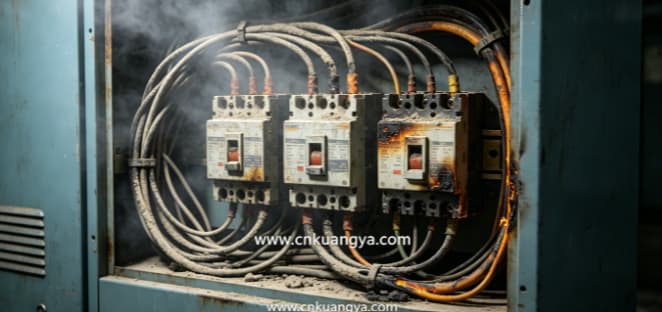
Arc faults are one of the most dangerous ignition sources.
An arc can reach:
Electrical arc faults are widely recognized as one of the leading causes of electrical fire incidents in enclosed systems. An arc fault occurs when electricity jumps through air between conductors, generating extremely high temperatures and intense energy release in a very short time.
👉 External references:
That is enough to instantly ignite:
Arc faults are also difficult to detect early without specialized systems.
| Устройство защиты | What It Protects | Fire Prevention Ability | Ограничение |
|---|---|---|---|
| Автоматический выключатель | Перегрузка по току | Средний | Reacts too late for arc ignition |
| Предохранитель | Короткое замыкание | Средний | Cannot stop fire after melting |
| СПД | Voltage surge | Low–Medium | Can fail under extreme surge |
| Thermal relay | Перегрев | Средний | No fire suppression capability |
Although electrical protection devices are essential, they do not directly extinguish fire sources. The comparison below highlights the functional gap.
Many systems already include:
But these devices are designed for электрическая защита, not fire containment.
They disconnect current during overloads—but:
International safety standards provide clear requirements for electrical equipment protection and fire prevention design in industrial systems. Organizations such as IEC and NFPA define guidelines for electrical installation safety, overcurrent protection, and fire risk mitigation in enclosed electrical environments.
👉 External links:
Fuses protect against overcurrent, but:
SPDs protect against voltage surges, but:
👉 Conclusion: Electrical protection devices reduce risk but do NOT eliminate fire hazard.
This gap is exactly where Electrical Cabinet Fire Protection systems become essential.
Automatic fire suppression systems are compact fire safety solutions designed to:
Unlike building-level systems (sprinklers, gas flooding systems), these are:
They are commonly used in:
| Сцена | System Behavior | Time Response | Назначение |
|---|---|---|---|
| Обнаружение | Heat/flame sensing or thermal trigger | Непрерывно | Identify abnormal temperature rise |
| Активация | Trigger releases suppression agent | Секунды | Initiate fire response |
| Suppression | Agent floods enclosure | 1–5 seconds | Stop combustion reaction |
| Post-suppression | Prevent re-ignition | Ongoing | Stabilize internal environment |
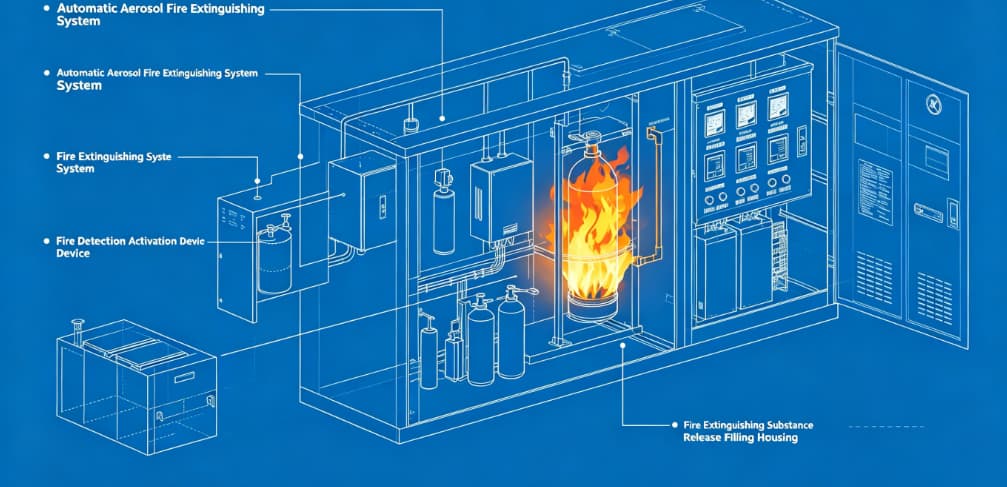
Automatic suppression systems operate in a rapid multi-stage process designed specifically for enclosed electrical environments.
A typical system includes three key stages:
The system continuously monitors:
When abnormal heat is detected (e.g., 85°C–180°C threshold), the system prepares to activate.
Once threshold is reached:
This happens within seconds.
The extinguishing agent:
Common agents include:
Aerosol systems are especially popular for compact cabinets due to their:
Electrical fires grow exponentially:
Manual response is too slow. Automatic systems respond in seconds.
Automatic fire suppression systems provide fast localized protection inside electrical cabinets. They are designed to respond within seconds, ensuring that ignition sources are suppressed before fire can spread to surrounding electrical components.
Cabinets often exist in:
There may be no personnel nearby. Automatic suppression ensures self-defense capability.
One cabinet fire can:
Localized suppression isolates the event.
Downtime in industrial systems can cost:
Fire prevention is significantly cheaper than recovery.
| Область применения | Typical Equipment | Fire Risk Level | Why Protection Is Critical |
|---|---|---|---|
| Солнечные фотоэлектрические системы | Combiner boxes, inverters | Высокий | DC arc faults + outdoor heat |
| BESS systems | Battery cabinets | Очень высокий | Thermal runaway risk |
| Промышленная автоматизация | Control panels, PLC cabinets | Высокий | Непрерывная работа |
| Станции зарядки электромобилей | Power modules, connectors | Высокий | High current load cycles |
| Telecom systems | Network cabinets | Средний | Remote unmanned operation |
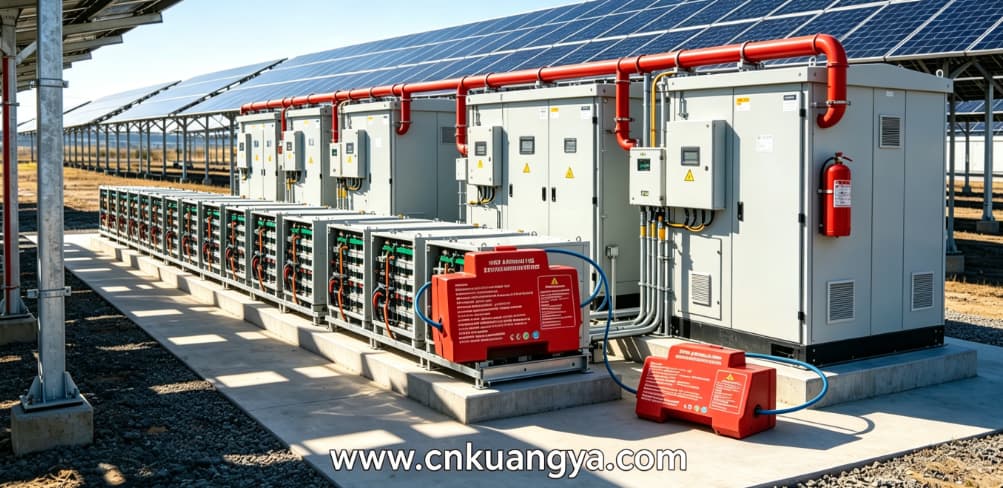
Electrical cabinet fire protection is widely required across multiple high-risk industries, especially where continuous operation and high energy density coexist.
Solar combiner boxes and inverters are exposed to:
DC arc faults are particularly dangerous in PV systems.
Batteries introduce:
Automatic suppression is critical to prevent escalation.
Factories rely on uninterrupted control systems. Fire damage can:
Fast chargers operate under:
Connector faults can easily generate heat buildup.
When selecting an Electrical Cabinet Fire Protection solution, engineers should consider:
Must match cabinet environment:
Larger enclosures require:
Outdoor cabinets require resistance to:
Good systems should be:
They prevent overload—not fire.
Arc faults are the leading cause of cabinet fires.
External fire systems cannot protect inside sealed enclosures.
Overcrowded wiring increases risk significantly.
The industry is shifting from:
“Disconnect after fault”
to:
“Suppress before fire spreads”
Modern infrastructure design now integrates:
This layered approach defines modern Electrical Cabinet Fire Protection стандарты.
As electrical systems become more compact and powerful:
Fire risk will not decrease—it will increase.
Future protection systems will likely include:
Electrical cabinets are essential—but inherently high-risk components of modern power systems. Traditional electrical protection devices reduce fault impact, but they cannot fully prevent fire events.
Вот почему Electrical Cabinet Fire Protection must evolve into a dedicated safety layer.
Automatic fire suppression systems provide:
In today’s solar, industrial, and energy storage environments, they are not just an upgrade—they are a necessity.

