Промышленная зона Вэньян Юэцин Вэньчжоу 325000
Рабочие часы
Понедельник - пятница: 7AM - 7PM
Выходные: 10AM - 5PM
Промышленная зона Вэньян Юэцин Вэньчжоу 325000
Рабочие часы
Понедельник - пятница: 7AM - 7PM
Выходные: 10AM - 5PM

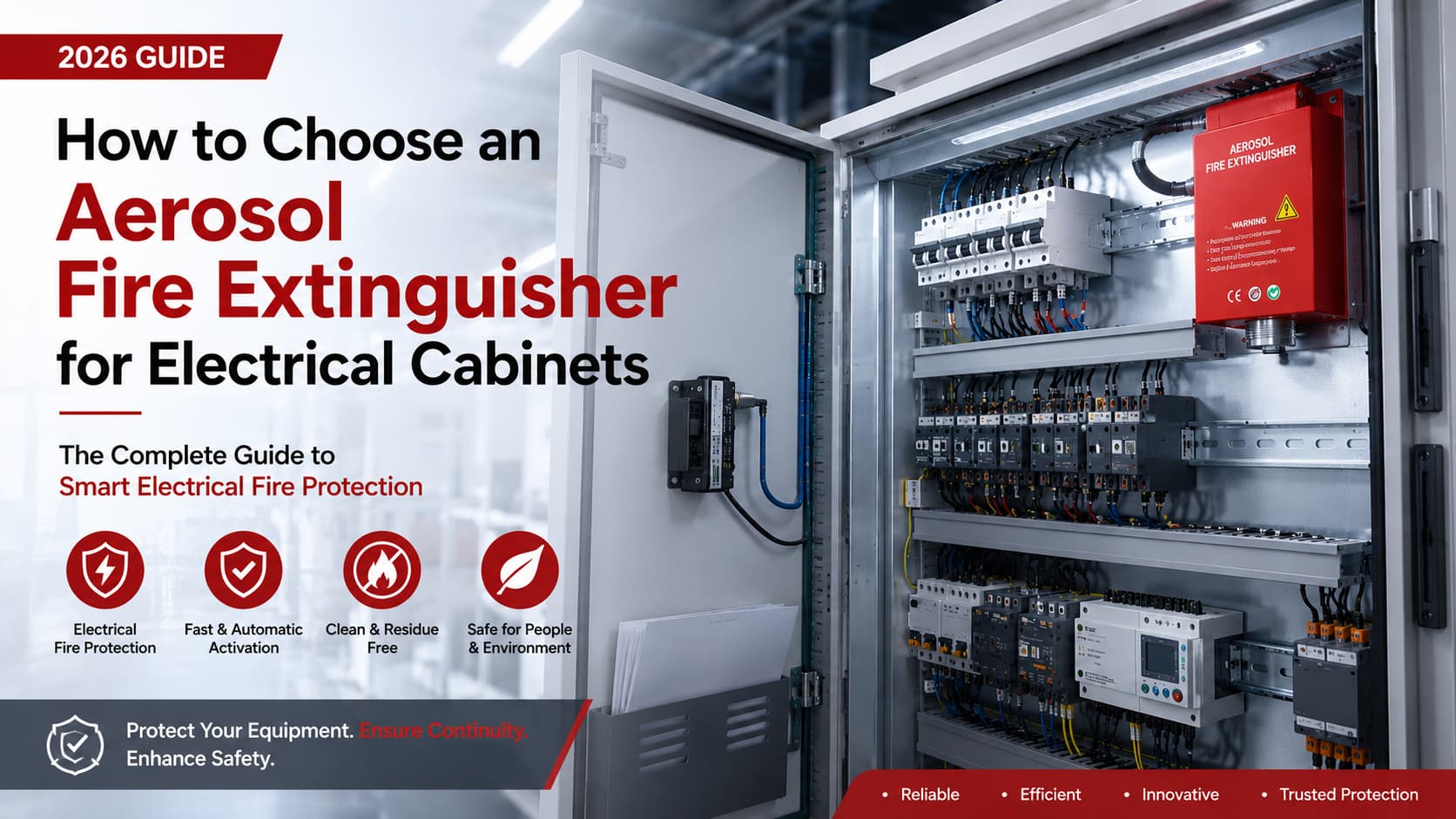
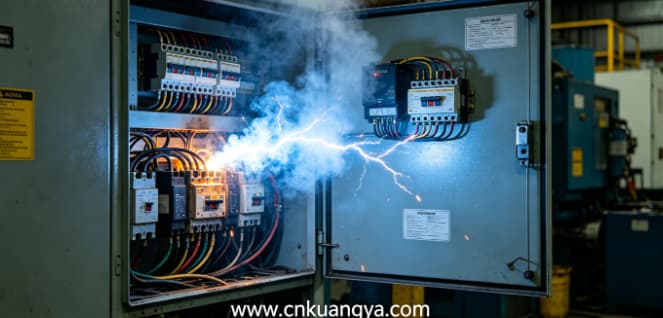
Electrical cabinets are one of the most common ignition points in industrial and photovoltaic systems. Overheating, short circuits, and insulation failure account for over 25–30% of electrical fire incidents in enclosed control systems.
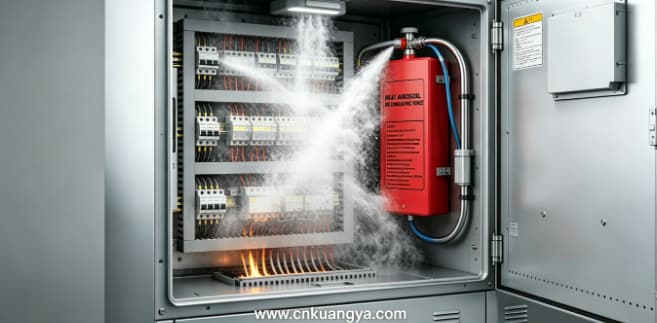
An aerosol fire extinguisher is a compact fire suppression device that releases ultra-fine potassium-based particles to interrupt combustion at the chemical chain reaction level.
Choosing the right system is not just about safety—it directly impacts equipment uptime, compliance, and long-term maintenance cost.
В данном руководстве объясняются how to choose an aerosol fire extinguisher for electrical cabinets based on engineering standards, application scenarios, and system compatibility.
An aerosol fire extinguisher is a solid compound-based fire suppression system that generates fine aerosol particles when activated.
These particles chemically interrupt the combustion process by binding free radicals such as H· and OH·, stopping fire propagation.
Unlike traditional gas systems (CO₂ or FM-200), aerosol systems do not require pressurized cylinders, making them ideal for compact electrical enclosures.
This means they are especially effective in sealed or semi-sealed electrical cabinets used in PV and industrial environments.
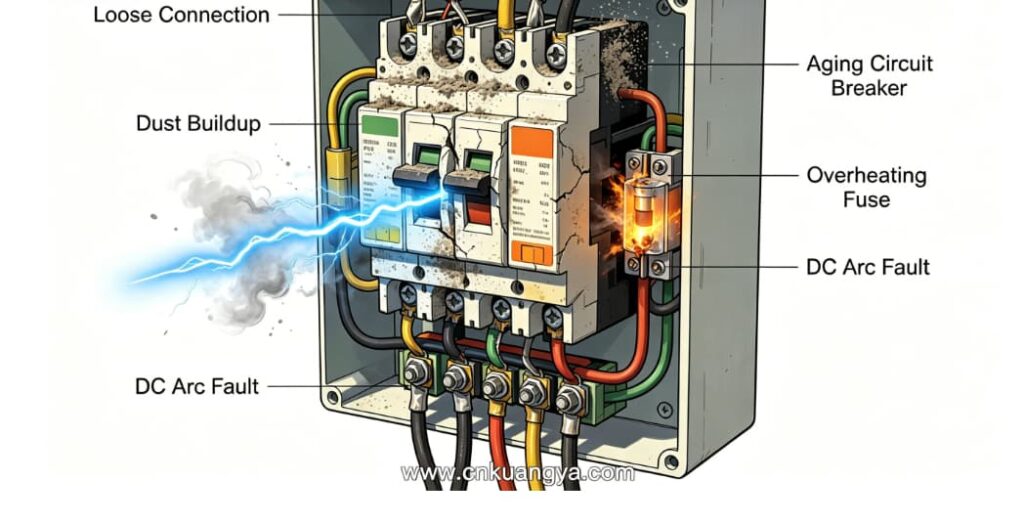
Electrical cabinets operate under continuous thermal and electrical stress.
Common ignition risks include:
Studies in industrial fire safety show that over 70% of cabinet fires start internally, meaning external suppression systems respond too late.
Electrical fire hazards associated with energized equipment have also been addressed in fire protection guidelines published by the National Fire Protection Association (NFPA).
While devices such as предохранительs and surge protection systems help prevent many electrical faults, they cannot eliminate every ignition source once overheating or arcing occurs inside an enclosed cabinet.
Aerosol systems provide internal, early-stage suppression, which is critical for preventing cascade failures.
Electrical cabinet fires are often not caused by external disasters but by internal electrical stress.
Industry reports show that over 70% of electrical cabinet fires originate from internal faults such as loose terminals or arc faults.
In a 1MW solar installation, a combiner box overheated due to a loose DC terminal connection.
👉 Conclusion: External fire extinguishers arrived too late; internal suppression would have prevented escalation.
A motor control cabinet experienced an arc fault due to insulation aging.
👉 Conclusion: Gas systems failed due to lack of chemical-level suppression.These real-world failures highlight why proper aerosol selection is critical in engineering design.
The first selection factor is enclosure size.
Most systems are rated in cubic meters (m³). For example:
Undersizing reduces extinguishing efficiency by up to 40% in real-world tests.
Aerosol systems typically support:
For electrical cabinets, Class C compatibility is mandatory.
Most aerosol generators activate between:
Lower activation temperature improves response time but may increase false triggers in hot environments.
Electrical cabinets often operate in harsh environments.
Key factors include:
Reliable systems should align with:
Compliance ensures the system is accepted in industrial audits and insurance inspections.To understand why aerosol systems perform differently from traditional suppression methods, a technical comparison is necessary.
Many aerosol system failures are not product failures—they are selection errors.
If a 2m³ cabinet uses a system rated for 1m³:
👉 Suppression concentration drops below effective threshold
Результат:
In PV outdoor systems:
👉 Result: false activation or delayed response
Aerosol systems are not standalone protection.
Best practice is:
👉 Without upstream protection, fire frequency increases
| Характеристика | Аэрозольная система | Система на основе CO₂ | FM-200 System |
|---|---|---|---|
| Installation size | Very compact | Large cylinders | Средний |
| Стоимость обслуживания | Низкий | Средний | Высокий |
| Электробезопасность | Высокий | Средний | Высокий |
| Response speed | Очень быстро | Быстрый | Быстрый |
| Environmental impact | Низкий | Средний | High (GWP concern) |
Aerosol systems are increasingly preferred in modern PV and industrial electrical protection designs due to cost efficiency and compact integration.
Based on these technical advantages, aerosol systems are widely used across multiple industrial environments.
Aerosol fire suppression works at the chemical chain reaction level, unlike CO₂ which only reduces oxygen concentration.
This means aerosol can extinguish fire even in sealed cabinets without airflow dependency.
In cabinet environments smaller than 5m³, aerosol systems show:
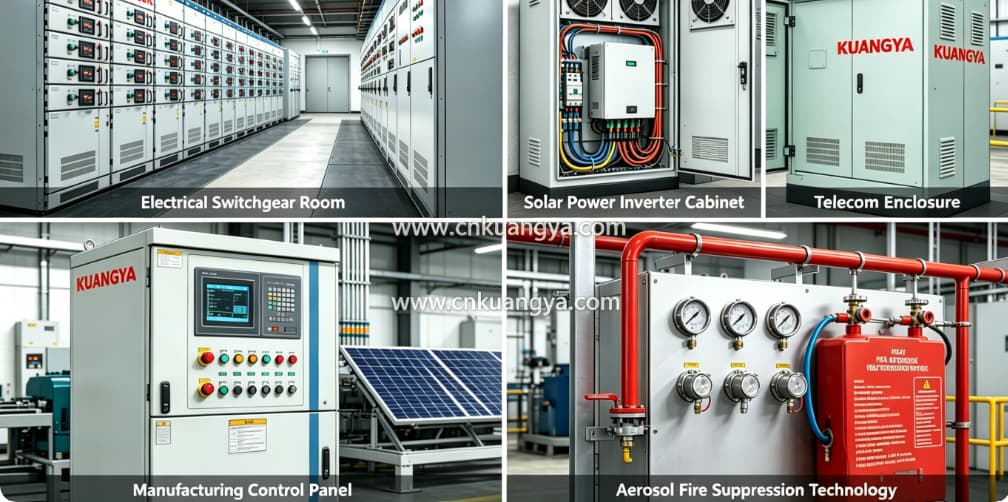
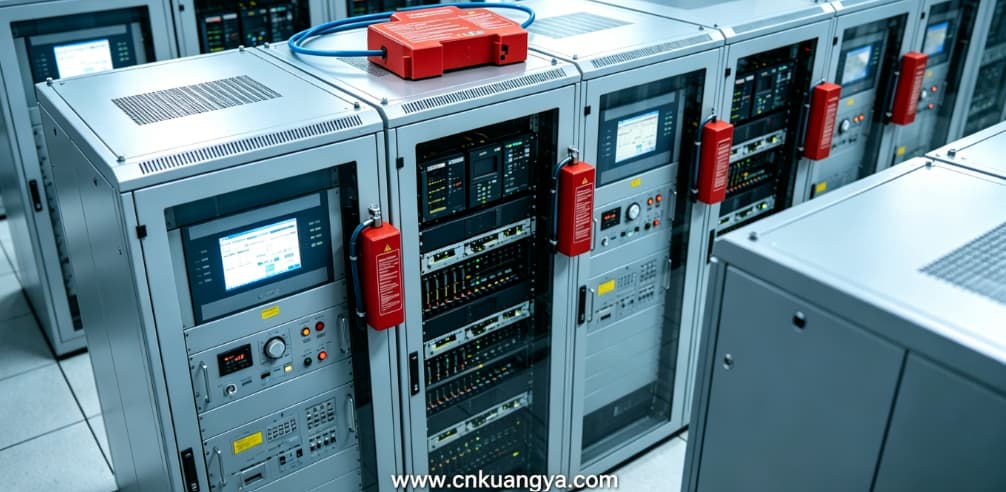
Aerosol fire extinguishers are widely used in:
In PV systems, integration with protection devices like Предохранители постоянного тока and surge protection devices (СПД) creates a full safety chain against both electrical faults and fire risks.
In real-world applications, system integration matters as much as individual device performance.
Kuangya provides industrial-grade PV protection components including SPDs, DC fuses, and enclosure protection solutions designed for electrical safety environments.
Aerosol fire protection becomes most effective when combined with upstream protection devices that reduce fault occurrence at the source.
It is used for suppressing fires in enclosed spaces such as electrical cabinets, control panels, and inverter boxes.
Yes. It is non-conductive and safe for energized electrical systems.
Typically 30–60 seconds of discharge, with residual protection effect for several minutes.
No. It complements manual extinguishers by providing automatic early-stage suppression.
Most units require inspection every 12–24 months depending on certification standards.
No. Aerosol generators are single-use devices and must be replaced after discharge.
Typically 5–10 years depending on manufacturer specifications.
Choosing the right aerosol fire suppression system is a critical step in protecting electrical cabinets from internal fire risks.
The key decision factors include cabinet volume, fire class compatibility, environmental rating, and certification compliance.
In modern PV and industrial systems, aerosol technology is becoming a preferred solution due to its compact design and fast chemical suppression mechanism.
For engineered electrical protection systems, combining aerosol suppression with upstream devices like SPDs and fuses creates a complete safety architecture.
👉 If you are designing or upgrading PV or industrial electrical protection systems, integrating aerosol fire suppression can significantly improve operational safety and system reliability.

