Промышленная зона Вэньян Юэцин Вэньчжоу 325000
Рабочие часы
Понедельник - пятница: 7AM - 7PM
Выходные: 10AM - 5PM
Промышленная зона Вэньян Юэцин Вэньчжоу 325000
Рабочие часы
Понедельник - пятница: 7AM - 7PM
Выходные: 10AM - 5PM

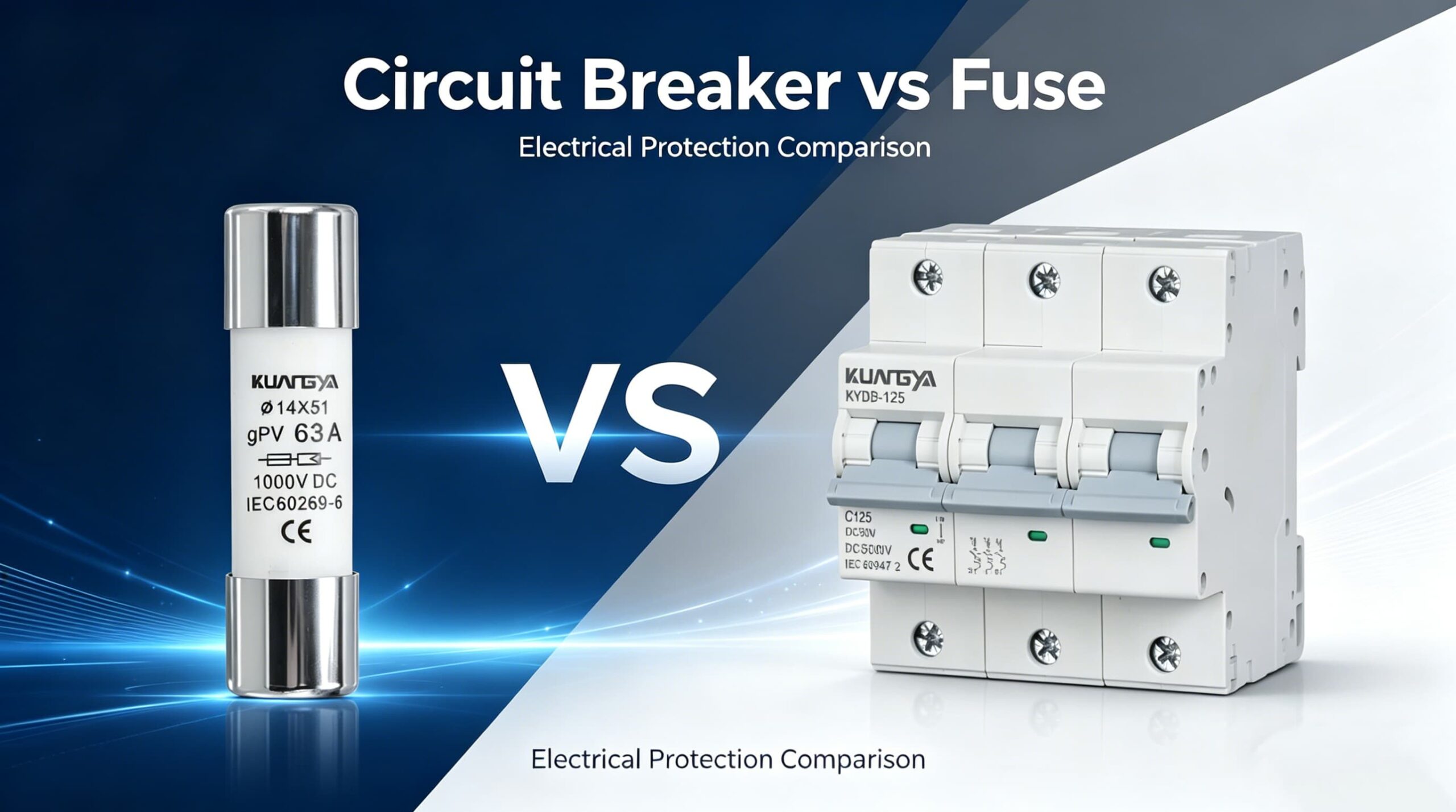
Понимание отличия автоматического выключателя от предохранителя важно при проектировании безопасных электрических систем.
Предохранитель защищает электрические цепи, плавясь под действием чрезмерного тока, в то время как автоматический выключатель срабатывает механически и может быть сброшен. Предохранители быстрее и дешевле, а автоматические выключатели многоразовые и более удобны для современных электрических систем.
При проектировании электрической системы выбор правильного защитного устройства имеет решающее значение для безопасности и надежности.
Два наиболее распространенных варианта - автоматические выключатели и предохранители.
Но каковы реальные различия между ними и какой из них лучше подходит для вашего применения?
В этом руководстве мы сравним автоматические выключатели с предохранителями:
чтобы помочь вам выбрать подходящее решение для защиты.
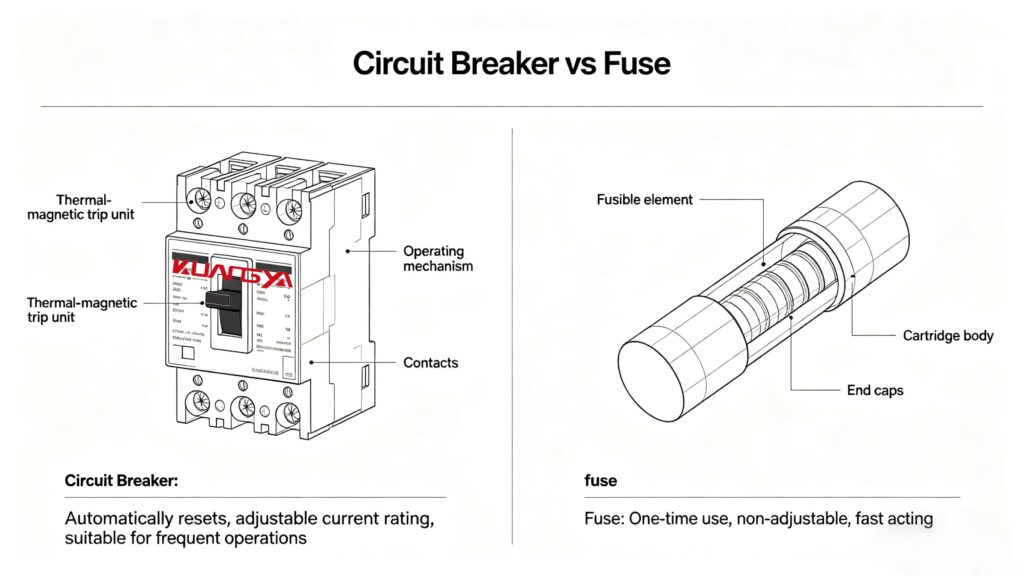
Предохранитель - это жертвенное устройство защиты от сверхтоков, предназначенное для защиты электрических цепей от чрезмерного тока.
Он содержит металлический элемент или проволоку, которая плавится, когда сила тока превышает определенный предел. Как только элемент предохранителя расплавляется, цепь размыкается и прекращает прохождение тока.
Фотоэлектрические предохранители широко используются в системах солнечной энергетики для обеспечения быстрой и надежной защиты от сверхтоков.
Узнайте больше о наших решениях для предохранителей постоянного тока на сайте Официальный сайт Куаньи
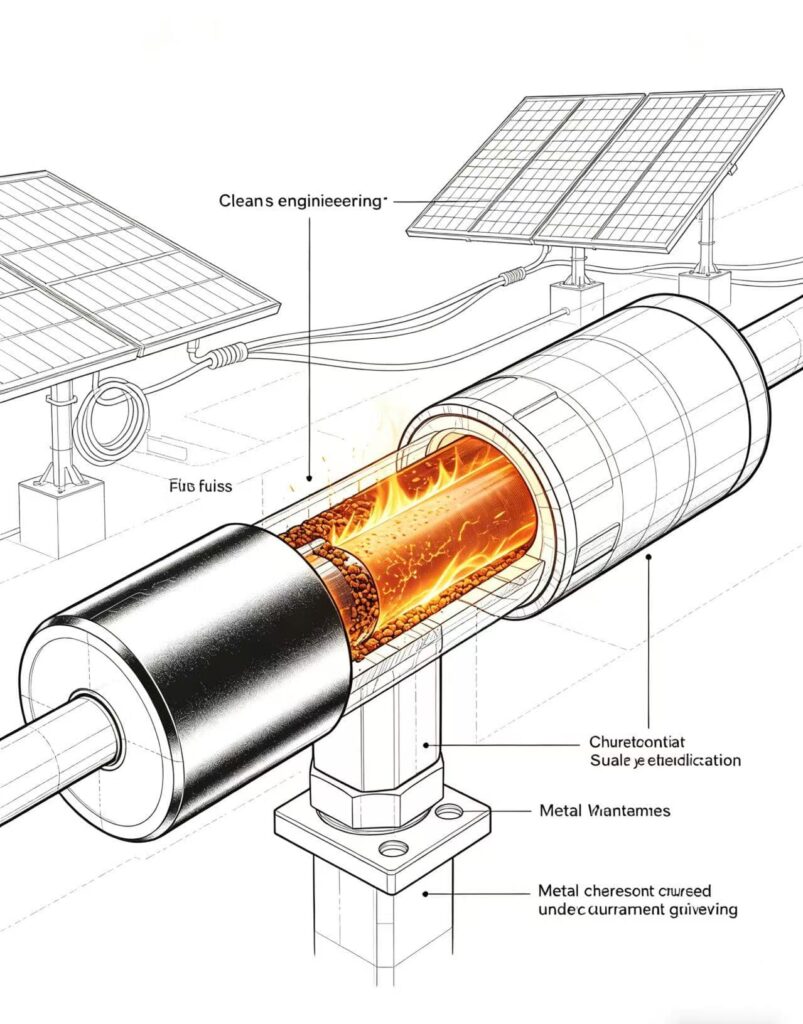
Когда по цепи течет аномальный ток:
Для возобновления работы системы необходимо вручную заменить предохранитель.
Предохранители широко используются в:
Автоматический выключатель - это автоматический выключатель, который защищает электрические цепи от перегрузок и коротких замыканий.
В отличие от предохранителя, автоматический выключатель не требует замены после срабатывания. Его можно просто сбросить и использовать повторно.
Автоматические выключатели постоянного тока необходимы для систем хранения энергии солнечных батарей и аккумуляторов.
Ознакомьтесь с нашими изделиями для автоматических выключателей на сайте Официальный сайт Куаньи
Многие современные автоматические выключатели разработаны в соответствии со стандартами IEC 60947-2 для низковольтных распределительных устройств и устройств управления.
Для получения дополнительной информации посетите официальный сайт Веб-сайт IEC.
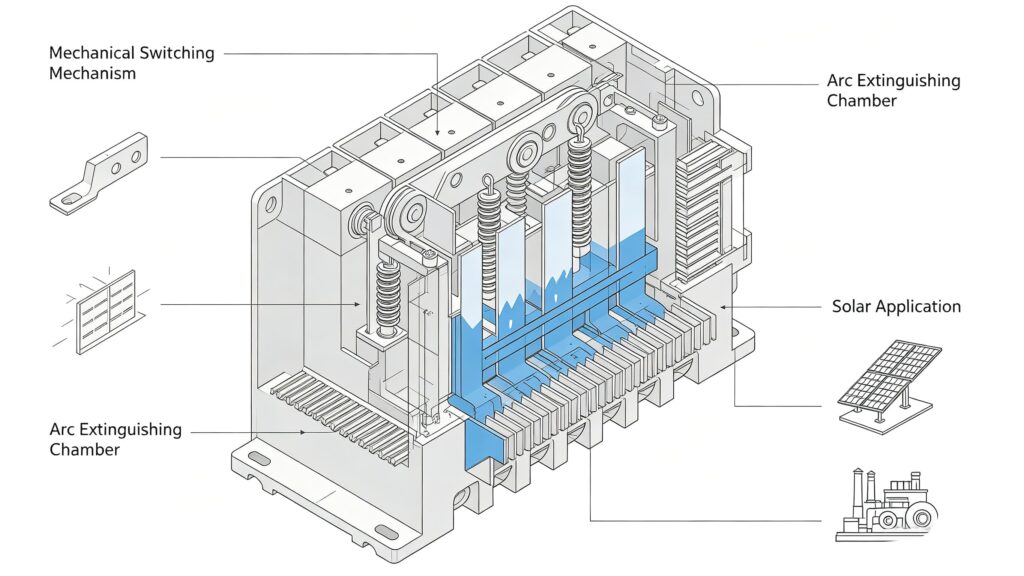
Автоматический выключатель обнаруживает аномальный ток с помощью тепловых или магнитных механизмов.
При возникновении перегрузки по току:
Автоматические выключатели широко используются в:
| Характеристика | Предохранитель | Автоматический выключатель |
|---|---|---|
| Принцип работы | Плавится под действием сверхтока | Механическое отключение |
| Возможность многократного использования | Одноразовые | Многоразовые |
| Возможность сброса | Нет | Да |
| Требуется замена | Да | Нет |
| Скорость реакции | Очень быстро | Быстрый |
| Техническое обслуживание | Требуется замена | Не требует особого ухода |
| Первоначальная стоимость | Нижний | Выше |
| Долгосрочная стоимость | Выше в связи с заменой | Снижение с течением времени |
| Особенности безопасности | Базовая защита | Усовершенствованная защита |
| Дистанционное управление | Нет в наличии | Доступно в некоторых моделях |
| Контроль дуги | Ограниченный | Лучшее подавление дуги |
| Подходит для автоматизации | Нет | Да |
Предохранители очень быстро реагируют на короткие замыкания и сильные перегрузки по току.
Предохранители обычно дешевле автоматических выключателей.
Отсутствие движущихся механических частей.
Может выдерживать очень высокие токи замыкания.
Простая и устойчивая конструкция.
После продувки необходимо заменить.
Замена требует времени.
Никакого мониторинга или дистанционного управления.
Неправильный рейтинг может привести к проблемам с безопасностью.
После срабатывания может быть сброшен.
Включает в себя несколько функций защиты.
Замена не требуется.
Поддержка IoT и интеллектуальных систем.
Индикация ON / OFF / TRIP.
Более дорогостоящий аванс.
Внутренние детали могут стареть.
По сравнению с полупроводниковыми предохранителями.
Необходимо периодическое тестирование.
В фотоэлектрических системах широко используются оба устройства.
Правильная защита от перенапряжения также важна для фотоэлектрических систем.
Подробнее о защитных устройствах SPD для солнечных батарей читайте на сайте Официальный сайт Куаньи
Для фотоэлектрических систем требуются надежные устройства защиты от сверхтоков, предназначенные для высоковольтных приложений постоянного тока.
Электрические системы часто проектируются в соответствии с такими стандартами, как Национальный электротехнический кодекс NFPA 70.
В солнечных фотоэлектрических системах выбор между автоматическим выключателем и предохранителем влияет как на безопасность, так и на надежность.
Системы постоянного тока сложнее, поскольку гашение дуги происходит труднее.
Во многих фотоэлектрических системах для лучшей защиты используются оба варианта.
Да.
Типичная конфигурация:
Многие солнечные комбинаторы объединяют в себе и то, и другое.
Ознакомьтесь с нашими решениями для комбинированных фотоэлектрических шкафов на сайте Официальный сайт Куаньи
Не всегда. Это зависит от области применения.
В некоторых случаях - да.
Автоматические выключатели служат дольше, потому что их можно использовать многократно.
Да, широко используется в промышленных и солнечных системах.
В солнечных фотоэлектрических системах выбор между автоматическим выключателем и предохранителем влияет как на безопасность, так и на надежность.
Выбор между автоматическим выключателем и предохранителем зависит не только от цены.
Это о:
В современных фотоэлектрических системах обе технологии часто комбинируются для обеспечения максимальной защиты.
Компания Kuangya предлагает надежные решения по защите от постоянного и переменного тока для солнечных и промышленных систем.
✅ Бесплатная консультация по продукции
✅ OEM и ODM сервис
✅ Быстрая поддержка котировок
✅ Гарантия 5 лет
✅ Глобальный опыт экспорта
📩 Электронная почта: export@cnkuangya.com
Следите за нами, чтобы узнать больше о защите солнечных батарей и электрооборудования.
🎥 TikTok: @kuangya3
▶ YouTube: @elainesun-m3t3j
📸 Instagram: @cnkuangya6
📘 Facebook: CNkuangya
Хотите получить полное руководство по:
📩 Свяжитесь с нами, чтобы получить БЕСПЛАТНОЕ техническое руководство в формате PDF.

