Промышленная зона Вэньян Юэцин Вэньчжоу 325000
Рабочие часы
Понедельник - пятница: 7AM - 7PM
Выходные: 10AM - 5PM
Промышленная зона Вэньян Юэцин Вэньчжоу 325000
Рабочие часы
Понедельник - пятница: 7AM - 7PM
Выходные: 10AM - 5PM

Было 2:47 утра во вторник. В доме стояла тишина, лишь гудел холодильник. В стенах главной спальни в старой розетке уже несколько недель периодически искрился провод. Этого было недостаточно, чтобы сработать автоматический выключатель - ток был вполне в пределах 15 ампер. Но нагрев был сильным. За долю секунды изоляция карбонизировалась, и вспыхнула плазменная дуга, достигшая температуры, превышающей температуру поверхности солнца. Сухой деревянный каркас мгновенно загорелся. К тому времени, когда закричала дымовая сигнализация, стена уже была охвачена огнем.
Это не сцена из фильма. Это ужасающая реальность электрический пожар вызванное дуговым замыканием. Современный блок предохранителей, отвечающий всем требованиям, оснащенный стандартными миниатюрными автоматическими выключателями (MCB) и устройствами остаточного тока (RCD), абсолютно ничего не сделал, чтобы предотвратить это. Почему? Потому что он не был предназначен для этого.
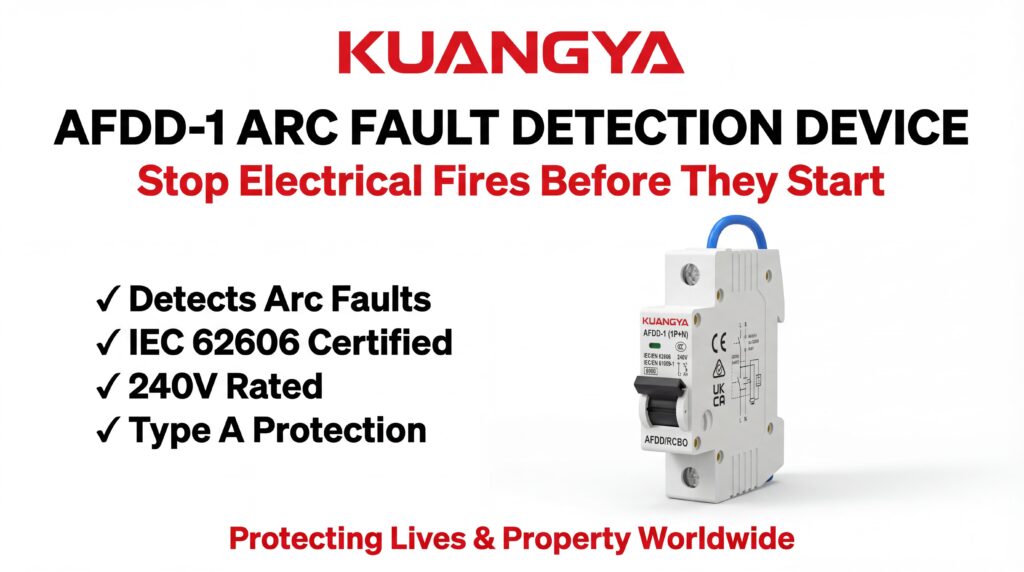
Большинство домовладельцев полагают, что если их электрический щит не отключается, то проводка безопасна. Это опасное заблуждение оставляет миллионы домов уязвимыми перед самым коварным типом электрического сбоя: дуговым замыканием.
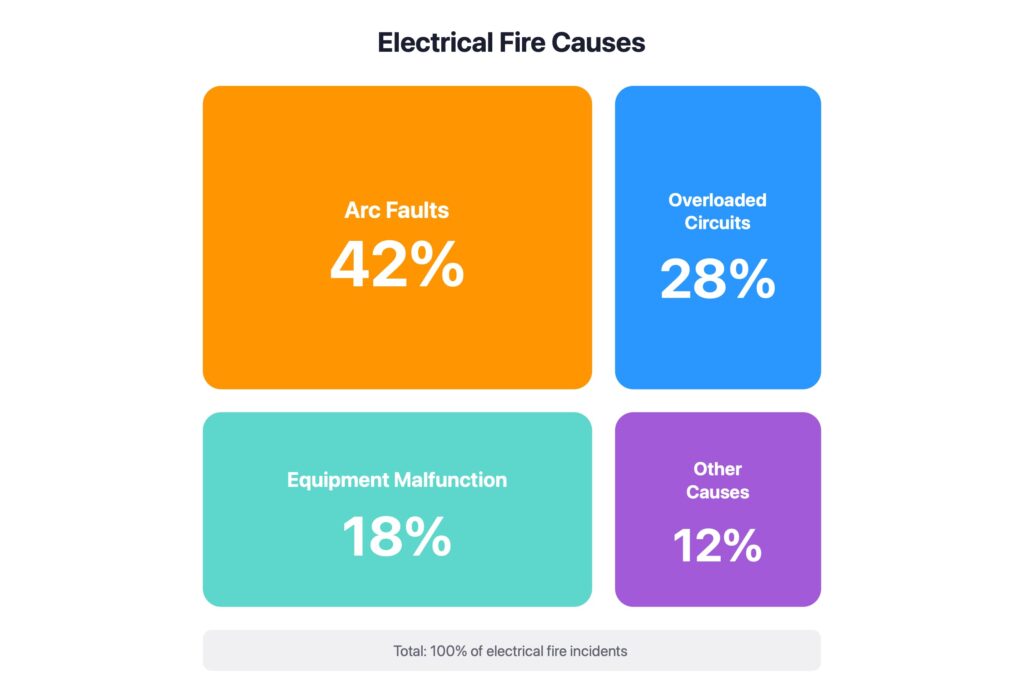
Согласно Национальная ассоциация противопожарной защиты (NFPA) и последние данные за 2024-2025 гг. 35 000 пожаров в домахтолько в Соединенных Штатах ежегодно происходят по причине неисправности электрооборудования. В результате этих пожаров происходит более 500 смертей, 1 400 раненых, а также ошеломляющие $1,4 миллиарда в виде материального ущерба.
Дуговое замыкание возникает, когда электрический ток проскакивает через зазор между двумя проводниками. В отличие от “короткого замыкания”, при котором ток скачет очень сильно (срабатывает MCB), дуговое замыкание может быть нестабильным и прерывистым.
Мы постоянно слышим это от расстроенных владельцев недвижимости после происшествий: “Почему мой автоматический выключатель не защитил меня? Он был совсем новый!” или “Мой MCB работал исправно в течение многих лет, но мой дом все равно сгорел”.”
Суровая правда заключается в том, что стандартные выключатели слепы к этой проблеме. Они ищут перегрузки (слишком большой ток). Дуговые замыкания часто происходят при нормальном уровне тока, только со смертоносным, огненным сигналом.
Введите Устройство обнаружения дуговых разрывов (AFDD), В Северной Америке он также известен как AFCI (Arc Fault Circuit Interrupter). Это технологический скачок, который закрывает брешь в безопасности.
В то время как MCB является тупым инструментом (срабатывает при большом токе), MCB Куанья AFDD Это высокоточный компьютер. В нем используется передовой микропроцессор для непрерывного мониторинга формы электрической волны вашей цепи.
Он анализирует линию на наличие уникальных “отпечатков пальцев” опасной дуги: специфических зазубренных волновых форм и высокочастотного шума, которые отличают опасный ослабленный провод от обычной дуги в двигателе пылесоса или выключателе освещения.
Чтобы понять, почему AFDD важны, нужно увидеть, какое место они занимают в иерархии защиты.
Решения AFDD компании Kuangya разработаны в соответствии со строгими международными стандартами, включая UL 1699 и IEC 62606, Это гарантирует, что вы покупаете не просто выключатель, а сертифицированное средство защиты от пожара.
Если безопасность не была достаточным стимулом, то закон идет в ногу со временем. Правительства и органы безопасности по всему миру переходят от “рекомендаций” AFDD к мандат Они.
Сайт 2025 Национальный электрический кодекс (NEC) расширил требования к прерывателям дугового замыкания (AFCI). Если первоначально они требовались только для спален, то теперь кодекс предписывает защиту практически всех цепей жилого помещения, включая:
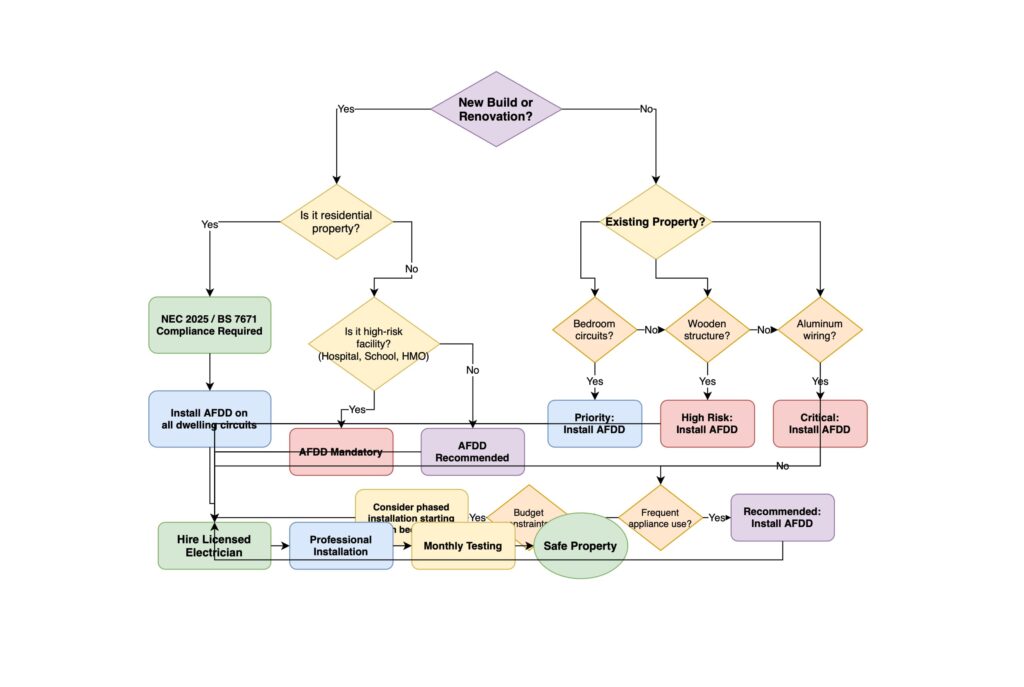
Ценность AFDD не теоретическая. Она доказана на практике.
Сценарий: В рамках проекта по модернизации жилого фонда в Манчестере в старом викторианском доме были установлены AFDD во всех цепях спальни и гостиной (всего 12 цепей).
Результат: В течение шести месяцев устройства срабатывали три раза. Владельцы дома сначала заподозрили “неприятное срабатывание”.”
Открытие: Профессиональный электрик провел расследование и обнаружил неплотное соединение в распределительной коробке, спрятанной под половицами, и поврежденный кабель обогревателя, который был раздавлен шкафом.
ROI: Общий объем инвестиций в AFDD: £480. Результат: Предотвращено три потенциальных пожара. Стоимость спасенного имущества и жизней не поддается исчислению.
Сценарий: Чтобы обеспечить безопасность сотен студентов, подрядчики выбрали гибридные распределительные щиты AFDD компании Hager для нового комплекса на 210 мест.
Результат: Установка полностью соответствует строгим нормам BS 7671 для студенческих общежитий. Система обеспечивает круглосуточный активный мониторинг, защищая университет от ответственности и, что более важно, защищая студентов от высокого риска электрических пожаров, вызванных неправильным использованием приборов.
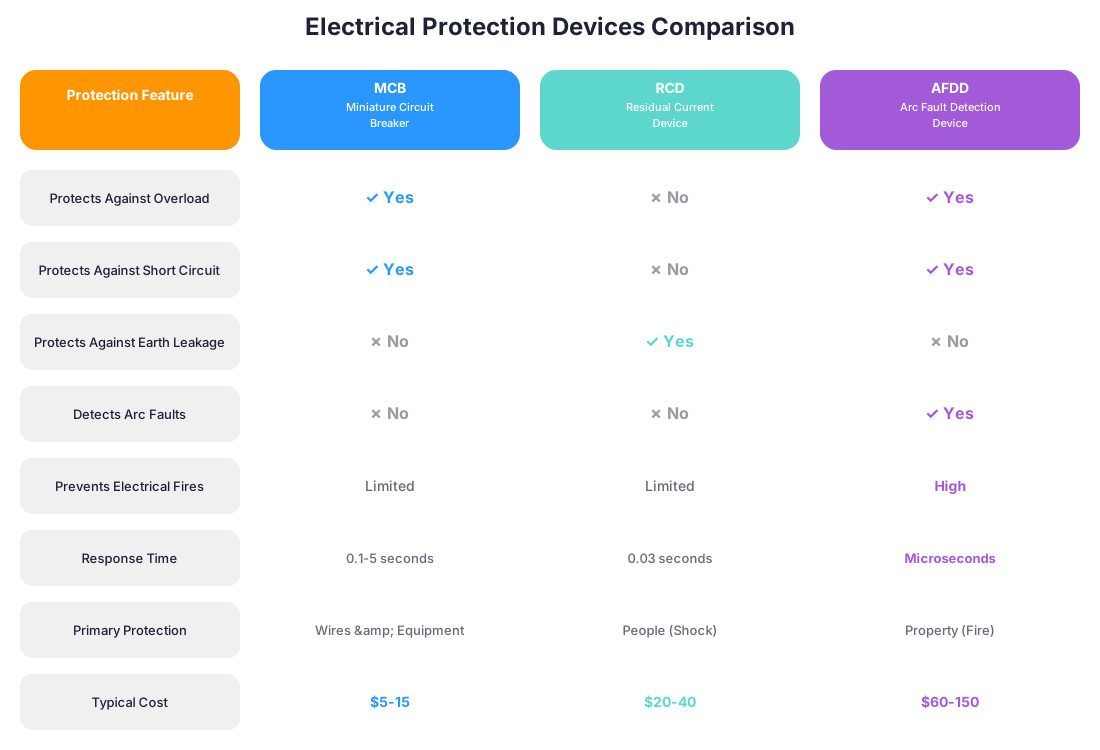
При модернизации электрического щита первым вопросом является разница в стоимости. Давайте разложим ее по полочкам.
| Характеристика | Миниатюрный автоматический выключатель (MCB) | Устройство остаточного тока (УЗО) | AFDD (Обнаружение дуговых разрывов) |
|---|---|---|---|
| Основная функция | Защищает Провода (Перегрузка/короткая) | Защищает Люди (Шок) | Защищает Недвижимость (Огонь) |
| Обнаруживает дуговые разрывы? | НЕТ | НЕТ | ДА |
| Предотвращает пожар? | Ограниченный (только сильные скачки) | Ограничено (только утечка на землю) | Высокий (раннее обнаружение) |
| Смета. Стоимость единицы продукции | $5 - $15 | $20 - $40 | $60 - $150 |
Реальность окупаемости инвестиций:
AFDD стоит дороже, чем стандартный выключатель, но дешевле, чем ваша страховая франшиза. Средняя стоимость ремонта повреждений от огня и дыма в доме составляет более $50,000. Если AFDD предотвратит хотя бы один инцидент за 20 лет службы, он окупится в 500 раз.
Для обеспечения правильной работы AFDD требуется правильная установка.
Переход к более безопасной электрической инфраструктуре происходит во всем мире. Сайт Рынок устройств для обнаружения дуговых разрывов В 2024 году она оценивалась в $2,3 миллиарда, и, по прогнозам, вырастет до $5,1 миллиарда к 2033 году, темпы роста составили 9,2%.
В: Могу ли я установить AFDD самостоятельно?
О: Нет. Для установки требуется доступ к главному электрическому щиту. Для обеспечения безопасности и соблюдения правил всегда нанимайте лицензированного электрика.
В: Будет ли AFDD работать с моими текущими выключателями?
О: Да. AFDD могут быть установлены рядом с существующими устройствами защиты. Многие современные устройства представляют собой “комбинированные” устройства, включающие в себя защиту от перегрузки (MCB) и утечки (RCD) в одном компактном блоке.
В: Вызывают ли AFDD “неприятные отключения”?
О: У ранних поколений была такая проблема, но современные Kuangya AFDD используют интеллектуальную фильтрацию, чтобы отличить опасную дугу от нормальной работы щеточных двигателей (например, блендеров или дрелей). Теперь неприятные отключения происходят крайне редко.
В: Каким стандартам соответствует Kuangya?
О: Наши устройства производятся в соответствии с требованиями IEC 62606 и UL 1699 стандарты, обеспечивающие глобальное соответствие и надежность.
Электрические пожары не дают о себе знать, пока не станет слишком поздно. “Тихий убийца” в ваших стенах может искрить прямо сейчас. Традиционные автоматические выключатели необходимы, но их недостаточно. Вам нужен третий элемент защиты.
Соблюдайте требования. Получите защиту.
Модернизируйте свой электрический щит с помощью Решения Kuangya AFDD сегодня. Независимо от того, являетесь ли вы домовладельцем, арендодателем или управляющим объектом, у нас есть сертифицированные технологии, необходимые вам, чтобы спать спокойно по ночам.
👉 Свяжитесь с нашими экспертами по безопасности для получения предложения
👉 Посмотреть весь ассортимент продукции AFDD

