WengYang Industrial Zone Yueqing Wenzhou 325000
Horas de trabalho
De segunda a sexta-feira: das 7h às 19h
Fim de semana: 10:00 - 17:00
WengYang Industrial Zone Yueqing Wenzhou 325000
Horas de trabalho
De segunda a sexta-feira: das 7h às 19h
Fim de semana: 10:00 - 17:00

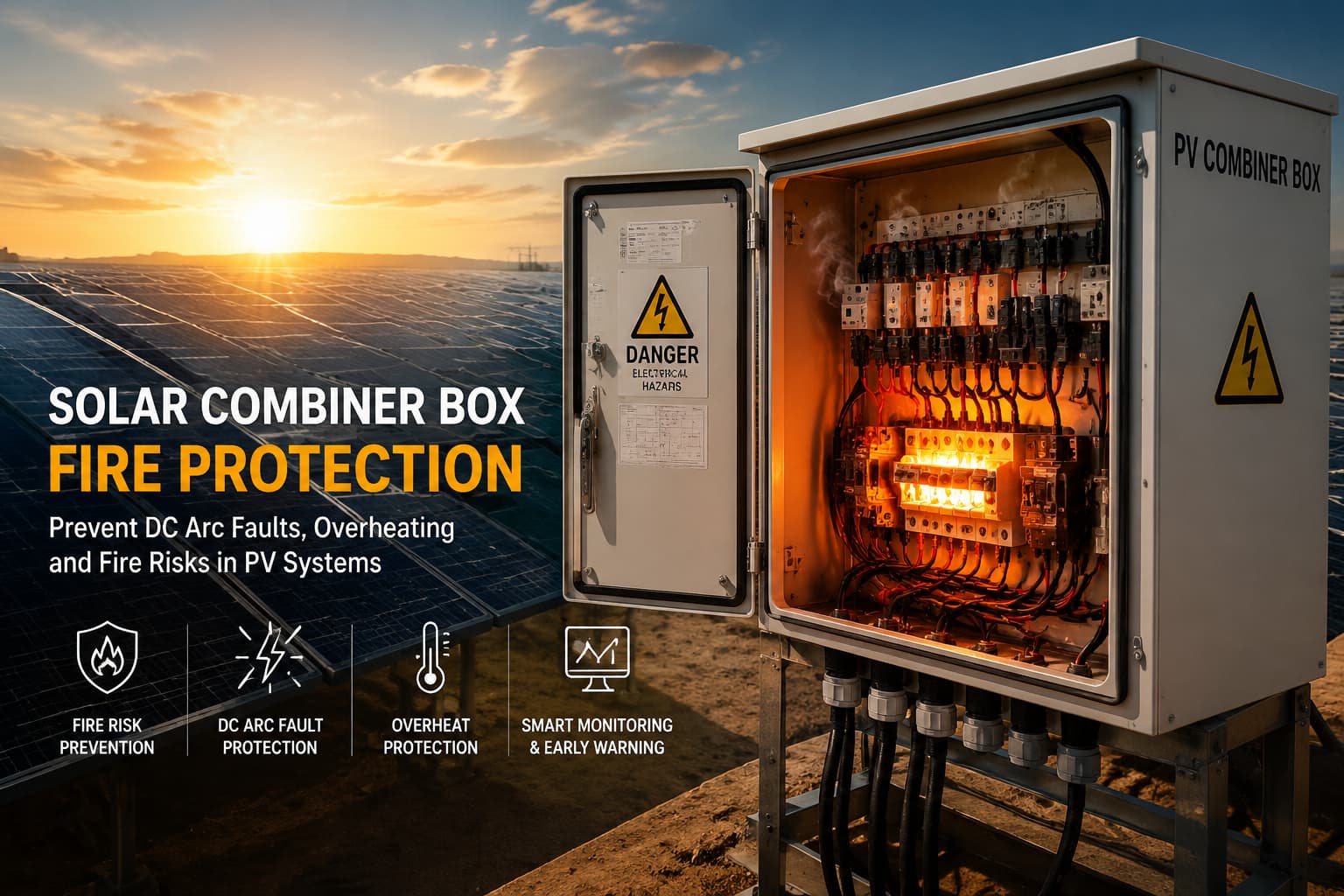
As caixas de junção solares são nós críticos em sistemas fotovoltaicos (FV) onde múltiplas entradas de strings convergem antes de alimentar os inversores. No entanto, devido a Arcos elétricos em corrente contínua (CC), conexões frouxas, sobrecorrente, envelhecimento do isolamento e estresse ambiental, as caixas de junção também estão entre os pontos de ignição mais frequentes em usinas solares.
Este artigo explica:
Focar-nos-emos em Estratégias de proteção contra incêndios em caixas de junção solar utilizadas em projetos fotovoltaicos reais na Europa, Médio Oriente, Índia e China, apoiadas por relatórios da indústria e incidentes de campo.
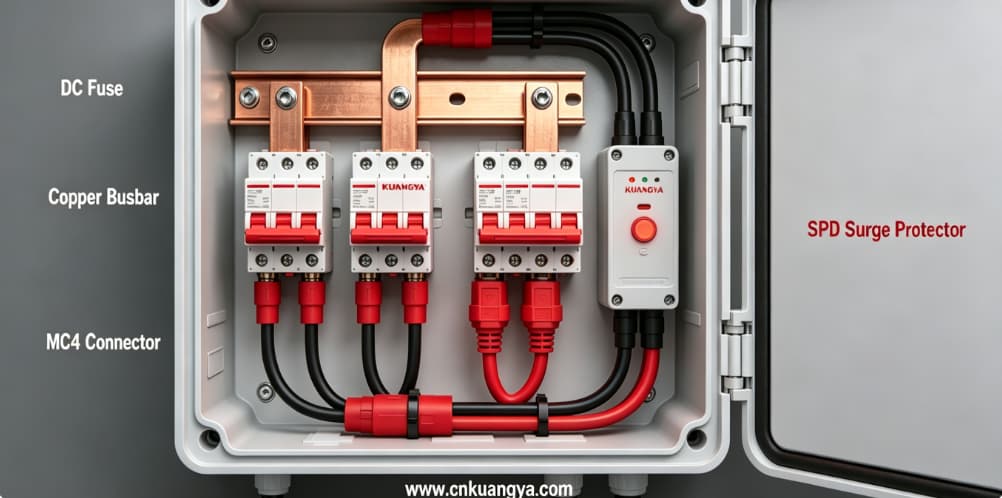
Uma caixa de junção solar foi projetada para agregar corrente contínua (CC) de múltiplas strings fotovoltaicas. Em teoria, é simples. Na prática, é um dos componentes mais estressados térmica e eletricamente em todo o sistema fotovoltaico.
| Fonte de risco | Causa Técnica | Mecanismo de Ignição de Incêndio |
|---|---|---|
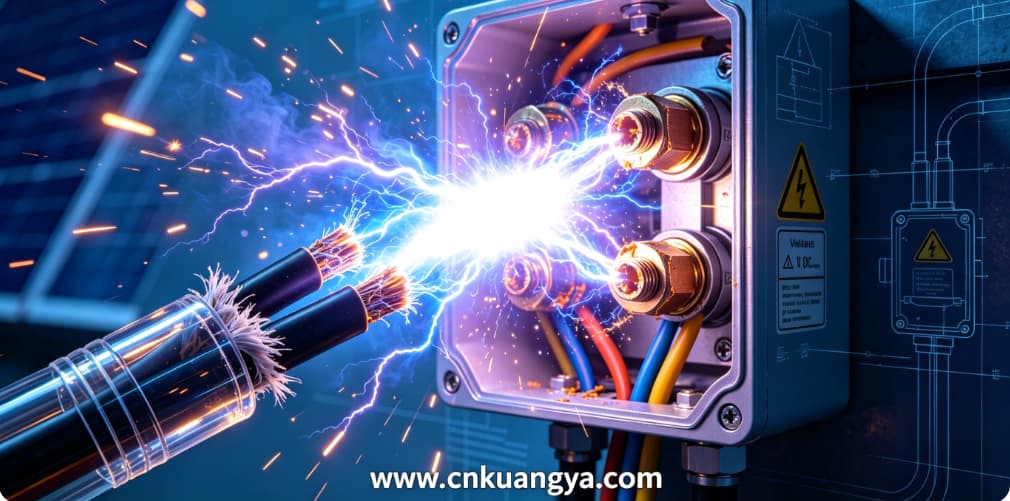
| Falha de Arco em CC | Terminais soltos, envelhecimento de conectores | Ignição por arco de alta temperatura (>3000°C) |
| Sobrecorrente | Desequilíbrio de string com falha | Fuga térmica em barramentos |
| Entrada de umidade | Falha de IP65 ou envelhecimento da junta de vedação | Curto-circuito + falha de isolamento |
| Instalação inadequada | Aperto de torque incorreto | Aquecimento por resistência de contato |
| Eventos de sobretensão | Descargas atmosféricas / surtos da rede | Ruptura do isolamento e ignição |
| Envelhecimento de componentes | Exposição aos raios UV, ciclos térmicos | Aumento progressivo da resistência |
Ao contrário dos sistemas CA, Os arcos CC não se extinguem naturalmente, o que aumenta significativamente a probabilidade de ignição.
Embora os sistemas fotovoltaicos sejam considerados “infraestrutura de baixa manutenção”, dados de campo mostram que eventos de incêndio elétrico não são raros.
Uma usina solar de escala industrial no sul da Espanha sofreu desligamentos repetidos devido ao superaquecimento da caixa de junção (combiner box).
Conclusões da Causa Raiz:
Resultado:
Lição de Engenharia:
Mesmo problemas menores em conectores podem escalar para eventos térmicos sob condições de irradiância sustentada.
Um incêndio ocorreu em uma instalação fotovoltaica de 100MW durante a operação no pico do verão.
Resumo do Relatório de Investigação:
| Cadeia de falhas | Resultado |
|---|---|
| Acúmulo de poeira + calor | Degradação do isolamento |
| Corrente de falta em CC | Arco elétrico sustentado |
| Desconexão retardada | Ignição térmica |
Resultado:
Um relatório de monitoramento de uma usina fotovoltaica costeira identificou pontos quentes recorrentes em caixas de junção.
Observação principal:
Resultado:
Compreender a progressão do incêndio é essencial para projetar sistemas de proteção.
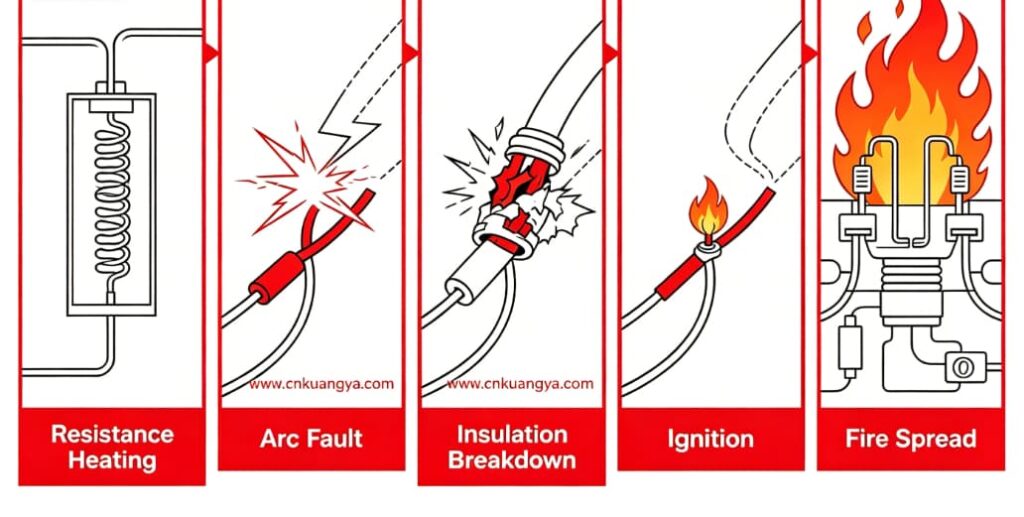
| Estágio | Condição Elétrica | Efeito Físico |
|---|---|---|
| Estágio 1 | Aumento da resistência nos terminais | Início de aquecimento local |
| Estágio 2 | Temperatura excede 120°C | Amolecimento do isolamento |
| Estágio 3 | Início do arco | Ocorre descarga de plasma |
| Estágio 4 | Arco CC contínuo | Carbonização rápida |
| Estágio 5 | Ignição | Combustão de materiais internos |
| Estágio 6 | Propagação de incêndio | O dano se espalha para strings adjacentes |
Sistemas CC são particularmente perigosos porque:
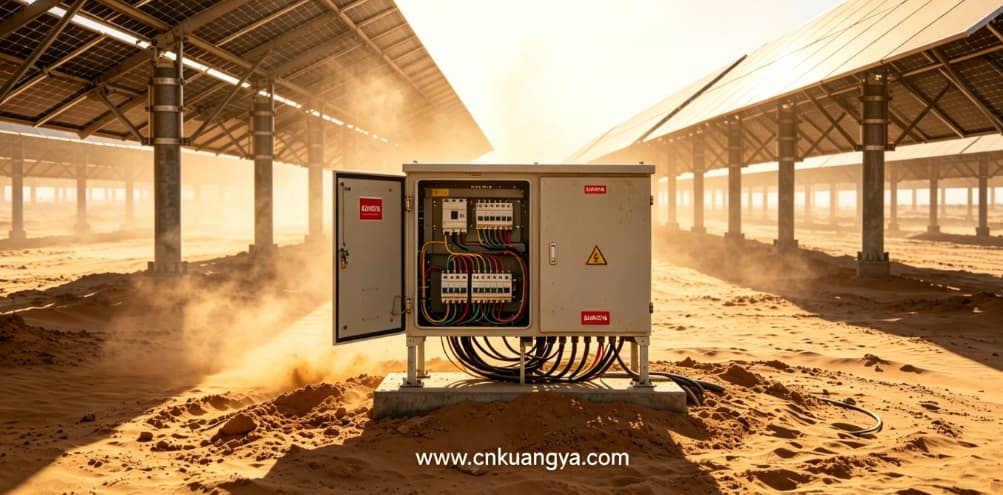
As caixas de junção solares são frequentemente instaladas ao ar livre por 20 a 25 anos, tornando o estresse ambiental um fator importante.
| Tipo de ambiente | Nível de risco | Problema principal |
|---|---|---|
| Deserto (Oriente Médio) | 🔴 Muito alto | Poeira + calor extremo |
| Áreas costeiras | 🔴 Muito alto | Corrosão salina |
| Regiões tropicais | 🟠 Alto | Humidade + crescimento biológico |
| Zonas temperadas | 🟡 Médio | Ciclos térmicos sazonais |
| Regiões com neve | 🟡 Médio | Tensão de congelamento e descongelamento |
Em parques solares nos EAU e na Arábia Saudita:
Isto acelera:
Mesmo caixas de junção de alta qualidade compartilham pontos de vulnerabilidade semelhantes.
| Componente | Tipo de risco | Explicação |
|---|---|---|
| Fusíveis CC | Fadiga térmica | Ciclos de carga repetidos enfraquecem o elemento fusível |
| Barramentos | Aquecimento por sobrecorrente | Má dissipação de calor sob carga elevada |
| Conectores MC4 | Resistência de contato | Pequeno aumento de resistência = calor elevado |
| Dispositivos de proteção contra surtos | Falha por fim de vida útil | Degradação do MOV leva ao sobreaquecimento |
| Vedações do invólucro | Ingressão ambiental | Humidade causa curto-circuitos |
Projetos fotovoltaicos modernos exigem cada vez mais a conformidade com normas internacionais de segurança contra incêndios, como as diretrizes da IEC e da NFPA.
Estas normas definem requisitos rigorosos para a segurança elétrica, especialmente na arquitetura de proteção do lado CC. Em sistemas de caixas de junção (combiner boxes), a coordenação adequada entre os dispositivos de proteção é essencial, incluindo dispositivos de proteção contra surtos (DPS) e Fusíveis CC para reduzir os riscos de incêndio relacionados a sobrecorrentes e surtos.
🔗 Links internos (produtos KUANGYA utilizados em sistemas reais):
De acordo com normas reconhecidas internacionalmente:
| Padrão | Região | Foco |
|---|---|---|
| IEC 62548 | Internacional | Segurança no projeto de arranjos fotovoltaicos |
| IEC 61439 | Global | Segurança em painéis de baixa tensão |
| UL 1741 | EUA | Sistemas de segurança de inversores |
| NFPA 70 (NEC) | EUA | Segurança contra incêndios em instalações elétricas |
Uma decisão de projeto fundamental em sistemas fotovoltaicos modernos é optar apenas pela proteção passiva ou integrar supressão ativa.
| Tipo de proteção | Método | Eficácia | Limitação |
|---|---|---|---|
| Proteção Passiva | Fusíveis, isolamento, design do invólucro | Previne a propagação | Não consegue extinguir o fogo após o início |
| Proteção Ativa | Supressão por aerossol / gás | Supressão rápida de incêndio | Requer integração de sistema |
| Proteção Inteligente | Sensores + desligamento + supressão | Nível de segurança mais elevado | Custo mais alto |
Os desenvolvedores de energia solar em escala de utilidade pública estão mudando cada vez mais para:
“Sistemas integrados de ”Detecção + Isolamento + Supressão”
Especialmente em:
Na próxima parte, abordaremos:
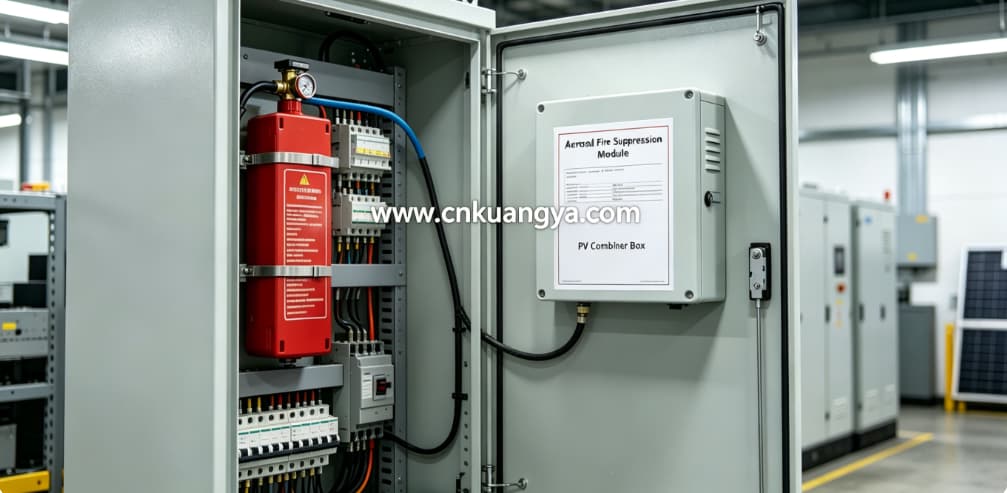
À medida que os sistemas fotovoltaicos atingem centenas de megawatts, os métodos de proteção tradicionais (fusíveis + design de gabinete) já não são suficientes. A proteção moderna contra incêndio em caixas de junção solar baseia-se em engenharia em camadas: detecção, isolamento e supressão.
| Camada | Função | Tecnologia utilizada |
|---|---|---|
| Camada 1 | Deteção precoce | Sensores de temperatura, sensores de fumo, deteção de arco elétrico (AFCI) |
| Camada 2 | Isolamento de falhas | Disjuntores CC, interruptores de desconexão inteligentes |
| Camada 3 | Supressão de incêndio | Sistemas de supressão por aerossol / gás |
| Camada 4 | Monitoramento | SCADA + alarmes remotos |
A maioria dos empreiteiros EPC agora exige:
“Caixas de junção autoprotegidas com capacidade de resposta a incêndio integrada”
Especialmente para:
Uma das tecnologias mais amplamente adotadas atualmente é supressão de incêndio por aerossol condensado, especialmente para gabinetes elétricos compactos.
Sistema de supressão de incêndio por aerossol
Quando acionado por calor ou falha elétrica:
| Recurso | Benefício |
|---|---|
| Não requer tubulação | Fácil adaptação em caixas de combinação existentes |
| Ativação rápida | Resposta tipicamente <10 segundos |
| Sem vasos de pressão | Seguro para implantação externa de longo prazo |
| Baixa manutenção | Sistemas com vida útil de 10 anos disponíveis |
| Eletricamente seguro | Sem danos por resíduos condutivos |
Uma fazenda fotovoltaica de 80MW no norte do Chile implementou módulos de aerossol dentro de caixas de junção (combiner boxes).
Resultado observado após a instalação:
Um sistema robusto de proteção contra incêndio para caixas de junção solares não se trata apenas de adicionar dispositivos de supressão. Começa pelo projeto estrutural.
| Área de projeto | Requisito de engenharia |
|---|---|
| Material do invólucro | Policarbonato ou metal resistente a UV e retardante de chama |
| Ventilação | Fluxo de ar controlado sem entrada de poeira |
| Disposição interna | Cruzamento mínimo de condutores, dissipação de calor otimizada |
| Fiação | Cabos CC com classificação para alta temperatura |
| Aterramento | Sistema de aterramento de baixa resistência |
| Dispositivos de proteção | Sistema coordenado de fusível + DPS + disjuntor |
Muitas caixas de junção de baixo custo falham porque:
Isto cria um efeito de “câmara de acumulação de calor”.
Um dos desafios de decisão mais comuns para EPCs é equilibrar o CAPEX com a confiabilidade da proteção contra incêndios.
| Nível de proteção | Tipo de sistema | Custo relativo | Redução de Risco |
|---|---|---|---|
| Básico | Apenas fusível + invólucro | Baixa | Baixa |
| Padrão | Fusível + DPS + monitoramento | Médio | Médio |
| Avançado | AFCI + monitoramento inteligente | Alta | Alta |
| Premium | AFCI + supressão por aerossol + desligamento inteligente | Muito alta | Muito alta |
Embora sistemas avançados aumentem o custo inicial em 5–15%, eles reduzem significativamente:
Em energia solar em escala de concessionária, apenas um evento de incêndio pode exceder:
1–3 anos de investimento em sistemas de proteção
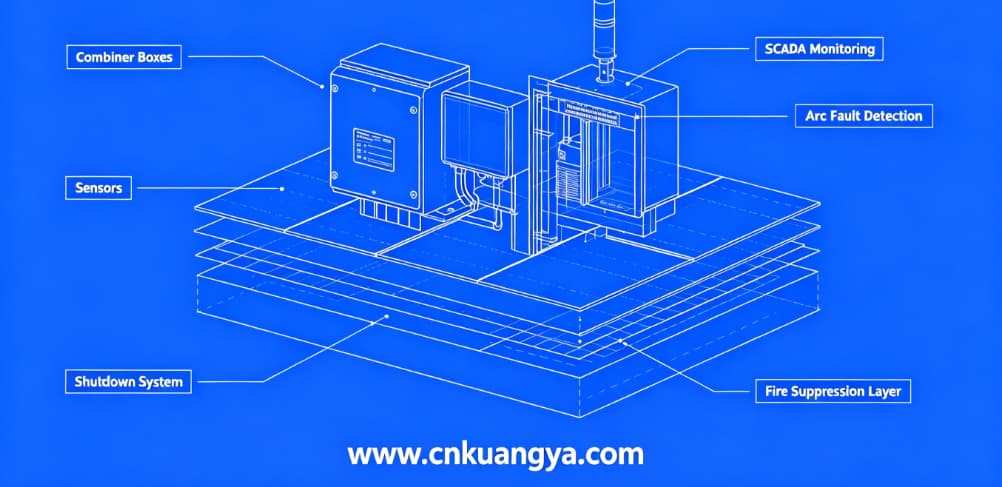
As caixas de junção modernas já não são unidades de hardware passivas. Elas fazem parte de um ecossistema de proteção digital.
| Função | Descrição |
|---|---|
| Rastreamento de temperatura | Detecção de pontos quentes em tempo real |
| Monitoramento de corrente das strings | Detectar desequilíbrios precocemente |
| Detecção de falha de arco | Identificar padrões de forma de onda anormais |
| Desligamento remoto | Isolar strings com falha instantaneamente |
| Interligação com alarme de incêndio | Acionar sistema de supressão automaticamente |
Uma fazenda solar alemã implementou proteção de combinadora totalmente integrada ao SCADA:
Com base em diversos projetos de engenharia EPC, as seguintes práticas são agora consideradas padrão da indústria:
Em parques solares no Oriente Médio, as EPCs frequentemente adicionam:
Para engenheiros e equipes de compras, a seleção não deve ser baseada apenas no preço.
| Tipo de Projeto | Proteção Recomendada |
|---|---|
| FV residencial | Básico + DPS |
| Telhado comercial | Padrão + monitoramento |
| Fotovoltaico industrial | AFCI + desligamento inteligente |
| Fotovoltaico em escala de concessionária | Sistema totalmente integrado (AFCI + supressão por aerossol) |
| Ambiente de alto risco | Sistema de proteção contra incêndio premium |
A maioria dos incêndios é causada por Falhas de arco em CC, terminais soltos e sobreaquecimento devido ao aumento da resistência de contacto.
Não. Um fusível apenas interrompe a corrente. Não consegue extinguir um arco após o início da ignição.
Uma combinação de:
fornece o mais alto nível de proteção.
Sim. Não deixa resíduos condutivos e não requer cilindros pressurizados, tornando-o adequado para quadros elétricos fotovoltaicos.
Nem todas, mas instalações de grande escala e ambientes de alta temperatura exigem fortemente proteção avançada devido à maior exposição ao risco.
A prática da indústria recomenda:
Nenhum sistema é de risco zero. No entanto, um projeto adequado pode reduzir significativamente a probabilidade de incêndio e a gravidade dos danos.

