웽양 공업구 웨칭 원저우 325000
근무 시간
월요일~금요일: 오전 7시~오후 7시
주말: 주말: 오전 10시 - 오후 5시
웽양 공업구 웨칭 원저우 325000
근무 시간
월요일~금요일: 오전 7시~오후 7시
주말: 주말: 오전 10시 - 오후 5시

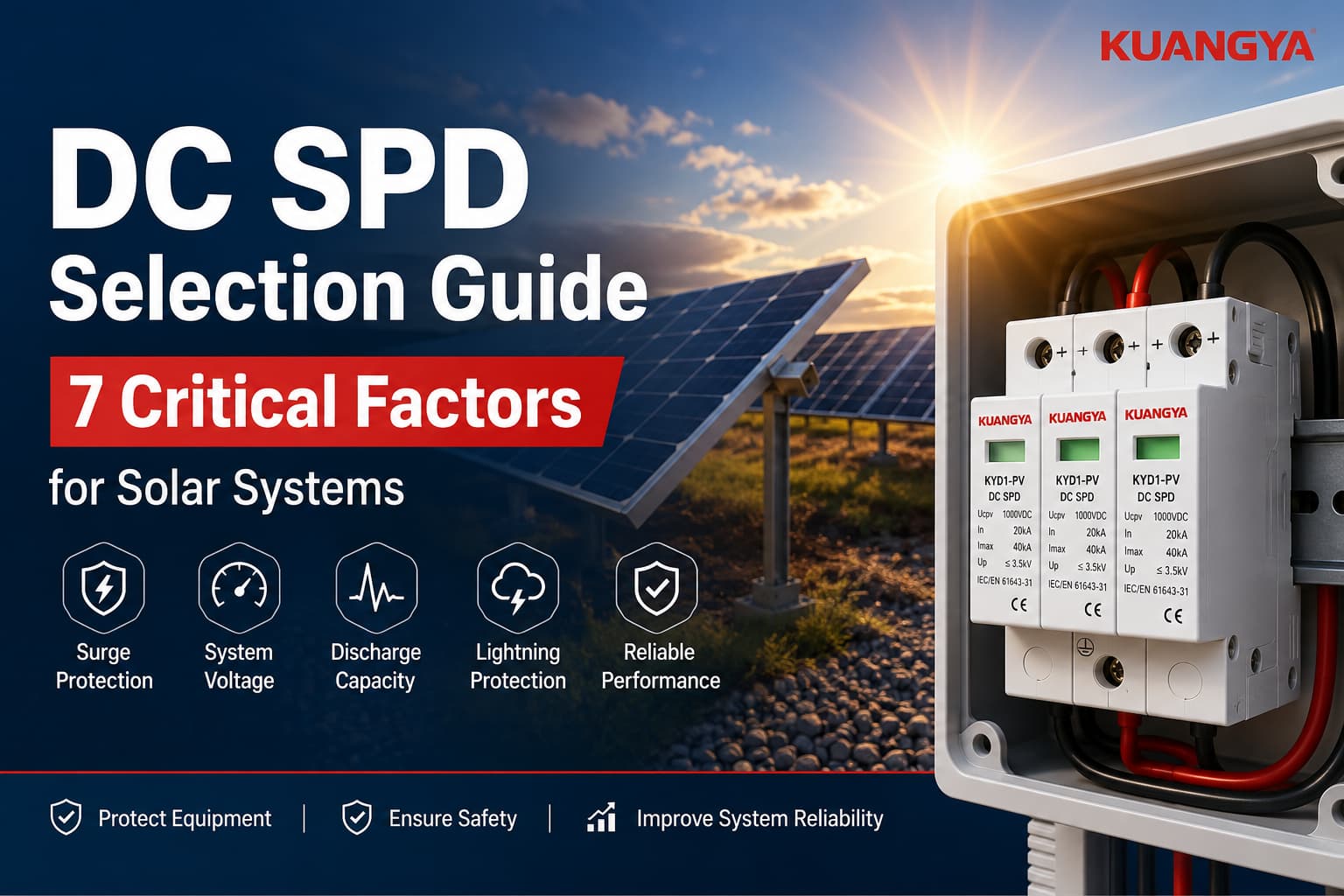
Looking for reliable DC surge protection devices? Explore our range of DC SPD designed for photovoltaic systems.
Selecting the right DC SPD (Surge Protective Device) for a solar PV system requires evaluating several key factors, including system voltage, maximum continuous operating voltage (Uc), surge current ratings, installation environment, and applicable standards. A properly selected DC SPD helps protect solar panels, inverters, combiner boxes, and other critical equipment from lightning-induced surges and switching transients.
For most photovoltaic projects, choosing a DC SPD specifically designed for solar applications is essential to ensure long-term system reliability and safety.
Modern solar PV systems contain sensitive electronic equipment that can be damaged by transient overvoltages.
While solar panels themselves are relatively robust, components such as inverters, monitoring systems, communication devices, and battery storage equipment are highly vulnerable to surge events.
A single surge event may result in:
Many project owners focus on module efficiency and inverter brands but overlook surge protection during system design.
This can become a costly mistake.
The purpose of a DC SPD is not simply to satisfy electrical requirements. Its primary role is to improve system reliability and reduce the risk of equipment damage throughout the lifetime of the solar installation.
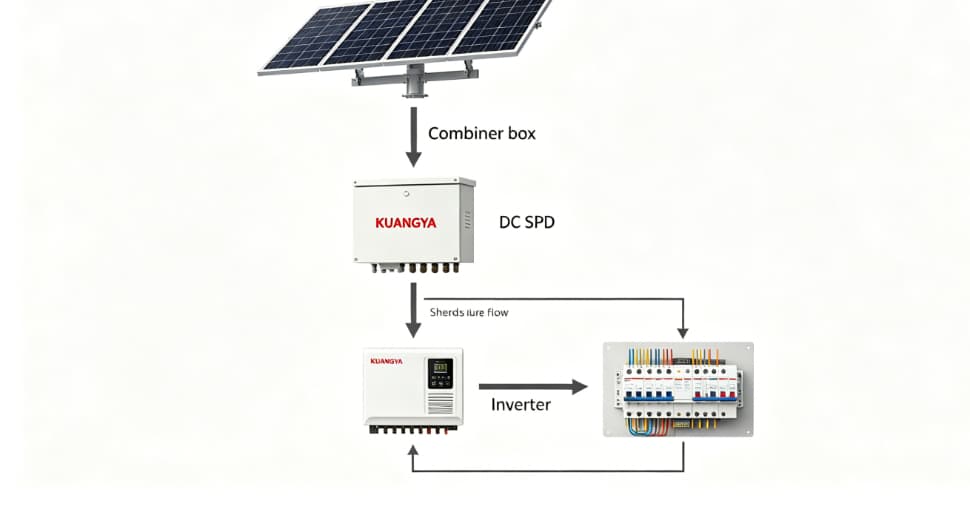
Unlike many indoor electrical installations, solar systems are often installed in exposed locations.
예를 들면 다음과 같습니다:
These locations increase the likelihood of surge exposure.
Even when lightning does not strike a solar array directly, nearby lightning activity can induce high transient voltages into DC cables and connected equipment.
In addition to lightning, switching operations within the electrical network may also generate transient overvoltages.
Without proper protection, these events can damage sensitive components and shorten equipment lifespan.
This is why surge protection has become a standard design requirement in modern photovoltaic systems.
The rapid growth of solar installations worldwide has increased the importance of electrical protection and system reliability. Research organizations continue to study best practices for improving photovoltaic system performance and resilience.
Choosing a DC SPD should never be based solely on price.
Instead, engineers and buyers should evaluate several technical parameters.
The most important factors include:
Let’s examine each factor in detail.
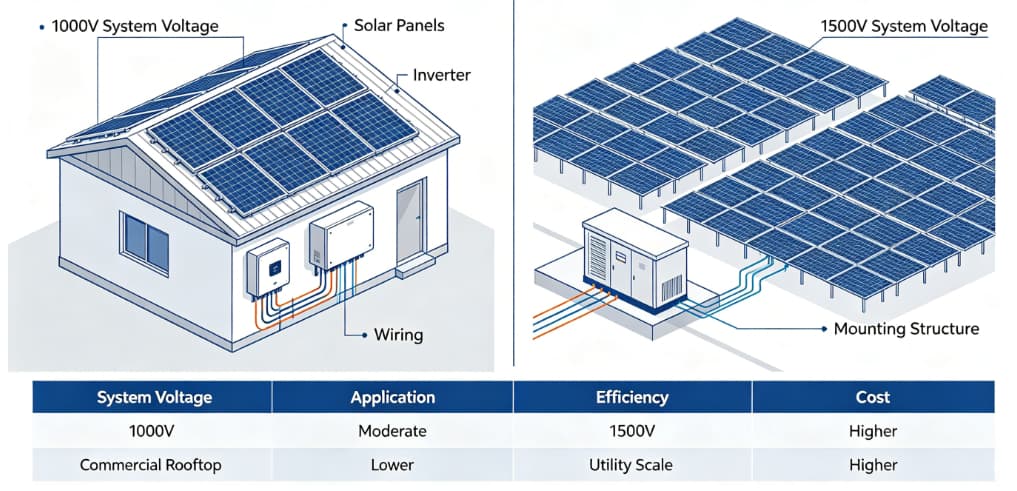
The first step in selecting a DC SPD is understanding the operating voltage of the photovoltaic system.
Typical solar installations operate at:
| 애플리케이션 | 일반 전압 |
|---|---|
| 주거용 태양광 | Up to 600V DC |
| Commercial Solar | 최대 1000V DC |
| Utility-Scale Solar | 최대 1500V DC |
The selected SPD must be compatible with the maximum voltage that may occur within the PV system.
Many installers make the mistake of considering only nominal voltage values.
However, solar array voltage can increase under low-temperature conditions.
For this reason, the maximum open-circuit voltage of the PV array should always be considered during SPD selection.
Selecting an SPD with an insufficient voltage rating may result in premature failure and reduced protection performance.
Uc refers to the Maximum Continuous Operating Voltage of the SPD.
This value indicates the highest voltage that the SPD can withstand continuously without entering protection mode.
A suitable Uc value is essential for long-term reliability.
If the Uc value is too low, the SPD may experience constant electrical stress and eventually fail.
When selecting Uc, consider:
A safety margin is generally recommended to ensure reliable operation.
The nominal discharge current, known as In, represents the surge current that an SPD can safely handle multiple times throughout its service life.
This parameter is particularly important in regions where thunderstorms occur frequently.
Higher In ratings generally provide:
When comparing different SPD models, In should always be considered together with other electrical characteristics.
It should not be used as the sole selection criterion.
Imax represents the maximum surge current that an SPD can safely withstand during a single surge event.
This value reflects the device’s ultimate surge-handling capability.
Projects located in high-risk lightning regions often require SPDs with higher Imax ratings.
예를 들면 다음과 같습니다:
Selecting an inadequate Imax value may leave the system vulnerable during severe lightning events.
Another important parameter when selecting a DC SPD is the Voltage Protection Level (Up).
Up indicates the maximum residual voltage that remains after the SPD diverts a surge.
In simple terms, the lower the Up value, the better the protection provided to connected equipment.
Sensitive components such as:
can all benefit from lower residual voltage levels.
However, Up should not be evaluated independently.
The best SPD selection always involves balancing:
to match the actual requirements of the project.
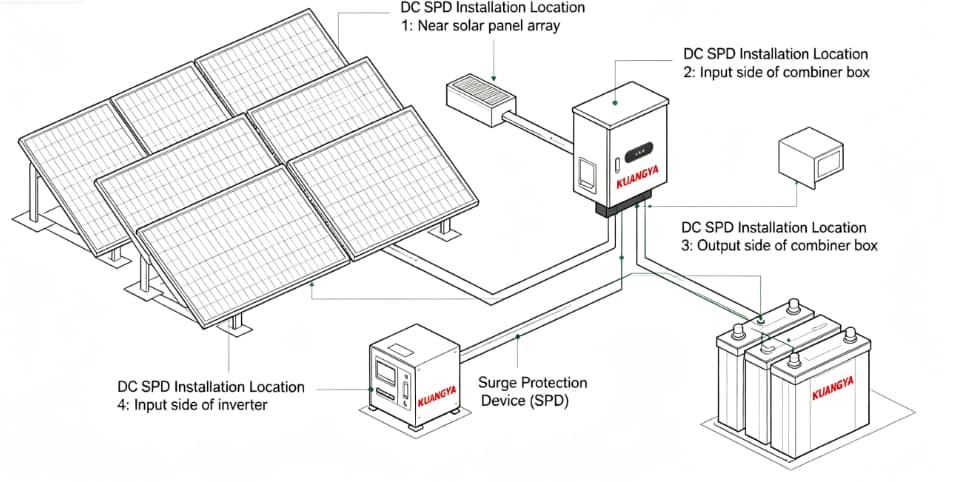
The installation environment plays a significant role in SPD selection.
A residential rooftop system and a utility-scale solar farm face very different operating conditions.
When evaluating environmental factors, consider:
For example, a rooftop solar installation in a city may face lower lightning exposure than a large ground-mounted solar farm located in an open rural area.
Similarly, coastal projects may experience harsher environmental conditions that require higher-quality protection devices.
Understanding the installation environment helps ensure the selected SPD provides appropriate protection throughout its service life.
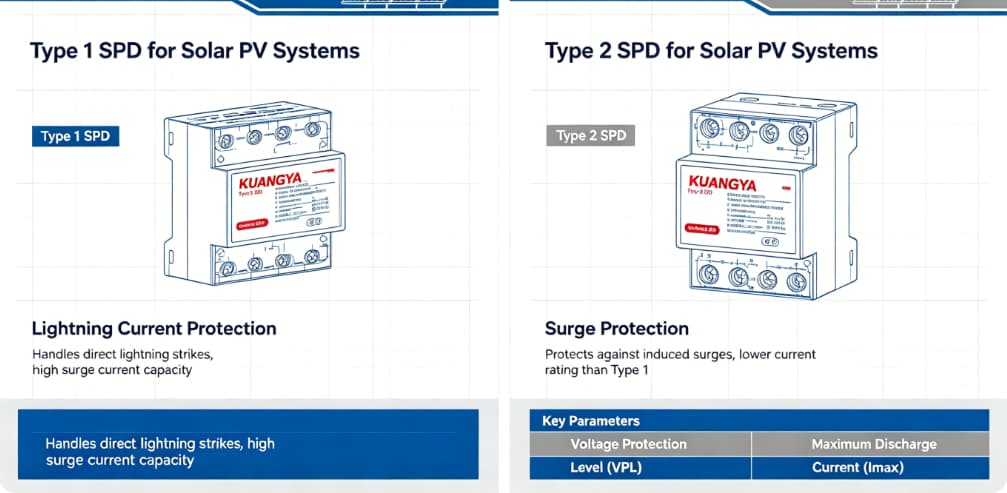
This is one of the most frequently asked questions in photovoltaic projects.
The answer depends on the lightning protection strategy of the installation.
Generally speaking:
Designed to handle high-energy lightning currents associated with direct lightning events.
Typically used in:
Designed to protect against indirect lightning surges and switching transients.
Commonly used in:
For many solar projects, Type 2 SPDs are the most common choice.
However, the final selection should always be based on the project’s specific requirements and local regulations.
For a detailed comparison, see our guide:
Type 1 vs Type 2 SPD for Solar Systems
Even experienced installers occasionally make mistakes when selecting surge protection devices.
Understanding these common errors can help avoid costly failures.
Price is important, but it should never be the primary selection criterion.
A low-cost SPD may appear attractive initially, but inadequate protection can lead to expensive equipment damage later.
When evaluating products, focus on:
rather than price alone.
Many photovoltaic systems are expanded after installation.
Additional PV strings, larger inverters, or battery storage systems may increase operating voltage and system complexity.
Selecting an SPD with sufficient design margin can reduce future replacement costs.
Lightning activity varies significantly between regions.
An SPD suitable for one project may not be adequate for another.
Factors such as:
should always be considered during product selection.
A complete photovoltaic protection strategy often includes:
These components should work together as a coordinated protection system.
Selecting an SPD without considering other protective devices can reduce overall system effectiveness.
To better understand the selection process, consider the following example.
System Type:
Commercial Rooftop Solar Installation
시스템 전압:
1000V DC
위치:
Industrial Facility
Lightning Exposure:
보통
The project engineer evaluated:
After reviewing these factors, a photovoltaic DC SPD specifically designed for 1000V systems was selected.
The protection solution was installed within the DC combiner box and coordinated with the project’s fuse protection devices.
The system achieved:
This example demonstrates that proper selection is not based on a single specification but rather on the overall characteristics of the installation.
Before finalizing your SPD selection, review the following checklist.
| 항목 | Verification |
|---|---|
| Maximum PV Voltage Confirmed | ✓ |
| Appropriate Uc Selected | ✓ |
| Suitable In Rating Selected | ✓ |
| Adequate Imax Rating Selected | ✓ |
| Up Value Evaluated | ✓ |
| Installation Environment Assessed | ✓ |
| Standards Compliance Verified | ✓ |
| Protection Coordination Considered | ✓ |
Using a structured checklist can help reduce design errors and improve overall protection performance.
AC and DC circuits behave differently.
Solar photovoltaic systems require SPDs specifically designed for direct current applications to ensure safe and reliable operation.
There is no single factor.
Proper selection requires evaluating voltage, surge current ratings, installation environment, and system design together.
예.
Even small rooftop systems can be affected by lightning-induced surges and switching transients.
Proper surge protection helps reduce the risk of equipment damage.
Service life depends on:
Regular inspection is recommended as part of routine maintenance.
항상 그런 것은 아닙니다.
Large photovoltaic systems often require protection at multiple locations, such as combiner boxes, inverter inputs, and distribution panels.
꼭 그렇지는 않습니다.
A suitable SPD should be selected according to the actual project requirements.
Choosing specifications that greatly exceed system needs may increase costs without providing significant additional benefits.
표준 및 규정 준수 요구 사항
When selecting a DC SPD, it is important to ensure compliance with internationally recognized standards. The International Electrotechnical Commission (IEC) publishes key standards related to surge protection and photovoltaic systems, helping engineers and buyers verify product safety and performance requirements.
Applicable standards vary by region and project requirements.
Always verify that the selected SPD meets the relevant standards and certification requirements for the intended market.
예.
After major lightning activity, it is good practice to inspect surge protection devices and confirm they remain operational.
Browse our complete DC SPD solutions for 600V, 1000V, and 1500V solar applications.
Selecting the right DC SPD for a solar PV system requires more than simply choosing a device with the highest ratings.
A successful selection process should consider:
By carefully evaluating these factors, engineers, installers, and project owners can improve system reliability, reduce equipment damage, and minimize long-term maintenance costs.
As photovoltaic systems continue to grow in scale and complexity, effective surge protection remains an essential component of every successful solar project.
KUANGYA provides DC surge protective devices for photovoltaic, energy storage, and EV charging applications.
Our product range includes solutions for:
Whether you are a distributor, EPC contractor, installer, or project developer, our team can help you identify the most suitable surge protection solution for your project.
Contact us today to request technical support, catalogs, and product information.

