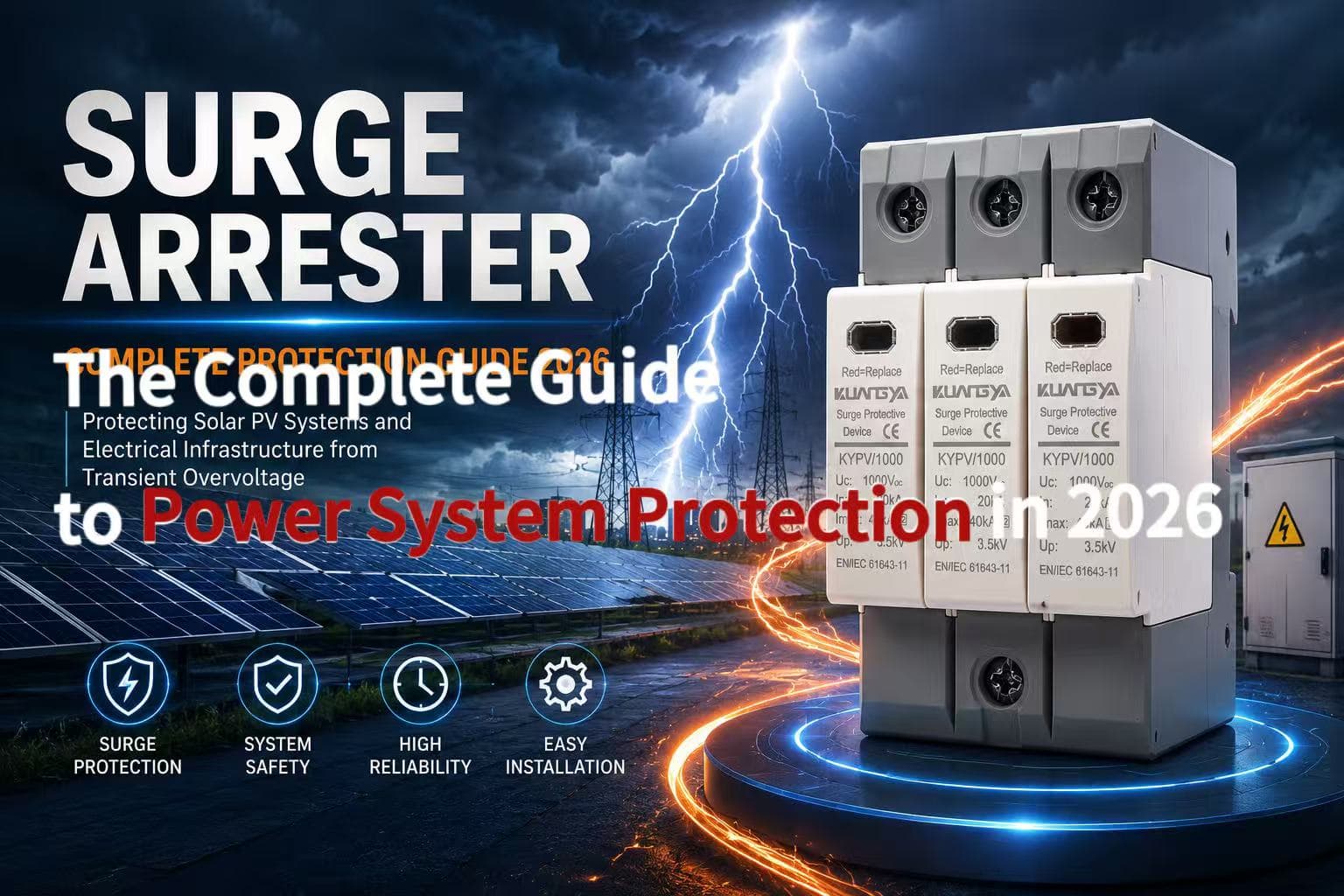
Surge Arrester: The Complete Guide to Power System Protection in 2026

소개

In today’s electrically connected world, power quality and equipment protection have become more critical than ever. From residential solar systems to industrial automation and commercial power distribution networks, electrical devices are increasingly sensitive to voltage fluctuations and transient surges. One lightning strike or switching surge can destroy expensive equipment within milliseconds.

This is where surge protection devices play a vital role.

A surge protection device is designed to safeguard electrical systems and equipment from transient overvoltages caused by lightning strikes, switching operations, and other electrical disturbances. By diverting excess voltage safely to the ground, surge arresters help maintain system reliability, reduce downtime, and extend equipment lifespAs renewable energems, EV charging stations, and smart electrical infrastructures continue expanding globally, the demand for reliable surge protection solutions is rapidly increasing. Whether in photovoltaic systems, industrial plants, data centers, or residential buildings, surge arresters are now considered an essential part of modern electrical protection design.

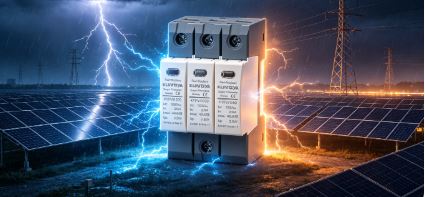
Surge arrester protection in solar photovoltaic systems

This comprehensive guide explains everything you need to know about surge arresters, including:

  • What a surge arrester is
  • How surge arresters work
  • Different types of surge arresters
  • Applications in power systems and solar installations
  • Key selection criteria
  • Differences between surge arresters and surge protective devices (SPDs)
  • Installation best practices
  • Maintenance and testing methods
  • International standards and certifications
  • Future trends in surge protection technology

What Is a Surge Arrester?

A surge arrester is an electrical protection device that limits overvoltage transients by redirecting surge current to the ground. It acts as a safety barrier between the power system and sensitive electrical equipment.

Under normal operating conditions, the surge arrester remains inactive and does not affect the system voltage. However, when a transient overvoltage occurs, the arrester instantly becomes conductive and safely discharges the excessive energy.

After the surge disappears, the arrester automatically returns to its high-resistance state.

Surge arresters are widely used in:

  • Power transmission systems
  • Distribution networks
  • Solar photovoltaic systems
  • Wind energy systems
  • Industrial machinery
  • Telecommunications
  • 데이터 센터
  • Residential electrical panels
  • 전기차 충전 인프라

Why Surge Protection Is Important

Electrical surges can occur unexpectedly and may cause severe damage to electrical systems.International IEC surge protection standards provide important guidelines for protecting electrical systems against transient overvoltage.

일반적인 원인은 다음과 같습니다:

Lightning Strikes

Lightning is one of the most destructive sources of transient overvoltage. Even indirect lightning strikes near transmission lines can induce massive voltage surges.

전환 작업

Switching transformers, motors, or capacitor banks can generate transient overvoltages inside the power network.

접지 오류

Improper grounding or insulation failure may create dangerous voltage spikes.

Electrostatic Discharge

Sensitive electronics can be damaged by sudden electrostatic energy release.

Utility Grid Disturbances

Power grid instability and fault clearing operations may also generate surges.

Without adequate surge protection, these events can lead to:

  • Equipment failure
  • 화재 위험
  • Production downtime
  • 데이터 손실
  • Reduced equipment lifespan
  • Expensive maintenance costs

How Overvoltage Protection Works?

The working principle of a surge arrester is based on voltage limitation and energy diversion.

Under normal voltage conditions:

  • The arrester behaves like an insulator
  • Minimal leakage current flows
  • The electrical system operates normally

During a surge event:

  • The arrester rapidly changes to a conductive state
  • Excessive surge current flows through the arrester
  • The surge energy is diverted safely to the ground
  • The protected equipment remains safe

After the transient disappears:

  • The arrester returns to its non-conductive state
  • Normal system operation resumes

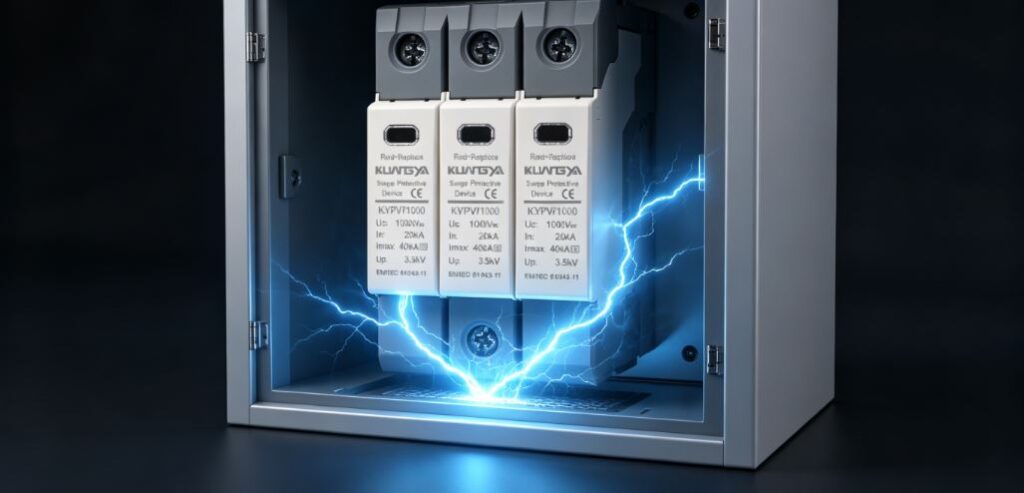
Modern surge arresters mainly use Metal Oxide Varistor (MOV) technology because of its fast response time and excellent energy absorption capability.


Main Components of a Protection Device

A typical surge arrester consists of several critical components.

구성 요소기능
금속 산화물 배리스터(MOV)Limits transient overvoltage
주택Provides insulation and environmental protection
Ground TerminalSafely directs surge current to earth
Disconnect DeviceIsolates damaged arrester from the circuit
Internal Thermal ProtectionPrevents overheating and fire risks

The MOV is considered the core component because it reacts almost instantly to voltage spikes.


Types of Overvoltage Protection Devices

Different electrical systems require different types of surge arresters.

1. Station Class Surge Arresters

These are used in high-voltage substations and utility transmission systems.

특징

  • High energy handling capacity
  • Excellent reliability
  • Suitable for critical infrastructure

애플리케이션

  • Transmission substations
  • Power generation facilities
  • Large industrial plants

2. Intermediate Class Surge Arresters

Intermediate class arresters are used in medium-voltage distribution systems.

특징

  • Moderate discharge capability
  • Cost-effective protection
  • Compact design

애플리케이션

  • Distribution substations
  • Industrial distribution systems

3. Distribution Class Surge Arresters

These arresters protect medium-voltage distribution equipment.

애플리케이션

  • Pole-mounted transformers
  • Overhead lines
  • 상업용 건물

4. Secondary Surge Arresters

These are designed for low-voltage systems and end-user protection.

애플리케이션

  • Residential buildings
  • Commercial facilities
  • Consumer electronics

5. Polymer Surge Arresters

Polymer-housed arresters are becoming increasingly popular due to their lightweight and pollution-resistant characteristics.

장점

  • Better contamination resistance
  • Lightweight structure
  • Improved safety
  • Excellent weather resistance

Surge Arrester vs Surge Protective Device (SPD)

Many people confuse surge arresters with SPDs. Although they share similar purposes, there are important differences.

기능서지 피뢰기서지 보호 장치(SPD)
주요 애플리케이션Power systemsLow-voltage equipment protection
전압 레벨Medium to high voltageLow voltage
설치 위치Utility and industrial systems건물 배전반 구축
주요 목적Divert lightning and switching surgesProtect sensitive electronics
기술MOV or gap typeMOV, TVS diode, gas discharge tube

In modern photovoltaic and industrial systems, both surge arresters and SPDs are often used together for layered protection.


Surge Protection in Solar PV Systems

The rapid growth of solar energy has made surge protection more important than ever.

Solar photovoltaic systems are highly exposed to lightning and switching surges because of:

  • Large outdoor installations
  • 긴 케이블 길이
  • Rooftop exposure
  • Sensitive inverters and controllers

Watch how transient overvoltage and lightning-induced surges may cause hidden inverter failures in solar power systems.

A single surge event can damage:

  • Solar inverters
  • 컴바이너 박스
  • 모니터링 시스템
  • 배터리 스토리지 시스템
  • PV modules

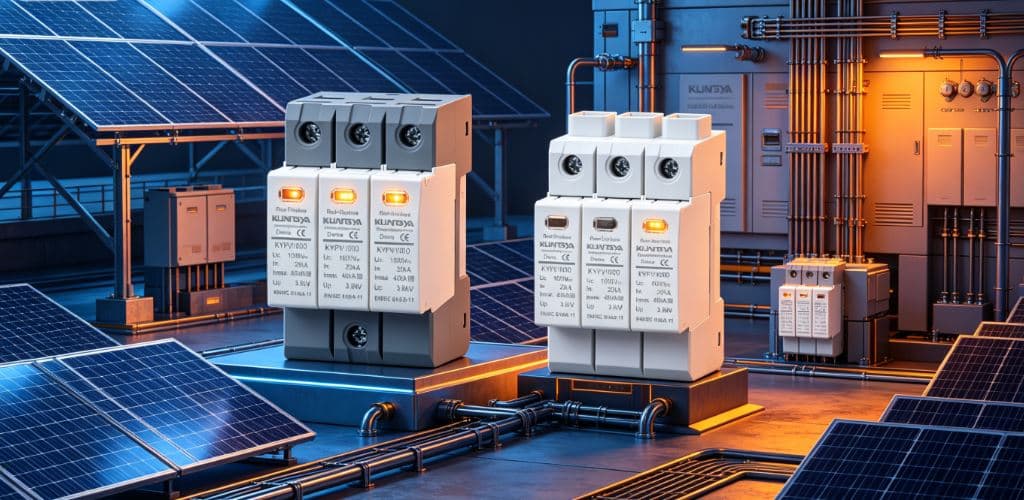
Recommended Protection Locations

Installation PointProtection Purpose
DC Side of PV SystemProtects inverter DC input
AC Output SideProtects AC distribution network
컴바이너 박스Prevents lightning-induced surges
Communication LinesProtects monitoring equipment

Importance of Surge Protection in Industrial Applications

Industrial environments often contain sensitive automation equipment such as:

  • PLC systems
  • Variable frequency drives (VFDs)
  • CNC machines
  • Robotics
  • Communication networks

Voltage surges can cause production interruptions and costly downtime.

Benefits of industrial surge arresters include:

  • Improved system reliability
  • Reduced maintenance costs
  • Longer equipment lifespan
  • Enhanced operational safety

Key Parameters for Selecting a Surge Arrester

Choosing the correct surge arrester is critical for effective protection.

1. Rated Voltage

The arrester voltage rating must match the system voltage.

2. Maximum Continuous Operating Voltage (MCOV)

MCOV defines the maximum voltage the arrester can withstand continuously.

3. Nominal Discharge Current

Indicates the surge current capability during standard test conditions.

4. Maximum Discharge Current

Defines the highest surge current the arrester can safely divert.

5. Energy Absorption Capability

Measures how much surge energy the arrester can handle.

6. Response Time

Faster response means better protection for sensitive equipment.

7. Environmental Resistance

For outdoor applications, resistance to UV, humidity, pollution, and temperature is important.


Protection Device Selection Guide

애플리케이션Recommended Arrester Type주요 요구 사항
Residential BuildingsSecondary SPDFast response
태양광 발전 시스템DC SPD + AC SPD자외선 저항
산업 자동화Distribution ClassHigh reliability
Transmission SystemsStation ClassHigh energy capacity
전기차 충전소유형 2 SPDStable grounding

설치 모범 사례

Proper installation significantly affects surge protection performance.

Use Short Ground Connections

Long grounding wires increase impedance and reduce protection effectiveness.

올바른 접지 확인

A low-resistance grounding system is essential.

Install Close to Equipment

The shorter the connection distance, the better the protection.

Coordinate Multiple Protection Levels

Use layered surge protection:

  • Type 1 SPD at service entrance
  • Type 2 SPD at distribution panel
  • Type 3 SPD near sensitive devices

Follow Manufacturer Guidelines

Always comply with installation instructions and local electrical standards.


Common Failure Modes of Protection Devices

Even high-quality surge arresters may fail under extreme conditions.

Thermal Runaway

Repeated surges may overheat MOV components.

Moisture Ingress

Poor sealing can allow water penetration.

Aging

Environmental stress gradually degrades performance.

Excessive Surge Energy

Extremely large surges may exceed arrester capacity.


유지 관리 및 테스트

Regular inspection helps ensure reliable protection.

육안 검사

Check for:

  • Cracks
  • Burn marks
  • 부식
  • Mechanical damage

Leakage Current Measurement

Increased leakage current may indicate deterioration.

Infrared Thermography

Detects overheating components.

Insulation Resistance Testing

Confirms proper insulation performance.


International Standards for Surge Protection

Compliance with international standards ensures safety and reliability.

표준설명
IEC 60099Surge arrester standards
IEC 61643Low-voltage SPD standards
UL 1449SPD safety standard
IEEE C62 SeriesSurge protection guidelines
EN 50539PV surge protection standard

Manufacturers serving international markets should ensure compliance with regional certification requirements.


Future Trends in Surge Protection Technology

The surge protection industry continues evolving rapidly.

Smart Surge Monitoring

Modern SPDs now include remote monitoring functions.

IoT Integration

Connected protection devices improve predictive maintenance.

Higher Renewable Energy Demand

Solar and battery systems require advanced DC protection technologies.

Compact Modular Designs

Modern surge arresters are becoming smaller and easier to maintain.

Enhanced Fire Safety

New thermal disconnect technologies improve operational safety.


How to Choose the Right Surge Protection Manufacturer

Selecting a reliable manufacturer is essential for long-term system reliability.

Consider the following factors:

  • International certifications
  • Product testing capability
  • Manufacturing quality control
  • 기술 지원
  • OEM/ODM 서비스
  • Global project experience
  • Warranty policy

A trusted supplier can help ensure stable product performance and regulatory compliance.


자주 묻는 질문(FAQ)

What is the difference between a lightning arrester and a surge arrester?

A lightning arrester mainly protects against lightning-induced surges, while a surge arrester protects against multiple types of transient overvoltages.

Can surge arresters fail?

Yes. Repeated surges, aging, or excessive energy exposure may damage the arrester over time.

Are surge arresters required in solar systems?

Yes. Solar installations are highly exposed to lightning and switching surges, Modern solar SPD solutions help protect photovoltaic systems against lightning-induced surges.

How long does a surge arrester last?

The lifespan depends on environmental conditions and surge frequency. High-quality products may last many years under normal operation.

Where should a surge arrester be installed?

It should be installed as close as possible to the equipment being protected and connected to a reliable grounding system.


결론

Surge arresters play a critical role in protecting modern electrical systems from transient overvoltage damage. As power systems become more advanced and sensitive electronic equipment becomes more widespread, effective surge protection is no longer optional — it is essential.

From utility substations to solar photovoltaic systems and industrial automation, surge arresters help ensure system stability, operational safety, and equipment longevity.

When selecting a surge arrester, engineers and buyers should carefully evaluate:

  • 정격 전압
  • Discharge capability
  • 환경 적합성
  • Compliance standards
  • Installation requirements

By combining proper product selection, correct installation, and regular maintenance, businesses can significantly reduce electrical risks and improve long-term reliability.

As renewable energy and smart electrical infrastructure continue growing worldwide, surge protection technology will remain a key foundation of modern power system safety.Choosing complete surge protection solutions helps improve long-term electrical system reliability.

cnkuangya
cnkuangya
기사 : 26