웽양 공업구 웨칭 원저우 325000
근무 시간
월요일~금요일: 오전 7시~오후 7시
주말: 주말: 오전 10시 - 오후 5시
웽양 공업구 웨칭 원저우 325000
근무 시간
월요일~금요일: 오전 7시~오후 7시
주말: 주말: 오전 10시 - 오후 5시

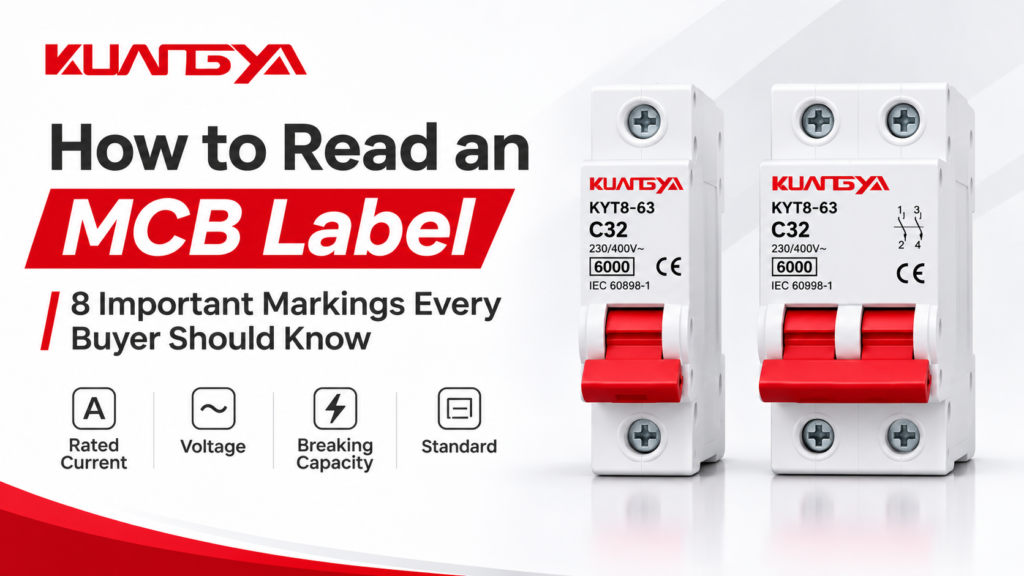
An MCB 라벨 소형 회로 차단기의 전기 등급, 보호 특성 및 적용 가능한 표준에 대한 필수 정보를 제공합니다. MCB 라벨을 읽는 방법을 이해하면 전기 유통업체, 패널 제작자, 계약자 및 조달 팀이 애플리케이션에 적합한 회로 차단기를 선택하는 데 도움이 됩니다.
정격 전류 및 전압에서 트리핑 곡선 및 차단 용량에 이르기까지 각 마킹은 구매자가 주문하기 전에 확인해야 할 중요한 기술 정보를 제공합니다.
이 가이드에서는 8가지 중요한 MCB 라벨 마킹을 설명하고 MCB를 선택할 때 무엇을 찾아야 하는지 보여줍니다.
제조업체 이름 또는 브랜드는 일반적으로 MCB 상단 근처에 인쇄되어 있습니다.
이 표시는 제품의 브랜드를 식별하며, 구매자가 제조업체와 제품군을 구분하는 데 도움이 됩니다.
유통업체와 OEM 구매자의 경우, 재판매용 제품이나 자체 브랜드 프로젝트용 제품을 구매할 때 브랜드 식별이 특히 중요합니다.
MCB 제조업체를 평가할 때 구매자는 다음 사항도 확인해야 합니다.
예를 들어, KUANGYA AC MCB 제품 모델에 따라 다양한 정격 전류, 트립 곡선 및 차단 용량 옵션을 제공하며, 주거용, 상업용 및 경공업용 배전 분야에 적합하도록 설계되었습니다.
모델 번호는 특정 MCB 제품 또는 제품 시리즈를 식별합니다.
모델에 따라 치수, 전기 정격, 차단 용량 및 설치 특성이 다를 수 있습니다.
모델 번호를 통해 구매자는 다음 사항을 확인할 수 있습니다.
그러나 모델 번호 체계는 제조업체마다 다릅니다. 모든 제조업체가 동일한 명명 형식을 따라야 한다는 보편적인 규칙은 없습니다.
견적을 요청할 때 구매자는 가능한 경우 전체 모델 번호를 제공해야 합니다.
이를 통해 공급업체가 정확한 제품을 식별하고 외관이 비슷한 모델 간의 혼동을 방지할 수 있습니다.
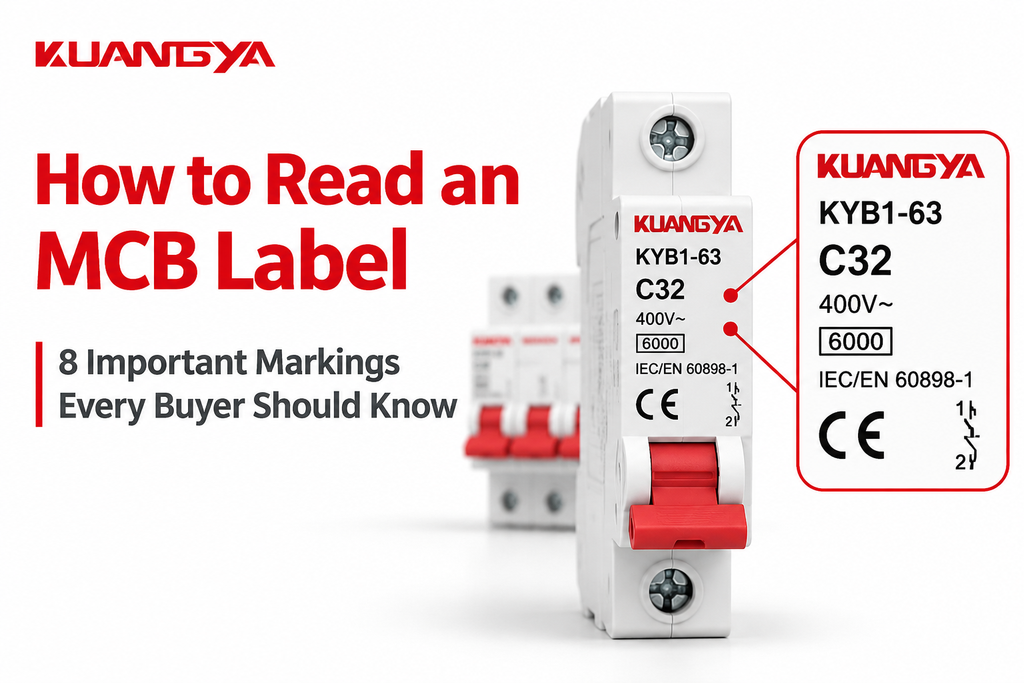
정격 전류는 MCB 라벨에서 가장 중요한 전기 매개변수 중 하나입니다.
일반적으로 암페어(A)로 표현됩니다.
일반적인 MCB 전류 정격에는 다음이 포함됩니다:
예를 들어, C32라는 표시는 MCB의 정격 전류가 32A이고 C형 트립 특성을 가진다는 것을 의미합니다.
정격 전류는 지정된 기준 조건에서의 전류 정격을 나타냅니다. 이는 전류가 32A를 조금 초과하더라도 차단기가 즉시 트립된다는 것을 의미하지 않습니다.
실제 트립 동작은 차단기의 시간-전류 특성과 작동 조건에 따라 달라집니다.
정격 전류를 선택할 때 엔지니어는 다음을 고려해야 합니다:
정격 전류가 적절하지 않은 MCB를 선택하면 원치 않는 트립이 발생하거나 회로 보호가 충분하지 않을 수 있습니다.
정격 사용 전압은 명시된 조건에서 MCB가 작동하도록 설계된 전압을 나타냅니다.
일반적으로 볼트(V)로 표시됩니다.
예를 들어
| 표시 | 의미 |
|---|---|
| 230V AC | 특정 교류 용도에 대한 정격 전압 |
| 400V AC | 특정 교류 용도에 대한 정격 전압 |
| 230/400V 교류 | 다양한 시스템 구성에 대한 정격 전압 |
실제 전압 적합성은 제조업체가 명시한 정격, 극 구성 및 배선 방식에 따라 달라집니다.
예를 들어, 일반적인 3상 230/400V 시스템에서는:
구매자는 차단기의 외관이나 극수에만 의존하지 말고, 사용하려는 회로의 전압 정격을 항상 확인해야 합니다.
중요: AC용 차단기와 DC용 차단기는 자동으로 서로 호환되지 않습니다. DC 용도에는 해당 DC 전압 및 전류에 대해 정격이 지정되고 시험을 거친 차단기를 사용해야 합니다.
태양광 및 기타 DC 배전 시스템의 경우, 다음을 참조하십시오. KUANGYA DC MCB 제품 특정 모델에 대한 승인된 전압 및 극 구성을 확인하십시오.
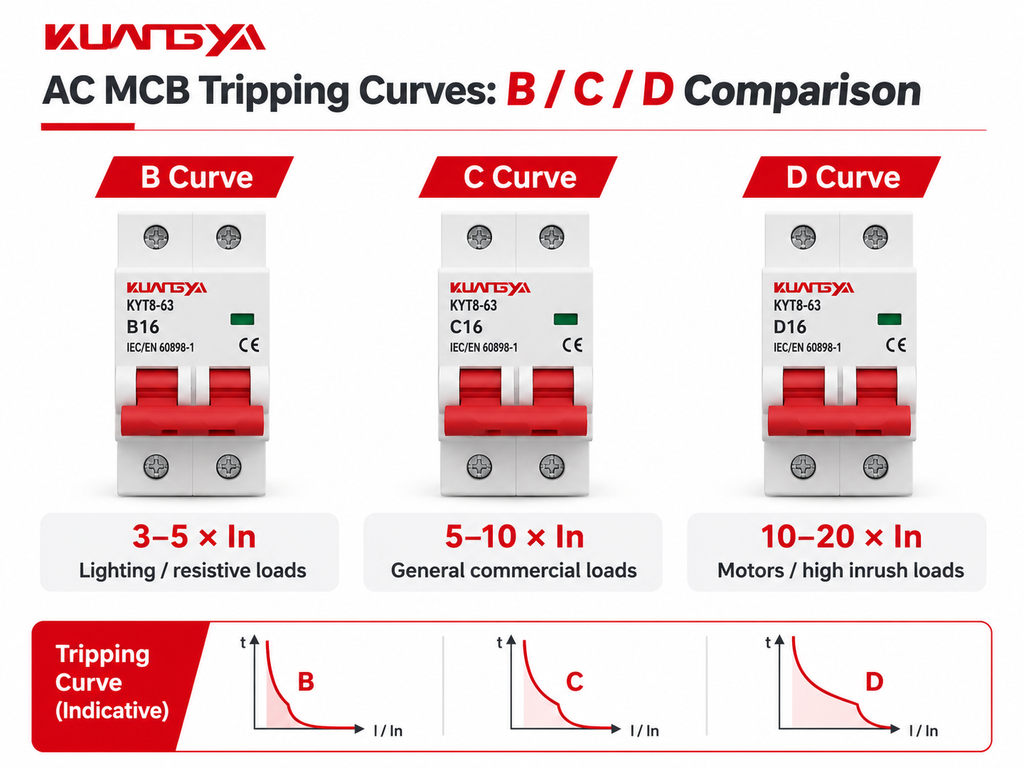
B, C 및 D라는 글자는 MCB의 순간 자기 트리핑 특성을 나타냅니다.
이들은 차단기가 특히 단락 조건에서 고전류 급증에 어떻게 반응하는지를 설명합니다.
IEC 60898-1에 따라 기존의 순간 트리핑 범위는 다음과 같습니다:
| 곡선 | 자기 트리핑 범위 | 일반적인 애플리케이션 |
|---|---|---|
| B | 3–5 × In | 저항성 부하 및 일반 조명 |
| C | 5–10 × In | 일반 상업 및 산업 부하 |
| D | 10–20 × In | 높은 기동 전류를 가진 부하 |
예를 들어, C32 MCB는 정격 전류가 32A이고 C형 트리핑 특성을 가지고 있습니다.
관습적인 순간 자기 작동 범위는 약 160–320A입니다.
적절한 트립 곡선은 부하 특성, 기동 전류 및 고장 루프 조건에 따라 달라집니다.
트립 곡선이 높을수록 무조건 더 좋은 것은 아닙니다. 선택한 곡선은 적절한 보호 기능을 제공하면서 정상적인 장비 기동 중 불필요한 트립을 방지해야 합니다.
보다 자세한 비교 내용은 관련 가이드를 참조하세요.
B, C 및 D형 MCB 트립 곡선: 차이점 이해하기
[기존 B/C/D형 MCB 관련 문서의 링크를 여기에 삽입하세요.]
차단 용량은 지정된 시험 조건에서 차단기가 단락 전류를 차단할 수 있는 능력을 나타냅니다.
일반적으로 킬로암페어(kA)로 표현됩니다.
일반적인 표시는 다음과 같습니다:
예를 들어
6000의 표시는 해당 제품 표준 및 정격 조건에서 6,000A의 선언된 단락 용량을 나타냅니다.
IEC 60898-1에 따라 관련 정격 단락 용량은 Icn으로 지정됩니다.
더 높은 차단 용량은 차단기가 필요한 전압 및 작동 조건에서 정격이 적용되는 경우 더 높은 예상 단락 전류를 차단할 수 있게 합니다.
MCB를 선정할 때 구매자와 엔지니어는 다음 사항을 확인해야 합니다.
차단용량은 설치 장소의 고장 조건에 적합해야 합니다.
10kA MCB가 항상 필요하다거나 6kA MCB가 모든 설치에 적합하다고 가정하지 마십시오.
MCB에 인쇄된 표준 번호는 해당 제품에 적용된 기술 요구사항과 시험 체계에 관한 정보를 제공합니다.
Two important standards for low-voltage circuit breakers are:
IEC 60898-1
This standard covers AC circuit breakers for overcurrent protection in household and similar installations.
It applies to specified AC circuit breakers with rated voltages not exceeding 440V between phases and rated currents not exceeding 125A.
Official reference:
IEC 60898-1:2015 + Amendment 1:2019 — IEC Webstore
IEC 60947-2
This standard covers low-voltage circuit breakers intended for applications involving instructed or skilled persons.
The 2024 edition applies to circuit breakers for circuits with rated voltages up to 1,000V AC or 1,500V DC, within its scope.
Official reference:
IEC 60947-2:2024 — IEC Webstore
These standards have different scopes. Buyers should check which standard applies to the specific product and intended application.
A standard number printed on the product should not, by itself, be treated as proof of independent certification or conformity.
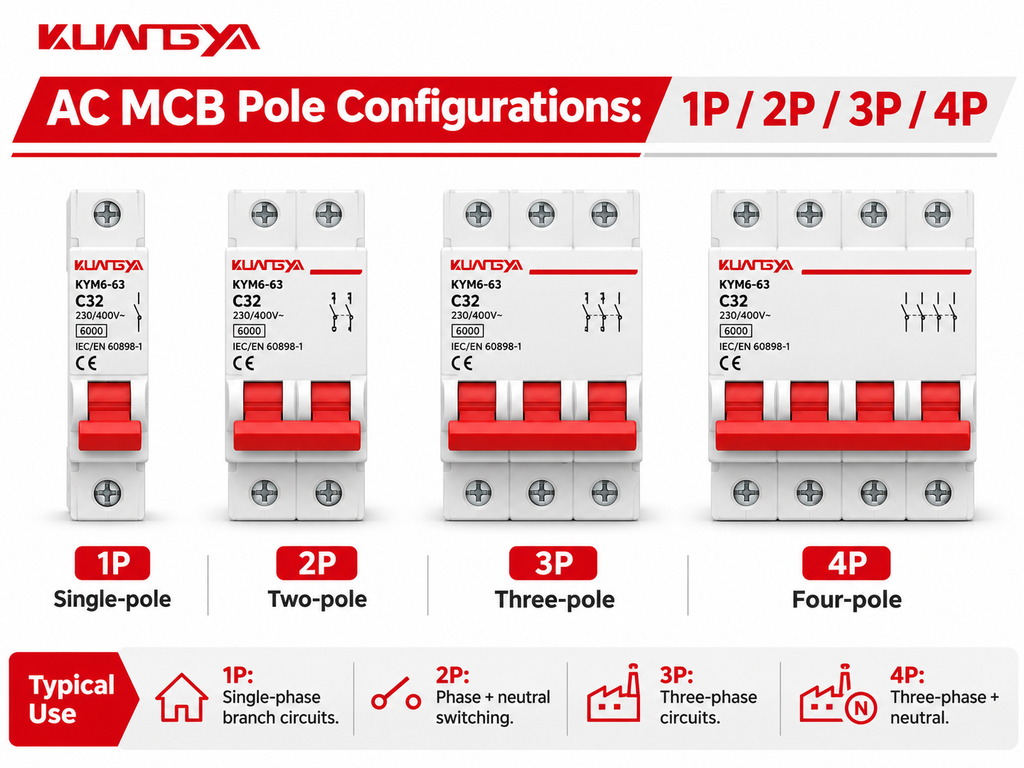
The number of poles determines the circuit configuration that the MCB is designed to protect and switch.
Common configurations include:
| 구성 | Typical description |
|---|---|
| 1P | Single-pole circuit breaker |
| 2P | Two-pole circuit breaker |
| 3P | Three-pole circuit breaker |
| 4P | Four-pole circuit breaker |
Different pole configurations are used in different electrical distribution systems.
예를 들어
Buyers should also check the terminal markings and wiring diagram, where provided.
These markings help identify the correct connection points and installation arrangement.
The number of poles alone does not determine the breaker’s complete protection capability. The rated voltage, switching arrangement, and manufacturer’s wiring instructions must also be considered.
Let’s put the markings together.
Imagine an MCB with the following information printed on its front:
| 표시 | 설명 |
|---|---|
| C32 | Type C tripping curve, 32A rated current |
| 230/400V 교류 | Declared operational voltage |
| 6000 | 6kA rated short-circuit capacity, subject to applicable standard |
| IEC 60898-1 | Applicable product standard |
| 2P | Two-pole configuration |
| 50/60Hz | Rated operating frequency, if marked |
| Brand logo | Manufacturer or product brand |
| Model number | Product identification |
By understanding these markings, buyers can quickly identify the basic electrical characteristics of an MCB.
However, the front label is only the starting point. Full technical verification should also include the product datasheet, dimensions, terminal capacity, temperature conditions, and applicable test documentation.
Before placing an MCB order, procurement teams should confirm the following information with the manufacturer or supplier.
| 항목 | Information to confirm |
|---|---|
| Product type | AC MCB or DC MCB |
| 정격 전류 | 6A, 10A, 16A, 32A, etc. |
| Tripping curve | B, C or D |
| 정격 전압 | Required AC or DC voltage |
| 차단 용량 | 4.5kA, 6kA, 10kA, etc. |
| 폴 수 | 1P, 2P, 3P or 4P |
| Applicable standard | IEC 60898-1 or IEC 60947-2, as applicable |
| Product dimensions | Required panel and DIN rail compatibility |
| 문서 | Datasheet, test reports and relevant conformity documents |
| Branding | Standard brand or OEM/private label |
For bulk orders, confirming the label artwork and product specifications before mass production is also important.
This helps reduce marking errors, packaging inconsistencies, and unnecessary communication during order processing.
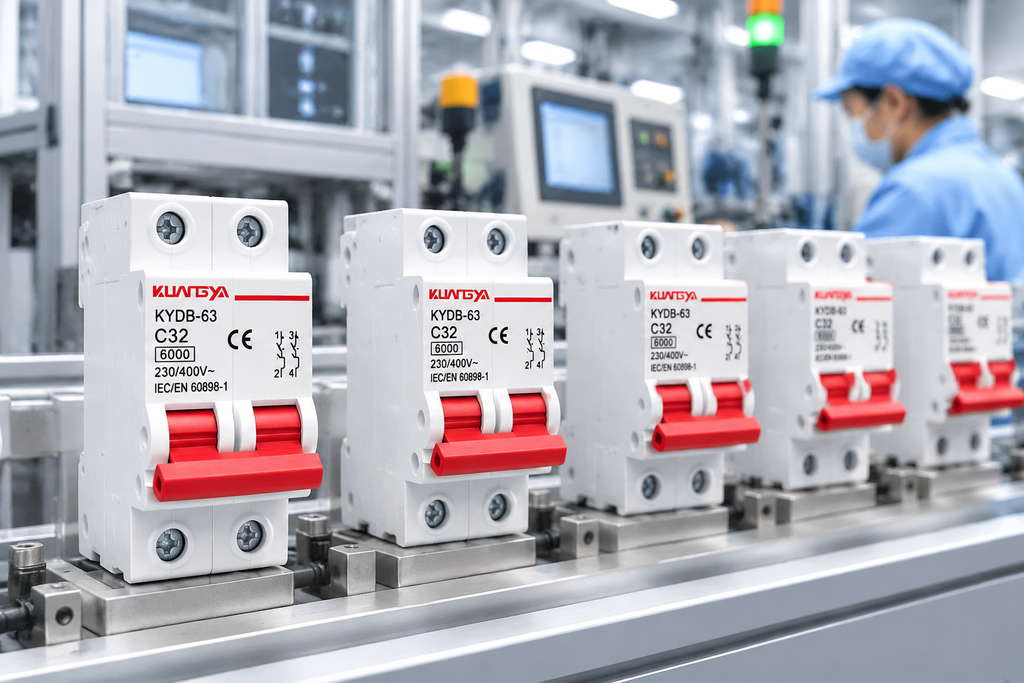
Understanding MCB markings helps buyers compare products, but the manufacturer’s production capability and quality control are equally important.
For distributors, wholesalers, and panel builders, a reliable supplier should be able to provide:
KUANGYA manufactures low-voltage circuit protection products, including AC MCBs and DC MCBs, for international distributors, contractors, and OEM customers.
Our AC MCB range includes different rated currents, tripping curves, pole configurations, and breaking capacity options depending on the model.
Explore our products:
For product specifications, OEM requirements, or bulk purchasing inquiries, contact our team to discuss your application.
C32 means the MCB has a rated current of 32A and a Type C tripping characteristic. Under IEC 60898-1, the conventional instantaneous magnetic tripping range for Type C is 5–10 times the rated current.
6000 generally indicates a rated short-circuit capacity of 6,000A (6kA). The exact designation and conditions depend on the applicable product standard and rated voltage.
The main difference is their rated short-circuit breaking capacity. A 10kA MCB has a higher declared capacity than a 6kA MCB under the applicable specified conditions.
It indicates the declared voltage ratings for the relevant electrical system configurations. The exact suitability must be checked against the manufacturer’s voltage and pole configuration specifications.
Not automatically. AC and DC circuits have different arc-extinguishing requirements. Always select a circuit breaker specifically rated for the intended DC voltage and current.
IEC 60898-1 covers AC circuit breakers for household and similar installations, while IEC 60947-2 covers low-voltage circuit breakers within its industrial and professional application scope. Their requirements and rating designations should not be assumed to be interchangeable.
No. The rated current must match the load, cable capacity, and installation conditions. Selecting an unnecessarily high current rating may compromise proper circuit protection.
Provide the required AC or DC type, rated current, rated voltage, tripping curve, breaking capacity, pole configuration, applicable standard, and estimated order quantity. If OEM branding is required, include your label and packaging requirements.
Reading an MCB label correctly is an essential step in selecting the right circuit breaker.
From rated current and voltage to tripping curves, breaking capacity, and applicable standards, each marking provides important information about the product’s intended operation.
For distributors, contractors, and procurement teams, understanding these specifications makes it easier to compare products, communicate technical requirements, and purchase the correct MCB for each application.
If you are looking for an MCB manufacturer offering different specifications and OEM options, contact KUANGYA to discuss your requirements.

