웽양 공업구 웨칭 원저우 325000
근무 시간
월요일~금요일: 오전 7시~오후 7시
주말: 주말: 오전 10시 - 오후 5시
웽양 공업구 웨칭 원저우 325000
근무 시간
월요일~금요일: 오전 7시~오후 7시
주말: 주말: 오전 10시 - 오후 5시

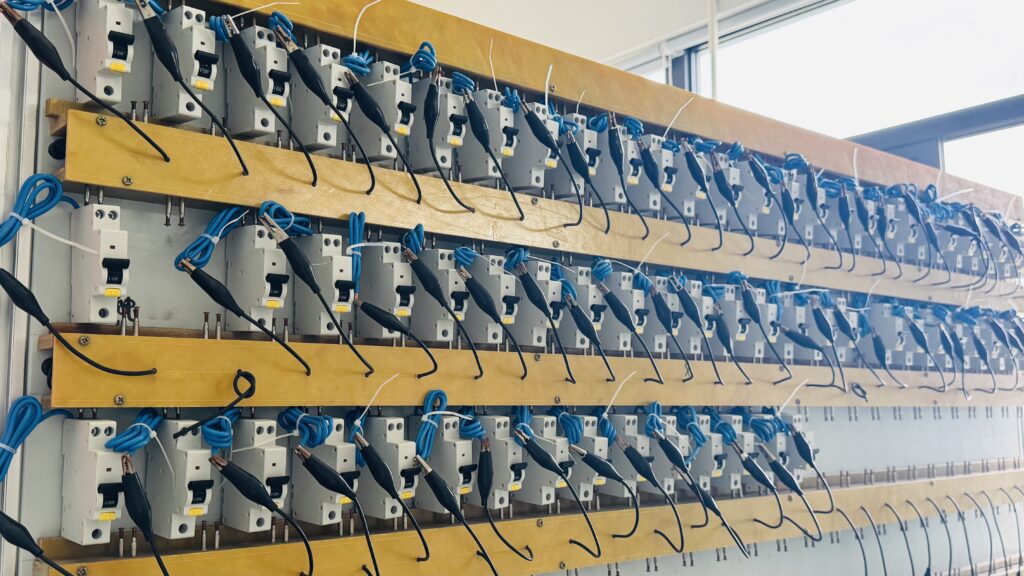
No—do not replace a 20A breaker with a 25A breaker unless a qualified electrician has verified that the entire circuit is rated for 25A. A breaker protects the wiring. Increasing only the breaker rating can let conductors overheat before the breaker trips, creating a fire risk.
This screening tool does not replace an electrician or local code review.
차단기 교체가 왜 그렇게 위험한지 이해하려면 먼저 전기 부품을 개별 부품으로 생각하지 말고 균형 잡힌 시스템으로 보아야 합니다. 집의 모든 회로는 삼위일체로 구성된 구성 요소가 함께 작동합니다:
배관 시스템이라고 생각하세요. 부하는 수도꼭지, 전선은 수도꼭지에 연결된 파이프, 차단기는 해당 파이프의 압력 안전 밸브입니다. 60PSI의 수압을 처리할 수 있는 파이프가 있다면 55PSI에서 해제되는 안전 밸브를 설치하는 것입니다. 서지가 발생하면 밸브가 열리고 파이프가 파열되는 것을 방지합니다.
Now, imagine replacing that 55 PSI valve with a 100 PSI one because the faucet you want to use requires more pressure than the old valve would allow. The valve won't trip anymore, but the pipe is now subjected to pressure it was never designed for. It’s a ticking time bomb. Swapping a 20A breaker for a 25A one does the exact same thing to the wires hidden in your walls.
핵심 요점: The circuit breaker’s amp rating is not about how much power you can get. It is a safety rating matched to the size of the wire in the wall. The overcurrent protective device must be coordinated with conductor ampacity, terminal temperature ratings, equipment instructions, load characteristics, installation conditions, and the electrical rules applicable at the site.
So, what actually happens when a wire is forced to carry more current than it’s rated for? The result isn't a small problem; it's the primary cause of electrical fires. According to the 국제 전기 안전 재단(ESFI), home electrical fires account for an estimated 51,000 fires each year in the United States and about $1.3 billion in property damage. Many of these are preventable and start inside the walls.
25A 차단기가 있지만 배선 정격이 20A(일반적으로 12게이지 전선)인 회로에 25A 부하를 넣으면 차단기는 만족합니다. 차단기는 25A를 보고 이를 처리할 수 있다는 것을 알기 때문입니다. 하지만 전선은 그렇지 않습니다. 토스터의 발열체처럼 전선이 뜨거워지기 시작합니다. 이는 재앙적인 사건의 연쇄로 이어집니다:
이 순서도는 위험한 순서를 보여줍니다:
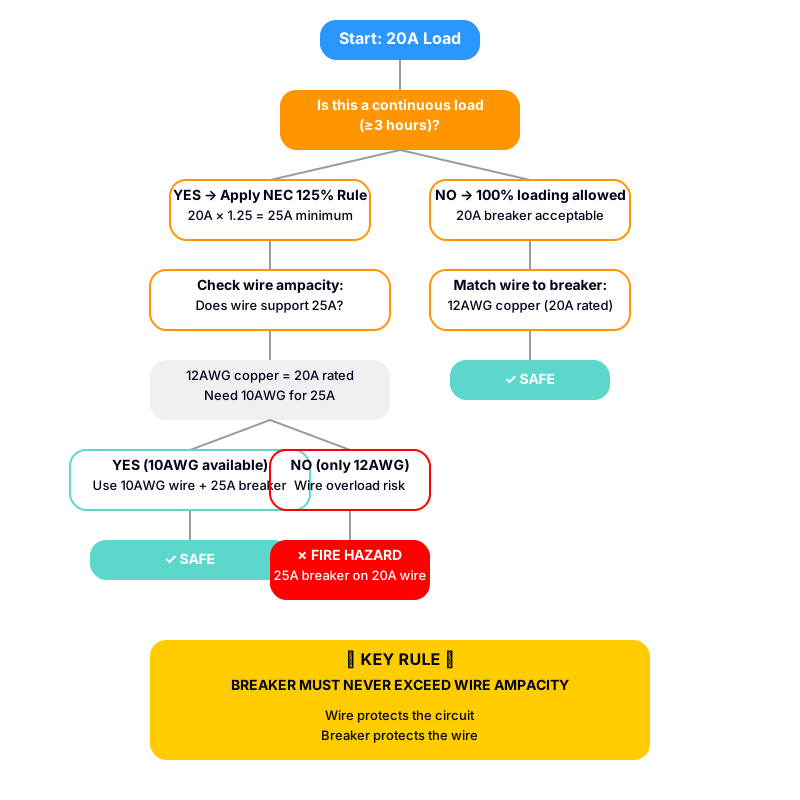
This isn’t just a theoretical risk. It violates fundamental safety codes written to prevent exactly this scenario. The National Electrical Code (NEC) Section 240.4 states plainly that "conductors...shall be protected against overcurrent in accordance with their ampacities." Bypassing this rule by installing an oversized breaker is not a clever workaround; it is creating a serious, code-violating fire hazard.
핵심 요점: 대형 차단기는 회로의 주요 안전 기능을 무효화합니다. 이로 인해 벽의 배선이 과열되어 보호 절연이 녹아 전기 화재의 주요 원인인 아크 결함이 발생할 수 있습니다.
Now that you understand the danger, let’s focus on the correct engineering approach. The question isn't "how can I force my circuit to handle more power?" but rather, "what does my load 진정으로 require, and what kind of circuit is needed to provide that power safely?"
주요 주제는 바로 이것입니다: 부하가 20A인 경우 올바른 차단기를 선택하는 방법은 무엇인가요? 그 해답은 한 가지 중요한 개념에 달려 있습니다: 연속 로드와 비연속 로드 비교.
The National Electrical Code (NEC) in Article 100 defines a "continuous load" as any load where the maximum current is expected to continue for 3시간 이상.
Why does this distinction matter so much? Because continuous loads generate sustained heat—not just in the appliance, but all along the circuit's wiring and within the breaker itself. To manage this heat and provide a safe operational buffer, the NEC has what is commonly known as the 125% 규칙.
Let's break that down.
비연속 부하를 위한 크기 조정:
정말 비연속적인 부하가 있는 경우 규칙은 간단합니다. 차단기와 전선의 정격은 예상 부하의 100% 이상이어야 합니다.
지속적인 부하를 위한 크기 조정:
부하가 연속적인 경우 125% 규칙을 적용해야 합니다.
이것은 대부분의 DIY 사용자가 놓치는 중요한 정보입니다. 그들은 결과(25A)만 보고 25A 차단기를 구입하고 규칙에 따라 전체 회로, 전선을 포함하여 25A 정격으로 설정합니다.
핵심 요점: 부하 유형에 따라 필요한 안전 여유도가 결정됩니다. 3시간 이상 작동하는 부하의 경우 차단기 크기를 조정해야 합니다. 및 the wire to handle 125% of the load's rated current.
Let's turn this theory into a practical, repeatable process. When faced with a tripping breaker or a new appliance, follow these four steps to determine the safe and correct course of action. This decision-making process is visualized in the flowchart below.
1단계: 부하와 그 특성 파악하기
먼저 기기의 명판을 확인하세요. 암페어(A) 또는 와트(W) 등급을 찾아야 합니다. 와트만 표시되어 있으면 와트를 전압(보통 120V 또는 240V)으로 나누어 암페어를 계산할 수 있습니다.
다음으로 연속 부하인지 비연속 부하인지 확인합니다. 최대 출력으로 3시간 이상 실행할 수 있나요? 여기서는 정직하고 보수적으로 생각하세요. 전기차 충전기는 확실히 연속적입니다. 작업장의 대형 컴프레서는 그럴 수 있습니다. 간헐적으로 사용하는 테이블 톱은 그렇지 않습니다.
2단계: 적절한 크기 조정 규칙 적용하기
이제 로드 유형에 따라 NEC 규칙을 적용합니다.
Let's use our 20A load example:
3단계: 다음 표준 크기 구분선 선택하기
회로 차단기는 표준 크기(15A, 20A, 25A, 30A, 40A 등)로 제공됩니다. 다음 표준 크기 중 하나를 선택해야 합니다. 보다 크거나 같은 2단계에서 필요한 회로 용량을 입력합니다.
4단계: 차단기에 전선 연결하기
이 단계는 가장 중요하고 가장 자주 건너뛰는 단계입니다. 사용하는 와이어 게이지 필수 have a current-carrying capacity (ampacity) equal to or greater than the rating of the breaker you selected in Step 3. You cannot protect a wire with a breaker that is rated higher than the wire's own ampacity.
현재 벽에 있는 전선이 12AWG(20A 회로의 경우)인 경우 25A 차단기를 설치할 수 없습니다. 두 가지 안전한 옵션이 있습니다. 부하를 20A 미만으로 유지하도록 관리하거나 25A 차단기와 새로운 10AWG 전선을 사용하여 완전히 새로운 회로를 실행하는 것입니다. 세 번째 옵션은 없습니다.
To make this crystal clear, let's put it in a table. The relationship between the breaker and the wire is non-negotiable. The values below are for standard NM-B (Romex) copper wiring commonly used in residential construction.
표 1: 표준 차단기 및 최소 구리선 크기
| 차단기 정격(암페어) | 필요한 전선 게이지(AWG) | 일반적인 애플리케이션 |
|---|---|---|
| 15A | 14 AWG | 일반 조명 회로, 표준 콘센트 |
| 20A | 12 AWG | 주방 콘센트, 차고 콘센트, 전용 가전 제품 |
| 25A | 10 AWG | 대형 단일 기기(A/C 장치), 연속 부하 |
| 30A | 10 AWG | 전기 건조기, 온수기 |
| 40A | 8 AWG | 전기레인지, 대형 장비 |
| 50A | 6 AWG | 전기 레인지, EV 충전기 |
| 60A | 6 AWG | 대형 EV 충전기, 서브 패널 |
기억하세요: 게이지 숫자가 작을수록 와이어가 더 두껍다는 뜻입니다. 10AWG 와이어는 물리적으로 더 두껍고 12AWG 와이어보다 더 많은 열과 전류를 처리할 수 있습니다.
Now, let's see how the 125% rule affects our choices with a clear example.
표 2: 연속 부하에 대한 사이징 예시
| 시나리오 매개변수 | 가치 |
|---|---|
| 어플라이언스 부하 | 20A(연속) |
| 1단계: 125% 규칙 적용 | 20A × 1.25 = 25A |
| 2단계: 차단기 선택 | 다음 표준 사이즈 업은 25A |
| 3단계: 전선과 차단기 연결 | 표 1에서 25A 차단기에는 다음이 필요합니다. 10 AWG 와이어 |
| 결론 | 25A 차단기와 10AWG 와이어로 새 회로를 실행해야 합니다. |
핵심 요점: 어떤 경우에도 차단기가 연결된 전선의 암페어 용량보다 높은 정격 암페어를 가진 차단기를 설치하지 마세요. 차단기 크기에 따라 필요한 전선 크기가 결정됩니다. 더 큰 차단기가 필요한 경우 필수 더 큰 와이어를 설치합니다.
Let's apply this knowledge to a few common situations.
사례 연구 1: 좌절에 빠진 목공예가
이것이 시작 시나리오입니다. 사용자에게 약 15A를 소비하는 새 테이블 톱이 있지만 시동 전류가 커서 가끔 20A 차단기를 트립합니다. 비연속 부하입니다.
사례 연구 2: 새로운 EV 충전기
A homeowner buys a 40A Level 2 EV charger. They see "40A" and think they need a 40A breaker.
사례 연구 3: 주방 조리대 회로
주방 회로는 규정에서 요구하는 12AWG 와이어를 사용하는 20A 회로입니다. 한 주택 소유자가 1500W(12.5A) 커피 메이커와 1200W(10A) 토스터를 동시에 가동하고 있습니다. 총 부하는 22.5A이며 20A 차단기가 트립됩니다.
A tripping circuit breaker is not a faulty component that needs to be overpowered. It is a messenger, delivering a critical piece of information: your circuit is being pushed beyond its designated safety limit. Your first question should never be, "How can I stop it from tripping?" but rather, "Why is it tripping?"
By "upgrading" a 20A breaker to 25A on existing 12 AWG wire, you are not increasing your power; you are removing your safety. You are gambling with the integrity of your home's wiring for a tiny bit of convenience. It's a bet that thousands of people lose every year in devastating house fires.
해당 위치에 더 많은 전력을 공급하는 유일한 안전한 방법은 적절한 차단기를 사용하여 새 회로를 실행하는 것입니다. 및 와이어 크기로 부하를 처리할 수 있습니다. 이 영역은 바로 가기를 위한 영역이 아닙니다.
안전을 위한 간곡한 호소: 이러한 원칙을 이해하는 것은 모든 주택 소유자에게 중요하지만, 회로 차단기 교체를 포함한 주 전기 패널 내부의 모든 작업은 감전 위험이 있으므로 자격을 갖춘 전기 기술자가 수행해야 합니다. 전기 기사는 작업을 안전하게 수행하고 코딩할 수 있는 도구, 교육 및 지식을 갖추고 있습니다.
안전을 지키고, 함께 일하는 사람들의 권력을 존중하며, 메신저를 침묵시키지 마세요.
1. 20A 차단기를 25A 차단기로 교체할 수 있는 시기가 있나요?
Only if the existing wire connected to that breaker is 10 AWG or thicker. If a previous installer used 10 AWG wire for a 20A circuit (which is safe, just over-engineered), then the wire can handle a 25A breaker. However, you must be 100% certain of the wire gauge. When in doubt, assume it's matched to the breaker (12 AWG) and cannot be upsized.
2. 차단기가 계속 트립되면 어떻게 해야 하나요?
회로에서 모든 플러그를 뽑아주세요. 차단기가 재설정되고 유지되면 과부하가 문제인 것입니다. 너무 많은 플러그를 꽂고 있는 것입니다. 아무것도 연결하지 않은 상태에서 차단기가 즉시 다시 작동하면 단락(위험한 배선 결함)이 발생한 것일 수 있으므로 즉시 전기 기술자에게 연락해야 합니다.
3. 알루미늄 배선은 어떻게 되나요? 이러한 규칙이 변경되나요?
Aluminum conductors require connector compatibility, correct preparation, specified torque, and ampacity calculations based on the governing code, insulation rating, terminal temperature rating, ambient temperature, and installation method. Do not select a conductor from a simplified AWG table; older aluminum branch-circuit wiring should be assessed by a qualified electrician.
4. 20A 회로에 15A 콘센트를 사용할 수 있나요?
In some jurisdictions, including certain U.S. NEC applications, a 15A receptacle may be permitted on a 20A multi-outlet branch circuit under specific conditions. This is not a universal rule. Confirm the receptacle configuration, listing, load, equipment instructions, and locally adopted code.
5. 30A 차단기가 10AWG 전선용으로도 표시되어 있는 이유는 무엇인가요? 10AWG는 25A용인 줄 알았는데요.
A conductor size does not have one universal breaker rating. Allowable ampacity depends on conductor material, insulation temperature rating, terminal limitations, ambient temperature, conductor grouping, installation method, equipment instructions, and locally adopted rules. A qualified designer must evaluate the complete circuit before choosing 25A or 30A protection.
6. 차단기가 만졌을 때 뜨겁게 느껴집니다. 이게 정상인가요?
상당한 부하가 걸리는 차단기는 약간 따뜻하게 느껴질 수 있지만 절대 뜨거워서는 안 됩니다. 차단기가 뜨거우면 연결 불량, 차단기 내부 결함 또는 지속적인 과부하를 나타낼 수 있습니다. 이는 경고 신호이므로 전기 기술자에게 점검을 받아야 합니다.
7. 표준 차단기와 AFCI 또는 GFCI 차단기의 차이점은 무엇인가요?
8. 전선이 도관(파이프) 안에 있는 경우 더 큰 차단기를 사용할 수 있나요?
Not necessarily. While conduit provides physical protection, bundling multiple current-carrying wires in the same conduit traps heat. This often requires you to "derate" the wires, meaning you have to treat them as if their ampacity is lower. In some cases, putting wires in conduit might mean you need an even 더 두꺼운 전선을 동일한 차단기 크기로 사용하세요. 이것은 전문적인 계산이 필수적인 또 다른 영역입니다.

