温州市岳陽工業区 325000
勤務時間
月曜日~金曜日:午前7時~午後7時
週末午前10時~午後5時
温州市岳陽工業区 325000
勤務時間
月曜日~金曜日:午前7時~午後7時
週末午前10時~午後5時

No—do not replace a 20A breaker with a 25A breaker unless a qualified electrician has verified that the entire circuit is rated for 25A. A breaker protects the wiring. Increasing only the breaker rating can let conductors overheat before the breaker trips, creating a fire risk.
This screening tool does not replace an electrician or local code review.
ブレーカーを交換することがなぜ危険なのかを理解するには、まず電気部品を個々の部品として考えるのをやめて、バランスの取れたシステムとしてとらえる必要がある。家庭内のすべての回路は、三位一体となった部品で構成されています:
配管システムのようなものだと考えてほしい。負荷は蛇口、ワイヤーはそれに接続されたパイプ、ブレーカーはそのパイプにある圧力安全弁です。60PSIの水圧に対応する定格のパイプがあれば、55PSIで開放する安全弁を取り付ける。サージが発生した場合、バルブが開き、パイプの破裂を防ぐ。.
Now, imagine replacing that 55 PSI valve with a 100 PSI one because the faucet you want to use requires more pressure than the old valve would allow. The valve won't trip anymore, but the pipe is now subjected to pressure it was never designed for. It’s a ticking time bomb. Swapping a 20A breaker for a 25A one does the exact same thing to the wires hidden in your walls.
重要な収穫 The circuit breaker’s amp rating is not about how much power you can get. It is a safety rating matched to the size of the wire in the wall. The overcurrent protective device must be coordinated with conductor ampacity, terminal temperature ratings, equipment instructions, load characteristics, installation conditions, and the electrical rules applicable at the site.
So, what actually happens when a wire is forced to carry more current than it’s rated for? The result isn't a small problem; it's the primary cause of electrical fires. According to the 国際電気安全財団(ESFI), home electrical fires account for an estimated 51,000 fires each year in the United States and about $1.3 billion in property damage. Many of these are preventable and start inside the walls.
25Aのブレーカーがある回路に25Aの負荷をかけるが、配線は20A定格(通常12ゲージのワイヤー)しかない場合、ブレーカーは満足する。ブレーカーは25Aを見て、それを処理できることを知ります。しかし、ワイヤーはそうはいかない。トースターのエレメントのように熱を持ち始める。これが悲惨な連鎖を引き起こす:
このフローチャートは危険なシーケンスを示している:
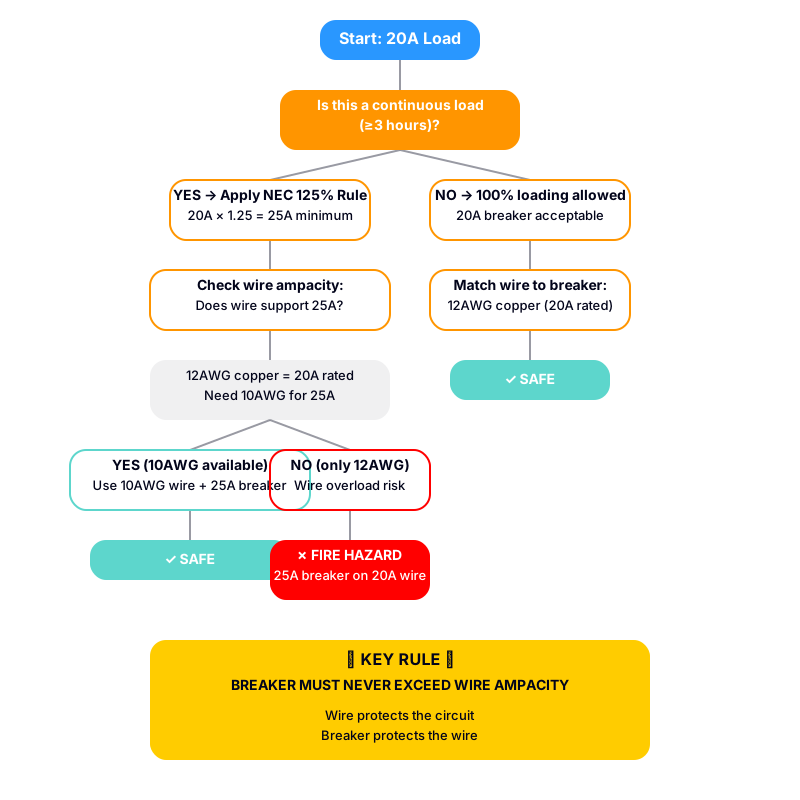
This isn’t just a theoretical risk. It violates fundamental safety codes written to prevent exactly this scenario. The National Electrical Code (NEC) Section 240.4 states plainly that "conductors...shall be protected against overcurrent in accordance with their ampacities." Bypassing this rule by installing an oversized breaker is not a clever workaround; it is creating a serious, code-violating fire hazard.
重要な収穫 オーバーサイズのブレーカーは、回路の主要な安全機能を無効にします。壁の配線が過熱し、保護絶縁が溶けて、電気火災の主な原因であるアークフォルトが発生します。.
Now that you understand the danger, let’s focus on the correct engineering approach. The question isn't "how can I force my circuit to handle more power?" but rather, "what does my load 本当に require, and what kind of circuit is needed to provide that power safely?"
主なトピックはこれだ: 負荷が20Aの場合、どのようにブレーカーを選べばいいのか? その答えは、ある重要な概念にかかっている: 連続負荷と非連続負荷。.
The National Electrical Code (NEC) in Article 100 defines a "continuous load" as any load where the maximum current is expected to continue for 3時間以上.
Why does this distinction matter so much? Because continuous loads generate sustained heat—not just in the appliance, but all along the circuit's wiring and within the breaker itself. To manage this heat and provide a safe operational buffer, the NEC has what is commonly known as the 125%ルール.
Let's break that down.
非連続負荷に対するサイジング:
本当に非連続的な負荷がある場合、ルールは簡単です。ブレーカーとワイヤーの定格は、予想される負荷の少なくとも100%でなければなりません。.
連続負荷に対するサイジング:
負荷が連続的な場合は、125%ルールを適用しなければならない。.
これは、ほとんどのDIY業者が見逃している重要な情報である。25Aという結果を見て、25Aのブレーカーを買うだけです。 全回路, ワイヤーを含め、定格25Aであること。.
重要な収穫 負荷の種類によって、必要な安全マージンが決まります。3時間以上稼働する負荷の場合、ブレーカーのサイズを決める必要があります。 そして the wire to handle 125% of the load's rated current.
Let's turn this theory into a practical, repeatable process. When faced with a tripping breaker or a new appliance, follow these four steps to determine the safe and correct course of action. This decision-making process is visualized in the flowchart below.
ステップ1:負荷とその特性を特定する
まず、電化製品の銘板を見てください。定格アンペア数(A)または定格ワット数(W)を確認します。ワット数しか記載されていない場合は、ワット数を電圧(通常は120Vまたは240V)で割ることでアンペアを計算できます。.
次に、連続負荷か非連続負荷かを判断します。最大出力で3時間以上稼働しますか?ここでは正直に控えめに。EV充電器は間違いなく連続的です。作業場の大型コンプレッサーはそうかもしれない。断続的に使用するテーブルソーはそうではない。.
ステップ2:適切なサイズルールを適用する
次に、負荷タイプに基づいたNECルールを適用する。.
Let's use our 20A load example:
ステップ3:次の標準サイズブレーカーの選択
サーキットブレーカーには標準サイズ(15A、20A、25A、30A、40Aなど)がある。次の標準サイズを選択する必要があります。 以上 ステップ2で求めた必要な回路容量。.
ステップ4:ワイヤーをブレーカーに合わせる
これは最も重要で、最もよく省略されるステップです。使用するワイヤーゲージ マスト have a current-carrying capacity (ampacity) equal to or greater than the rating of the breaker you selected in Step 3. You cannot protect a wire with a breaker that is rated higher than the wire's own ampacity.
現在壁の中にあるワイヤーが12 AWG(20Aの回路用)の場合、25Aのブレーカーを取り付けることは絶対にできません。負荷が20A以下になるように管理するか、25Aのブレーカーと新しい10AWGワイヤーで完全に新しい回路を作るかです。第3の選択肢はありません。.
To make this crystal clear, let's put it in a table. The relationship between the breaker and the wire is non-negotiable. The values below are for standard NM-B (Romex) copper wiring commonly used in residential construction.
表 1:標準ブレーカーと最小銅線サイズ
| ブレーカー定格(アンペア) | 必要なワイヤーゲージ (AWG) | 一般的なアプリケーション |
|---|---|---|
| 15A | 14 AWG | 一般照明回路、標準コンセント |
| 20A | 12 AWG | キッチン用コンセント、ガレージ用コンセント、専用電化製品 |
| 25A | 10 AWG | 大型の単一機器(A/Cユニット)、連続負荷 |
| 30A | 10 AWG | 電気乾燥機、温水器 |
| 40A | 8 AWG | 電気レンジ、大型機器 |
| 50A | 6 AWG | 電気レンジ、EV充電器 |
| 60A | 6 AWG | 大型EV充電器、サブパネル |
覚えておいてほしい:ゲージ数が小さいほど、ワイヤーは太い。. 10AWGワイヤーは12AWGワイヤーよりも物理的に太く、より多くの熱と電流を扱うことができる。.
Now, let's see how the 125% rule affects our choices with a clear example.
表2:連続負荷のサイジング例
| シナリオ・パラメーター | 価値 |
|---|---|
| 機器負荷 | 20A(連続) |
| ステップ1:125%ルールを適用する | 20a × 1.25 = 25a |
| ステップ2:ブレーカーの選択 | 次の標準サイズは 25A |
| ステップ3:ワイヤーをブレーカーに合わせる | 表1より、25Aのブレーカーに必要なのは 10AWGワイヤー |
| 結論 | 25Aのブレーカーと10AWGのワイヤーで新しい回路を敷設する必要があります。. |
重要な収穫 どのような場合でも、接続する電線のアンペア容量より高い定格電流のブレーカーを取り付けないでください。ブレーカーのサイズによって、必要なワイヤーのサイズが決まります。より大きなブレーカーが必要な場合は マスト より太いワイヤーを取り付ける。.
Let's apply this knowledge to a few common situations.
ケーススタディ1:イライラしている木工職人
これが冒頭のシナリオです。ユーザーは新しいテーブルソーを使用しており、約15Aを消費するが、起動電流が大きく、時折20Aのブレーカーが落ちる。これは非連続負荷です。.
ケーススタディ2:新しいEV充電器
A homeowner buys a 40A Level 2 EV charger. They see "40A" and think they need a 40A breaker.
ケーススタディ3:キッチンカウンター回路
キッチンの回路は、法令で定められた通り、12 AWGのワイヤーで20Aの回路です。1500W(12.5A)のコーヒーメーカーと1200W(10A)のトースターを同時に使用している。合計負荷は22.5Aで、20Aのブレーカーが落ちる。.
A tripping circuit breaker is not a faulty component that needs to be overpowered. It is a messenger, delivering a critical piece of information: your circuit is being pushed beyond its designated safety limit. Your first question should never be, "How can I stop it from tripping?" but rather, "Why is it tripping?"
By "upgrading" a 20A breaker to 25A on existing 12 AWG wire, you are not increasing your power; you are removing your safety. You are gambling with the integrity of your home's wiring for a tiny bit of convenience. It's a bet that thousands of people lose every year in devastating house fires.
より多くの電力をその場所に供給する唯一の安全な方法は、適切なブレーカーを使用して新しい回路を敷設することです。 そして 負荷に対応するワイヤーのサイズ。これは近道ができる分野ではありません。.
安全への緊急の嘆願 これらの原則を理解することは、どの住宅所有者にとっても非常に重要ですが、サーキットブレーカーの変更を含め、メイン電気パネル内の作業は感電死の危険性があるため、資格を持ち、免許を持った電気技師が行う必要があります。電気工事士は、安全に、かつ規定通りに作業を行うための道具、訓練、知識を持っています。.
安全な場所に留まり、一緒に仕事をしている権力を尊重し、決してメッセンジャーを黙らせないこと。.
1.20Aのブレーカーを25Aに交換することはできますか?
Only if the existing wire connected to that breaker is 10 AWG or thicker. If a previous installer used 10 AWG wire for a 20A circuit (which is safe, just over-engineered), then the wire can handle a 25A breaker. However, you must be 100% certain of the wire gauge. When in doubt, assume it's matched to the breaker (12 AWG) and cannot be upsized.
2.ブレーカーが落ち続けている場合、まず何をすべきですか?
回路からすべてのプラグを抜く。ブレーカーがリセットされ、保持される場合、問題は過負荷です。コンセントを入れすぎているのです。何も差し込まない状態でブレーカーがすぐに落ちる場合は、ショート(危険な配線障害)している可能性が高いので、すぐに電気技師に連絡してください。.
3.アルミ配線についてはどうですか?ルールは変わるのか?
Aluminum conductors require connector compatibility, correct preparation, specified torque, and ampacity calculations based on the governing code, insulation rating, terminal temperature rating, ambient temperature, and installation method. Do not select a conductor from a simplified AWG table; older aluminum branch-circuit wiring should be assessed by a qualified electrician.
4.20Aの回路で15Aのコンセントを使用できますか?
In some jurisdictions, including certain U.S. NEC applications, a 15A receptacle may be permitted on a 20A multi-outlet branch circuit under specific conditions. This is not a universal rule. Confirm the receptacle configuration, listing, load, equipment instructions, and locally adopted code.
5.なぜ30Aのブレーカーが10AWGワイヤーにも対応しているのですか?10AWGは25A用だと思っていました。.
A conductor size does not have one universal breaker rating. Allowable ampacity depends on conductor material, insulation temperature rating, terminal limitations, ambient temperature, conductor grouping, installation method, equipment instructions, and locally adopted rules. A qualified designer must evaluate the complete circuit before choosing 25A or 30A protection.
6.ブレーカーが触ると熱く感じる。これは正常ですか?
大きな負荷がかかっているブレーカーは、わずかに温かく感じることがありますが、決して熱くなってはいけません。ブレーカーが熱い場合は、接続不良、ブレーカー内部の故障、または過負荷が持続している可能性があります。これは警告サインであり、電気技術者に点検してもらうべきである。.
7.標準ブレーカーと AFCI または GFCI ブレーカーの違いは何ですか?
8.電線が電線管(パイプ)に入っている場合、より大きなブレーカーを使用できますか?
Not necessarily. While conduit provides physical protection, bundling multiple current-carrying wires in the same conduit traps heat. This often requires you to "derate" the wires, meaning you have to treat them as if their ampacity is lower. In some cases, putting wires in conduit might mean you need an even 厚い 同じブレーカー・サイズであれば、同じ電線を使用した場合これも専門的な計算が不可欠な分野である。.

