温州市岳陽工業区 325000
勤務時間
月曜日~金曜日:午前7時~午後7時
週末午前10時~午後5時
温州市岳陽工業区 325000
勤務時間
月曜日~金曜日:午前7時~午後7時
週末午前10時~午後5時

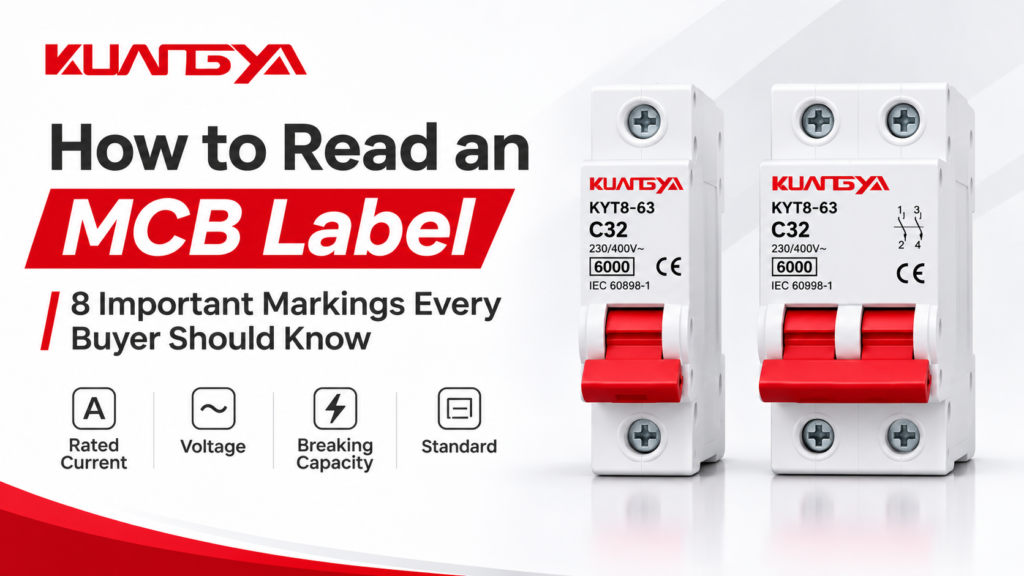
アン MCBの銘板 ミニチュアサーキットブレーカの電気定格、保護特性、および適用規格に関する重要な情報が記載されています。MCB銘板の読み方を理解することで、電気機器の販売業者、盤メーカー、施工業者、調達担当者は、用途に適したサーキットブレーカを選定できます。
定格電流や定格電圧から、トリップ特性曲線や遮断容量まで、各表示には重要な技術情報が示されており、購入者は発注前に確認する必要があります。
本ガイドでは、MCB銘板に記載される重要な表示8項目を説明し、MCBを選定する際の確認事項をご紹介します。
メーカー名またはブランド名は、通常、MCBの上部付近に印字されています。
この表示は製品のブランドを示し、購入者がメーカーや製品シリーズの違いを識別するのに役立ちます。
販売代理店やOEM購入者にとって、再販用またはプライベートブランド製品向けに購入する際、ブランドの識別は特に重要です。
MCBメーカーを評価する際、購入者は次の点も確認する必要があります。
例えば、, KUANGYA交流用配線用遮断器(MCB)製品 住宅、商業施設、および軽工業向けの配電用途に対応するよう設計されており、モデルに応じて定格電流、トリップ特性曲線、および遮断容量の選択肢が異なります。
型式番号は、特定のMCB製品または製品シリーズを識別するものです。
モデルによって、寸法、電気定格、遮断容量、および設置特性が異なる場合があります。
型式番号から、購入者は以下を確認できます。
ただし、型番の付番方式はメーカーによって異なります。すべてのメーカーが同じ命名形式に従わなければならないという共通ルールはありません。
見積もりを依頼する際は、可能な限り完全な型番を提示してください。
これにより、サプライヤーは正しい製品を特定し、外観が似ている型番との混同を避けることができます。
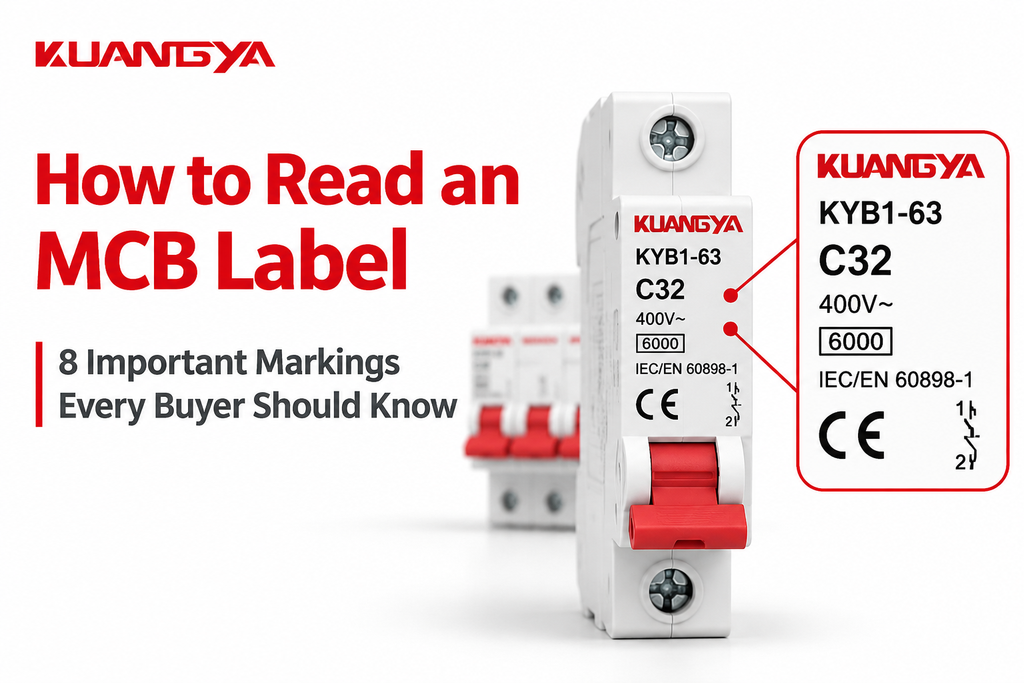
定格電流は、MCBラベル上で最も重要な電気パラメータの一つです。
一般的にはアンペア(A)で表されます。
一般的なMCBの電流定格には以下が含まれます:
例えば、C32の表示は、MCBの定格電流が32Aであり、タイプCのトリッピング特性を持つことを意味します。
定格電流は、指定された基準条件下での電流定格を示します。これは、電流が32Aをわずかに超えた場合でも、ブレーカーが即座にトリップすることを意味するものではありません。
実際のトリッピング挙動は、ブレーカーの時間-電流特性および動作条件に依存します。
定格電流を選定する際、エンジニアは以下を考慮しなければなりません:
定格電流が適切でないMCBを選定すると、不要動作や回路保護の不足を招くおそれがあります。
定格使用電圧は、規定された条件下でMCBが動作するよう設計された電圧を示します。
一般にボルト(V)で表示されます。
例えば、こうだ:
| マーキング | 意味 |
|---|---|
| AC230V | 指定されたACアプリケーションの定格電圧 |
| AC400V | 指定されたACアプリケーションの定格電圧 |
| 230/400V AC | 各種システム構成における定格電圧 |
実際に適用可能な電圧は、メーカーが公表する定格、極数構成、および配線方式によって異なります。
例えば、一般的な三相230/400Vシステムでは:
購入者は、遮断器の外観や極数だけに頼らず、必ず使用する回路の定格電圧を確認してください。
重要: AC用遮断器とDC用遮断器は、必ずしも相互に交換して使用できるわけではありません。DC用途では、該当する直流電圧および電流に対して、個別に定格が定められ、試験済みの遮断器が必要です。
太陽光発電システムおよびその他の直流配電システムについては、次を参照してください。 KUANGYA DC MCB製品 および特定のモデルの承認された電圧と極構成を確認してください。
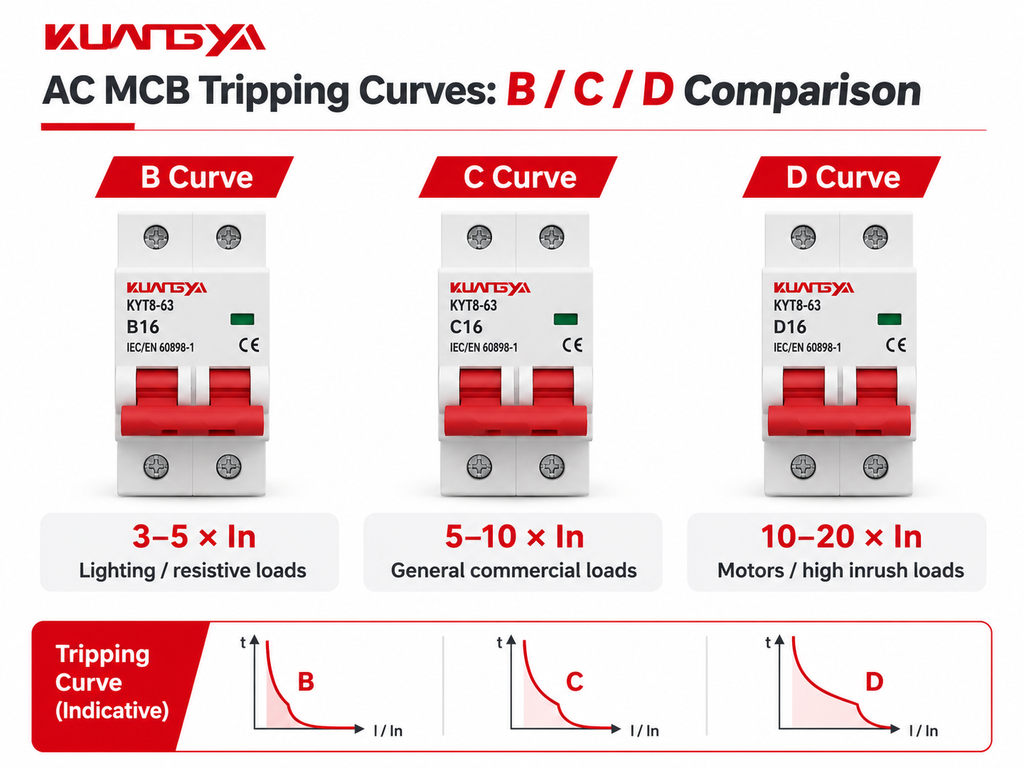
B、C、Dの文字は、MCBの瞬時磁気トリッピング特性を示します。
これらは、特に短絡条件下での高電流サージに対するブレーカーの反応を説明します。
IEC 60898-1に基づく従来の瞬時トリッピング範囲は次のとおりです:
| カーブ | 磁気トリッピング範囲 | 一般的な用途 |
|---|---|---|
| B | 3–5 × In | 抵抗負荷および一般照明 |
| C | 5–10 × In | 一般的な商業および産業負荷 |
| D | 10–20 × In | 高い始動電流を持つ負荷 |
例えば、C32 MCBは定格電流が32Aで、C形のトリップ特性を備えています。
その従来の瞬時電磁動作範囲は、約160~320Aです。
適切なトリップ特性は、負荷特性、始動電流、および故障ループの条件によって異なります。
トリップ特性の設定が高いほど優れているとは限りません。通常の機器始動時に不要なトリップを防ぎながら、適切な保護を確保できる特性を選定する必要があります。
より詳細な比較については、関連ガイドをご覧ください。
B、C、D形MCBのトリップ特性:違いを理解する
[既存のB/C/D形MCB関連記事へのリンクをここに挿入してください。]
破壊容量は、指定された試験条件下で短絡電流を遮断する回路遮断器の能力を示します。
一般的にはキロアンペア(kA)で表されます。
一般的なマーキングには以下が含まれます:
例えば、こうだ:
6000のマーキングは、適用される製品標準および定格条件下での6,000Aの宣言された短絡容量を示します。
IEC 60898-1の下で、関連する定格短絡容量はIcnとして指定されています。
より高い遮断容量を持つ遮断器は、定格が必要な電圧および動作条件に適用される場合、より大きな予想短絡電流を遮断できます。
MCBを選定する際、購入者および技術者は以下を確認してください。
遮断容量は、設置場所の故障条件に適合している必要があります。
10kAのMCBが常に必要である、または6kAのMCBがあらゆる設置環境に適していると決めつけないでください。
The standard number printed on an MCB provides information about the technical requirements and test framework used for the product.
Two important standards for low-voltage circuit breakers are:
IEC 60898-1
This standard covers AC circuit breakers for overcurrent protection in household and similar installations.
It applies to specified AC circuit breakers with rated voltages not exceeding 440V between phases and rated currents not exceeding 125A.
Official reference:
IEC 60898-1:2015 + Amendment 1:2019 — IEC Webstore
IEC 60947-2
This standard covers low-voltage circuit breakers intended for applications involving instructed or skilled persons.
The 2024 edition applies to circuit breakers for circuits with rated voltages up to 1,000V AC or 1,500V DC, within its scope.
Official reference:
IEC 60947-2:2024 — IEC Webstore
These standards have different scopes. Buyers should check which standard applies to the specific product and intended application.
A standard number printed on the product should not, by itself, be treated as proof of independent certification or conformity.
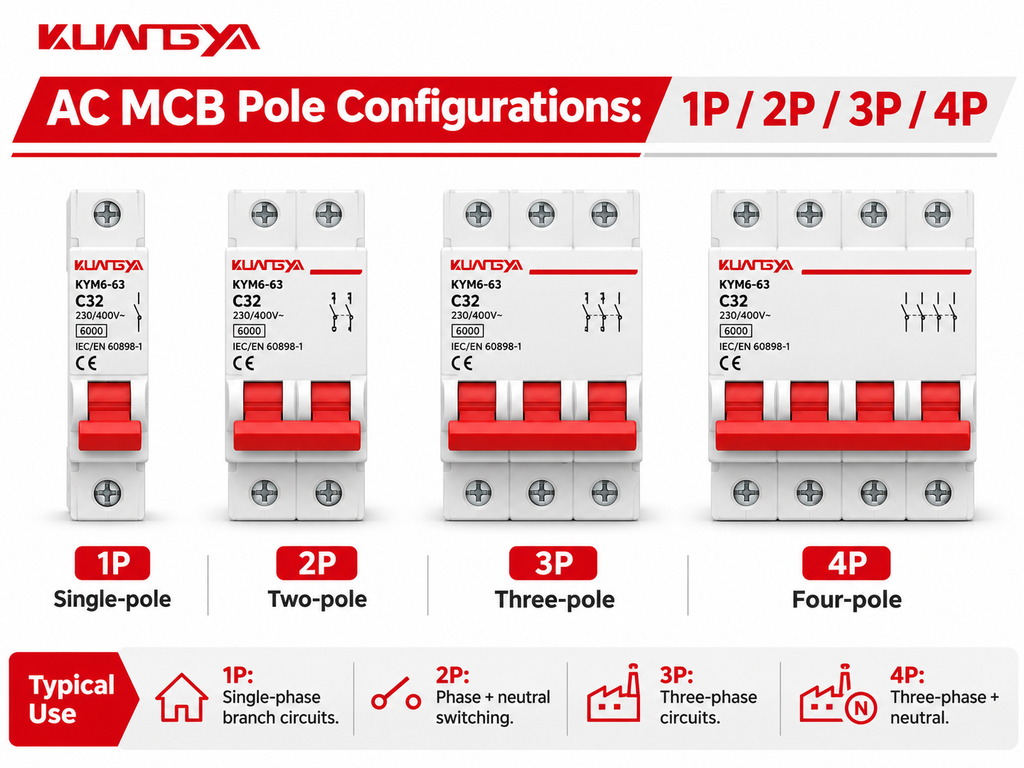
The number of poles determines the circuit configuration that the MCB is designed to protect and switch.
Common configurations include:
| 構成 | Typical description |
|---|---|
| 1P | Single-pole circuit breaker |
| 2P | Two-pole circuit breaker |
| 3P | Three-pole circuit breaker |
| 4P | Four-pole circuit breaker |
Different pole configurations are used in different electrical distribution systems.
例えば、こうだ:
Buyers should also check the terminal markings and wiring diagram, where provided.
These markings help identify the correct connection points and installation arrangement.
The number of poles alone does not determine the breaker’s complete protection capability. The rated voltage, switching arrangement, and manufacturer’s wiring instructions must also be considered.
Let’s put the markings together.
Imagine an MCB with the following information printed on its front:
| マーキング | 説明 |
|---|---|
| C32 | Type C tripping curve, 32A rated current |
| 230/400V AC | Declared operational voltage |
| 6000 | 6kA rated short-circuit capacity, subject to applicable standard |
| IEC 60898-1 | Applicable product standard |
| 2P | Two-pole configuration |
| 50/60Hz | Rated operating frequency, if marked |
| Brand logo | Manufacturer or product brand |
| Model number | Product identification |
By understanding these markings, buyers can quickly identify the basic electrical characteristics of an MCB.
However, the front label is only the starting point. Full technical verification should also include the product datasheet, dimensions, terminal capacity, temperature conditions, and applicable test documentation.
Before placing an MCB order, procurement teams should confirm the following information with the manufacturer or supplier.
| 項目 | Information to confirm |
|---|---|
| Product type | AC MCB or DC MCB |
| 定格電流 | 6A, 10A, 16A, 32A, etc. |
| Tripping curve | B, C or D |
| 定格電圧 | Required AC or DC voltage |
| 破断能力 | 4.5kA, 6kA, 10kA, etc. |
| ポール数 | 1P, 2P, 3P or 4P |
| Applicable standard | IEC 60898-1 or IEC 60947-2, as applicable |
| Product dimensions | Required panel and DIN rail compatibility |
| ドキュメンテーション | Datasheet, test reports and relevant conformity documents |
| Branding | Standard brand or OEM/private label |
For bulk orders, confirming the label artwork and product specifications before mass production is also important.
This helps reduce marking errors, packaging inconsistencies, and unnecessary communication during order processing.
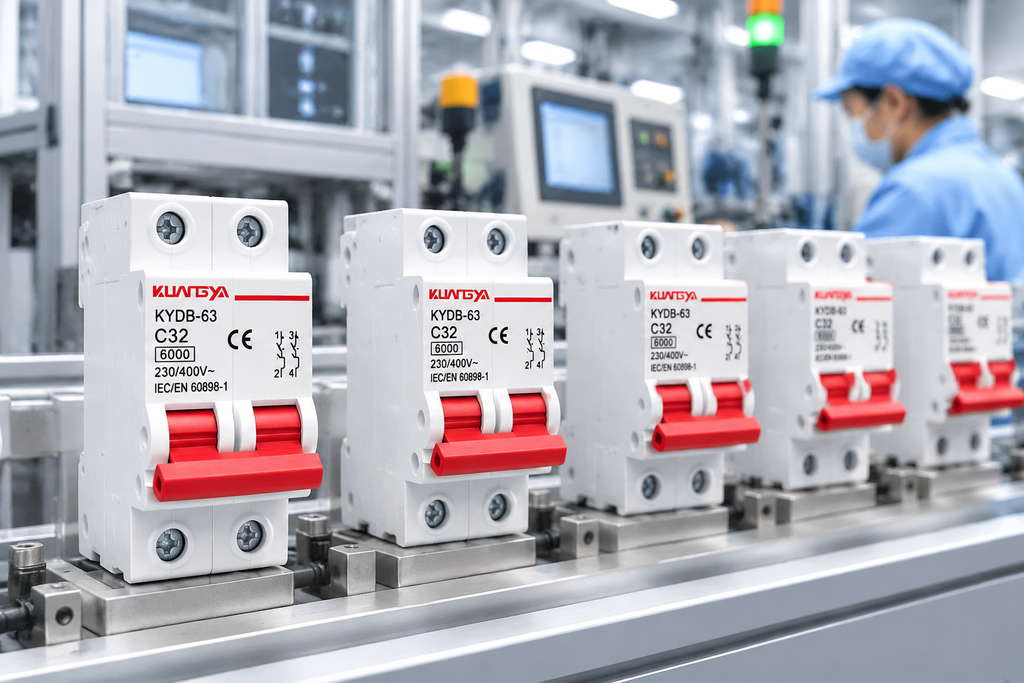
Understanding MCB markings helps buyers compare products, but the manufacturer’s production capability and quality control are equally important.
For distributors, wholesalers, and panel builders, a reliable supplier should be able to provide:
KUANGYA manufactures low-voltage circuit protection products, including AC MCBs and DC MCBs, for international distributors, contractors, and OEM customers.
Our AC MCB range includes different rated currents, tripping curves, pole configurations, and breaking capacity options depending on the model.
Explore our products:
For product specifications, OEM requirements, or bulk purchasing inquiries, contact our team to discuss your application.
C32 means the MCB has a rated current of 32A and a Type C tripping characteristic. Under IEC 60898-1, the conventional instantaneous magnetic tripping range for Type C is 5–10 times the rated current.
6000 generally indicates a rated short-circuit capacity of 6,000A (6kA). The exact designation and conditions depend on the applicable product standard and rated voltage.
The main difference is their rated short-circuit breaking capacity. A 10kA MCB has a higher declared capacity than a 6kA MCB under the applicable specified conditions.
It indicates the declared voltage ratings for the relevant electrical system configurations. The exact suitability must be checked against the manufacturer’s voltage and pole configuration specifications.
Not automatically. AC and DC circuits have different arc-extinguishing requirements. Always select a circuit breaker specifically rated for the intended DC voltage and current.
IEC 60898-1 covers AC circuit breakers for household and similar installations, while IEC 60947-2 covers low-voltage circuit breakers within its industrial and professional application scope. Their requirements and rating designations should not be assumed to be interchangeable.
No. The rated current must match the load, cable capacity, and installation conditions. Selecting an unnecessarily high current rating may compromise proper circuit protection.
Provide the required AC or DC type, rated current, rated voltage, tripping curve, breaking capacity, pole configuration, applicable standard, and estimated order quantity. If OEM branding is required, include your label and packaging requirements.
Reading an MCB label correctly is an essential step in selecting the right circuit breaker.
From rated current and voltage to tripping curves, breaking capacity, and applicable standards, each marking provides important information about the product’s intended operation.
For distributors, contractors, and procurement teams, understanding these specifications makes it easier to compare products, communicate technical requirements, and purchase the correct MCB for each application.
If you are looking for an MCB manufacturer offering different specifications and OEM options, contact KUANGYA to discuss your requirements.

