温州市岳陽工業区 325000
勤務時間
月曜日~金曜日:午前7時~午後7時
週末午前10時~午後5時
温州市岳陽工業区 325000
勤務時間
月曜日~金曜日:午前7時~午後7時
週末午前10時~午後5時

ヨーロッパ全域で電気自動車の普及が加速する中、適切な残留電流保護の問題は、設置業者、施設管理者、EV充電インフラ開発業者にとって非常に重要になっています。以下のどちらかを選択する必要があります。 タイプB RCCB (残留電流ブレーカー)とタイプA漏電遮断器とRDC-DD(残留直流電流検出装置)の組み合わせは、単なる技術的な決定ではなく、包括的な保護、規制への準拠、費用対効果のバランスであり、2026年以降のEV充電設備の安全性と信頼性を定義するものです。.
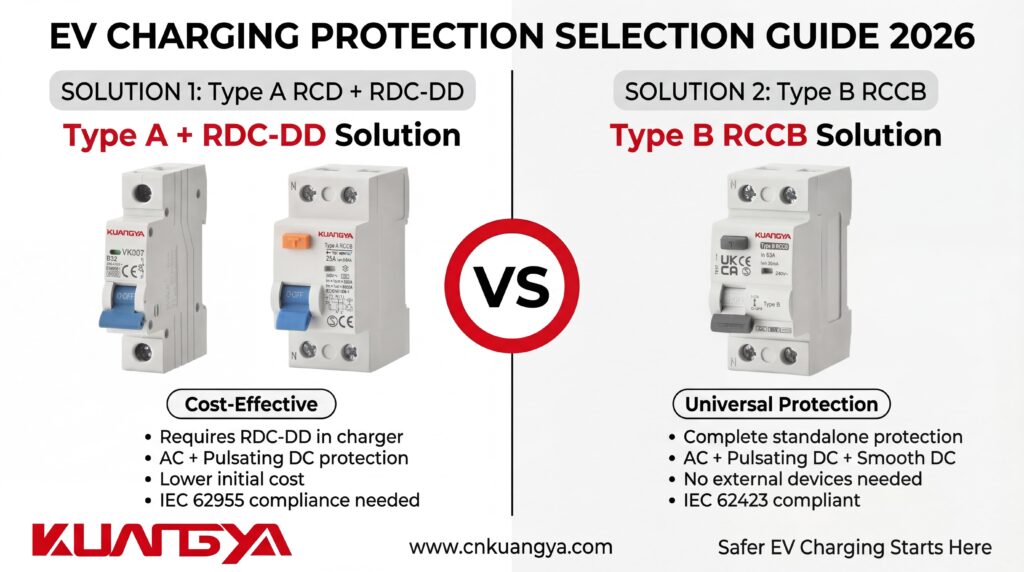
タイプBの漏電遮断器は、電気自動車の充電アプリケーションに利用可能な最も包括的な保護ソリューションです。従来の家庭用負荷向けに設計されたタイプACやタイプAの漏電遮断器とは異なり、タイプBのデバイスは、最新のパワーエレクトロニクスが発生させるあらゆる故障電流を検出できるように設計されています。.
タイプBのRCCBの特徴は、滑らかな直流残留電流を検出する能力にあります。EV充電器の整流回路に異常が発生すると、リップルを最小限に抑えた滑らかな直流漏れ電流が発生します。このタイプの電流は、標準的なタイプAまたはタイプAC漏電遮断器のトロイダルトランスコアを磁気的に飽和させ、事実上「盲目化」させ、生命を脅かすようなAC故障でさえ検出できなくするという深刻なリスクをもたらします。. 引用
タイプBのRCCBは、以下の保護機能を備えている:
この包括的な検出機能により、タイプBのRCCBはIEC 62423およびIEC 61008-1規格に準拠しており、直流故障電流が存在する、または予想される設備向けの汎用ソリューションとして位置づけられています。. 引用
タイプBのRCCBは通常、人員保護のために30mAの定格残留動作電流(I∆n)で動作しますが、火災保護や階層配電システムにおける選択的協調のために、より高い定格(100mA、300mA)が利用可能です。残留電流が定格しきい値を超えた場合、デバイスは指定された制限時間内にトリップする必要があり、30mAのデバイスの典型的な応答時間は40ミリ秒以下ですが、これは電気ショックのシナリオで心室細動を防ぐのに十分な速さです。. 引用
タイプBのRCCBは、定格直流非動作電流(通常10mA)までの直流残留電流が流れた場合でも、交流故障検出能力を維持するように設計されています。このため、それ以下の保護デバイスでは無効になってしまうような直流汚染があっても、デバイスは機能し、保護し続けることができます。.
タイプA漏電遮断器とRDC-DDの組み合わせは、EV充電保護へのモジュール式アプローチであり、特に単相住宅および軽商用設備向けとして欧州市場で大きな支持を得ています。このソリューションでは、保護機能を2つの特殊なコンポーネントに分割しています。タイプA漏電遮断器は交流および脈動する直流故障を処理し、RDC-DDはスムーズな直流漏れ電流を特別に監視します。.
RDC-DD(残留直流電流検出装置)は監視装置であり、それ自体は保護装置ではありません。保護回路内の直流残留電流を継続的に測定し、直流漏電が6mAを超えると外部スイッチングデバイス(通常はコンタクタまたは充電ステーションの内部リレー)をトリガーします。この6mAのしきい値は、タイプBのRCCBの最小値10mAよりも著しく低く、上流の漏電遮断器の目くらましを防ぐために特別に調整された追加の安全マージンを提供します。.
RDC-DDは、漏電遮断器と組み合わせて使用される残留直流電流検出装置の性能要件を定義したIEC 62955およびBS IEC 62955規格に従って動作します。EV充電ステーションに組み込まれる場合、RDC-DDは通常、充電器の制御盤に接続され、直流障害が検出されると、制御盤はメインコンタクタに開動作を指令し、効果的に供給を遮断します。.
この構成のタイプA漏電遮断器は、AC正弦波残留電流と脈動DC残留電流(位相制御機器や半波整流から発生する可能性のあるタイプの故障)に対する保護を提供します。タイプAのデバイスは平滑な直流電流には無効ですが、直流汚染によって飽和していない限り、交流故障には有効です。RDC-DDの6mAの検出しきい値が重要なのはまさにこのためです。直流電流がタイプA漏電遮断器の機能を損なうレベルに達する前に確実に遮断します。.
タイプB RCCB は、外部監視システムに依存することなく、ユニバーサルな単一デバイスによる保護を提供します。単一の磁気回路内ですべての故障タイプを同時に検出するため、別個のデバイス間の調整不良によって生じる可能性のある保護のギャップを排除します。統合された設計により、通信の遅延や故障箇所の追加もなく、セーフティクリティカルな保護機能を充電ステーションの制御電子機器に依存することもありません。.
タイプA+RDC-DD は、適切に実装されれば同等の保護を提供するが、システムの複雑さをもたらす。保護機能は、RDC-DD と充電ステーションの制御システムとの正しい統合、コンタクタ制御回路の適切な配線、およびスイッチングデバイスの信頼性の高い動作によって決まります。現場での経験によると、RDC-DD システムの統合が不十分な設備では、検出信号がスイッチングデバイスに届かないと、迷惑なトリップが発生したり、最悪の場合、保護ギャップが発生したりすることがあります。.
EVインフラの需要増に対応するため、タイプBのRCCB生産が拡大するにつれて、これらのソリューション間のコスト差は大幅に縮小している。2026年現在、欧州市場における典型的な価格設定は以下の通りである:
タイプB RCCB(40A、30mA、2極): ブランドと機能により180-280ユーロ
タイプA RCCB(40A、30mA、2極): €45-75\
RDC-DDモジュール(IEC 62955準拠): €60-120\
統合と設置の労力: タイプA+RDC-DDシステムの場合、40~80ユーロ追加
タイプA+RDC-DDの総設備コストは通常145~275ユーロであり、多くのシナリオでタイプBのソリューションと競争力を持つ。しかし、コスト計算式は以下のように変化する:
タイプB RCCB の設置は、標準的な電気保護方法に従います。このデバイスは、他のRCCBと同様に分電盤に取り付けられ、追加の制御配線を必要とせず、充電ステーションの電子機器から独立して動作します。このシンプルさにより、設置時間が短縮され、配線ミスの可能性が最小限に抑えられ、簡単なテストとメンテナンスが可能になります。標準的な漏電遮断器の設置に慣れている電気技術者であれば、追加のトレーニングを受けることなくタイプBのデバイスを使用することができます。.
タイプA+RDC-DD システムを慎重に統合する必要があります。RDC-DDを充電ステーションの制御盤に正しく配線し、コンタクター制御回路を適切に構成し、保護チェーン全体をテストして、DC故障検出が確実に遮断をトリガーすることを確認する必要があります。この統合は通常、充電ステーションメーカーが行うが、現場での修正やトラブルシューティングは複雑な場合がある。RDC-DDを統合した充電ステーションは、多くの配電盤にすでに存在する標準的なタイプA保護で設置できるため、既存設備のアップグレードコストを削減できます。.
どちらのソリューションも、EV導電充電システムの国際規格であるIEC 61851-1の要件を満たしており、2つの許容可能な保護オプションが規定されている:
欧州の設備は、英国のBS 7671:2018+A2:2022のような地域の電気規格にも準拠しなければならない。この規則では、タイプ A、タイプ F、またはタイプ B の漏電遮断器が明示的に許可されています。ただし、直流障害保護は漏電遮断器自体(タイプ B)または統合検出装置(RDC-DD)のいずれかによって対処されます。.
初期計画で見落とされがちな重要な考慮点は、上流の保護装置との相互作用です。タイプBのRCCBで保護されたEV充電回路が既存のタイプAのメイン漏電遮断器の下流に設置されている場合、タイプBのデバイスを通過する直流故障電流が上流のタイプAの漏電遮断器を飽和させ、設置されている他の回路の保護を無効にする可能性があります。ベストプラクティスでは、EV 回路は一般的なタイプ A の RCCB の下流ではなく、他の回路と並列に接続するか、システムの接地が可能な場合はメインスイッチをタイプ B または非 RCD デバイスにアップグレードする必要があります。.
タイプA + RDC-DDソリューションは、RDC-DDが正しく動作し、切断が十分に高速であれば、直流電流が上流機器に影響を与えるレベルに達する前に電源を切断することで、この懸念に対処する。.
最適な保護ソリューションを選択するには、設置特性、コスト制約、長期運用要件を体系的に評価する必要がある。以下のフレームワークは、この決定の指針となる:
ステップ1:充電器の統合を評価する
ステップ2:既存のインフラの評価
ステップ3:設置規模の検討
ステップ4:総所有コストの計算
おすすめだ: タイプA RCD + RDC-DD(充電器にRDC-DDが内蔵されている場合)またはタイプB RCCB
ウォールボックス型充電器を1台設置する家庭では、充電ステーションに内蔵されている保護機能によって選択が決まる。信頼できるメーカーの最近の住宅用充電器には、IEC 62955準拠のRDC-DDが搭載されるようになってきており、タイプAの保護が許容可能で費用対効果に優れている。充電器に認証されたDC故障検出機能がない場合は、タイプBのRCCBが必須となる。.
CNKuangya製品選択:
おすすめだ: タイプB RCCB(4極)
三相設備では、タイプB RCCBの統合保護が大きなメリットをもたらします。三相に渡ってRDC-DDを実装する複雑さと、より高い電力レベルと増加する故障電流の可能性が相まって、タイプBデバイスの包括的な保護が商用アプリケーションに好ましい選択肢となっている。.
CNKuangya製品選択:
おすすめだ: セレクティブ・コーディネーション付きタイプB RCCB
複数の充電ポイントを持つ駐車場施設では、1つの充電器に障害が発生してもすべてのステーションへのサービスが中断しないような保護アーキテクチャが必要である。各充電ポイントには、個別に 30mA のタイプ B 保護が必要であり、定格 100~300mA の上流選択型(S 型)RCCB がバックアップ保護を提供し、システム全体のシャットダウンを防止する。.
CNKuangya製品選択:
おすすめだ: 充電器RDC-DDの準拠を確認するか、タイプBにアップグレードする。
メイン漏電遮断器がタイプAである既存の設備にEV充電を追加する場合、最も費用対効果の高い方法は、認証された一体型RDC-DDを備えた充電ステーションを選択し、タイプA保護の専用回路に設置することです。メイン漏電遮断器をタイプBにアップグレードすることが可能であれば、時間の経過とともにパワーエレクトロニクスが追加されるため、この方が設備全体の長期的な保護につながります。.
CNKuangya製品選択:
| モデル | ポール | 定格電流 (A) | 感度 (mA) | 破断能力 | 規格 | 代表的なアプリケーション |
|---|---|---|---|---|---|---|
| KY-B2-40/30 | 2P | 40 | 30 | 6kA | IEC 61008-1、IEC 62423 | 単相家庭用EV充電器 ≤7.4kW |
| KY-B2-63/30 | 2P | 63 | 30 | 6kA | IEC 61008-1、IEC 62423 | 単相商用充電器 ≤11kW |
| KY-B4-40/30 | 4P | 40 | 30 | 6kA | IEC 61008-1、IEC 62423 | 三相商用充電器 11~22kW |
| KY-B4-63/30 | 4P | 63 | 30 | 6kA | IEC 61008-1、IEC 62423 | 最大22kWの三相高出力充電器 |
| KY-B4-63/100-S | 4P | 63 | 100 | 10kA | IEC 61008-1、IEC 62423 | マルチステーション設置のための選択的メインプロテクション |
主な特徴
| モデル | ポール | 定格電流 (A) | 感度 (mA) | 破断能力 | 規格 | 代表的なアプリケーション |
|---|---|---|---|---|---|---|
| KY-A2-40/30 | 2P | 40 | 30 | 6kA | IEC 61008-1 | RDC-DD内蔵単相充電器 |
| KY-A2-63/30 | 2P | 63 | 30 | 6kA | IEC 61008-1 | RDC-DD内蔵単相充電器 |
| KY-A4-40/30 | 4P | 40 | 30 | 6kA | IEC 61008-1 | RDC-DD内蔵三相充電器 |
| KY-A4-63/30 | 4P | 63 | 30 | 6kA | IEC 61008-1 | RDC-DD内蔵三相充電器 |
主な特徴
定格電流の選択:\
RCCBの定格電流は、充電回路を保護するサーキットブレーカ(MCB)の定格と同等以上でなければならない。EV充電器のような連続負荷の場合、サーキットブレーカの定格は最大充電電流の125%である必要があります。例32AのEV充電器には40AのMCBが必要なため、40Aまたは63AのRCCBが必要です。.
ポール構成:
感度の選択:
いや、これは重大な安全違反だ。. IEC 61851-1および欧州の電気工事規定では、EV充電設備に対して6mAを超える直流故障電流に対する保護を明確に要求しています。タイプ A の漏電遮断器は滑らかな直流電流を検出することができず、直流飽和が発生すると「盲目」となり、人命にかかわるような交流故障に対しても保護されないままになってしまいます。.
充電ステーションに IEC 62955 に準拠した認証 RDC-DD がない場合は、タイプ B RCCB を設置する必要があります。これはオプションではなく、基本的な安全要件です。現場調査では、タイプ A の RCCB が直流飽和のためにトリップに失敗し、機器の損傷、火災リスク、感電死の危険性が生じた事例が報告されています。.
充電器が適切なDC故障保護機能を備えているかどうかを評価する際には、技術データシートにIEC 62955準拠とRDC-DD機能への明確な言及があるかどうかを確認してください。内蔵保護」や「スマート安全機能」といったマーケティング用語は不十分であり、特定の規格への準拠が文書化されている必要がある。疑問がある場合は、保護が保証されるタイプBのRCCBを指定してください。.
タイプBのRCCBは、通常の動作過渡現象に対する耐性を維持しながら、広い周波数範囲(DC~1000Hz)で複数の種類の残留電流を正確に検出し、識別する必要があるため、その洗練された磁気回路設計を反映した価格となっています。トロイダル変圧器、電子検出回路、トリップ機構は、迷惑なトリップを発生させることなく信頼性の高い保護を提供するために、正確に連動する必要があります。.
しかし、コスト差は大幅に縮小している。2026年には、タイプBのRCCBとタイプA+RDC-DDシステムとの総設備コストの差は、住宅用設備では50~100ユーロ以下になることが多い。タイプBの価値提案には以下が含まれる:
シンプルさと信頼性: セーフティクリティカルな保護のため、充電ステーションの電子機器や制御配線に依存しない。デバイスは独立して動作し、故障箇所を減らします。.
将来への備え: 設置するパワーエレクトロニクス(ソーラー・インバータ、バッテリー・ストレージ、ヒートポンプ)を増やせば、タイプBの保護機能は、それらのすべてをそのままカバーします。.
メンテナンスの複雑さを軽減: 複数の保護要素を調整するのではなく、単一デバイスのテストと検証。.
上流の互換性: 適切に選択されたタイプ B の保護回路は、既存のタイプ A のメイン漏電遮断器がある設備でも、保護ギャップを生じることなく動作します(ただし、並列接続が望ましい)。.
商業施設や複数のステーションを設置する場合、システム全体のコスト、設置にかかる労力、長期的なメンテナンスを考慮すると、一般的にタイプBのRCCBの方が費用対効果が高いことがわかる。充電ステーションがRDC-DD認証を取得している住宅用シングル充電器の設置では、タイプA+RDC-DDが適切かつ経済的である。.
主配電盤
│
主開閉器(非RCDまたはBタイプ)
│
├── 回路1:照明とソケット ───→ タイプA RCCB(30mA)
│
回路2:厨房機器 ──→ タイプA RCCB(30mA)
│
回路3:EV充電 ───→ タイプB RCCB(30mA)───→ MCB(40A)───→ EV充電器
                                        ↓
                              AC+脈動DC+平滑DCを検出
                              外部機器不要
                              独立動作
                              あらゆるEV充電器に対応
主な特徴
主配電盤
│
主開閉器(A形または漏電遮断器なし)
│
├── 回路1:照明とソケット ───→ タイプA RCCB(30mA)
│
回路2:厨房機器 ──→ タイプA RCCB(30mA)
│
回路3:EV充電 ───→ A型RCCB(30mA) ───→ MCB(40A) ───→ EV充電器
                                        ↓ │
                              交流+脈動直流を検出 │ └────────────────────────────────────────── → EV充電器
                                                                        │
                                                           ┌────────────┴────────────┐
                                                           充電ステーション
                                                           RDC-DD一体型 │ │ 充電ステーション
                                                           充電ステーション
                                                           │ │
                                                           │ DC > 6mA │ をモニターする
                                                           コンタクターへのコマンド │ │ 供給を遮断する
                                                           電源を切断する │ │ │ コマンド
主な特徴
タイプB RCCBとタイプA + RDC-DDのどちらを選択するかは、単に同等の2つの保護方式を選ぶということではなく、設置の具体的な要件を理解し、システムの運用期間を通じて最適な安全性、信頼性、価値を提供するソリューションを選択することです。.
タイプB RCCBは、包括的で独立した、将来性のある普遍的なソリューションです。充電ステーションの電子機器との調整は不要で、メーカーやモデルに関係なくあらゆるEV充電器に対応し、EV充電だけでなく、設置されているすべてのパワーエレクトロニクスをカバーする保護を提供します。商業施設、マルチステーション施設、三相システム、長期的な信頼性が最優先されるシナリオでは、タイプB RCCBが最適です。.
タイプA漏電遮断器+RDC-DDは、特定のアプリケーション、特に充電ステーションが認定IEC 62955準拠の直流故障検出を含む住宅用単相設備に、コストを最適化した代替手段を提供します。このソリューションは、RDC-DDの統合が適切に実施され、保守されていれば、適切な保護を維持しながら初期設備コストを削減することができます。しかし、システムの複雑さと依存性が生じるため、慎重に管理する必要がある。.
ヨーロッパのEV充電インフラが2026年以降も拡大し続ける中、電気安全の基盤は、パワーエレクトロニクス特有の要求に合わせて設計されなければなりません。現在ご指定いただいている保護装置は、今後数十年にわたり、ユーザー、資産、電気システムを保護します。設置要件を十分に理解した上で選択し、適用される規格への準拠を確認し、すべての電気保護を導く基本原則である「常に安全第一」に妥協することはありません。.
EV充電プロジェクトのRCCB選定に関する技術相談、詳細な製品仕様、保護システム設計の支援については、こちらをご覧ください。 cnkuangya.com または当社のエンジニアリング・サポート・チームにお問い合わせください。お客様のEV充電インフラが、運用期間を通じて安全で信頼性の高いサービスを提供できるよう、包括的な選定ツール、設置ガイド、継続的な技術サポートを提供しています。.
本ガイドは、2026 年 3 月現在の IEC 61851-1:2017, IEC 62423, IEC 61008-1, IEC 62955, BS 7671:2018+A2:2022 規格に基づいています。お住まいの地域の特定の設置要件については、必ず地域の電気工事規定および規則を参照してください。.

