温州市岳陽工業区 325000
勤務時間
月曜日~金曜日:午前7時~午後7時
週末午前10時~午後5時
温州市岳陽工業区 325000
勤務時間
月曜日~金曜日:午前7時~午後7時
週末午前10時~午後5時

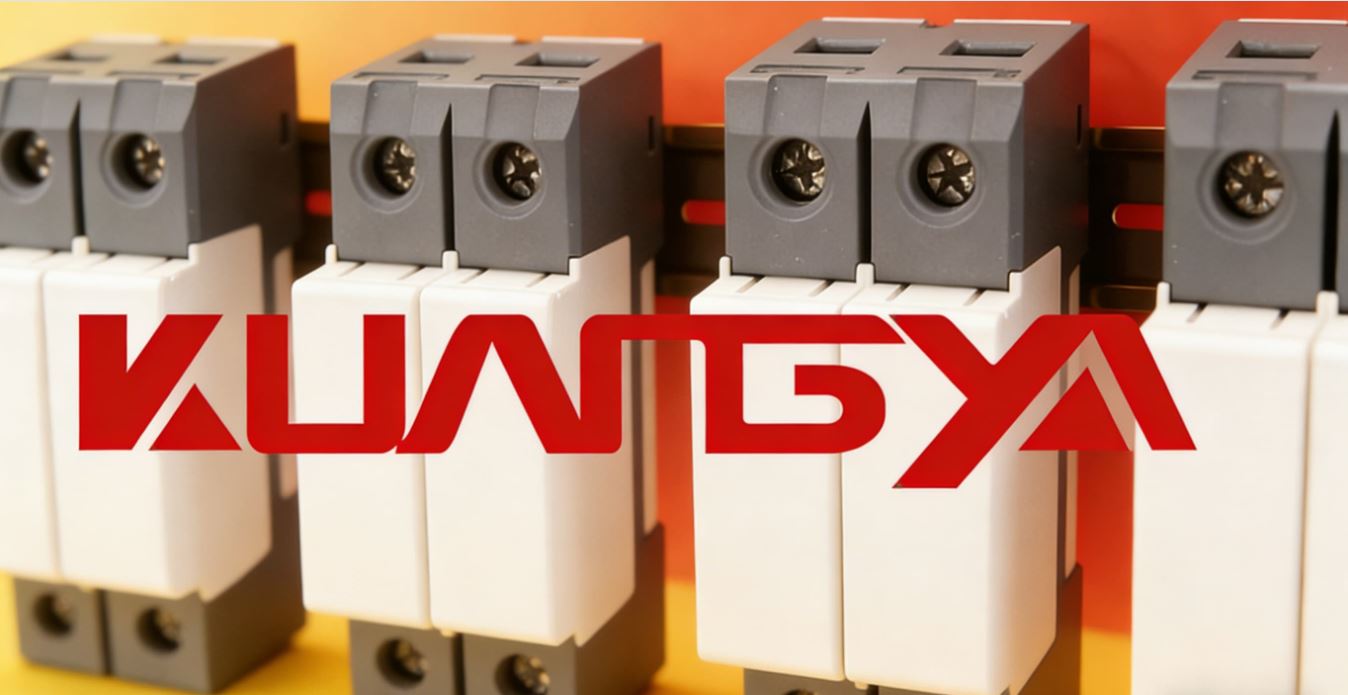
SPD stands for Surge Protective Device. In electrical systems, an SPD limits transient overvoltages and diverts surge current to help reduce damage to connected equipment. It does not provide backup power or replace a circuit breaker, RCD, or complete lightning protection system.
| 期間 | 意味 |
|---|---|
| SPD | サージ保護装置 |
| 主な目的 | Limit transient overvoltages caused by events such as lightning coupling and electrical switching. |
| Common formats | Panel-mounted, equipment-integrated, and suitable plug-in protection devices. |
| アプリケーション | AC power, photovoltaic DC, or signal circuits, using a device specifically rated for that application. |
“Surge protector” is a common name for an SPD, not a separate technical category. A plug-in surge protector can be an SPD; a plain power strip is not necessarily surge-protected. TVSS is an older term for transient voltage surge suppressor. When comparing products, check the applicable standard and ratings rather than relying on the marketing name.
An SPD reduces transient voltage stress at its connection points. Surge current can flow between live conductors or between a live conductor and protective earth, depending on the protection mode and circuit arrangement. It is therefore inaccurate to describe every SPD as sending all excess current directly to ground.
Protection has limits. The voltage reaching equipment depends on the SPD, its connecting leads, bonding, installation arrangement, and surge conditions. An SPD does not guarantee that equipment will survive every surge.
An SPD is not a voltage regulator. It should not be relied on to correct sustained overvoltage, undervoltage, overloads, short circuits, or loss of supply. Those conditions require other protective or power-management measures.
Many SPDs contain voltage-dependent components such as metal oxide varistors (MOVs), gas discharge tubes, or avalanche diodes. Under normal conditions, the protective path generally presents a high impedance. During a transient, it becomes conductive and limits the voltage across that path. This response does not necessarily involve an electronic voltage-monitoring controller.
After a surge within its capability, a serviceable device can return to its normal state. Repeated stress or an excessive event can degrade or disconnect a protective element. An operated thermal disconnector or failed module does not repair itself when the surge ends. Check the product indicator and replacement instructions.
| コンディション | Typical SPD Behavior |
|---|---|
| Normal operating voltage | The protective path generally remains at high impedance. |
| 過渡過電圧 | The protective elements conduct surge current and limit voltage across the protected mode. |
| Surge ends | A serviceable device returns to its normal state. |
| Protective element fails or disconnects | Inspection and replacement may be required according to the product instructions. |
First identify whether a product uses IEC or UL classifications. The type numbers are not interchangeable descriptions of a fixed surge-current rating. Do not classify a device as Type 1 merely because its label shows a large kA value.
| IEC Classification | Typical Role and Test Characteristic |
|---|---|
| タイプ1 | Lightning-current duty where required by the protection design; associated with an impulse-current rating Iimp and a 10/350 µs test waveform. |
| タイプ2 | Distribution-level surge protection; associated with discharge-current ratings such as In and Imax using an 8/20 µs waveform. |
| タイプ3 | Protection close to sensitive equipment, coordinated with upstream protection; associated with combination-wave testing. |
Combined Type 1+2 products are available. The required combination and placement depend on the lightning protection design, incoming services, equipment, and local installation rules. A single device does not replace the bonding and other measures required by that design.
Under UL 1449, type designations also define installation applications. Type 1 devices may be suitable on the line or load side of the service overcurrent device, subject to their listing. Type 2 devices are intended for the load side. Type 3 includes point-of-use formats such as suitable cord-connected and direct plug-in devices. Follow the actual listing and installation instructions.
| Rating or Check | What to Verify |
|---|---|
| Uc / MCOV | Maximum continuous operating voltage appropriate to the supply and connection mode. Do not simply equate this to nominal system voltage. |
| Up / VPR | Declared voltage protection level or voltage protection rating under the relevant test method. Account for equipment withstand and installation effects; the terms are not automatically interchangeable. |
| Iimp, In and Imax | Compare the same parameter, waveform, protection mode, and test basis. A higher advertised kA number alone does not establish better protection. |
| Short-circuit coordination | Verify the product short-circuit rating and required backup protective device against the installation. Surge-current capacity is not a substitute for this check. |
| System compatibility | Check AC or DC application, voltage, earthing arrangement, number of poles, protection modes, and environmental rating. |
| 認証 | Check the certificate or listing for the exact model and ratings. An installation code is not a product certification. |
| 装置 | 主な役割 |
|---|---|
| SPD | Limits transient overvoltages. |
| Circuit breaker or fuse | Provides specified overcurrent protection. It does not replace surge protection. |
| RCD / RCCB | Provides residual-current protection. An RCCB does not provide integral overload protection. |
| 無停電電源装置 | Supplies stored energy during outages. Voltage conditioning and built-in surge protection depend on the model. |
| ATS | Transfers a load between power sources. It is not a substitute for an SPD. |
A UPS uses stored energy to maintain supply during an outage. An SPD and a UPS address different disturbances and can be used together. Surge protection around generators and transfer equipment should be selected for the actual source arrangement and manufacturer requirements.
Typical locations include building distribution boards, industrial control panels, and equipment supply points. Telecom and data circuits require protection compatible with their signal and interface characteristics.
In solar installations, distinguish the inverter’s AC side from the PV DC side. An AC SPD must not be assumed suitable for a PV string. Select protection specifically rated for the circuit and its maximum operating voltage.
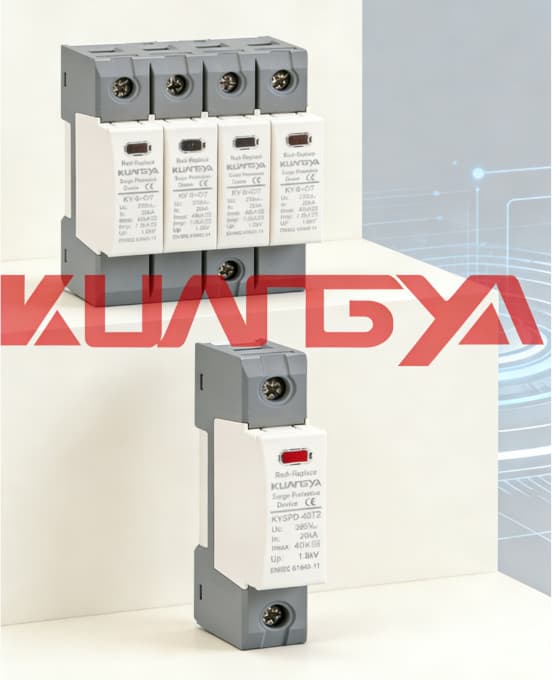
エクスペリエンス KUANGYA AC surge protective devices for model-specific information. For solar DC applications, verify the maximum PV voltage and intended DC protection arrangement before selecting a product.
1. Define the circuit. Record AC or DC, nominal and maximum voltage, phase arrangement, earthing system, and installation location.
2. Establish the protection design. Identify the applicable local rules, lightning exposure, existing lightning protection system, and equipment requirements. Determine the required SPD type and coordination with other devices.
3. Compare documented ratings. Check Uc or MCOV, Up or VPR, the applicable surge-current parameters, short-circuit coordination, and protection modes. Use the exact product datasheet.
4. Check installation requirements. Follow the specified conductor sizes, lead routing, backup protection, and bonding requirements. Long connection leads can increase the voltage experienced by equipment. Installation and maintenance should be performed by qualified personnel.
5. Plan inspection and replacement. Record the model, status indication, and maintenance instructions. Obtain replacement modules approved for that product rather than assuming similar-looking cartridges are interchangeable.
SPD stands for Surge Protective Device. Its purpose is to limit transient overvoltages and divert surge current to help reduce electrical equipment damage.
Often, yes. “Surge protector” is a common name. Both panel-mounted and suitable plug-in products can be SPDs. Check the product documentation.
No. Compare matching test parameters and waveforms, and also check voltage protection, system compatibility, and coordination. A single kA figure is insufficient.
Appropriately selected SPDs can form part of a coordinated lightning protection design. They do not replace air terminals, down conductors, bonding, or other required lightning protection measures, and they do not guarantee damage-free operation.
There is no universal service life. It depends on the device, surge exposure, supply conditions, and environment. Follow its inspection schedule and replace it when the manufacturer’s indication or instructions require replacement.
On many products it indicates a disconnected or failed protective module, but indicator meanings vary. Check the exact model’s instructions. See our SPD red-light guide.
No single statement covers every installation. Requirements depend on the jurisdiction, adopted code edition, building use, and protection design. Product standards and installation requirements serve different purposes.
For a KUANGYA AC SPD enquiry, provide the system voltage, phase and earthing arrangement, installation location, required type, applicable standard, and quantity. Request the exact model datasheet, backup-protection instructions, and relevant certification documents before specifying the product.
UL Solutions: SPD testing and certification; Schneider Electric: surge-current waveform terminology. Always use the current applicable standard and exact product instructions for a project.

