Zona industriale di WengYang Yueqing Wenzhou 325000
Orario di lavoro
Da lunedì a venerdì: dalle 7.00 alle 19.00
Fine settimana: 10.00 - 17.00
Zona industriale di WengYang Yueqing Wenzhou 325000
Orario di lavoro
Da lunedì a venerdì: dalle 7.00 alle 19.00
Fine settimana: 10.00 - 17.00

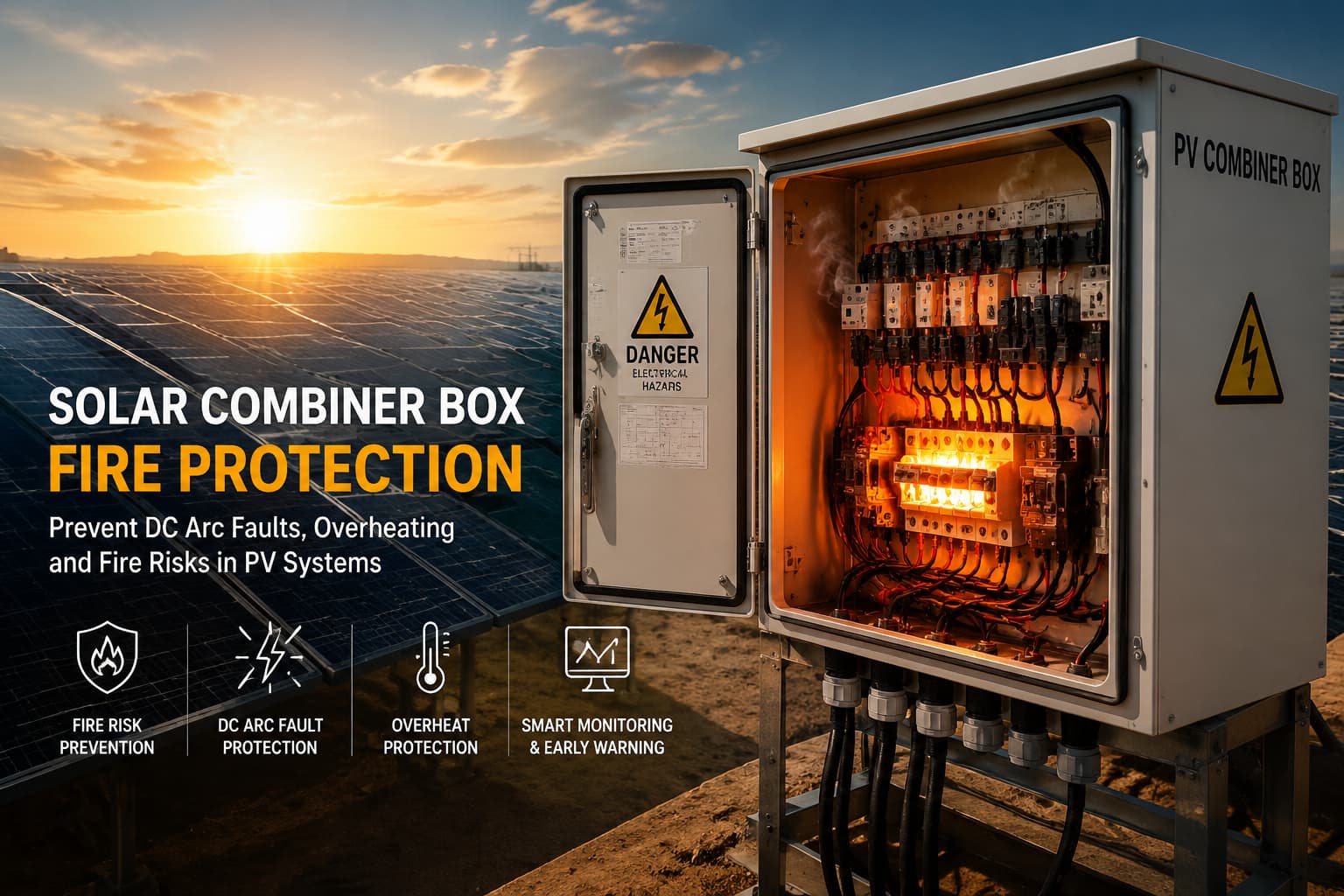
Solar combiner boxes are critical nodes in photovoltaic (PV) systems where multiple string inputs converge before feeding into inverters. However, due to DC arcing, loose connections, overcurrent, insulation aging, and environmental stress, combiner boxes are also among the most frequent ignition points in solar plants.
Questo articolo spiega:
We will focus on Solar Combiner Box Fire Protection strategies used in real photovoltaic projects in Europe, the Middle East, India, and China, supported by industry reports and field incidents.
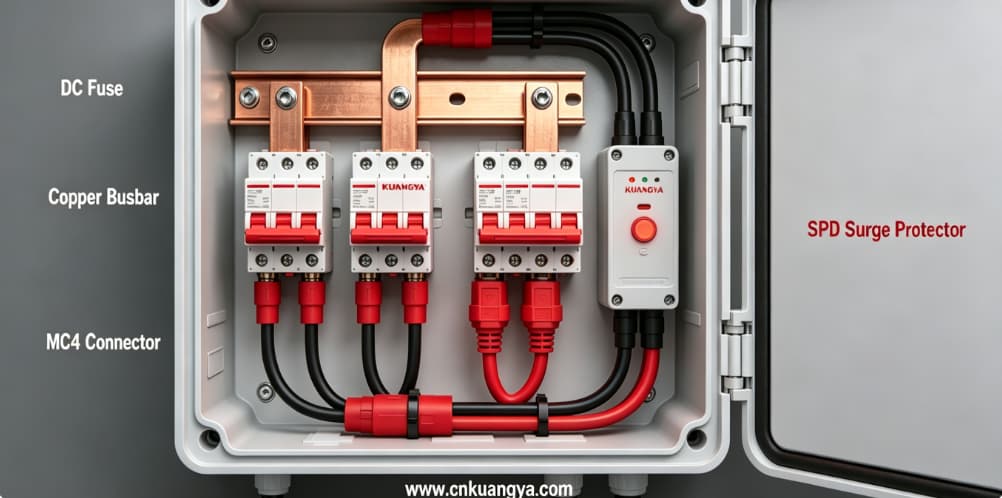
A solar combiner box is designed to aggregate DC current from multiple PV strings. In theory, it is simple. In practice, it is one of the most thermally and electrically stressed components in the entire PV system.
| Risk Source | Technical Cause | Fire Trigger Mechanism |
|---|---|---|
| DC Arc Fault | Loose terminals, connector aging | High-temperature arc ignition (>3000°C) |
| Sovracorrente | Faulty string imbalance | Thermal runaway in busbars |
| Ingresso di umidità | IP65 failure or gasket aging | Short circuit + insulation breakdown |
| Poor Installation | Improper torque tightening | Contact resistance heating |
| Surge Events | Lightning strikes / grid surges | Insulation breakdown and ignition |
| Component Aging | UV exposure, thermal cycling | Progressive resistance increase |
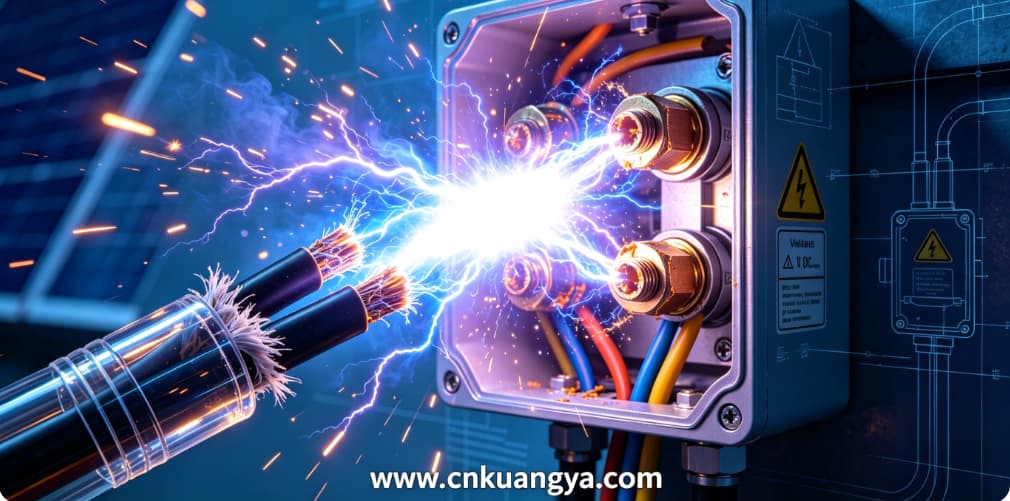
Unlike AC systems, DC arcs do not naturally extinguish, which significantly increases ignition probability.
Although PV systems are considered “low-maintenance infrastructure,” field data shows that electrical fire events are not rare.
A utility-scale solar plant in southern Spain experienced repeated shutdowns due to combiner box overheating.
Root Cause Findings:
Risultato:
Engineering Lesson:
Even minor connector issues can escalate into thermal events under sustained irradiance conditions.
A fire broke out in a 100MW PV installation during peak summer operation.
Investigation Report Summary:
| Failure Chain | Risultato |
|---|---|
| Dust + Heat buildup | Degrado dell'isolamento |
| DC fault current | Sustained arcing |
| Delayed disconnection | Thermal ignition |
Risultato:
A monitoring report from a coastal PV farm identified recurring hotspots in combiner boxes.
Key observation:
Risultato:
Understanding fire progression is essential for designing protection systems.
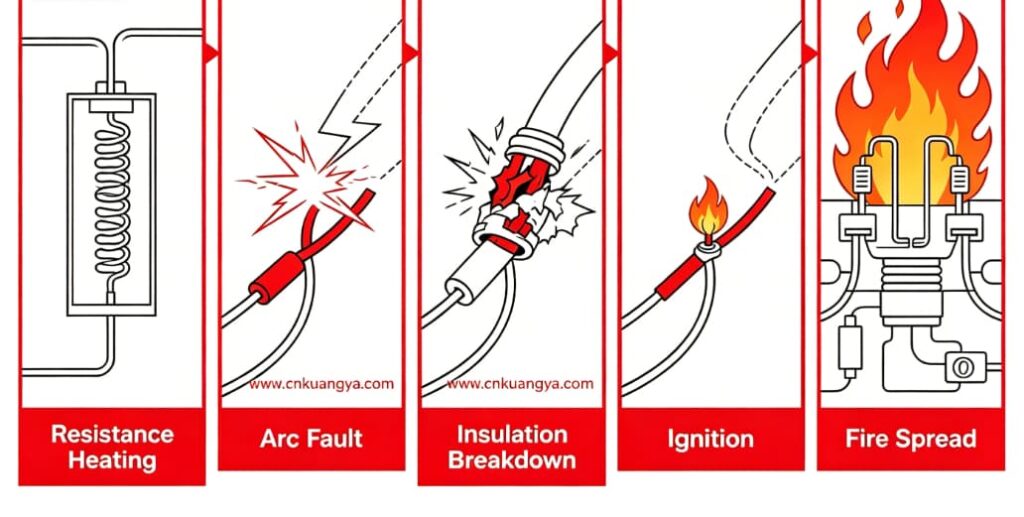
| Palcoscenico | Condizione Elettrica | Effetto Fisico |
|---|---|---|
| Stage 1 | Increased resistance at terminals | Inizio del riscaldamento localizzato |
| Stage 2 | Temperature exceeds 120°C | Insulation softening |
| Stage 3 | Arc initiation | Plasma discharge occurs |
| Stage 4 | Continuous DC arc | Rapid carbonization |
| Stage 5 | Innesco | Combustion of internal materials |
| Stage 6 | Fire propagation | Damage spreads to adjacent strings |
DC systems are particularly dangerous because:
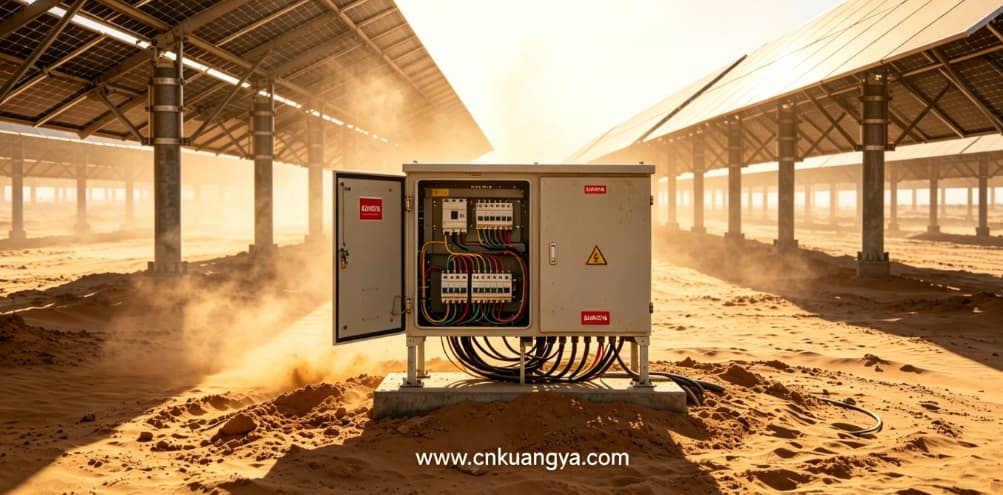
Solar combiner boxes are often installed outdoors for 20–25 years, making environmental stress a major factor.
| Tipo di ambiente | Livello di rischio | Main Issue |
|---|---|---|
| Deserto (Medio Oriente) | 🔴 Very High | Dust + extreme heat |
| Coastal areas | 🔴 Very High | Corrosione salina |
| Tropical regions | 🟠 High | Humidity + biological growth |
| Temperate zones | 🟡 Medium | Seasonal thermal cycling |
| Snow regions | 🟡 Medium | Freeze-thaw stress |
In UAE and Saudi Arabia solar farms:
This accelerates:
Even high-quality combiner boxes share similar vulnerability points.
| Componente | Tipo di rischio | Spiegazione |
|---|---|---|
| Fusibili DC | Fatica termica | Repeated load cycles weaken fuse element |
| Barre di distribuzione (busbar) | Overcurrent heating | Poor heat dissipation under high load |
| Connettori MC4 | Resistenza di contatto | Small resistance increase = high heat |
| Dispositivi di protezione dalle sovratensioni | End-of-life failure | MOV degradation leads to overheating |
| Enclosure seals | Environmental ingress | Moisture causes short circuits |
Modern PV projects increasingly require compliance with international fire safety standards, such as IEC and NFPA guidelines.
These standards define strict requirements for electrical safety, especially in DC-side protection architecture. In combiner box systems, proper coordination between protection devices is essential, including surge protective devices (SPD) e Fusibili DC to reduce overcurrent and surge-related fire risks.
🔗 Internal links (KUANGYA products used in real systems):
According to internationally recognized standards:
| Standard | Regione | Focus |
|---|---|---|
| IEC 62548 | Internazionale | PV array design safety |
| IEC 61439 | Globale | Low-voltage switchgear safety |
| UL 1741 | STATI UNITI D'AMERICA | Inverter safety systems |
| NFPA 70 (NEC) | STATI UNITI D'AMERICA | Electrical installation fire safety |
A key design decision in modern PV systems is whether to rely on passive protection only or integrate active suppression.
| Tipo di protezione | Metodo | Effectiveness | Limitazione |
|---|---|---|---|
| Passive Protection | Fuses, insulation, enclosure design | Prevents escalation | Cannot stop fire once started |
| Active Protection | Aerosol / gas suppression | Rapid fire suppression | Requires system integration |
| Smart Protection | Sensors + shutdown + suppression | Highest safety level | Costo più elevato |
Utility-scale solar developers are increasingly shifting toward:
“Detection + Isolation + Suppression” integrated systems
Especially in:
In the next part, we will cover:
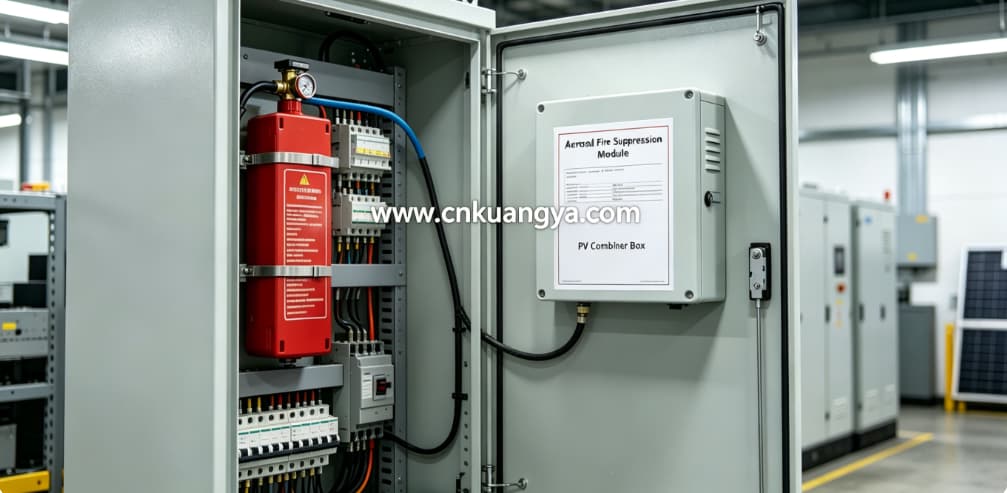
As PV systems scale into hundreds of megawatts, traditional protection methods (fuses + enclosure design) are no longer sufficient. Modern Solar Combiner Box Fire Protection relies on layered engineering: detection, isolation, and suppression.
| Strato | Funzione | Technology Used |
|---|---|---|
| Layer 1 | Early detection | Temperature sensors, smoke sensors, arc fault detection (AFCI) |
| Layer 2 | Fault isolation | DC breakers, smart disconnect switches |
| Layer 3 | Fire suppression | Aerosol / gas suppression systems |
| Layer 4 | Monitoraggio | SCADA + remote alarms |
Most EPC contractors now require:
“Self-protecting combiner boxes with built-in fire response capability”
Especially for:
One of the most widely adopted technologies today is condensed aerosol fire suppression, especially for compact electrical enclosures.
Aerosol Fire Suppression System
When triggered by heat or electrical fault:
| Caratteristica | Benefici |
|---|---|
| No piping required | Easy retrofit in existing combiner boxes |
| Fast activation | Typically <10 seconds response |
| No pressure vessels | Safe for long-term outdoor deployment |
| Bassa manutenzione | 10-year service life systems available |
| Electrically safe | No conductive residue damage |
A 80MW PV farm in northern Chile implemented aerosol modules inside combiner enclosures.
Observed outcome after installation:
A robust Solar Combiner Box Fire Protection system is not only about adding suppression devices. It starts from structural design.
| Design Area | Engineering Requirement |
|---|---|
| Materiale dell'involucro | UV-resistant, flame-retardant polycarbonate or metal |
| Ventilazione | Controlled airflow without dust ingress |
| Layout interno | Minimum conductor crossing, optimized heat dissipation |
| Cablaggio | High-temperature rated DC cables |
| Messa a terra | Low-resistance grounding system |
| Protection devices | Coordinated fuse + SPD + breaker system |
Many low-cost combiner boxes fail because:
This creates a “heat accumulation chamber” effect.
One of the most common EPC decision challenges is balancing CAPEX with fire protection reliability.
| Livello di protezione | Tipo di sistema | Costo relativo | Risk Reduction |
|---|---|---|---|
| Base | Fuse + enclosure only | Basso | Basso |
| Standard | Fuse + SPD + monitoring | Medio | Medio |
| Avanzato | AFCI + smart monitoring | Alto | Alto |
| Premium | AFCI + aerosol suppression + smart shutdown | Molto alto | Molto alto |
Although advanced systems increase upfront cost by 5–15%, they significantly reduce:
In utility-scale solar, even one fire event can exceed:
1–3 years of protection system investment
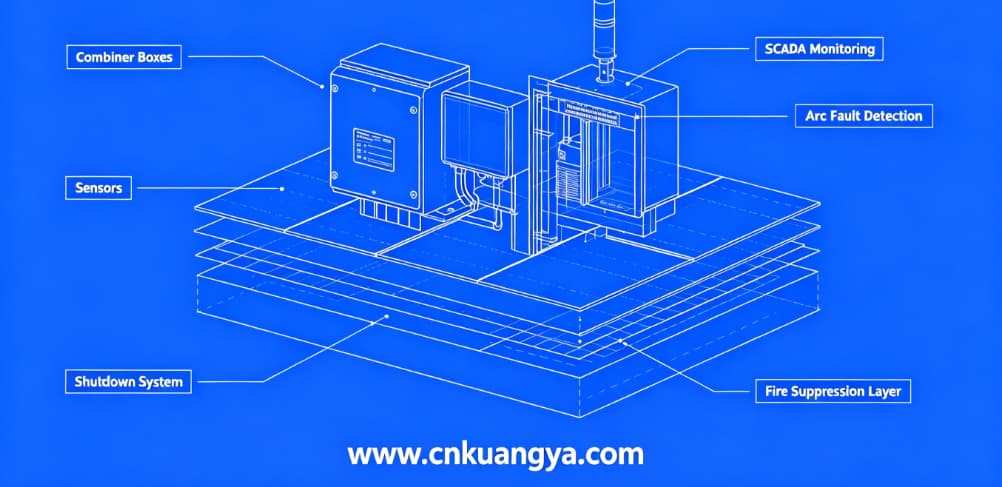
Modern combiner boxes are no longer passive hardware units. They are part of a digital protection ecosystem.
| Funzione | Descrizione |
|---|---|
| Temperature tracking | Real-time hotspot detection |
| String current monitoring | Detect imbalance early |
| Rilevamento dei guasti da arco elettrico | Identify abnormal waveform patterns |
| Remote shutdown | Isolate faulted strings instantly |
| Fire alarm linkage | Trigger suppression system automatically |
A German solar farm implemented full SCADA-integrated combiner protection:
Based on multiple EPC project designs, the following practices are now considered industry standard:
In Middle East solar farms, EPCs often add:
For engineers and procurement teams, selection should not be based only on price.
| Tipo di progetto | Protezione raccomandata |
|---|---|
| FV residenziale | Basic + SPD |
| Commercial rooftop | Standard + monitoring |
| Industrial PV | AFCI + smart shutdown |
| Utility-scale PV | Full integrated system (AFCI + aerosol suppression) |
| High-risk environment | Premium fire protection system |
Most fires are caused by DC arc faults, loose terminals, and overheating due to increased contact resistance.
No. A fuse only interrupts current. It cannot extinguish an arc once ignition has started.
A combination of:
provides the highest level of protection.
Yes. It leaves no conductive residue and does not require pressurized cylinders, making it suitable for PV electrical enclosures.
Not all, but utility-scale and high-temperature environments strongly require advanced protection due to higher risk exposure.
Industry practice recommends:
No system is zero-risk. However, proper design can reduce fire probability and damage severity significantly.

