Zone industrielle WengYang Yueqing Wenzhou 325000
Heures de travail
Du lundi au vendredi : de 7h00 à 19h00
Le week-end : 10H00 - 17H00
Zone industrielle WengYang Yueqing Wenzhou 325000
Heures de travail
Du lundi au vendredi : de 7h00 à 19h00
Le week-end : 10H00 - 17H00

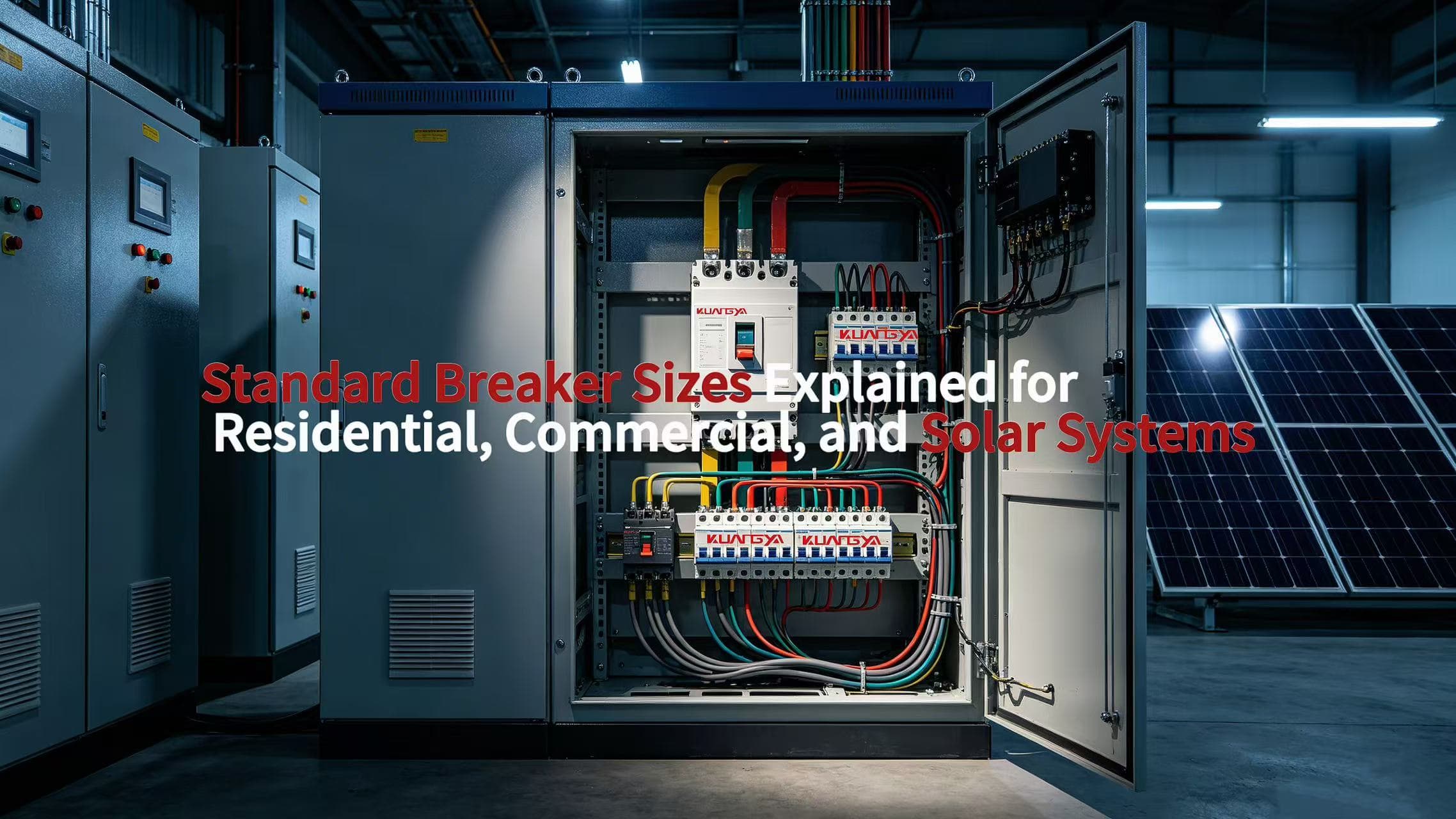
Choosing the correct breaker size is one of the most important parts of any electrical protection system. Reliable [circuit breaker solutions] can improve safety and long-term system stability.Whether for residential buildings, commercial facilities, industrial equipment, or solar energy systems, selecting the right circuit breaker helps ensure safety, stable operation, and long-term equipment protection.
Many engineers, contractors, and distributors search for standard breaker sizes when designing electrical systems because breaker sizing directly affects overload protection, short circuit performance, and system reliability.
In this guide, we will explain the most common standard breaker sizes, how to choose the correct breaker rating, and the differences between residential, commercial, industrial, and solar applications.
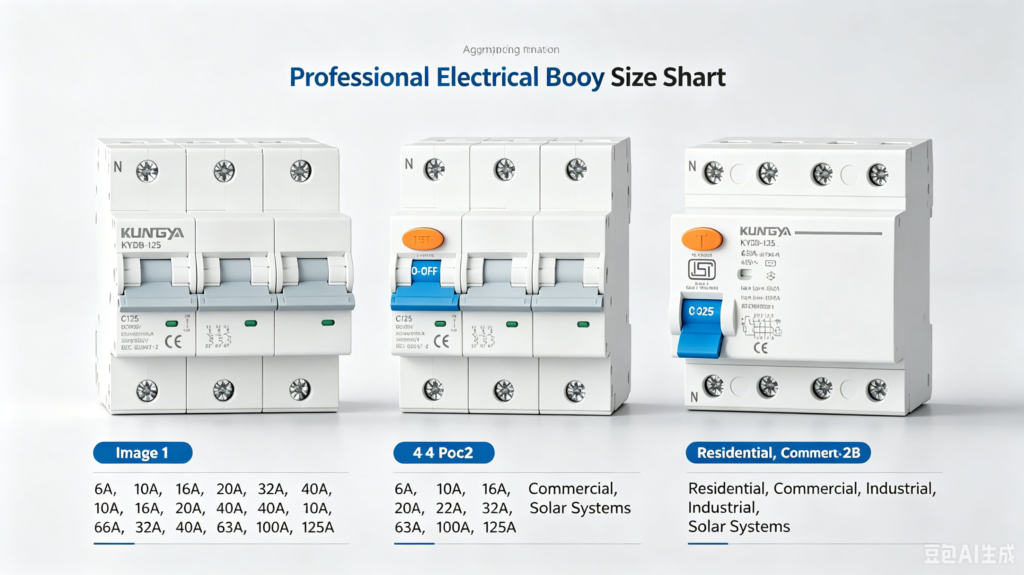
Standard breaker sizes refer to the commonly manufactured ampere ratings used in electrical systems. Circuit breakers are designed in standardized current ratings to meet IEC and UL electrical protection requirements.
The most common breaker sizes include:
| Common Breaker Sizes |
|---|
| 6A |
| 10A |
| 16A |
| 20A |
| 32A |
| 40A |
| 50A |
| 63A |
| 80A |
| 100A |
| 125A |
| 250A |
| 400A |
| 600A |
Different breaker sizes are used depending on the application, cable capacity, load type, voltage level, and installation standard.
Using the correct breaker size is essential for electrical safety and system performance.
An undersized breaker may trip frequently, interrupting operations and damaging sensitive equipment. An oversized breaker may fail to provide proper protection, increasing the risk of overheating, cable damage, or fire hazards.
Correct breaker sizing helps:
For solar and ESS systems, proper breaker sizing is especially important because DC electrical systems behave differently from AC systems.
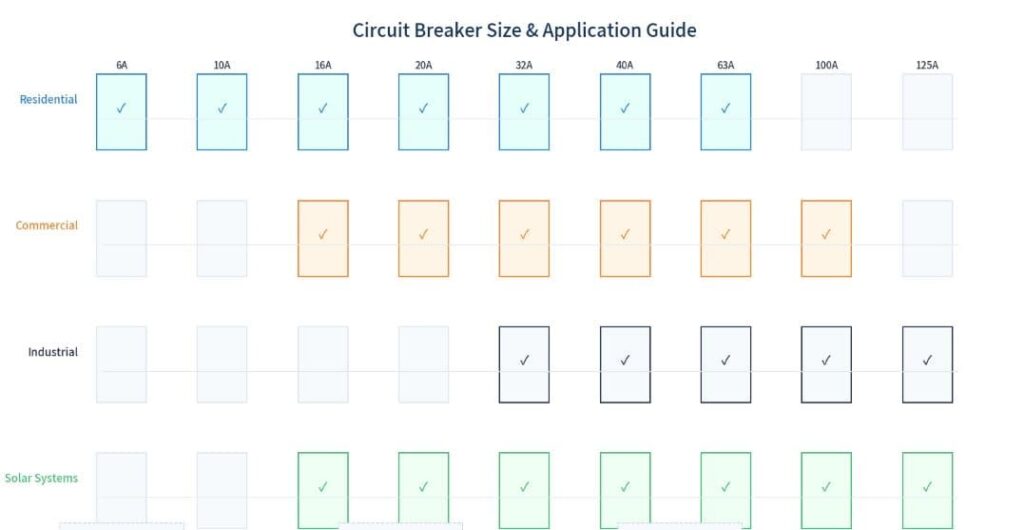
Below is a general breaker size chart used in different applications.
| Application | Common Breaker Size |
|---|---|
| Circuits d'éclairage | 6A – 16A |
| Wall outlets | 16A – 20A |
| Chauffe-eau | 20A – 32A |
| Climatiseurs | 32A – 50A |
| Fours électriques | 32A – 63A |
| Application | Common Breaker Size |
|---|---|
| Office lighting | 20A – 32A |
| Systèmes CVC | 40A - 100A |
| Elevators | 63A - 125A |
| Panneaux de distribution | 100A - 250A |
| Application | Common Breaker Size |
|---|---|
| Industrial motors | 63A – 250A |
| Machinery protection | 100A – 400A |
| Main power distribution | 250A – 600A |
| Application | Common Breaker Size |
|---|---|
| Protection de la chaîne PV | 16A – 32A |
| Boîtes combinées | 32A – 125A |
| Protection de la batterie | 125A – 400A |
| Protection de l'onduleur | 32A – 250A |
Selecting the correct breaker size requires more than simply matching the load current.
Several factors must be considered.
The first step is calculating the total operating current.
Par exemple :
A common rule is to size the breaker at approximately 125% of the continuous load current.
The breaker must protect the cable, not just the equipment.
If the breaker rating exceeds the cable capacity, the cable may overheat before the breaker trips.
Typical examples include:
| Cable Size | Recommended Breaker |
|---|---|
| 1.5 mm² | 10A – 16A |
| 2.5 mm² | 16A – 20A |
| 4 mm² | 20A – 32A |
| 6 mm² | 32A – 40A |
| 10 mm² | 50A – 63A |
Local regulations and installation conditions may vary.
AC and DC breakers are not interchangeable in many applications.Because DC electrical arcs are more difficult to interrupt, solar systems require specially designed protection devices. Learn more in our detailed guide on [DC circuit breaker vs AC circuit breaker] for photovoltaic applications.
DC circuits are more difficult to interrupt because the electrical arc does not naturally cross zero like AC current.
For solar systems, using dedicated DC breakers is critical.
Typical DC breaker voltages include:
Solar projects increasingly require 1000V DC and 1500V DC breakers for high-efficiency PV systems.
Temperature affects breaker performance.
High ambient temperatures may reduce breaker carrying capacity, causing nuisance tripping.
In hot environments such as:
derating factors must be considered during breaker selection.
Breaking capacity refers to the maximum fault current a breaker can safely interrupt.
Common breaking capacities include:
| Capacité de rupture | Application typique |
|---|---|
| 6kA | Résidentiel |
| 10kA | Commercial |
| 25kA | Industriel |
| 50kA+ | Heavy industrial systems |
Higher fault current systems require higher breaking capacities.
Because household electrical loads are usually lower, residential systems commonly use smaller breaker sizes. Most panels rely on [miniature circuit breakers] to protect lighting and outlet circuits.
The most common residential breaker sizes are:
Typical applications include lighting, kitchen appliances, water heaters, and HVAC systems.
Modern homes with EV chargers and rooftop solar systems may require larger breakers due to higher energy demand.
Commercial electrical systems are more complex than residential systems.
In addition to standard breakers, many commercial facilities use [RCCB protection solutions] to enhance leakage and electrical shock protection.
Office buildings, shopping centers, hotels, and hospitals often require:
Commercial breaker sizes commonly range from:
Commercial facilities also frequently use molded case circuit breakers (MCCBs) because of their higher current ratings and adjustable protection settings.
Industrial facilities require heavy-duty electrical protection systems.
Factories, manufacturing plants, and processing equipment often operate under:
Industrial systems commonly use:
Typical industrial breaker sizes include:
Large industrial installations may require customized protection coordination studies.
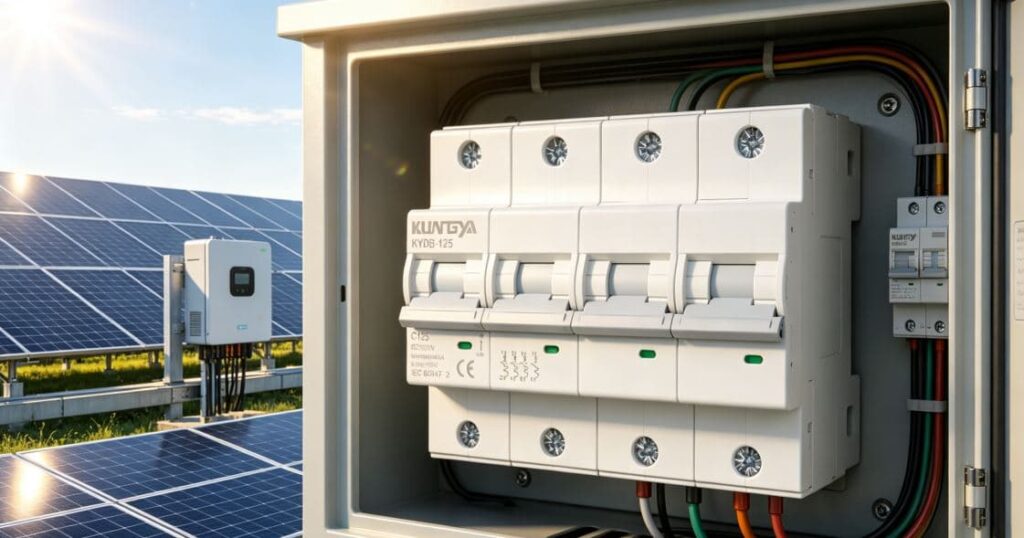
Solar power systems have become one of the fastest-growing applications for DC breakers.
Modern photovoltaic systems require reliable [Disjoncteurs CC] for safe protection.
Proper DC breaker sizing is essential for:
| Solar Application | Common DC Breaker Size |
|---|---|
| PV strings | 16A – 20A |
| Boîtes combinées | 32A – 63A |
| String inverters | 63A - 125A |
| Battery ESS | 125A – 400A |
Modern photovoltaic systems increasingly use:
Reliable solar breakers help reduce fire risks and improve system safety.
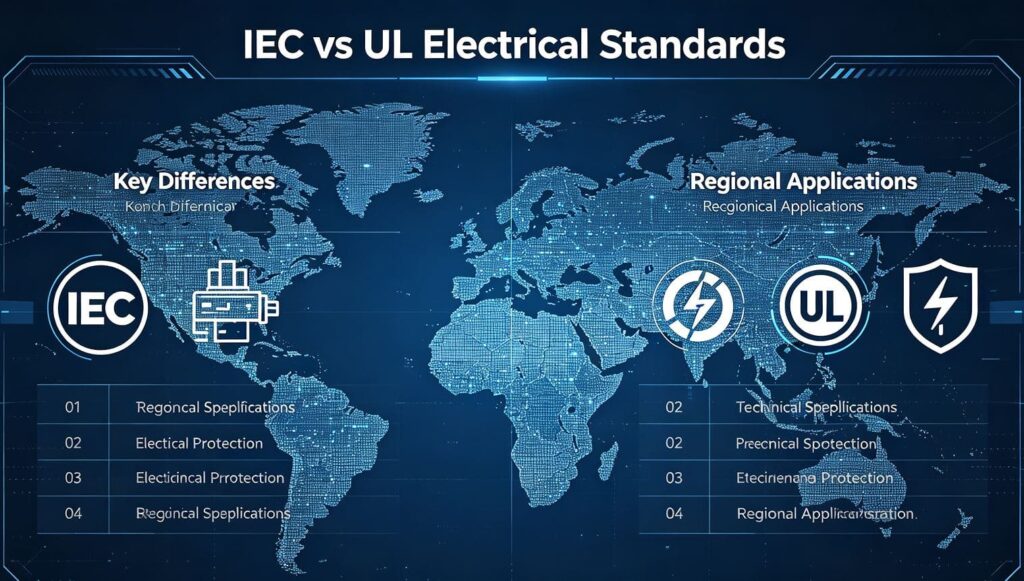
Different regions follow different electrical standards.
IEC breakers are commonly used in:
IEC breakers usually follow modular DIN rail designs and metric sizing systems.
UL breakers are mainly used in:
UL systems often use different voltage ratings, panel designs, and certification requirements.
Understanding local market standards is important when selecting breakers for export projects.
Different breaker types are available for different applications.
MCBs are used in:
Typical sizes:
MCCBs are used in:
Typical sizes:
RCCBs protect against leakage current and electric shock.
Les notations les plus courantes sont les suivantes :
DC breakers are specially designed for:
Common DC ratings:
Incorrect breaker sizing can cause serious problems.
Oversized breakers may fail to trip during overload conditions, creating fire hazards.
The breaker must always match cable current capacity.
This is a common mistake in solar installations.
DC breakers must be specifically designed for DC arc interruption.
Outdoor solar installations may require breaker derating.
High fault current systems require high interrupting capacity.
As electrical systems continue to evolve, breaker technology is also changing.
Growing industries include:
This increases demand for:
Manufacturers are also developing safer and more energy-efficient protection solutions for renewable energy projects.
The quality of the breaker is just as important as selecting the correct size.
Reliable breaker manufacturers provide:
For solar and industrial applications, choosing certified and tested breakers helps reduce operational risks.
Different markets may require different specifications.
Par exemple :
| Market | Common Requirement |
|---|---|
| L'Europe | IEC certification |
| Moyen-Orient | High temperature resistance |
| Asie du Sud-Est | Compact DIN rail systems |
| Amérique du Nord | UL certification |
Export-oriented projects should always verify local compliance requirements before selecting breakers.
Understanding standard breaker sizes is essential for building safe and reliable electrical systems.
Whether for residential buildings, commercial facilities, industrial power distribution, or solar energy systems, selecting the correct breaker size helps protect equipment, reduce downtime, and improve overall safety.
Modern electrical projects increasingly require advanced breaker solutions, especially in solar and ESS applications where DC protection is critical.
By considering load current, cable size, voltage type, ambient temperature, and breaking capacity, engineers and buyers can choose the right protection solution for every project.
As global demand for renewable energy and intelligent power distribution continues to grow, reliable circuit breaker solutions will remain a key part of modern electrical infrastructure.
The most common standard breaker sizes include 6A, 10A, 16A, 20A, 32A, 40A, 63A, 100A, and 125A for residential, commercial, industrial, and solar applications.
Residential systems commonly use 15A, 20A, 32A, and 63A breakers depending on the electrical load and application. Most residential panels also use [miniature circuit breakers] for lighting and outlet protection.
No. Solar systems require dedicated [Disjoncteurs CC] specifically designed for DC arc interruption and photovoltaic protection.
MCBs are mainly used for low-current residential applications, while MCCBs are designed for higher current commercial and industrial systems with greater interrupting capacity.
Correct breaker sizing helps prevent overloads, short circuits, overheating, and electrical fires while protecting cables, electrical equipment, and solar power systems.
Nous sommes un fabricant professionnel de produits électriques pour les applications solaires et industrielles, y compris les disjoncteurs, les disjoncteurs SPD, les disjoncteurs RCD et les accessoires connexes. Forts d'une riche expérience en matière d'exportation, nous fournissons des solutions fiables et des services OEM/ODM à nos clients du monde entier.
+86-577-61885000
+86 13676769183
info@cnkuangya.com
export@cnkuangya.com
WengYang Industrial Zone, Yueqing, Wenzhou 325000, Chine

