Zona industrial de WengYang Yueqing Wenzhou 325000
Horas de trabajo
De lunes a viernes: de 7.00 a 19.00 horas
Fin de semana: 10.00 A 17.00 HORAS
Zona industrial de WengYang Yueqing Wenzhou 325000
Horas de trabajo
De lunes a viernes: de 7.00 a 19.00 horas
Fin de semana: 10.00 A 17.00 HORAS

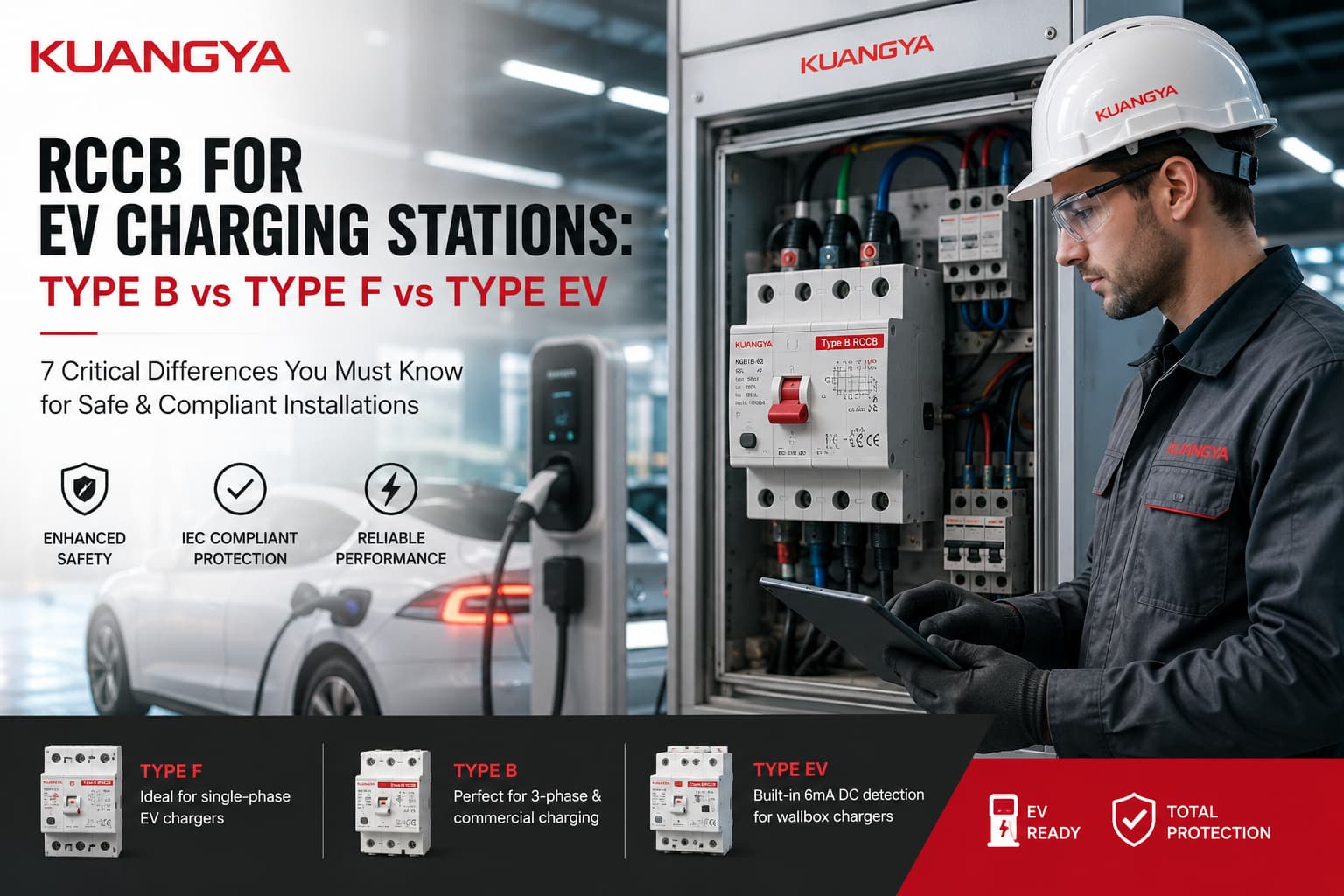
RCCB para estaciones de carga de VE: Tipo B vs Tipo F vs Tipo EV se está convirtiendo en uno de los temas más críticos en la seguridad moderna de carga de VE. La elección del RCCB correcto garantiza una protección fiable, evita los riesgos de fuga de CC y cumple las normas IEC.
A medida que los vehículos eléctricos siguen dominando el mercado mundial del transporte, la infraestructura de recarga de vehículos eléctricos se está expandiendo rápidamente en los sectores residencial, comercial y público. Sin embargo, a menudo se pasa por alto un problema de seguridad crítico durante la instalación del cargador: una protección de corriente residual adecuada.
Elegir el RCCB incorrecto para una estación de carga de VE puede provocar disparos molestos, corrientes de fuga de CC no detectadas, daños en los equipos, riesgos de incendio o incluso de descarga eléctrica.
Por este motivo, entender las diferencias entre el RCCB de tipo B, el RCCB de tipo F y el RCCB de tipo EV se ha convertido en algo esencial para ingenieros eléctricos, instaladores, fabricantes de cargadores de VE y contratistas de proyectos.
En esta guía se lo explicaremos:
Tanto si está diseñando un sistema de carga de VE doméstico como una gran estación de carga comercial, este artículo le ayudará a elegir la solución de protección RCCB correcta.
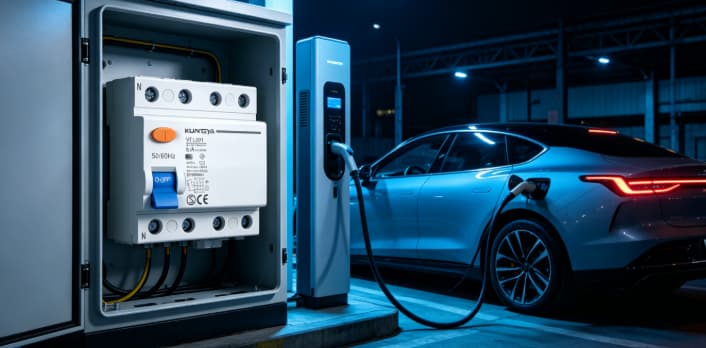
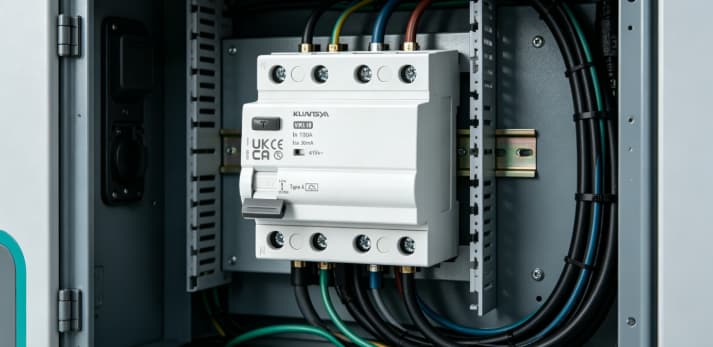
RCCB para estaciones de carga de vehículos eléctricos: Tipo B vs Tipo F vs Tipo EV se ha convertido en esencial porque los modernos cargadores de VE generan complejas corrientes de fuga de CC que los RCCB ordinarios pueden no detectar.
Las soluciones modernas de RCCB para estaciones de carga de VE deben gestionar las fugas de CA, las corrientes de CC pulsantes y las complejas corrientes de fallo generadas por el inversor.
Un interruptor diferencial es un dispositivo de protección diseñado para desconectar los circuitos eléctricos cuando se detecta una corriente de fuga.
En las aplicaciones de carga de vehículos eléctricos, los RCCB son esenciales porque los sistemas de carga implican:
A diferencia de los electrodomésticos tradicionales, los cargadores de VE generan corrientes residuales complejas que los RCCB estándar pueden no detectar correctamente.
El objetivo principal de un RCCB en las estaciones de carga de VE es:
Sin una protección adecuada del RCCB, los sistemas de carga de VE pueden resultar peligrosos en condiciones de fallo de aislamiento o fuga de CC.
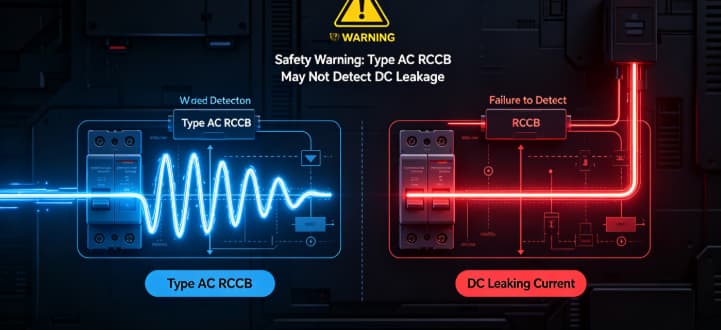
Los RCCB de CA de tipo tradicional están diseñados únicamente para corrientes de fuga de CA sinusoidales puras.
Sin embargo, los cargadores de VE modernos contienen:
Estos sistemas electrónicos pueden generar:
Cuando las fugas de CC superan los 6 mA, los RCCB de tipo CA ordinarios o incluso algunos de tipo A pueden quedar “cegados”, lo que significa que ya no pueden detectar corrientes de fuga peligrosas.
Esto crea graves riesgos para la seguridad.
Por este motivo, las normas internacionales prohíben cada vez más el uso exclusivo de RCCB de tipo CA para estaciones de recarga de VE.
Los tipos de RCCB más comunes utilizados para los sistemas de carga de VE incluyen:
| Tipo RCCB | Detecta fugas de CA | Detecta CC pulsante | Detecta CC suave | Apto para carga de vehículos eléctricos |
|---|---|---|---|---|
| Tipo AC | Sí | No | No | No |
| Tipo A | Sí | Sí | Limitado | Parcial |
| Tipo F | Sí | Sí | Limitado | Algunos cargadores monofásicos para VE |
| Tipo B | Sí | Sí | Sí | Mejor solución universal |
| Tipo EV | Sí | Sí | Supervisión de 6 mA CC | Solución de carga optimizada para vehículos eléctricos |
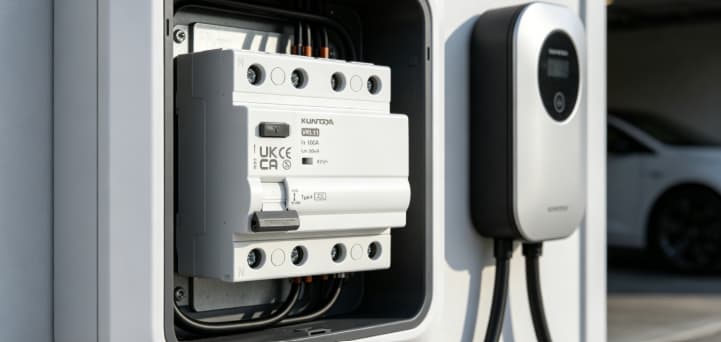
RCCB para estaciones de carga de vehículos eléctricos: Tipo B vs Tipo F vs Tipo EV es una comparación importante a la hora de seleccionar dispositivos de protección para sistemas de carga de VE residenciales y comerciales.
Los RCCB de tipo F están especialmente diseñados para circuitos que contengan:
Pueden detectar:
En comparación con los RCCB de tipo A, el tipo F proporciona una inmunidad mejorada contra los disparos molestos.
Los RCCB de tipo F se utilizan habitualmente en:
Son especialmente adecuados cuando:
Los RCCB de tipo F pueden soportar corrientes de fuga de mayor frecuencia generadas por los modernos cargadores de VE.
Proporcionan una resistencia mejorada contra las corrientes transitorias y el ruido eléctrico.
Los RCCB de tipo F suelen ser menos caros que las soluciones de tipo B.
A pesar de sus ventajas, los RCCB de tipo F no pueden detectar corrientes de fuga de CC suaves por encima de ciertos niveles.
Esto significa que no son adecuados para:
Muchos instaladores comparan ahora RCCB para estaciones de carga de VE: Tipo B vs Tipo F vs Tipo EV para equilibrar seguridad, conformidad y coste de instalación.
Muchos ingenieros consideran que el tipo B es el RCCB más seguro para las estaciones de carga de vehículos eléctricos porque puede detectar corrientes de fuga de CC suaves de forma fiable.
Los interruptores diferenciales de tipo B son los dispositivos de protección diferencial de más alto nivel para la electrónica de potencia moderna.
Pueden detectar:
Los RCCB de tipo B están diseñados específicamente para:
Muchos sistemas de carga de vehículos eléctricos pueden generar corrientes de fuga de CC suaves superiores a 6 mA.
Sólo los interruptores diferenciales de tipo B pueden detectar con fiabilidad estas peligrosas corrientes de fuga.
Por ello, los RCCB de tipo B son ampliamente recomendados por:
Los RCCB de tipo B pueden detectar corrientes continuas residuales suaves que otros tipos de RCCB pueden pasar por alto.
Proporcionan el máximo nivel de protección para:
Los RCCB de tipo B son compatibles con:
A medida que evoluciona la tecnología de los cargadores de VE, los RCCB de tipo B siguen siendo compatibles con las arquitecturas de carga avanzadas.
Los RCCB de tipo B son significativamente más caros que los dispositivos de tipo A o F.
Suelen requerir un mayor espacio en el panel de distribución.
El cableado correcto y la coordinación con los sistemas SPD y MCB son esenciales.
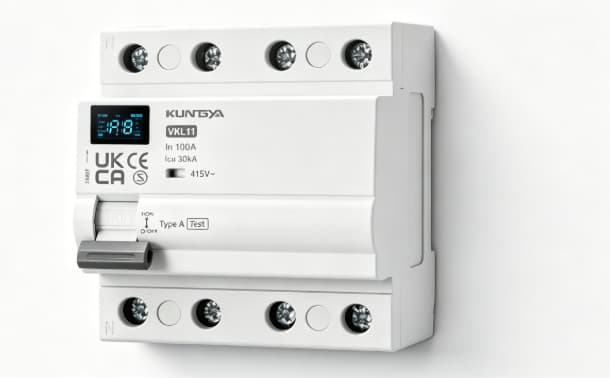
Los RCCB de tipo EV están especialmente diseñados para aplicaciones de carga de vehículos eléctricos.
Suelen combinarse:
Este diseño permite que el dispositivo desconecte el circuito antes de que una fuga de CC peligrosa pueda cegar los RCCB aguas arriba.
En lugar de utilizar un RCCB de tipo B completo, muchos cargadores de VE modernos utilizan:
Esta solución combinada se conoce comúnmente como “Tipo EV”.”
El sistema supervisa continuamente las corrientes de fuga de CC.
Si la fuga de CC supera los 6 mA:
Las soluciones de tipo EV suelen ser más económicas.
Ideal para cajas murales EV domésticas.
Más pequeño que los RCCB tradicionales de tipo B.
Ampliamente aceptado para la protección de cargadores de VE modernos.
Las soluciones de tipo EV no siempre son adecuadas para:
En muchas instalaciones comerciales, los RCCB de tipo B siguen siendo obligatorios.
Al comparar RCCB para estaciones de carga de VE: Tipo B vs Tipo F vs Tipo EV, los ingenieros deben tener en cuenta el tipo de cargador, la alimentación monofásica o trifásica, la detección de fugas de CC y la aplicación comercial vs residencial.
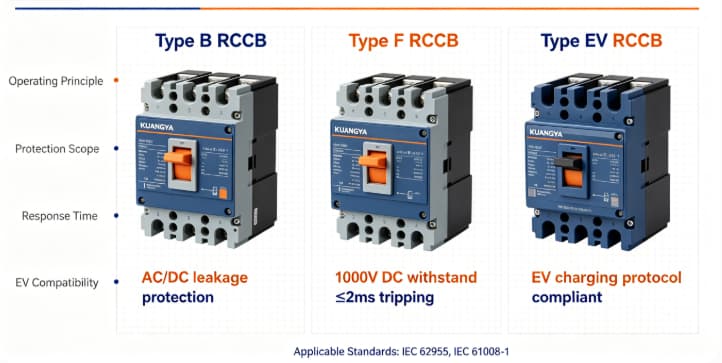
Comprensión del RCCB para estaciones de carga de vehículos eléctricos: Tipo B vs Tipo F vs Tipo EV ayuda a los instaladores e ingenieros a seleccionar la solución de protección más segura para los diferentes sistemas de carga.
| Característica | Tipo F RCCB | Tipo B RCCB | Tipo EV RCCB |
|---|---|---|---|
| Detección de fugas de CA | Sí | Sí | Sí |
| Detección de CC pulsante | Sí | Sí | Sí |
| Detección suave de CC | Limitado | Completo | Supervisión de 6 mA |
| Detección de alta frecuencia | Parcial | Excelente | Bien |
| Compatibilidad de carga de vehículos eléctricos | Medio | Excelente | Excelente |
| Cargadores de vehículos eléctricos residenciales | Bien | Excelente | Excelente |
| Estaciones de carga comerciales | Limitado | Mejor | Medio |
| Carga rápida de CC | No | Sí | Limitado |
| Coste | Medio | Alta | Medio |
| Conformidad IEC | Condicional | Completo | Completo |
| Recomendado para | Cargadores domésticos | Sistemas universales de VE | Cajas murales inteligentes |
La normativa internacional hace cada vez más referencia al RCCB para las estaciones de carga de VE: Tipo B vs Tipo F vs Tipo EV a la hora de definir los requisitos de protección segura de los cargadores de VE.
Varias normas internacionales regulan el uso de los RCCB en los sistemas de recarga de vehículos eléctricos.
Esta norma define los requisitos de seguridad de los sistemas de carga conductiva de vehículos eléctricos.
Se refiere específicamente a los dispositivos de protección RDC-DD para la recarga de vehículos eléctricos.
Cubre los requisitos técnicos del RCCB y las clasificaciones de Tipo B.
Los distintos países pueden imponer requisitos adicionales:
Compruebe siempre la normativa local antes de la instalación.
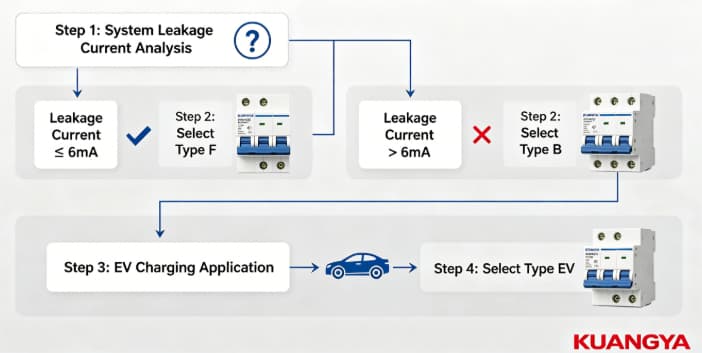
Elegir el RCCB adecuado depende de varios factores.
Normalmente compatible con:
Recomendado:
Obligatorio:
Los cargadores de mayor potencia producen corrientes de fuga más complejas.
Las grandes estaciones de carga suelen requerir protección de tipo B.
Los sistemas monofásicos pueden utilizar el Tipo F o el Tipo EV.
Los sistemas comerciales trifásicos suelen requerir el tipo B.
Algunos cargadores de VE ya contienen módulos RDC-DD de 6 mA.
En este caso:
Compruebe siempre las especificaciones del fabricante.
Una comprensión incorrecta del RCCB para estaciones de carga de VE: Tipo B vs Tipo F vs Tipo EV puede conducir a una selección incorrecta del dispositivo de protección y a graves riesgos eléctricos.
Este es uno de los errores de instalación más peligrosos.
Muchos instaladores pasan por alto las reglas de detección de 6 mA CC.
Las conexiones de neutro inadecuadas pueden provocar disparos molestos.
Las estaciones de recarga de vehículos eléctricos deben coordinarse:
para una protección total.
Un sistema típico de protección de carga de VE incluye:
| Dispositivo de protección | Función |
|---|---|
| MCB | Protección contra sobrecorriente |
| RCCB | Protección contra fugas |
| SPD | Protección contra sobretensiones |
| Aislador | Mantenimiento Seguridad |
| RDC-DD | Control de fugas de CC |
Para una infraestructura moderna de VE, es esencial combinar todas estas capas de protección.
A medida que la infraestructura de VE se expande por todo el mundo, el RCCB para estaciones de carga de VE: Tipo B vs Tipo F vs Tipo EV seguirá siendo un foco importante para la seguridad eléctrica y el cumplimiento de la IEC.
A medida que avanza la tecnología de los VE, también evoluciona la de los RCCB.
Entre las novedades futuras figuran:
El rápido crecimiento de los sistemas de carga ultrarrápida aumentará aún más la demanda de soluciones avanzadas de protección de tipo B.
Sólo si el cargador incluye detección de fugas de CC de 6 mA integrada.
En caso contrario, se recomienda una protección de tipo B.
No siempre.
Muchos cargadores residenciales utilizan soluciones de tipo EV o de tipo A + RDC-DD.
Sin embargo, las estaciones de carga comerciales y de corriente continua suelen requerir el Tipo B.
El tipo B detecta directamente corrientes de fuga de CC totalmente lisas.
El tipo EV combina el tipo A RCCB con la monitorización integrada de 6 mA CC.
Contienen una electrónica de detección avanzada capaz de detectar múltiples formas de onda de corriente residual.
Sólo en aplicaciones residenciales limitadas en las que ya existe detección de CC integrada.
No es adecuado para la protección universal de carga de vehículos eléctricos.
RCCB para estaciones de carga de VE: Tipo B vs Tipo F vs Tipo EV sigue siendo uno de los temas más buscados en el diseño moderno de protección eléctrica y seguridad de carga de VE.
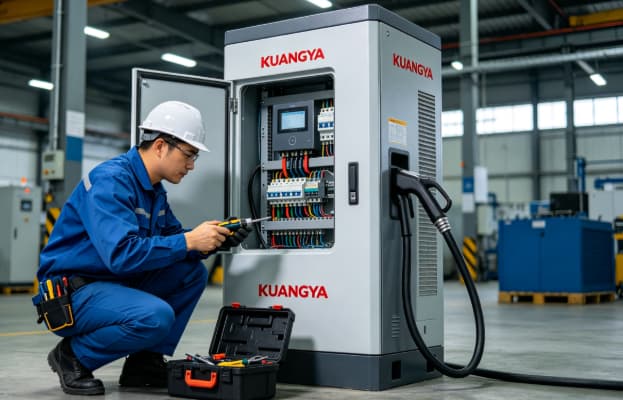
Seleccionar el RCCB correcto para las estaciones de carga de vehículos eléctricos es fundamental para la seguridad eléctrica, el cumplimiento de la normativa y la fiabilidad del sistema a largo plazo.
Aunque los RCCB de tipo F pueden funcionar para algunos cargadores monofásicos residenciales, no pueden proporcionar una protección universal.
Los RCCB de tipo EV ofrecen una solución rentable para los cargadores murales modernos con monitorización de CC integrada.
Sin embargo, los RCCB de tipo B siguen siendo la solución de protección más segura y completa para la infraestructura de carga de vehículos eléctricos comerciales, cargadores rápidos de CC y sistemas electrónicos de potencia avanzados.
A medida que las redes de recarga de vehículos eléctricos sigan expandiéndose por todo el mundo, será aún más importante contar con una protección de corriente residual adecuada.
Elegir entre RCCB para estaciones de carga de VE: Tipo B vs Tipo F vs Tipo EV depende de la tecnología del cargador, las características de la corriente de fuga y los requisitos de instalación.
Invertir hoy en el RCCB correcto garantiza sistemas de carga más seguros, menores riesgos de mantenimiento y el cumplimiento de futuras normas eléctricas.
Kuangya ofrece soluciones profesionales de protección de circuitos para:
Nuestros productos incluyen:
Póngase en contacto con nuestro equipo técnico hoy mismo para encontrar la mejor solución de protección para sus proyectos de carga de vehículos eléctricos.
Más información sobre nuestro RCCB para estaciones de carga de VE: Soluciones Tipo B vs Tipo F vs Tipo EV en KUANGYA para una protección más segura y fiable de los cargadores de vehículos eléctricos.

