Zona industrial de WengYang Yueqing Wenzhou 325000
Horas de trabajo
De lunes a viernes: de 7.00 a 19.00 horas
Fin de semana: 10.00 A 17.00 HORAS
Zona industrial de WengYang Yueqing Wenzhou 325000
Horas de trabajo
De lunes a viernes: de 7.00 a 19.00 horas
Fin de semana: 10.00 A 17.00 HORAS

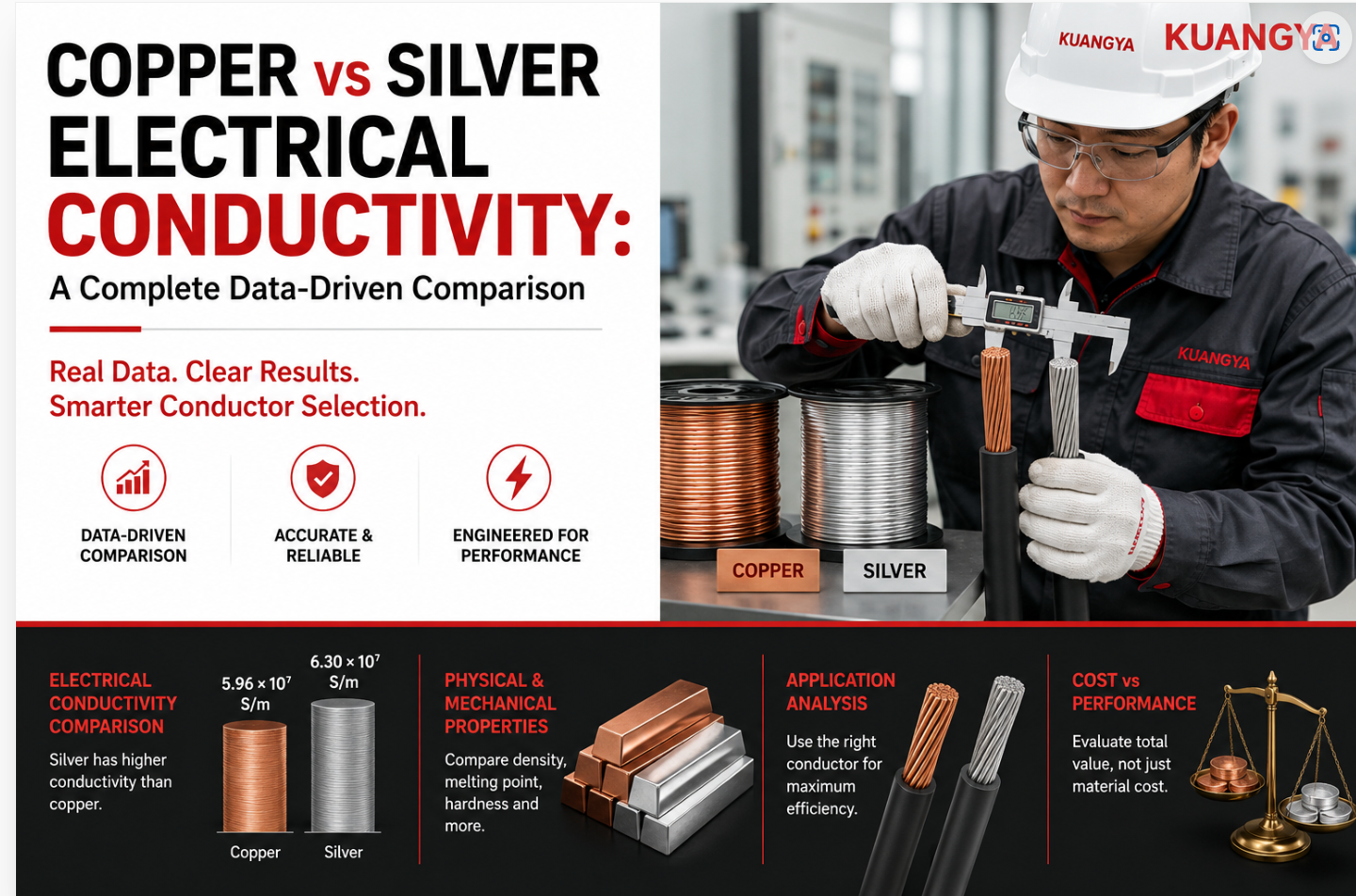
Cuando uno piensa en la espina dorsal de la electricidad moderna, probablemente se imagina líneas eléctricas, placas de circuitos y cableado. Lo que tal vez no vea es el silencioso debate que tiene lugar a nivel material: cobre frente a plata conductividad eléctrica. Muchos lectores quieren saber más sobre la conductividad eléctrica del cobre y la plata.Estos dos metales son los mejores cuando se trata de transportar corriente, pero sus funciones en el mundo real no podrían ser más diferentes. La plata es técnicamente el mejor conductor de la tabla periódica, pero el cobre se utiliza en casi todos los hogares, fábricas y redes eléctricas de la Tierra.
Si alguna vez se ha preguntado por qué la plata no está en todas partes a pesar de su mayor conductividad, o cómo se comparan más allá de los números, esta guía sobre la plata y la conductividad le ayudará. cobre frente a plata conductividad eléctrica es para usted. Desglosaremos su rendimiento con datos concretos, compararemos sus pros y sus contras y exploraremos exactamente dónde brilla cada metal (y dónde no). Tanto si eres un aficionado a la electrónica, un estudiante de ingeniería o simplemente sientes curiosidad por los cables de tu pared, esta inmersión en profundidad te dará todas las respuestas.
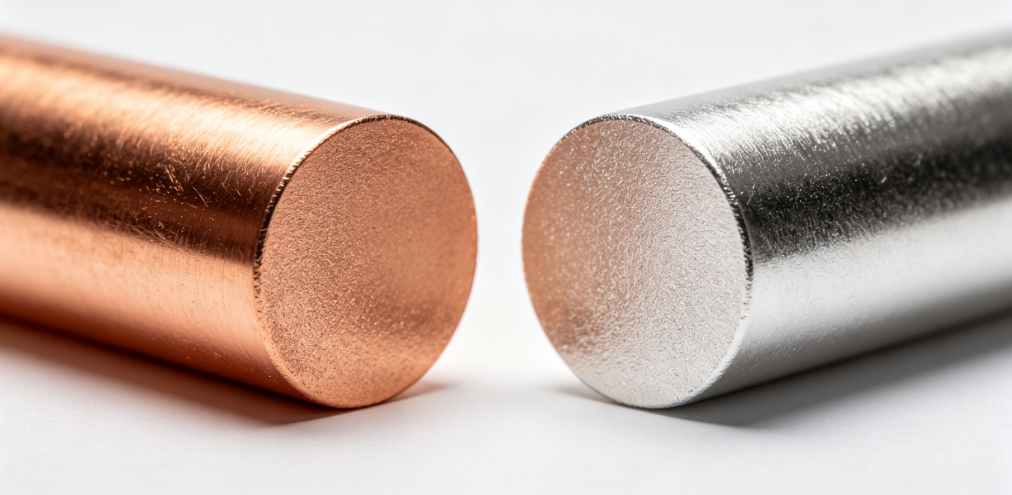
Para analizar cobre frente a plata conductividad eléctrica, Vayamos directamente a los hechos. En electrotecnia, la conductividad se mide mediante la Norma Internacional del Cobre Recocido (IACS), que establece como referencia el cobre de gran pureza a 100%. También utilizamos la resistividad (la inversa de la conductividad) para medir la resistencia de un material al flujo de corriente. NIST.
La tabla siguiente resume las especificaciones clave a 20 °C (temperatura ambiente):
| Propiedad | Cobre de gran pureza (99,98%) | Plata pura (99,99%) |
|---|---|---|
| Conductividad IACS | 100% (Valor de referencia) | 106% |
| Conductividad eléctrica (S/m) | 59.6 × 10⁶ | 63.0 × 10⁶ |
| Resistividad (nΩ-m) | 16.78 | 15.90 |
| Densidad (g/cm³) | 8.96 | 10.49 |
| Punto de fusión (°C) | 1085 | 961.8 |
| Oxidación/desgaste común | Forma óxido de cobre estable y protector | Tiende a formar sulfuro de plata negro (deslustre) |
| Coste relativo | Baja, ampliamente disponible | ~50 veces superior al cobre |
| Uso industrial típico | Cableado y electrónica a gran escala | Circuitos de alta frecuencia, contactos de precisión |
Esto prepara el terreno para nuestra inmersión más profunda. Las cifras por sí solas no lo dicen todo: el contexto importa.

Para comprender cobre frente a plata conductividad eléctrica, Si nos fijamos en la estructura atómica de estos metales. Ambos son metales de transición con un único electrón de valencia en su capa más externa. Este electrón sólo se siente débilmente atraído por el núcleo, por lo que puede moverse libremente por la red metálica, formando un “mar de electrones libres” que transporta la corriente eléctrica.
Los átomos de plata tienen un radio atómico mayor que los de cobre. Esto significa que el electrón más externo está más lejos del núcleo y experimenta aún menos atracción. En consecuencia:
Los electrones libres del cobre están ligeramente más ligados, por lo que su conductividad es ligeramente inferior. Sin embargo, la diferencia en cobre frente a plata conductividad eléctrica es lo suficientemente pequeño como para que, en la mayoría de las aplicaciones cotidianas, el rendimiento del cobre sea indistinguible del de la plata.
Dos factores principales influyen en el rendimiento de ambos metales:
La batalla en el mundo real sobre cobre frente a plata conductividad eléctrica no se trata de qué metal es “mejor”, sino de cuál se adapta mejor al trabajo que hay que hacer. Desglosemos sus casos de uso.
El cobre es el caballo de batalla del mundo eléctrico. Se utiliza en más de 90% de todas las aplicaciones conductoras por una sencilla razón: ofrece un equilibrio inmejorable entre rendimiento, durabilidad y coste.
La plata sólo brilla en situaciones en las que su pequeña ventaja conductiva marca una gran diferencia y el coste es menos preocupante.
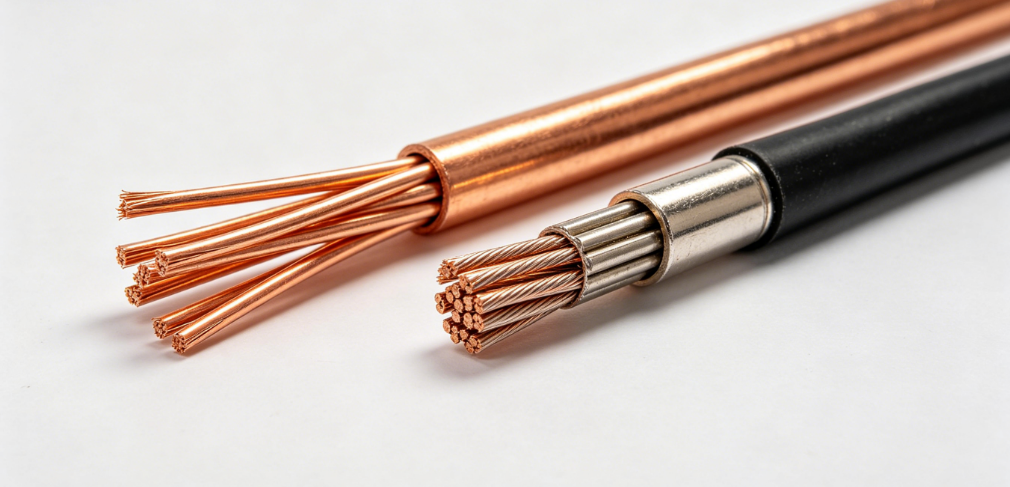
Para equilibrar rendimiento y coste, muchos fabricantes utilizan cobre plateado. Se aplica una fina capa de plata a un núcleo de cobre, combinando el bajo coste y la resistencia del cobre con la conductividad de alta frecuencia de la plata. Este diseño optimiza cobre frente a plata conductividad eléctrica, ampliamente utilizado en conectores RF, cables coaxiales y equipos de audio de alto rendimiento.
El mayor obstáculo en el debate sobre la conductividad eléctrica del cobre frente a la plata es simplemente económico.
En resumen, para cobre frente a plata conductividad eléctrica, La plata es técnicamente superior, pero no ofrece una mejor relación calidad-precio para el 99% de las aplicaciones. El pequeño aumento de rendimiento no merece la pena por el enorme incremento del coste.
Para ayudarte a compararlas de un vistazo, aquí tienes un desglose de las principales ventajas e inconvenientes:
✅ Pros:
❌ Contras:
✅ Pros:
❌ Contras:
Para terminar, respondamos a algunas de las preguntas más frecuentes sobre cobre frente a plata conductividad eléctrica.
R: La ventaja de la conductividad del 6% es insignificante para el uso doméstico de bajo voltaje. El aumento de costes sería enorme, y el riesgo de deslustre (que aumenta la resistencia) hace que la plata sea menos fiable para un uso a largo plazo. El cobre es simplemente la mejor opción para los hogares.
R: Sí. El deslustre de la plata (sulfuro de plata) es un mal conductor. Aunque no afecta a la conductividad del metal, puede aumentar considerablemente la resistencia superficial, lo que supone un grave problema para las señales de alta frecuencia y los contactos eléctricos.
R: Depende de la aplicación. Para electrónica de alta frecuencia o equipos de audio en los que la pureza de la señal es prioritaria, el coste suele estar justificado. Para aplicaciones de potencia estándar, el beneficio no merece el gasto extra.
R: A medida que los metales se calientan, su conductividad disminuye. Tanto el cobre como la plata pierden aproximadamente 20% de su conductividad a unos 100°C. En sus puntos de fusión (1085 °C para el cobre y 961,8 °C para la plata), se vuelven líquidos y su conductividad disminuye drásticamente.
R: Técnicamente, sí. Pero a menos que su proyecto incluya señales de alta frecuencia o contactos de precisión, no notará ninguna diferencia de rendimiento y pagará un sobreprecio. Para la mayor parte de la electrónica de bricolaje, el cobre es la elección perfecta.
El debate sobre la conductividad eléctrica del cobre frente a la plata es un ejemplo clásico de cómo “mejor” en teoría no siempre significa “mejor” en la práctica. La plata es el rey indiscutible de la conductividad, pero su elevado coste, su tendencia al deslustre y su punto de fusión más bajo la hacen poco práctica para la mayoría de los usos cotidianos. El cobre, en cambio, ofrece una combinación casi ideal de rendimiento, durabilidad y asequibilidad, lo que lo convierte en la columna vertebral de nuestra infraestructura eléctrica.
La próxima vez que enchufes un aparato o enciendas un interruptor, acuérdate del héroe anónimo: el cobre. Puede que no sea el metal más llamativo ni el más conductor, pero es el que alimenta nuestro mundo. Y cuando se trata de aplicaciones especializadas en las que hasta la última pizca de conductividad cuenta, la plata está ahí para llenar el vacío.
Comisión Electrotécnica Internacional (IEC): Normas mundiales para materiales conductores de la electricidad.

