WengYang Industrial Zone Yueqing Wenzhou 325000
Horas de trabalho
De segunda a sexta-feira: das 7h às 19h
Fim de semana: 10:00 - 17:00
WengYang Industrial Zone Yueqing Wenzhou 325000
Horas de trabalho
De segunda a sexta-feira: das 7h às 19h
Fim de semana: 10:00 - 17:00

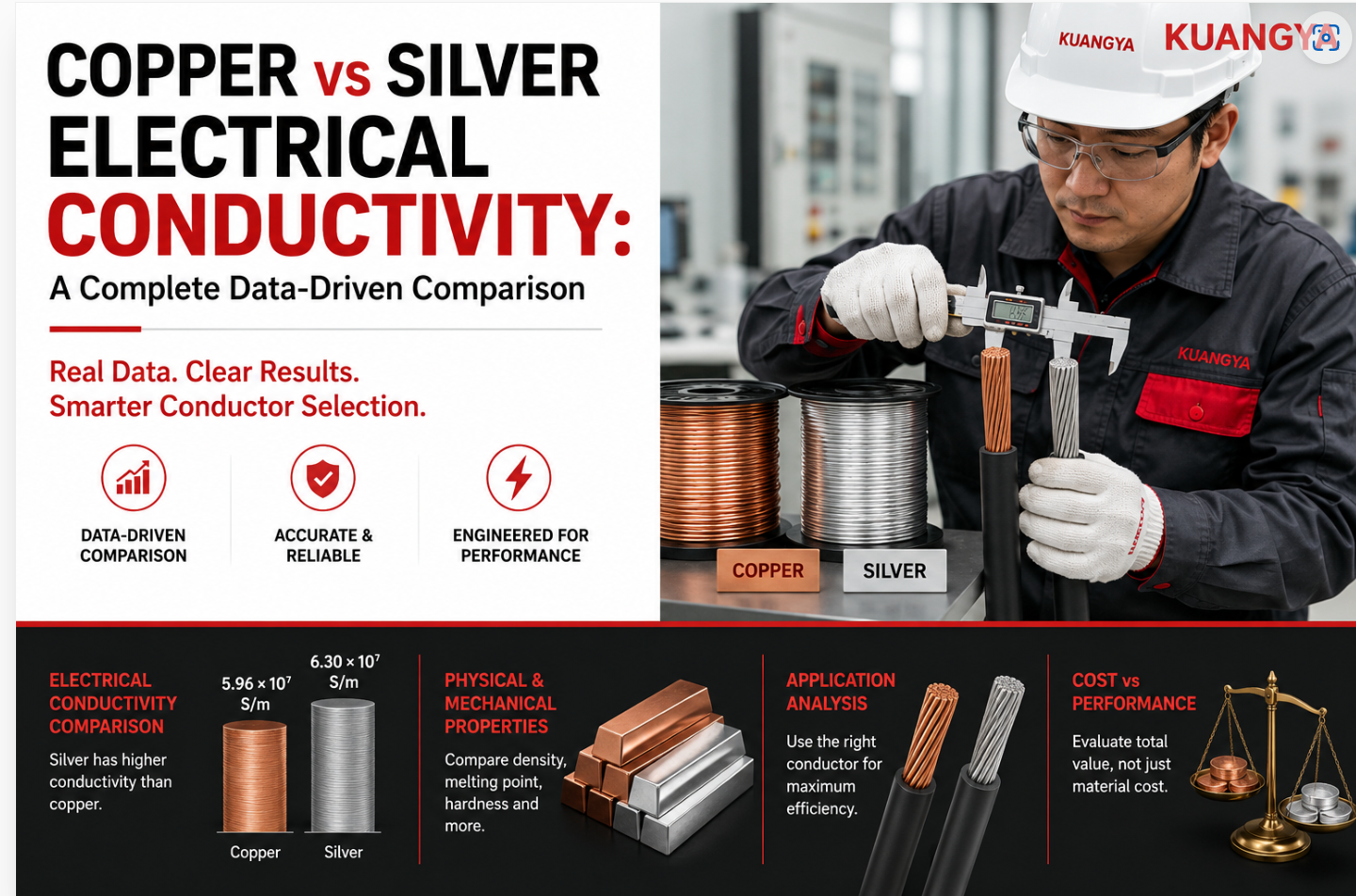
Quando você pensa na espinha dorsal da eletricidade moderna, provavelmente imagina linhas de energia, placas de circuito e fiação. O que você talvez não veja é o debate silencioso que está acontecendo no nível material: Condutividade elétrica do cobre versus prata. Muitos leitores querem saber mais sobre a condutividade elétrica do cobre e da prata.Esses dois metais têm o melhor desempenho quando se trata de transportar corrente, mas suas funções no mundo real não poderiam ser mais diferentes. Tecnicamente, a prata é o melhor condutor da tabela periódica, mas o cobre é usado em quase todas as casas, fábricas e redes elétricas do planeta.
Se você já se perguntou por que a prata não está em todos os lugares, apesar de sua condutividade superior, ou como as duas se comparam além dos números brutos, este guia sobre Condutividade elétrica do cobre versus prata é para você. Analisaremos seu desempenho com dados concretos, compararemos seus prós e contras e exploraremos exatamente onde cada metal se destaca (e onde não se destaca). Seja você um amador de eletrônica, um estudante de engenharia ou apenas um curioso sobre os fios da sua parede, este mergulho profundo lhe dará todas as respostas.
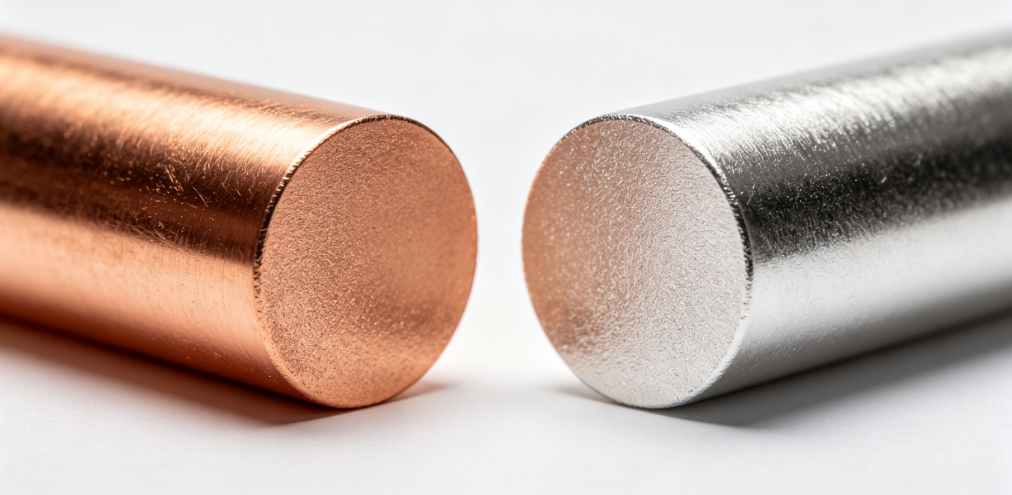
Para analisar Condutividade elétrica do cobre versus prata, Vamos direto aos fatos. Na engenharia elétrica, a condutividade é medida usando o Padrão Internacional de Cobre Recozido (IACS), que define o cobre de alta pureza a 100% como referência. Também usamos a resistividade (o inverso da condutividade) para medir o quanto um material resiste ao fluxo de corrente. Todos os parâmetros físicos neste artigo referem-se a dados padrão de temperatura ambiente de NIST.
A tabela abaixo resume as principais especificações a 20°C (temperatura ambiente):
| Propriedade | Cobre de alta pureza (99,98%) | Prata pura (99,99%) |
|---|---|---|
| Condutividade IACS | 100% (referência) | 106% |
| Condutividade elétrica (S/m) | 59.6 × 10⁶ | 63.0 × 10⁶ |
| Resistividade (nΩ-m) | 16.78 | 15.90 |
| Densidade (g/cm³) | 8.96 | 10.49 |
| Ponto de fusão (°C) | 1085 | 961.8 |
| Oxidação/manchas comuns | Forma um óxido de cobre estável e protetor | Tende a formar sulfeto de prata preto (mancha) |
| Custo relativo | Baixo, amplamente disponível | ~50x maior que o cobre |
| Uso industrial típico | Fiação em grande escala, eletrônicos | Circuitos de alta frequência, contatos de precisão |
Isso prepara o cenário para nosso mergulho mais profundo. Os números por si só não contam toda a história - o contexto é importante.

Para entender Condutividade elétrica do cobre versus prata, Para saber mais sobre a estrutura atômica desses metais, é preciso dar uma olhada. Ambos são metais de transição com um único elétron de valência em sua camada mais externa. Esse elétron é apenas fracamente atraído pelo núcleo, de modo que pode se mover livremente pela estrutura metálica, formando um “mar de elétrons livres” que transporta corrente elétrica.
Os átomos de prata têm um raio atômico maior do que os átomos de cobre. Isso significa que o elétron mais externo está mais distante do núcleo e sofre ainda menos atração. Como resultado:
Os elétrons livres do cobre são ligeiramente mais ligados, o que leva a uma condutividade marginalmente menor. Entretanto, a diferença em Condutividade elétrica do cobre versus prata é pequeno o suficiente para que, na maioria das aplicações cotidianas, o desempenho do cobre seja indistinguível do da prata.
Dois fatores principais afetam o desempenho de ambos os metais:
A batalha no mundo real sobre Condutividade elétrica do cobre versus prata não se trata de qual metal é “melhor”, mas sim de qual é o mais adequado para o trabalho em questão. Vamos detalhar seus casos de uso.
O cobre é o cavalo de batalha do mundo elétrico. Ele é usado em mais de 90% de todas as aplicações condutoras por um motivo simples: oferece um equilíbrio imbatível de desempenho, durabilidade e custo.
A prata só se destaca em cenários em que sua pequena vantagem de condutividade faz uma grande diferença e o custo é uma preocupação menor.
Para equilibrar desempenho e custo, muitos fabricantes usam cobre banhado a prata. Uma fina camada de prata é aplicada a um núcleo de cobre, combinando o baixo custo e a resistência do cobre com a condutividade de alta frequência da prata. Esse projeto otimiza Condutividade elétrica do cobre versus prata, amplamente utilizado em conectores de RF, cabos coaxiais e equipamentos de áudio de alto desempenho.
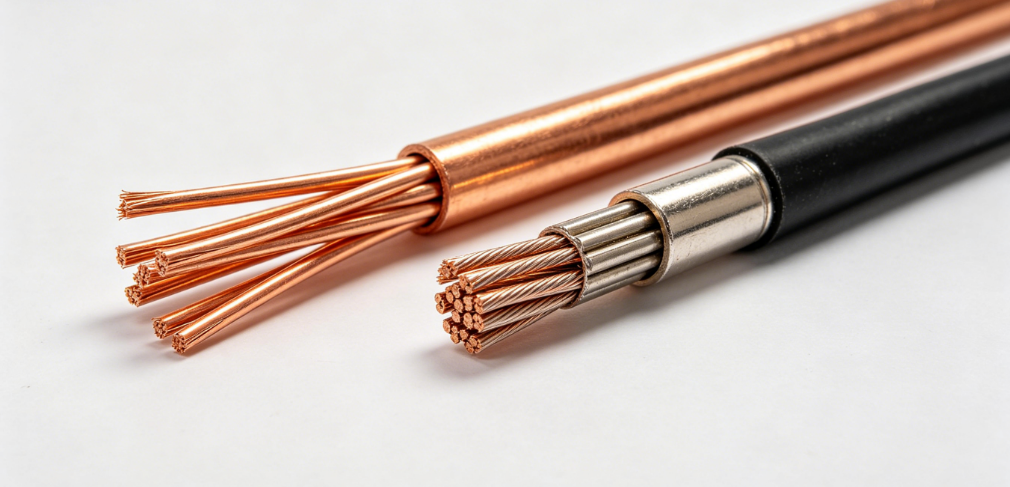
O maior obstáculo no debate sobre condutividade elétrica entre cobre e prata é simplesmente econômico.
Em suma, para Condutividade elétrica do cobre versus prata, A prata é tecnicamente superior, mas não é um valor melhor para 99% aplicações, pois o pequeno ganho de desempenho simplesmente não vale o enorme aumento no custo.
Para ajudá-lo a compará-los em um piscar de olhos, aqui está um detalhamento das principais vantagens e desvantagens:
✅ Prós:
❌ Contras:
✅ Prós:
❌ Contras:
Para concluir, vamos responder a algumas das perguntas mais frequentes sobre Condutividade elétrica do cobre versus prata.
R: A vantagem da condutividade do 6% é insignificante para uso doméstico de baixa tensão. O aumento de custo seria enorme, e o risco de manchar (que aumenta a resistência) torna a prata menos confiável para uso a longo prazo. O cobre é simplesmente a melhor opção para residências.
R: Sim. A mancha de prata (sulfeto de prata) é um mau condutor. Embora não afete a condutividade geral do metal, pode aumentar significativamente a resistência da superfície, o que é um grande problema para sinais de alta frequência e contatos elétricos.
R: Depende da aplicação. Para equipamentos eletrônicos de alta frequência ou de áudio em que a pureza do sinal é uma prioridade, o custo geralmente é justificado. Para aplicações de alimentação padrão, o benefício não vale a pena o gasto extra.
R: À medida que os metais se aquecem, sua condutividade diminui. Tanto o cobre quanto a prata perderão cerca de 20% de sua condutividade em torno de 100°C. Em seus pontos de fusão (1085°C para o cobre e 961,8°C para a prata), eles se tornam líquidos e sua condutividade cai drasticamente.
R: Tecnicamente, sim. Mas, a menos que seu projeto envolva sinais de alta frequência ou contatos de precisão, você não notará nenhuma diferença de desempenho e pagará mais caro. Para a maioria dos eletrônicos DIY, o cobre é a escolha perfeita.
O debate sobre a condutividade elétrica entre cobre e prata é um exemplo clássico de como “melhor” na teoria nem sempre significa “melhor” na prática. A prata é o rei indiscutível da condutividade, mas seu alto custo, tendência a manchar e ponto de fusão mais baixo a tornam impraticável para a maioria dos usos cotidianos. O cobre, por outro lado, oferece uma combinação quase ideal de desempenho, durabilidade e preço acessível, tornando-o a espinha dorsal de nossa infraestrutura elétrica.
Da próxima vez que você ligar um dispositivo ou acionar um interruptor de luz, lembre-se do herói desconhecido: o cobre. Ele pode não ser o metal mais chamativo ou mais condutor, mas é o que alimenta nosso mundo. E quando se trata de aplicações especializadas em que cada pedacinho de condutividade é importante, a prata está lá para preencher a lacuna.
Comissão Eletrotécnica Internacional (IEC): Padrões globais para materiais condutores de eletricidade.

