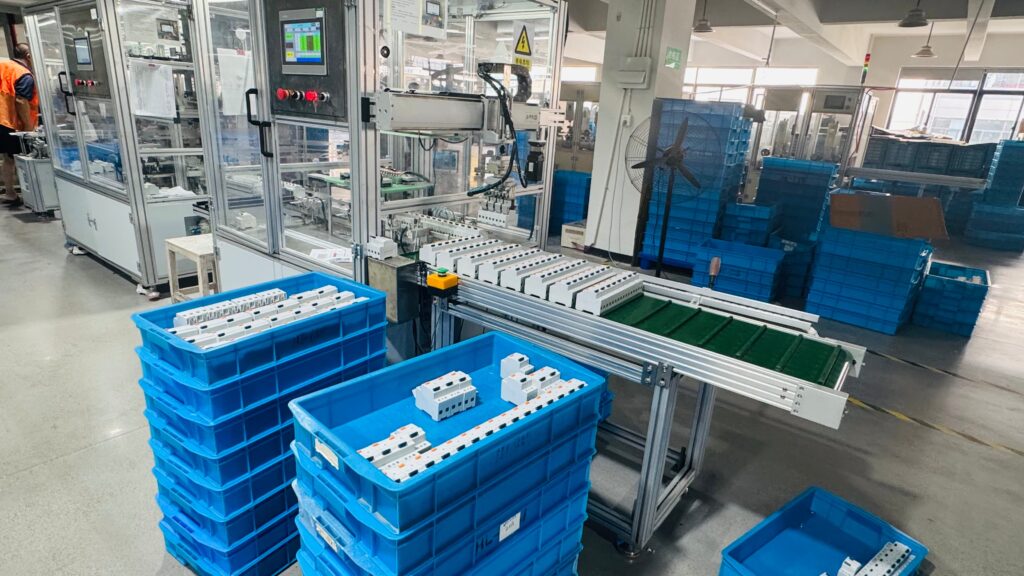
Zona industrial de WengYang Yueqing Wenzhou 325000
Horas de trabajo
De lunes a viernes: de 7.00 a 19.00 horas
Fin de semana: 10.00 A 17.00 HORAS
Zona industrial de WengYang Yueqing Wenzhou 325000
Horas de trabajo
De lunes a viernes: de 7.00 a 19.00 horas
Fin de semana: 10.00 A 17.00 HORAS


In modern electrical installations, circuit protection devices serve as the first line of defense against electrical hazards that could lead to fires, equipment damage, or life-threatening electric shocks. Whether you’re designing a residential home, commercial building, or industrial facility, understanding the differences between MCB (Miniature Circuit Breaker) and RCBO (Residual Current Breaker with Overcurrent Protection) is crucial for ensuring both safety and compliance with electrical standards.
Currents as low as 30 mA can pose serious risks to human life, making the selection of appropriate circuit protection devices not just a technical decision, but a critical safety consideration. This comprehensive guide will walk you through everything you need to know about MCBs and RCBOs, from their fundamental differences to practical selection criteria and real-world applications.
A Miniature Circuit Breaker (MCB) is an automatically operated electrical switch designed to protect electrical circuits from damage caused by excess current from overload or short circuit conditions. MCBs are typically designed for low-power applications, generally ranging from 0.5A to 125A, making them ideal for residential and commercial installations.
MCBs operate through two primary protection mechanisms:
Protección térmica: A bimetallic strip heats up and bends when excessive current flows through the circuit for an extended period, eventually triggering the trip mechanism. This protects against overload conditions where current exceeds the rated value but isn’t high enough to be classified as a short circuit.
Protección magnética: An electromagnet generates a magnetic field proportional to the current flowing through it. During a short circuit, the sudden surge of current creates a strong magnetic field that instantly trips the breaker, disconnecting the circuit within milliseconds.
MCBs are commonly found in residential distribution boards, final circuits, and lighter commercial applications. They excel at protecting wiring and equipment from thermal damage and fire risks associated with overcurrent conditions.
However, MCBs have a critical limitation: they cannot detect earth leakage currents or ground faults. This means that if someone accidentally touches a live wire or if insulation breaks down causing current to leak to earth, an MCB alone will not trip to prevent electric shock. This is where RCBOs become essential.
A Residual Current Breaker with Overcurrent Protection (RCBO) combines the functionality of an MCB and an RCD (Residual Current Device) into a single compact unit. This dual-function device provides protection against overload, short circuits, AND earth leakage currents, making it a comprehensive solution for modern electrical safety requirements. cita
RCBOs incorporate three protection mechanisms:
Protección contra sobrecargas: Like an MCB, the thermal element protects against sustained overcurrent conditions that could overheat wiring and cause fires.
Protección contra cortocircuitos: The magnetic trip unit provides instantaneous disconnection during fault conditions with extremely high current flow.
Protección contra fugas a tierra: A differential current transformer continuously monitors the balance between live and neutral currents. In a healthy circuit, these should be equal. If current leaks to earth (through damaged insulation, faulty equipment, or human contact), the RCBO detects this imbalance and trips within milliseconds—typically 30mA sensitivity for shock protection.
The key advantage of RCBOs is their ability to provide circuit-level protection against all common electrical faults in a single device. Each circuit fitted with an RCBO is independently protected, which means a fault on one circuit won’t affect others—improving fault discrimination and reducing nuisance tripping across the installation.
The fundamental difference lies in what each device protects against:
While MCBs safeguard circuits and equipment, RCBOs protect both circuits AND lives.
MCB installations typically require a separate RCD (often called an RCCB – Residual Current Circuit Breaker) to provide earth leakage protection. In traditional consumer units, one RCD might protect multiple MCB circuits, which means a ground fault on any circuit will trip the entire RCD group, potentially affecting unrelated circuits.
RCBO installations provide per-circuit protection, eliminating the “all circuits down” problem. If your kitchen socket develops a fault, only that circuit trips—your refrigerator on a different RCBO-protected circuit continues running.
MCBs are more compact and cost-effective individually, but when you factor in the need for separate RCDs, the space and cost advantages diminish. RCBOs occupy more space per circuit than MCBs but eliminate the need for group RCD protection, often resulting in similar or even reduced overall panel space requirements in modern installations.
Modern electrical regulations increasingly favor RCBO protection, particularly for circuits in high-risk areas. Many jurisdictions now require earth leakage protection on all socket circuits, wet locations, and outdoor installations, making RCBOs the preferred choice for new installations and upgrades.
Budget-Constrained Projects: In installations where cost is the primary concern and a group RCD arrangement is acceptable, MCBs with upstream RCD protection can be more economical.
Circuitos de iluminación: For dedicated lighting circuits that already have upstream RCD coverage, MCBs may be sufficient, as lighting circuits typically pose lower shock risks.
Industrial Control Circuits: In certain industrial applications where earth leakage protection might cause unwanted nuisance tripping due to equipment characteristics, MCBs with carefully designed earthing systems may be preferred.
Circuits with Existing RCD Protection: When upgrading or extending circuits that already have adequate RCD protection at the distribution board level.
Kitchens and Utility Rooms: Areas with multiple high-power appliances (ovens, washing machines, dishwashers) benefit from individual circuit protection. A fault in one appliance won’t affect others, preventing food spoilage or workflow interruption.
Bathrooms and Wet Locations: Any circuit supplying power to bathrooms, laundry rooms, outdoor sockets, swimming pools, or garden lighting must have earth leakage protection due to increased shock risk in damp environments.
Commercial and Workshop Environments: Spaces where power tools, machinery, and multiple users increase the risk of electrical faults benefit from the comprehensive protection and fault isolation RCBOs provide.
Circuitos críticos: For circuits feeding IT equipment, refrigeration, security systems, or medical equipment where unwanted outages cause significant problems, RCBOs provide protection without the risk of group tripping.
New Installations and Upgrades: When designing new consumer units or upgrading existing installations, RCBOs offer superior safety, better fault discrimination, and future-proof compliance with evolving electrical standards.
Vulnerable Occupants: Installations serving children, elderly residents, or individuals with medical conditions should prioritize the enhanced protection RCBOs provide.
The rated current (In) must be selected based on the circuit’s design load and cable capacity:
Common ratings include 6A, 10A, 16A, 20A, 32A, 40A, and 63A for residential and light commercial applications.
MCBs and RCBOs are available in different trip curves (B, C, D) that determine their sensitivity to overcurrent:
Type B (3-5× In): Most sensitive, trips at 3-5 times rated current. Ideal for residential circuits with resistive loads, lighting, and general socket outlets where inrush currents are minimal.
Type C (5-10× In): Medium sensitivity, trips at 5-10 times rated current. Suitable for circuits with moderate inrush currents such as small motors, fluorescent lighting, and commercial installations.
Type D (10-20× In): Least sensitive, trips at 10-20 times rated current. Used for circuits with high inrush currents like transformers, large motors, and industrial equipment.
The breaking capacity indicates the maximum fault current the device can safely interrupt. Common ratings include:
30 mA: Standard for shock protection in residential and commercial installations. Required for socket outlets and circuits in wet locations.
100mA or 300mA: Used for fire protection rather than shock protection, typically on main incoming circuits or equipment with higher leakage currents.
When designing consumer units or distribution boards:
Group Similar Circuits: Organize circuits logically—lighting together, power circuits together, dedicated appliance circuits clearly labeled.
Leave Room for Expansion: Allow 20-30% spare capacity for future circuit additions.
Consider Fault Discrimination: In RCBO installations, each circuit is independently protected. In MCB+RCD arrangements, carefully plan which circuits share RCD protection to minimize inconvenience from group tripping.
Etiquetado: Clearly label each circuit breaker with its protected area or equipment. This is crucial for maintenance and emergency response.
Especificaciones de par: Always tighten terminals to manufacturer-specified torque values. Under-tightening causes high resistance and overheating; over-tightening can damage terminals.
Gestión de cables: Ensure neat cable routing to prevent accidental damage and facilitate future maintenance. Avoid excessive bending or stress on conductors.
Testing Before Energization: Test all circuits with appropriate instruments before connecting to the power supply. Verify correct polarity, earth continuity, and insulation resistance.
Initial Verification: After installation, test all MCBs and RCBOs:
Periodic Testing: RCBOs and RCDs should be tested regularly:
A modern 3-bedroom home typically requires:
This configuration ensures maximum safety and minimizes the risk of multiple circuits failing simultaneously.
A small commercial office building benefits from:
Workshops require careful planning:
En Suministro de equipos eléctricos Kuangya, we understand that reliable circuit protection is the foundation of electrical safety. With 25 years of experience serving over 500 global customers across 2,000+ new energy projects, we provide high-quality MCBs, RCBOs, and comprehensive circuit protection solutions.
Disyuntores de CA: Our extensive catalog includes miniature circuit breakers and RCBOs designed for residential, commercial, and industrial applications. All products are manufactured under strict quality control and comply with international standards including IEC, CE, and RoHS certifications.
Calidad certificada: Every unit undergoes rigorous testing before delivery, ensuring reliable performance in critical applications. Our commitment to quality has helped us maintain outstanding customer satisfaction and long-term partnerships across the industry.
Soluciones a medida: From standard products to fully customized solutions, Kuangya adapts to diverse project requirements. Whether you’re designing a residential installation, commercial building, or industrial facility, our technical team can help you select the right protection devices for your specific needs.
Apoyo mundial: With factory-direct supply, fast lead times, and multilingual service, we provide efficient support and reliable logistics for customers worldwide. Our dedication to customer care ensures you receive not just products, but complete solutions backed by expert technical assistance.
Visite cnkuangya.com to explore our complete range of circuit protection products and discover how we can support your next electrical project with reliable, certified solutions.
In most residential and commercial applications, yes. RCBOs can directly replace MCBs while providing enhanced protection. However, verify that the panel has sufficient space and that the RCBO specifications (current rating, breaking capacity, pole configuration) match the circuit requirements.
RCBOs are more sensitive because they detect earth leakage currents that MCBs cannot sense. Common causes include:
This is actually the RCBO working correctly—protecting against hazards an MCB would miss.
Requirements vary by jurisdiction, but modern electrical codes increasingly mandate earth leakage protection (via RCBO or RCD) for:
Always consult local electrical codes and regulations for specific requirements in your area.
Manufacturers and electrical standards typically recommend:
Regular testing ensures your protection devices will operate correctly when needed.
The choice between MCB and RCBO ultimately depends on your specific application, safety requirements, budget, and regulatory compliance needs. While MCBs provide essential overcurrent protection and remain suitable for certain applications, RCBOs offer comprehensive protection against all common electrical faults, making them increasingly the preferred choice for modern installations.
For residential applications, particularly in kitchens, bathrooms, outdoor areas, and circuits serving vulnerable occupants, RCBOs provide superior safety through independent circuit protection and earth leakage detection. In commercial and industrial settings, the improved fault discrimination and reduced downtime from nuisance tripping often justify the additional investment in RCBO technology.
When selecting circuit protection devices, consider not just the immediate cost, but the long-term value of enhanced safety, reduced maintenance, improved reliability, and compliance with evolving electrical standards. Partner with experienced suppliers like Kuangya Electrical who can provide certified products, technical guidance, and ongoing support to ensure your electrical installations meet the highest safety standards.
Whether you choose MCBs, RCBOs, or a combination of both, proper selection, installation, and maintenance of circuit protection devices is essential for creating safe, reliable electrical systems that protect both property and lives.
Ready to upgrade your circuit protection? Póngase en contacto con Suministro de equipos eléctricos Kuangya today for expert guidance on selecting the right MCBs and RCBOs for your residential, commercial, or industrial project. With 25 years of experience and a commitment to quality, we’re your trusted partner for electrical safety solutions.