WengYang Industriegebiet Yueqing Wenzhou 325000
Arbeitszeiten
Montag bis Freitag: 7AM - 7PM
Am Wochenende: 10AM - 5PM
WengYang Industriegebiet Yueqing Wenzhou 325000
Arbeitszeiten
Montag bis Freitag: 7AM - 7PM
Am Wochenende: 10AM - 5PM

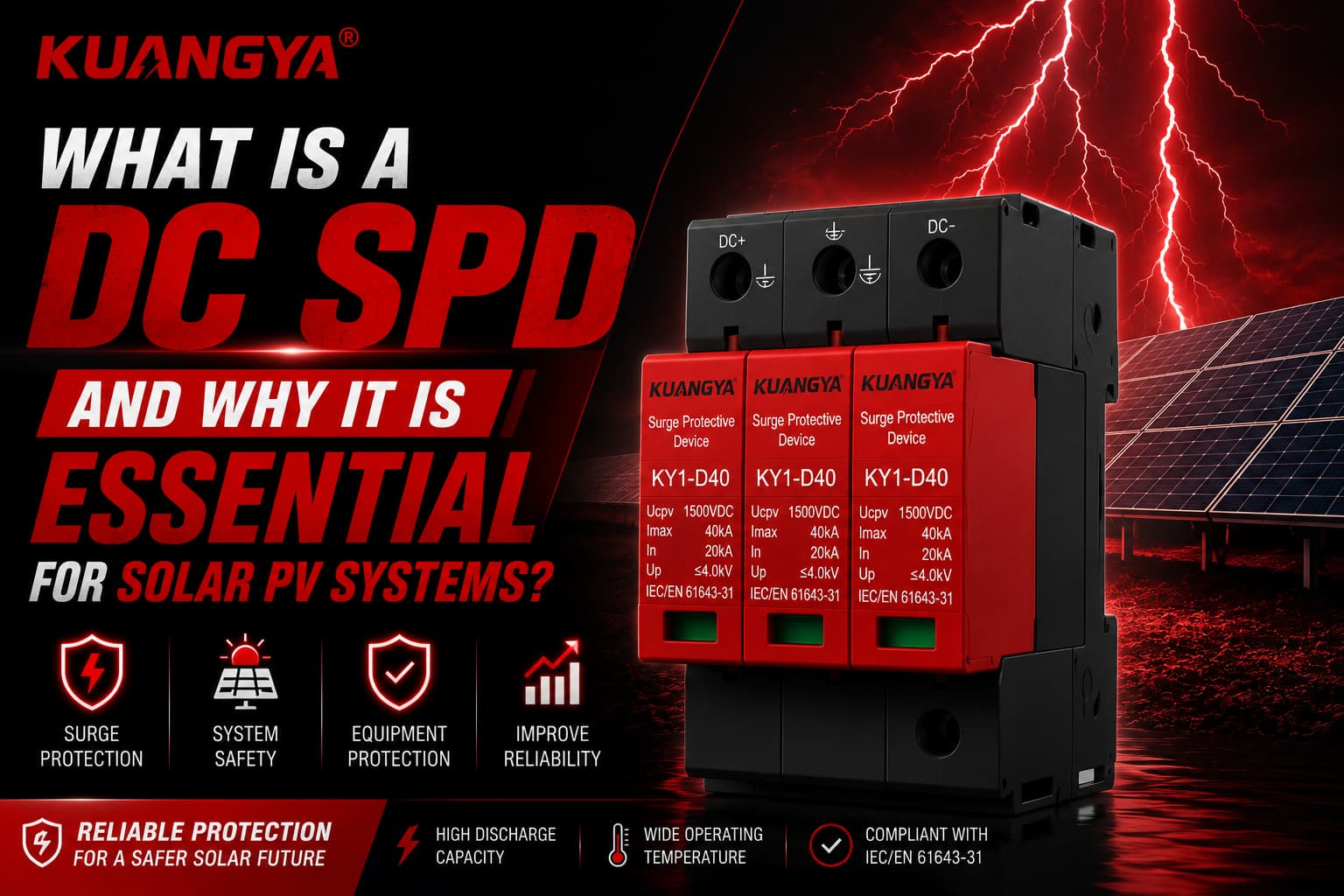
Photovoltaik-(PV)-Anlagen gelten weithin als eine der zuverlässigsten Lösungen für erneuerbare Energien. Doch hinter ihrer stabilen Energieerzeugung verbirgt sich eine ernsthafte und oft unterschätzte Gefahr –elektrische Überspannungen.
Diese Überspannungen werden durch Blitzeinschläge, Netzumschaltungen oder interne elektrische Störungen verursacht und können teure Solaranlagen innerhalb von Millisekunden zerstören.
┃ Selbst ein kleines Überspannungsereignis kann zum Ausfall des Wechselrichters, zu Systemstillständen oder zu dauerhaften Schäden an PV-Komponenten führen.
Deshalb ist ein Überspannungsschutz in Solarenergiesystemen keine Option, sondern unerlässlich. Verständnis der modernen Anforderungen an den Überspannungsschutz für Solaranlagen ist entscheidend für den Schutz teurer PV-Anlagen und die Gewährleistung der langfristigen Systemzuverlässigkeit.
Im Mittelpunkt dieser Schutzstrategie steht der DC-Überspannungsschutz (Gleichstrom-Überspannungsschutzgerät).
A DC-Überspannungsschutz (Was ist ein DC-Überspannungsschutz) ist ein elektrisches Schutzgerät, das dazu dient, transiente Überspannungen in Gleichstromkreisen (DC), insbesondere in Solar-PV-Anlagen, zu begrenzen.
Seine Hauptfunktion besteht darin, gefährliche Spannungsspitzen zu erkennen und die Stoßenergie sicher in das Erdungssystem abzuleiten, bevor sie empfindliche Geräte erreicht.
Zu den typischerweise geschützten Geräten gehören:
┃ Ein DC-Überspannungsschutzgerät (SPD) verhindert keine Überspannungen, sondern leitet diese sicher von kritischen Anlagen ab.
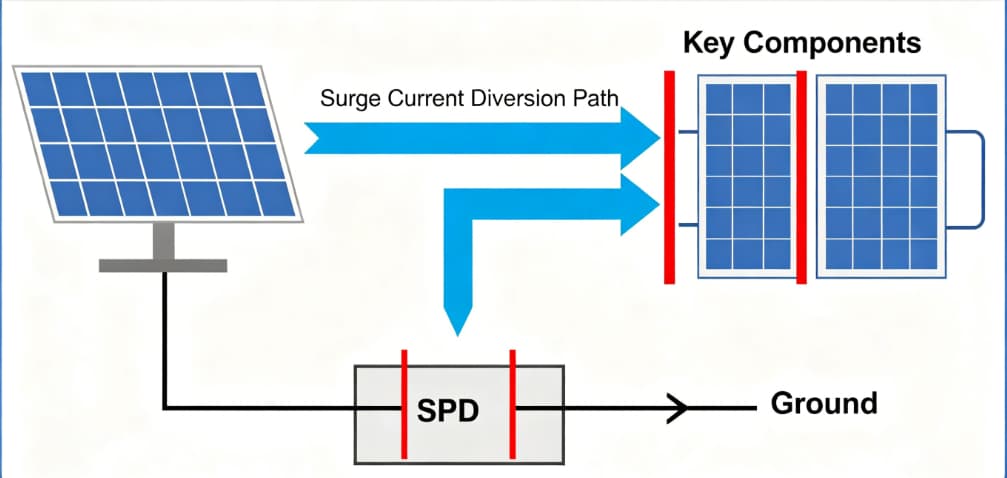
Ein DC-SPD arbeitet in Echtzeit und reagiert innerhalb von Nanosekunden, sobald eine Überspannung auftritt.
┃ Die typische Ansprechzeit beträgt weniger als 25 Nanosekunden.
Diese extrem schnelle Reaktion verhindert katastrophale Schäden in Solarsystemen.
Solar-PV-Anlagen sind besonders anfällig, da sie:
┃ 1. Direkte Blitzeinschläge (selten, aber zerstörerisch)
┃ 2. Indirekte Blitzeinkopplung (am häufigsten)
┃ 3. Schaltüberspannungen im Netz
┃ 4. Erdpotenzialunterschiede
Ohne Schutzmaßnahmen können selbst indirekte Blitzeinschläge Tausende von Volt in PV-Stränge induzieren.
Dies macht Solar-Überspannungsschutz (DC-SPD) zu einer kritischen Anforderung in allen Installationen.
Die meisten Menschen gehen davon aus, dass Blitzeinschläge die größte Bedrohung für Photovoltaikanlagen darstellen.
Die eigentliche Gefahr ist jedoch Überspannungsenergie, die sich innerhalb des Systems selbst ausbreitet.
Sobald eine Überspannung in das System eindringt, kann sie sich über Kabel verbreiten und mehrere Geräte beeinträchtigen, was zu kaskadierenden Ausfällen in der gesamten Anlage führt.
Sehen Sie sich diese Erklärung an:
👇
┃ Wichtige Erkenntnis: Beim Schutz vor Sonneneinstrahlung geht es nicht um den Schutz eines einzelnen Geräts, sondern um den Schutz des gesamten Systems.
Obwohl beide Geräte vor Überspannungen schützen, sind ihre Anwendungsbereiche unterschiedlich.
| Merkmal | DC SPD | AC SPD |
|---|---|---|
| Stromart | Gleichstrom | Wechselstrom |
| Anmeldung | PV-Solaranlagen | Netzstromsysteme |
| Lichtbogenverhalten | Schwer zu löschen | Natürlicher Nulldurchgang |
| Risikostufe | Höher | Unter |
┃ Gleichstromsysteme sind bei Überspannungsereignissen gefährlicher, da Gleichstromlichtbögen nicht von selbst verlöschen.
DC-Überspannungsschutzgeräte werden im Allgemeinen in drei Typen unterteilt:
Einsatz in Bereichen mit direkter Blitzeinwirkung
Einsatz für den standardmäßigen Solarschutz (häufigster Typ von Solar-SPD)
Dient dem Schutz empfindlicher nachgeschalteter Elektronik
┃ In den meisten Photovoltaik-Anlagen ist ein Solar-Überspannungsschutz vom Typ 2 die Standardwahl.
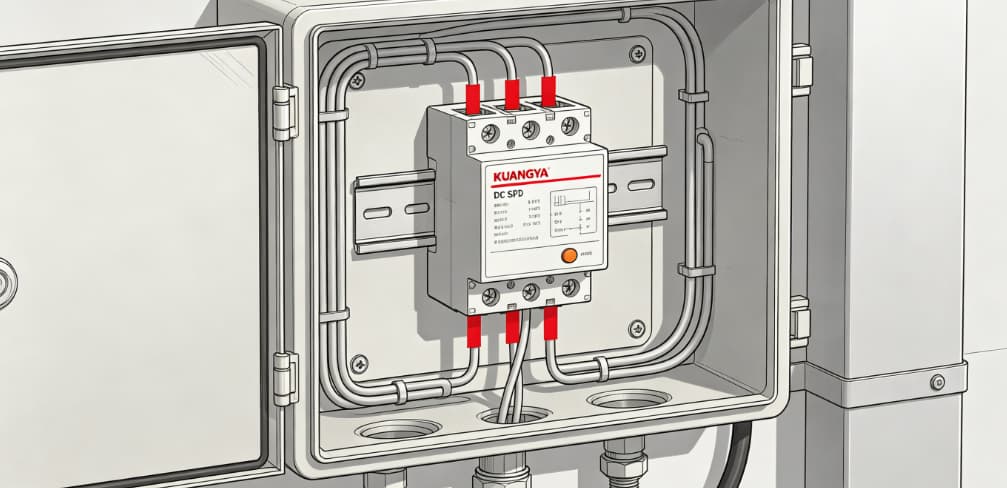
Der korrekte Installationsort bestimmt die Wirksamkeit des Schutzes.
Zu den gängigen Installationspunkten gehören:
┃ Je näher der Überspannungsschutz (SPD) am Gerät installiert ist, desto höher ist die Schutzeffizienz.
Eine fehlerhafte Platzierung kann die Schutzleistung erheblich verringern.
Zu verstehen Was ist ein DC-Überspannungsschutz (DC SPD)?, müssen wir das Verhalten von Überspannungen verstehen.
Eine Überspannung ist kein stetiger Stromfluss, sondern eine hochenergetische transiente Welle.
┃ Reflexion – Energie prallt zwischen Komponenten ab
┃ Verstärkung – lange Kabel erhöhen Spannungsspitzen
┃ Induktion – elektromagnetische Kopplung durch Blitzeinschläge
Selbst indirekte Blitzeinschläge können gefährliche Spannungsspitzen erzeugen.
Eine gewerbliche Dachanlage in Südostasien war indirektem Blitzeinschlag ausgesetzt. Da kein DC-Überspannungsschutz (SPD) installiert war, wurden 4 Wechselrichter beschädigt, was den Eigentümer über 25.000 USD an Ersatz- und Ausfallkosten kostete.
In einem 10-MW-Solarpark im Nahen Osten waren in allen Anschlusskästen DC-Überspannungsschutzgeräte vom Typ 2 installiert. Ein nahegelegener Blitzeinschlag verursachte eine Überspannung von 7 kV, aber alle Wechselrichter und Überwachungssysteme blieben voll funktionsfähig, wodurch dem Unternehmen potenzielle Verluste in Höhe von Hunderttausenden erspart blieben.
┃ Diese Beispiele verdeutlichen den messbaren ROI einer Investition in DC-Überspannungsschutz.
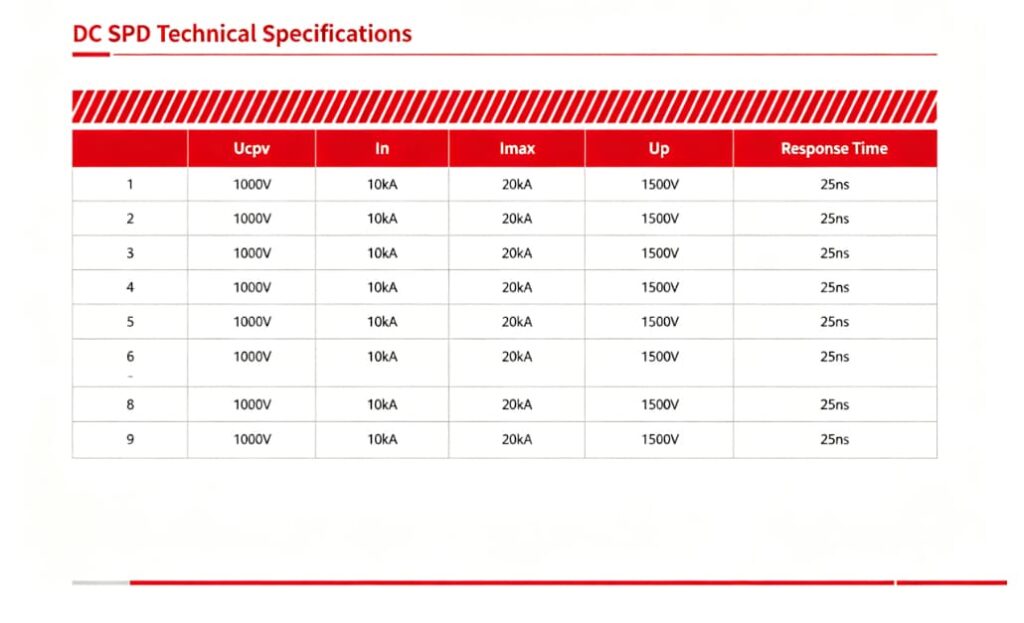
Ein zuverlässiger DC-Überspannungsschutz wird durch mehrere Schlüsselparameter definiert:
Das Verständnis dieser Spezifikationen ist nur der erste Schritt. Eine ordnungsgemäße Installation erfordert zudem das Wissen, wie ein DC-Überspannungsschutz für eine Photovoltaikanlage zu dimensionieren ist basierend auf Systemspannung, Leitungslänge und Überspannungsbelastung.
| Parameter | Bedeutung | Bedeutung |
|---|---|---|
| Ucpv | Maximale Betriebsspannung | Muss der PV-Systemspannung entsprechen |
| Unter | Nennableitstoßstrom | Normale Stoßstrombelastbarkeit |
| Imax | Maximale Stoßstrombelastbarkeit | Schutz bei Extremereignissen |
| Nach oben | Restspannungspegel | Niedriger = besserer Schutz |
| Reaktionszeit | Reaktionsgeschwindigkeit | Sicherheitskritisch |
Die Installation eines DC-Überspannungsschutzes macht nur einen geringen Bruchteil der Gesamtkosten einer PV-Anlage aus, verhindert jedoch katastrophale finanzielle Verluste.
| Artikel | Kosten | Risiko ohne Überspannungsschutz (SPD) |
|---|---|---|
| Austausch eines einzelnen Wechselrichters | $6,000 | Hoch (möglicher Ausfall) |
| DC-Überspannungsschutzgerät (SPD) | 200 – 500 | Niedrig |
| Ausfallzeit pro Tag | 1.500/Tag | Kann ohne SPD 10+ Tage betragen |
┃ Der ROI für DC-Überspannungsschutzgeräte (SPD) kann bereits beim ersten vermiedenen Überspannungsereignis erreicht werden.
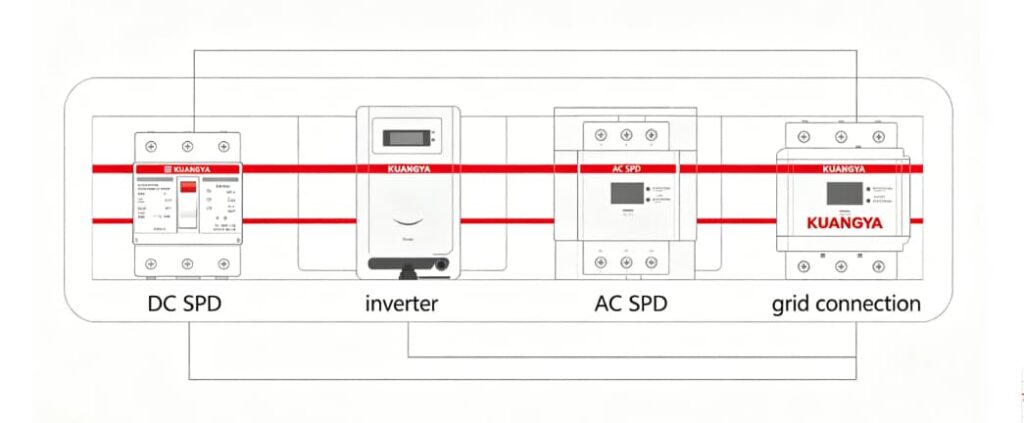
Ein vollständiges Solarschutzsystem umfasst mehrere Ebenen:
┃ Der DC-Überspannungsschutz (SPD) fungiert als erste Verteidigungslinie, bevor die Energie den Wechselrichter erreicht.
PV-Generator → Generatoranschlusskasten (mit DC-SPD) → Wechselrichter → AC-SPD → Netzanschluss
┃ Wenn diese Reihenfolge unterbrochen wird, kann Überspannungsenergie die Schutzschichten umgehen.
┃ Halten Sie die SPD-Leitungen so kurz wie möglich
┃ Sorgen Sie für eine niederimpedante Erdung
┃ So nah wie möglich am zu schützenden Gerät installieren
┃ Scharfe Kabelknicke und mechanische Belastungen vermeiden
┃ Ein defektes oder unsachgemäß installiertes SPD bietet keinen Schutz.
┃ Führt zu vorzeitigem Ausfall des Überspannungsschutzgeräts
┃ Kann tatsächliche Stoßstromereignisse nicht bewältigen
┃ Verringert die Schutzeffizienz
┃ Erhöht die Restspannungsexposition
┃ Hohe Luftfeuchtigkeit, Temperatur und Staub beschleunigen die Degradation
Externe Bedingungen beeinflussen die Lebensdauer von SPDs erheblich:
┃ Auch ohne Überspannungsereignisse können Umwelteinflüsse die Lebensdauer von SPDs verkürzen.
Die DC-SPD-Technologie entwickelt sich parallel zu Solarenergiesystemen weiter.
┃ Zukünftige Solar-ÜSS-Systeme werden als intelligente Schutznetzwerke fungieren.
Ein Gerät, das Solaranlagen vor gefährlichen Spannungsspitzen schützt.
Ja, auch kleine Anlagen können durch blitzinduzierte Überspannungen beschädigt werden.
Typischerweise 5–10 Jahre, abhängig von der Belastung durch Überspannungen und der Umgebung.
Es reduziert das Risiko erheblich, kann jedoch direkte Blitzeinschläge nicht vollständig verhindern.
Nur wenn die Anzeige einen normalen Status anzeigt; andernfalls ist ein Austausch zwingend erforderlich.
Übereinstimmung mit IEC 61643-31, UL 1449und IEC 62561

