Промышленная зона Вэньян Юэцин Вэньчжоу 325000
Рабочие часы
Понедельник - пятница: 7AM - 7PM
Выходные: 10AM - 5PM
Промышленная зона Вэньян Юэцин Вэньчжоу 325000
Рабочие часы
Понедельник - пятница: 7AM - 7PM
Выходные: 10AM - 5PM

NPN и PNP - это два типа транзисторов с биполярным переходом, используемых в электронике и промышленной автоматике. Основное различие заключается в том, что транзисторы NPN включаются при положительном сигнале базы, а транзисторы PNP включаются, когда напряжение базы ниже напряжения эмиттера.
NPN vs PNP - одна из самых востребованных тем в электронике и промышленной автоматизации. Работаете ли вы с системами ПЛК, датчиками, проектами Arduino или коммутационными схемами, понимание разницы между транзисторами NPN и PNP крайне важно.
Оба типа транзисторов широко используются в современной электронике, но их работа основана на Теория транзисторов с биполярным переходом , особенно в том, как носители заряда перемещаются внутри полупроводниковых материалов.
В этом руководстве мы расскажем:
Транзистор - это полупроводниковый прибор, используемый для усиления или переключения электронных сигналов. Обычно он имеет три вывода: эмиттер, базу и коллектор.
Транзисторы - один из важнейших компонентов современной электроники и систем промышленной автоматизации. Принцип их работы объясняется в теория полупроводниковых приборов.
Два наиболее распространенных транзистора с биполярным переходом (BJT):
Понимание соотношения NPN и PNP является основополагающим для электроники и промышленной автоматизации.
Транзистор NPN включается, когда на базу подается небольшой положительный ток по отношению к эмиттеру.
При сравнении NPN и PNP транзисторы NPN чаще используются в электронных коммутационных схемах и системах микроконтроллеров.
NPN-транзисторы широко используются в современных системах управления, поскольку они быстрее и легче интегрируются в цифровую электронику.
PNP-транзистор включается, когда напряжение на базе становится меньше напряжения на эмиттере.
Поведение PNP обычно используется в системы коммутации высокого напряжения встречаются в промышленной автоматизации.
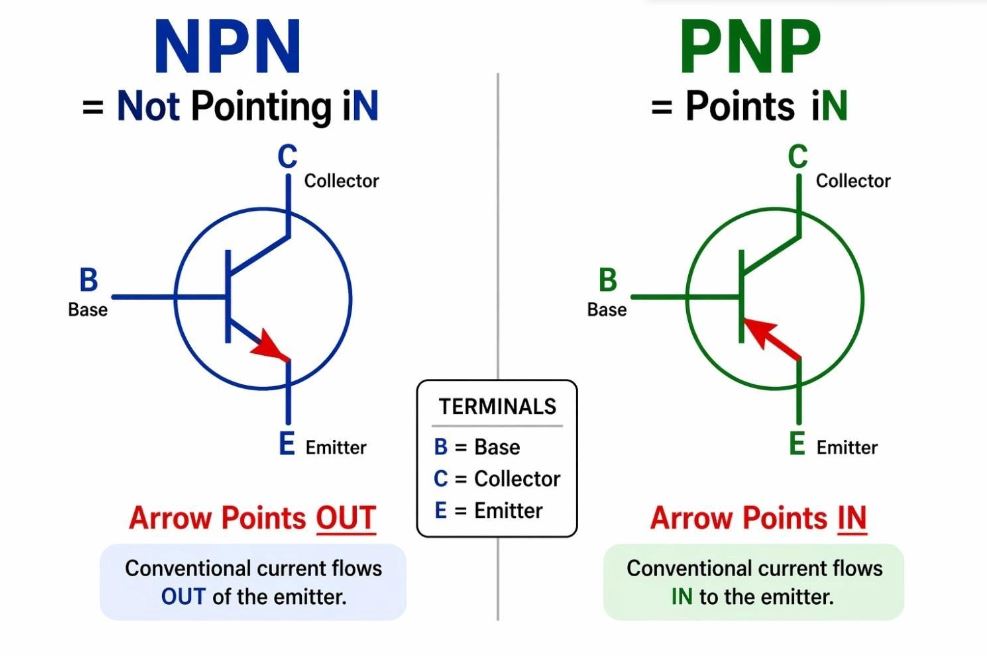
| Характеристика | NPN | PNP |
|---|---|---|
| Текущий поток | Коллектор → Эмиттер | Эмиттер → Коллектор |
| Сигнал триггера | Положительное базовое напряжение | Более низкое базовое напряжение |
| Тип переключения | Переключение на низкую сторону | Переключение высокой стороны |
| Скорость | Быстрее | Немного медленнее |
| Использование | Цифровые и микроконтроллерные схемы | Промышленные системы управления |
Понимание соотношения NPN и PNP очень важно для проектирование промышленных схем и систем автоматизации.
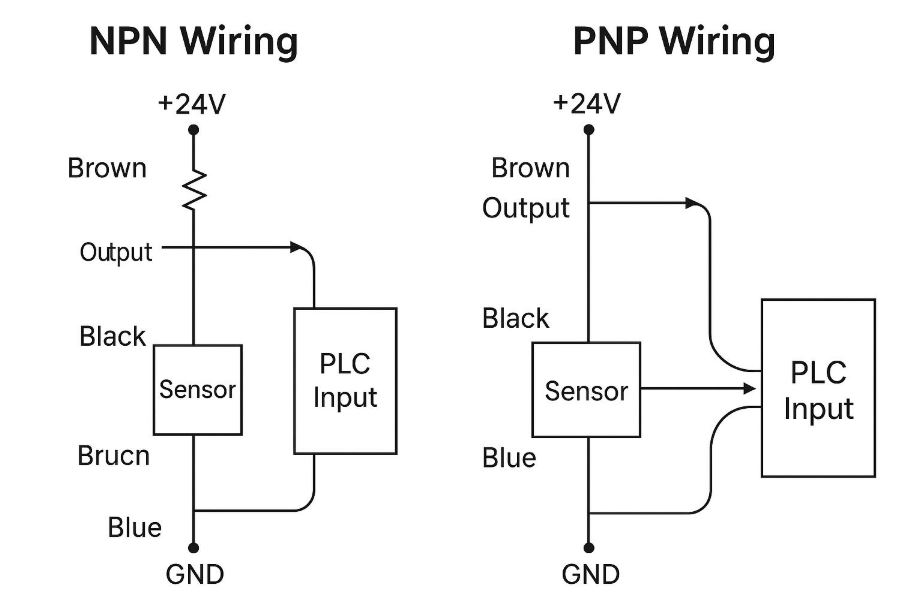
Разница в проводке имеет решающее значение в системах промышленной автоматизации.
В системах ПЛК соотношение NPN и PNP определяет способ обработки входных сигналов.
Это ключевая концепция в проектирование систем промышленной автоматизации и архитектуры ПЛК.
Системы PNP часто предпочтительны, поскольку поиск неисправностей с помощью мультиметров проще и безопаснее в промышленных условиях.
При сравнении NPN и PNP более широко используется NPN, потому что:
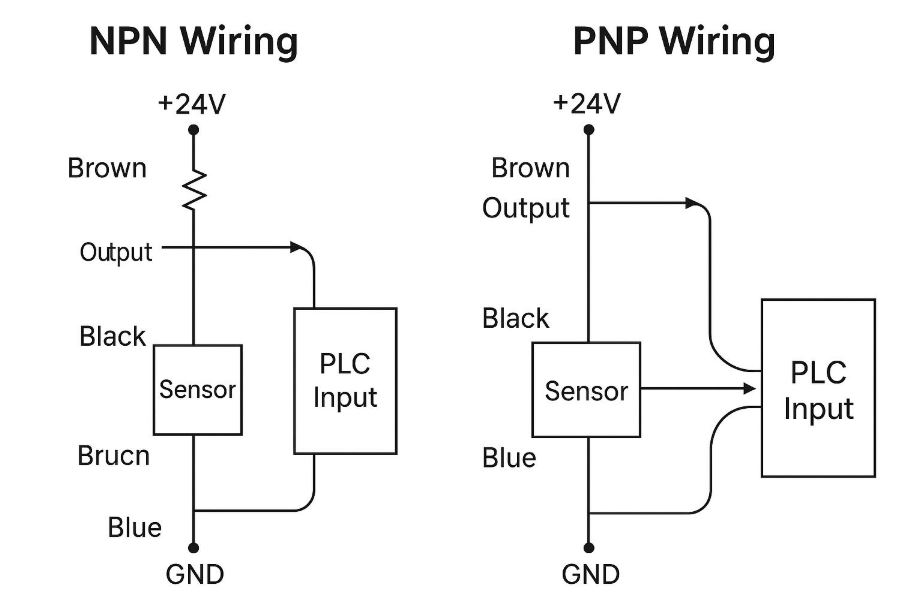
Промышленные датчики также работают по логике NPN и PNP:
Неправильный выбор может привести к сбою сигнала ПЛК или нарушению работы системы.
Хотя MOSFET широко используются сегодня, NPN- и PNP-транзисторы по-прежнему важны, поскольку они:
Они по-прежнему широко используются в образовании, промышленной электронике, аналоговых схемах и системах автоматизации.
NPN и PNP - это фундаментальные понятия в электронике и промышленной автоматизации. Оба типа транзисторов необходимы в зависимости от схемы и области применения.
Подведем итоги:
Выбор между NPN и PNP зависит от конструкции системы и требований приложения.
Разница заключается в направлении тока и полярности срабатывания.
NPN, как правило, работает быстрее благодаря подвижности электронов.
Потому что он определяет, используют ли датчики логику с замиранием или с замиранием.
Нет, они требуют разной полярности и разной схемы.
PNP более распространен в современных системах промышленной автоматизации.
Да, они по-прежнему широко используются в электронике, автоматике и системах управления.
За дополнительной информацией, пожалуйста, обращайтесь КУАНЬЯ.

Мы являемся профессиональным производителем электротехнической продукции для солнечной энергетики и промышленного применения, включая MCB, SPD, RCD и сопутствующие аксессуары. Имея богатый опыт экспорта, мы предоставляем надежные решения и услуги OEM/ODM для глобальных клиентов.
+86-577-61885000
+86 13676769183
info@cnkuangya.com
export@cnkuangya.com
Промышленная зона Вэньян, Юэцин, Вэньчжоу 325000, Китай

