Промышленная зона Вэньян Юэцин Вэньчжоу 325000
Рабочие часы
Понедельник - пятница: 7AM - 7PM
Выходные: 10AM - 5PM
Промышленная зона Вэньян Юэцин Вэньчжоу 325000
Рабочие часы
Понедельник - пятница: 7AM - 7PM
Выходные: 10AM - 5PM

Сейчас 2 часа ночи во вторник, и критически важная производственная линия остановилась. Первичная проверка не выявила ни сработавших главных выключателей, ни явных признаков серьезной перегрузки или короткого замыкания. После нескольких часов дорогостоящего простоя и диагностики электрик находит виновника: обугленную клемму в панели управления. Неплотное соединение создавало дугу низкого уровня с высоким сопротивлением, которая медленно прожигала изоляцию. Ток не был достаточным для срабатывания стандартного выключателя, но его было достаточно, чтобы остановить работу, и он легко мог стать причиной пожара.
Будучи старшим инженером по применению, я видел этот сценарий слишком много раз. Хотя большинство инженеров понимают основы защиты от сверхтоков, нюансы различий между современными защитными устройствами часто упускаются из виду - до тех пор, пока не произойдет дорогостоящее или опасное событие. В современных промышленных условиях полагаться только на традиционные автоматические выключатели - все равно что управлять современным автомобилем, у которого есть только тормоза, но нет подушек безопасности и систем предотвращения столкновений.
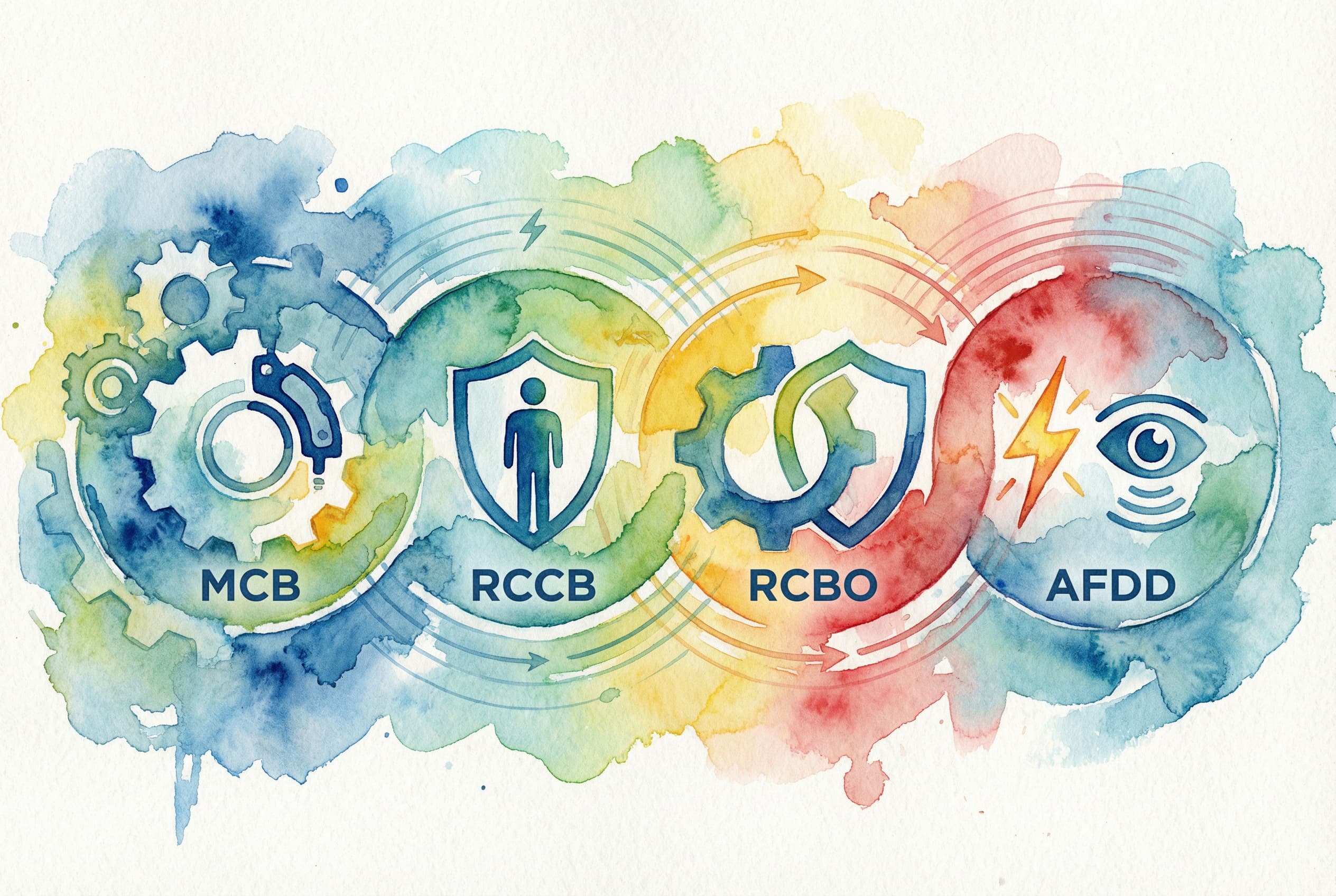
Давайте проясним роль этих четырех критически важных устройств, используя простую аналогию: системы безопасности вашего автомобиля.
Понимание того, какую систему и где следует использовать, является ключом к созданию действительно безопасной и надежной промышленной электроустановки.
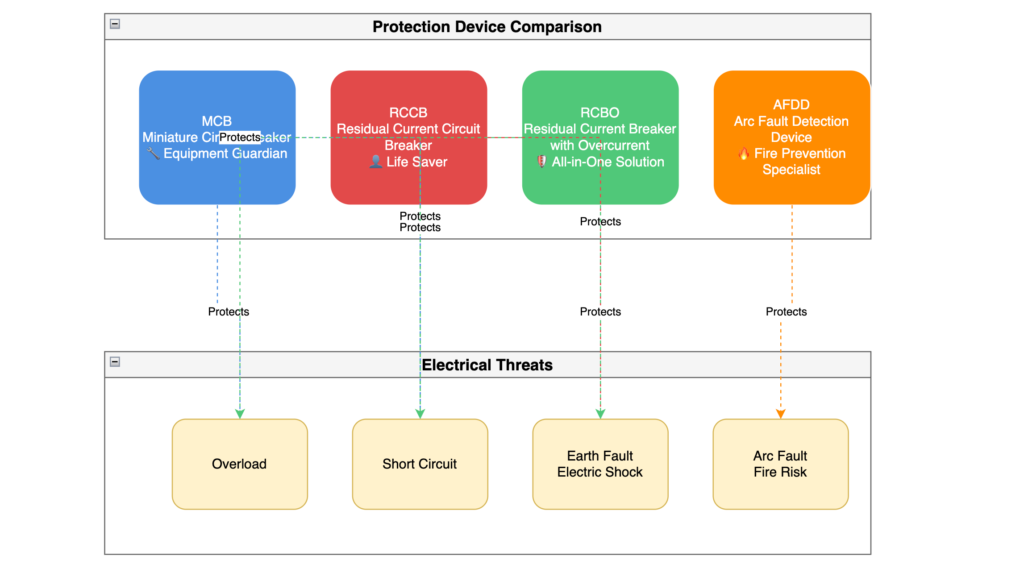
Каждое из этих устройств предназначено для устранения определенного типа электрических неисправностей. Если вы используете не тот прибор, который вам нужен, это приведет к критическому снижению безопасности.
MCB - это наиболее распространенная форма защиты цепи. Его единственная задача - защитить электропроводку и подключенное оборудование. Для этого он автоматически отключает питание, когда обнаруживает либо длительную перегрузку (например, двигатель потребляет слишком большой ток в течение длительного времени), либо внезапное короткое замыкание (сильный всплеск тока).
УЗО, иногда называемое УЗО, предназначено для одной цели: спасать жизни людей. Он работает, постоянно измеряя ток, протекающий в живом и нейтральном проводниках. Согласно закону Кирхгофа, этот ток должен быть идеально сбалансирован. Если человек прикоснется к токоведущей части, небольшое количество тока просочится через его тело в землю. Устройство RCCB обнаруживает этот крошечный дисбаланс (всего 30 мА) и отключается за миллисекунды, задолго до того, как удар может стать смертельным.
RCBO объединяет функциональность MCB и RCCB в одном компактном устройстве. Он обеспечивает защиту от перегрузок, коротких замыканий, и токов замыкания на землю. Это делает его идеальным выбором для защиты отдельных конечных цепей, где важна безопасность оборудования и персонала, например, розеток, питающих портативные инструменты на производстве или в зонах технического обслуживания.
AFDD - самая передовая технология из четырех, она устраняет опасность, которую не видят остальные. Опасное дуговое замыкание возникает при пробое изоляции проводки или неплотном соединении, создавая слаботочную высокотемпературную плазменную дугу. Эти “последовательные” или “параллельные” дуги часто не потребляют достаточно тока для срабатывания MCB и не могут просочиться на землю для срабатывания RCCB. Тем не менее, они являются одной из основных причин электрических пожаров.
AFDD использует сложный микропроцессор для непрерывного анализа формы электрической волны. Он запрограммирован на распознавание уникальных шумов и неравномерностей, характерных для опасной дуги, отличая ее от обычной дуги, возникающей при работе выключателей или щеток электродвигателей. При обнаружении опасной дуги он отключает цепь, чтобы предотвратить пожар.
| Устройство | Функция | Защищает от | Основной вариант использования (промышленный) | Ключевое ограничение |
|---|---|---|---|---|
| MCB | Защита от перегрузки по току | Перегрузка и короткое замыкание | Общее оборудование и защита цепей | Нет защиты от поражения электрическим током или дуговых разрядов. |
| РЦКБ | Защита от замыкания на землю | Удар током и пожар | Безопасность персонала; должен быть сопряжен с MCB. | Нет защиты от перегрузок и коротких замыканий. |
| RCBO | Защита "все в одном | Перегрузка, короткое замыкание и замыкание на землю | Защита критически важных отдельных цепей, где риску подвергаются как оборудование, так и люди. | Более высокая стоимость одной цепи. |
| AFDD | Обнаружение дуговых замыканий | Электрические пожары от дуговых разрядов | Защита цепей в зонах с высоким риском пожара (например, при хранении легковоспламеняющихся материалов), спальных помещений или невосполнимого имущества. | По своей сути не обеспечивает защиту от сверхтоков или замыканий на землю (обычно в сочетании с RCBO). |
Выбор правильного устройства - это не только технические характеристики, но и управление рисками. Международный стандарт IEC 60364 (и его местные эквиваленты, например BS 7671) содержит четкие рекомендации. Здесь приведены практические рекомендации по его применению на вашем предприятии.
Шаг 1: Проведите оценку рисков на основе местоположения\
Вместо универсального подхода оцените риск, связанный с каждой зоной и цепью. Стандарты требуют повышенной защиты в определенных местах. Спросите себя:
Шаг 2: Применяйте защиту, соответствующую риску\
Основываясь на своей оценке, разработайте многоуровневую стратегию безопасности:
Шаг 3: Обеспечение надежности системы с помощью избирательности\
В промышленных условиях неисправность в незначительной цепи освещения не должна приводить к остановке всего производственного цеха. В этом заключается принцип селективность (или дискриминация). Она обеспечивает срабатывание только того защитного устройства, которое находится непосредственно перед местом повреждения, оставляя остальные части системы в рабочем состоянии. Достижение надлежащей селективности требует тщательного проектирования и выбора выключателей с правильными кривыми отключения и характеристиками. Использование универсального устройства RCBO в каждой конечной цепи часто является самым простым способом гарантировать селективность на конечном уровне распределения, предотвращая дорогостоящие неприятные отключения на нескольких линиях.
В конечном счете, проектирование современной промышленной электросистемы - это проактивное управление рисками. Выходя за рамки базовой защиты от сверхтоков и применяя многоуровневый подход, включающий в себя обнаружение остаточного тока и дуговых замыканий, вы не просто ставите галочку в графе "соответствие требованиям". Вы создаете более безопасное, надежное и устойчивое производство.