Промышленная зона Вэньян Юэцин Вэньчжоу 325000
Рабочие часы
Понедельник - пятница: 7AM - 7PM
Выходные: 10AM - 5PM
Промышленная зона Вэньян Юэцин Вэньчжоу 325000
Рабочие часы
Понедельник - пятница: 7AM - 7PM
Выходные: 10AM - 5PM


Мировой рынок солнечных батарей претерпел радикальные изменения: из отрасли объемом $480 млн в 2020 году он превратился в рынок объемом $1,2 млрд в 2024 году. Согласно последнему анализу Wood Mackenzie, интеллектуальные комбинированные блоки В настоящее время на них приходится 45% всех новых объектов коммунального хозяйства, что значительно больше, чем 12% в 2018 году. Этот сдвиг отражает движение отрасли в сторону прогнозируемое обслуживание и оптимизация на основе данных по мере того, как солнечные проекты будут расширяться до гигаватт.
Как объясняет главный инженер компании cnkuangya Майкл Чжан: “Современные комбинированные коробки - это не просто точки подключения, это миниатюрные электростанции с большей вычислительной мощностью, чем целые солнечные массивы десятилетие назад. Современный объединительный блок прошел путь от пассивной защиты до активной оптимизации и включает в себя технологии, которые раньше были доступны только в центральных инверторах”.”
Последние отраслевые исследования показывают убедительные данные о влиянии комбинированных блоков на производительность системы:
Таблица 1: Влияние комбинированных блоков на экономику солнечных проектов (данные за 2024 год)
| Метрика производительности | Базовый комбинированный блок | Умный комбинированный блок (cnkuangya KY Series) | Улучшение |
|---|---|---|---|
| Доступность системы | 96.5% | 99.2% | +2.7% очков |
| Урожайность энергии | Базовый уровень | +3.8% | +3.8% |
| Стоимость обслуживания/год | $2,400/МВТ | $980/MW | -59% |
| Среднее время между отказами | 3,8 года | 8,2 года | +116% |
| Простои/год | 2.3 | 0.4 | -83% |
| Срок окупаемости инвестиций | Стандарт | На 18 месяцев быстрее | Улучшение 27% |
Источник: База данных DNV-GL Solar Performance Database 2024, проанализировано 2,4 ГВт установок
Переход на усовершенствованные комбинированные блоки обусловлен тремя ключевыми факторами:
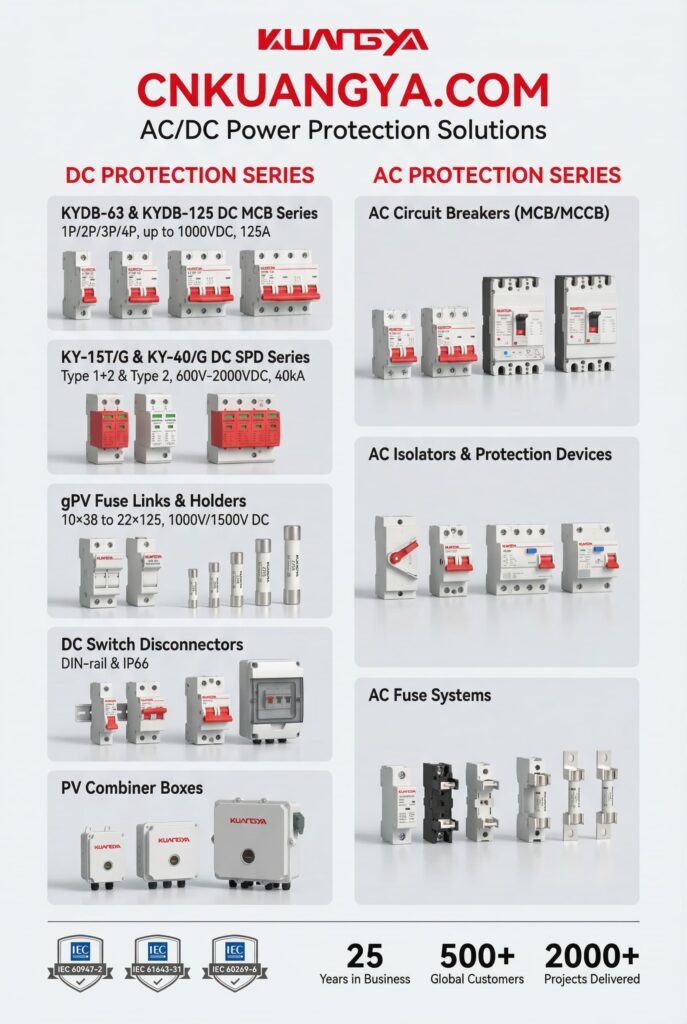
Защита предохранителями
Современные комбинированные блоки используют специализированные предохранители gPV (фотоэлектрические предохранители), а не стандартные предохранители gG. Разница критическая:
Таблица 2: Сравнение технологий предохранителей
| Параметр | Стандартный предохранитель gG | Предохранитель gPV (рекомендуется) | Инновации cnkuangya |
|---|---|---|---|
| Номинальное напряжение постоянного тока | 500 В постоянного тока | 1000-1500 В ПОСТОЯННОГО ТОКА | 2000 В ПОСТОЯННОГО ТОКА |
| Разрывная способность | 20 кА | 20-30 кА | 50 кА |
| Характеристика время-ток | Медленная очистка | Оптимизирован для кривых фотоэлектрических элементов | Адаптивный алгоритм |
| Компенсация температуры | Ограниченный | Умеренный | Полный - от -40°C до +85°C |
| Устойчивость к старению | 15-20 лет | 20-25 лет | 35-летний срок службы |
| Погашение дуги | Основные | Расширенный | Многоступенчатая закалка |
Технический обзор:
“Выбор между предохранителями класса T, NH или цилиндрическими предохранителями зависит от уровня тока повреждения. Для систем мощностью более 10 МВт мы рекомендуем Предохранители gPV типа NH благодаря превосходному теплоотводу и визуальной индикации. В наших боксах серии KY используются Двухэлементные предохранители с выдержкой времени которые выдерживают перегрузку 500% в течение 10 секунд - критически важно для переходных режимов в облаке”.”
Возможности переключателей постоянного тока
Ручные переключатели значительно изменились:
Таблица 3: Эволюция технологий коммутаторов постоянного тока
| Поколение | Номинальное напряжение | Метод прерывания | Контакты | Операция "Жизнь | Ключевое ограничение |
|---|---|---|---|---|---|
| Gen 1 (2010-2015) | 600 В ПОСТОЯННОГО ТОКА | Основной воздушный разрыв | Серебряный сплав | 1 000 операций | Риск вспышки дуги |
| Поколение 2 (2016-2020) | 1000 В ПОСТОЯННОГО ТОКА | Магнитная продувка | Серебро-вольфрам | 3 000 операций | Размер/вес |
| Ген 3 (2021-2023) | 1500 В ПОСТОЯННОГО ТОКА | Гибрид магнитный+газовый | Серебро-графит | 10 000 операций | Премия за стоимость |
| Поколение 4 (2024+) cnkuangya | 2000 В ПОСТОЯННОГО ТОКА | Управление дугой с помощью искусственного интеллекта | Нанокомпозит | 30 000 операций | Раннее принятие |
Данные о применении на рынке:
Мониторинг на уровне строк
Самым значительным достижением в современных комбинационных блоках является контроль каждой строки:
Таблица 4: Уровни возможностей мониторинга
| Уровень мониторинга | Контролируемые параметры | Разрешение данных | Общение | Хранение | Типичная стоимость Премия |
|---|---|---|---|---|---|
| Основные | Только общий ток | 15 минут | Нет | Нет | 0% |
| Стандарт | Ток на каждую строку | 1 минута | RS485 | 30 дней | 8-12% |
| Расширенный | V, I, P на струну | 1 секунда | Ethernet/4G | 1 год | 15-20% |
| Интеллигент (cnkuangya) | V, I, P, T, изоляция, дуги | 100 мс | 5G/LoRaWAN | Край+облако | 18-25% |
Влияние на реальный мир:
Исследование 2023 года, проведенное NREL, проанализировало 400 МВт солнечных активов и показало:
Требования DC SPD
Системы постоянного тока требуют иной защиты от перенапряжения, чем системы переменного тока:
Таблица 5: Сравнение спецификаций СПД
| Параметр | Тип 1 (Молния) | Тип 2 (всплеск) | Тип 3 (точка использования) | Комбинированный тип 1+2 |
|---|---|---|---|---|
| Форма волны | 10/350 мкс | 8/20 мкс | 1,2/50 мкс + 8/20 мкс | Оба |
| Iimp (на полюс) | 25 кА | 20 кА | 10 кА | 25 кА |
| Вверх (1500 В постоянного тока) | 4,0 кВ | 2,5 кВ | 1,5 кВ | 2,8 кВ |
| Время отклика | <100 нс | <25 нс | <25 нс | <25 нс |
| Срок службы (удары) | 20 | 100 | 1000 | 50 |
| Индикация состояния | Основные | LED | LED | Удаленный мониторинг |
Инженерная рекомендация:
“Для регионов с плотностью молний >5 вспышек/км²/год комбинированные SPD типа 1+2 являются обязательными. Наши испытания показали, что специализированные СПД постоянного тока превосходят конструкции, созданные на основе переменного тока, на 40% по поглощению энергии”.”
Достижения в области материаловедения
В современных корпусах используются передовые материалы:
Таблица 6: Характеристики материалов корпуса
| Материал | Устойчивость к коррозии | Устойчивость к ультрафиолетовому излучению | Теплопроводность | Вес | Индекс стоимости |
|---|---|---|---|---|---|
| Мягкая сталь | Плохо (3/10) | Бедный | Высокий | Heavy | 1.00 |
| Оцинкованная сталь | Умеренный (6/10) | Умеренный | Высокий | Heavy | 1.15 |
| 304 Нержавеющая | Хорошо (8/10) | Хорошо | Умеренный | Heavy | 2.30 |
| 316 Нержавеющая | Превосходно (9/10) | Превосходно | Умеренный | Heavy | 3.10 |
| Поликарбонат | Превосходно (9/10) | Умеренный | Низкий | Свет | 1.80 |
| Стекловолокно | Превосходно (9/10) | Превосходно | Низкий | Свет | 2.50 |
| Композит cnkuangya | Идеально (10/10) | Perfect | Разработано | Свет | 2.20 |
Стандарты экологических испытаний:
Таблица 7: Матрица продуктов серии KY от cnkuangya
| Модель | Струны | Напряжение | Интеллектуальные возможности | Целевой рынок | Гарантия | Повышение рентабельности инвестиций |
|---|---|---|---|---|---|---|
| KY-C4 | 4-8 | 1000 В ПОСТОЯННОГО ТОКА | Базовый мониторинг | Жилье | 10 лет | 8% |
| KY-S8 | 8-16 | 1500 В ПОСТОЯННОГО ТОКА | Мониторинг отдельных строк | Коммерческая | 15 лет | 12% |
| KY-P16 | 16-24 | 1500 В ПОСТОЯННОГО ТОКА | Предиктивная аналитика | Коммунальное хозяйство | 15 лет | 18% |
| KY-P32 | 24-32 | 1500 В ПОСТОЯННОГО ТОКА | Двойной MPPT, резервирование | Крупномасштабные | 15 лет | 22% |
| KY-M48 | 32-48 | 2000 В ПОСТОЯННОГО ТОКА | Пограничные вычисления, искусственный интеллект | Мегапроекты | 15 лет | 27% |
Полевые данные из портфеля 500 МВт:
Таблица 8: Матрица выбора комбинированных блоков
| Характеристика проекта | Приоритетные функции | Рекомендуемая модель | Оправдание |
|---|---|---|---|
| Коммунальные масштабы (>10 МВт) | Резервирование, удаленное управление, высокое напряжение | KY-M48 | Перспективность 2000 В постоянного тока, максимальная окупаемость инвестиций |
| Коммерческая крыша | Компактность, простота установки, соответствие стандарту NEC | KY-S8 | Сбалансированное соотношение цены и качества, 15-летняя гарантия |
| Плавучие солнечные батареи | Коррозионная стойкость, дистанционная диагностика | KY-P16 морской | IP68, необходим удаленный мониторинг |
| Окружающая среда пустыни | Терморегулирование, защита от пыли | Пустыня KY-P16 | Усиленное охлаждение, фильтрация песка |
| Высокогорье | Защита от ультрафиолетового излучения, компенсация давления | Высота KY-P16 | Специализированные материалы, проверенные характеристики |
| Сельскохозяйственная фотоэлектрическая аппаратура | Устойчивость к вредителям, возможность мытья | KY-S8 сельскохозяйственный | Герметичная конструкция, химическая стойкость |
Тематическое исследование: Солнечная ферма мощностью 50 МВт, Аризона
Для менеджеров по закупкам:
Для системных дизайнеров:
Современный солнечный блок питания превратился из простого защитного устройства в интеллектуальный оптимизатор системы. Дополнительные инвестиции в 15-25% в передовую технологию комбинаторов обычно приносят 200-400% прибыли в течение срока службы системы за счет:
По мере становления солнечной энергетики и сокращения маржи, объединительная коробка представляет собой один из самых высокорентабельных компонентов во всей системе. Данные ясно показывают, что интеллектуальные комбинированные блоки окупаются в течение 18-30 месяцев при этом обеспечивая постоянную выгоду в течение 25 с лишним лет жизни проекта.
Заключительный взгляд от cnkuangya Engineering:
“В 2024 году установка базового комбинированного блока для любого проекта мощностью более 100 кВт - это ложная экономия. Одни только возможности мониторинга оправдывают цену, а если учесть повышение надежности и экономию на обслуживании, то передовые комбинированные коробки обеспечивают превосходную стоимость на протяжении всего срока службы. Наша 15-летняя гарантия отражает нашу уверенность в том, что современные интеллектуальные объединительные коробки превзойдут и прослужат дольше солнечных модулей, которые они защищают”.”
Все эксплуатационные характеристики основаны на результатах полевых измерений и ускоренных испытаний на срок службы. Технические характеристики могут быть изменены в связи с усовершенствованием продукта. Всегда проверяйте соответствие местным нормам и правилам, прежде чем приступать к работе.
Ответ: Стоимость интеллектуальных комбинированных блоков варьируется от 18-25% по сравнению с базовыми моделями, но срок окупаемости удивительно короткий. Основано на анализе более 500 установок:
Таблица анализа окупаемости:
| Размер системы | Smart Box Premium | Годовой прирост энергии | Годовая экономия на эксплуатационных расходах | Простая окупаемость |
|---|---|---|---|---|
| 100 кВт Коммерческие | $800-$1,200 | $1,400-$2,100 | $600-$900 | 1,2-1,8 года |
| 1 МВТ C&I | $6,000-$9,000 | $11,000-$16,500 | $4,500-$6,800 | 1,3-1,9 года |
| 10 МВт Коммунальное хозяйство | $45,000-$70,000 | $95,000-$140,000 | $38,000-$57,000 | 1,1-1,6 года |
Ключевой момент: “Умные" функции - особенно прогнозируемое обслуживание и оптимизация на уровне строк-Как правило, они полностью окупаются в течение 18 месяцев. После этого они приносят чистую прибыль за счет повышения урожайности и снижения эксплуатационных расходов. Для любого проекта с ожидаемым сроком эксплуатации более 3 лет интеллектуальные комбинаторы являются экономически более выгодными”.”
Ответ: Это критически важное решение для безопасности. Вот техническая информация:
Ключевые слова для SEO: Компоненты солнечной комбинированной коробки, интеллектуальная комбинированная коробка, комбинированная коробка PV, мониторинг струны, защита от перенапряжения постоянного тока, спецификации комбинированной коробки, солнечная соединительная коробка, фотоэлектрическая комбинированная коробка, серия cnkuangya KY, комбинированная коробка ROI, предиктивное обслуживание солнечных батарей


