WengYang Industrial Zone Yueqing Wenzhou 325000
Horas de trabalho
De segunda a sexta-feira: das 7h às 19h
Fim de semana: 10:00 - 17:00
WengYang Industrial Zone Yueqing Wenzhou 325000
Horas de trabalho
De segunda a sexta-feira: das 7h às 19h
Fim de semana: 10:00 - 17:00

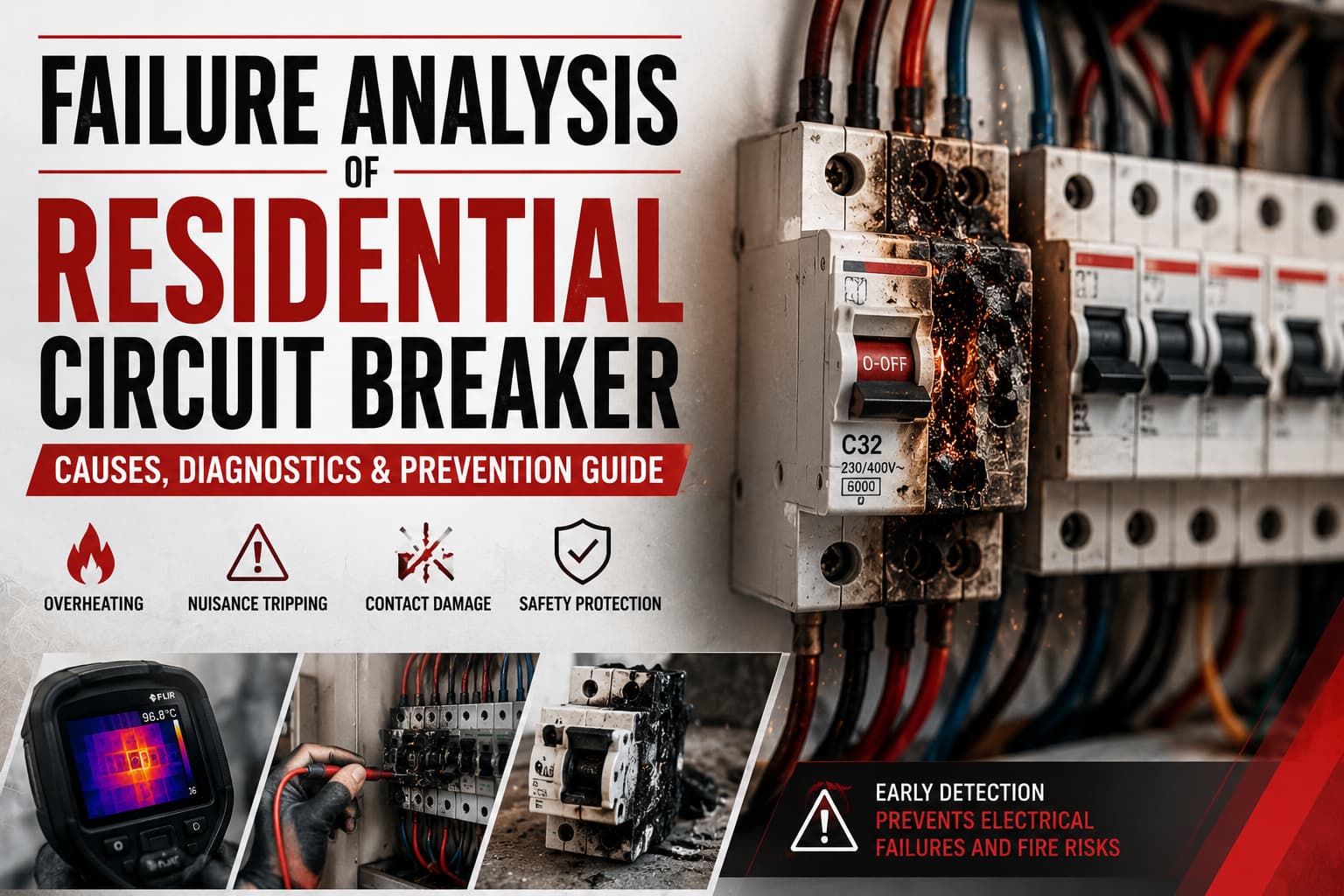
As residências modernas dependem muito de sistemas elétricos confiáveis. De condicionadores de ar e geladeiras a carregadores de veículos elétricos e inversores solares, as cargas elétricas residenciais estão se tornando cada vez mais complexas. No centro da segurança elétrica residencial está um dispositivo pequeno, mas extremamente importante: o disjuntor.
Um disjuntor residencial é projetado para desconectar automaticamente a energia durante sobrecargas, curtos-circuitos ou condições elétricas anormais. Em circunstâncias normais, ele protege a fiação, os aparelhos e as pessoas de falhas elétricas perigosas. Entretanto, quando o próprio disjuntor falha, todo o sistema de proteção deixa de ser confiável.
Uma análise detalhada de falhas no desempenho de disjuntores residenciais pode ajudar os engenheiros a identificar riscos elétricos ocultos antes que ocorram falhas graves no sistema.
É por isso que o Análise de falha do disjuntor residencial é muito importante para:
Entender como e por que os disjuntores falham pode ajudar a reduzir:
Neste guia, exploraremos as falhas mais comuns de disjuntores residenciais, suas causas principais, métodos de diagnóstico, estudos de casos reais e estratégias preventivas.
Para obter uma compreensão mais ampla dos dispositivos de proteção residencial, incluindo soluções de MCB, RCCB, RCBO e AFDD, você também pode explorar nossa Disjuntor CA guia.
Um disjuntor residencial é um dispositivo automático de proteção elétrica instalado dentro de um quadro de distribuição doméstico ou unidade consumidora.
Sua função principal é interromper a corrente elétrica quando ocorrem condições perigosas.
Os disjuntores residenciais típicos protegem contra:
A maioria dos sistemas residenciais usa:
Quando a corrente anormal excede o valor nominal do disjuntor, o mecanismo de disparo interno desconecta o circuito automaticamente.
Sem um disjuntor funcionando adequadamente, a fiação doméstica pode superaquecer e causar incêndios elétricos.
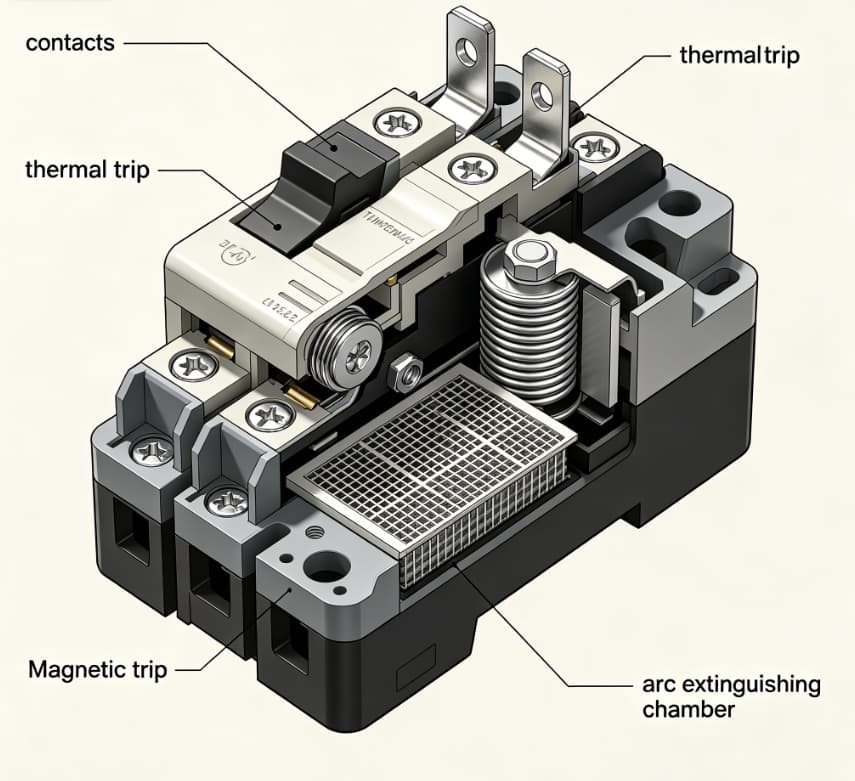
A compreensão da falha do disjuntor começa com a compreensão de seus componentes internos.
Um disjuntor miniatura (MCB) padrão geralmente contém as seguintes peças:
| Componente | Função | Risco de falha comum |
|---|---|---|
| Contatos fixos e móveis | Conduzir e interromper a corrente | Erosão por contato, soldagem |
| Elemento de disparo térmico | Proteção contra sobrecargas | Desvio de calibração, fadiga |
| Mecanismo de disparo magnético | Desarme instantâneo durante curtos-circuitos | Danos na bobina, operação atrasada |
| Câmara de extinção de arco elétrico | Suprimir arcos elétricos | Erosão do arco, acúmulo de carbono |
| Sistema de trava mecânica | Manter o disjuntor ligado/desligado | Fadiga da mola, emperramento |
| Isolamento da carcaça | Isolamento elétrico e térmico | Rachaduras, superaquecimento |
Cada componente dentro do disjuntor pode se tornar um ponto de falha em potencial sob condições elétricas ou ambientais adversas.
Muitas pessoas presumem que os disjuntores ou funcionam perfeitamente ou falham completamente. Na realidade, a análise profissional de falhas de sistemas de disjuntores residenciais geralmente revela uma degradação interna gradual muito antes de ocorrer uma falha completa. Na realidade, a maioria das falhas de disjuntores ocorre gradualmente.
Um disjuntor deteriorado pode:
Para engenheiros e compradores, a análise de falhas ajuda a melhorar:
Isso se torna ainda mais importante em residências modernas com:
Essas cargas mais novas criam ambientes elétricos mais complexos do que os sistemas residenciais tradicionais.
Entender os problemas comuns encontrados durante Análise de falha do disjuntor residencial é essencial para selecionar e manter disjuntores confiáveis.
Entender esses modos de falha é uma das partes mais importantes da análise de falhas de aplicações de disjuntores residenciais em casas modernas.
Os disjuntores podem falhar de várias maneiras diferentes. Algumas falhas geram sintomas óbvios, enquanto outras permanecem ocultas até que ocorra um incidente grave.
A falha no desarme é uma das falhas mais perigosas do disjuntor.
Nessa condição, o disjuntor permanece ligado mesmo quando uma corrente excessiva flui pelo circuito.
Se o disjuntor não puder desconectar a corrente de falha, o isolamento do fio poderá derreter e incendiar materiais próximos.
Esse tipo de falha é especialmente perigoso em instalações residenciais mais antigas.
O disparo incômodo ocorre quando o disjuntor dispara mesmo que a carga pareça normal.
As residências modernas com muitos dispositivos eletrônicos costumam ter esse problema com mais frequência.
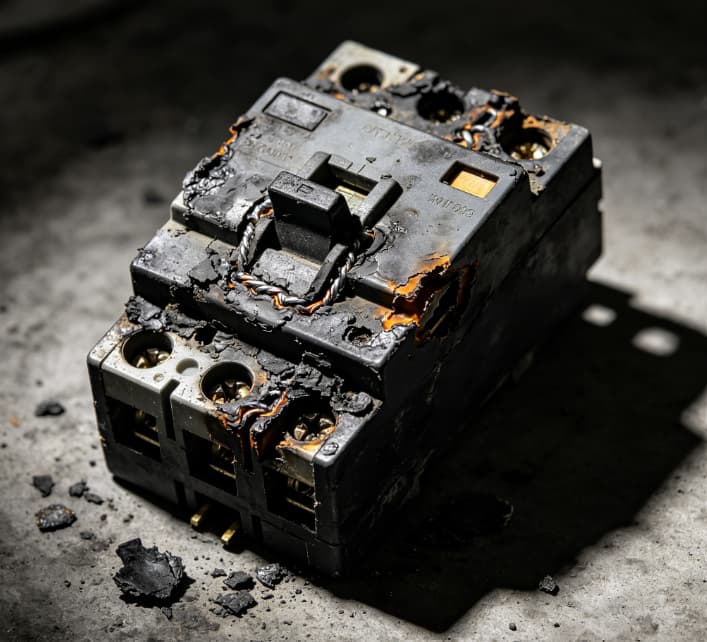
Durante curtos-circuitos graves, os contatos elétricos podem derreter permanentemente.
A alavanca do disjuntor pode parecer funcional enquanto os contatos internos permanecem fechados por fusíveis.
Isso cria um sério risco de segurança, pois os usuários podem pensar que o circuito está isolado quando, na verdade, está energizado.
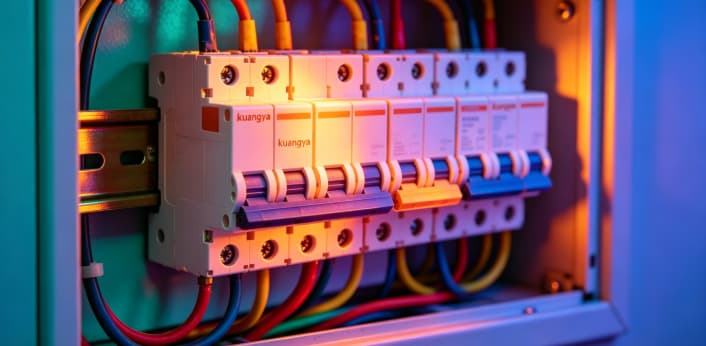
O superaquecimento está entre os problemas mais comuns dos disjuntores residenciais.
Geralmente, ela se desenvolve gradualmente ao longo do tempo.
Conexões elétricas ruins geram calor de resistência.
A operação próxima à corrente nominal máxima aumenta a temperatura interna.
Painéis elétricos lotados retêm o calor.
A corrosão aumenta a resistência de contato.
As inspeções por imagens térmicas geralmente podem detectar o superaquecimento antes que ocorra uma falha catastrófica.
Os componentes mecânicos se desgastam com o tempo.
A troca manual frequente acelera a fadiga mecânica.
Os disjuntores residenciais são projetados principalmente para proteção, não para operações diárias de comutação.
Os arcos elétricos geram temperaturas extremamente altas.
As falhas de arco podem carbonizar os materiais de isolamento e enfraquecer permanentemente o desempenho do disjuntor.
É por isso que a proteção AFCI está se tornando cada vez mais comum nos códigos elétricos residenciais modernos.
| Modo de falha | Sintomas típicos | Principais causas | Consequências potenciais |
|---|---|---|---|
| Falha no disparo | O disjuntor permanece ligado durante a sobrecarga | Contatos soldados, travamento mecânico | Risco de incêndio, danos à fiação |
| Tropeços incômodos | Interrupções aleatórias de energia | Harmônicos, terminais soltos | Redução da confiabilidade do sistema |
| Contato com a soldagem | O disjuntor aparece como LIGADO/DESLIGADO, mas os contatos estão com fusível | Alta corrente de falha | Incapacidade de isolar o circuito |
| Superaquecimento | Superfície quente, cheiro de queimado | Conexão solta, sobrecarga | Danos térmicos, risco de incêndio |
| Falha mecânica | Alça rígida ou emperrada | Fadiga da mola | Proteção atrasada |
| Danos por falha de arco elétrico | Isolamento carbonizado | Fiação solta, umidade | Danos internos permanentes |
O projeto adequado de proteção em camadas é fundamental para reduzir as falhas de disjuntores nas residências modernas. Nossos Guia de proteção da distribuição de baixa tensão As falhas dos disjuntores geralmente são causadas por uma combinação de fatores ambientais, elétricos, de instalação e de fabricação. Uma análise completa das falhas dos sistemas de disjuntores residenciais deve avaliar todas essas condições contribuintes em conjunto.
As condições ambientais influenciam significativamente a vida útil e a confiabilidade do disjuntor.
Os disjuntores são dispositivos sensíveis à temperatura.
Painéis instalados em:
frequentemente apresentam envelhecimento térmico acelerado.
Temperaturas mais altas enfraquecem o isolamento e afetam a precisão da calibração do disparo.
A exposição à umidade pode causar:
As regiões costeiras são especialmente desafiadoras para os sistemas elétricos residenciais.
O acúmulo de poeira reduz a eficiência da dissipação de calor.
A poluição industrial também pode contaminar as superfícies internas de contato.
Muitos circuitos residenciais operam perto da capacidade máxima por longos períodos.
Exemplos comuns incluem:
Sobrecargas repetidas enfraquecem os componentes do disparo térmico.
Mesmo quando os disjuntores interrompem as falhas com sucesso, ainda podem ocorrer danos internos.
As interrupções repetidas de falhas causam:
Os disjuntores expostos a falhas graves devem ser substituídos com frequência.
Os equipamentos eletrônicos modernos geram harmônicos.
As fontes comuns de harmônicos incluem:
Os harmônicos aumentam o aquecimento do disjuntor e podem afetar o comportamento do disparo.
| Categoria | Causa | Impacto no disjuntor | Ambiente comum |
|---|---|---|---|
| Ambiental | Alta temperatura | Envelhecimento acelerado | Painéis de teto |
| Ambiental | Umidade | Corrosão e rastreamento | Casas no litoral |
| Ambiental | Poluição por poeira | Retenção de calor | Áreas residenciais industriais |
| Elétrica | Sobrecarga contínua | Fadiga térmica | Cozinhas, carregamento de veículos elétricos |
| Elétrica | Estresse de curto-circuito | Erosão de contato | Circuitos de aparelhos com defeito |
| Elétrica | Distorção harmônica | Aquecimento extra | Sistemas de inversores solares |
A instalação inadequada é um dos principais fatores que contribuem para a falha do disjuntor.
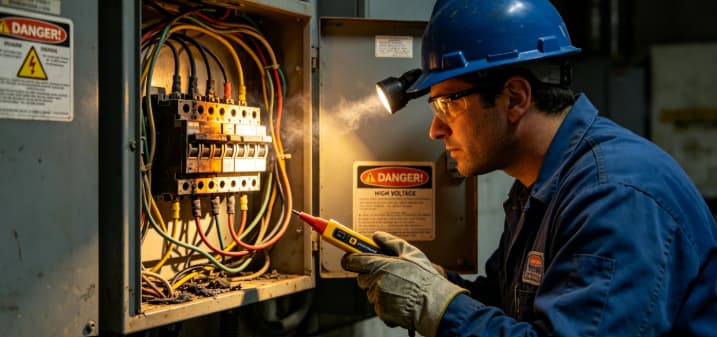
Terminais soltos geram calor excessivo na resistência.
O aperto insuficiente causa superaquecimento.
O aperto excessivo danifica os terminais e os condutores.
Os fabricantes especificam os valores exatos de torque para uma instalação segura.
É extremamente comum usar a classificação errada do disjuntor.
Os exemplos incluem:
A seleção incorreta compromete completamente a segurança elétrica.
Alguns instaladores combinam disjuntores e painéis de diferentes fabricantes.
Isso pode gerar:
Muitas certificações só se aplicam quando são usadas combinações aprovadas.
Nem todas as falhas de disjuntores são causadas por instaladores ou usuários.
A baixa qualidade de fabricação pode resultar em:
Os disjuntores baratos podem parecer idênticos externamente, mas têm desempenho muito diferente internamente.
Para distribuidores e compradores OEM, o controle de qualidade do fornecedor é extremamente importante.
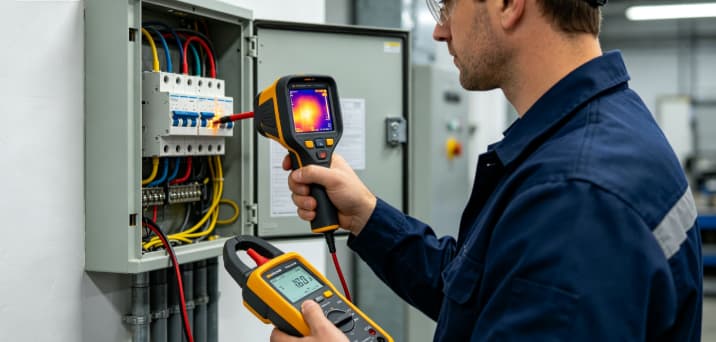
A análise precisa de falhas em equipamentos de disjuntores residenciais requer testes elétricos e métodos de inspeção física. A análise profissional de falhas combina várias técnicas de inspeção e teste.
A inspeção visual costuma ser a primeira etapa do diagnóstico.
Os inspetores verificam:
Os danos visuais geralmente revelam superaquecimento ou histórico de arco.
As câmeras térmicas de infravermelho ajudam a identificar o aumento anormal da temperatura.
A imagem térmica pode detectar:
Esse método é seguro e altamente eficaz durante a operação ao vivo.
A alta resistência de contato indica degradação interna.
Causas de resistência excessiva:
O teste de micro-ohm ajuda a avaliar a condição do contato.
Equipamentos especializados verificam o comportamento de disparo do disjuntor.
Os testes avaliam:
Isso confirma se o disjuntor ainda atende aos padrões de proteção.
O teste de isolamento identifica a degradação causada por:
O teste do megôhmetro é amplamente utilizado durante as inspeções de manutenção.
Em investigações de laboratório, os disjuntores com defeito podem ser desmontados.
Os engenheiros inspecionam:
Isso ajuda a determinar a causa raiz exata da falha.
Preciso Análise de falha do disjuntor residencial requer a combinação de inspeção visual, imagens térmicas e técnicas de teste elétrico.
| Método de diagnóstico | Objetivo principal | Equipamento necessário | Principais vantagens |
|---|---|---|---|
| Inspeção visual | Detectar danos óbvios | Nenhum | Avaliação inicial rápida |
| Imagens térmicas | Identificar superaquecimento | Câmera térmica IR | Teste ao vivo sem contato |
| Teste de resistência de contato | Avalie a qualidade do contato | Medidor de micro-ohm | Detecta desgaste interno |
| Teste de característica de viagem | Verificar a resposta da proteção | Testador de viagem | Confirma a calibração |
| Teste de resistência do isolamento | Verificar a integridade do isolamento | Megôhmetro | Identifica danos causados pela umidade |
| Desmontagem interna | Investigação da causa-raiz | Ferramentas de laboratório | Análise forense detalhada |
Exemplos do mundo real demonstram como Análise de falha do disjuntor residencial As investigações revelam causas subjacentes que, de outra forma, poderiam ser ignoradas.
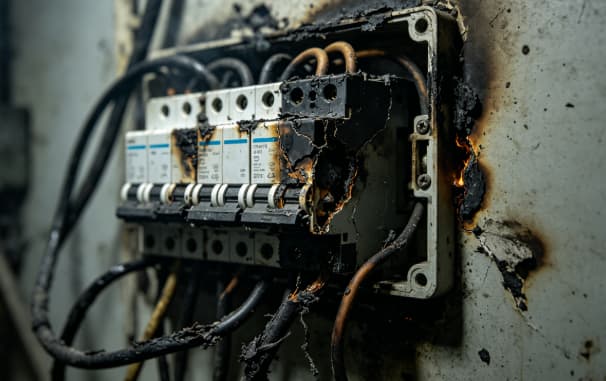
Um proprietário de casa sofreu repetidos disparos do disjuntor na cozinha.
O torque de instalação inadequado causou o aquecimento da resistência.
Um aparelho defeituoso causou graves danos à fiação.
A alavanca do disjuntor permaneceu ligada mesmo durante a falha.
A inspeção interna revelou contatos soldados.
Disjuntor de baixa qualidade com capacidade de interrupção insuficiente.
Substitua por um disjuntor certificado classificado para corrente de falha mais alta.
Um sistema solar residencial acionou repetidamente disparos de disjuntores.
A distorção harmônica do inversor aumentou o aquecimento do disjuntor.
| Caso | Cenário | Causa principal | Solução |
|---|---|---|---|
| Sobreaquecimento do disjuntor de cozinha | Tropeços frequentes | Terminal solto | Substitua o disjuntor e reaperte o torque |
| Falha durante curto-circuito | Fiação derretida | Contato de soldagem | Aumento da capacidade de ruptura |
| Disparos do inversor solar | Viagens incômodas repetidas | Distorção harmônica | Use um tipo de disjuntor compatível |
Os disjuntores de baixo custo geralmente reduzem os custos de fabricação usando:
Esses atalhos aumentam significativamente o risco de fracasso a longo prazo.
Para importadores e distribuidores, a escolha de fornecedores confiáveis é fundamental para reduzir as reclamações de garantia e proteger a reputação do mercado.
Os disjuntores residenciais confiáveis devem estar em conformidade com os padrões internacionais.
Comum na Europa e nos mercados internacionais:
Comum na América do Norte:
Normalmente, os testes de conformidade incluem:
Muitos problemas descobertos durante a análise de falhas das inspeções de disjuntores residenciais podem ser evitados por meio de manutenção regular. A manutenção preventiva reduz significativamente o risco de falha do disjuntor. Muitas instalações residenciais modernas agora preferem a proteção RCBO porque ela combina proteção contra sobrecarga e fuga em um único dispositivo. Veja nossa Guia de seleção RCBO para obter mais detalhes.
A varredura térmica anual ajuda a identificar:
Isso é especialmente importante para sistemas de carregamento solar e de veículos elétricos.
Os terminais elétricos se afrouxam gradualmente devido ao ciclo térmico.
As verificações de torque de rotina evitam falhas por superaquecimento.
Uma recomendação comum de engenharia é:
Isso melhora a confiabilidade a longo prazo.
Os disjuntores mais antigos perdem gradualmente a precisão da proteção.
A substituição deve ser considerada quando:
Os disjuntores falsificados e de baixa qualidade continuam sendo um grande problema global.
Sempre verifique:
| Fator de seleção | Recomendação | Importância |
|---|---|---|
| Corrente nominal | Corresponder ao tamanho do condutor | Evitar sobrecarga |
| Capacidade de ruptura | Exceder a corrente de falha | Interrupção segura de falhas |
| Curva de viagem | Curva B ou C | Proteção residencial adequada |
| Certificação | IEC / UL / CE | Garantia de conformidade |
| Classificação de temperatura | Considere ambientes quentes | Manter a precisão |
| Qualidade do fabricante | Escolha fornecedores de boa reputação | Confiabilidade a longo prazo |
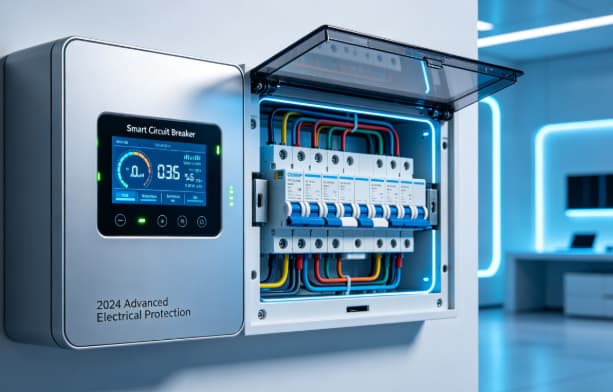
Os sistemas elétricos residenciais estão evoluindo rapidamente.
As futuras tecnologias de disjuntores incluem:
Os recursos incluem:
Muitos países estão aumentando os requisitos para:
para reduzir incêndios elétricos residenciais.
À medida que os sistemas solares e de baterias se tornam mais comuns, os disjuntores precisam lidar com eles:
Executar regularmente Análise de falha do disjuntor residencial pode reduzir significativamente os riscos de incêndio, os danos aos equipamentos e o tempo de inatividade operacional.
O Análise de falha do disjuntor residencial é essencial para melhorar a segurança elétrica residencial moderna.
Os disjuntores podem falhar devido a:
A compreensão desses mecanismos de falha ajuda engenheiros, empreiteiros e compradores a melhorar a confiabilidade do sistema e, ao mesmo tempo, reduzir os riscos de segurança. Uma análise adequada das falhas nas instalações de disjuntores residenciais também ajuda a reduzir os custos de manutenção e a melhorar a segurança elétrica a longo prazo.
À medida que as residências continuam integrando sistemas de energia solar, carregadores de veículos elétricos e eletrônicos inteligentes, a confiabilidade do disjuntor se torna ainda mais importante do que antes.
Um disjuntor adequadamente selecionado, corretamente instalado e com manutenção regular pode proporcionar décadas de proteção segura e confiável.
Investir em proteção de circuito de alta qualidade não se trata apenas de conformidade - trata-se de proteger residências, equipamentos e vidas humanas.
Um completo Análise de falha do disjuntor residencial não apenas garante a conformidade com os padrões de segurança, mas também prolonga a vida útil dos sistemas elétricos residenciais.
Os problemas mais frequentes descobertos durante Análise de falha do disjuntor residencial incluem superaquecimento, conexões soltas e degradação do contato.
Os disjuntores residenciais geralmente superaquecem por causa de fiação solta, circuitos sobrecarregados, ventilação insuficiente ou contatos internos degradados.
Sim. Em alguns casos, contatos soldados ou falhas mecânicas podem impedir que o disjuntor dispare durante condições de falha perigosas.
A maioria dos profissionais da área elétrica recomenda a inspeção de disjuntores residenciais a cada 1-3 anos, especialmente em residências com sistemas solares, carregadores de veículos elétricos ou cargas elétricas elevadas.
As ferramentas comuns de diagnóstico incluem câmeras de imagem térmica, testadores de resistência de isolamento, medidores de resistência de contato e equipamentos de teste de características de disparo.

