웽양 공업구 웨칭 원저우 325000
근무 시간
월요일~금요일: 오전 7시~오후 7시
주말: 주말: 오전 10시 - 오후 5시
웽양 공업구 웨칭 원저우 325000
근무 시간
월요일~금요일: 오전 7시~오후 7시
주말: 주말: 오전 10시 - 오후 5시

A DC surge protective device for solar PV is one of the small components that can prevent a very expensive failure. Solar strings, combiner boxes, inverters and battery cabinets are exposed to lightning-induced surges, switching transients and long outdoor cable runs. If the surge energy is not diverted safely, the result can be damaged inverter inputs, burned terminals, nuisance shutdowns or a complete loss of production.
For buyers, installers and panel builders, the challenge is not only choosing a “1000V DC SPD” or “1500V DC SPD.” The correct DC surge protective device for solar PV must match the system voltage, earthing method, installation position, discharge current, protection level and coordination with fuses or breakers. This guide gives a practical checklist for safe selection.
The first step is to compare the maximum open-circuit voltage of the PV array with the continuous operating voltage of the SPD. A common mistake is selecting only by the nominal inverter voltage. In cold weather, the PV string open-circuit voltage can rise above the standard test condition value, so the SPD must remain stable at the highest possible DC voltage.
For many commercial projects, the common choices are 600V DC, 1000V DC and 1500V DC. The selected DC surge protective device for solar PV should have a Uc value suitable for the real maximum PV voltage, not just the printed inverter rating.
SPD type depends on where the equipment is installed and how much lightning current it may need to handle.
If the PV plant is located in an open field, mountain area, coastal zone or high-thunderstorm region, it is safer to evaluate Type 1+2 protection at the main DC entry point and Type 2 protection closer to sensitive equipment.
Three ratings decide whether the SPD can discharge surge energy and protect downstream equipment effectively.
| 매개변수 | 의미 | Selection tip |
|---|---|---|
| In | 공칭 방전 전류 | Higher In improves repeated surge endurance. |
| Imax | 최대 방전 전류 | Important for outdoor PV systems with strong surge risk. |
| Up | 전압 보호 레벨 | Lower Up gives better protection for inverter electronics. |
A good DC surge protective device for solar PV should not only have a high surge current rating. It also needs a suitable protection level, so the residual voltage after discharge is low enough for the inverter and monitoring equipment.
Solar protection is a system, not a single device. The SPD should be coordinated with DC fuses, DC circuit breakers, isolators and the grounding design. In a combiner box, SPDs are often installed together with string fuses and DC breakers. At the inverter side, another SPD may be added to shorten the distance between protection and sensitive electronics.
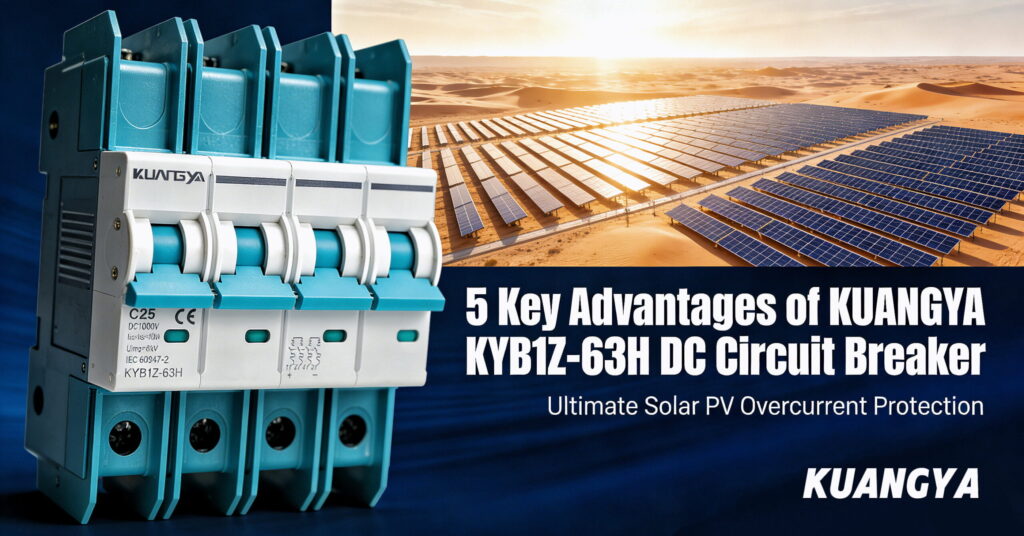
If you are also sizing breakers for PV strings, read our guide on DC circuit breaker sizing for solar. For breaker product selection, you can also review the KUANGYA DC MCB series.
Even a correctly rated DC surge protective device for solar PV can perform poorly if the wiring is too long. Long leads add inductance and increase the residual voltage during a surge. Keep SPD connection wires short, straight and properly sized. The earth connection should be low impedance and mechanically secure.
As a practical rule, install the SPD as close as possible to the protected equipment and avoid unnecessary loops. In outdoor combiner boxes, pay close attention to cable glands, enclosure sealing and corrosion resistance.
PV systems are expected to run for years with limited maintenance. A visual status window helps maintenance teams identify failed SPD modules quickly. Pluggable modules reduce downtime because the damaged cartridge can be replaced without rewiring the complete protection unit.
For large solar farms or remote telecom power sites, remote alarm contacts are also useful. They allow the monitoring system to report SPD failure before a second surge causes equipment damage.
오른쪽 선택 DC surge protective device for solar PV is a balance of voltage, surge current, protection level, installation position and maintenance needs. A properly selected SPD reduces inverter damage risk and improves the reliability of solar power systems.
Technical references: For surge protective device terminology and PV application guidance, review the official IEC pages for IEC 61643-31 및 IEC 61643-32.KUANGYA supplies DC protection components for solar PV applications, including DC breakers and related protection devices for combiner boxes, inverter inputs and industrial DC cabinets. If you need help matching protection devices for a 600V, 1000V or 1500V solar project, contact KUANGYA with your system voltage, string current and installation layout.

