주소
304 북쪽 추기경
세인트 도체스터 센터, MA 02124
근무 시간
월요일~금요일: 오전 7시~오후 7시
주말: 주말: 오전 10시 - 오후 5시

주소
304 북쪽 추기경
세인트 도체스터 센터, MA 02124
근무 시간
월요일~금요일: 오전 7시~오후 7시
주말: 주말: 오전 10시 - 오후 5시
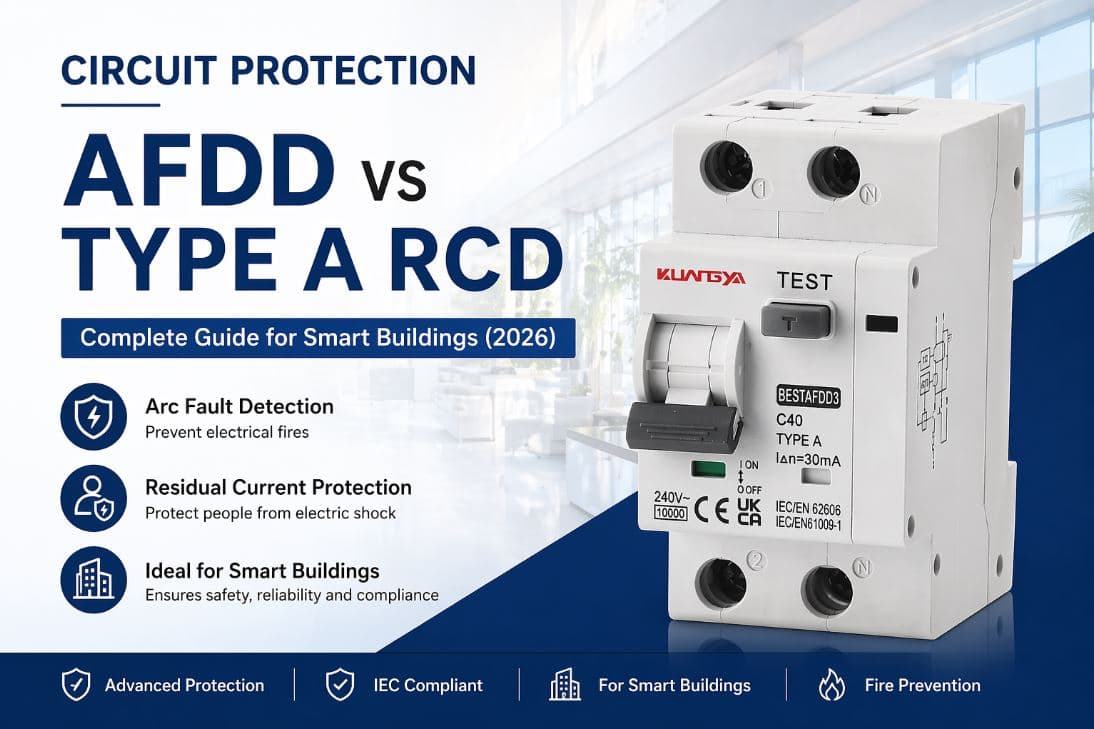
In today’s smart buildings, where technology evolves at lightning speed, electrical safety can’t rely on yesterday’s solutions. Enter the dynamic duo of modern protection: the Type A Residual Current Device (RCD) and the Arc Fault Detection Device (AFDD). While Type A RCDs have solidified their position as the global standard against earth leakage, AFDDs are emerging as the critical innovation for preventing electrical fires. Together, they’re creating a safety net that addresses what the National Fire Protection Association (NFPA) identifies as the leading causes of electrical incidents: shock hazards and arc faults.
A: Think of them as specialists in different but equally critical areas of electrical safety:
| Protection Device | Primary Threat Addressed | 작동 방식 | What It Prevents | Global Standard |
|---|---|---|---|---|
| Type A RCD | Earth Leakage Current | Detects an imbalance between live and neutral conductors, indicating current is leaking to earth (e.g., through a person). | Electric shock, electrocution, and some fire risks from insulation failure to earth. | IEC 61008/61009; mandatory in EU, UK, AU, and many other regions. |
| AFDD | Dangerous Arc Faults | Analyzes the current waveform for unique high-frequency “noise” signatures characteristic of series (loose connection) or parallel (insulation breakdown) arcs. | Electrical fires that can start behind walls, in damaged cords, or at faulty connections without tripping standard breakers. | IEC 62606; increasingly mandated or recommended in building codes worldwide. |
The Key Difference: A Type A RCD acts like a guardian against current going where it shouldn’t (to earth, possibly through you). An AFDD acts like a detective listening for the unique “sound” of a spark that could start a fire, even if no current is leaking.
The drive for integrating both devices is fueled by a global trend toward stricter safety codes. The move isn’t uniform, but the direction is clear: a layered defense is becoming the benchmark for quality electrical installations.
A: Adoption varies, but a clear trend towards mandatory or highly recommended use in specific high-risk areas is evident worldwide.
| 지역 | Type A RCD Status | AFDD Status | Key Driver & Application Focus |
|---|---|---|---|
| Europe (e.g., Germany, France) | Long mandatory for most final circuits. | Becoming mandatory in new residential buildings and renovations (per national amendments to IEC 60364). | Stringent building safety culture. Focus on life safety in homes. |
| United Kingdom | Mandatory for years under Wiring Regulations (BS 7671). | Required in certain high-risk residential accommodations (e.g., houses of multiple occupancy, care homes) since Amendment 2 (2022). | Fire safety post-Grenfell. Protecting vulnerable occupants. |
| 북미 | GFCI (similar function) required in wet locations. | AFCI (US term for AFDD) required in most living areas of new homes per NEC. | Strong focus on preventing residential electrical fires. |
| Australia / New Zealand | Mandatory (RCDs) for all power and lighting circuits. | Not yet mandated in wiring rules but recommended for high-risk situations. | Proactive safety standards; likely future inclusion. |
Smart buildings, with their dense networks of sensitive electronics, variable-speed drives, and constant connectivity, present unique challenges that make the AFDD+Type A RCD combination not just beneficial, but essential.
A: Smart buildings intensify the very risks these devices are designed to mitigate. Here are the top 3 reasons:
| Reason | Risk Amplified | Protection Solution |
|---|---|---|
| 1. Proliferation of Power Electronics | Increased harmonic noise and DC leakage currents from devices like servers, IoT sensors, and LED drivers can mask faults or blind traditional protectors. | Type A RCDs detect DC leakage; advanced AFDDs filter harmonics to identify true arcs. |
| 2. High Cost of Downtime | A single electrical fault in a data center or automated facility can halt operations, causing massive financial and reputational loss. | The dual-layer system provides preventive protection, stopping faults before they cause catastrophic failure. |
| 3. Insurance & Compliance Premiums | Insurers and regulators are increasingly mandating or incentivizing the highest levels of proven safety technology. | Installing both AFDDs and Type A RCDs can lower premiums and ensure compliance with evolving codes. |
Successfully integrating these technologies requires thoughtful design, not just box-ticking.
A: Follow a risk-based, layered approach. This 5-step strategy ensures comprehensive protection:
| 단계 | Action | Key Consideration |
|---|---|---|
| 1. Risk Assessment | Identify high-risk circuits: data centers, kitchens, EV chargers, aged wiring. | Prioritize protection where failure consequences are highest. |
| 2. Device Selection | Choose combined AFDD+RCCB units for space efficiency, or separate devices for flexibility. | Ensure devices meet IEC 62606 (AFDD) and IEC 61008/9 (Type A RCD). |
| 3. System Coordination | Configure selective tripping so the nearest device to a fault operates first. | Prevents unnecessary whole-system shutdowns. |
| 4. Installation & Wiring | Follow manufacturer guidelines strictly, especially for neutral conductor handling. | Proper installation is critical for reliable operation. |
| 5. Testing & Commissioning | Use certified testers to verify both arc fault and leakage current detection. | Document all tests for compliance and maintenance records. |
The future lies not just in having both devices, but in their seamless integration into the building’s intelligence.
The evidence is overwhelming: in our electrically complex modern world, Type A RCDs and AFDDs are complementary, not competitive. One guards against the hidden danger of shock; the other sniffs out the spark before it becomes a blaze. For engineers, architects, and building owners committed to true resilience, specifying this dual-layer protection is no longer an optional upgrade—it’s the new standard of care. By embracing this perfect partnership today, we’re not just complying with codes; we’re building a fundamentally safer, more reliable electrical future.